VARRON Borivoié.-Livre Rare Book
BALLAND (A.)Livre Rare Book
La Chimie alimentaire dans l'oeuvre de Parmentier
1902réf. 002495Paris, Librairie J.-B. Baillière et fils, 1902

Henri Picard et Fils · Paris, France200,00 €
2 347 résultats
réf. ORD-10640Thèse. Bordeaux. Cadoret. 1926. In-8 br.63pp. (1).
réf. 8146ou description des principales industries modernes 4 tomes en 4 volumes in 4 demi-chagrin vert à nerfs,titre,filets, caissons dorés.Plats toile chagrinée verte;triple filet à froid en encadrement.Tome 1:faux-titre,titre avec vignette. Industries chimiques,le verre et le cristal,les poteries, les faïences et les porcelaines, le savon, les soudes et les potasses, le sel, le soufre et l’acide sulfurique, 756 pages, texte sur 2 colonnes, 413 figures, tranches dorées. Tome 2 : faux-titre, titre avec vignette Industrie chimique : le sucre, le papier, les papiers peints, les cuirs et les peaux, le caoutchouc, la gutta percha, la teinture. 731 pages, 323 figures dans le texte. Tranches dorées. Tome 3 : faux-titre, titre avec vignette industrie chimique l’eau, les boissons gazeuses, le blanchiment et le blanchissage, le phosphore et les allumettes chimiques, le froid artificiel, l’asphalte et le bitume. 684 pages, 292 figures dans le texte. Tranches dorées. Tome 4 : faux-titre, titre avec vignette Industries agricoles et alimentaires : pain, farines, fécules, pâtes alimentaires, lait, beurre, fromages, vin, cidre, bière, alcool, distillation, vinaigre, huiles, conserves alimentaires, café et thé. 739 pages, 367 figures dans le texte, texte sur 2 colonnes. Tranches dorées. Furne Jouvet & Cie éditeur sans date,très bon état pratiquement sans rousseurs. un coin légèrement émoussés
réf. 6578ou notions scientifiques sur les objets usuels de la vie,in 8 demi chagrin rouge à nerfs,titre et caissons dorés, filets à froid, plats percaline rouge.Faux-titre, frontispice sous serpente,titre,IV,542 pages 1 feuillet de table des matières, publicité de 4 pages.Tanches dorées. 290 gravures sur bois dans et hors-texte,1 carte en couleurs.Hachette & Cie 1883 pratiquement sans rousseurs
1902réf. 002495Paris, Librairie J.-B. Baillière et fils, 1902
réf. 5164Seconde édition.Considérablement augmentée.Petit in 8 demi-cuir vert époque,titre roulette,filets dorés.Faux-titre, frontispice(portrait de l’auteur en buste,gravé sur bois) titre, XXIV,364 pages,vignettes dans le texte.Imprimerie Nationale 1851.Rare.Pâle mouillure dans la partie inférieure de la page 329 à la fin,sans gravité.
réf. 4196Petit in 8 demi chagrin rouge à nerfs,titre,filets dorés, plats percaline faux-titre,frontispice gravé de GIRARDET, titre,gravé avec vignette(visite de la laiterie) titre,380 pages,tranches dorées;quelques figures dans le tête,un petit manque au nerf inférieur,Mame & fils 1866, pratiquement sans rousseur
réf. 2744In 8 pleine toile brique éditeur,titre au dos en long et sur le premier plat faux-titre,titre,90 pages,3 pages de publicités complet des 6 grands plans dépliants en fin de volume, figures dans le texte.Th.PILTER éditeur 191 premier plat légèrement poussiéreux
réf. 2612in 4 reliure amateur demi-toile verte muette à coins,pièce de titre imprimée sur le premier plat. Faux-titre,frontispice(cabanières de Roquefort)titre,200 pages,non rogné,151 illustrations dans le texte,pleine page et hors-texte.Carte dépliante des laiteries de Roquefort, nombreuses publicités illustrées en fin de volume.Avec 1 feuillet de liste alphabétique des annonceurs Rodez E . Carrère éditeur 1906. Belle édition sur papier Couché.Page de faux-titre poussiéreuse;le haut de la page de titre est resté collé au haut de la page suivante;sans gravité(ce qui est très fréquent avec le papier couché)sinon très bon état d’ensemble rare édition originale.
réf. 2616in 8 carré broché couverture jaquette imprimée,faux-titre, frontispice en couleurs,titre avec vignette,236 pages, illustrations pleine page en couleurs de Yves BRAYE Société anonyme des caves des producteurs réunis de Roquefort. Exemplaire numéroté sur vélin blanc filigrané.15 décembre 1955.Dos avec de très petits manques,habilement doublé . Epidermures sur les plats
1936réf. 190813New York: Frederick A. Stokes Company 1936. First edition and first printing. Small hardcover. 124 pages. A posthumously released book compiled by Jack Lait. Includes 32 pages of illustrations. A clean very near fine copy in cloth boards and in a very near fine dust jacket that is slight smaller than the book. A fresh copy. Frederick A. Stokes Company unknown books
1945réf. 65055Norfolk CT: New Directions 1945. First Edition. First edition. 47 pp. Gray-green cloth in dustjacket. Printed by Carroll Coleman at his Prairie Press. Briefly inscribed on the front free endpaper to George Leite; signed "J Laughlin". Leite was at the center of the West Coast avant garde in New York with Laughlin. Cloth spine cocked and faded the dustjacket lightly and evenly toned with a few short tears and minor loss. Overall Very Good. Nice association connecting two notable mid-century avant garde publishers. This was Laughlin's second collection of poetry. New Directions unknown books
1932réf. 20281New York: Grosset and Dunlap 1932. First Edition. Octavo; red cloth with titles stamped in black on spine and front panel; red topstain; 218pp 2ads; illus. with 4 black and white photographic plates reproducing stills from the film. Lacking the rare dustjacket. Slight forward lean hint of darkening to spine with some rubbing to topstain; Very Good. Novelization and first photoplay edition of Burnett's screenplay for the 1932 pre-code gangster film directed by Charles Brabin starring Walter Huston Jean Harlow and Wallace Ford. Grosset and Dunlap unknown books
2001réf. UCOUCAL00drpFundacao Calouste Gulbenkian 2001. Very Good. Coutinho Isabel Pereira. Calouste Gulbenkian Museum. Sampaio Luisa; Hipolito Mario Castro; Fidalgo Manuela; Leite Maria Fernanda Passos; Ribeiro Maria Queiroz; Figueiredo Maria Rosa; Silva Nuno Vassallo e. Lisbon Portugal: Fundacao Calouste Gulbenkian 2001. 187pp. Illustrated. Bibliography. 4to. Paperback. Book condition: Very good with rubbing and bumping. Fundacao Calouste Gulbenkian paperback books
1920réf. 234521920. Milk delivery photo archive documenting neighborhood dairy distribution through branded route trucks uniformed drivers insulated cargo compartments route numbers and product claims printed directly on delivery vehicles circa 1920s-1940s. Milk delivery emerged after farm-based household provisioning and before supermarket consolidation transformed food purchasing into a centralized retail experience centered on consumer self-service and mass refrigeration. The archive records the final stage of the dairy economy in which independent and regional dairies maintained direct household delivery through branded trucks route drivers and localized service territories before supermarket consolidation largely displaced home milk delivery after World War II. Photo archive of 10 silver gelatin photographs various sizes ranging from 3 x 5 to 8 x 10 inches primarily Midwestern and Northeastern United States circa 1925-1945. Trucks and route vehicles from multiple dairies appear throughout the archive including Friedrichs Grade A Milk of Allwood Road Delawanna New Jersey; Broadview Jersey Milk; Aristocrat Milk operated by P.J. Bair of Gap Pennsylvania; Glendale Farms Wisconsin; and Hamilton Dairies. A large Friedrichs delivery truck marked "Golden Guernsey Raw Milk" stands parked on a residential street lined with detached houses and utility poles reflecting the close integration of dairy routes into neighborhood infrastructure. A streamlined Aristocrat Milk tractor trailer appears outside a brick dairy structure with striped awnings carrying regulatory markings including Pennsylvania P.U.C. licensing information and "Owned and Operated." Two Glendale Farms workers stand inside the open side door of a compact delivery van bearing route number 59 while another uniformed driver poses beside an early Helco Cream Dairy truck in white coveralls and cap associated with sanitary dairy labor presentation during the interwar period. State and municipal health departments increasingly regulated milk during this period through pasteurization requirements bacterial testing bottling standards and "Grade A" certification programs intended to reduce outbreaks of tuberculosis typhoid scarlet fever and undulant fever transmitted through contaminated dairy products. Several trucks prominently advertise "Pasteurized" "Grade A Milk" and "Golden Guernsey Raw Milk" showing how dairies marketed sanitation breed quality and freshness directly to consumers at street level. Milk delivery photograph archive from the final period in which independent and regional dairies maintained direct household distribution through branded trucks route drivers and localized service territories before supermarket consolidation largely displaced home milk delivery after World War II. Before widespread household refrigeration and supermarket centralization drivers entered neighborhoods every morning carrying bottled milk cream butter and eggs directly to porches and apartment buildings often maintaining long-term personal relationships with customers on fixed routes. The shift toward branded sanitary delivery systems intensified after the Pure Food and Drug Act of 1906 and subsequent municipal milk ordinances forced dairies to compete through visible cleanliness mechanical refrigeration and standardized truck fleets. Painted advertising panels insulated cargo compartments route numbering systems sanitary uniforms and hybrid rural-urban transport methods appear throughout the archive operating simultaneously within the same industry. Light surface wear curling and scattered handling marks throughout. Overall in good condition. unknown books
1962réf. 468418New York: Macfadden Books 1962. Softcover. Very Good. First paperback edition. Illustrated wrappers. Pages toned ink "X" on first leaf very good. Macfadden Books unknown books
1982réf. 390469San Francisco 1982. Unbound. Fine. Two photomechanically reproduced flyers measuring 8.5" x 11" and 8.5" x 14". One is on yellow paper and the other on orange. Fine with slight abrasions where they were tacked up. Two flyers protesting the incarceration of activist Peter Plate for his role in the 1979 San Francisco White Night Riots. One flyer shows a group of protesters by a damaged police car and declares "remember white night" while the other briefly explains the case against Plate under a drawing of a burning police car. The riots occurred on the night of May 21 1979 and were a result of the "lenient verdict" in the case of Dan White notorious killer of San Francisco Mayor George Moscone and San Francisco Supervisor Harvey Milk. White was only sentenced to voluntary manslaughter which outraged the citizens of San Francisco. The gay community and the police department were already at odds but White being a former officer helped to intensified what was scheduled to be a "peaceful protest" into a conflict. During the night activist Peter Plate was arrested for participating in the riots and charges were brought against him. By 1982 Plate was scheduled to stand trial for "multiple felony charges" including "assault and battery on a police officer and burning police cars." Ultimately the city targeted a few people for the actions of thousands. The flyers urge for multiple protests that year August 17th July 14th and December 19th. "The malevolence that the district attorney's office and the police department display in their desire to convict Peter Plate and his co-defendants reflects the criminal nature of law and order. unknown books
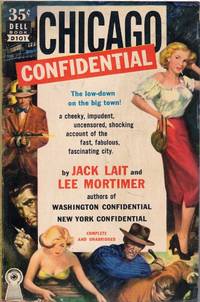
1952réf. 65422NY: Dell 1952. Mass market paperback. Very good. Mass market paperback. First Printing. Slight spine lean wraps a bit darkened and rubbed else very good. Dell unknown books
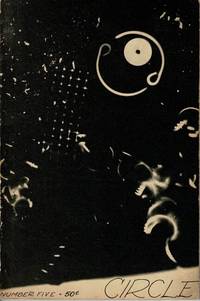
1945réf. 69535Berkeley: Circle 1945. 8vo pp. 85 3; 2 leaves of "photo poems" and text illustrations; pictorial paper wrappers wrappers toned owner's signature on first page very good. With material from Henry Miller Max Jacob E. E. Cummings Weldon Kees Dane Ruhdyar Paul Radin and others. Circle unknown books
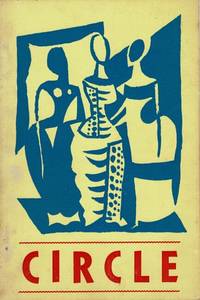
1946réf. 69596Berkeley: Circle 1946. 8vo pp. 4 96 8; 6 plates 1 folding; pictorial paper wrappers designed by the Palestinian artist Bezalel Schatz; wrappers toned text clean very good. An influential California literary mag. "Simultaneously with the arrival of Henry Miller in Big Sur 1940s a new intellectual tendency had emerged in Berkeley in a little magazine called Circle. Edited by George Leite who became one of Miller's associates Circle produced ten issues beginning in 1944 with what Lawrence Ferlinghetti and Nancy Peters described as antiwar anarchist or antiauthoritarian civil libertarian attitudes coupled with a new experimentation in the arts." Schwartz From West to East This issue with contributions by Lawrence Durrell C. F. MacIntyre William Everson Henry Miller Alex Comfort et al. Circle unknown books
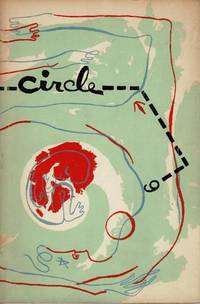
1946réf. 69601Berkeley: Circle 1946. 8vo pp. 148 12; text illustrations folding "map of James Joyce's life"; pictorial paper wrappers; wrappers soiled pencil note on title page text clean and sound good. An influential California literary mag. "Simultaneously with the arrival of Henry Miller in Big Sur 1940s a new intellectual tendency had emerged in Berkeley in a little magazine called Circle. Edited by George Leite who became one of Miller's associates Circle produced ten issues beginning in 1944 with what Lawrence Ferlinghetti and Nancy Peters described as antiwar anarchist or antiauthoritarian civil libertarian attitudes coupled with a new experimentation in the arts." Schwartz From West to East With contributions by Anais Nin Bern Porter Thomas Parkinson Paul Radin Henry Miller Jack Jones et al. Also notably with the first appearance of Robert Duncan's "The Years as Catches Circle] unknown books
1944réf. 69595Berkeley: Circle 1944. 8vo pp. 1 74 5; 7 plates; staple bound in printed yellow paper wrappers; staples corroding light mottling to spine very good. An influential California literary mag. "Simultaneously with the arrival of Henry Miller in Big Sur 1940s a new intellectual tendency had emerged in Berkeley in a little magazine called Circle. Edited by George Leite who became one of Miller's associates Circle produced ten issues beginning in 1944 with what Lawrence Ferlinghetti and Nancy Peters described as antiwar anarchist or antiauthoritarian civil libertarian attitudes coupled with a new experimentation in the arts." Schwartz From West to East This issue with contributions by Anais Nin Theodore Schroeder Henry Miller Bern Porter James Franklin Lewis et al. Circle unknown books
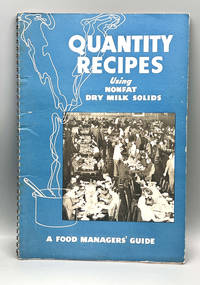
1947réf. 5129Chicago: American Dry Milk Institute Inc. 1947. Spiral_bound. Blue illustrated wraps. Very good. 64 pages. 23 x 15.5 cm. Produced to facilitate providing nutritional attractive food in institutional kitchens. Highlighting low cost and increased volume nonfat dry milk is featured in all the recipes - most serving 50 people. Covers lightly rubbed. Interior clean. American Dry Milk Institute, Inc. paperback books
1952réf. S5007Rio de Janeiro:: Academia Brasileira de Ciências 1952. 1952. 271 x 186 mm. 4to. Pages 44-46. Entire volume: 71 pp. 1 tables. Printed wrappers; wrappers creased several leaves dog-eared. Very good. RARE. FIRST EDITION. "After his well known success in quantum electrodynamics Feynman was working on meson theory. He proposed to Leite Lopes that they investigate whether the pseudoscalar meson theory would give some results in the description of the deuteron which could be experimentally checked in spite of the difficulty of the 1/r3 singularity at the origin of the Yukawa potential. The results of this study were published in an article entitled 'On the pseudoscalar meson theory of the deuteron' in the proceedings of the Symposium on New Research Techniques in Physics 15-29 June 1952. Many physicists from Europe and the United States attended this symposium." Mehra. Among the contributors to this publication are Eugene Paul Wigner 1902-1995 with three papers among the total of 67. Gleick Genius p. 495; Mehra The beat of a different drum p. 334-335. Academia Brasileira de Ciências, 1952. unknown books
1979réf. 219748San Francisco: the Club 1979. Newsletter. 4p. 8.5x11 inches articles events resources photos very good newsletter in wraps. Cover story on Supervisors listening to reports of police brutality. Britt charges police invasion. On the White Night Riots. Interview with Evans. the Club unknown books
1929réf. 2311552New York: Grosset & Dunlap 1929. Photoplay Edition. Hard Cover. Very Good/No Jacket. 0x0x0. Photoplay edition. Lacks jacket. Spine creased a few light smudges on boards top page ridge lightly foxed. 1929 Hard Cover. 242 pp. Photoplay of first sound film to win the Academy Award for Best Picture and one of the first musicals with a Technicolor sequence. Frontispiece and plates with scenes from the motion picture. "Eddie Kearns Charles King sings "The Broadway Melody" and tells some chorus girls that he brought the Mahoney Sisters vaudeville act to New York to perform it with him in the latest revue being produced by Francis Zanfield Eddie Kane. Harriet "Hank" Mahoney Bessie Love and her sister Queenie Mahoney Anita Page are awaiting Eddie's arrival at their apartment. Hank the older sister prides herself on her business sense and talent while Queenie is lauded for her beauty. Hank is confident they will make it big while Queenie is less eager to put everything on the line to become a star. Hank declines the offer of their Uncle Jed Jed Prouty to join a 30-week traveling show but consents to think it over. Eddie who is engaged to Hank arrives and sees Queenie for the first time since she was a girl and is instantly taken with her. He tells them to come to a rehearsal for Zanfield's revue to present their act. A blond woman sabotages their performance by placing a bag in the piano which causes a fight with Hank. Zanfield isn't interested in it but says he might have a use for Queenie who begs him to give Hank a part as well saying both will work for one wage. She also convinces him to pretend that Hank's business skills won him over. Eddie witnesses this exchange and becomes even more enamored of Queenie for her devotion to her sister. During a dress rehearsal for the revue Zanfield says the pacing is too slow for "The Broadway Melody" and cuts Hank and Queenie from the number. Meanwhile another woman is injured after falling off a set prop and Queenie is selected to replace her. Nearly everyone is captivated by Queenie particularly notorious playboy Jacques "Jock" Warriner Kenneth Thomson. While Jock begins to woo Queenie Hank is upset that Queenie is building her success on her looks rather than her talent. Grosset & Dunlap hardcover books