2 401 résultats
1912réf. 818601Berlin, Dt. Milchwirtschaftl. Verein, 1912. M. 4 schemat. Ktn. u. zahlr. Tab. 172 S. (Schriften d. Dt. Milchwirtschaftl. Vereins 39).
réf. 6202378115.Gpaperback. Good. Access codes and supplements are not guaranteed with used items. May be an ex-library book. paperback
réf. 6202378077.Gpaperback. Good. Access codes and supplements are not guaranteed with used items. May be an ex-library book. paperback
réf. 6202378107.Gpaperback. Good. Access codes and supplements are not guaranteed with used items. May be an ex-library book. paperback
réf. 6202378069.Gpaperback. Good. Access codes and supplements are not guaranteed with used items. May be an ex-library book. paperback
réf. 6202378085.Gpaperback. Good. Access codes and supplements are not guaranteed with used items. May be an ex-library book. paperback
2019réf. 2-6139794811Novas Edições Acadêmicas 2019. Paperback. New. 52 pages. 8.66x5.91x0.12 inches. Novas Edições Acadêmicas paperback
réf. 1390947262.Gpaperback. Good. Access codes and supplements are not guaranteed with used items. May be an ex-library book. paperback
réf. 1396346708.Ghardcover. Good. Access codes and supplements are not guaranteed with used items. May be an ex-library book. hardcover
1920réf. 234521920. Milk delivery photo archive documenting neighborhood dairy distribution through branded route trucks uniformed drivers insulated cargo compartments route numbers and product claims printed directly on delivery vehicles circa 1920s-1940s. Milk delivery emerged after farm-based household provisioning and before supermarket consolidation transformed food purchasing into a centralized retail experience centered on consumer self-service and mass refrigeration. The archive records the final stage of the dairy economy in which independent and regional dairies maintained direct household delivery through branded trucks route drivers and localized service territories before supermarket consolidation largely displaced home milk delivery after World War II. Photo archive of 10 silver gelatin photographs various sizes ranging from 3 x 5 to 8 x 10 inches primarily Midwestern and Northeastern United States circa 1925-1945. Trucks and route vehicles from multiple dairies appear throughout the archive including Friedrichs Grade A Milk of Allwood Road Delawanna New Jersey; Broadview Jersey Milk; Aristocrat Milk operated by P.J. Bair of Gap Pennsylvania; Glendale Farms Wisconsin; and Hamilton Dairies. A large Friedrichs delivery truck marked "Golden Guernsey Raw Milk" stands parked on a residential street lined with detached houses and utility poles reflecting the close integration of dairy routes into neighborhood infrastructure. A streamlined Aristocrat Milk tractor trailer appears outside a brick dairy structure with striped awnings carrying regulatory markings including Pennsylvania P.U.C. licensing information and "Owned and Operated." Two Glendale Farms workers stand inside the open side door of a compact delivery van bearing route number 59 while another uniformed driver poses beside an early Helco Cream Dairy truck in white coveralls and cap associated with sanitary dairy labor presentation during the interwar period. State and municipal health departments increasingly regulated milk during this period through pasteurization requirements bacterial testing bottling standards and "Grade A" certification programs intended to reduce outbreaks of tuberculosis typhoid scarlet fever and undulant fever transmitted through contaminated dairy products. Several trucks prominently advertise "Pasteurized" "Grade A Milk" and "Golden Guernsey Raw Milk" showing how dairies marketed sanitation breed quality and freshness directly to consumers at street level. Milk delivery photograph archive from the final period in which independent and regional dairies maintained direct household distribution through branded trucks route drivers and localized service territories before supermarket consolidation largely displaced home milk delivery after World War II. Before widespread household refrigeration and supermarket centralization drivers entered neighborhoods every morning carrying bottled milk cream butter and eggs directly to porches and apartment buildings often maintaining long-term personal relationships with customers on fixed routes. The shift toward branded sanitary delivery systems intensified after the Pure Food and Drug Act of 1906 and subsequent municipal milk ordinances forced dairies to compete through visible cleanliness mechanical refrigeration and standardized truck fleets. Painted advertising panels insulated cargo compartments route numbering systems sanitary uniforms and hybrid rural-urban transport methods appear throughout the archive operating simultaneously within the same industry. Light surface wear curling and scattered handling marks throughout. Overall in good condition. unknown
1920réf. 234521920. Milk delivery photo archive documenting neighborhood dairy distribution through branded route trucks uniformed drivers insulated cargo compartments route numbers and product claims printed directly on delivery vehicles circa 1920s-1940s. Milk delivery emerged after farm-based household provisioning and before supermarket consolidation transformed food purchasing into a centralized retail experience centered on consumer self-service and mass refrigeration. The archive records the final stage of the dairy economy in which independent and regional dairies maintained direct household delivery through branded trucks route drivers and localized service territories before supermarket consolidation largely displaced home milk delivery after World War II. Photo archive of 10 silver gelatin photographs various sizes ranging from 3 x 5 to 8 x 10 inches primarily Midwestern and Northeastern United States circa 1925-1945. Trucks and route vehicles from multiple dairies appear throughout the archive including Friedrichs Grade A Milk of Allwood Road Delawanna New Jersey; Broadview Jersey Milk; Aristocrat Milk operated by P.J. Bair of Gap Pennsylvania; Glendale Farms Wisconsin; and Hamilton Dairies. A large Friedrichs delivery truck marked "Golden Guernsey Raw Milk" stands parked on a residential street lined with detached houses and utility poles reflecting the close integration of dairy routes into neighborhood infrastructure. A streamlined Aristocrat Milk tractor trailer appears outside a brick dairy structure with striped awnings carrying regulatory markings including Pennsylvania P.U.C. licensing information and "Owned and Operated." Two Glendale Farms workers stand inside the open side door of a compact delivery van bearing route number 59 while another uniformed driver poses beside an early Helco Cream Dairy truck in white coveralls and cap associated with sanitary dairy labor presentation during the interwar period. State and municipal health departments increasingly regulated milk during this period through pasteurization requirements bacterial testing bottling standards and "Grade A" certification programs intended to reduce outbreaks of tuberculosis typhoid scarlet fever and undulant fever transmitted through contaminated dairy products. Several trucks prominently advertise "Pasteurized" "Grade A Milk" and "Golden Guernsey Raw Milk" showing how dairies marketed sanitation breed quality and freshness directly to consumers at street level. Milk delivery photograph archive from the final period in which independent and regional dairies maintained direct household distribution through branded trucks route drivers and localized service territories before supermarket consolidation largely displaced home milk delivery after World War II. Before widespread household refrigeration and supermarket centralization drivers entered neighborhoods every morning carrying bottled milk cream butter and eggs directly to porches and apartment buildings often maintaining long-term personal relationships with customers on fixed routes. The shift toward branded sanitary delivery systems intensified after the Pure Food and Drug Act of 1906 and subsequent municipal milk ordinances forced dairies to compete through visible cleanliness mechanical refrigeration and standardized truck fleets. Painted advertising panels insulated cargo compartments route numbering systems sanitary uniforms and hybrid rural-urban transport methods appear throughout the archive operating simultaneously within the same industry. Light surface wear curling and scattered handling marks throughout. Overall in good condition. unknown books
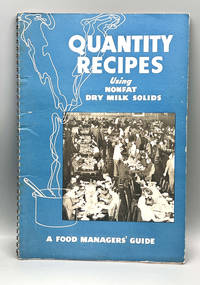
1947réf. 5129Chicago: American Dry Milk Institute Inc. 1947. Spiral_bound. Blue illustrated wraps. Very good. 64 pages. 23 x 15.5 cm. Produced to facilitate providing nutritional attractive food in institutional kitchens. Highlighting low cost and increased volume nonfat dry milk is featured in all the recipes - most serving 50 people. Covers lightly rubbed. Interior clean. American Dry Milk Institute, Inc. paperback books
2000réf. 111005Orinda CA: Noetic Press 2000. Paperback Small Quarto. Paperback. Very good. wraps 444 pp covers lightly worn. Noetic Press paperback
réf. 30147351-nnew. unknown
réf. 30147351like new. unknown
2017réf. x-3319691309Springer-Verlag New York Inc 2017. Paperback. New. 560 pages. 9.25x6.10x1.27 inches. Springer-Verlag New York Inc paperback
réf. 9727724027.Gpaperback. Good. Access codes and supplements are not guaranteed with used items. May be an ex-library book. paperback
réf. B9783034308915Paperback / softback. New. This book looks at the way that Mozambican and Angolan literary works seek to narrate re-create and make sense of the postcolonial nation via three broad themes: the role of history; the recurring image of the voyage; and discursive/narrative strategies. A final section considers the postcolonial in a broader Lusophone and international context. paperback
réf. B9781781886106Paperback / softback. New. paperback
réf. 44110696-nnew. unknown
réf. 44110696like new. unknown
réf. A9781781886106Paperback / softback. New. paperback
réf. 38604263-nnew. unknown
réf. 38604263like new. unknown
réf. B9781787075818Paperback / softback. New. paperback