Joao Leite, Paolo Torroni, Mehdi DastaniBiblio.com

2 346 résultats
2008réf. Adhya-9783540850571Springer 2008. Paperback. New. Springer paperback
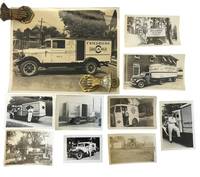
1920réf. 234521920. Milk delivery photo archive documenting neighborhood dairy distribution through branded route trucks uniformed drivers insulated cargo compartments route numbers and product claims printed directly on delivery vehicles circa 1920s-1940s. Milk delivery emerged after farm-based household provisioning and before supermarket consolidation transformed food purchasing into a centralized retail experience centered on consumer self-service and mass refrigeration. The archive records the final stage of the dairy economy in which independent and regional dairies maintained direct household delivery through branded trucks route drivers and localized service territories before supermarket consolidation largely displaced home milk delivery after World War II. Photo archive of 10 silver gelatin photographs various sizes ranging from 3 x 5 to 8 x 10 inches primarily Midwestern and Northeastern United States circa 1925-1945. Trucks and route vehicles from multiple dairies appear throughout the archive including Friedrichs Grade A Milk of Allwood Road Delawanna New Jersey; Broadview Jersey Milk; Aristocrat Milk operated by P.J. Bair of Gap Pennsylvania; Glendale Farms Wisconsin; and Hamilton Dairies. A large Friedrichs delivery truck marked "Golden Guernsey Raw Milk" stands parked on a residential street lined with detached houses and utility poles reflecting the close integration of dairy routes into neighborhood infrastructure. A streamlined Aristocrat Milk tractor trailer appears outside a brick dairy structure with striped awnings carrying regulatory markings including Pennsylvania P.U.C. licensing information and "Owned and Operated." Two Glendale Farms workers stand inside the open side door of a compact delivery van bearing route number 59 while another uniformed driver poses beside an early Helco Cream Dairy truck in white coveralls and cap associated with sanitary dairy labor presentation during the interwar period. State and municipal health departments increasingly regulated milk during this period through pasteurization requirements bacterial testing bottling standards and "Grade A" certification programs intended to reduce outbreaks of tuberculosis typhoid scarlet fever and undulant fever transmitted through contaminated dairy products. Several trucks prominently advertise "Pasteurized" "Grade A Milk" and "Golden Guernsey Raw Milk" showing how dairies marketed sanitation breed quality and freshness directly to consumers at street level. Milk delivery photograph archive from the final period in which independent and regional dairies maintained direct household distribution through branded trucks route drivers and localized service territories before supermarket consolidation largely displaced home milk delivery after World War II. Before widespread household refrigeration and supermarket centralization drivers entered neighborhoods every morning carrying bottled milk cream butter and eggs directly to porches and apartment buildings often maintaining long-term personal relationships with customers on fixed routes. The shift toward branded sanitary delivery systems intensified after the Pure Food and Drug Act of 1906 and subsequent municipal milk ordinances forced dairies to compete through visible cleanliness mechanical refrigeration and standardized truck fleets. Painted advertising panels insulated cargo compartments route numbering systems sanitary uniforms and hybrid rural-urban transport methods appear throughout the archive operating simultaneously within the same industry. Light surface wear curling and scattered handling marks throughout. Overall in good condition. unknown
1920réf. 234521920. Milk delivery photo archive documenting neighborhood dairy distribution through branded route trucks uniformed drivers insulated cargo compartments route numbers and product claims printed directly on delivery vehicles circa 1920s-1940s. Milk delivery emerged after farm-based household provisioning and before supermarket consolidation transformed food purchasing into a centralized retail experience centered on consumer self-service and mass refrigeration. The archive records the final stage of the dairy economy in which independent and regional dairies maintained direct household delivery through branded trucks route drivers and localized service territories before supermarket consolidation largely displaced home milk delivery after World War II. Photo archive of 10 silver gelatin photographs various sizes ranging from 3 x 5 to 8 x 10 inches primarily Midwestern and Northeastern United States circa 1925-1945. Trucks and route vehicles from multiple dairies appear throughout the archive including Friedrichs Grade A Milk of Allwood Road Delawanna New Jersey; Broadview Jersey Milk; Aristocrat Milk operated by P.J. Bair of Gap Pennsylvania; Glendale Farms Wisconsin; and Hamilton Dairies. A large Friedrichs delivery truck marked "Golden Guernsey Raw Milk" stands parked on a residential street lined with detached houses and utility poles reflecting the close integration of dairy routes into neighborhood infrastructure. A streamlined Aristocrat Milk tractor trailer appears outside a brick dairy structure with striped awnings carrying regulatory markings including Pennsylvania P.U.C. licensing information and "Owned and Operated." Two Glendale Farms workers stand inside the open side door of a compact delivery van bearing route number 59 while another uniformed driver poses beside an early Helco Cream Dairy truck in white coveralls and cap associated with sanitary dairy labor presentation during the interwar period. State and municipal health departments increasingly regulated milk during this period through pasteurization requirements bacterial testing bottling standards and "Grade A" certification programs intended to reduce outbreaks of tuberculosis typhoid scarlet fever and undulant fever transmitted through contaminated dairy products. Several trucks prominently advertise "Pasteurized" "Grade A Milk" and "Golden Guernsey Raw Milk" showing how dairies marketed sanitation breed quality and freshness directly to consumers at street level. Milk delivery photograph archive from the final period in which independent and regional dairies maintained direct household distribution through branded trucks route drivers and localized service territories before supermarket consolidation largely displaced home milk delivery after World War II. Before widespread household refrigeration and supermarket centralization drivers entered neighborhoods every morning carrying bottled milk cream butter and eggs directly to porches and apartment buildings often maintaining long-term personal relationships with customers on fixed routes. The shift toward branded sanitary delivery systems intensified after the Pure Food and Drug Act of 1906 and subsequent municipal milk ordinances forced dairies to compete through visible cleanliness mechanical refrigeration and standardized truck fleets. Painted advertising panels insulated cargo compartments route numbering systems sanitary uniforms and hybrid rural-urban transport methods appear throughout the archive operating simultaneously within the same industry. Light surface wear curling and scattered handling marks throughout. Overall in good condition. unknown books
2019réf. x-1138333166Taylor & Francis 2019. Hardcover. New. 212 pages. 9.25x6.25x0.75 inches. Taylor & Francis hardcover
2021réf. x-1032082348Routledge 2021. Paperback. New. 222 pages. 9.02x5.98x0.55 inches. Routledge paperback
2004No marks or inscriptions. No creasing to covers or to spine. A lovely clean very tight copy with bright unmarked boards and no bumping to corners. 140pp. Originally published in 1967, written by Min Lewis and with the superb drawings by her husband Stanley Lewis, this work is 'the essential documentary reference that gives a complete corroboration to Dylan's own work'. It contains an important cache of letters, documents, illustrations and thumbnail sketches relating to Laugharne and Dylan Thomas in the 1950s and 1960s including Stanley's delightful original 1958 sketches of the Llaregyb Players rehearsing Under Milk Wood.
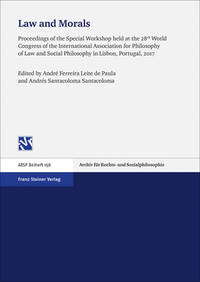
2019réf. 1174151Franz Steiner Verlag 2019. 1st. hardcover. New. 106x6x151. Franz Steiner Verlag hardcover
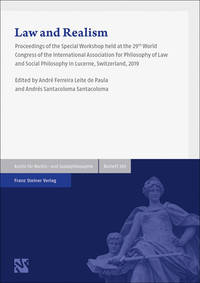
2021réf. 1544641Franz Steiner Verlag 2021. 1st. hardcover. New. 9x6x1. Franz Steiner Verlag hardcover
réf. B9781787991286Paperback / softback. New. paperback
réf. 48196693like new. unknown
réf. 1787991288.Gpaperback. Good. Access codes and supplements are not guaranteed with used items. May be an ex-library book. paperback
réf. ABE-1768517376081DOCUMENTATION OFFERTE A L'ENSEIGNEMENT PAR L'UNION NATIONALE INTERPROFESSIONNELLE DE PROPAGANDE DU LAIT-FILM DE 46 VUES-VERS 1955-(E25)
1933réf. 57931933 Paris avril 1933 In4 broché 53 pages illustrations et publicités dans le texte -
réf. 3269aaf(1950):
réf. 69454S.l., éd. chez l'auteur, imprimerie Labor à Paris, S.d. (c 1928), il doit s'agir de l'EDITION ORIGINALE sans réédition ultérieure, gd. in-8, cartonnage souple, texte en noir sur fond moucheté brun et gris-orangé éd., 53 - (3) pp., avant-propos,table des matières, ENVOI de l'auteur à Madame et Monsieur J. de La Fontaine (!) à St-Lothain (Jura) le 26/7/1928, L'auteur était ingénieur L. A. B., lauréat de la Société des Agriculyeurs de France. Cette importante "plaquette" essaye de définir la race franc-comtoise et quelles seraient ses caractéristiques en fonction se son "histoire" ! Nous remontons au début du XVIIIe sicèle lorsque les éleveurs de l'Oberland Bernois (Suisse) s'établirent dans la principauté de Montbelliard en amenant avec eux leur cheptel. Le cheptel existant, de race Tourache est exploité pour le lait, la viande et, avec ses bœufs, le trait. 50 pages pour nous convaincre qu'il existe un race franc-comtoise ! TRES RARE Bon état; la couverture présente quelques petits manques sur la 4e de couverture, les coins des pages sont pliés mais sans manque; le papier est uniformément jauni
réf. 68113Coll. "Les Codes de l'Alimentation", Paris, éditions Scientifiques Françaises, 1926, EDITION ORIGINALE, expl. n° 7572/15.000, fort in-8 carré, br., couv. texte en noir sur fond vert clair éd., 310 - XXIV pp., nb. publicités, quelques ill. en noir in-texte, table analytique des matières, Pierre Casanova (1885 - ?) fut ingénieur-agronome et avocat à la Cour d'Appel de Paris. Francis Marre était chimiste-expert près de la Cour d'Appel de Paris et des tribunaux de la Seine. Tous les délits que peuvent commetre les négociants en beurre et crémiers depuis la loi du 1er août 1905 jusqu'en 1926. Les falsifications, les fraudes, les conservations des produitsla qualité du beurre, la préparation et la conservation du lait, ainsi que pour le fromage. Un chapitre sur les œufs. Mais aussi le contrôle lors de la vente des produits et les autorisations. Il est aussi question des techniques de fabrication du lait, du beurre et du fromage. Très RARE. Bon état général; la couverture est défraîchie et le papier est uniformément jauni; les bords sont salis.
1912réf. Fh58Lyon Geneste 1912 Petit in4 - broché - 140 pages - nombreux tableaux hors texte - 1 petite déchirure au 1er plat
1912réf. Fh58Lyon Geneste 1912 Petit in4 - broché - 140 pages - nombreux tableaux hors texte - 1 petite déchirure au 1er plat
réf. 15145Paris, Librairie agricole de la Maison Rustique, quatrieme edition, non date (vers 1900). Format 12x18 cm, tres jolie demi-reliure cuir, 360 pages. Quelques rousseurs eparses.Tres bon etat.
1981réf. 92161Couverture souple. Broché. 44 pages. Couverture légèrement pliée.
1956réf. 008899Paris Gallimard NRF 1956 in-12° Brochés
réf. 6578ou notions scientifiques sur les objets usuels de la vie,in 8 demi chagrin rouge à nerfs,titre et caissons dorés, filets à froid, plats percaline rouge.Faux-titre, frontispice sous serpente,titre,IV,542 pages 1 feuillet de table des matières, publicité de 4 pages.Tanches dorées. 290 gravures sur bois dans et hors-texte,1 carte en couleurs.Hachette & Cie 1883 pratiquement sans rousseurs
réf. 85177aafParis, Hatier, 1994, in-4to, 252 p., richem. ill. avec des photogr. et gravures en couleurs, cartonnage original ill. en couleurs, jaquette orig. ill. en couleurs.
réf. 29973Genève, Editions Radar 1952 230x160mm, 282 + 29pages, avec 6 cartes dépliantes, reliure toile de l’éditeur.
réf. 29974Genève, Editions Radar 1952, 222x155mm, 183pages, nombreux tableaux, broché.