3.436 resultados
1971ref. 549522Garden City New York: Doubleday & Company Inc 1971. Hardcover. Fine/Very Good. First edition. Translated by Beverly Koch. Illustrated by Jacqueline Duhéme. Oblong slim quarto. Pictorial boards with dust jacket. Crown and top corners modestly bumped else fine in lightly worn and soiled very good or better dust jacket with corresponding gentle bumping and a tiny tear at the crown. Asturies was the recipient of the 1967 Nobel Prize for Literature. Doubleday & Company, Inc hardcover books
1963ref. 532987New York: The Orion Press 1963. Hardcover. Fine/Fine. First edition. Introduction by the author. Octavo. 361pp. Illustrated. Fine in fine dust jacket. A beautiful copy and scarce thus. The Orion Press hardcover books
1967ref. 535013London: Peter Owen 1967. Hardcover. Fine/Very Good. First English edition. Translated by Darwin Flakoll and Claribel Alegria. 12mo. 238pp. Fine in modestly worn and rubbed very good dust jacket with a very short creased tear at the top of the upper flap fold and a price label in pounds on the upper flap. Surprisingly uncommon in commerce. Peter Owen hardcover books
1974ref. 535531London: Jonathan Cape 1974. Hardcover. Fine/Near Fine. First English edition. Translated by Gregory Rabassa. Tall octavo. 695pp. Boards very slightly bowed else fine in very lightly worn near fine dust jacket with an unnecessary small interior tape reinforcement at the spine base. Jonathan Cape hardcover books
1973ref. 536956New York: Delacorte Press / Seymour Lawrence 1973. Hardcover. Fine/Near Fine. First American edition. Translated by Gregory Rabassa. Tall octavo. 695pp. Topedge faintly foxed else fine in price-clipped and lightly worn near fine dust jacket. Delacorte Press / Seymour Lawrence hardcover books
1971ref. 538340New York: Seymour Lawrence / Delacorte Press 1971. Hardcover. Fine/Near Fine. First American edition. Translated by Gregory Rabassa. 386pp. Cover with a tiny faint stain else fine in near fine dust jacket with a a faintly toned spine a bit of nicking and one tiny tear. Seymour Lawrence / Delacorte Press hardcover books
1993ref. 367349New York: Random House 1993. Hardcover. Near Fine/Near Fine. First edition. Slightly bowed else near fine in a near fine dust jacket with toning. Signed by the author. Random House hardcover books
1964ref. 346530New York: Harry N. Abrams 1964. Hardcover. Fine/Fine. First edition. Folio. 162pp. Illustrated with black & white photographs and tipped-in color plates. A fine copy with light spotting to the top edge in a fine dustwrapper. From the library of the artists Ben Shahn and Bernarda Bryson Shahn with an estate label designed by their son Jonathan Shahn. With a magazine and newspaper clipping laid-in. Harry N. Abrams hardcover books
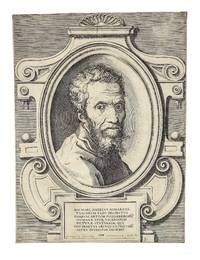
1564ref. 4839No place: no printer no date after 1564. SOLE STATE. Hardcover. Fine. Watermark unidentified partly obscured by the image. A good impression trimmed just within the image "Georgius Mantovanus Fecit" lightly written in ink next to Ghisi's monogram. Verso soiled early crease visible on verso only. With stippling still visible in the face but no visible ruling in the inscription. Early impressions are rich with sharp contrasts much stippling on the face and ruled guidelines for the letters of the inscription below. In late impressions the stippling has disappeared and the ruled lines are no longer visible. While partly obscured the watermark does not correspond to any of the three described and illustrated by Boorsch et al. p. 139. In the tablet beneath the portrait: "MICHAEL ANGELVS BONAROTA/ TVSCORVM FLOS DELIBATVS/ DVARVM ARTIVM PVLCHERRIMARVM/ HVMANAE VITAE VICARIARVM/PICTVRAE STATVARIAE QVE/ SVO PENITVS SAECVLO EXTINCTARVM / ALTER INVENTOR FACIEBAT" Trans. "Michelangelo Buonarroti the picked flower of the Tuscans in the two most beautiful imitative arts of human life painting and sculpture which perished altogether with his age. Another artist made it." Below this is Ghisi's monogram Georgius.Mantovanus.Fecit. "Only a few actual portraits were made of the great sculptor painter and architect Michelangelo 1475-1564. Ghisi's engraving is based on Marcello Venusti's version of a portrait painted by Jacopino del Conte. Both the original painting now in Casa Buonarroti Florence and Venusti's version of it Capitoline Museum Rome were made about 1545. "Ghisi's print shows Michelangelo at about seventy when the paintings of the Sistine Ceiling were more than thirty years behind him. He had recently finished The Last Judgment and he had accepted at the insistence of Pope Paul III the post of chief architect of St. Peter's. How Ghisi saw Venusti's portrait or a drawing after it is unknown but as Venusti had strong ties with Mantua and as Ghisi had probably used a drawing by Venusti for his engraving of The Last Judgment we can assume that there was an avenue of communication between the two artists. The ornamental frame in the print may well reproduce the one that held the painting. "Because the Rossi in the seventeenth century and then later the Calcografia Nazionale issued impressions from this plate with impressions from The Last Judgment d' Arco and subsequent Italian writers up to Massari have stated that the portrait is the frontispiece for The Last Judgment. Furthermore Pittaluga Rotili and Perina say that both the portrait and The Last Judgment were made in 1556. "The Last Judgment however is certainly earlier and the inscription on the plate of the Portrait seems to indicate that Michelangelo was dead when the engraving was made. His death occurred on February 18 1564. Further the style of this engraving supports the hypothesis that it was made in the mid-156os; certainly Ghisi's technique and style here are far more developed than in The Last Judgment. Finally the watermarks show that the paper on which the earliest impressions were printed was made in the north. In fact early impressions have the same watermarks as are found on early impressions of the engravings based on the ceiling paintings by Primaticcio. Like the plates for those engravings the plate for the Portrait of Michelangelo traveled to Italy and later impressions were printed on Italian paper. The plate itself never received a publisher's address although it is clear it was in the hands of the Rossi family before it passed to the Calcografia Nazionale."Boorsch Lewis and Lewis The Engravings of Giorgio Ghisi no. 39 p. 139-141. no printer, no date, after hardcover books
1550ref. 5044Rome: ca 1550. SECOND STATE of three with the addition of "Romae" incised at lower right. Hardcover. Fine. A very fine example with high contrast of this rare print. This is the first published engraving dedicated to Michelangelo's Moses and one of only two made in the 16th century. The funerary monument of Julius II occupied Michelangelo in various phases from 1505 to the 1540s. Prints of the entire monument are few. In them the figure of Moses is necessarily reduced in size and imperfectly executed. Later prints of the statue in isolation such as that by the Netherlandish artist Jacob Matham 1571-1631 in which the figure is shown in reverse fail to match the standard set by this early engraving. The inscription reads: Moysis ingens ex marmore simulacrum in Julij Secundi/ Pontificis Maximi ad petri in Exquilijs uincula sepulcro / præstanti Michaelis Angeli Bonarotae manu fictum. The immense marble statue of Moses in the Church of San Pietro in Vincoli on the Esquiline Hill sculpted by the hand of Michelangelo Buonarroti for the tomb of Pope Julius II. Michelangelo's design for the tomb of Pope Julius II with the master's iconic figure of Moses was originally intended for St. Peter's but was ultimately installed in the church of San Pietro in Vincoli in Rome. The work was commissioned by Pope Julius in 1505 at which time Michelangelo received an initial payment of 100 gold ducats but was not completed until March 1545. Michelangelo re-worked his initial design numerous times first in 1513 after Julius' death and again in 1516 1525/1526 1532 and 1542. The final monument includes three figures carved by Michelangelo: the aforementioned Moses and Leah and Rachel symbols respectively of the active and contemplative life. Michelangelo's sculptures of the dying and rebellious slaves now in the Louvre and the Genius of Victory Palazzo Vecchio Florence were not used in the final design. On the second tier of the monument as it stands is an effigy of the reclining Julius II attributed to Tommaso di Pietro Boscoli 1503-1574 but with the face possibly the work of Michelangelo watched over by the Madonna and Child carved by Alessandro Scherano di Settignano after a model by Michelangelo and flanked by a sibyl and a prophet; these last two sculptures were carved by Michelangelo's pupil Raffaello da Montelupo ca. 1504-ca. 1567. "The engraving reproduces accurately in the same direction and without substantial variations the sculpture of the tomb of Julius II identifying the light source at the top left. The work attributed by Bottari to Beatrizet Heinecken 1768 was treated as anonymous by Heinecken in the Nachrichten of 1768 but later included by him in the list of Beatrizet's works Dictionnaire 1788. Nagler recorded it both under the monogram of Cornelis Bos and as the work of Beatrizet. Appearing in the Hollstein repertoire as Bos it was subsequently treated among works of doubtful attribution both of Bos Schéle 1965 and of Beatrizet Bianchi 2004. "Due to the fact that copies of this print are found in volumes of Roman composition on the model of the Speculum Romanae Magnificentiae El Escorial; Madrid Biblioteca Nacional; both datable between the mid-1580s and the 1590s one would be led to believe that the plate was engraved in Rome where in the last decade of the 16th century it was acquired by Van Aelst. This does not however exclude Cornelis Bos as a possible author since more than one of his plates is known to bear a Roman address in late editions even if it makes it more likely -in our opinion- the identification with a Flemish engraver active in Italy. In the sparse and luminous texture and in the clean geometries one could also perceive the burin of Niccolò della Casa."Alberti Rovetta and Salsi "D'après Michelangelo"2015 p. 219 ff. ca hardcover books
1993ref. 310741New York: Random House 1993. Hardcover. xix 378p. preface introduction index very good first edition stated with Random House number line ending with 2 which indicated first printing as per Zempel & Verkler in quarter-cloth boards and unclipped dust jacket with a stained and torn front panel. Random House hardcover books
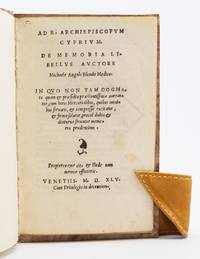
1545ref. ST19432bVenetiis Venice: Giovanni Antonio & Pietro Nicolini da Sabbio 1545. FIRST EDITION. 152 x 97 mm. 6 3 3/4". 20 leaves. Modern rose and cream-colored marbled paper boards. Verso of title page stamped in red ink: "Duplicate / ex-libris Bernard Zufall." Young "Bibliography of Memory" p. 34. ◆Paper boards lightly soiled negligible foxing to a couple of leaves but a fine copy clean and fresh in a sturdy binding. This rare work on the preservation of memory offers advice to those seeking to optimize their cognitive functions providing guidance about the best foods to eat and avoid the best days and times for recollection according to the planetary hours and most interestingly recipes to calm the mind and boost one's memory. This last section includes several formulas for various drams salves and confections that incorporate ingredients such as gingers cinnamon coriander and rosemary. The compact size of this work suggests that it was meant to be portable and consulted frequently; our copy however has obviously been very little used and consequentially is extremely well preserved. Italian physician and polymath Michelangelo Biondo or Blondus 1497-1565 was the author of at least two dozen works on a variety of subjects including art astronomy rhetoric medicine cognition and philosophy. The present copy comes from the library of magician and memory expert Bernard Zufall 1894-1971 known as the "Human Encyclopedia." Zufall amassed the largest known collection of books on mnemonics in excess of 1000 titles which except for duplicates like the present work he donated to Yale University. This appears to be a genuinely rare book: RBH records just one copy at auction selling at Lyon and Turnbull in 2015 for 1000 approximately $1640 all in. Giovanni Antonio & Pietro Nicolini da Sabbio unknown books
ref. 2354230New York: Reynal and Company in association with William Morrow and Company 1966. First Edition. Large Hardcover. Near Fine/Near Fine. 15x11x2. First edition. Spine leans forward slightly a couple tiny blemishes to edges. 1966 Large Hardcover. 597 pp. 32 plates in full color numerous black-and-white reproductions throughout. "Michelangelo di Lodovico Buonarroti Simoni March 6 1475 - February 18 1564 commonly known as Michelangelo was an Italian Renaissance painter sculptor architect poet and engineer. Despite making few forays beyond the arts his versatility in the disciplines he took up was of such a high order that he is often considered a contender for the title of the archetypal Renaissance man along with his rival and fellow Italian Leonardo da Vinci. Michelangelo's output in every field during his long life was prodigious; when the sheer volume of correspondence sketches and reminiscences that survive is also taken into account he is the best-documented artist of the 16th century. Two of his best-known works the Pieta and the David were sculpted before he turned thirty. Despite his low opinion of painting Michelangelo also created two of the most influential works in fresco in the history of Western art: the scenes from Genesis on the ceiling and The Last Judgment on the altar wall of the Sistine Chapel in Rome. Later in life he designed the dome of St. Peter's Basilica in the same city and revolutionised classical architecture with his use of the giant order of pilasters. In a demonstration of Michelangelo's unique standing he was the first Western artist whose biography was published while he was alive. Two biographies were published of him during his lifetime; One of them by Giorgio Vasari proposed that he was the pinnacle of all artistic achievement since the beginning of the Renaissance a viewpoint that continued to have currency in art history for centuries. In his lifetime he was also often called Il Divino 'the divine one'. One of the qualities most admired by his contemporaries was his terribilita a sense of awe-inspiring grandeur and it was the attempts of subsequent artists to imitate Michelangelo's impassioned and highly personal style that resulted in the next major movement in Western art after the High Renaissance Mannerism. Michelangelo was a profound perfectionist. If he found the tiniest flaw in one of his works he considered it ruined. Reynal and Company in association with William Morrow and Company hardcover books
ref. 2304492New York: Reynal and Company in association with William Morrow and Company 1966. First Edition. Large Hardcover. Near Fine/Very Good. 15x11x2. First edition. Near fine in very good jacket. Edge wear on jacket spine faded 1/2 inch closed tear on jacket corner. Binding tight and square pages clean bright and unmarked. 1966 Large Hardcover. 597 pp. 32 plates in full color numerous black-and-white reproductions throughout. "Michelangelo di Lodovico Buonarroti Simoni March 6 1475 - February 18 1564 commonly known as Michelangelo was an Italian Renaissance painter sculptor architect poet and engineer. Despite making few forays beyond the arts his versatility in the disciplines he took up was of such a high order that he is often considered a contender for the title of the archetypal Renaissance man along with his rival and fellow Italian Leonardo da Vinci. Michelangelo's output in every field during his long life was prodigious; when the sheer volume of correspondence sketches and reminiscences that survive is also taken into account he is the best-documented artist of the 16th century. Two of his best-known works the Pieta and the David were sculpted before he turned thirty. Despite his low opinion of painting Michelangelo also created two of the most influential works in fresco in the history of Western art: the scenes from Genesis on the ceiling and The Last Judgment on the altar wall of the Sistine Chapel in Rome. Later in life he designed the dome of St. Peter's Basilica in the same city and revolutionised classical architecture with his use of the giant order of pilasters. In a demonstration of Michelangelo's unique standing he was the first Western artist whose biography was published while he was alive. Two biographies were published of him during his lifetime; One of them by Giorgio Vasari proposed that he was the pinnacle of all artistic achievement since the beginning of the Renaissance a viewpoint that continued to have currency in art history for centuries. In his lifetime he was also often called Il Divino 'the divine one'. One of the qualities most admired by his contemporaries was his terribilita a sense of awe-inspiring grandeur and it was the attempts of subsequent artists to imitate Michelangelo's impassioned and highly personal style that resulted in the next major movement in Western art after the High Renaissance Mannerism. Michelangelo was a profound perfectionist. If he found the tiniest flaw in one of his works he considered it ruined. Reynal and Company in association with William Morrow and Company hardcover books
1863ref. 53056London: Bohn 1863. Hardcover. Fair. frontis portrait 14p. plus 60 plates. Cloth. 34cm. Moderate to heavy foxing. Hinges weak. Frontispiece & free endpaper detached. Shaken. Name and gift inscription on endpaper. The "Outlines" are line drawings of Michaelangelo's works. Bohn hardcover books
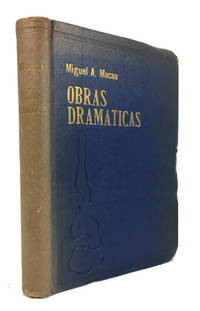
1950ref. 61003Mexico City: Editorial Latina 1950. Hardcover. Good. 184p. Thin blue hardcover binding. 19 cm. Backstrip faded and chipped. Text browned. No jacket. INSCRIBED in 1950 to Jose juan Arrom by Macau. Spanish text. Four plays. Editorial Latina hardcover books
1967ref. 76098Valladolid: Universidad de Valladolid 1967. Paperback. Very Good/Very Good. xiv 331p. Wrapper with dj. Spanish text. Universidad de Valladolid paperback books
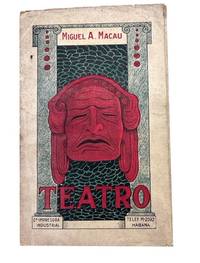
1924ref. 61002Habana: Compania Impresora Industrial 1924. Paperback. Fair. 179p. Softcover in original wrapper. 21 cm. Covers soiled and chipped. Front cover almost detached. Small stain at top of fore-edge. Contents sound. Spanish text. Four plays. Compania Impresora Industrial paperback books
2005ref. 18042Pomona CA: Kelly-Winterton Press 2005 One of 150 unnumbered copies. Patterned green and white paper wrappers. Paper spine label. Octavo. Title page in red and black. Fabriano paper. Calligraphic types designed by Robert Slimbach. Typography by Jerry Kelly. Tips slightly bent. A fine copy. John Addington Symonds Jr. 1840–1893 was an English poet critic and historian known for his biographies renaissance scholarship and in particular his attention to homosexuality in antiquity. Kelly-Winterton Press, books
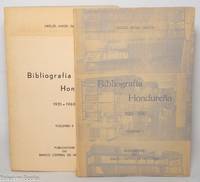
ref. 348835Tegucicalpa: Banco Central de Honduras. Paperback. 2 volumes 8 201 3 pages; 489 49 pages index paperback. Published in commemoration of Honduras's 150th year of independence from Spain. Banco Central de Honduras paperback books
1956ref. 337966Rome: Edizioni Mediterranee 1956. hardcover. very good/very good. Victor Carpaccio. 36 color plates. Unpaginated with text in Italian. Folio natural boards with red type boards and pages lightly foxed pictorial d.w. in worn original slipcase. Rome: Edizioni Mediterranee 1956. A very good copy in a very good dust wrapper. Edizioni Mediterranee unknown books
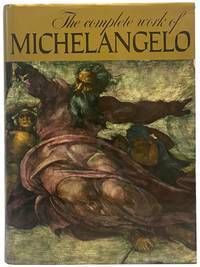
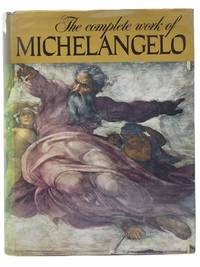
1965ref. NF2439THE COMPLETE WORK OF MICHELANGELO Reynal & Morrow 1965 first edition fine in near fine dust-wrapper with some light wear and tear to the upper margin of the rear dust-wrapper panel. 1040 gravure illustrations 32 plates in full color. Reynal & Morrow unknown books
1964ref. NF0663MICHELANGELO Abrams1964 first edition fine in fine dust-wrapper. The Library Of Great Painters Series. 133 reproductions with 48 tipped in color plates. Abrams unknown books
1942ref. 624450New York: Farrar & Rinehart 1942. Hardcover. Near Fine/Very Good. First American edition. Octavo. 277pp. A bit of toning to the pastedowns and some bumping at the spine ends near fine in very good dust jacket with some edge toning rubbing and moderate wear at the spine ends including crease tears and small chips. Author's first novel. Farrar & Rinehart hardcover books
1943ref. 345993Antigua Guatemala: Ediciones del Aire 1943. Pamphlet. 20 pages staplebound pamphlet. Staples a touch rusted. Covers soiled. Edition of 400 copies numbered 1543-1943 this one being 1865. Poem. Ediciones del Aire unknown books