CHAR, René - Salvador DaliLivre Rare Book

5518 risultati
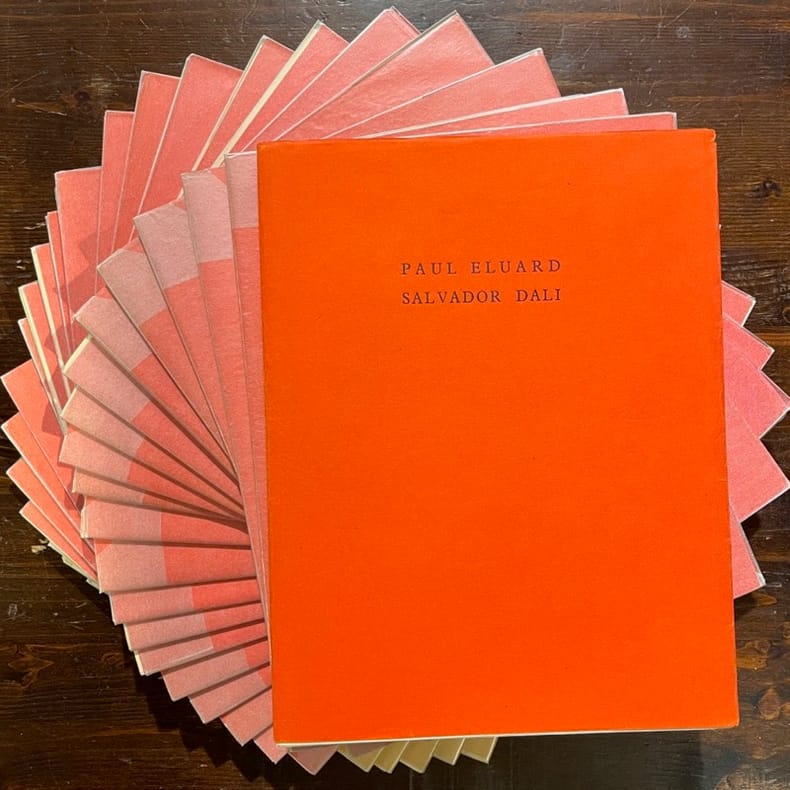
1930rif. 3884Paris, Éditions Surréalistes, Corti, 1930. Un volume petit-in-4 (235 x 185 mm), broché, couverture de papier rose imprimée. Édition originale tirée à 215 exemplaires. CELUI-CI L'UN DES 15 SUR INGRES VERT, ROSE ET BLEU AVEC UNE EAU-FORTE ORIGINALE DE SALVADOR DALI EN FRONTISPICE (N° 18). Seuls ces exemplaires et les 15 ex. de tête sur japon la contiennent. Le volume est signé au colopon par René Char. Bien complet du "Prière d'insérer" imprimé sur papier couché rouge. Artine est le second ouvrage comportant une gravure de Dali entré dans le groupe surréaliste en 1929. - ENGLISH DESCRIPTION: René CHAR. ARTINE. Paris, Éditions Surréalistes, Corti, 1930. A small quarto volume (235 x 185 mm), paperback, printed pink paper cover. First edition, limited to 215 copies. THIS IS ONE OF 15 COPIES ON GREEN, PINK, AND BLUE INGRES PAPER WITH AN ORIGINAL ETCHING BY SALVADOR DALI AS A FRONTISPIECE (No. 18). Only these copies and the 15 deluxe copies on Japanese paper contain it. The volume is signed in the colophon by René Char. Complete with the "Please Insert" printed on red coated paper. Artine is the second book to include an engraving by Dalí, who joined the Surrealist group in 1929. A perfectly preserved copy. References: Michler-Löpsinger, 3 - Cahiers de l'Herne, 20 - Monod, I-2603 - PAB, René Char, 4. Additional photographs available on request.
1477In-folio (300 x 200mm). 320 carte, grande iniziale in rosso di 26 linee, interamente rubricato. Legatura in pelle di scrofa coeva tedesca su assi di legno (Heilbronn), anticamente legato al pluteo, angoli e fermagli in metallo, borchie mancanti.
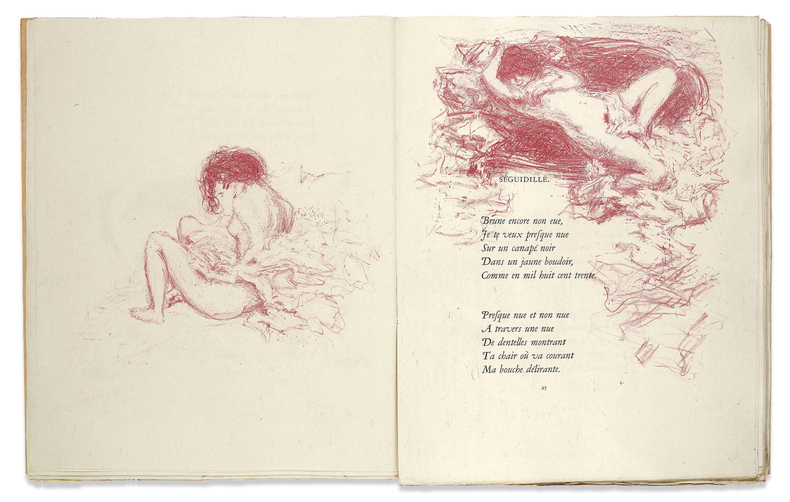
1900rif. 3912Un volume in-4°, broché, couverture imprimée illustrée d'une vignette de l'artiste . - 109 lithographies originales de Pierre Bonnard (1867-1947). Toutes les lithographies sont tirées en rose sanguine et disposées librement, transcrivant avec sensualité la poésie de Verlaine en forme et en couleurs ; il s’en dégage une profonde harmonie entre le texte et l’illustration. Élégamment imprimé en Garamond, comme le seront plus tard Les Fêtes galantes illustrées par Laprade, l’ouvrage marque le début de la grande aventure éditoriale d’Ambroise Vollard. Édition : 230 exemplaires numérotés sur Chine ou Hollande. - "Ceci n’est pas un traité de géométrie !" Il existe deux états de la couverture de Parallèlement : Vollard dut en effet remplacer la vignette de l'Imprimerie nationale à l’effigie de la République française par un dessin de Bonnard (ainsi notre exemplaire). Ce remaniement était intervenu à la suite d’une interpellation à la Chambre au sujet de la présence de l'effigie de la République sur un livre jugé « licencieux ». Une fois l’ouvrage imprimé, on s’était avisé que Parallèlement n'était pas un traité de géométrie… (Pierre Berès). Exemplaire numéroté sur vélin de Hollande, conservé broché, tel que paru et en excellent état de conservation.
1957rif. 190907Paris: Éditions Louise Leiris 1957. Signed limited edition number 96 of 100 copies signed by Picasso. Printed by Mourlot Paris this complete set of Picasso's 8 portraits of French novelist and playwright Honoré de Balzac is accompanied by text by French surealist writer Michel Leiris. In 1927 Picasso was commissioned by publisher Ambroise Vollard to do a series of illustrations for Balzac's novella Le Chef-d'uvre inconnu The Unknown Masterpiece. First published in 1831 in the newspaper L'Artiste under the title Maître Frenhofer Master Frenhofer the story tells of an obsessive painter who has toiled over his magnum opus for ten years. When he finally unveils the finished work his fellow artists fail to be impressed and Frenhofer driven mad by his masterpiece burns the artwork and kills himself later that night. Frenhofer's plight clearly resonated with artists. Cezanne supposedly once lamented "Frenhofer c'est moi!" However Picasso's obsession with the tale went one step further. He even claimed that he was being haunted by the ghost of Balzac and in 1937 chose the address believed to have been the setting of the opening scene of Le Chef-d'uvre inconnu to be his new studio. Ironically it was there that Picasso produced what is widely regarded to be his own chef-d'uvre Guernica. These eight portraits of Balzac created in 1952 and published five years later are testimony to Picasso's enduring obsession and deep admiration for the writer. 8 transfer lithographs on Velin d'Arches. Loose as issued in original beige cloth portfolio with ties and black lettering to spine. Some gentle toning and minor foxing to a few leaves mainly confined to the edges. Overall the prints are clean and bright in a very good portfolio. hardcover
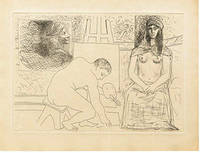
1969rif. 48574Barcelona.: Ediciones de la Cometa. 1969. Loose as issued in original publisher's printed wrappers and cloth-lined parchment-covered box. 2 vols. Folio. 470 x 370 mm or the reverse. Frontispiece engraving with burin signed in pencil by Picasso loose in paper portfolio as issued and Picasso's printed text illustrated with a further 12 original etchings by Picasso. Picasso's poetic and pictorial homage to El Greco and Velazquez.From the edition limited to 263 copies with this one of 220 examples with 12 original etchings together with an original etched frontispiece signed in pencil by Picasso.'From 1955 on the frequent visits of fellow Spaniards re-awakened Picasso's memories of Spain. In 1957 he began to write again in Spanish and he painted 'Las Meninas' after Velazquez. From January 6 1957 to August 20 1959 - the date of each text is meticulously noted - he wrote this dramatic poem and gave it the title of El Greco's masterpiece … Ten years later he suggested to Gustavo Gili a publisher in Barcelona that he should publish the piece. To illustrate it he chose 15 prints done between 1966 and 1967 … The prints depict fleshy women watched by a jealous cupid a male who is ferocious and ready for violence circus theatre and family scenes and the painter and his model. To these was added a burin engraving dated June 9 1939 in which a text in Spanish beginning 'Trozo de almíbar' 'bit of sirop' is enclosed by remarques.' Cramer.Cramer 146. Ediciones de la Cometa. hardcover
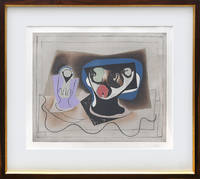
1972rif. 191744Paris: Atelier Crommelynck 1972. Printed at the Crommelynck workshop in Paris with its blind-stamp lower left. Unnumbered aside from the edition of 300. Aquatint in colours on Arches wove paper upper and lower edges deckled. Signed in pencil lower right by Picasso. Image size 49.8 x 60.4 cm. Sheet size: 64.1 x 83.8 cm. Framed size: 80 x 89.2 cm. Presented in a dark wood and gold leaf frame with conservation acrylic glazing. Soft creasing to margins hidden by the mount not affecting the image otherwise a bright impression. unknown
Im Jahr 1932 veröffentlichte Cahiers d'Art den ersten Band des Picasso-Katalogs, ein Projekt, das Christian Zervos gemeinsam mit Picasso erarbeitet hat. Die Neuausgabe des Werkverzeichnisses der Gemälde, Aquarelle und Zeichnungen wurde wissenschaftlich von der Picasso Administration auf den neuesten Stand der Forschung gebracht. Die Ausgabe ist in Englisch und Französisch lieferbar. - This new, revised editon includes corrections to the original catalogue prepared together with the Picasso Administration. With over 16000 black- and white illustrations. The new edition is available in French, and in English translation for the first time in its history.
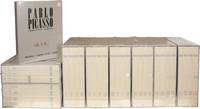
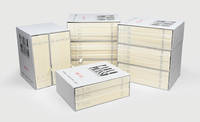
2014rif. 167067Paris: Cahiers d'Art 2014. Softcover. Revised Edition one of 1200 English language copies. Complete in 33 volumes. As New. Preceded in publication by the original French language editions published individually between 1932 and 1978 and the French language 33-volume set published in 1991. Catalogue raisonné published by Cahiers d'Art founder Christian Zervos in partnership with Picasso himself. Illustrated with over 16000 black-and-white images of Picasso's work. A monumental production. Fine and unread each volume in the original Near Fine glassine dust jacket. Housed in nine off-white linen slipcases as issued by the publisher. Still in publisher's shrinkwrap. Oversize set shipping billed at cost. Cahiers d'Art unknown
2014rif. 167067Paris: Cahiers d'Art 2014. Softcover. Revised Edition one of 1200 English language copies. Complete in 33 volumes. As New. Preceded in publication by the original French language editions published individually between 1932 and 1978 and the French language 33-volume set published in 1991. Catalogue raisonné published by Cahiers d'Art founder Christian Zervos in partnership with Picasso himself. Illustrated with over 16000 black-and-white images of Picasso's work. A monumental production. Fine and unread each volume in the original Near Fine glassine dust jacket. Housed in nine off-white linen slipcases as issued by the publisher. Still in publisher's shrinkwrap. Oversize set shipping billed at cost. Cahiers d'Art unknown books
1969rif. 902981969. PICASSO Pablo. El Entierro del Conde de Orgaz. Three volumes. 12 XI 1 69 7 pp. Illustrated with one signed engraving and 12 etchings by Picasso and a preface by Rafael Alberti. Folio 370 x 470 mm bound loose as issued in the original wrappers and vellum-covered slipcase. The whole preserved in a cloth folding box. Barcelona: Gustavo Gili and Ediciones de la Cometa 1969. A Spanish production in every sense in this Picasso book Picasso illustrated his own poetry based upon his life and youth in Andalucia. The title bears reference to the painting by El Greco an artist very much admired by Picasso. Picasso began this poem in 1957 during a period of renewed interest in his Spanish heritage. Included in the work is a facsimile of Picasso's original manuscript of the poem written in coloured pencils. To illustrate his autobiographical poetry the artist selected one of his engravings from 1939 and etchings finished between 1966 and 1967. Printed and published by the publishing house Gustavo Gili of Barcelona with a prologue-poem by Rafael Alberti El Entierro del Conde de Orgaz includes a total of thirteen Picasso etchings of circus scenes and allegorical images infused with eroticism all echoing the artist's Spanish homeland and influences therefrom. One of an edition of 263 copies on Romani wove. It is notable that the present publication was the subject of a single exhibition at the Fundacion Picasso "Pablo Ruiz Picasso: El Entierro del Conde de Orgaz" May 2004. Goeppert 146. Bloch 1465-1477. Johnson Artists' Books in the Modern Era 1870-2000 No. 92. hardcover
1969rif. 902981969. PICASSO Pablo. El Entierro del Conde de Orgaz. Three volumes. 12 XI 1 69 7 pp. Illustrated with one signed engraving and 12 etchings by Picasso and a preface by Rafael Alberti. Folio 370 x 470 mm bound loose as issued in the original wrappers and vellum-covered slipcase. The whole preserved in a cloth folding box. Barcelona: Gustavo Gili and Ediciones de la Cometa 1969. A Spanish production in every sense in this Picasso book Picasso illustrated his own poetry based upon his life and youth in Andalucia. The title bears reference to the painting by El Greco an artist very much admired by Picasso. Picasso began this poem in 1957 during a period of renewed interest in his Spanish heritage. Included in the work is a facsimile of Picasso's original manuscript of the poem written in coloured pencils. To illustrate his autobiographical poetry the artist selected one of his engravings from 1939 and etchings finished between 1966 and 1967. Printed and published by the publishing house Gustavo Gili of Barcelona with a prologue-poem by Rafael Alberti El Entierro del Conde de Orgaz includes a total of thirteen Picasso etchings of circus scenes and allegorical images infused with eroticism all echoing the artist's Spanish homeland and influences therefrom. One of an edition of 263 copies on Romani wove. It is notable that the present publication was the subject of a single exhibition at the Fundacion Picasso "Pablo Ruiz Picasso: El Entierro del Conde de Orgaz" May 2004. Goeppert 146. Bloch 1465-1477. Johnson Artists' Books in the Modern Era 1870-2000 No. 92. hardcover books
rif. 51-1019Paris: Ambroise Vollard 1931. 13 original etchings unbound as issued in a sleeve inside the bound book. One of 65 deluxe copies no. 10 on Imperial Japan paper signed by Picasso and Vollard. Only the deluxe copies on Japan paper were signed on the colophon by the artist and publisher. This copy without the second suite on Rives. Housed in a custom clamshell case encased throughout in three leathers by the celebrated binder Alexandr Mosalov. References : Cramer Pablo Picasso les livres illustrés n° 20 ;Bloch: 82-94; Livre no 19. Un des précieux exemplaires sur Japon sans la suite.In-4 228 x 250 mm. En feuilles sous chemise rempliée illustrée. Quelques défauts à la couverture dos et bords inférieurs du premier plat légèrement passés accident à la coiffe supérieure quelques taches coin inférieur du premier feuillet blanc coupé bords des planches de la suite très légèrement maculées sans atteinte aux gravures.13 eaux fortes originales hors texte dont la table des gravures et 67 dessins gravés sur bois de Pablo Picasso. Paris: Ambroise Vollard, 1931. hardcover
rif. 124157Paris Le Degré quarante et un 1968. . First edition one of 65 copies on vieux japon from a total edition of 75 this copy unnumbered but probably one of the XV hors-commerce copies 'réservés aux compagnons' signed by Iliazd in red pencil on the colophon and by nine of the artists on the upper flyleaf; oblong 4to 23.2 x 29 cm; illustrated with 13 drypoint engravings of which three are in colour from the following artists: Beaudin Bryen Derain Dunoyer de Segonzac Ernst Giacometti Magnelli Marcoussis Masson Miro Pascin Picasso and Survage; loose as issued in the publisher's vellum wrappers with title printed in black brown cloth chemise and slipcase with title in black to spine a fine copy. Signed by Iliazd and nine of the artists including Picasso Miro and Ernst. Signed by Iliazd and nine of the artists including Picasso Miro and Ernst. A wonderful example of this homage to the Parisian printer and publisher Roger Lacourière containing original etchings by thirteen artists who collaborated with him in his Montmartre atelier. Picasso not only contributed an etching but also a poem titled Aux quatre coins de la pièce which he had engraved on a copper plate. The original plate was lost and there was only one known impression. Through great skill Iliazd was able give to the poem in printed form the same aesthetic as the manuscript-engraving. This collaboration between Iliazd and Picasso is notably scarce due to its small edition. Our example is in the vellum wrappers with the title printed in black as opposed to the more common marbled parchment wrappers with the title printed in red. Paris, Le Degré quarante et un, 1968. hardcover
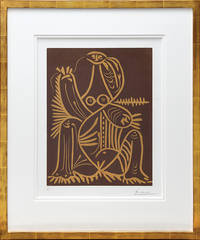
1962rif. 138061Vallauris: Unpublished 1962. No edition. One of 68 trial proofs of the first state in beige or ochre on black. Stamped Picasso signature lower right as issued marked "Gravure ineditée" in pencil lower left rubber stamp of Marina Picasso to verso. Printed by Arnéra Vallauris. Linocut in ochre over black on vélin d'Arches watermarked wove paper. Image size: 52.4 x 63.7 cm. Sheet size: 75.1 x 62.1 cm. Framed size: 84.3 x 94.3 cm. Light creasing to upper right corner light skinning to verso from previous hinging otherwise in very good condition. Presented in a handmade gold leaf frame with conservation acrylic glazing. Wofsy L-148; Baer 1327 I. unknown
1960rif. 48558Alès.: PAB. Pierre. André. Benoit. 1960. Loose as issued in original publisher's printed wrappers with flaps original drypoint engraving on celluloid 'Homme Grec Barbu' by Picasso to front cover original publisher's patterned paper-covered board chemise with title in black to spine and matching slipcase. Folio. 512 x 340 mm. Leaf with title leaf with Picasso's original drypoint engraving on celluloid as frontispiece leaf with Pindar's dedication in Greek two leaves with Pindar's verse in Greek original drypoint engraving recto leaf with translator's credit leaf with Pindar's dedication in French two leaves with Pindar's verse in French translated by Jean Beaufret leaf with original drypoint engraving and final leaf with justification and achevé d'imprimer. A superb example of this superb collaboration between Picasso and PAB.From the edition limited to 50 copies with this one of 44 signed and numbered in pencil on the justification by the publisher and artist; six copies numbered in Roman numerals as well as six hors commerce copies were also issued.Picasso's four original drypoint engravings are titled as follows: 'Homme Grec Barbu' for the front cover; 'Lutteur avec Lance et Bouclier'; 'Athlète de Face'; 'Athlète au Repos'.'Pindar's Eighth Pythian Ode was after Ovid's Metamorphoses 1931 and Aristophanes's Lysistrata 1934 the third and last text from classical antiquity which Picasso illustrated . At the request of P.A. Benoit Picasso executed four drypoints on celluloid for Pindar's text . The Eighth Pythian Ode was presented i.e. sung in 446 BC at Aegina in honour of a certain Aristomenes who had won the wrestling competition at the Pythian Games at Delphi. Pindar celebrates the youth's splendid victory but also mourns the transience of happiness and glory by evoking the sad fate of the defeated.' Patrick Cramer.Cramer 108; Baer 1077 - 1080. PAB. (P[ierre]. A[ndré]. B[enoit].). unknown
rif. 21202Paris, Guy Lévis Mano, 1935 - 1937. Collection Repères publiée entre juillet 1935 et août 1937 à Paris par Guy Lévis Mano. 25 volumes in-4 en feuilles sous couvertures vermillon ou jaune. Série complète en parfaite condition, sous chemise et étui.
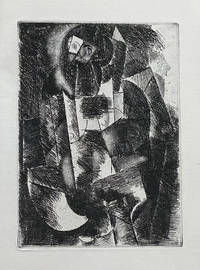
1914rif. N - 2024 - 115Max Jacob. Illustrated with three cubist etchings by Picasso in full page from 1913. Max Jacob three-act play reflect the author mystic quest and his research into the cabala and astrology Picasso completed the illustrations during the winter of 1913/14 making three etchings and dry points one for each act to which he gave the titles: Femme Nue plate 1 Nature Morte au Crâne plate 2 and Femme plate 3. This book is second illustrated book published by Daniel-Henry Kahnweiler created in collaboration with Picasso. Signed by the Picasso and Jacob in the justification page and marked as number "40" of 85 copies on "Holland van Gelder" total edition 106 copies. The book is complete in the original glassine light offsetting is present in the text page near the first illustration. Ref Cramer #3. Very good conditions. Daniel- Henry Kahnweiler, Editeur hardcover
1914rif. N - 2024 - 115Max Jacob. Illustrated with three cubist etchings by Picasso in full page from 1913. Max Jacob three-act play reflect the author mystic quest and his research into the cabala and astrology Picasso completed the illustrations during the winter of 1913/14 making three etchings and dry points one for each act to which he gave the titles: Femme Nue plate 1 Nature Morte au Crâne plate 2 and Femme plate 3. This book is second illustrated book published by Daniel-Henry Kahnweiler created in collaboration with Picasso. Signed by the Picasso and Jacob in the justification page and marked as number "40" of 85 copies on "Holland van Gelder" total edition 106 copies. The book is complete in the original glassine light offsetting is present in the text page near the first illustration. Ref Cramer #3. Very good conditions. Daniel- Henry Kahnweiler, Editeur hardcover books
rif. 120103Paris Le degré quarante et un 1940. . Limited edition number 42 of 50 copies from a total edition of 64 oblong 4to; signed in red by Iliazd and pencil by Picasso on the Russian justification page with 6 illustrations total: 2 aquatints and 4 engravings with burin on Montval wove à la cuve paper some minor foxing more so to some leaves text in Russian; attached with string unbound in wrappers reinforced with grey cardboard and a sheet of Montval paper some pages uncut title in black kufic lettering on the front; brown paper-covered slipcase a very good copy. One of 50 copies - signed by Iliazd and Picasso. The first of nine books Iliazd and Picasso collaborated on. All of them were published under the imprint of 'Degré Quarante et Un' a name Iliazd chose in memory of a school of futurist poetry called the 'University of the 41º' which he had founded in Tiflis in 1917. Afat is a collection of seventy-six classical sonnets in Russian written by Iliazd the majority of which were written between January and June 1938. In his poems Iliazd writes of love of feminine beauty of the poet's difficult métier and the hidden meaning of words. Three sonnets are about the poet's relationship to 'Pablo' Picasso.' Patrick Cramer. The sonnets are preceded by two Arabic titles in aquatint by Picasso both titles are written in kufic letters. The title Afat is a Persian term signifying unhappiness in love. The second title 'Madjusiya' means 'sorceress' and the illustrations Picasso produced were inspired by these two words. The first ten examples were reserved for close friends. Coco Chanel's copy number five included an extra sonnet dedicated to her. Paris, Le degré quarante et un, 1940. unknown
1962rif. 192114Paris: Editions Berggruen 1962. This print was issued with the deluxe edition of the book Diurnes with text by Jacques Prévert. Printed by Arnéra Vallauris. Edition of 100. Linocut in brown and tan on Vélin d'Arches watermarked paper. Signed in pencil lower right by Picasso numbered lower left. Image size 39 x 30 cm. Sheet size 54.5 x 43 cm. Framed size: 67.4 x 56.5 cm. Presented in a handmade gold leaf frame with conservation acrylic glazing. Tape residue from previous hinging to extreme top edge of verso otherwise in excellent condition. Bloch 1062; Baer 1276; Kramer 83. unknown
2013rif. 193398Paris: Cahiers d'Art 2013. The reference work for all of Picasso's paintings and drawings Revised and first English language edition number 207 of 1200 sets. Includes corrections to the original printing made in collaboration with the Picasso Administration. The most comprehensive catalogue raisonné on the works of Picasso the original volumes were prepared in partnership with Picasso himself and took Zervos over four decades to finish; the first volume published in 1932. 33 vols in 34. Original white stiff wrappers lettering to front covers and spines in black and red. With glassine dust jackets. All housed in the publisher's 9 grey linen slipcases. Illustrated with 16000 black and white images of paintings and drawings. A tear to the glassine of the spine of volume XXV otherwise a fine set. unknown
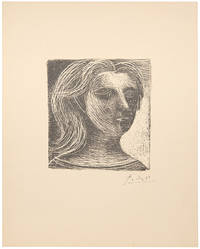
rif. 1120451925. . Lithograph 1925 on Japanese Imperial paper signed lower right an artist's proof gifted directly to Genevieve Laporte from Picasso's private collection aside from the edition of one hundred printed by Engelmann Paris published by D.H. Kahnweiler Galerie Simon Paris image: 12.7 x 11.8 cm. 5 x 4.6 in. sheet: 28 x 22.5 cm. 11 x 8.9 in. This work is a unique proof gifted to Geneviève Laporte 1926-2012 Picasso's lover during the 1950s. In 1951 Picasso and Laporte began an affair which lasted for two years and during which time the artist presented her with a number of his works. A poet and writer herself Laporte published her book 'Sunshine at Midnight: Memories of Picasso and Cocteau' in 1973. While Pablo Picasso never claimed to be a Surrealist his earlier Cubist works certainly laid the groundwork for such a movement to exist. By the time André Breton's 'Surrealist Manifesto' was published in 1924 Picasso was creating art with a similar surrealist style. The present work demonstrates Picasso's ceaseless desire to present an alternative to realism. The artist challenges our perception of portraiture and reality by capturing the woman's face in a simultaneous profile and frontal-facing perspective. As the viewer our eyes delight in the challenge to understand this surreal vision of a multifaceted woman made up of elegant curving intersecting lines. Bloch 73; Baer 240; Mourlot XX; Cramer Books 14 1925. unknown
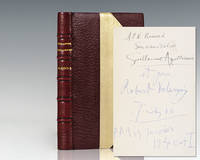
1913rif. 128083Paris: Mercure de France 1913. First edition of Apollinaire's first collection of poems signed by him and Pablo Picasso. Octavo bound in three quarter morocco with gilt titles and raised bands to the spine patterned endpapers frontispiece portrait of the poet by Pablo Picasso. Association copy inscribed by both Apollinaire and Pablo Picasso on front free endpaper "A A P.N. Roinard son admirateur Guillaume Apollinaire" and "et pour Robert Valançay Picasso Paris Janvier 1940 et I." Apollinaire has also made five corrections to the text in ink on pages 71 77 92 110 and 189. The recipient of Apollinaire's inscription Paul-Napoléon Roinard was a French libertarian painter and poet whom Apollinaire befriended in 1903 and considered "one of the most powerful precursors of the new poetry." Apollinaire dedicated his poem Le Brasier included in the present volume on p. 129 to Roinard. The recipient of Picasso's inscription Robert Valançay was a poet translator and literary critic who worked with and admired many of the artists and poets of the surrealist group. He published two major volumes of poetry but was most appreciated and sought after for his translations. He was considered the official translator of Max Ernst and Hans Arp. In near fine condition. Original wrappers bound in. A remarkable association copy linking four major figures of the literary and artistic avant-gardes of the 20th century. French poet playwright short story writer novelist and art critic Guillaume Apollinaire is considered one of the foremost poets of the early 20th century as well as one of the most impassioned defenders of Cubism and a forefather of Surrealism. At the turn of the 20th century he became one of the most popular members of the artistic community of Paris both in Montmartre and Montparnasse. His friends and collaborators in that period included Pablo Picasso Henri Rousseau Gertrude Stein Max Jacob André Salmon André Breton André Derain Faik Konitza Blaise Cendrars Giuseppe Ungaretti Pierre Reverdy Alexandra Exter Jean Cocteau Erik Satie Ossip Zadkine Marc Chagall Marcel Duchamp and Jean Metzinger. He is credited with coining the term "Cubism" in 1911 to describe the emerging art movement the term Orphism in 1912 and the term "Surrealism" in 1917 to describe the works of Erik Satie. Mercure de France hardcover
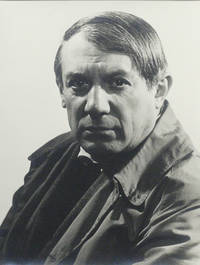
1932rif. 2650Paris: np 1932. Fine. MAN RAY CAPTURES PICASSO'S ESSENCE IN LEGENDARY PORTRAIT. AN ICONIC PHOTOGRAPH WITH IMPORTANT PROVENANCE: From the famous Sotheby's sale of 1995 of items from the "Estate of Juliet Man Ray The Man Ray Trust and the Family of Juliet Man Ray". The son of Russian-Jewish immigrants Emmanuel "Manny" Radnitzky 1890-1976 grew up in Brooklyn New York. He displayed creative abilities from a young age and studied to be a painter. He adopted "Man Ray" as his pseudonym and in 1915 formed the New York group of Dada artists with Marcel Duchamp. In the 1920s and 1930s Paris was the destination for the international avant-garde offering an exceptional number of galleries art dealers and wealthy patrons who promised artistic freedom. Man Ray sailed to the "City of Light" in 1921 joined Parisian Dada and Surrealist circles and became intimate associates with Pablo Picasso Max Ernst and other leading artists. He pursued fashion and portrait photography creating a pantheon of the city's cultural life. "As a photographer I was in demand" Ray explained to John Bainbridge a writer at The New Yorker. "I was like a doctor. Everybody needed me." Bolz To be photographed by Man Ray meant you had made it in the Parisian art world. Ray often said that Old Masters especially Hans Holbein the Younger Rembrandt and Vermeer inspired his portraits. "I. admired the respect with which they treated the proportions of human features" he wrote in an article published in Modern Photography magazine in November 1957. He also made considerable technological advancements in the field by creating "rayographs" photographic images composed of ordinary objects placed on photo sensitive paper exposed to light and developing solarization the process of tone reversal observed in cases of extreme overexposure. "I photograph the things that I do not wish to paint the things which already have an existence" Ray said. Schwarz 10 Ray sought to create a sense of drama and mystery believing that his photography could transcend the mechanical nature of a camera. When photographing his friends and colleagues Ray's emotional and psychological insights allowed him to expose the soul of each subject. One such subject and friend was Pablo Picasso. Man Ray and Picasso met in 1921 in Paris. They became friends through their connection to Surrealism spending holidays together and collaborating on creative pursuits. In his autobiography Man Ray described Picasso: "He gave me the impression of a man who was aware of all that was going on about him and in the world in general a man who reacted violently to all impacts but had only one outlet to express his feelings: painting." Man Ray 177 The intensity and awareness that Man Ray described is masterfully captured in his portraits of the painter. This photo we have on offer is from Man Ray's renowned series of Picasso portraits and coincided with the publication of the first volume of Picasso's catalogue raisonné reflecting the critical position Picasso's work occupied in the French artistic establishment. In this almost sculptural photograph from 1932 Man Ray unusually presented Picasso in an open trench coat over his jacket and tie. Picasso's dark hair is slicked down and his smooth face looks directly into the camera. Ray used light on the outlines of Picasso's face to create a contemplative image that showed him as a dark and shadowy figure juxtaposed against the light background. Picasso's riveting gaze also conveys a reflective and sober mood. This print has the Man Ray stamps M28 and M30 on the reverse and was lot 348 from the sale of the "Estate of Juliet Man Ray The Man Ray Trust and the Family of Juliet Man Ray" Sotheby's March 22 and 23 1995. Man Ray and Picasso remained close confidantes after this collaboration and during the summer of 1937 Man Ray filmed his friends including Pablo Picasso during a trip to the French Riviera. The result was On the French Riviera with Man Ray and Picasso a documentary film which portrayed the friendship of Picasso and Ray at the center of a close-knit community of artists. German occupation led Ray to leave Paris for the United States in 1940. He lived and worked in New York and Los Angeles returning to Paris in 1951 and resuming his friendship with Picasso and other artists. Ray died in Paris in 1976 yet his creativity and innovative techniques which demonstrate the distinctive cultural landscape of Paris during the interwar period had a substantial influence on contemporary art. Contributing to magazines like Vogue Vanity Fair and Harper's Bazaar he paved the way for Richard Avedon Annie Leibovitz and other artistic photographers. Ray achieved international recognition for his photography which he elevated to an art form. On May 14 2022 Man Ray's Le Violon d'Ingres 1924 sold for $12.4 million setting a new world record as the most expensive photograph ever sold at auction. He was a masterful portraitist renowned for capturing the essence of his subject's personality and mood. This collaboration between two of the most prolific creative and eclectic artists of the twentieth century had truly spectacular results. Provenance: Sotheby's London 22nd and 23rd March 1995 Lot 348: "Property of the Estate of Juliet Man Ray The Man Ray Trust and the Family of Juliet Man Ray." Image/Print Size: 9 x 11 3/4 in. Elegantly framed with wooden frame under UV-protecting museum glass to an overall size of 20 ½ x 24 ½ inches. Paris: 1932; printed later. Silver print. With Man Ray stamps on reverse: M28 and M30 - 'Man Ray 31 bis Rue Campagne Première Paris XIVe' and the copyright stamp ADAGP. Fine condition. References: Diane M. Bolz. "Visual Moment: Man Ray in Paris." Moment Magazine. Winter Issue 2022. The Editors of Encyclopaedia Britannica. "Man Ray." Encyclopedia Britannica. 14 Nov. 2022. Arthur Lubow. Man Ray: The Artist and His Shadows. New Haven: Yale University Press 2021. Man Ray. Photographs by Man Ray: 1920 Paris 1934. Hartford: James Thrall Soby 1934. Man Ray. Self Portrait. London: Bloomsbury 1988. Man Ray and Jean-Hubert Martin. Man Ray Photographs. London: Thames and Hudson 1982. Arturo Schwarz. Man Ray: The Rigour of Imagination. London: Thames and Hudson 1977. Slate Photo. "Man Ray's Portraits." Slate Magazine. February 6 2013. Alden Whitman. "Man Ray is Dead in Paris at 86; Dadaist Painter and Photographer." The New York Times. November 19 1976. np unknown
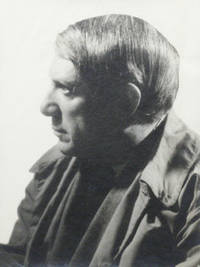
1932rif. 2651Paris: np 1932. Fine. MAN RAY CAPTURES PICASSO'S ESSENCE IN LEGENDARY PORTRAIT. AN ICONIC PHOTOGRAPH WITH IMPORTANT PROVENANCE: From the famous Sotheby's sale of 1995 of items from the "Estate of Juliet Man Ray The Man Ray Trust and the Family of Juliet Man Ray". The son of Russian-Jewish immigrants Emmanuel "Manny" Radnitzky 1890-1976 grew up in Brooklyn New York. He displayed creative abilities from a young age and studied to be a painter. He adopted "Man Ray" as his pseudonym and in 1915 formed the New York group of Dada artists with Marcel Duchamp. In the 1920s and 1930s Paris was the destination for the international avant-garde offering an exceptional number of galleries art dealers and wealthy patrons who promised artistic freedom. Man Ray sailed to the "City of Light" in 1921 joined Parisian Dada and Surrealist circles and became intimate associates with Pablo Picasso Max Ernst and other leading artists. He pursued fashion and portrait photography creating a pantheon of the city's cultural life. "As a photographer I was in demand" Ray explained to John Bainbridge a writer at The New Yorker. "I was like a doctor. Everybody needed me." Bolz To be photographed by Man Ray meant you had made it in the Parisian art world. Ray often said that Old Masters especially Hans Holbein the Younger Rembrandt and Vermeer inspired his portraits. "I. admired the respect with which they treated the proportions of human features" he wrote in an article published in Modern Photography magazine in November 1957. He also made considerable technological advancements in the field by creating "rayographs" photographic images composed of ordinary objects placed on photo sensitive paper exposed to light and developing solarization the process of tone reversal observed in cases of extreme overexposure. "I photograph the things that I do not wish to paint the things which already have an existence" Ray said. Schwarz 10 Ray sought to create a sense of drama and mystery believing that his photography could transcend the mechanical nature of a camera. When photographing his friends and colleagues Ray's emotional and psychological insights allowed him to expose the soul of each subject. One such subject and friend was Pablo Picasso. Man Ray and Picasso met in 1921 in Paris. They became friends through their connection to Surrealism spending holidays together and collaborating on creative pursuits. In his autobiography Man Ray described Picasso: "He gave me the impression of a man who was aware of all that was going on about him and in the world in general a man who reacted violently to all impacts but had only one outlet to express his feelings: painting." Man Ray 177 The intensity and awareness that Man Ray described is masterfully captured in his portraits of the painter. This photo we have on offer is from Man Ray's renowned series of Picasso portraits and coincided with the publication of the first volume of Picasso's catalogue raisonné reflecting the critical position Picasso's work occupied in the French artistic establishment. In this monumental photograph from 1932 Man Ray unusually presented Picasso in an open trench coat over his jacket and tie. Choosing to shoot this portrait in profile he captured Picasso's pensive expression. Ray used a bold lighting effect and an unadorned background so as not to detract from the subject. Picasso is slightly out-of-focus creating a subtle softness. The print is also on thin tissue-like paper creating texture and depth. Man Ray was famous for experimenting with different types of paper for his prints. This 1932 Portrait of Picasso was selected for Man Ray's seminal 1934 album which included his most important photographs. This print has the Man Ray stamps M28 and M30 on the reverse and was lot 487 from the sale of the "Estate of Juliet Man Ray The Man Ray Trust and the Family of Juliet Man Ray" Sotheby's March 22 and 23 1995. Man Ray and Picasso remained close confidantes after this collaboration and during the summer of 1937 Man Ray filmed his friends including Pablo Picasso during a trip to the French Riviera. The result was On the French Riviera with Man Ray and Picasso a documentary film which portrayed the friendship of Picasso and Ray at the center of a close-knit community of artists. German occupation led Ray to leave Paris for the United States in 1940. He lived and worked in New York and Los Angeles returning to Paris in 1951 and resuming his friendship with Picasso and other artists. Ray died in Paris in 1976 yet his creativity and innovative techniques which demonstrate the distinctive cultural landscape of Paris during the interwar period had a substantial influence on contemporary art. Contributing to magazines like Vogue Vanity Fair and Harper's Bazaar he paved the way for Richard Avedon Annie Leibovitz and other artistic photographers. Ray achieved international recognition for his photography which he elevated to an art form. On May 14 2022 Man Ray's Le Violon d'Ingres 1924 sold for $12.4 million setting a new world record as the most expensive photograph ever sold at auction. He was a masterful portraitist renowned for capturing the essence of his subject's personality and mood. This collaboration between two of the most prolific creative and eclectic artists of the twentieth century had truly spectacular results. Provenance: Sotheby's London 22nd and 23rd March 1995 Lot 487: "Property of the Estate of Juliet Man Ray The Man Ray Trust and the Family of Juliet Man Ray." Image/Print Size: 6 3/4 x 9 3/8 in. Elegantly framed with wooden frame under UV-protecting museum glass to an overall size of 20 ½ x 24 ½ inches. Paris: 1932; printed later. Silver print on thin paper. With Man Ray stamps on reverse: M28 and M30 - 'Man Ray 31 bis Rue Campagne Première Paris XIVe' and with the copyright stamp ADAGP. Fine condition. References: Diane M. Bolz. "Visual Moment: Man Ray in Paris." Moment Magazine. Winter Issue 2022. The Editors of Encyclopaedia Britannica. "Man Ray." Encyclopedia Britannica. 14 Nov. 2022. Arthur Lubow. Man Ray: The Artist and His Shadows. New Haven: Yale University Press 2021. Man Ray. Photographs by Man Ray: 1920 Paris 1934. Hartford: James Thrall Soby 1934. Man Ray. Self Portrait. London: Bloomsbury 1988. Man Ray and Jean-Hubert Martin. Man Ray Photographs. London: Thames and Hudson 1982. Arturo Schwarz. Man Ray: The Rigour of Imagination. London: Thames and Hudson 1977. Slate Photo. "Man Ray's Portraits." Slate Magazine. February 6 2013. Alden Whitman. "Man Ray is Dead in Paris at 86; Dadaist Painter and Photographer." The New York Times. November 19 1976. np unknown