Reinhardt, Brigitte (Hrsg.) und Pablo (Ill.) PicassoAntiquariat.de
5 576 résultats
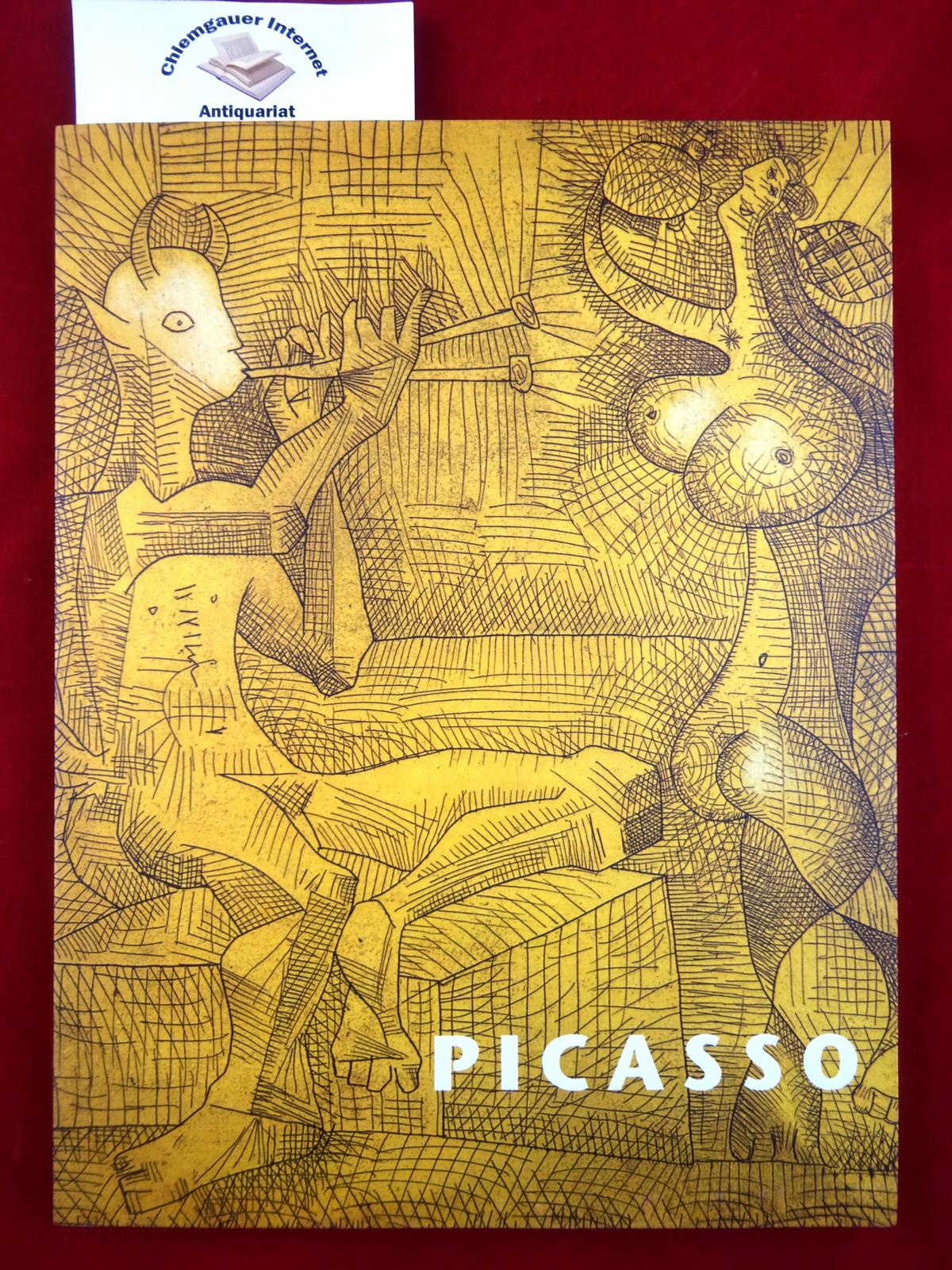
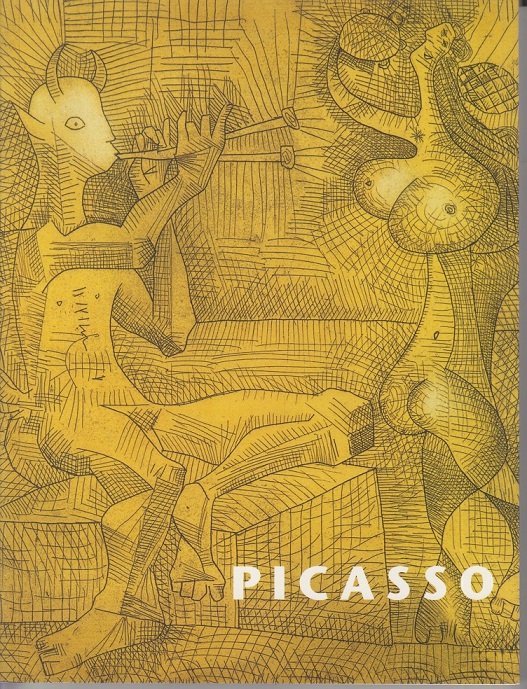
1994réf. 74645Ulm : Ulmer Museum, 1994. 125 S. : überw. Ill. 4°, Broschiert
1994réf. 284481Ostfildern : Cantz, [1994]. 125 Seitn. Mit zahlreichen farbigen Abbildungen. 28 cm Originalbroschur.
1994réf. 22152Ostfildern : Cantz, 1994. 1. Aufl. 125 S., mit vielen Abb. 4°, OPp, schöner Zust.
réf. Q22A-06352Abbeville Pr. Used - Good. Good condition. A copy that has been read but remains intact. May contain markings such as bookplates stamps limited notes and highlighting or a few light stains. Abbeville Pr unknown
1990Catalogue de l'exposition présentée en 1990-1991 aux Galeries nationales du Grand Palais (Paris), organisée par la Réunion des musées nationaux: 47 peintures, 2 sculptures, 40 dessins, 24 carnets, 245 estampes, 19 céramiques, et papier collé de Georges Braque, avec notices, commentaires et illustrations en noir et en couleurs et notes bibliographiques; introduction de Gérard REGNIER, commissaire général; expositions et affectations. Exemplaire enrichi du dossier de presse, pochette de 18 feuilles, pour l'essentiel tirés à part d'une documentation issue de l'ouvrage: renseignements pratiques sur l'exposition, préface du catalogue, définition juridique d'une dation (absente de l'ouvrage), Jacqueline Picasso et présentation de cette nouvelle dation, sa répartition, présentations des peintures, sculptures, dessins, carnets, céramiques, estampes et du papier collé de Georges Braque, liste des oeuvres classée par lieu d'affectation, repères biographiques, listes des photos de presse et de 12 films sur Picasso (absentes de l'ouvrage). Français
1990réf. 17671Paris, Réunion des musées nationaux, 1990 1 volume 21,5 x 27cm Broché sous couverture au 1er plat illustré couleurs. 298p., 1feuillet; très nombreuses illustrations en noir et en couleurs, vignettes et pleines pages + pochette de 18 feuilles. Volume en très bon état; petite déchirure au dos du dossier.
réf. 61005Numéro entièrement consacré à l'Espagne - 15e année - n° 36 - 12 avril 1946 - nouvelle série - revue illustrée - in-4 broché
1953réf. 214526Switzerland: Skira 1953. First edition. Small hardcover. 135 pages. Features text by Maurice Raynal translated by James Emmons. Includes numerous tipped in color plates chronological survey bibliography list of previous exhibitions indext of names and contents. A near fine copy in cloth boards with a small bookstore sticker to the front free endpaper and with the small ownership signature of Pulitzer Prize winning poet Frank Bidart and in a near fine dust jacket. A very nice copy with an interesting provenance. Skira unknown books
1953Genève, Skira, 1953, 16mo legatura editoriale tutta tela con sovraccopertina illustrata a colori, pp. 135 con numerosissime tavole a colori applicate alla pagina.
1953in 16° quadrotto, pp. 135, 1, p/tela editoriale color panna con tit. rossi, sovracop. ill. e custodia in cartoncino. Collana: Le Gout de Notre Temps diretta da A. Skira; ottima monografia con m. belle ill. a colori applicate. Strappetti riparati alla sovracop. 369/30
1966pp. 140 con num. e belle. ill. a col. applicate. Ottima monografia scritta da un amico intimo del grande artista spagnolo.
1925réf. 79936Paris: Grasset 1925. Fine. Grasset Paris 1925 12 x 19 cm broché Edition with some parts in first edition one of 1100 numbered copies on pure thread paper. Work illustrated with a portrait of the author by Pablo Picasso. Spine with a very slight lack at foot. Grasset unknown
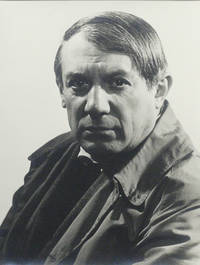
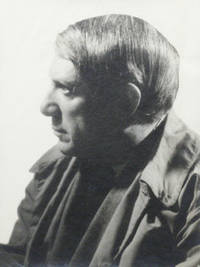
1932réf. 2650Paris: np 1932. Fine. MAN RAY CAPTURES PICASSO'S ESSENCE IN LEGENDARY PORTRAIT. AN ICONIC PHOTOGRAPH WITH IMPORTANT PROVENANCE: From the famous Sotheby's sale of 1995 of items from the "Estate of Juliet Man Ray The Man Ray Trust and the Family of Juliet Man Ray". The son of Russian-Jewish immigrants Emmanuel "Manny" Radnitzky 1890-1976 grew up in Brooklyn New York. He displayed creative abilities from a young age and studied to be a painter. He adopted "Man Ray" as his pseudonym and in 1915 formed the New York group of Dada artists with Marcel Duchamp. In the 1920s and 1930s Paris was the destination for the international avant-garde offering an exceptional number of galleries art dealers and wealthy patrons who promised artistic freedom. Man Ray sailed to the "City of Light" in 1921 joined Parisian Dada and Surrealist circles and became intimate associates with Pablo Picasso Max Ernst and other leading artists. He pursued fashion and portrait photography creating a pantheon of the city's cultural life. "As a photographer I was in demand" Ray explained to John Bainbridge a writer at The New Yorker. "I was like a doctor. Everybody needed me." Bolz To be photographed by Man Ray meant you had made it in the Parisian art world. Ray often said that Old Masters especially Hans Holbein the Younger Rembrandt and Vermeer inspired his portraits. "I. admired the respect with which they treated the proportions of human features" he wrote in an article published in Modern Photography magazine in November 1957. He also made considerable technological advancements in the field by creating "rayographs" photographic images composed of ordinary objects placed on photo sensitive paper exposed to light and developing solarization the process of tone reversal observed in cases of extreme overexposure. "I photograph the things that I do not wish to paint the things which already have an existence" Ray said. Schwarz 10 Ray sought to create a sense of drama and mystery believing that his photography could transcend the mechanical nature of a camera. When photographing his friends and colleagues Ray's emotional and psychological insights allowed him to expose the soul of each subject. One such subject and friend was Pablo Picasso. Man Ray and Picasso met in 1921 in Paris. They became friends through their connection to Surrealism spending holidays together and collaborating on creative pursuits. In his autobiography Man Ray described Picasso: "He gave me the impression of a man who was aware of all that was going on about him and in the world in general a man who reacted violently to all impacts but had only one outlet to express his feelings: painting." Man Ray 177 The intensity and awareness that Man Ray described is masterfully captured in his portraits of the painter. This photo we have on offer is from Man Ray's renowned series of Picasso portraits and coincided with the publication of the first volume of Picasso's catalogue raisonné reflecting the critical position Picasso's work occupied in the French artistic establishment. In this almost sculptural photograph from 1932 Man Ray unusually presented Picasso in an open trench coat over his jacket and tie. Picasso's dark hair is slicked down and his smooth face looks directly into the camera. Ray used light on the outlines of Picasso's face to create a contemplative image that showed him as a dark and shadowy figure juxtaposed against the light background. Picasso's riveting gaze also conveys a reflective and sober mood. This print has the Man Ray stamps M28 and M30 on the reverse and was lot 348 from the sale of the "Estate of Juliet Man Ray The Man Ray Trust and the Family of Juliet Man Ray" Sotheby's March 22 and 23 1995. Man Ray and Picasso remained close confidantes after this collaboration and during the summer of 1937 Man Ray filmed his friends including Pablo Picasso during a trip to the French Riviera. The result was On the French Riviera with Man Ray and Picasso a documentary film which portrayed the friendship of Picasso and Ray at the center of a close-knit community of artists. German occupation led Ray to leave Paris for the United States in 1940. He lived and worked in New York and Los Angeles returning to Paris in 1951 and resuming his friendship with Picasso and other artists. Ray died in Paris in 1976 yet his creativity and innovative techniques which demonstrate the distinctive cultural landscape of Paris during the interwar period had a substantial influence on contemporary art. Contributing to magazines like Vogue Vanity Fair and Harper's Bazaar he paved the way for Richard Avedon Annie Leibovitz and other artistic photographers. Ray achieved international recognition for his photography which he elevated to an art form. On May 14 2022 Man Ray's Le Violon d'Ingres 1924 sold for $12.4 million setting a new world record as the most expensive photograph ever sold at auction. He was a masterful portraitist renowned for capturing the essence of his subject's personality and mood. This collaboration between two of the most prolific creative and eclectic artists of the twentieth century had truly spectacular results. Provenance: Sotheby's London 22nd and 23rd March 1995 Lot 348: "Property of the Estate of Juliet Man Ray The Man Ray Trust and the Family of Juliet Man Ray." Image/Print Size: 9 x 11 3/4 in. Elegantly framed with wooden frame under UV-protecting museum glass to an overall size of 20 ½ x 24 ½ inches. Paris: 1932; printed later. Silver print. With Man Ray stamps on reverse: M28 and M30 - 'Man Ray 31 bis Rue Campagne Première Paris XIVe' and the copyright stamp ADAGP. Fine condition. References: Diane M. Bolz. "Visual Moment: Man Ray in Paris." Moment Magazine. Winter Issue 2022. The Editors of Encyclopaedia Britannica. "Man Ray." Encyclopedia Britannica. 14 Nov. 2022. Arthur Lubow. Man Ray: The Artist and His Shadows. New Haven: Yale University Press 2021. Man Ray. Photographs by Man Ray: 1920 Paris 1934. Hartford: James Thrall Soby 1934. Man Ray. Self Portrait. London: Bloomsbury 1988. Man Ray and Jean-Hubert Martin. Man Ray Photographs. London: Thames and Hudson 1982. Arturo Schwarz. Man Ray: The Rigour of Imagination. London: Thames and Hudson 1977. Slate Photo. "Man Ray's Portraits." Slate Magazine. February 6 2013. Alden Whitman. "Man Ray is Dead in Paris at 86; Dadaist Painter and Photographer." The New York Times. November 19 1976. np unknown books
1932réf. 2651Paris: np 1932. Fine. MAN RAY CAPTURES PICASSO'S ESSENCE IN LEGENDARY PORTRAIT. AN ICONIC PHOTOGRAPH WITH IMPORTANT PROVENANCE: From the famous Sotheby's sale of 1995 of items from the "Estate of Juliet Man Ray The Man Ray Trust and the Family of Juliet Man Ray". The son of Russian-Jewish immigrants Emmanuel "Manny" Radnitzky 1890-1976 grew up in Brooklyn New York. He displayed creative abilities from a young age and studied to be a painter. He adopted "Man Ray" as his pseudonym and in 1915 formed the New York group of Dada artists with Marcel Duchamp. In the 1920s and 1930s Paris was the destination for the international avant-garde offering an exceptional number of galleries art dealers and wealthy patrons who promised artistic freedom. Man Ray sailed to the "City of Light" in 1921 joined Parisian Dada and Surrealist circles and became intimate associates with Pablo Picasso Max Ernst and other leading artists. He pursued fashion and portrait photography creating a pantheon of the city's cultural life. "As a photographer I was in demand" Ray explained to John Bainbridge a writer at The New Yorker. "I was like a doctor. Everybody needed me." Bolz To be photographed by Man Ray meant you had made it in the Parisian art world. Ray often said that Old Masters especially Hans Holbein the Younger Rembrandt and Vermeer inspired his portraits. "I. admired the respect with which they treated the proportions of human features" he wrote in an article published in Modern Photography magazine in November 1957. He also made considerable technological advancements in the field by creating "rayographs" photographic images composed of ordinary objects placed on photo sensitive paper exposed to light and developing solarization the process of tone reversal observed in cases of extreme overexposure. "I photograph the things that I do not wish to paint the things which already have an existence" Ray said. Schwarz 10 Ray sought to create a sense of drama and mystery believing that his photography could transcend the mechanical nature of a camera. When photographing his friends and colleagues Ray's emotional and psychological insights allowed him to expose the soul of each subject. One such subject and friend was Pablo Picasso. Man Ray and Picasso met in 1921 in Paris. They became friends through their connection to Surrealism spending holidays together and collaborating on creative pursuits. In his autobiography Man Ray described Picasso: "He gave me the impression of a man who was aware of all that was going on about him and in the world in general a man who reacted violently to all impacts but had only one outlet to express his feelings: painting." Man Ray 177 The intensity and awareness that Man Ray described is masterfully captured in his portraits of the painter. This photo we have on offer is from Man Ray's renowned series of Picasso portraits and coincided with the publication of the first volume of Picasso's catalogue raisonné reflecting the critical position Picasso's work occupied in the French artistic establishment. In this monumental photograph from 1932 Man Ray unusually presented Picasso in an open trench coat over his jacket and tie. Choosing to shoot this portrait in profile he captured Picasso's pensive expression. Ray used a bold lighting effect and an unadorned background so as not to detract from the subject. Picasso is slightly out-of-focus creating a subtle softness. The print is also on thin tissue-like paper creating texture and depth. Man Ray was famous for experimenting with different types of paper for his prints. This 1932 Portrait of Picasso was selected for Man Ray's seminal 1934 album which included his most important photographs. This print has the Man Ray stamps M28 and M30 on the reverse and was lot 487 from the sale of the "Estate of Juliet Man Ray The Man Ray Trust and the Family of Juliet Man Ray" Sotheby's March 22 and 23 1995. Man Ray and Picasso remained close confidantes after this collaboration and during the summer of 1937 Man Ray filmed his friends including Pablo Picasso during a trip to the French Riviera. The result was On the French Riviera with Man Ray and Picasso a documentary film which portrayed the friendship of Picasso and Ray at the center of a close-knit community of artists. German occupation led Ray to leave Paris for the United States in 1940. He lived and worked in New York and Los Angeles returning to Paris in 1951 and resuming his friendship with Picasso and other artists. Ray died in Paris in 1976 yet his creativity and innovative techniques which demonstrate the distinctive cultural landscape of Paris during the interwar period had a substantial influence on contemporary art. Contributing to magazines like Vogue Vanity Fair and Harper's Bazaar he paved the way for Richard Avedon Annie Leibovitz and other artistic photographers. Ray achieved international recognition for his photography which he elevated to an art form. On May 14 2022 Man Ray's Le Violon d'Ingres 1924 sold for $12.4 million setting a new world record as the most expensive photograph ever sold at auction. He was a masterful portraitist renowned for capturing the essence of his subject's personality and mood. This collaboration between two of the most prolific creative and eclectic artists of the twentieth century had truly spectacular results. Provenance: Sotheby's London 22nd and 23rd March 1995 Lot 487: "Property of the Estate of Juliet Man Ray The Man Ray Trust and the Family of Juliet Man Ray." Image/Print Size: 6 3/4 x 9 3/8 in. Elegantly framed with wooden frame under UV-protecting museum glass to an overall size of 20 ½ x 24 ½ inches. Paris: 1932; printed later. Silver print on thin paper. With Man Ray stamps on reverse: M28 and M30 - 'Man Ray 31 bis Rue Campagne Première Paris XIVe' and with the copyright stamp ADAGP. Fine condition. References: Diane M. Bolz. "Visual Moment: Man Ray in Paris." Moment Magazine. Winter Issue 2022. The Editors of Encyclopaedia Britannica. "Man Ray." Encyclopedia Britannica. 14 Nov. 2022. Arthur Lubow. Man Ray: The Artist and His Shadows. New Haven: Yale University Press 2021. Man Ray. Photographs by Man Ray: 1920 Paris 1934. Hartford: James Thrall Soby 1934. Man Ray. Self Portrait. London: Bloomsbury 1988. Man Ray and Jean-Hubert Martin. Man Ray Photographs. London: Thames and Hudson 1982. Arturo Schwarz. Man Ray: The Rigour of Imagination. London: Thames and Hudson 1977. Slate Photo. "Man Ray's Portraits." Slate Magazine. February 6 2013. Alden Whitman. "Man Ray is Dead in Paris at 86; Dadaist Painter and Photographer." The New York Times. November 19 1976. np unknown books
1932réf. 2650Paris: np 1932. Fine. MAN RAY CAPTURES PICASSO'S ESSENCE IN LEGENDARY PORTRAIT. AN ICONIC PHOTOGRAPH WITH IMPORTANT PROVENANCE: From the famous Sotheby's sale of 1995 of items from the "Estate of Juliet Man Ray The Man Ray Trust and the Family of Juliet Man Ray". The son of Russian-Jewish immigrants Emmanuel "Manny" Radnitzky 1890-1976 grew up in Brooklyn New York. He displayed creative abilities from a young age and studied to be a painter. He adopted "Man Ray" as his pseudonym and in 1915 formed the New York group of Dada artists with Marcel Duchamp. In the 1920s and 1930s Paris was the destination for the international avant-garde offering an exceptional number of galleries art dealers and wealthy patrons who promised artistic freedom. Man Ray sailed to the "City of Light" in 1921 joined Parisian Dada and Surrealist circles and became intimate associates with Pablo Picasso Max Ernst and other leading artists. He pursued fashion and portrait photography creating a pantheon of the city's cultural life. "As a photographer I was in demand" Ray explained to John Bainbridge a writer at The New Yorker. "I was like a doctor. Everybody needed me." Bolz To be photographed by Man Ray meant you had made it in the Parisian art world. Ray often said that Old Masters especially Hans Holbein the Younger Rembrandt and Vermeer inspired his portraits. "I. admired the respect with which they treated the proportions of human features" he wrote in an article published in Modern Photography magazine in November 1957. He also made considerable technological advancements in the field by creating "rayographs" photographic images composed of ordinary objects placed on photo sensitive paper exposed to light and developing solarization the process of tone reversal observed in cases of extreme overexposure. "I photograph the things that I do not wish to paint the things which already have an existence" Ray said. Schwarz 10 Ray sought to create a sense of drama and mystery believing that his photography could transcend the mechanical nature of a camera. When photographing his friends and colleagues Ray's emotional and psychological insights allowed him to expose the soul of each subject. One such subject and friend was Pablo Picasso. Man Ray and Picasso met in 1921 in Paris. They became friends through their connection to Surrealism spending holidays together and collaborating on creative pursuits. In his autobiography Man Ray described Picasso: "He gave me the impression of a man who was aware of all that was going on about him and in the world in general a man who reacted violently to all impacts but had only one outlet to express his feelings: painting." Man Ray 177 The intensity and awareness that Man Ray described is masterfully captured in his portraits of the painter. This photo we have on offer is from Man Ray's renowned series of Picasso portraits and coincided with the publication of the first volume of Picasso's catalogue raisonné reflecting the critical position Picasso's work occupied in the French artistic establishment. In this almost sculptural photograph from 1932 Man Ray unusually presented Picasso in an open trench coat over his jacket and tie. Picasso's dark hair is slicked down and his smooth face looks directly into the camera. Ray used light on the outlines of Picasso's face to create a contemplative image that showed him as a dark and shadowy figure juxtaposed against the light background. Picasso's riveting gaze also conveys a reflective and sober mood. This print has the Man Ray stamps M28 and M30 on the reverse and was lot 348 from the sale of the "Estate of Juliet Man Ray The Man Ray Trust and the Family of Juliet Man Ray" Sotheby's March 22 and 23 1995. Man Ray and Picasso remained close confidantes after this collaboration and during the summer of 1937 Man Ray filmed his friends including Pablo Picasso during a trip to the French Riviera. The result was On the French Riviera with Man Ray and Picasso a documentary film which portrayed the friendship of Picasso and Ray at the center of a close-knit community of artists. German occupation led Ray to leave Paris for the United States in 1940. He lived and worked in New York and Los Angeles returning to Paris in 1951 and resuming his friendship with Picasso and other artists. Ray died in Paris in 1976 yet his creativity and innovative techniques which demonstrate the distinctive cultural landscape of Paris during the interwar period had a substantial influence on contemporary art. Contributing to magazines like Vogue Vanity Fair and Harper's Bazaar he paved the way for Richard Avedon Annie Leibovitz and other artistic photographers. Ray achieved international recognition for his photography which he elevated to an art form. On May 14 2022 Man Ray's Le Violon d'Ingres 1924 sold for $12.4 million setting a new world record as the most expensive photograph ever sold at auction. He was a masterful portraitist renowned for capturing the essence of his subject's personality and mood. This collaboration between two of the most prolific creative and eclectic artists of the twentieth century had truly spectacular results. Provenance: Sotheby's London 22nd and 23rd March 1995 Lot 348: "Property of the Estate of Juliet Man Ray The Man Ray Trust and the Family of Juliet Man Ray." Image/Print Size: 9 x 11 3/4 in. Elegantly framed with wooden frame under UV-protecting museum glass to an overall size of 20 ½ x 24 ½ inches. Paris: 1932; printed later. Silver print. With Man Ray stamps on reverse: M28 and M30 - 'Man Ray 31 bis Rue Campagne Première Paris XIVe' and the copyright stamp ADAGP. Fine condition. References: Diane M. Bolz. "Visual Moment: Man Ray in Paris." Moment Magazine. Winter Issue 2022. The Editors of Encyclopaedia Britannica. "Man Ray." Encyclopedia Britannica. 14 Nov. 2022. Arthur Lubow. Man Ray: The Artist and His Shadows. New Haven: Yale University Press 2021. Man Ray. Photographs by Man Ray: 1920 Paris 1934. Hartford: James Thrall Soby 1934. Man Ray. Self Portrait. London: Bloomsbury 1988. Man Ray and Jean-Hubert Martin. Man Ray Photographs. London: Thames and Hudson 1982. Arturo Schwarz. Man Ray: The Rigour of Imagination. London: Thames and Hudson 1977. Slate Photo. "Man Ray's Portraits." Slate Magazine. February 6 2013. Alden Whitman. "Man Ray is Dead in Paris at 86; Dadaist Painter and Photographer." The New York Times. November 19 1976. np unknown
1932réf. 2651Paris: np 1932. Fine. MAN RAY CAPTURES PICASSO'S ESSENCE IN LEGENDARY PORTRAIT. AN ICONIC PHOTOGRAPH WITH IMPORTANT PROVENANCE: From the famous Sotheby's sale of 1995 of items from the "Estate of Juliet Man Ray The Man Ray Trust and the Family of Juliet Man Ray". The son of Russian-Jewish immigrants Emmanuel "Manny" Radnitzky 1890-1976 grew up in Brooklyn New York. He displayed creative abilities from a young age and studied to be a painter. He adopted "Man Ray" as his pseudonym and in 1915 formed the New York group of Dada artists with Marcel Duchamp. In the 1920s and 1930s Paris was the destination for the international avant-garde offering an exceptional number of galleries art dealers and wealthy patrons who promised artistic freedom. Man Ray sailed to the "City of Light" in 1921 joined Parisian Dada and Surrealist circles and became intimate associates with Pablo Picasso Max Ernst and other leading artists. He pursued fashion and portrait photography creating a pantheon of the city's cultural life. "As a photographer I was in demand" Ray explained to John Bainbridge a writer at The New Yorker. "I was like a doctor. Everybody needed me." Bolz To be photographed by Man Ray meant you had made it in the Parisian art world. Ray often said that Old Masters especially Hans Holbein the Younger Rembrandt and Vermeer inspired his portraits. "I. admired the respect with which they treated the proportions of human features" he wrote in an article published in Modern Photography magazine in November 1957. He also made considerable technological advancements in the field by creating "rayographs" photographic images composed of ordinary objects placed on photo sensitive paper exposed to light and developing solarization the process of tone reversal observed in cases of extreme overexposure. "I photograph the things that I do not wish to paint the things which already have an existence" Ray said. Schwarz 10 Ray sought to create a sense of drama and mystery believing that his photography could transcend the mechanical nature of a camera. When photographing his friends and colleagues Ray's emotional and psychological insights allowed him to expose the soul of each subject. One such subject and friend was Pablo Picasso. Man Ray and Picasso met in 1921 in Paris. They became friends through their connection to Surrealism spending holidays together and collaborating on creative pursuits. In his autobiography Man Ray described Picasso: "He gave me the impression of a man who was aware of all that was going on about him and in the world in general a man who reacted violently to all impacts but had only one outlet to express his feelings: painting." Man Ray 177 The intensity and awareness that Man Ray described is masterfully captured in his portraits of the painter. This photo we have on offer is from Man Ray's renowned series of Picasso portraits and coincided with the publication of the first volume of Picasso's catalogue raisonné reflecting the critical position Picasso's work occupied in the French artistic establishment. In this monumental photograph from 1932 Man Ray unusually presented Picasso in an open trench coat over his jacket and tie. Choosing to shoot this portrait in profile he captured Picasso's pensive expression. Ray used a bold lighting effect and an unadorned background so as not to detract from the subject. Picasso is slightly out-of-focus creating a subtle softness. The print is also on thin tissue-like paper creating texture and depth. Man Ray was famous for experimenting with different types of paper for his prints. This 1932 Portrait of Picasso was selected for Man Ray's seminal 1934 album which included his most important photographs. This print has the Man Ray stamps M28 and M30 on the reverse and was lot 487 from the sale of the "Estate of Juliet Man Ray The Man Ray Trust and the Family of Juliet Man Ray" Sotheby's March 22 and 23 1995. Man Ray and Picasso remained close confidantes after this collaboration and during the summer of 1937 Man Ray filmed his friends including Pablo Picasso during a trip to the French Riviera. The result was On the French Riviera with Man Ray and Picasso a documentary film which portrayed the friendship of Picasso and Ray at the center of a close-knit community of artists. German occupation led Ray to leave Paris for the United States in 1940. He lived and worked in New York and Los Angeles returning to Paris in 1951 and resuming his friendship with Picasso and other artists. Ray died in Paris in 1976 yet his creativity and innovative techniques which demonstrate the distinctive cultural landscape of Paris during the interwar period had a substantial influence on contemporary art. Contributing to magazines like Vogue Vanity Fair and Harper's Bazaar he paved the way for Richard Avedon Annie Leibovitz and other artistic photographers. Ray achieved international recognition for his photography which he elevated to an art form. On May 14 2022 Man Ray's Le Violon d'Ingres 1924 sold for $12.4 million setting a new world record as the most expensive photograph ever sold at auction. He was a masterful portraitist renowned for capturing the essence of his subject's personality and mood. This collaboration between two of the most prolific creative and eclectic artists of the twentieth century had truly spectacular results. Provenance: Sotheby's London 22nd and 23rd March 1995 Lot 487: "Property of the Estate of Juliet Man Ray The Man Ray Trust and the Family of Juliet Man Ray." Image/Print Size: 6 3/4 x 9 3/8 in. Elegantly framed with wooden frame under UV-protecting museum glass to an overall size of 20 ½ x 24 ½ inches. Paris: 1932; printed later. Silver print on thin paper. With Man Ray stamps on reverse: M28 and M30 - 'Man Ray 31 bis Rue Campagne Première Paris XIVe' and with the copyright stamp ADAGP. Fine condition. References: Diane M. Bolz. "Visual Moment: Man Ray in Paris." Moment Magazine. Winter Issue 2022. The Editors of Encyclopaedia Britannica. "Man Ray." Encyclopedia Britannica. 14 Nov. 2022. Arthur Lubow. Man Ray: The Artist and His Shadows. New Haven: Yale University Press 2021. Man Ray. Photographs by Man Ray: 1920 Paris 1934. Hartford: James Thrall Soby 1934. Man Ray. Self Portrait. London: Bloomsbury 1988. Man Ray and Jean-Hubert Martin. Man Ray Photographs. London: Thames and Hudson 1982. Arturo Schwarz. Man Ray: The Rigour of Imagination. London: Thames and Hudson 1977. Slate Photo. "Man Ray's Portraits." Slate Magazine. February 6 2013. Alden Whitman. "Man Ray is Dead in Paris at 86; Dadaist Painter and Photographer." The New York Times. November 19 1976. np unknown
1952réf. 7315Mulhouse, Souillac, 1952. Grand in-8 broché de 56 pages, couverture rempliée verte imprimée rouge et blanc. Petits chocs en tête et en queue, bel état général.
1925réf. 79936Grasset | Paris 1925 | 12 x 19 cm | broché
1922réf. 21017Paris G. Crès 1922 in-8 demi-basane un volume, reliure demi-basane marron-clair grand in-octavo (half binding sheepskin in-8) (18 x 22,5 cm), dos à nerfs (spine with raised band), décoré or et à froid(gilt and blind-stamping decoration), titre et auteur frappés or (gilt title), pièces de titre et auteurs sur fond marron foncé avec filet "or" de part et d'autre, roulette "or" en place des nerfs avec un filet "or" de part et d'autre, entre-nerfs à fleuron "or" avec fleuron à froid encré de noir de part et d'autre, coiffe supérieure légèrement arasée, mors décorés à froid d'un filet à froid, papier peigné marron et crème aux plats, tête lisse dorée, gouttière et tranche de queue lisses, Première monographie de Pablo Picasso abondamment illustrée comprenant en fin de volume la reproduction à pleine page de 6 eaux-fortes, 31 dessins et de 62 peintures (hors-texte en noir). Avec table des illustrations, bibliographie, et oeuvres illustrées + Buste de Picasso par Pablo Gargallo en frontispice en noir, 117 pages de texte, 1922 Paris, G. Crès Editeur,
réf. 16690Paris, Maison de la Pensée Française, 1954, 1 broché, dos insolé. in-8 de 8 pages de texte et de 22 planches photos ;
1954réf. 110168Paris, Maison de la Pensée française, impr. Union, à Paris 1954 In-8 21,5 x 15,5 cm. Broché, doos, couverture bleu-ardoise, titre en noir sur le premier plat, 6 pp. de texte, 22 reproductions d’oeuvres en noir & blanc à pleine page. Exemplaire en très bon état.
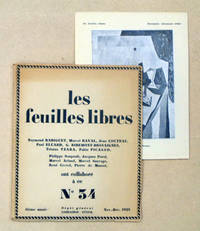
réf. 87797Paris Les feuilles libres 1923. Gr.8° S. 211 - 269 8 Taf. davon 2 montiert davon 1 lose Brosch. Etw. gebräunt eckknittrig u. tlw. randrissig innen allg. tadellos. Enth.: Raymond Radiguet: «Le prisonnier des mers»; Marcel Raval: «Raymond Radiguet» Jean Cocteau: «Pablo Picasso» Paul Eluard: «Ta foi» G. Ribemont-Dessaignes; «L’oeil couchant» Tristan Tzara: «Faites vos jeux» nur Teil 4; dazu Kritiken/Rezensionen. 7 Tafeln mit Werken von Pablo Picasso. - «Raymond Radiguet Marcel Raval Jean Cocteau Paul Eluard G. Ribemont-Dessaignes Tristan Tzara Pablo Picasso Philippe Soupault Jacques Porel Marcel Arland Marcel Sauvage René Crevel Pierre de Massot ont collaboré à ce No. 34». 010 Paris, Les feuilles libres, 1923 unknown
1965réf. 66648Ffm., Hbg.: Frankfurter Kunstverein u. Kunstverein in Hamburg 1965. 36 nn. Bll., 152 Tfln., 10 nn. Bll. Kl.8°. Illustr. Kt. (leicht angestaubt, Rücken gebräunt u. min. fleckig).
2017réf. 2-288915193XPPUR Presses Polytechniques 2017. Paperback. New. 254 pages. French language. 9.37x6.30x0.79 inches. PPUR Presses Polytechniques paperback
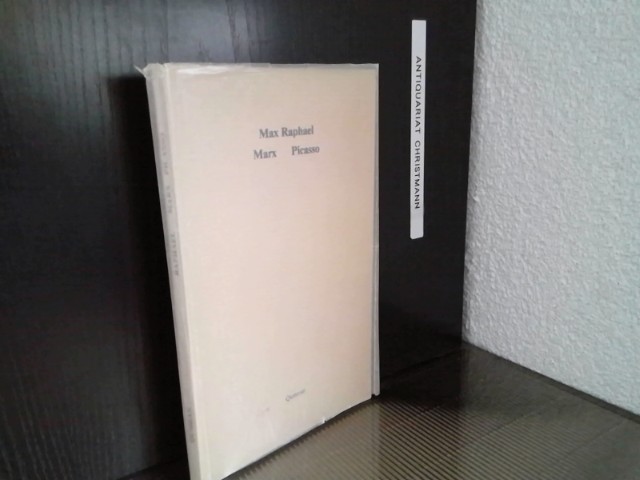
1983réf. 26990Frankfurt am Main ; Paris : Qumran 1983. 159 S. ; 21 cm, mit Schutzumschlag, Umschlag mit Randblessuren kart., Softcover/Paperback, sonst Exemplar in gutem Erhaltungszustand