5.576 resultados
ref. 68-2418New York NY: Perls Galleries 1947. 8vo. 16 pp. Stapled Wraps Very Good. Illustrated. The Perls Gallery in New York was founded in 1937 by Klaus Gunther Perls 1912-2008 and his brother Franz R. Perls1910-1975 after having worked at their mother's Galerie Kate Perls in Paris. Following his marriage to Amelia Blumenthal of Philadelphia in 1940 Klaus and Amelia B. Perls jointly ran the gallery. They specialized in modern French painting while Franz established the Frank Perls Gallery in Beverly Hills.He originally dealt in works by Maurice Utrillo Maurice de Vlaminck and Raoul Dufy that his mother sent from Paris until the Nazi occupation. When she was forced to flee France he began dealing in now little known contemporary American artists including Darrel Austin and in Mexican and South American art such as Mario Carreno. After the war Klaus again dealt in French art from the School of Paris.Artists in the Perls' stable included Rouault Picasso Léger Derain Dufy Matisse Modigliani Pascin Soutine and Vlaminck. The Perls Galleries closed in 1997. New York, NY: Perls Galleries, 1947. paperback
ref. 68-2420New York NY: Perls Galleries 1949. 8vo. 16 pp. Stapled Wraps Very Good. Illustrated.The Perls Gallery in New York was founded in 1937 by Klaus Gunther Perls 1912-2008 and his brother Franz R. Perls1910-1975 after having worked at their mother's Galerie Kate Perls in Paris. Following his marriage to Amelia Blumenthal of Philadelphia in 1940 Klaus and Amelia B. Perls jointly ran the gallery. They specialized in modern French painting while Franz established the Frank Perls Gallery in Beverly Hills.He originally dealt in works by Maurice Utrillo Maurice de Vlaminck and Raoul Dufy that his mother sent from Paris until the Nazi occupation. When she was forced to flee France he began dealing in now little known contemporary American artists including Darrel Austin and in Mexican and South American art such as Mario Carreno. After the war Klaus again dealt in French art from the School of Paris.Artists in the Perls' stable included Rouault Picasso Léger Derain Dufy Matisse Modigliani Pascin Soutine and Vlaminck. The Perls Galleries closed in 1997. New York, NY: Perls Galleries, 1949. paperback
ref. 68-2416New York NY: Perls Galleries 1945. 8vo. 16 pp. Stapled Wraps Very Good. Illustrated. The Perls Gallery in New York was founded in 1937 by Klaus Gunther Perls 1912-2008 and his brother Franz R. Perls1910-1975 after having worked at their mother's Galerie Kate Perls in Paris. Following his marriage to Amelia Blumenthal of Philadelphia in 1940 Klaus and Amelia B. Perls jointly ran the gallery. They specialized in modern French painting while Franz established the Frank Perls Gallery in Beverly Hills.He originally dealt in works by Maurice Utrillo Maurice de Vlaminck and Raoul Dufy that his mother sent from Paris until the Nazi occupation. When she was forced to flee France he began dealing in now little known contemporary American artists including Darrel Austin and in Mexican and South American art such as Mario Carreno. After the war Klaus again dealt in French art from the School of Paris.Artists in the Perls' stable included Rouault Picasso Léger Derain Dufy Matisse Modigliani Pascin Soutine and Vlaminck. The Perls Galleries closed in 1997. New York, NY: Perls Galleries, 1945. paperback
ref. 68-2419New York NY: Perls Galleries 1948. 8vo. 16 pp. Stapled Wraps Very Good. Illustrated.The Perls Gallery in New York was founded in 1937 by Klaus Gunther Perls 1912-2008 and his brother Franz R. Perls1910-1975 after having worked at their mother's Galerie Kate Perls in Paris. Following his marriage to Amelia Blumenthal of Philadelphia in 1940 Klaus and Amelia B. Perls jointly ran the gallery. They specialized in modern French painting while Franz established the Frank Perls Gallery in Beverly Hills.He originally dealt in works by Maurice Utrillo Maurice de Vlaminck and Raoul Dufy that his mother sent from Paris until the Nazi occupation. When she was forced to flee France he began dealing in now little known contemporary American artists including Darrel Austin and in Mexican and South American art such as Mario Carreno. After the war Klaus again dealt in French art from the School of Paris.Artists in the Perls' stable included Rouault Picasso Léger Derain Dufy Matisse Modigliani Pascin Soutine and Vlaminck. The Perls Galleries closed in 1997. New York, NY: Perls Galleries, 1948. paperback
ref. 68-2417New York NY: Perls Galleries 1946. 8vo. 16 pp. Stapled Wraps Very Good. Illustrated. The Perls Gallery in New York was founded in 1937 by Klaus Gunther Perls 1912-2008 and his brother Franz R. Perls1910-1975 after having worked at their mother's Galerie Kate Perls in Paris. Following his marriage to Amelia Blumenthal of Philadelphia in 1940 Klaus and Amelia B. Perls jointly ran the gallery. They specialized in modern French painting while Franz established the Frank Perls Gallery in Beverly Hills.He originally dealt in works by Maurice Utrillo Maurice de Vlaminck and Raoul Dufy that his mother sent from Paris until the Nazi occupation. When she was forced to flee France he began dealing in now little known contemporary American artists including Darrel Austin and in Mexican and South American art such as Mario Carreno. After the war Klaus again dealt in French art from the School of Paris.Artists in the Perls' stable included Rouault Picasso Léger Derain Dufy Matisse Modigliani Pascin Soutine and Vlaminck. The Perls Galleries closed in 1997. New York, NY: Perls Galleries, 1946. paperback
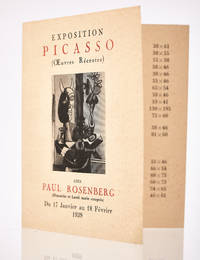
1939ref. 89995Paris: Paul Rosenberg 1939. Fine. First presentation at the Paul Rosenberg Gallery in Paris of an artwork foreshadowing the bull of Guernica: The Negro Sculpture before the Window. Paul Rosenberg Paris 1939 11 x 13.5 cm Une feuille pliée 4 pp. Rare first edition of the catalogue for Picassos final exhibition at the Galerie Paul Rosenberg in Paris held from 17 January to 18 February 1939 at 21 rue La Boétie. The front wrapper is illustrated with a black-and-white photograph of the exhibitions centrepiece: La sculpture nègre devant la fenêtre now known as Buste de Minotaure devant une fenêtre Private Collection; see Zervos vol. VIII p. 360. Painted on 19 April 1937 the work is widely regarded as a precursor to the bull of Guernica executed only a few weeks later. An excellent well-preserved copy. The plaquette lists the 33 works exhibited arranged by year of execution- 1936 1937 and 1938. The verso carries the notice of the next exhibition Centenary of Cézanne dated 20 February 1939. These two events were followed only by a final show devoted to Georges Braque before the gallery closed and Paul Rosenberg left France for permanent exile in the United States. The event met with considerable success as reported by the American collector and sculptor Meric Callery to Alfred H. Barr the first director of the Museum of Modern Art in New York: ""R's Rosenberg present show of Picasso is surprising in that it is so pretty colorful and gay. They have had over 600 people per day to see it."" Making Modernism Michael C. FitzGerald 1996 The adjectives pretty colourful and gay may seem surprising given both Picassos style and the political context of 1939. Indeed the exhibition - comprising chiefly still lifes painted between 1936 and 1938 in the Tremblay-sur-Mauldre studio - appears at first sight to contrast sharply with the tragic contemporary events. From 1937 onwards the Nazis began confiscating over 20000 modern artworks to mount the notorious Entartete Kunst Degenerate Art exhibition. Circulated throughout Germanys major cities it culminated in June 1939 in a large-scale auction to finance the war preceded by the burning of more than 5000 paintings in the courtyard of Berlins main barracks. Fully aware of the ongoing tragedy Paul Rosenberg took measures to save as many works as possible organising in the same year the first retrospective of Picasso at the Museum of Modern Art where Guernica was displayed and preserved. In 1940 he took permanent refuge in New York opening his celebrated gallery on 79th Street while some 2000 works he could not take with him were looted by the Nazis. Belying its seemingly innocuous appearance the exhibition of recent works by the foremost representative of so-called Degenerate Art held by a Jewish dealer constituted a genuine act of resistance to the rise of Nazism. Yet it was above all through a single work prominently displayed in the main salon and reproduced on the catalogues front that Rosenberg and Picasso transformed the still-life exhibition into a profoundly political statement. Later known as Buste du Minotaure devant une fenêtre this transitional work as noted by the art historian Vérane Tasseau is highly symbolic: The bull does not stand for fascism but for brutality and darkness Picasso remarked in the autumn of 1944 during an interview with the young painter Jerome Seckler for the American Marxist journal New Masses. Seckler had hoped to elicit from him the assertion that the late 1938 series of still lifes with bull heads was a political statement in continuity with Guernica."" This first bulls head in the still-life series gradually evolved over the course of 1938 into a curious zoomorphic human visage. It is nevertheless still titled in the catalogue La sculpture nègre devant la fenêtre. Although this title was not retained in subsequent monographs it establishes a remarkable link between two major themes in Picassos oeuvre: th Paul Rosenberg unknown
1983ref. 143492Arti 1983. Bon Etat aspect 4e plat assez salie intérieur frais. in8. 1983. Broché. Arti unknown
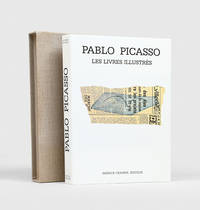
1983ref. 195994Geneva: Patrick Cramer 1983. First edition of this reference work cataloguing 156 titles illustrated by Picasso with the ownership stamp of the eminent Picasso collector Gérard Delile to the first blank. Quarto. Profusely illustrated with 804 photographic illustrations 35 of which are in colour. Text in French. Original beige cloth spine and front cover lettered in dark brown. With illustrated dust jacket and matching beige cloth slipcase. Some pencil marks to margins; dust jacket lightly creased: a near-fine copy in a near-fine jacket. hardcover
ref. 015603Bern., Editions Kornfeld et Klippstein. Tome / Band I und II.; / Catalogue de l'Oeuvre gravé céramique 1949 - 1971. Katalog des graphischen Keramikwerkes 1949 - 1971. Tome / Band III.; Catalogue de l'Oeuvre gravé et lithographié 1970 - 1972 Suppléments Tome I + II. Katalog des graphischen Werkes 1970 - 1972 Nachträge Band I +II. Tome / Band IV. 1971 - 1979. 310, 344(3), 198, 253S. Komplett in vier Bänden, Band 1 in 2. Auflage, der Schutzumschlag des 2. und 3. Bandes hat Einrisse. 4°. H OLeinen mit OUmschlag.
1971ref. 104264Madoura. Very Good. 1971. Wraps. Wraps softcover. 1971. Very Good Plus condition. Madoura. Photography of ceramics. ; 8vo 8" - 9" tall . Madoura paperback
1974ref. 238960Roma: Editori Riuniti 1974. Rilegato tela sovracoperta cloth dust jacket. Molto buono Very Good. Volume con 340 illustrazioni a colori e 419 in bianco e nero. Cm 28x27. pp. 296. Molto buono Very Good. Sovracoperta leggermente sciupata Worn soiled and chipped dust jacket. Prima edizione First Edition. Editori Riuniti, hardcover
1974In 8' gr. carre', t.ed. con sovrac., pp. 292, ill. in n. e col. n. t., sguardie ill; lacerazioni alla sovrac., altrimenti in buono stato, ordinari segni del tempo.Luogo di pubblicazione RomaEditore Editori RiunitiAnno pubblicazione 1974Materia/Argomento Arte, Ceramica, PicassoScaffale 44/8Autore Ramie, Georges
1961ref. 239911Torino: Galleria La Bussola 1961. Rilegatura a punto metallico stapled binding. Molto buono Very Good. Catalogo di mostra Galleria La Bussola Torino dicembre 1961. Con 25 piccole illustrazioni in b/n ed elnco delle 66 ceramiche esposte. Cm 215x15. pp. 12. Molto buono Very Good. Piccola abrasione ad una pagina Small abrasion on one page. . Pablo Picasso fu pittore scultore e litografo considerato uno dei più grandi artisti del XX secolo e co-fondatore del cubismo insieme a Georges Braque. Nato a Malaga Picasso attraversò diverse fasi artistiche dal periodo blu a quello rosa fino all'innovazione del cubismo con opere come Les Demoiselles d'Avignon e l'iconico impegno politico e sociale di Guernica. La sua prolifica carriera vide anche esperienze nella scultura ceramica scenografia e fu caratterizzata da una continua ricerca e sperimentazione. Galleria La Bussola, unknown
ref. 43917277-nnew. unknown
ref. B9781013787348Hardback. New. hardcover
ref. 101378734X.Ghardcover. Good. Access codes and supplements are not guaranteed with used items. May be an ex-library book. hardcover
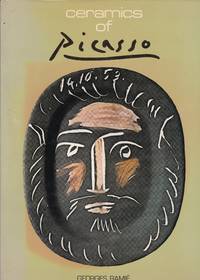
ref. 24712-Ediciones Poligrafa 1985-. First English edition Ediciones Poligrafa 1985. 128 pages. Illustrated in colour with 223 plates. Cloth. Previous owners name free front endpage. Very good in sunned dustjacket. Ask to see our other Picasso titles. From the library of artist Bryan Kneale. Ceramics Of Picasso Spanish artist 8434304244 -Ediciones Poligrafa (1985)- hardcover
1985ref. 9370Barcelona, Ediciones Polígrafia, 1985. 128 S. mit 223 Farbabbildungen. 4°. Orig.-Pappband mit Orig.-Umschlag (Umschlag lichtrandig).
ref. 02-0647Milwaukee Wis.: David Barnett Gallery 1984. Poster. Milwaukee, Wis.: David Barnett Gallery, 1984. unknown
1992EDITORI RIUNITI 1992, 274 PP. FONDO DI MAGAZZINO: SEGNI DEL TEMPO, QUALCHE LIEVISSIMA ABRASIONE, VOLUME INTONSO. Teorico dell’arte, critico, scienziato sperimentatore e organizzatore delle più avanzate tecniche e scuole del restauro, archeologo, memorialista: il sapere e il fare di Cesare Brandi presentano a chi s’accosta all’opera sua molte e diverse facce così intimamente collegate da non apparire mai dispersive. Al contrario, ogni interesse e speculazione di questo grande scrittore — ché scrittore fu sempre eccelso per lingua, invenzione, sentimento ben oltre lo specifico della critica d’arte — concorrono a formare una personalità e a istituire un’autorità centrata sulla più alta forma d’indagine filosofica, ossia l’estetica. Brandi appare, in questo senso, quasi il restauratore di quel tipo irripetibile di intellettuale che fu proprio del Rinascimento, quando l’unicità delle forme e delle ricerche era risposta dettata dall’esigenza di sfidare il sapere stratificato delle scuole prigioniere del passato. Un umanista d’altri tempi dunque? C’è sicuramente anche questo nella figura di Brandi; ma ciò che oggi più importa è che attraverso il filtro della speculazione teorica e critica passano i più pressanti interrogativi e le decisive questioni attinenti all’essenza dell’arte e alla posizione che essa assume nella socialità di ogni tempo. Il ricco saggio di Massimo Carboni si propone, a pochi anni dalla scomparsa di Brandi e a molte testimonianze oramai attestate, da Croce a Argan, da Luigi Russo a Gianfranco Contini, e alle migliaia di studenti e studiosi italiani e stranieri che al suo dettato si sono formati, di restituire nella sua interezza l’itinerario teorico e critico di questo maestro del XX secolo. Un compendio che traccia un metodo. La prima parte del lavoro di Carboni è dedicata ai concetti generali sottesi all’opera di Brandi; le altre parti ai singoli versanti in cui la sua critica si esplicò, le ultime allo stile personale che ne ha fatto scrittore e artista lui stesso inconfondibile: nelle lettere, nei libri di viaggi, nella passione e nell’ironia delle polemiche con le scuole contemporanee di cui colse acutamente astrattezze, rigidità, partigianerie, nonsensi. Indispensabile, mai prima tentata, perfettamente indagata, la bibliografia che raccoglie in fondo al volume tutto di Brandi e tutto su Brandi circa sessanta pagine fitte di titoli e indicazioni compilate con amorevole scrupolo, uno strumento unico e necessario al pubblico ampio e vario sempre più interessato a una materia dai confini vasti e inesplorati. Massimo Carboni è nato a Livorno nei 1954. Ha pubblicato ’L’Impossibile Critico. Paradosso della critica d’arte’ (edizioni Kappa, Roma, 1985). Collabora alle riviste «aut-aut», «Artforum», «Prometeo» e ai programmi culturali di RAI-Radio Tre. Indice Nota introduttiva Cesare Brandi. Teoria e esperienza dell’arte I. Realtà pura, semiosi, astanza. Dal «Carmine» a «Teoria generale della critica» II. «Gelso» o della lingua poetica III. L’«archè» dell’architettura IV. Il problema del restauro V. Dal Moderno al Contemporaneo VI. Il rilievo stilistico: la scrittura e i libri di viaggio Note Bibliografia completa degli scritti di Cesare Brandi Indice dei nomi
2011ref. 103498Dumont Buchverlag. New. Hardcover. FREE UPGRADE to Courier/Priority Shipping Upon Request - IN STOCK AND IMMEDIATELY AVAILABLE FOR SHIPMENT - Flawless copy brand new pristine never opened -- Text in German. 320 pages; over 300 illustrations most in color. -- with a bonus offer-- . 2011. 3832194185 . Dumont Buchverlag hardcover
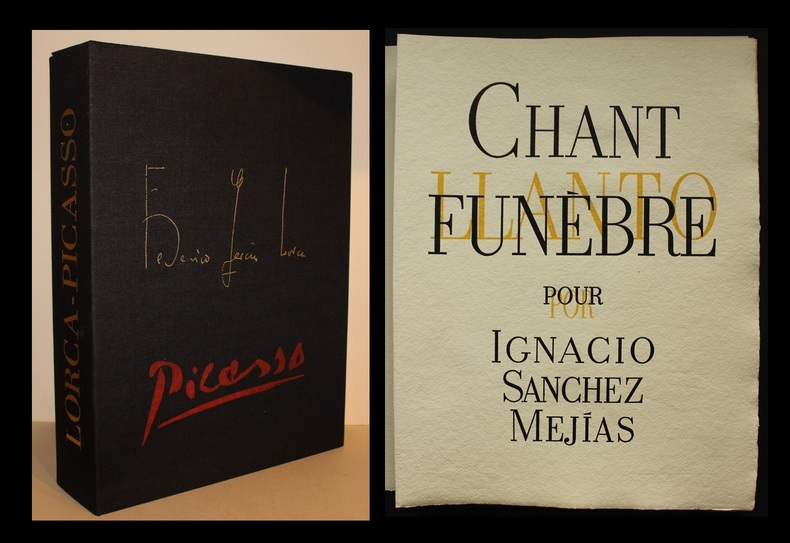
1976ref. 136111976 Moulin de Vauboyen à Bièvres en Essonne, Pierre de Tartas et SPADEM, 1976, 1 vol. in-folio (370 x 280 mm) en feuilles sous couverture gaufrée et boîte à châsse en toile noire de l'éditeur, auteur à l'or et signature de Picasso en rouge sur le plat supérieur et auteur et illustrateur à l'or au dos, de 71 pp. - (2) ff. (justificatif de tirage et achevé d'imprimer) - (2) ff. bl.Très bon état de lensemble.
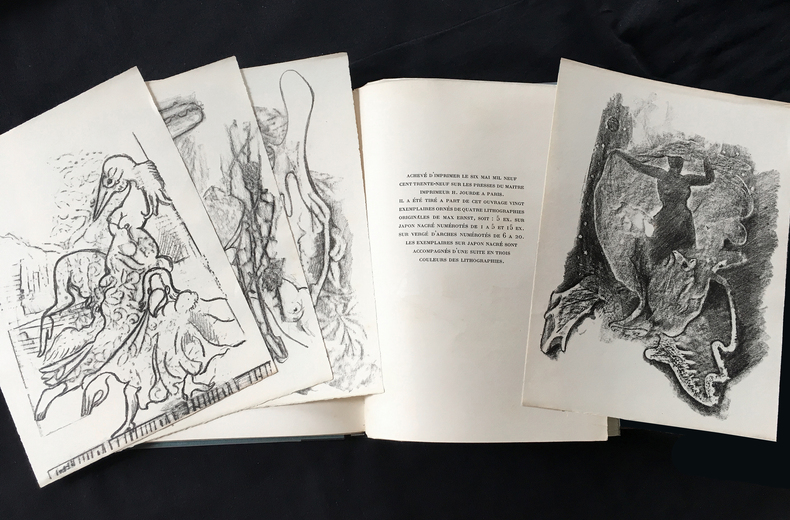
1939ref. 1435-2Paris, NRF, Gallimard, 1939. in-4 broché, 70 pages, couverture imprimée. ÉDITION ORIGINALE de ce recueil contenant : "Trois chevaux aigus. Nous sommes. Nulle rupture. À l'ombre de ma porte. Poème perpétuel. L'or et l'eau froide. Trois poèmes inachevés. Les vainqueurs d'hier périront". Tirage : 5 Japon nacré et 15 vergé d'Arches numérotés et signés + les exemplaires non numérotés sur vélin du Marais (tirage probable à 500 ex.). Le notre, sur vélin du Marais est accompagné DES 4 SUPERBES LITHOGRAPHIES ORIGINALES DE MAX ERNST TIRÉES EN NOIR À PLEINE PAGE SUR VERGÉ DE HOLLANDE (seuls les 20 premiers exemplaires en grand papier contiennent ces lithographies). - Note bibliographique et historique : Max Ernst avait prévu une série de douze lithographies, mais seules quatre d’entre elles furent publiées dans l’édition de luxe à petit nombre. Un an plus tôt, en 1938, désapprouvant ses positions trotskystes, Éluard avait rompu avec Breton : À sa suite Max Ernst quitte le groupe surréaliste outré d’avoir à subir l’exigence de « saboter la poésie de Paul Éluard par tous les moyens » (in Centre Georges Pompidou, Paul Éluard et ses amis peintres, 1982, p.109).
1939ref. 1435Paris, NRF, Gallimard, 1939. in-4 (260 x 200 mm) broché, toutes marges, 70 pages, couverture imprimée rempliée. ÉDITION ORIGINALE TRÈS RARE de ce recueil contenant : "Trois chevaux aigus. Nous sommes. Nulle rupture. À l'ombre de ma porte. Poème perpétuel. L'or et l'eau froide. Trois poèmes inachevés. Les vainqueurs d'hier périront". Tirage : 5 Japon nacré + 15 vergé d'Arches. Celui-ci l' un des 15 ex. numérotés sur vergé d'Arches (n°12), SIGNÉ PAR PAUL ÉLUARD ET MAX ERNST, ACCOMPAGNÉ DE 4 SUPERBES LITHOGRAPHIES ORIGINALES À PLEINE PAGE TIRÉES EN NOIR SUR VERGÉ DE HOLLANDE DE MAX ERNST (seuls les 20 premiers exemplaires en grand papier contiennent ces lithographies). - Note bibliographique et historique : Max Ernst avait prévu une série de douze lithographies, mais seules quatre d’entre elles furent publiées dans l’édition de luxe à petit nombre. Un an plus tôt, en 1938, désapprouvant ses positions trotskystes, Éluard avait rompu avec Breton : À sa suite Max Ernst quitte le groupe surréaliste outré d’avoir à subir l’exigence de « saboter la poésie de Paul Éluard par tous les moyens » (in Centre Georges Pompidou, Paul Éluard et ses amis peintres, 1982, p.109).
1984ref. 12488[Marseille] Bibliophiles de Provence 1984-1985 Un volume in-folio en feuilles sous emboîtage toilé aubergine et chemise rempliée, frontispice, non paginé, 5 gravures à l'eau-forte, à l'aquatinte et à la manière noire en noir et en couleurs par Orlando Pelayo. Exemplaire nominatif, l'un des 110 pour les Bibliophiles de Provence (le n°70), sur grand Vélin d'Arches.