CARRACHE, AugustinLivre Rare Book

543 resultados
ref. LCS-18404Première et célèbre édition de l’Arétin d’Augustin Carrache, «le plus artistique des Livres érotiques…» (H. Cohen, col. 88). A la Nouvelle Cythère [Paris, Didot, 1798]. Grand in-4 de 1 feuillet pour le faux-titre (relié à l’époque sans le titre), 10 pp. de préface, (1) f. de table et d’errata, 80 pp. et 20 gravures numérotées à pleine page hors textes protégées par des serpentes, veau fauve marbré, roulette dorée autour des plats, dos lisse orné, pièce de titre en maroquin rouge, roulette intérieure, tranches dorées. Reliure de l’époque. 301 x 225 mm.
ref. 51-1610Rome: Dominico de Rossi Jo. Jacobi Jo. Jacobi de Rubeis circa 1690. Oblong folio. 47 x 69 cm. 18.5 x 27.25 inches page size. Suite of 4 unnumbered and 20 numbered engravings. 24 of 25 plates lacking plate no. 9. Housed in a custom portfolio with painted boards leather spine large embossed leather label leather ties and leather corners by the celebrated Russian-American binder Alexandr Sasha Mosalov. OCLC Number: 26691776.Lit. Annibale Carracci e I suoi incisori Ecole française de Rome 1986: D-1-25 Rome: Dominico de Rossi, Jo. Jacobi (Jo. Jacobi de Rubeis), circa 1690. hardcover
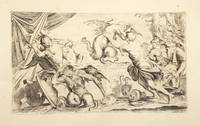
1677ref. 8814Roma: Io. Jacobus de Rubeis 1677. First Edition Primera edición. 585x396mm. 23x15½". Roma Io. Jacobus de Rubeis 1677 o anterior. 13 láminas grabadas al aguafuerte incluyendo portada. Junto con: CARRACCI Anibal inventor & MITELLI M. grabador. L'Enea Vagante Pitture Dei Caracci Intagliate E Dedicate Al Serenissimo Principe Leopoldo Medici Da Gioseppe Maria Mitelli Bolognese Serma. Altezza. Gioseppe Ma. Mitelli. Roma Gio Jacomo de Rossi 1663. 16 ilustraciones sobre 14 láminas grabadas al aguafuerte incluyendo portada. 2 obras en un volumen. En gran folio 585 x 396mm. En total 29 ilustraciones sobre 27 grandes láminas grabadas sobre pinturas inventadas por Carracci para el Palacio Farnese y el Palacio Fava en Roma y Boloña respectivamente. Encuadernación en holandesa del siglo XVIII. -I: Serie completa de 13 láminas numeradas incluyendo portada. Las láminas 2-13 están todas firmadas por Annibal Carraccius y dibujadas y grabadas por Petrus Aquila. Cada una lleva el nombre del impresor estampado "Io. Jacob. de Rubeis" Giovanni Giacomo de Rossi. La segunda lámina contiene la dedicatoria del editor al Cardenal César d'Estrées. La obra salió sin fecha de publicación pero la colección se menciona en el Indice De Rossi de 1677. Las láminas muestran los frescos pintados por Annibale Carracci entre 1596 y 1597 para el Cardenal Odoardo Farnese en el techo del Camerino Farnese en el Palacio Farnese de Roma. Representan los logros de Hércules y otras escenas alegóricas. Referencias: Goldschmidt E.P. Catalogue 163 p. 25 -II: Serie completa de 16 láminas sobre 14 hojas representando los frescos realizados por los hermanos Carracci en 1586 en el Palacio Fava de Boloña ilustrando la historia de Aeneas. Referencias: Bertarelli 1940 59; Bartsch XIX.289.46 Io. Jacobus de Rubeis hardcover
1663ref. 4850Rome: Da Gio. Giacomo de Rossi alla Pace al insegna di Parigi 1663. FIRST EDITION. Hardcover. Fine. Bound in modern quarter red morocco over marbled boards. A very good copy of the complete set of etchings. Some mostly mild soiling and staining a little heavier on two of the final plates and one small defect in plate 4 repaired. A complete set of etchings after the parietal frescoes in Palazzo Fava Bologna painted by the Carracci ca. 1593 depicting the story of Aeneas. The set comprises a title page 12 etched plates numbered from I to XII with the scenes of the cycle; and 4 additional sheets with 2 etchings per sheet reproducing the trompe l'oeil grisaille "statues" that divide the scenes. The title leaf includes the dedication to Lepoldo de Médici 1617-1675 with the Medici arms. The frescoes illustrating scenes from Books II and III of the "Aeneid" were etched by Giuseppe Maria Mitelli after drawings made by Flaminio Torri whose untimely death had prevented him from executing the plates himself. At the foot of the plates Mitelli attributes the individual scenes to one or another of the Carracci Annibale Agostino or Ludovico but these individual attributions do not always correspond to the conclusions of the most recent criticism. According to the Carracci biographer Carlo Cesare Malvasia "Felsina pittrice 1678 the frescoes were executed under the direction of Ludovico with at least two scenes Polyphemus and the Harpies being drawn by Ludovico and painted by Annibale. The Carracci - Annibale 1560-1609 his brother Agostino 1557-1602 and their cousin Ludovico 1555-1619- are among the most famous Bolognese painters of the last two decades of the sixteenth and the first part of the seventeenth centuries. Their artistic production took on a new importance in the history of Italian and European art of that time exerting a huge influence on subsequent generations. They gave life to an art based on a renewed awareness of nature and on the careful study of reality contributing to the development of the Baroque style which was opposed to the artificiality of late Mannerism. Towards the end of the sixteenth century the Carracci founded what has been called the first private school of painting of the modern age: the Accademia degli Incamminati. Annibale certainly the most talented of the three would be called to Rome to work for the powerful Farnese family while Ludovico and Agostino remained rooted in Bologna. But it is in Palazzo Fava that their "avvenetura" begins. Here the Carracci executed their first commission and the first important fresco cycle of their career. In 1584 thanks also to the intercession of Antonio Carracci father of Annibale and Agostino and tailor of the Fava family Count Filippo Fava entrusted the decoration of the entire "piano nobile" of the building to young artists who immediately gave proved their talent by creating an absolute jewel of Bolognese and Italian art. Thanks to the Fava family a family of patrons who played a fundamental role in the history and artistic development of Bologna Palazzo Fava became a place of study for the young artists of the time who were able to take advantage of mobile scaffolding to closely observe the adventures represented in the friezes of the cycle: those of Jason and Medea and in those of Aeneas the latter of which is reproduced here. https://genusbononiaeblog.it/i-carracci-palazzo-fava/ The engraver Giuseppe Maria Mitelli was renowned for the familiar playful carnivalesque and visionary themes of his etchings exemplified by allegorical figures genre scenes and images of everyday life in the streets of his native Bologna. He produced a large and varied body of work from genre scenes and fantastic imagery to reproductions of the works of the great Italian painters such as this suite. Mitelli was among the founders of Bologna's Accademia Clementina and was one of its first directors. For a full biography see "Agostino e Giuseppe Maria Mitelli" in Arte antica e moderna 3 1958 pp. 295-301. Da Gio. Giacomo de Rossi alla Pace al insegna di Parigi hardcover
ref. 2-74048Roma nella stamperia di Lodovico Grigniani senza data ca. 1646 in folio cm. 425 x 28 legatura in piena pergamena antichizzata con fregi e titoli dorati al dorso pp. 4 con frontespizio in cornice xilografica e marca tipografica un ritratto del Carracci inciso in rame e 80 grandi incisioni a piena pagina fuori testo raffiguranti le famose “arti per via”. Il frontespizio non riporta la data di pubblicazione riscontrabile unicamente alla base del ritratto del Carracci. Sembrano mancare le prime 20 pagine di testo ma copia identica a quella censita presso la Library of Congress con la quale è stata collazionata. Ovvero: “Edizione coeva alla prima tiratura: differisce per l 'assenza di data al frontespizio e per contenere oltre a frontespizio elenco delle tavole e ritratto di Annibale Carracci soltanto le stampe e non il testo introduttivo” cfr. Docet. Esemplare in ottime condizioni ben marginoso. unknown
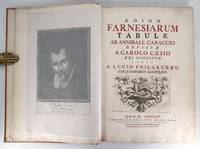
1753ref. 1715Rome: Venantius Monaldinus 1753. First Edition. Near fine. Oversized folio 17 1/4 x 12 inches 438 x 304 mm; half title engraved portrait of Annibale Carracci on frontispiece with tissue guard rubricated title with large engraved vignette; 10 unnumbered prelim. pages and index LXXIV pages with wide margins and uncut forty engravings on thirty-three numbered plates -of which 11 are oversized and folding- and over 60 large vignettes and historiated initials. Bound in half calf with orange paper-covered boards corners bumped edges and spine rubbed but binding is tight and square paper supple and clean with only minor discoloration and toning to gutters. Cicognara 3376; Bartsch XXI pp. 103-114 nos.21-64. The superbly engraved plates by Carlo Cesio 1622 - 1682 reproduce the Palazzo Farnese frescoes that Annibale Carracci 1560 - 1609 began in 1597 and completed in 1608 just one year before his death. The frescoes were commissioned by Alessandro Farnese 1468-1549 later Pope Paul III ostensibly in honor of his niece's nuptials and located on the 'piano nobile' of the family's palace which today hosts the French Embassy in Rome. They depict "The Loves of the Gods" and were greatly admired at the time and were later considered to reflect a significant change in painting style away from sixteenth century Mannerism in anticipation of the development of Baroque and Classicism in Rome during the seventeenth century. "The important cycle of frescoes trompe-l'oeil and architectural framework known as quadratura that make up the barrel-vaulted ceiling of the gallery depict the 'Loves of the Gods' a sophisticated dialogue between the theme of love and allegorical subjects from antiquity." Quoted from World Monuments Fund website. Venantius Monaldinus unknown
In folio (cm. 53 x 37), rilegatura inizio '800 in mezza pelle con titolo e fregi in oro al dorso; p. 117, incisione del chostro al frontespizio, una tav. inserita (dedica al prof, Francesco Rizzoli) seguono 47 tavole a piena pagina disegnate da vari artisti e incise solo sul recto da Fabbri che riproducono il ciclo pittorico realizzato da Ludovico Carracci e dai pittori della sua scuola sulle pareti del chiostro ottagonale di S. Michele in Bosco; 39 grandi capilettera e 33 testate e finalini animati, finemente incisi da Pio Panfili. Bello e fresco esemplare.
1694ref. B6133Bologna: Per gli Eredi d'Antonio Pisarri c. 1694;. Repairs to slightly worn extremities; notations on upper endpaper; plates 7 and 8 with spill staining; generally text and plates are clean and crisp. . Binding: Contemporary vellum with dentelled and filleted gilt panels with gilt floral designed corners. Spine with six 6 horizontal bands manuscript black ink title on one and central gilt ornament in remaining compartments; edges marbled. Notes: Text in Italian.The Italian Ludovico or Lodovico Carracci 1555 – 1619 from Bologna was an early-Baroque painter etcher and printmaker whose works create spiritual emotion and are credited with reinvigorating Italian art especially fresco art which was subsumed with formalistic Mannerism. His studio . propelled a number of Emilian artists to pre-eminence in Rome and elsewhere and singularly helped encourage the so-called Bolognese School of the late 16th century which included Reni one of the authors of this work. Carracci had his apprentices draw studies focused on observation of nature and natural poses and use a bold scale in drawing figures. Ludovico's pupils included Giacomo Cavedone also included in the list of authors of this work. Size: folio 407x272mm. Illustration: Illustrated title with printer's device head- and tailpieces decorative initials sixteen 16 full-page copper engravings including one frontispiece and four 4 oversized folding plates; depicting frescoes - mural paintings and decorations - painted by Ludovico Carracci and his entourage or artists at S. Michele in Bosco in the early 17th century telling of the life of Saint Benedict. Each engraved plate is signed below with the name of its painter as well as by Giacopo Giovannini as its drawer and engraver: Britio #1; Garbieri #211; Guido Reni #3-large folding 15; Lod. Carracci #4 5 6-large folding 7 8 9 12 - the last two large folding 17 18 19; Leonello Sp. #10; L. Massari 13 14; Giac. Cavedoni #16. The frontispiece signed: "Giacomo Giovannini inu. e Scolpi D.D.D. Marc ant.o fabbri forma in Bologa" Provenance: Upper pasted endpaper with bookplate References: Berlin Katalog 4084; Cicognara 3472 re 1776 ed. also refers to the first ed. Pages: Ll: 1f bl. 5ff 33ff. ill: 19ff; 1f. bl.; collation: Frontispiece; Illustrated Title; Serenissima Altezza/Dedication; Lettore Gentilissimo/ Al Sig. Giacomo Giovannini; Innocentius PP. XII.; 33 ff. of descriptive text plus 19 copper-engraved plates. Category: Book Art Architecture & Design; Book Europe Italy; Book Plate Books General; Per gli Eredi d'Antonio Pisarri, hardcover
1971ref. 93667Phaidon. New. 1971. Hardcover. 0714814717 . FREE UPGRADE to Courier/Priority Shipping Upon Request - IN STOCK AND IMMEDIATELY AVAILABLE FOR SHIPMENT - Flawless copy brand new pristine never opened -- TWO 2 VOLUME SET. Text in English. Volume 1: 183 pages; Volume 2: 351 pages. Catalogue Raisonne Catalog Raisonné Complete Works Life and Work Raisonnee Phaidon hardcover
2005ref. 93668Harvey Miller Publishers; Et Al. New. 2005. Hardcover. 1872501184 . FREE UPGRADE to Courier/Priority Shipping Upon Request - IN STOCK AND IMMEDIATELY AVAILABLE FOR SHIPMENT - Flawless copy brand new pristine never opened -- Corresponds to ISBN: 1872501184. 450 pages. Description: "The primary goal of Ludovico Carracci and the Art of Drawing is to provide a ground-breaking model for a new kind of book on Italian drawings. In addition to covering the traditional scholarly terrain of chronology style and connoisseurship this book utilizes up-to-date art historical methods including considerations of the historical context of Bologna its impact on Ludovico's art and a new portrayal of the role of women and women artists in the city. He was a prolific draftsman who produced over 300 extant drawings. His drawings offer the key to his artistic personality because he conceived his original subjects and planned his dramatic compositions in these sheets. Like most Italian artists of the early modern period Ludovico developed his ideas in drawings and began painting only after his conceptions had been finalized. Thus his drawings reveal how he thought how his ideas changed and which features of a composition were most important or challenging to his creative imagination. The Carracci have always been considered some of the most important draftsmen in Italian art for their revival of drawing the human figure from life in the course of designing paintings. But Ludovico's drawings were not only preparatory studies for pictures. He was also an innovator in developing finished compositional drawings that were produced as works of art in their own right made for sale to a new audience of private collectors in Bologna." Catalogue Raisonne Catalog Raisonné Complete Works Life and Work Raisonnee -- with a bonus offer . Harvey Miller Publishers; Et Al hardcover
2007ref. 86905Merigo. New. 2007. Hardcover. FREE UPGRADE to Courier/Priority Shipping Upon Request - IN STOCK AND IMMEDIATELY AVAILABLE FOR SHIPMENT - Flawless copy brand new pristine never opened --Text in Italian. 216 pages with many illustrations including color plates. Catalogue Raisonne Catalog Raisonné Complete Works Catalogo Ragionato Catalogo delle Opere L'Opera Completa Raisonnee Merigo hardcover
1979ref. 91557National Gallery of Art. New. 1979. Paperback. FREE UPGRADE to Courier/Priority Shipping Upon Request - IN STOCK AND IMMEDIATELY AVAILABLE FOR SHIPMENT - Flawless copy brand new pristine never opened -- 533 pages. Catalogue Raisonne Catalog Raisonné Complete Works Life and Work Raisonnee -- with a bonus offer . National Gallery of Art paperback
per li Manolessi, In Bologna, 1672. In 4°, 22 cm, rilegatura coeva in piena pergamena, dorso a cinque nervi, titolo in oro su tassello. p. (24), 406, (2) Volume riccamente illustrato, prima antiporta architettonico a tutta pagina con porticato ornato dalle insegne alle armi del decicatario, il cardinale Francesco Barberini (stemma con tre api) e stemma degli accademici Gelati con il motto "Nec longum tempus", sullo sfondo la città di Bologna in lontananza ed una selva di alberi spogli ricoperti dal gelo (simbolo degli Accademici Gelati). Ritratto del cardinale Barberini, inciso da Hubert van Otteren al retro del frontespizio. Secondo frontespizio calcografico con impresa dell'Accademia dei Gelati incisa da Lorenzo Tinti su disegno di Agostino Carracci. 31 ritratti e 71 stemmi con le "imprese" degli accademici gelati a cui è sempre accompagnato un motto ed un aggettivo attribuito all'accademico rappresentato; La pubblicazione è a cura di Giovambattista Capponi, il cui nome figura nella dedicatoria e firma l'introduzuine come "animosissimo segretario". Testo entro doppia conrice, testatine incise su rame, capilettera, fregi e finalini xilografici in cui sono ricorrenti le iconografie del dedicatario e degli accademici (le api ed i rami "gelati"). Antico restauro al dorso sotto al tassello ed al margine della pagina 105-106. Le prime quattro carte leggermente brunite e qualche sporadico alone, ma pagine per lo più bianche ed in ottimo stato. Alcuni errori di impaginazione carattestici dell'edizione. Bell'esemplare completo in tutte le sue parti, con incisioni fresche e nitide.
Cm. 28,5,bella legatura neoclassica inglese in mezza pelle verde con fregi in oro al dorso, piatti marm. con punte in pelle, Frontespizio inciso, ritratto e 38 tavole numerate. Tutte le incisioni all'acquaforte. Seconda edizione delle incisioni di Marcantonio Bellavia, fraudolentemente proposte come incisioni di Annibale Carracci, precedute da un front. calcogr. con la firma falsa del Bloemaert e da una tavola con un preteso autoritratto del Carracci (in realta secondo stato di una lastra anonima secentesca con la raffigurazione del profeta Daniele dipinto da Raffaello nella Cappella Chigi in Santa Maria della Pace a Roma). Cfr. Bartsch, XX, p. 22 - 23, Bartsh ill., v. 44, DBI, 7, p. 619, Catalogo on line "Incisioni e stampe" della Bibl. Panizzi. Stampato tra il 1748 e il 1783, anni di attività del Monaldini. Ex - Libris Barone di Northwick. Bellissimo esemplare.
1 23x16.3 cm., 11, [1], 255, [1], 71, [1], 40, [8] pp., bel frontespizio inciso che include il ritratto del Tasso in medaglione e una veduta di Genova, il tutto entro bordura architettonica, i venti canti illustrati da 20 magnifiche incisioni a piena pagina disegnate dal pittore genovese Bernardo Castello e incise da Agostino Carracci (9) e da Giacomo Franco (11), legatura seicentesca in pergamena con titolo manoscritto al dorso, sguardie settecentesche, leggermente smarginato, lievi fioriture e bruniture uniformi, leggero alone ad alcune pagine, tracce di tarlo al margine inferiore di diverse carta senza pregiudizio, un rinforzo al margine interno al verso del frontespizio, restauro senza pregiudizio al margine esterno di pag. 245, nel complesso buon esemplare Prima edizione illustrata dal Castello, con la tavola del Canto Quarto non duplicata con quella del Canto Quinto. Gamba, 426: "Stimatissima edizione, principalmente per l'ornamento delle figure? E' da osservare che nel canto IV non sia duplicata la figura che sta nel canto V?".
1996ref. 68393Museum; Et Al. New. Paperback. FREE UPGRADE to Courier/Priority Shipping Upon Request - IN STOCK AND IMMEDIATELY AVAILABLE FOR SHIPMENT - Flawless copy brand new pristine never opened -- 160 pp. With 168 ills. 30 col. . 28 x 22 cm. -- with a bonus offer--; 0.8 x 10.9 x 8.4 Inches . 1996. 1854440926 . Museum; Et Al paperback
2010ref. 88245Museum; Yale University Press. New. Paperback. FREE UPGRADE to Courier/Priority Shipping Upon Request - IN STOCK AND IMMEDIATELY AVAILABLE FOR SHIPMENT - Flawless copy brand new pristine never opened -- Text in English.100 pages; 61 illus. -- with a bonus offer--; Born in Bologna Annibale Carracci 15641609 was one of the most revolutionary artists of the late Renaissance. Even before turning twenty he rebelled against convention by investing his art with a sense of naturalism uncommon to paintings of the period. His early painting The Butcher’s Shop a cherished work in the Kimbell Art Museum’s collection marks the beginning of Carracci’s artistic journey and remains one of his most powerfully naturalistic works. This fascinating study explores the origins and significance of The Butcher’s Shop placing it within the artist’s own career as well as the broader context of Italian painting. Detailing the uniqueness and vitality of Carracci’s style C. D. Dickerson emphasizes the remarkable plein-air quality of the painting and explains how Carracci may have achieved this utterly novel effect though in fact executing the work indoors in his studio. He also sets Carracci’s work in the tradition of butcher’s shop paintings in Renaissance Italy analyzes the painting in relation to the reality of the occupation at the time and investigates where in Bologna such a butcher’s shop might have stood. . 2010. 0300166400 . Museum; Yale University Press paperback
2004ref. 638175 Continents Editions. New. Paperback. FREE UPGRADE to Courier/Priority Shipping Upon Request – – IN STOCK AND IMMEDIATELY AVAILABLE FOR SHIPMENT - Flawless copy brand new pristine never opened -- Text in English. 84 pp. With 51 col. Ills. 21 x 21 cm. -- with a bonus offer--; Drawing Gallery series; 0.39 x 8.27 x 8.19 Inches . 2004. 8874391293 . 5 Continents Editions paperback
2000ref. 69337Gallery. New. Hardcover. FREE UPGRADE to Courier/Priority Shipping Upon Request - IN STOCK AND IMMEDIATELY AVAILABLE FOR SHIPMENT - Flawless copy brand new pristine never opened -- 304 pp. With 243 ills. 113 col. . 28 x 25 cm. In English. C/to: isbn 085331764X -- with a bonus offer--; 1.4 x 11.1 x 9.7 Inches . 2000. 085331764X . Gallery hardcover
1995ref. 68511Art Center. New. Paperback. FREE UPGRADE to Courier/Priority Shipping Upon Request - IN STOCK AND IMMEDIATELY AVAILABLE FOR SHIPMENT - Flawless copy brand new pristine never opened -- Text in English. 142 pp. With 86 ills. 74 col. . 30 x 25 cm. Description: "Showcasing drawings by Italian artists of the 16th and 17th centuries selected from a notable private collection this catalogue features fine reproductions and scholarly discussions of 55 sheets many previously unpublished by Sodoma Parmigianino Vasari the Carracci Barocci Tintoretto Reni Domenichino Strozzi Guercino and 39 other artists." -- with a bonus offer--; 0.75 x 12 x 10 Inches . 1995. 0964426315 . Art Center paperback
1986ref. 66995Institute; Et Al. New. Paperback. FREE UPGRADE to Courier/Priority Shipping Upon Request – – IN STOCK AND IMMEDIATELY AVAILABLE FOR SHIPMENT - Flawless copy brand new pristine never opened -- Text in Italian. 360 pp. With 487 ills. 23 x 22 cm. -- with a bonus offer-- . 1986. Institute; Et Al paperback
[Fig. Bologna-Carracci] (cm.21,5) Ottima piena pergamena originale titolo al dorso. --cc.8nn., pp.432 (440). Bellissima antiporta figurata disegnata da Agostino Carracci e 17 imprese, sempre in rame per lo più del Carracci. + figure geometriche, epigrafi, ecc.Notevoli 2 figure astronomiche a fondo nero con costellazioni osservate dal Montanari e da Galileo. E' la più importante pubblicazione degli accademici Gelati di Bologna, EDIZIONE ORIGINALE. tratta vari argomenti: armi, imprese, musica, filosofia, politica, fisica, astronomia, terme, giochi ecc.di insigni autori come BOMBACI, MARSILI, MONTANARI.Esemplare bellissimo molto fresco e nitido con rami in ottima tiratura. --GRAESSE I 9, AUTORI ITALIANI DEL '600 3509, PRAZ II 3, CICOGNARA 1830, FETIS III p.4 E VIII p.397, FRATI G477. Ex libris autografo alla sguardia "Salvatore Betti 1824" Per notizie sul Betti (1792-1882) vedi, Pitrè G. "Profili Biografici"Palermo 1878 pag.9.[f30] Libro
ref. 60537The Madonna seated with the infant Christ on her lap holds a bowl for the infant Baptist to drink from; S. Anne watches from behind with a hand raised.The preparatory drawing is at the Louvre ex coll. Mariette Inv. 7142.First engraving realized by Annibale Carracci after 1600 showing the signs of a renewed approach to engraving. Remarkable is in fact the strong chiaroscuro emphasized by the hatched background against which are disposed the sculpted figures. Although the figures are engaged in simple and natural activities the composition is carefully studied and masterfully engraved with regular hatchings and signs.This composition became immediately highly popular as its numerous copies testify seventeen are documented.From the second state the name of the publisher was added Nicolaes van Aelst publisher active in Brussels and Rome. In the latter city he had a workshop in via della Pace from 1582 to 1613. Three states of this print are documented however the exemplar at the Museum in Bologna Inv. 4730 is suggested to be a fourth state. Signed above right: 'Annib. Carracius in./ et fecit. 1606./ Nico van Aelst for.' Etching and engraving on laid paper with a vague circular watermark small margins; platemark: 123 x 161 mm total: 125 x 163 mm; state III/3 or III/4; warn out plate on the corners; on the verso cifres in characoal top right and left corner restored lower left margin also; selected literature: Bartsch 1818 XVIII vol. p.186 n. 9; Le Blanc 1854 p. 606 n. 6; Nagler 1858 p. 458 n. 1053; The Illustrated Bartsch 1980 p. 395 9-I 186 and 1996 39 2 Comm. p. 256n. 3906.020. unknown
Bulino misure: mm 209 x 259 Pittore e incisore, fratello maggiore di Annibale (Bologna 1560 – Roma 1609) e cugino di Ludovico Carracci (Bologna 1555 – Bologna 1619). Fonda con loro l'Accademia degli Incamminati a Bologna il cui programma prevedeva un'adesione alla realtà in chiave antimanieristica, voleva il recupero della grande tradizione del Rinascimento italiano rifacendosi agli artisti del primo Cinquecento: Tiziano, Raffaello, Michelangelo e Correggio senza trascurare il colorismo veneto. A differenza di Annibale e Ludovico, i qualit privilegiarono la pittura su tela o ad affresco, per Agostino l'attività grafica è stata la principale occupazione raggiungendo risultati di grande livello attraverso la luminosità del segno e la chiarezza delle composizioni. Ha realizzato duecentotrentaquattro incisioni tra bulini e acqueforti sia d’invenzione che di riproduzione, rappresentando sia soggetti sacri che profani. L'incisione è ratta dall'omonimo soggetto dipinto nel 1576 da Tintoretto (Venezia 1518 - Venezia 1594) in Palazzo Ducale a Venezia. L'incisione, per soggetto e formato, è da considerarsi in coppia con quella raffigurante Minerva allontana Marte dalla Pace e dall'Abbondanza datata 1589, data questa ragionevolmente valida per entrambi i rami. Nel foglio viene rappresentato Mercurio, divinità possente e vigorosa con il petaso alato e il caduceo attorno al quale sono intrecciati dei serpenti, mentre osserva tre fanciulle. Sono le Grazie dai corpi sinuosi, appena coperti da tessuti svolazzanti e riccamente panneggiati; la prima a sinistra, di spalle, poggia la mano su un dado mentre le altre due stringono tra le mani il mirto e la rosa, simboli di perpetuo amore. Contrariamente al dipinto, lo spazio è dilatato in orizzontale, si dà così un maggiore respiro alla vegetazione e alla natura ottenendo l'effetto di isolare le figure consolidandone l'equilibro che nel dipinto risulta precario. Carracci inoltre allunga i corpi e irrobustisce i profili dando così solidità e compattezza all'azione. In basso a destra all'interno del soggetto il monogramma "A.C", poco sopra: Iacobus Tinctoretus pixit. Nel margine inferiore bianco una riga su due colonne in latino: Spectator si scire cupis quid picta tabella est, est Iovis et Maiae filius et Charites. Nell'angolo a sinistra numero 3. Esemplare nel I/III stato prima delle aggiunte (II) e della rottura all'angolo inferiore destro (III). Impressione eccellente, dai toni decisi e nitidi, riccamente inchiostrata con morbida e omogenea velatura di fondo grigio argentea. Esemplare rifilato lungo la battuta del rame. Ottimo stato di conservazione eccetto alcune piccole macchie. Esemplare controfondato in antico con timbro di collezione L P M Cerroni (1753 - 1826), storico e funzionario austriaco, figlio di un ricco mercante lombardo, consacrò la sua vita al collezionismo di manoscritti, libri e stampe, e alla scrittura. Catalogò la sua collezione che venne dispersa nel 1828 a Vienna, notevoli i nuclei di antichi maestri tedeschi e italiani. Bibliografia: Bellori 390; Bartsch 117; De Grazia n. 149; LeBlanc 110.
Bologna, Lit. Algiolini e Coni, 1835, in-folio, legatura in mezza pelle moderna. Frontespizio coi ritratti dei Carracci e 27 magnifiche tavole litografiche. Solo due esemplari segnalati in ICCU.