Carracci, Ludovico; Carracci, Agostino; Carracci, Annibale; Robertson,Clare; Catherine WhistlerBiblio.com

466 résultats
1996réf. 68393Museum; Et Al. New. Paperback. FREE UPGRADE to Courier/Priority Shipping Upon Request - IN STOCK AND IMMEDIATELY AVAILABLE FOR SHIPMENT - Flawless copy brand new pristine never opened -- 160 pp. With 168 ills. 30 col. . 28 x 22 cm. -- with a bonus offer--; 0.8 x 10.9 x 8.4 Inches . 1996. 1854440926 . Museum; Et Al paperback
2010réf. 88245Museum; Yale University Press. New. Paperback. FREE UPGRADE to Courier/Priority Shipping Upon Request - IN STOCK AND IMMEDIATELY AVAILABLE FOR SHIPMENT - Flawless copy brand new pristine never opened -- Text in English.100 pages; 61 illus. -- with a bonus offer--; Born in Bologna Annibale Carracci 15641609 was one of the most revolutionary artists of the late Renaissance. Even before turning twenty he rebelled against convention by investing his art with a sense of naturalism uncommon to paintings of the period. His early painting The Butcher’s Shop a cherished work in the Kimbell Art Museum’s collection marks the beginning of Carracci’s artistic journey and remains one of his most powerfully naturalistic works. This fascinating study explores the origins and significance of The Butcher’s Shop placing it within the artist’s own career as well as the broader context of Italian painting. Detailing the uniqueness and vitality of Carracci’s style C. D. Dickerson emphasizes the remarkable plein-air quality of the painting and explains how Carracci may have achieved this utterly novel effect though in fact executing the work indoors in his studio. He also sets Carracci’s work in the tradition of butcher’s shop paintings in Renaissance Italy analyzes the painting in relation to the reality of the occupation at the time and investigates where in Bologna such a butcher’s shop might have stood. . 2010. 0300166400 . Museum; Yale University Press paperback
2004réf. 638175 Continents Editions. New. Paperback. FREE UPGRADE to Courier/Priority Shipping Upon Request – – IN STOCK AND IMMEDIATELY AVAILABLE FOR SHIPMENT - Flawless copy brand new pristine never opened -- Text in English. 84 pp. With 51 col. Ills. 21 x 21 cm. -- with a bonus offer--; Drawing Gallery series; 0.39 x 8.27 x 8.19 Inches . 2004. 8874391293 . 5 Continents Editions paperback
2000réf. 69337Gallery. New. Hardcover. FREE UPGRADE to Courier/Priority Shipping Upon Request - IN STOCK AND IMMEDIATELY AVAILABLE FOR SHIPMENT - Flawless copy brand new pristine never opened -- 304 pp. With 243 ills. 113 col. . 28 x 25 cm. In English. C/to: isbn 085331764X -- with a bonus offer--; 1.4 x 11.1 x 9.7 Inches . 2000. 085331764X . Gallery hardcover
2005réf. C93668Harvey Miller Publishers; Et Al. As New. Hardcover. FREE UPGRADE to Courier/Priority Shipping Upon Request - IN STOCK AND IMMEDIATELY AVAILABLE FOR SHIPMENT - Flawless copy brand new pristine never opened -- Corresponds to ISBN: 1872501184. 450 pages. Description: "The primary goal of Ludovico Carracci and the Art of Drawing is to provide a ground-breaking model for a new kind of book on Italian drawings. In addition to covering the traditional scholarly terrain of chronology style and connoisseurship this book utilizes up-to-date art historical methods including considerations of the historical context of Bologna its impact on Ludovico's art and a new portrayal of the role of women and women artists in the city. He was a prolific draftsman who produced over 300 extant drawings. His drawings offer the key to his artistic personality because he conceived his original subjects and planned his dramatic compositions in these sheets. Like most Italian artists of the early modern period Ludovico developed his ideas in drawings and began painting only after his conceptions had been finalized. Thus his drawings reveal how he thought how his ideas changed and which features of a composition were most important or challenging to his creative imagination. The Carracci have always been considered some of the most important draftsmen in Italian art for their revival of drawing the human figure from life in the course of designing paintings. But Ludovico's drawings were not only preparatory studies for pictures. He was also an innovator in developing finished compositional drawings that were produced as works of art in their own right made for sale to a new audience of private collectors in Bologna." Catalogue Raisonne Catalog Raisonné Complete Works Life and Work Raisonnee -- with a bonus offer-- - May be EITHER: out of print OOP and extremely rare in this pristine condition; signed by author or contributor; or a first or special edition; inquire for details; L'Arte del Disegno; The primary goal of Ludovico Carracci and the Art of Drawing is to provide a ground-breaking model for a new kind of book on Italian drawings. In addition to covering the traditional scholarly terrain of chronology style and connoisseurship this book utilizes up-to-date art historical methods including considerations of the historical context of Bologna its impact on Ludovico's art and a new portrayal of the role of women and women artists in the city. He was a prolific draftsman who produced over 300 extant drawings. His drawings offer the key to his artistic personality because he conceived his original subjects and planned his dramatic compositions in these sheets. Like most Italian artists of the early modern period Ludovico developed his ideas in drawings and began painting only after his conceptions had been finalized. Thus his drawings reveal how he thought how his ideas changed and which features of a composition were most important or challenging to his creative imagination. The Carracci have always been considered some of the most important draftsmen in Italian art for their revival of drawing the human figure from life in the course of designing paintings. But Ludovico's drawings were not only preparatory studies for pictures. He was also an innovator in developing finished compositional drawings that were produced as works of art in their own right made for sale to a new audience of private collectors in Bologna. . 2005. 1872501184 . Harvey Miller Publishers; Et Al hardcover
1672per li Manolessi, In Bologna, 1672. In 4°, 22 cm, rilegatura coeva in piena pergamena, dorso a cinque nervi, titolo in oro su tassello. p. (24), 406, (2) Volume riccamente illustrato, prima antiporta architettonico a tutta pagina con porticato ornato dalle insegne alle armi del decicatario, il cardinale Francesco Barberini (stemma con tre api) e stemma degli accademici Gelati con il motto "Nec longum tempus", sullo sfondo la città di Bologna in lontananza ed una selva di alberi spogli ricoperti dal gelo (simbolo degli Accademici Gelati). Ritratto del cardinale Barberini, inciso da Hubert van Otteren al retro del frontespizio. Secondo frontespizio calcografico con impresa dell'Accademia dei Gelati incisa da Lorenzo Tinti su disegno di Agostino Carracci. 31 ritratti e 71 stemmi con le "imprese" degli accademici gelati a cui è sempre accompagnato un motto ed un aggettivo attribuito all'accademico rappresentato; La pubblicazione è a cura di Giovambattista Capponi, il cui nome figura nella dedicatoria e firma l'introduzuine come "animosissimo segretario". Testo entro doppia conrice, testatine incise su rame, capilettera, fregi e finalini xilografici in cui sono ricorrenti le iconografie del dedicatario e degli accademici (le api ed i rami "gelati"). Antico restauro al dorso sotto al tassello ed al margine della pagina 105-106. Le prime quattro carte leggermente brunite e qualche sporadico alone, ma pagine per lo più bianche ed in ottimo stato. Alcuni errori di impaginazione carattestici dell'edizione. Bell'esemplare completo in tutte le sue parti, con incisioni fresche e nitide.
1971réf. C93667Phaidon. As New. Hardcover. FREE UPGRADE to Courier/Priority Shipping Upon Request - IN STOCK AND IMMEDIATELY AVAILABLE FOR SHIPMENT - Flawless copy brand new pristine never opened -- TWO 2 VOLUME SET. Text in English. Volume 1: 183 pages; Volume 2: 351 pages. Catalogue Raisonne Catalog Raisonné Complete Works Life and Work Raisonnee -- with a bonus offer-- - May be EITHER: out of print OOP and extremely rare in this pristine condition; signed by author or contributor; or a first or special edition; inquire for details; Two volumes in one. A study in the reform of Italian Painting around 1590. With 467 illustrations and 10 colour plates. This book the first systematic study of Annibale Carracci's life and work surveys the whole of the artist's activity and analyses the origin development and significance of his achievements viewing them against the background of the art and thought of the period. All known paintings and prints by the master are illustrated as well as many of the drawings made in connection with them in 346 black and white plates and ten colour plates and all are exhaustively discussed in a catalogue raisonne. In addition 121 text figures illustrate special aspects and the background of Annibale's art. There are also a bibliography and full indexes. . 1971. 0714814717 . Phaidon hardcover
2005réf. 93668Harvey Miller Publishers; Et Al. New. 2005. Hardcover. 1872501184 . FREE UPGRADE to Courier/Priority Shipping Upon Request - IN STOCK AND IMMEDIATELY AVAILABLE FOR SHIPMENT - Flawless copy brand new pristine never opened -- Corresponds to ISBN: 1872501184. 450 pages. Description: "The primary goal of Ludovico Carracci and the Art of Drawing is to provide a ground-breaking model for a new kind of book on Italian drawings. In addition to covering the traditional scholarly terrain of chronology style and connoisseurship this book utilizes up-to-date art historical methods including considerations of the historical context of Bologna its impact on Ludovico's art and a new portrayal of the role of women and women artists in the city. He was a prolific draftsman who produced over 300 extant drawings. His drawings offer the key to his artistic personality because he conceived his original subjects and planned his dramatic compositions in these sheets. Like most Italian artists of the early modern period Ludovico developed his ideas in drawings and began painting only after his conceptions had been finalized. Thus his drawings reveal how he thought how his ideas changed and which features of a composition were most important or challenging to his creative imagination. The Carracci have always been considered some of the most important draftsmen in Italian art for their revival of drawing the human figure from life in the course of designing paintings. But Ludovico's drawings were not only preparatory studies for pictures. He was also an innovator in developing finished compositional drawings that were produced as works of art in their own right made for sale to a new audience of private collectors in Bologna." Catalogue Raisonne Catalog Raisonné Complete Works Life and Work Raisonnee -- with a bonus offer . Harvey Miller Publishers; Et Al hardcover
1971réf. 93667Phaidon. New. 1971. Hardcover. 0714814717 . FREE UPGRADE to Courier/Priority Shipping Upon Request - IN STOCK AND IMMEDIATELY AVAILABLE FOR SHIPMENT - Flawless copy brand new pristine never opened -- TWO 2 VOLUME SET. Text in English. Volume 1: 183 pages; Volume 2: 351 pages. Catalogue Raisonne Catalog Raisonné Complete Works Life and Work Raisonnee Phaidon hardcover
1776In folio (cm. 53 x 37), rilegatura inizio '800 in mezza pelle con titolo e fregi in oro al dorso; p. 117, incisione del chostro al frontespizio, una tav. inserita (dedica al prof, Francesco Rizzoli) seguono 47 tavole a piena pagina disegnate da vari artisti e incise solo sul recto da Fabbri che riproducono il ciclo pittorico realizzato da Ludovico Carracci e dai pittori della sua scuola sulle pareti del chiostro ottagonale di S. Michele in Bosco; 39 grandi capilettera e 33 testate e finalini animati, finemente incisi da Pio Panfili. Bello e fresco esemplare.
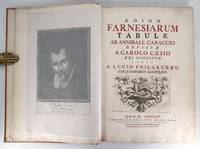
1753réf. 1715Rome: Venantius Monaldinus 1753. First Edition. Near fine. Oversized folio 17 1/4 x 12 inches 438 x 304 mm; half title engraved portrait of Annibale Carracci on frontispiece with tissue guard rubricated title with large engraved vignette; 10 unnumbered prelim. pages and index LXXIV pages with wide margins and uncut forty engravings on thirty-three numbered plates -of which 11 are oversized and folding- and over 60 large vignettes and historiated initials. Bound in half calf with orange paper-covered boards corners bumped edges and spine rubbed but binding is tight and square paper supple and clean with only minor discoloration and toning to gutters. Cicognara 3376; Bartsch XXI pp. 103-114 nos.21-64. The superbly engraved plates by Carlo Cesio 1622 - 1682 reproduce the Palazzo Farnese frescoes that Annibale Carracci 1560 - 1609 began in 1597 and completed in 1608 just one year before his death. The frescoes were commissioned by Alessandro Farnese 1468-1549 later Pope Paul III ostensibly in honor of his niece's nuptials and located on the 'piano nobile' of the family's palace which today hosts the French Embassy in Rome. They depict "The Loves of the Gods" and were greatly admired at the time and were later considered to reflect a significant change in painting style away from sixteenth century Mannerism in anticipation of the development of Baroque and Classicism in Rome during the seventeenth century. "The important cycle of frescoes trompe-l'oeil and architectural framework known as quadratura that make up the barrel-vaulted ceiling of the gallery depict the 'Loves of the Gods' a sophisticated dialogue between the theme of love and allegorical subjects from antiquity." Quoted from World Monuments Fund website. Venantius Monaldinus unknown
réf. 2-74048Roma nella stamperia di Lodovico Grigniani senza data ca. 1646 in folio cm. 425 x 28 legatura in piena pergamena antichizzata con fregi e titoli dorati al dorso pp. 4 con frontespizio in cornice xilografica e marca tipografica un ritratto del Carracci inciso in rame e 80 grandi incisioni a piena pagina fuori testo raffiguranti le famose “arti per via”. Il frontespizio non riporta la data di pubblicazione riscontrabile unicamente alla base del ritratto del Carracci. Sembrano mancare le prime 20 pagine di testo ma copia identica a quella censita presso la Library of Congress con la quale è stata collazionata. Ovvero: “Edizione coeva alla prima tiratura: differisce per l 'assenza di data al frontespizio e per contenere oltre a frontespizio elenco delle tavole e ritratto di Annibale Carracci soltanto le stampe e non il testo introduttivo” cfr. Docet. Esemplare in ottime condizioni ben marginoso. unknown
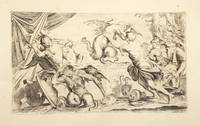
1663réf. 4850Rome: Da Gio. Giacomo de Rossi alla Pace al insegna di Parigi 1663. FIRST EDITION. Hardcover. Fine. Bound in modern quarter red morocco over marbled boards. A very good copy of the complete set of etchings. Some mostly mild soiling and staining a little heavier on two of the final plates and one small defect in plate 4 repaired. A complete set of etchings after the parietal frescoes in Palazzo Fava Bologna painted by the Carracci ca. 1593 depicting the story of Aeneas. The set comprises a title page 12 etched plates numbered from I to XII with the scenes of the cycle; and 4 additional sheets with 2 etchings per sheet reproducing the trompe l'oeil grisaille "statues" that divide the scenes. The title leaf includes the dedication to Lepoldo de Médici 1617-1675 with the Medici arms. The frescoes illustrating scenes from Books II and III of the "Aeneid" were etched by Giuseppe Maria Mitelli after drawings made by Flaminio Torri whose untimely death had prevented him from executing the plates himself. At the foot of the plates Mitelli attributes the individual scenes to one or another of the Carracci Annibale Agostino or Ludovico but these individual attributions do not always correspond to the conclusions of the most recent criticism. According to the Carracci biographer Carlo Cesare Malvasia "Felsina pittrice 1678 the frescoes were executed under the direction of Ludovico with at least two scenes Polyphemus and the Harpies being drawn by Ludovico and painted by Annibale. The Carracci - Annibale 1560-1609 his brother Agostino 1557-1602 and their cousin Ludovico 1555-1619- are among the most famous Bolognese painters of the last two decades of the sixteenth and the first part of the seventeenth centuries. Their artistic production took on a new importance in the history of Italian and European art of that time exerting a huge influence on subsequent generations. They gave life to an art based on a renewed awareness of nature and on the careful study of reality contributing to the development of the Baroque style which was opposed to the artificiality of late Mannerism. Towards the end of the sixteenth century the Carracci founded what has been called the first private school of painting of the modern age: the Accademia degli Incamminati. Annibale certainly the most talented of the three would be called to Rome to work for the powerful Farnese family while Ludovico and Agostino remained rooted in Bologna. But it is in Palazzo Fava that their "avvenetura" begins. Here the Carracci executed their first commission and the first important fresco cycle of their career. In 1584 thanks also to the intercession of Antonio Carracci father of Annibale and Agostino and tailor of the Fava family Count Filippo Fava entrusted the decoration of the entire "piano nobile" of the building to young artists who immediately gave proved their talent by creating an absolute jewel of Bolognese and Italian art. Thanks to the Fava family a family of patrons who played a fundamental role in the history and artistic development of Bologna Palazzo Fava became a place of study for the young artists of the time who were able to take advantage of mobile scaffolding to closely observe the adventures represented in the friezes of the cycle: those of Jason and Medea and in those of Aeneas the latter of which is reproduced here. https://genusbononiaeblog.it/i-carracci-palazzo-fava/ The engraver Giuseppe Maria Mitelli was renowned for the familiar playful carnivalesque and visionary themes of his etchings exemplified by allegorical figures genre scenes and images of everyday life in the streets of his native Bologna. He produced a large and varied body of work from genre scenes and fantastic imagery to reproductions of the works of the great Italian painters such as this suite. Mitelli was among the founders of Bologna's Accademia Clementina and was one of its first directors. For a full biography see "Agostino e Giuseppe Maria Mitelli" in Arte antica e moderna 3 1958 pp. 295-301. Da Gio. Giacomo de Rossi alla Pace al insegna di Parigi hardcover
1663réf. 4850Rome: Da Gio. Giacomo de Rossi alla Pace al insegna di Parigi 1663. FIRST EDITION. Hardcover. Fine. Bound in modern quarter red morocco over marbled boards. A very good copy of the complete set of etchings. Some mostly mild soiling and staining a little heavier on two of the final plates and one small defect in plate 4 repaired. A complete set of etchings after the parietal frescoes in Palazzo Fava Bologna painted by the Carracci ca. 1593 depicting the story of Aeneas. The set comprises a title page 12 etched plates numbered from I to XII with the scenes of the cycle; and 4 additional sheets with 2 etchings per sheet reproducing the trompe l'oeil grisaille "statues" that divide the scenes. The title leaf includes the dedication to Lepoldo de Médici 1617-1675 with the Medici arms. The frescoes illustrating scenes from Books II and III of the "Aeneid" were etched by Giuseppe Maria Mitelli after drawings made by Flaminio Torri whose untimely death had prevented him from executing the plates himself. At the foot of the plates Mitelli attributes the individual scenes to one or another of the Carracci Annibale Agostino or Ludovico but these individual attributions do not always correspond to the conclusions of the most recent criticism. According to the Carracci biographer Carlo Cesare Malvasia "Felsina pittrice 1678 the frescoes were executed under the direction of Ludovico with at least two scenes Polyphemus and the Harpies being drawn by Ludovico and painted by Annibale. The Carracci - Annibale 1560-1609 his brother Agostino 1557-1602 and their cousin Ludovico 1555-1619- are among the most famous Bolognese painters of the last two decades of the sixteenth and the first part of the seventeenth centuries. Their artistic production took on a new importance in the history of Italian and European art of that time exerting a huge influence on subsequent generations. They gave life to an art based on a renewed awareness of nature and on the careful study of reality contributing to the development of the Baroque style which was opposed to the artificiality of late Mannerism. Towards the end of the sixteenth century the Carracci founded what has been called the first private school of painting of the modern age: the Accademia degli Incamminati. Annibale certainly the most talented of the three would be called to Rome to work for the powerful Farnese family while Ludovico and Agostino remained rooted in Bologna. But it is in Palazzo Fava that their "avvenetura" begins. Here the Carracci executed their first commission and the first important fresco cycle of their career. In 1584 thanks also to the intercession of Antonio Carracci father of Annibale and Agostino and tailor of the Fava family Count Filippo Fava entrusted the decoration of the entire "piano nobile" of the building to young artists who immediately gave proved their talent by creating an absolute jewel of Bolognese and Italian art. Thanks to the Fava family a family of patrons who played a fundamental role in the history and artistic development of Bologna Palazzo Fava became a place of study for the young artists of the time who were able to take advantage of mobile scaffolding to closely observe the adventures represented in the friezes of the cycle: those of Jason and Medea and in those of Aeneas the latter of which is reproduced here. https://genusbononiaeblog.it/i-carracci-palazzo-fava/ The engraver Giuseppe Maria Mitelli was renowned for the familiar playful carnivalesque and visionary themes of his etchings exemplified by allegorical figures genre scenes and images of everyday life in the streets of his native Bologna. He produced a large and varied body of work from genre scenes and fantastic imagery to reproductions of the works of the great Italian painters such as this suite. Mitelli was among the founders of Bologna's Accademia Clementina and was one of its first directors. For a full biography see "Agostino e Giuseppe Maria Mitelli" in Arte antica e moderna 3 1958 pp. 295-301. Da Gio. Giacomo de Rossi alla Pace al insegna di Parigi hardcover books
réf. 51-1610Rome: Dominico de Rossi Jo. Jacobi Jo. Jacobi de Rubeis circa 1690. Oblong folio. 47 x 69 cm. 18.5 x 27.25 inches page size. Suite of 4 unnumbered and 20 numbered engravings. 24 of 25 plates lacking plate no. 9. Housed in a custom portfolio with painted boards leather spine large embossed leather label leather ties and leather corners by the celebrated Russian-American binder Alexandr Sasha Mosalov. OCLC Number: 26691776.Lit. Annibale Carracci e I suoi incisori Ecole française de Rome 1986: D-1-25 Rome: Dominico de Rossi, Jo. Jacobi (Jo. Jacobi de Rubeis), circa 1690. hardcover
réf. LCS-18404Première et célèbre édition de l’Arétin d’Augustin Carrache, «le plus artistique des Livres érotiques…» (H. Cohen, col. 88). A la Nouvelle Cythère [Paris, Didot, 1798]. Grand in-4 de 1 feuillet pour le faux-titre (relié à l’époque sans le titre), 10 pp. de préface, (1) f. de table et d’errata, 80 pp. et 20 gravures numérotées à pleine page hors textes protégées par des serpentes, veau fauve marbré, roulette dorée autour des plats, dos lisse orné, pièce de titre en maroquin rouge, roulette intérieure, tranches dorées. Reliure de l’époque. 301 x 225 mm.