Chardin, JohnBiblio.com

1 264 résultats
réf. 1148148086.Gpaperback. Good. Access codes and supplements are not guaranteed with used items. May be an ex-library book. paperback
réf. 1148474544.Gpaperback. Good. Access codes and supplements are not guaranteed with used items. May be an ex-library book. paperback
réf. 1147178402.Gpaperback. Good. Access codes and supplements are not guaranteed with used items. May be an ex-library book. paperback
réf. 7549A Amsterdam 1735. 4to. 3 cont.full mottled calf. Raised bands richly gilt backs. Extremities with small traces of use slight weakening to parts of hinge top of spine on vol. II with loss of leather ca 1x2 cm. Internally fine on good paper. 2 engr.frontisp. with portraits 3 engr.titlevign. 3 large engr. textvignettes. 1239043594437 pp. and 78 mostly large folded engraved plates mapsplansviews etc. - To this second edition was published a 4th volume which contains the author's previously published work "Couronnement de Soliman III" and extracts from the author's manuscript this supplementary volume is not present here but the 3 volumes contain the whole travel and all the plates belonging to these 3 volumes. Rare second edition of Chardin's travels regarded as being one of the finest works of early Western scholarship on Persia and the Near East in general. "Thought to have been read by writers such as Montesquieu and Rousseau Chardin's account stands apart from those of other travellers to the region Caucasus at this time through its awareness of cultural difference and relativity and in its desire to place accuracy above romanticism." Speake The Literature of Travel and Exploration 1.Chardin set out from Paris for Persia and India. He reached Ispahan 1673 spent four years in Persia visited India and returned by the Good Hope in 1677. The first volume contains the trip from Paris to Isfahan the second contains a particular description of Isfahan and the relation of the author's two voyages from Ispahan to Bander-Abassi the third contains a general description of the Persian empire and the particular descriptions of the sciences and arts which are in use therein of political military and civil government.Born in Paris in a Hugenot Protestant family Jean Chardin 1643-1713 undertook his travels to Persia because of his father's position as a jeweler and shareholder in the French East India Company. The younger Chardin set out in 1664 traveling through Turkey the Black Sea Georgia and Armenia. Soon after his arrival in Persia he received a commission to create jewelry for Shah Abbas II who died in 1666 and was succeeded by Shah Safi. After witnessing the latter's coronation Chardin went on India and finally returned to Paris in 1670. In 1671 he published an account of the coronation and in the same year set off for Persia again arriving in Isfahan in 1673 and remaining there for several years before once more visiting India and returning home in 1677. With the persecution of the Hugenots in France he moved to England in 1680"Travel restarted with 17th-century missionaries whose medical and pedagogical expertise helped counterbalance Orthodox or pagan reservations. Dominican Prefects Dortelli D'Ascoli and Giovanni da Lucca 1630s extended Giorgio Interiano's description of Circassia and Abkhazia. Theatine proselytisers targeted Mingrelia/western Georgia Capuchins the eastern provinces - the Vatican's Fide Press further contributed by printing the first Georgian books Chikobava/Vateishvili. Many including mission-head Don Pietro Avitabile 1626-1638 recounted their experiences. Prefect to Mingrelia Joseph Marie Zampi a 23-year denizen from approximately 1645 contributed a third significant source in his description of Mingrelian religious practice. This he handed to Jean Chardin 1643-1713 in 1672. A French traveller who became English! ambassador in Holland Chardin translated and incorporated it as a substantial part of his own description of a sometimes perilous journey through Transcaucasia 1672-3 which reflects Ottoman and Persian influence in western and eastern parts respectively - a Turkish organized slave-trade flourished from various Mingrelian ports. Linguistically Zampi revealingly observed that the ecclesiastical language Georgian was as difficult for even the Mingrelian priesthood to understand as Latin was for Italian peasants!" Speake The Literature of Travel and Exploration 1 199-202.Brunet 1802Graesse II P. 121 hardcover
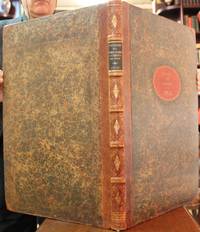
1811réf. B4638Paris: Le Normant c. 1811. A fine example of this work. Plates and text are in very good condition; generally clean and crisp. . Edition: New Edition Binding: Atlas volume rebacked tastefully in half calf saving the original marbled boards. Decorative red and gilt centerpiece on upper board with gilt title. Ten 8vo 216x135mm text volumes with full brown cloth boards. With black calf labels with gilt text. Notes: Text is in French. This 1811 edition is based on Chardin’s classic account of life and society in Persia complete with new plates coincided with renewed French imperial ambitions aimed at rivaling the British possessions in India. Chardin a Frenchman was the son of a jeweller. He set out in company with a Lyon merchant named Raisin in 1665 for Persia and India. After a highly successful journey during which he had received the patronage of Shah Abbas II of Persia he returned to France in 1670. He set out again for Persia in August 1671. This second journey was much more adventurous than the first and did not reach Isfahan till June 1673. In Isfahan he was appointed the Shah's personal jeweler by Suleiman I. During this time he was allowed to engage in an extended tour through much of Persia. Through the course of this tour Chardain was able to study the culture government and religion in detail. After four years spent in research throughout Persia he again visited India and returned to Europe. In 1681 he settled in London where he was appointed jeweller to the court of Charles II. Sir John Chardin's narrative has received the highest praise from the most competent authorities for its fullness comprehensiveness and fidelity; and it furnished Montesquieu Rousseau Gibbon and Helvétius with most important material. Size: Folio 338x510mm. Illustration: The atlas volume is illustrated with 65 sheets bearing 86 engravings which include: a frontis portrait of Chardin two maps of which one is a folding map of Persia and the other a map of the Black Sea 9 additional folded sheets 18 double plate sheets 1 quadruple plate sheet plus single plate sheets. Volume: 11 vol.10 text-1 atlas References: Weber 381; Graesse II 13; Wilson 40 Category: Book Plate Books General; Book Asia Middle East Iran; Book Europe France; Le Normant hardcover
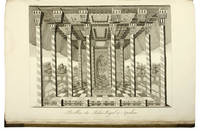
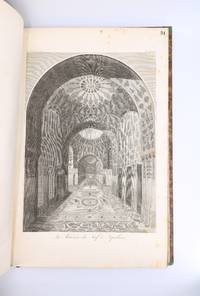
réf. 85524Paris Le Normant Imprimeur-Libraire 1811. . Folio. With 85 engravings on 64 sheets 9 folding including 1 map portrait of Chardin 18 sheets with double-illustrations and 1 sheet with 4; light waterstain on lower margin of several leaves. Near contemporary half polished calf over marbled boards; a bit rubbed. A very good copy of the atlas from the most desirable edition enhanced with new and larger plates. 'Chardin was a Huguenot who was forced to emigrate to England. He was knighted by Charles II and on his death was buried in Westminster Abbey. His first visit to the East was made in 1665 at the age of twenty-two when he both gratified a love of travelling and carried on his trade as a dealer in jewels. His more important voyage was made in 1671. His route differed from that usually taken by travellers to the East Indies in that he proceeded by way of the Black Sea and the countries bordering thereon' Cox I p 249-250. 'Chardin set out for Persia for a second time in August 1671 but on this occasion diverted through Smyrna and Constantinople and took the Black Sea Route to Caucasia Mingrelia and Georgia finally arriving at Esfahan in June 1673. In Georgia he heard of a race of warlike women the Amazons who had at some time in the recent past invaded a kingdom to the northwest. He remained in Persia for four years as he says 'chiefly following the court in its removals but also making some particular journeys. as well as studying the language.' He apparently knew Esfahan better than Paris and visited nearly every part of the country. His account of the Persian court and his business transactions with the shah are of considerable interest. In 1677 he proceeded to India afterwards returning to France by way of the Cape of Good Hope' Howgego C102; His second and more notable voyage to Persia is important because it is in the account of this voyage that he describes life in late Safavid Persia' Ghani p. 71. Includes among others lovely views of Tbilisi Tiflis Erevan Ispahan Persepolis as well as Georgian and Persian costumes views of lavish palace rooms and the Coronation of Suleyman. Paris, Le Normant, Imprimeur-Libraire, 1811. hardcover
réf. 85525Paris Le Normant 1811. . Folio 54 x 36 cm; with 85 engravings on 64 sheets 9 folding including portrait of Chardin 18 sheets with double-illustrations and 1 sheet with 4 with additional large folding map of Asia with outline coloured by hand by P. Lapie 1810 engraved by Blondeau all protected with original tissue guards. Recent half-calf over marbled boards. Attractive fresh example of the atlas uncut from the most desirable edition enhanced with new and larger plates. Printed on thick paper and extra-illustrated with a large hand-coloured map of the whole region. 'Chardin was a Huguenot who was forced to emigrate to England. He was knighted by Charles II and on his death was buried in Westminster Abbey. His first visit to the East was made in 1665 at the age of twenty-two when he both gratified a love of travelling and carried on his trade as a dealer in jewels. His more important voyage was made in 1671. His route differed from that usually taken by travellers to the East Indies in that he proceeded by way of the Black Sea and the countries bordering thereon' Cox I p 249-250. 'Chardin set out for Persia for a second time in August 1671 but on this occasion diverted through Smyrna and Constantinople and took the Black Sea Route to Caucasia Mingrelia and Georgia finally arriving at Esfahan in June 1673. In Georgia he heard of a race of warlike women the Amazons who had at some time in the recent past invaded a kingdom to the northwest. He remained in Persia for four years as he says 'chiefly following the court in its removals but also making some particular journeys. as well as studying the language.' He apparently knew Esfahan better than Paris and visited nearly every part of the country. His account of the Persian court and his business transactions with the shah are of considerable interest. In 1677 he proceeded to India afterwards returning to France by way of the Cape of Good Hope' Howgego C102; His second and more notable voyage to Persia is important because it is in the account of this voyage that he describes life in late Safavid Persia' Ghani p. 71. This edition of Chardin's classic account of Persia includes new plates not found in previous editions among others lovely views of Tbilisi Tiflis Erevan Ispahan Persepolis as well as Georgian and Persian costumes views of lavish palace rooms and the Coronation of Suleyman. Paris, Le Normant, 1811. hardcover
1811réf. 89644Paris: Le Normant 1811. Fine. Le Normant Paris 1811 12.5 x 20.5 cm pour les 10 volumes de texte - 345 x 52 cm pour le volume d'atlas 10 volumes reliés 1 atlas Generally regarded as the most complete early edition of Chardins Travels this imposing publication in ten volumes with a separate atlas was prepared in 1811 by Louis-Mathieu Langlès. The orientalist added a historical survey of Persia from the earliest times and an extensive critical apparatus confronting Chardins text with the historical geographical and philological scholarship of his own day. It remained the standard edition until Philip Stewarts complete modernised and annotated text appeared in 2018. The ten text volumes are bound in contemporary full tree calf smooth spines richly decorated with gilt ornamental rolls and tools black morocco-grained calf lettering- and numbering-pieces gilt rolls at the headcaps partly faded gilt borders to the boards marbled endpapers and marbled edges. The atlas bound separately as customary for its folio format is preserved in contemporary half tan calf over marbled paper boards smooth spine decorated with gilt rolls and tools brown lettering-piece and red morocco title label to the front board marbled edges. Some rubbing and restoration to the spine. The first text volume presents several printing peculiarities: the pagination jumps from 235 to 256 without loss while pages 213-220 are bound out of sequence. All the illustrations in the atlas including the portrait and map were subsequently renumbered from 1 to 65 in blue ink through a stencil. Some foxing to the plates. The atlas comprises a portrait of Chardin a large folding map and 83 views and figures on 63 plates numbered 1-82 with a plate 81 bis and several errors in numbering; nine are large folding plates and most of the figures occupy a full page. The frontispiece portrait was engraved by Jean-César Macret after a drawing by Charles-François-Adrien Macret. An attractive copy in handsome contemporary bindings the atlas bound differently from the text volumes as is customary for its larger format. The son of a Huguenot jeweller established on the Place Dauphine Jean Chardin left Paris in 1664 on the first of the journeys that were to take him through Persia and India. He gained access to the Safavid court where Shah Abbas II appointed him a royal merchant and commissioned jewellery from him. Returning to France in 1670 he set out again the following year and reached Isfahan in 1673 accompanied by the draughtsman Guillaume-Joseph Grelot. His long residence command of Persian and access to the court enabled him to move far beyond the conventional travel narrative and produce an encyclopaedic account of Safavid Persia its government religion sciences arts and daily life. Chardin returned to Europe at a time of increasing hostility towards French Protestants and settled in England in 1681. He was knighted by Charles II and elected a Fellow of the Royal Society the following year. He subsequently devoted much of his life to arranging the vast body of material gathered during his travels and years of residence in Persia. This prolonged process of composition accounts for the exceptionally complex publishing history of the Travels. A first part appeared in London in 1686 but it was not until the Amsterdam edition of 1711 that the greater part of the work was brought together. Anxious to sell the book in Roman Catholic countries the publisher Jean-Louis de Lorme had nevertheless removed a number of passages particularly those in which Chardins Calvinism was most openly expressed. Prosper Marchand restored them together with further manuscript material and The Coronation of Soliman III in his edition of 1735 the first complete edition of Chardins published writings. Almost a century later Louis-Mathieu Langlès returned to this textual tradition and subjected it to the new methods of institutional Oriental scholarship. Founder and first Le Normant hardcover
réf. 024303511X.Gpaperback. Good. Access codes and supplements are not guaranteed with used items. May be an ex-library book. paperback
réf. 0243865724.Gpaperback. Good. Access codes and supplements are not guaranteed with used items. May be an ex-library book. paperback
réf. 0332187705.Ghardcover. Good. Access codes and supplements are not guaranteed with used items. May be an ex-library book. hardcover
réf. 0366172212.Ghardcover. Good. Access codes and supplements are not guaranteed with used items. May be an ex-library book. hardcover
réf. 0366172166.Gpaperback. Good. Access codes and supplements are not guaranteed with used items. May be an ex-library book. paperback
réf. 0656434406.Ghardcover. Good. Access codes and supplements are not guaranteed with used items. May be an ex-library book. hardcover
réf. LCS-17482Édition la plus estimée, en grande partie originale, de la description de la Perse de Chardin. Ravissant exemplaire en veau écaille de l'époque aux dos ornés de la toile d'araignée dorée. Paris, Denys Horthemels, 1723 (tome 1), Amsterdam, Jean-Louis de Lorme, 1711 (les 9 autres tomes).10 tomes reliés en 11 volumes in-12 de :I/ (15) ff. avec le privilège, 254 pp., 1 portrait de l’auteur, 1 carte dépliante, 1 planche hors texte ;II/ 334 pp., 9 planches dépliantes;III/ 285 pp., 7 pl. dépl.;IV/ 280 pp., 6 pl. dépl.;V/ 312 pp., 4 pl. dépl. et 6 tableaux dépliants ;VI/ 328 pp., 5 pl. dépl.;VII/ 448 pp. ;VIII/ 255 pp., 16 pl. dépl.;IX/ (Volume de texte) 308 pp. / (Volume de planches) 29 pl. dépl. ;X/ 220 pp., (41) ff. de table.Seul le 1er volume est daté de 1723, les autres sont à la date de 1711. Très légère mouillure en tête du vol. 2, légère mouillure en marge int. du tome 3. Plein veau fauve écaille, triple filet doré autour des plats, dos à nerfs ornés de fleurons dorés à la toile d’araignée, pièces de titre et de tomaison de maroquin rouge et citron, filet doré sur les coupes, roulette intérieure dorée, tranches rouges. Reliure de l’époque.161 x 93 mm.
1723réf. 8491Rouen, Charles Ferrand, 1723. 10 volumes in-12, illustré de 74 figures dont 1 portrait, 1 carte, 6 tableaux dépliants et 2 figures sur une pl. au tome 8. Reliure de l'époque en veau granité, dos à nerfs orné de fleurons dorés, roulette sur les coupes, tranches rouges, il manque 1 planche au tome 6, 2 ff. partiellement déreliés au tome 6, annotations anciennes à l'encre en marge inf. de 4 p. au tome 7, une coiffe arrachée (tome 3), petit manque à la coiffe sup. du tome 5, mors fendu en pied sur 4 cm au tome 4, cependant bel exemplaire en reliure uniforme.
réf. ORD-2077Paris. Guillaume Cavelier. 1723. EXEMPLAIRE INCOMPLET DU TOME 3. Collationné feuille à feuille. 9 tomes sur 10 in-12 (98 x 166mm) basane brune à 5 nerfs ornés or, pièces de titre maroquin rouge, gardes marbrées, tranches rougies. Tome 1: Portrait en frontispice, 13ff.n.ch., 254 pages, page 28 chiffrée 39, 1 carte dépliante. Tome 2: 1f., 334 pages, 8 hors dont 4 dépliants, page 237 chiffrée 327. Tome 4: 1f., 280 pages, 6 hors texte dont 2 dépliants. Tome 5: 312 pages 4 gravures et 6 tableaux dépliants hors texte, pages 161 et 227 mal chiffrées. Tome 6: 328 pages, 4 gravures hors texte, page 211 chiffrée 121. Tome 7: 448 pages, page 39 chiffrée 63. Tome 8: 255 pages, 16 hors texte dont 10 dépliants. Tome 9: 308 pages, 29 hors texte dont 10 dépliants. Tome 10: 220 pages et 40ff.;.n.ch. (tables des matières), page 175 chiffrée 571. Qq. petits défauts aux reliures, rares piqûres. Bel ensemble.
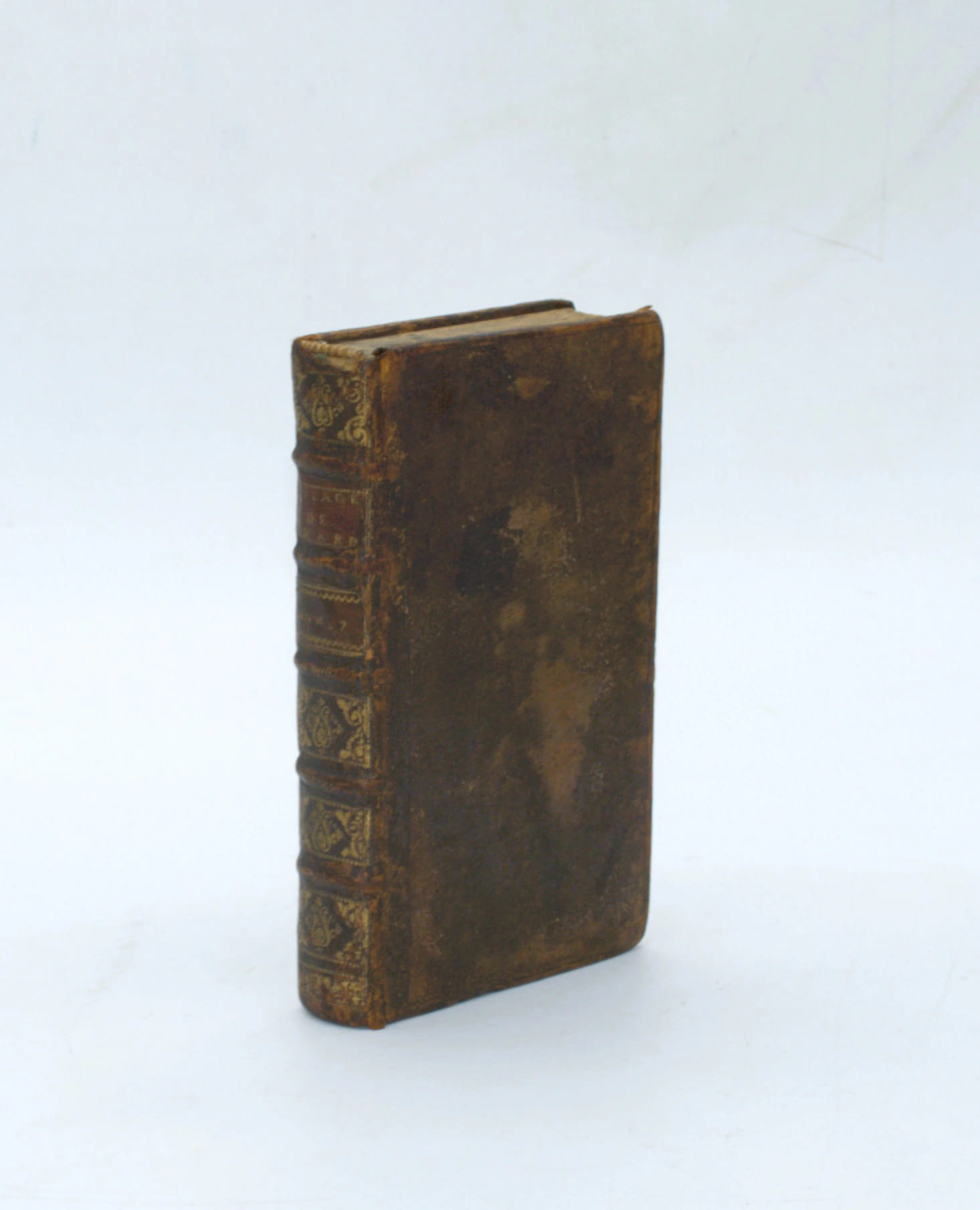
1723réf. PHO-2665Paris, Jean-Baptiste Mazuel, 1723, in-12 (168x100mm), 448 pp., veau époque, dos à nerfs orné avec pièces de titre et tomaison, tranches marbrées. Frottements, coiffe arasée, 1 coin dénudé.
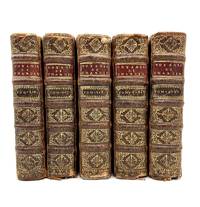
1723réf. 81601Chez Pierre-Michel huart | à Paris 1723 | 9.50 x 17 cm | 10 tomes en 5 volumes reliés
réf. LCS-1864079Première édition complète, en partie originale, rare dans ce format, des Voyages de Chardin en Perse ornée de 78 planches dépliantes, reliée en maroquin noir de l’époque. Amsterdam, Jean Louis de Lorme, 1711. 3 tomes en 3 volumes in-4 de: I/ 1 portrait-frontispice, (4) ff., 279 pp., 1 carte dépliante, 17 planches hors texte dont 9 dépliantes; II/ 454 pp., 15 planches hors texte dont 4 dépliantes; III/ 254 pp., (13) ff., 46 planches hors texte dont 31 dépliantes. Pleine reliure de l’époque en maroquin noir, dos à nerfs ornés de fleurons dorés, encadrement à la Du Seuil sur les plats, roulettes dorées sur les coupes, tranches dorées. Qq. restaurations discrètes. Reliure de l’époque. 252 x 189 mm.
1723réf. 81601à Paris: Chez Pierre-Michel huart 1723. Fine. Chez Pierre-Michel huart à Paris 1723 9.50 x 17 cm 10 tomes en 5 volumes reliés Second collective edition published by various booksellers including Michel Almaury. It is illustrated with 75 figures including a frontispiece portrait of which 30 are folding a map and 6 folding tables. Title pages in red and black. Contemporary full glazed brown sheep binding. Raised band spine richly decorated. Red morocco title labels brown sheep title label with frame of roll tooling. Head caps of volumes 1 to 8 torn off tail caps torn off except for the second volume 3 and 4. 9 corners very bumped. Rubbing. A lack to the lower joint at head of volume 9 10. Lacks to edges of volume 1. Set relatively worn. In volumes 9 10 worming to margins of 4 folding plates extending a few millimetres onto the engraving and to margins of 8 text leaves up to page 72; one to 2 wormholes afterwards on a few leaves; p.80 the engraving has a tear which has been amateurishly restored with pieces of paper. A tear in volume 7 8 p. 332. Trace of light dampstain on the title page of volume 1. 3 engravings with short margins. Title pages yellowed the first with a light dampstain. Bookplate of Henry Gouin. Considered the best ancient account and description of Persia Les voyages du Chevalier Chardin provides a complete survey of this region for the first time in history. Besides the different voyages volumes 5 6 7 and 8 examine the situation of arts government religion; volume 8 concerns the city of Isfahan. Chez Pierre-Michel huart unknown
réf. 033123744X.Ghardcover. Good. Access codes and supplements are not guaranteed with used items. May be an ex-library book. hardcover
réf. 101870664X.Ghardcover. Good. Access codes and supplements are not guaranteed with used items. May be an ex-library book. hardcover
réf. 1104525062.Gpaperback. Good. Access codes and supplements are not guaranteed with used items. May be an ex-library book. paperback
réf. 1104588021.Ghardcover. Good. Access codes and supplements are not guaranteed with used items. May be an ex-library book. hardcover