[Association of American Painters and Sculptors (New York, NY)]; [Gregg, Frederick James] N YBiblio.com

18 840 résultats
1913réf. 3556New York: Vreeland Advertising Press 1913. First edition first state. Half-title: International Exhibition of Modern Art. New York 1913. Title-page with vignette; printer's statement on verso. Publisher's color-illustrated wrappers. Advertisements also on inside front and back wrappers. Spine slightly creased with minor surface wear; shallow wear to extremities; faint scattered spotting to covers and some light soiling including a small stain to the lower front cover near the spine. Minor edge creases to corners. Internally clean and complete. Some rust marks at inner margins from original staples. Numerous contemporary pencil annotations throughout the List of Artists and Their Works pp. 17-67 mostly check marks underlining and descriptive marginalia e.g. "cubist" "really good" "awfull" all in a single hand and adding evidential interest. Overall a good to very good copy. First edition first state. Half-title: International Exhibition of Modern Art. New York 1913. Title-page with vignette; printer's statement on verso. Publisher's color-illustrated wrappers. Advertisements also on inside front and back wrappers. pp. 1-16 including ads half-title title imprint preface etc. 17-97 1 blank 4 ads; with a full-page floor plan printed on p. 68. 12mo 195 × 105 mm. First edition first state of the scarce 1913 Armory Show catalogue-an iconic document of American modernism-here with contemporary annotations offering insight into early reception. Catalogue of the International Exhibition of Modern Art-commonly known as the 1913 Armory Show-held at the Sixty-Ninth Regiment Armory in New York City. Organized by the Association of American Painters and Sculptors the show was the first major exhibition in the United States devoted to modern art. It presented some 1300 works by over 300 avant-garde European and American artists offering American audiences their first direct encounter with Post-Impressionism Fauvism and Cubism. Works by Duchamp Matisse Brâncuși and Picasso provoked widespread public and critical reaction and the exhibition is now regarded as a foundational moment in the history of American modernism. After its New York debut the show traveled to Chicago and Boston. This is the first state of the first edition with 97 numbered pages corresponding to the Getty Research Institute copy LCCN 15013453; Accession no. 91-B12639; OCLC 80870711. This version omits the "legend" for the floor plan and contains numerous inconsistencies in the artist index. Several artists are listed twice Gauguin appears three times occasionally under variant spellings or with or without abbreviated forenames and some duplications lack clear explanation. It lists 1040 works; six additional entries-by J. Alden Weir and George Bellows-appear only in the later 105-page issue. We are not aware of any prior bibliographical study describing the differences between these print states. The present version is presumed earlier based on the uncorrected index and omissions later rectified. . [Vreeland Advertising Press] unknown
réf. 15155Paris Editions d'Art Les Heures Claires 1965 in folio (38x29) 1 fort volume broché en faux-feuillets sous couverture rempliée, 220 pages et 5 faux-feuillets non chiffrés, avec 19 planches hors-texte en couleurs et un portrait de A. Warnod en frontispice (phototypie), sous boitage de l'éditeur. Préface de Pierre Brisson. Lithographies de Derain, et Van Dongen (tirées par Lucien Détruit), lithographies de Dufy, Matisse, Chagall, Dunoyer de Segonzac, Cavaillès, Terechkovitch et Carzou. Lithographies de Picasso, et Buffet (tirées par P.-J. Ballon), Lithographies de Miro (tirée par l'atelier Arte), eaux-fortes de Villon et Zadkine (tirée par Manuel Robbe), eau-forte de Braque (tirée par A. et P. Crommelynck). Original etchings by Braque, Jacques Villon, Zadkine. Original woodcuts by Vlaminck, Rouault, Pascin, Utrillo. Original lithographs by Derain, Dufy, Matisse, Van Dongen, Picasso, Chagall (engraved by Sorlier), Dunoyer de Segonzac, Cavaillès, Terechkovitch, Bernard Buffet, Carzou, Miro. Tirage limité à 250 exemplaires numérotés sur grand vélin d'Arches (limited to 250 copies), et quelques exemplaires hors-commerce. Notre exemplaire imprimé sur grand vélin d'Arches est un exemplaire d'artiste, il porte sur la justification la mention imprimée: exemplaire d'artiste. Cet exemplaire est enrichi d'une importante suite de 33 planches de divers états de la décomposition des couleurs de la lithographie de Picasso (sous chemise). Collationné complet. Très bel et rare exemplaire d'artiste ( Photographies sur demande / We can send pictures of this book on simple request )
1885réf. 143011885. Iran Art Qajar School Lovers in Embrace gouache painting on paper nineteenth century represents the courtly aesthetic erotic refinement and dynastic visual language that defined Persian painting under Qajar rule. The composition situates a princely male figure and his adorned companion in intimate embrace reinforcing themes of aristocratic leisure romanticized sovereignty and elite identity in Qajar Iran. The work supports research in Persian court painting gender representation in Islamic art Qajar costume and regalia and nineteenth century Iranian material culture. Persian Qajar gouache on paper with gold illuminated border. Depicts a young prince wearing blue and gold coat and karakul headgear embracing female companion adorned with tiara and pearls. Floral and animal illuminated margins including deer and monkeys. Image size 18.5 x 11 inches. The prince's distinctive headgear confirms Qajar rather than Zand period attribution aligning the work with the heightened stylization and opulent textile rendering characteristic of nineteenth century Tehran ateliers. Comparable compositions appear in Qajar painting traditions associated with artists such as Mohammad Sadiq whose courtly embrace scenes similarly emphasize costume detail glassware and staged intimacy as markers of refinement. The illuminated border populated by floral and animal motifs situates the lovers within a cosmological and decorative framework typical of Qajar manuscript aesthetics adapted to single-sheet painting. Minor browning to margins and discreet restoration to verso margins not affecting image. Very good. A refined example of Qajar visual culture centered on dynastic elegance and performative intimacy. unknown
1885réf. 143011885. Iran Art Qajar School Lovers in Embrace gouache painting on paper nineteenth century represents the courtly aesthetic erotic refinement and dynastic visual language that defined Persian painting under Qajar rule. The composition situates a princely male figure and his adorned companion in intimate embrace reinforcing themes of aristocratic leisure romanticized sovereignty and elite identity in Qajar Iran. The work supports research in Persian court painting gender representation in Islamic art Qajar costume and regalia and nineteenth century Iranian material culture. Persian Qajar gouache on paper with gold illuminated border. Depicts a young prince wearing blue and gold coat and karakul headgear embracing female companion adorned with tiara and pearls. Floral and animal illuminated margins including deer and monkeys. Image size 18.5 x 11 inches. The prince's distinctive headgear confirms Qajar rather than Zand period attribution aligning the work with the heightened stylization and opulent textile rendering characteristic of nineteenth century Tehran ateliers. Comparable compositions appear in Qajar painting traditions associated with artists such as Mohammad Sadiq whose courtly embrace scenes similarly emphasize costume detail glassware and staged intimacy as markers of refinement. The illuminated border populated by floral and animal motifs situates the lovers within a cosmological and decorative framework typical of Qajar manuscript aesthetics adapted to single-sheet painting. Minor browning to margins and discreet restoration to verso margins not affecting image. Very good. A refined example of Qajar visual culture centered on dynastic elegance and performative intimacy. unknown books
réf. 056253Paris Fernand Mourlot 1961 in folio 1 volume broché, en faux-feuillets sous couverture, 112 pages, avec 8 lithographies originales en couleurs et 22 dessins à la plume par André Masson, boîtage toilé de l'éditeur. Edition originale, tirée à 195 exemplaires numérotés à la presse, celui-ci un des 5 exemplaires du tirage de tête imprimés sur japon nacré (N° de 1 à 5), comprenant un dessin original en couleurs à pleine page, '' Nu féminin '' signé par André Masson, une suite sur vélin d'Arches en noir, une suite en couleurs, ainsi que trois épreuves du passages des couleurs. Exemplaire numéro 1. Très bel exemplaire ( Photographies sur demande / We can send pictures of this book on simple request )
1913réf. 368143New York: Association of American Painters and Sculptors 1913. Matted and framed. 21 x 21 inches. Some yellowing to postcards one spot to formal invitation otherwise near fine. Matted and framed. 21 x 21 inches. Rare set of ephemera from the International Exhibition of Modern Art better known as The Armory Show of 1913 including: - Stationary from the organizers of the show: The American Painters and Sculptors New York with Arthur B. Davies Gutzon Borglum Walt Kuhn Elmer L. MacRae listed on the masthead - Invitation to the Formal Opening of the International Exhibition of Modern Art at the Lexington Avenue Armory on February 17 1913 - Invitation to the Press Preview of the International Exhibition of Modern Art on February 16 1913 "Please present this card." - Two lapel buttons using the image of the uprooted pine tree traken from the Massachusetts Revolutionary War era battle flag with the text "The New Spirit" created by Walter Kuhn - Postcard advertising the exhibition with the flag with uprooted tree - Postcard Battleships 1913 by Elmer L. MacRae treasurer of the Association of American Painters and Sculptors. Association of American Painters and Sculptors unknown
1913réf. 368143New York: Association of American Painters and Sculptors 1913. Matted and framed. 21 x 21 inches. Some yellowing to postcards one spot to formal invitation otherwise near fine. Matted and framed. 21 x 21 inches. Rare set of ephemera from the International Exhibition of Modern Art better known as The Armory Show of 1913 including: - Stationary from the organizers of the show: The American Painters and Sculptors New York with Arthur B. Davies Gutzon Borglum Walt Kuhn Elmer L. MacRae listed on the masthead - Invitation to the Formal Opening of the International Exhibition of Modern Art at the Lexington Avenue Armory on February 17 1913 - Invitation to the Press Preview of the International Exhibition of Modern Art on February 16 1913 "Please present this card." - Two lapel buttons using the image of the uprooted pine tree traken from the Massachusetts Revolutionary War era battle flag with the text "The New Spirit" created by Walter Kuhn - Postcard advertising the exhibition with the flag with uprooted tree - Postcard Battleships 1913 by Elmer L. MacRae treasurer of the Association of American Painters and Sculptors. Association of American Painters and Sculptors unknown books
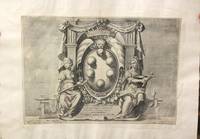
1617réf. B6037Cruger c. 1617. Engravings mounted on watermarked laid paper. Some tears to lower margins not affecting the plates. Staining on one plate. A very good attractive and rare set. Binding: Loose folio in an 18th century wrapper. Notes: c. 1617; exception: one leaf dated 1561 and signed by Antonio Salamanca in Rome. Size: Folio sheets of 405x555m Illustration: Folio set of 14 leaves of copper engravings. References confirm 14 including the tile. Illustrated allegorical title with the Medici arms flanked by female personifications of Justice at left and Faith at right; lettered with a dedication to Cosimo II of Tuscany by Jacobus Chitus with bottom right Teodoro Cruger sculp: 1617 altered in ink to 1618 Florentiae and at lower left five privileges: Cum Privil. S. Pontif S.C. Maiest. Repi. Venet. // M.D. Etrur. Reip Genuens et V.R.Neap. - p. x An.; frontis after self-portrait by Andra Del Sarto; twelve engravings depicting the story of Saint John the Baptist after paintings / frescos and later curtains by Andrea del Sarto at Florence and Franciabigio. References: Hollstein German 6 176 35; Hollstein 33; Le Blanc 1854-1890 2 72 7-20; Virtuelles Kupferstichkabinett 6382 and 6384 mention 14 plates. Pages: Ff: Title; Self-Portrait; 12 engravings. Category: Book Europe Italy; Book Religious Christianity; Book Plate Books General; Cruger unknown
1954réf. 21470Paris, Chez Grasset, 1954 ; in-quarto tellière broché, chemise-étui moderne ; 140 pp., [2]ff., couverture granitée jaune rempliée, imprimée en noir et chocolat ; page de titre imprimée en noir et vert printemps.
1950réf. 90943René Drouin | Paris 1950 | 19.7 x 28.5 cm | Broché
2002Signed by E.J. Hughes upon title page. 226 pages. Index of works. Chronology. Selected bibliography. Oblong 11" x 12". "Lavishly illustrated with 100 full colour and 25 black-and-white reproductions of prints, drawings and paintings, this is the first full-scale volume to honour the artistic life and work of E.J. Hughes from the start of his long career in the 1930s to the present... His unique talent for depicting the landscape in a way that both he and viewers believe it should be, rather than the way it actually is, enables us to experience and understand place and nature in new and deeper ways." - from dust jacket. Clean, bright and unmarked with very light wear. Dust jacket now preserved in glossy new archival-grade Brodart. A marvelous gift for any devotee of E.J. Hughes and his magnificent art. Book
1924réf. 136578émile Lévy, impr. G. Kadar, imprimeur, Paris 1924 2 volumes. In-folio 36 x 27,5 cm. 207- pp., 22-29 planches en couleurs montées sur onglets, 240-314 dessins dans et hors-texte, table des matières. Intérieur frais, bien complet des planches.
réf. 21352Grenoble, Editions du Grésivaudan, (1972).In-folio de 225 pp., 7 pp.n.ch., en ff. sous couverture rempliée imprimée, chemise et étui, chemise à lacets pour le portfolio des suites au format in-plano. .Magnifique édition, peu courante et injustement méconnue, illustrée de 16 lithographies originales en couleurs de Pierre PARSUS.Tirage à 299 exemplaires tous signés par l’artiste, exemplaire N°4 sur japon nacré avec 4 gouaches originales signées de format in in plano et 3 suites signées des 16 lithographies in plano, une sur Japon nacré,une sur soie contrecollé et une sur velin d’arches.
1959réf. 110021Paris, Librairie Floury, impr. Coulouma, à Argenteuil 1959 In-4 26,5 x 17,5 cm. Reliure janséniste plein maroquin rouge, signé Ed. Klein, sous étui bordé à l’identique, dos à nerfs, contreplats encadrés d’un triple filet doré, tête dorée, couverture illustrée et dos conservés, 247 pp., 16 aquarelles, peintures et dessins hors-texte et nombreuses reproductions dans le texte, appendice, André Dunoyer a exposé au Salon d’Automne, essai d’un catalogue des peintures, albums de dessins et illustrations de livres, catalogue sommaire de l’oeuvre gravée par Claude Roger-Marx, table des illustrations. Tirage de tête tiré à 200 exemplaires numérotés, comprenant quatre eaux-fortes originales supplémentaires sur trois annoncées et un état supplémentaire de la couverture avant la lettre. Celui-ci, N 70, enrichi d’un envoi autographe de l’artiste en page de garde. Bel exemplaire agréablement relié.
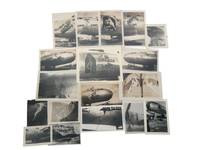
1943réf. 239731943. World War II military nose art photo archive circa 1940s documenting the names pin up figures cartoons and painted emblems through which American servicemen personalized aircraft during and immediately after the global conflict. Nose art occupied an unofficial visual culture alongside standardized military insignia allowing crews to attach humor sexuality regional identity private jokes and individual names to mass produced machines assigned by the armed forces. The practice became so widespread during World War II that pin ups cartoons and popular culture imagery applied to aircraft became commonly identified as "nose art" while surviving institutional collections preserve comparable photographs because the painted designs themselves were vulnerable to repainting damage reassignment and postwar disposal. Photo archive of 18 silver gelatin photographs measuring from 1.75 x 3 to 4 x 5 inches circa 1940s. The photographs concentrate on painted fuselage decorations and names on American military aircraft particularly heavy bombers such as the B-29 and B-24 with designs including glamorous women reclining pin ups cartoon figures lettering and comic imagery. Identifiable aircraft include "Supine Sue" subtitled "The international figure" with a reclining woman painted beside the cockpit; "The Arabian Lady" with a veiled or draped female figure; "The Dragon Lady" represented by a large female figure in a cloak; "Tail Wind" accompanied by a pin up; and "The Lady is a Tramp." Other views record "Forbidden Fruit" additional female figures painted at large scale on aircraft skins humorous character designs and servicemen posed beside decorated aircraft. Several photographs move closer to the painted surfaces preserving rivets mission markings lettering and the relationship between the illustrations and the industrial aluminum skin beneath them. One image records comparable decoration on a ship rather than an aircraft extending the group beyond aviation to the broader wartime practice of personalizing military equipment. Versos carry scattered numbers and handwritten identifications including one inscription reading "Charles Polutsky just before taking off from Alamogordo New Mexico to Gulfport Miss." while another photograph is dated "11/10/45." American servicemen had personalized aircraft before World War II but the scale of wartime mobilization made the practice especially visible across U.S. Army Air Forces units. Smithsonian collections preserve wartime photographs of named aircraft and nose art from the Pacific China Burma India and other theaters while the National Museum of the United States Air Force identifies pin up girls cartoons and contemporary popular imagery as characteristic forms of World War II aircraft decoration. Artists could be ground crewmen or servicemen with professional artistic experience: Army Air Forces photographer Robert Serotkin for example painted aircraft while serving during the war and Corporal Tony Starcer became known for painting the Memphis Belle and other aircraft of the 91st Bomb Group. The photographs preserve the intersection of standardized military machinery with an unofficial servicemen's culture that transformed individual aircraft into named and illustrated objects carrying the humor erotic imagery references and identities of their crews. Light to moderate handling wear occasional creasing edge wear tonal variation and scattered surface marks; several prints with handwritten or stamped verso markings. Overall in good condition. A concentrated photographic record of the vernacular art through which American servicemen personalized wartime aircraft and military equipment. unknown
1912réf. 016225Moscou Nauka 1912 In-12 Broché
1956réf. 1284Les Bibliophiles de l’Union Française, Paris 1956. 1 volume in-folio en feuilles sous couverture illustrée de 2 gravures à pleine-page, chemise-étui décoré de l'éditeur. Edition originale illustrée de 18 EAUX-FORTES ORIGINALES EN COULEURS ET RELIEFS D'ANDRÉ MASSON dont 10 à peine-page et 8 ornant les titres des poèmes. Tirage : 116 exemplaires, tous sur Auvergne du Moulin Richard de Bas, numérotés et nominatifs signés au crayon brun par l'éditeur, l'auteur et l'artiste. Troisième ouvrage édité par les Bibliophiles de l'Union Française. Poésies/proverbes populaires Malgaches "Les hain-teny ont leur secret, ce sont des poèmes doubles, dont le sens caché, et le seul efficace, relève d'une logique proverbiale, stricte et sévère (…) Quant au sens apparent, il traite d'amour. Jean Paulhan (1884-1968) vécut à Madagascar de janvier 1908 à novembre 1910. Il y occupa les fonctions de professeur de lettres au collège de Tananarive. Ses thèmes d’étude ne seront ni ceux des fonctionnaires ni ceux des missionnaires. Jean Paulhan aima la Grande Ile où le brouillard « marche lentement », le peuple dont il recueillit et traduisit les hain-teny. Trop secret ou impénétrable pour notre culture occidentale ? Le fait étrange est que contrairement au pantoum malais, ou au haïku japonais, le mot hain-teny n'est pas aujourd'hui retenu dans les dictionnaires de langue française…
1943réf. 239731943. World War II military nose art photo archive circa 1940s documenting the names pin up figures cartoons and painted emblems through which American servicemen personalized aircraft during and immediately after the global conflict. Nose art occupied an unofficial visual culture alongside standardized military insignia allowing crews to attach humor sexuality regional identity private jokes and individual names to mass produced machines assigned by the armed forces. The practice became so widespread during World War II that pin ups cartoons and popular culture imagery applied to aircraft became commonly identified as "nose art" while surviving institutional collections preserve comparable photographs because the painted designs themselves were vulnerable to repainting damage reassignment and postwar disposal. Photo archive of 18 silver gelatin photographs measuring from 1.75 x 3 to 4 x 5 inches circa 1940s. The photographs concentrate on painted fuselage decorations and names on American military aircraft particularly heavy bombers such as the B-29 and B-24 with designs including glamorous women reclining pin ups cartoon figures lettering and comic imagery. Identifiable aircraft include "Supine Sue" subtitled "The international figure" with a reclining woman painted beside the cockpit; "The Arabian Lady" with a veiled or draped female figure; "The Dragon Lady" represented by a large female figure in a cloak; "Tail Wind" accompanied by a pin up; and "The Lady is a Tramp." Other views record "Forbidden Fruit" additional female figures painted at large scale on aircraft skins humorous character designs and servicemen posed beside decorated aircraft. Several photographs move closer to the painted surfaces preserving rivets mission markings lettering and the relationship between the illustrations and the industrial aluminum skin beneath them. One image records comparable decoration on a ship rather than an aircraft extending the group beyond aviation to the broader wartime practice of personalizing military equipment. Versos carry scattered numbers and handwritten identifications including one inscription reading "Charles Polutsky just before taking off from Alamogordo New Mexico to Gulfport Miss." while another photograph is dated "11/10/45." American servicemen had personalized aircraft before World War II but the scale of wartime mobilization made the practice especially visible across U.S. Army Air Forces units. Smithsonian collections preserve wartime photographs of named aircraft and nose art from the Pacific China Burma India and other theaters while the National Museum of the United States Air Force identifies pin up girls cartoons and contemporary popular imagery as characteristic forms of World War II aircraft decoration. Artists could be ground crewmen or servicemen with professional artistic experience: Army Air Forces photographer Robert Serotkin for example painted aircraft while serving during the war and Corporal Tony Starcer became known for painting the Memphis Belle and other aircraft of the 91st Bomb Group. The photographs preserve the intersection of standardized military machinery with an unofficial servicemen's culture that transformed individual aircraft into named and illustrated objects carrying the humor erotic imagery references and identities of their crews. Light to moderate handling wear occasional creasing edge wear tonal variation and scattered surface marks; several prints with handwritten or stamped verso markings. Overall in good condition. A concentrated photographic record of the vernacular art through which American servicemen personalized wartime aircraft and military equipment. unknown books
1825réf. 109726Paris, chez Louis Janet, Libraire, impr. de l’Imprimerie de Crapelet, à Paris 1825 Fort in-12 17,5 x 12 cm. Reliure de l’époque plein maroquin rouge signée Chalin, papetier du Roi. Dos à nerfs plats, caissons ornés d’entrelacs végétaux dorés, plats encadrés d’un quadruple filet avec écoinçons et chiffre dorés au centre, contreplats moirés blanc encadrés par une large roulette entre deux doubles filets dorés, filets sur les coupes, tranches dorées, 644 pp. Ouvrage illustré de 8 lavis originaux en dégradé de sépia, avec des rehauts de gris aquarelle ou céruse. Sept de ces lavis, de format 9,3 x 6 cm, sont signés d’Achille Devéria, le huitième, un peu plus petit 7,2 x 4 cm mais de même facture, est de Louise Collin, une artiste qui parait avoir été élève de Devéria et qui a exposé au Salon dans les années 1830-1840. Les illustrations réprésentent : le Baptême de Jésus - Marie visitant Elisabeth - Jésus prêchant - Jésus devant Hérode - la Nativité et les rois mages - Jésus tombant sur le chemin de croix - la Résurrection Collin - Scène d’allaitement dans le désert lors de la fuite en égypte. Reliure légèrement frottée, rousseurs faibles et éparses. Exemplaire de qualité, peu courant.
1961réf. ABE-1530971246479Canton: Kuangtung Painters Association 1961 1961 First edition. Elephant folio 54.640cm wt: 8.3kg. 108 tipped-in color plates. Text in Chinese but there is a booklet in English with introduction and list of reproduced paintings laid in. Plastic dustjacket included. Blue silk covered boards. Photos available upon request. 1st Edition. Hardcover. Very Good/Dust Jacket Included. Canton: Kuangtung Painters Association, 1961 hardcover
1971réf. 17684Weber 1971 2 vol. In-4 relié toile éditeur sous jaquette, étui toilé, 286 pp. 237 reproductions dont 45 en couleurs. Tome 1 et seul paru. + 2 litho. sous porte folio toilé In-plano. Bel exemplaire.
1838réf. 5779Paris, Charles Gavard, 1838-1849. 1838 17 feuilles grand in-folio oblong de papier vélin ( 475 x 330 mm.) de: 17 gravures sur acier dont 5 en deux états, le second sur chine contrecollée. ( taches, déchirures marginales restaurées, quelques marges jaunies ou rousseurs). Non reliées, rangées dans un cartonnage recouvert de papier à la colle..
1843réf. 99454Paris, Gihaut frères 1843 In-folio 54 x 34,5 cm. Reliure demi-chagrin vert foncé, dos muet lisse orné de filets à froid, report du titre doré sur le premier plat, 21 planches hors-texte sous serpentes. Reliure légèrement frottée, planches très fraîches avec petite mouillure maginale en continu. Ouvrage peu courant, bien complet des 21 planches, la retraite et la prise de Constantine.
18976 vols., 8vo., First Edition thus, with 3 engraved frontispieces (original tissue guards present) and 87 engraved plates, some very light and inoffensive spotting; contemporary full vellum BY MACMILLAN & BOWES, bevelled boards, backstrips lettered in black, all edges gilt, marbled endpapers heightened with gilt, gilt doublures, a near fine set. The binding is signed on front free endpaper verso. A MOST ELEGANT SET AND VERY SCARCE INDEED IN THIS CONDITION.
1971réf. 116564Milano, Sergio Tosi 1971 In-4 à l’italienne 25 x 32 cm. Reliure éditeur toile beige, titre en biste sur le premier plat, composé de neuf compositions en pleine page, de quinze planches dépliantes de dessins en couleurs ainsi que deux gravures originales au même format que l’ouvrage, ces dernières sont signées et numérotées 41/90. Tirage limité à 90 exemplaires