40 risultati
1977rif. 227160Garden City New York Doubleday & Company Inc. 1977. 1977. First edition. 8vo. Profusely illustrated from b/w photographs. Index. Dust jacket with photo by Alex Gotfryd unclipped. Very good. 279 pages. No bookplates. Ink sketch of a woman on the rear pastedown. Boldly signed and inscribed by Greco on the front free endpaper in black ink: "To Clark best wishes Jose Greco.". Inscribed by Authors. 1st Edition. Hardcover. Very Good/Very Good. Garden City, New York, Doubleday & Company, Inc., 1977. hardcover books
rif. 48853Reading PA: Haage Concerts. Theater program. 8vo four leaves in paper wraps. Program signed on front by Jose Greco and Jose Molina. VG. Haage Concerts unknown books
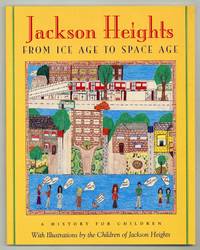
1996rif. 625523Jackson Heights Queens New York: Jackson Heights Beautification Group 1996. Softcover. Near Fine. First edition. Illustrated by the children of Jackson Heights as well as with a small portrait of each child artist. Slim small quarto. 48pp. Very light wear near fine in glossy wrappers. OCLC locates only four copies all in New York NYPL New York Historical Society Queens Borough Public Library Hofstra. Jackson Heights Beautification Group unknown books
rif. 502148Youthful photograph full-length dancing pose in costume signed and inscribed to African-American Los Angeles collector Joseph Huntley. 10" x 8". books
1969rif. 53767New York: Harry N. Abrams 1969. First English language edition. Hardcover. Near fine/very good . Elephant folio 16" x 13-1/2". 169 3pp. Plus 50 unnumbered leaves of plates. English text translated from the Italian. Color dust jacket spine lettered in pale yellow over blue cloth lettered in white. Illustrated with color plates many folding. Dust jacket with minor chips at extremities of bottom edge otherwise near fine. El Greco the Greek earned this name after he had left his native Crete to study in Italy and later to settle in Spain. For forty years he lived almost continuously in Toledo where he produced some of his greatest paintings. This volume focuses on the paintings of El Greco executed in Toledo during the last twenty years of his life. OCLC Contents: El Greco the expressionism of his final years / by Enrique Lafuente Ferrari -- Notes to the text -- What we know about the life of El Greco. His birth and youth in Crete ; The move to Italy ; His life and death in Toledo -- The magic of the environment. The city El Greco found ; Toledo between two centuries ; Religious life in Toledo ; Literary activity in Toledo ; The world of art -- The paintings done in Toledo. The Italian heritage ; The culmination of a new style ; The expressionist climax -- Annals of Toledo in the time of El Greco -- Notes to the Appendix -- Selective catalogue of El Greco's work in Spain -- Selective bibliography -- List of illustrations -- List of plates -- Topographical index of the plates. Harry N. Abrams hardcover books
1993rif. 38464Milano: Electa 1993. First edition. Hardcover. vg. Large quarto. 633 1pp. Original photo-illustrated dust-jacket over black cloth with white lettering on spine. Book housed in its photo-illustrated paper covered slipcase. Lavishly illustrated throughout with numerous floor plans architectural drawings and b/w photographic reproductions this massive volume reflects the architectural expressions of the labor cycle between 1872 and 1992. Sporadic rubbing with minor abrasion along edges of slipcase. Text in Italian. Slipcase in overall good- to good dust-jacket binding and interior in overall very good condition. Electa hardcover books
1959rif. M6174no place:: 1959-1967. 1959. 8vo. Various paginations. Illus. tables. Self-wraps and printed wrappers; 2 holes punched along spines. Ownership rubber stamps. Very good. From ancient Athens to nineteenth century Naples these 39 essays the group includes 9 duplicates cover such subjects as pelvimetrics shock obstetrics the contributions of individuals such as Girolamo Mercuriale Arnaldo Cantani how literature helps us understand historic medicine and much more. 1959-1967. paperback books
1960rif. 48969n.p.: n.p. 1960. Near fine. Presumed first edition of this photo-illustrated erotic pulp thriller full of sex violence Cold War sleaze and poisoned brandy. Following the best practices of espionage tradecraft the publisher of this sub-Flemingian adventure eliminated from its pages all clues to its issue and origin save for the $3.25 printed cover price. The story itself can be approximately dated by the cameo appearance of "Miss Marlene Dietrich queen of the nightclubs slithering onto the stage" in a white diamonté sheath dress and fox fur; also by the use of a Ford Zephyr. Scarce. 7'' x 4''. Original pictorial wrappers. Illustrated with black and white photographs of nude women presumably spies. Unpaginated. Price sticker residue to front cover red remainder mark to lower edge of text block. Minor traces of soil and edgewear to wrappers. n.p. unknown books
1993rif. 154515Napoli Naples Italy: Tullio Pironti Editore 1993. Hardcover. VG- Slipcase has some scuffs and small nicks; book is quite nice and clean. Cream cloth color illus. dust jacket 194 pp. of text plus 472 pp. of plates mostly in color; held in cardboard slipcase with matching illus. to dj. Text is in Italian. A sizable coffee table book offering paintings of Naples from the 19th century. Begins with three narrative essays. The majority of the book contains full-page full-color illustrations. The checklist cites 453 pieces; and surely most if not all are pictured here. Includes sizable artist bios and an extensive bibliography. Scarce and breath-taking. Tullio Pironti Editore hardcover books
1958rif. 154975N.p.: N.p. 1958. Vintage borderless photograph of composer Michel Legrand and chanteuse Juliette Greco circa 1958. Stamp of photographer Guy Le Page on the verso. Greco and Legrand collaborated on several releases in the 1950s and 1960s most notably Greco's self-titled album produced by Columbia in 1960. 7.25 x 7.25 inches. Near Fine. N.p. unknown books
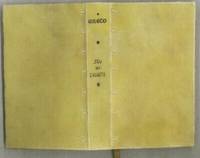
1713rif. C0588343 pages. Duodecimo 5 ½" x 3 ¼". Bound in vellum with black lettering to spine. Originally written in 1619 in Italian. Biblioteca van Der Niemeijeriana: 402 Gioachino Greco also known as Il Calabrese was born around 1600 in Celico which near Cosenza in Calabria. Calabria had already produced such players as Leonardo di Bono and Michele di Mauro. From his writing it's apparent the he wasn't educated and likely came from a lower class family. Already in 1619 Greco started keeping a notebook of tactics and particularly clever games and he took up the custom of giving copies of his manuscripts to his wealthy patrons. In Rome Monsignor Corsino della casa Minutoli Tegrini Cardinal Savelli and Monsignor Francisco Buoncompagni all received copies of which there are extant copies dated 1620 in the Corsiniana library in Rome under the title Trattato del nobilissimo gioco de scacchi. Despite his popularity in Rome in 1621 Greco took off to test himself against the rest of Europe leaving this paper trail as he went. In 1621 he left a fine copy of his manuscripts with Duke Enrico of Lorraine in Nancy. He traveled to Paris where he played Arnauld Isaac de Corbeville Enrico di Savoia the Marquis of St. Sorlin and the Duke of Nemours and Geneva and others. He had apparently been quite successful because in traveling from Paris to England he was waylaid by robbers who divested him of 5000 scudi a princely sum. Finally making it to London he beat all the best players. Sir Francis Godolphin and Nicholas Mountstephen were given copies of his manuscripts. While in London Greco developed an idea to record entire games rather than positions for study and inclusion in his manuscripts. He returned to Paris in 1624 where he rewrote his manuscript collection to reflect his new ideas. He then went to Spain and played at the court of Philip IV. There he beat his mentor and the strongest player of the time other than himself don Mariano Morano. He finally returned to Italy where he was enticed to traveling to the New Indies the Americas by a Spanish nobleman. He seemingly contracted some disease there and died around 1630 possibly 1634 at the young age of 30 34. He generously left all the money he earned at chess to the Jesuits. Gioachino Greco stood head and shoulders above his contemporaries a feat seldom duplicated. David Hooper in The Oxford Companion to Chess states that Greco probably made up the games in his manuscripts. The question of whether he actually played the games or invented them is rather moot since if he invented them he was perfectly capable of playing them. Condition: Old owner's inscription laid in to both front and back paste downs some slight foxing still has the original ribbon book mark. Other wise a good copy. Chezz Jacques Le Febvre hardcover books
1689rif. C0924343 pages with woodcut printer's device on title. Duodecimo 5 1/2 x 3 1/4. Bound in leather with raised spine bands and gilt to spine. Originally written in 1619 in Italian. From the library of Lothar Schmid. Biblioteca van Der Niemeijeriana: 400 Third French edition. Gioachino Greco also known as Il Calabrese was born around 1600 in Celico which near Cosenza in Calabria. Calabria had already produced such players as Leonardo di Bono and Michele di Mauro. From his writing it's apparent the he wasn't educated and likely came from a lower class family. Already in 1619 Greco started keeping a notebook of tactics and particularly clever games and he took up the custom of giving copies of his manuscripts to his wealthy patrons. In Rome Monsignor Corsino della casa Minutoli Tegrini Cardinal Savelli and Monsignor Francisco Buoncompagni all received copies of which there are extant copies dated 1620 in the Corsiniana library in Rome under the title Trattato del nobilissimo gioco de scacchi. Despite his popularity in Rome in 1621 Greco took off to test himself against the rest of Europe leaving this paper trail as he went. In 1621 he left a fine copy of his manuscripts with Duke Enrico of Lorraine in Nancy. He traveled to Paris where he played Arnauld Isaac de Corbeville Enrico di Savoia the Marquis of St. Sorlin and the Duke of Nemours and Geneva and others. He had apparently been quite successful because in traveling from Paris to England he was waylaid by robbers who divested him of 5000 scudi a princely sum. Finally making it to London he beat all the best players. Sir Francis Godolphin and Nicholas Mountstephen were given copies of his manuscripts. While in London Greco developed an idea to record entire games rather than positions for study and inclusion in his manuscripts. He returned to Paris in 1624 where he rewrote his manuscript collection to reflect his new ideas. He then went to Spain and played at the court of Philip IV. There he beat his mentor and the strongest player of the time other than himself don Mariano Morano. He finally returned to Italy where he was enticed to traveling to the New Indies the Americas by a Spanish nobleman. He seemingly contracted some disease there and died around 1630 possibly 1634 at the young age of 30 34. He generously left all the money he earned at chess to the Jesuits. Gioachino Greco stood head and shoulders above his contemporaries a feat seldom duplicated. David Hooper in The Oxford Companion to Chess states that Greco probably made up the games in his manuscripts. The question of whether he actually played the games or invented them is rather moot since if he invented them he was perfectly capable of playing them. Lothar Maximilian Lorenz Schmid 10 May 1928 – 18 May 2013 was a German chess grandmaster. He was born in Radebeul near Dresden into a family who were the co-owners of the Karl May Press which published the German Karl May adventure novels. He was best known as the chief arbiter at several World Chess Championship matches in particular the 1972 encounter between Bobby Fischer and Boris Spassky at Reykjavic. He was also an avid collector of chess books and paraphernalia. It was reputed that he owned the largest known private chess library in the world as well as a renowned collection of chess art chess boards and chess pieces from around the globe. Condition: Leather rubbed and scuffed Lothar Schmid's label to front paste down. Spine label missing spine bands rubbed old neat signature to title some doodling to back end papers else a good copy. Jacques le Febure hardcover books
1656rif. 21872London: Printed for Henry Harriman 1656. First edition. Hardcover. Very good. 12mo. 141202. Plate of chessboard present. Contemporary sheep blind rules on the boards. Light dampstain across the top the leather cracked and rubbed especially at the spine lacking the preliminary blank and the portrait of the King else a very good copy. Makes one wonder if the portrait of Charles II was deliberately destroyed. A translation by Francis Beale of Trattato del Nobilissimo Giuco degli Scacchi by Giachino Greco and consists of 94 chess gambits. Contains the first documented use of 'castle' as a chess verb according to the OED. ESTC R23418; Wing G1810. . Printed for Henry Harriman hardcover books
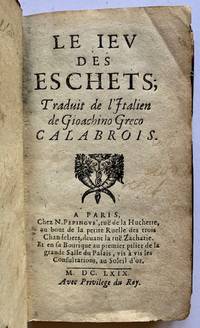
1669rif. 20514Paris: Chez N. Pepingve Avec Privilege du Roi 1669. Full leather. The 1669 1st French edition --and 1st published edition-- of Gioachino Greco's seminal "Le Jeu des Eschets". Greco c. 1600 - c. 1634 was the strongest player in Europe in the early 17th century and among the first to record entire games not just particular openings or combinations. His vast influence as cited by H.J.R. Murray among other historians of the game is keenly felt to this day. This copy is likely in its original full-leather binding certainly in a contemporary-to-the-period binding. Solid and VG with minor forgivable wear along the edges and the preliminaries. The interior though is very clean the pages surprisingly crisp and clean. Originally recorded by hand in Greco's native Italian here translated --and issued in book form-- for the first time. Chez N. Pepingve (Avec Privilege du Roi) unknown books