2.596 resultados
1995ref. 68591Ionike Trapeza. New. Paperback. FREE UPGRADE to Courier/Priority Shipping Upon Request - IN STOCK AND IMMEDIATELY AVAILABLE FOR SHIPMENT - Flawless copy brand new pristine never opened -- Text in Greek and English with portions in Greek only. 568 pp. With 405 ills. 299 col. and 52 reference ills. 29 x 21 cm. -- with a bonus offer-- . 1995. Ionike Trapeza paperback
1968ref. 59367Pescia Italy: Palazzo Di Valchiusa. As New. Paperback. FREE UPGRADE to Courier/Priority Shipping Upon Request – – IN STOCK AND IMMEDIATELY AVAILABLE FOR SHIPMENT - AS NEW THE TEXT BLOCK IS PRISTINE CLEAN UNMARKED AND IN EXCELLENT CONDITION - - Text in Italian. 32 pp. With 9 ills. 25 x 20 cm. -- with a bonus offer-- . 1968. Palazzo Di Valchiusa paperback
2009ref. 123590Viaindustriae. New. Paperback. FREE UPGRADE to Courier/Priority Shipping Upon Request - IN STOCK AND IMMEDIATELY AVAILABLE FOR SHIPMENT - Flawless copy brand new pristine never opened . Text in Italian. – with a bonus offer-- . 2009. 8890345942 . Viaindustriae paperback
1995ref. 89060Westport Connecticut U.S.A.: Quorum Books. New. Hardcover. FREE UPGRADE to Courier/Priority Shipping Upon Request - IN STOCK AND IMMEDIATELY AVAILABLE FOR SHIPMENT - FLAWLESS COPY BRAND NEW PRISTINE NEVER OPENED -- with a bonus offer--; T-Michma; DECISION MAKING MARKETING MANAGEMENT RETAIL . 1995. 0899308694 . Quorum Books hardcover
ref. 118827Skira. New. Paperback. FREE UPGRADE to Courier/Priority Shipping Upon Request - IN STOCK AND IMMEDIATELY AVAILABLE FOR SHIPMENT - IN STOCK AND IMMEDIATELY AVAILABLE FOR SHIPMENT - Flawless copy brand new pristine never opened - Text in Italian. -- with a bonus offer-- . 8857230627 . Skira paperback
2012ref. 102231Hatje Cantz. New. Hardcover. FREE UPGRADE to Courier/Priority Shipping Upon Request - IN STOCK AND IMMEDIATELY AVAILABLE FOR SHIPMENT - Flawless copy brand new pristine never opened -- 416 pages; 305 illustrations most in color. -- with a bonus offer-- . 2012. 3775733272 . Hatje Cantz hardcover
1941ref. 103761M. Knoedler & Co. Inc. ; Et Al. As New. Paperback. FREE UPGRADE to Courier/Priority Shipping Upon Request - IN STOCK AND IMMEDIATELY AVAILABLE FOR SHIPMENT - AS NEW THE TEXT BLOCK IS PRISTINE CLEAN UNMARKED AND IN EXCELLENT CONDITION - - 17 works catalogued and illustrated in black and white. -- with a bonus offer-- . 1941. M. Knoedler & Co. , Inc. ; Et Al paperback
ref. 9575Traduit de l’italien de Giochino GRECO, Calabrois. In 12 plein cuir fauve raciné à nerfs, pièce de titre cuir rouge, fers, filets dorés, roulette dorée sur coupes, titre XXII, 343 pages. Tranches jaspées A Paris chez la Veuve de N. PEPINGUE, 1689.Petites restaurations à la charnière droite, sinon bon exemplaire de cette très rare seconde édition française.
1554In-16°; pp. (32) marca tipografica incisa su legno al forntespizio; nel testo un foro di tarlo passante. Hoffmann III p. 1. Legatura in piena pelle con cornice a filetto dorata ai piatti, titolo e fregi in oro al dorso. Dorso restaurato.
1523In-8 p. (mm. 200x145), p. pergamena antica (risg. rifatti), 56 cc.nn., con pregevole frontespizio entro elaborata cornice di Ambrosius Holbein, inc. su legno; al verso dell’ultima carta marca tipografica con la Fortuna nuda; ornato da due belle grandi iniziali figurate a vignetta, pure xilografate. Testo in greco con traduzione latina a fronte. Cfr. Graesse,V, 53 - Brunet,IV, 238: “Edition rare. C’est, pour le texte, une réimpression de celui de Junte, mais la version a été faite sur un bon manuscrit. On la retrouve dans le "Valerius Flaccus" d’Alde, 1523, et dans celui de Burman, 1724” - Adams,II,O-315 - Choix de Olschki,III,3493 - Olschki “Livres à figures des XV et XVI Siècles”, 341: “Texte grec et traduction latine, faite par Leodrisio Crivelli, savant de la cour du Pape Pio II. Edition fort bien imprimée. La bordure montre aux cotés les figures de Lucrèce et de Judith, en bas la Fortune nue, enseigne de Cratander, qui se repète, plus grande et mieux exécutée, au verso du dernier f. Très bel exemplaire”. Leggerm. corto del marg. super., altrimenti fresco esemplare ben conservato.
ref. 105884Philips, vendredi 19 septembre 1958, EP, titres inscrits de manière manuscrite sur chaque face. Face A : Guy Béart chante Chandernagor Face B : Greco chante Qu'on est bien… Dans son plastique d'origine Philips 45.
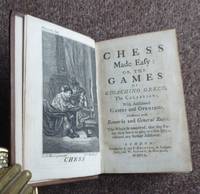
ref. 53883London printed for J. and P. Knapton in Ludgate-Street and W. Sandby in Fleet-Street MDCCL 1750. TITLE CONTINUED: The Whole so contrived that any Person may learn to play in a few Days without any farther Assistance. SECOND EDITION 1750. A translation of Greco's Tratto del nobilissimo giuoco degli scacchi. 12mo approximately 4¾ x 3 inches engraved frontispiece and a double page engraved plate of a chess board pages: xiii 1 1-212 errata leaf following page xxiii bound in full calf gilt lettered title label and gilt rules and date to spine gilt rule to edges of covers. Binding slightly rubbed margin of pages 3 and 6 have old ink note not affecting text occasional pale spotting small tear to lower margin of chessboard see attached image a very good copy. See: Whyld and Ravilious Chess Texts in the English Language Printed before 1850 page 37 No. 1750:1; ESTC T128171. MORE IMAGES ATTACHED TO THIS LISTING ALL ZOOMABLE FURTHER IMAGES ON REQUEST. POSTAGE AT COST. London, printed for J. and P. Knapton in Ludgate-Street and W. Sandby in Fleet-Street, MDCCL, 1750.
1785In-4 p. (mm. 307x219), mz. pelle coeva, tit. ms. su tassello al dorso, occhietto (a noi mancante), 16 pp., occhietto greco, 110 pp.; frontespizio in latino, XXXV pp., occhietto latino, 248 pp. “Opera Omnia” di Esiodo con testo in greco e in latino. Ritratto del poeta in medaglione, inc. in rame, ai due frontespizi; dedica in versi latini di Bernardus Zamagna “Ad Ferdinandum Austriacum ecc..”. Nel frontespizio latino si legge: “Hesiodi Opera Omnnia latinis versibus expressa atque illustrata a Bernardo Zamagna Ragusino”. "Prima edizione" bodoniana. Cfr. Brooks,290. Macchiette sul solo verso del primo frontesp.; tracce d’uso sulle prime 5 carte, altrimenti fresco esemplare con barbe .
1975in-4°, pp. 157 con numerosissime ill. n.t., 6 prove d'artista f.t. su materiali diversi numerate 8/100 numerate e firmate (quella su metallo per errore è numerata 9 invece di 8). Leg. a cartella edit. fig. Tracce d'uso e del tempo. con rinforzo con nastro adesivo alle cerniere.
1689ref. C0924343 pages. Duodecimo 5 ½" x 3 ¼". Bound in leather with raised spine bands and gilt to spine. Originally written in 1619 in Italian. From the library of Lothar Schmid. Biblioteca van Der Niemeijeriana: 400 Third French edition. Gioachino Greco also known as Il Calabrese was born around 1600 in Celico which near Cosenza in Calabria. Calabria had already produced such players as Leonardo di Bono and Michele di Mauro. From his writing it's apparent the he wasn't educated and likely came from a lower class family. Already in 1619 Greco started keeping a notebook of tactics and particularly clever games and he took up the custom of giving copies of his manuscripts to his wealthy patrons. In Rome Monsignor Corsino della casa Minutoli Tegrini Cardinal Savelli and Monsignor Francisco Buoncompagni all received copies of which there are extant copies dated 1620 in the Corsiniana library in Rome under the title Trattato del nobilissimo gioco de scacchi. Despite his popularity in Rome in 1621 Greco took off to test himself against the rest of Europe leaving this paper trail as he went. In 1621 he left a fine copy of his manuscripts with Duke Enrico of Lorraine in Nancy. He traveled to Paris where he played Arnauld Isaac de Corbeville Enrico di Savoia the Marquis of St. Sorlin and the Duke of Nemours and Geneva and others. He had apparently been quite successful because in traveling from Paris to England he was waylaid by robbers who divested him of 5000 scudi a princely sum. Finally making it to London he beat all the best players. Sir Francis Godolphin and Nicholas Mountstephen were given copies of his manuscripts. While in London Greco developed an idea to record entire games rather than positions for study and inclusion in his manuscripts. He returned to Paris in 1624 where he rewrote his manuscript collection to reflect his new ideas. He then went to Spain and played at the court of Philip IV. There he beat his mentor and the strongest player of the time other than himself don Mariano Morano. He finally returned to Italy where he was enticed to traveling to the New Indies the Americas by a Spanish nobleman. He seemingly contracted some disease there and died around 1630 possibly 1634 at the young age of 30 34. He generously left all the money he earned at chess to the Jesuits. Gioachino Greco stood head and shoulders above his contemporaries a feat seldom duplicated. David Hooper in The Oxford Companion to Chess states that Greco probably made up the games in his manuscripts. The question of whether he actually played the games or invented them is rather moot since if he invented them he was perfectly capable of playing them. Lothar Maximilian Lorenz Schmid 10 May 1928 – 18 May 2013 was a German chess grandmaster. He was born in Radebeul near Dresden into a family who were the co-owners of the Karl May Press which published the German Karl May adventure novels. He was best known as the chief arbiter at several World Chess Championship matches in particular the 1972 encounter between Bobby Fischer and Boris Spassky at Reykjavic. He was also an avid collector of chess books and paraphernalia. It was reputed that he owned the largest known private chess library in the world as well as a renowned collection of chess art chess boards and chess pieces from around the globe. Jacques le Febure books
1689ref. 267448Paris: Jacques Le Febvre 1689. Second French edition. 24 344 pp. 1 vols. 12mo. Modern plain calf red morocco spine label. Text browned some spotting and dampstaining towards rear of volume. Second French edition. 24 344 pp. 1 vols. 12mo. Translated from the Italian of Gioachino Greco c.1600-1634 considered by some to be the first professional chess player. Greco was one of the most celebrated players of the seventeenth century and importantly recorded many of his matches as he travelled across Europe. A complete copy of one of the most famous early chess books. DeLucia 2nd ed. p. 61; Niemeijer 400; Schmid 187 Jacques Le Febvre unknown books
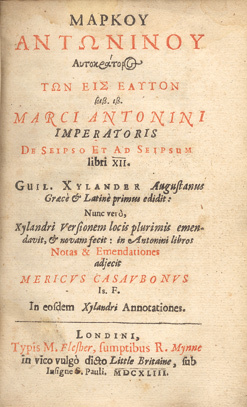
1643ref. 6506London, Flesher, R. Mynne, 1643 ; petit in-8 ; plein veau glacé havane, dos à nerfs richement décoré et doré, titre doré, double filet doré d'encadrement des plats avec au centre les armes de Louis-Urbain Le Fevre, seigneur de Caumartin, marquis de Saint-Ange, comte de Moret (OHR, 651), roulette sur les coupes (reliure fin du XVIIe - déb. XVIIIe) ; (56), 343, (1 bl.), 148, (4) pp. (bien complet du feuillet blanc qui suit le feuillet de titre).
1689ref. C0924343 pages with woodcut printer's device on title. Duodecimo 5 1/2 x 3 1/4. Bound in leather with raised spine bands and gilt to spine. Originally written in 1619 in Italian. From the library of Lothar Schmid. Biblioteca van Der Niemeijeriana: 400 Third French edition. Gioachino Greco also known as Il Calabrese was born around 1600 in Celico which near Cosenza in Calabria. Calabria had already produced such players as Leonardo di Bono and Michele di Mauro. From his writing it's apparent the he wasn't educated and likely came from a lower class family. Already in 1619 Greco started keeping a notebook of tactics and particularly clever games and he took up the custom of giving copies of his manuscripts to his wealthy patrons. In Rome Monsignor Corsino della casa Minutoli Tegrini Cardinal Savelli and Monsignor Francisco Buoncompagni all received copies of which there are extant copies dated 1620 in the Corsiniana library in Rome under the title Trattato del nobilissimo gioco de scacchi. Despite his popularity in Rome in 1621 Greco took off to test himself against the rest of Europe leaving this paper trail as he went. In 1621 he left a fine copy of his manuscripts with Duke Enrico of Lorraine in Nancy. He traveled to Paris where he played Arnauld Isaac de Corbeville Enrico di Savoia the Marquis of St. Sorlin and the Duke of Nemours and Geneva and others. He had apparently been quite successful because in traveling from Paris to England he was waylaid by robbers who divested him of 5000 scudi a princely sum. Finally making it to London he beat all the best players. Sir Francis Godolphin and Nicholas Mountstephen were given copies of his manuscripts. While in London Greco developed an idea to record entire games rather than positions for study and inclusion in his manuscripts. He returned to Paris in 1624 where he rewrote his manuscript collection to reflect his new ideas. He then went to Spain and played at the court of Philip IV. There he beat his mentor and the strongest player of the time other than himself don Mariano Morano. He finally returned to Italy where he was enticed to traveling to the New Indies the Americas by a Spanish nobleman. He seemingly contracted some disease there and died around 1630 possibly 1634 at the young age of 30 34. He generously left all the money he earned at chess to the Jesuits. Gioachino Greco stood head and shoulders above his contemporaries a feat seldom duplicated. David Hooper in The Oxford Companion to Chess states that Greco probably made up the games in his manuscripts. The question of whether he actually played the games or invented them is rather moot since if he invented them he was perfectly capable of playing them. Lothar Maximilian Lorenz Schmid 10 May 1928 – 18 May 2013 was a German chess grandmaster. He was born in Radebeul near Dresden into a family who were the co-owners of the Karl May Press which published the German Karl May adventure novels. He was best known as the chief arbiter at several World Chess Championship matches in particular the 1972 encounter between Bobby Fischer and Boris Spassky at Reykjavic. He was also an avid collector of chess books and paraphernalia. It was reputed that he owned the largest known private chess library in the world as well as a renowned collection of chess art chess boards and chess pieces from around the globe. Condition: Leather rubbed and scuffed Lothar Schmid's label to front paste down. Spine label missing spine bands rubbed old neat signature to title some doodling to back end papers else a good copy. Jacques le Febure hardcover
1714ref. 17793Paris: Denis Mouchet 1714. Contemporary mottled calf richly gold-tooled spine red sprinkled edges. 12mo. With a woodcut decoration on the title page and a woodcut headpiece in text. Late edition of the French translation of one of the most famous early chess books originally written in Italian and first presented in manuscript by the author the famous Calabrian chess player Giocchino Greco ca. 1600-1635 to the King of Naples in 1619. At first only manuscript transcriptions were made. The first French edition appeared in 1669 after the first English edition of 1656. After a short explanation of the general principles of the game of chess it teaches chess players by presenting chess games and problems only often with a possible defense added as well. The book is divided into two parts the first with 39 games extensively recorded and the second part with 55 more advanced chess problems.With a partly removed owner's inscription on the title-page repeated and partly removed at the first page of the main text. Slightly browned but otherwise in very good condition. Binding slightly rubbed and with slightly soiled paste-downs otherwise very good.l Bibl. Van der Linde-Niemeijeriana 404; Cat. Schaakboekerij Niemeijer 989; Coll. Rimington-Wilson 566. Denis Mouchet, unknown
2009ref. SBBIH-LUIXF2SUXIMELeckie 2009. paperback. New. Our books are dispatched from a Yorkshire former cotton mill. We list via barcode/ISBN so please note that the images are stock images and may not be the exact copy you receive furthermore the details about edition and year might not be accurate as many publishers reuse the same ISBN for multiple editions and as we simply scan a barcode or enter an ISBN we do not check the validity of the edition data when listing. If you're looking for an exact edition please don't order at least not without checking with us first although we don't always have time to check. We aim to dispatch prompty the service used will depend on order value and book size. We can ship to most countries see our shipping policies. Payment is via Abe only. Leckie paperback
1546This is the second and last volume of the New Testament. In-16° antico (cm. 12x7,6), pp. 361, (3). Fini e insolite testatine (e capilettera) di sinuose intricate volute al tratto. Solida piena perg. rigida antica, con tit. aggiunto poi a penna al ds. Ben risarcita e integrata con perg. antica una piccola mancanza al bordo inferiore del piatto ant. e alla cuffia inf. Perfetto nelle sue barbe l'interno, in cui ogni pagina è stata inquadrata originalmente da fini precisi filetti rossi tracciati a cura dell'editore. Antico ex libris (parrebbe coevo) a penna "Francisci Boutillier". Si tratta del 2° vol. del "Novum Testamentum", contenente il TESTO GRECO delle Epistole di Paolo, delle Epistole "cattoliche", e dell'Apocalisse. Una delle più belle edizioni di Roberto STEFANO (Parigi 1499-Ginevra 1559), il "Manuzio francese", prestigioso figlio d'arte, umanista, uno dei primi a stampare in eleganti caratteri greci; "per aver pubblicato una Bibbia con la versione di Leone Giudeo e con note alterate da Calvino, fu poi costretto a fuggire da Parigi, riparò a Ginevra e passò al Protestantesimo" (Diz. Eccl., 3, p. 976). In questa ed. e in quelle del 1549 e 1550 introdusse nel testo erasmiano correzioni dalla versione Poliglotta Complutense; solo più tardi, nel 1551, vi abbinò il testo latino e divise il testo greco per la prima volta in versetti (Cath. Encycl.). Al front., bella FIGURA xilogr. (stupendo serpente attorcigliato a una fronzuta lancia, sopra dedica in greco. All'ultima facciata, grande MARCA editoriale con saggio indicante un albero con fronde e frutti, da cui cadono alc. rami (motto su cartiglio "Altum sapere"). Dal 1542 era atto nominato "Regio Tipografo" da Francesco I, che aveva incaricato Claude Garamond di fondere i caratteri greci disegnati dal calligrafo cretese Angelos Vergikios (Ange Vergèce), famosi come i "grecs du Roi". RARISSIMO E IMPORTANTE, censito da ICCU solo alla Casanatense e alla Naz. di TO, che posseggono anche il vol. precedente.
1568[Prima Edizione-Mitologia (cm. 21,5) ottima mz. pergamena sec. XVII e piatti con musica rosso e nero (restaurata secolo XIX). -- cc. 340 con molti passi in greco. Capilettera figurati ed eleganti caratteri. Edizione originale di grande rarità di questo classico della mitologia, costumi tradizioni e usanze. Manca all' Adams, Choix, Moranti e Brunet. Stampata senza note tipografiche, è di incerta attribuzione. Al frontis ed in fine due bellissime marche tipografiche diverse con fontane. Solo la marca del frontis è riprodotta da Zappella fig. 559. VAccaro ignora tutte e due le marche. Ascrelli-Menato p. 388 indica tre tipografi che hanno usato la marca del frontis: Comin da Trino, Bartolomeo Cesano e Girol. Zenaro. Bm. Stc. la attribuiscono a Comin da Trino. Nessun riferimento invece per la bella e grande marca in fine. Alcune macchie a carta 277 che non impediscono la lettura ma esemplare molto bello e marginoso. * Bm. Stc. p.196; * Graesse II 236.[f61] Libro
ref. #[42175]39239227342 pag. bound in 3 early 20th century board bindings. Good copy. Illustrated with 2 titleprints and 8 mostly folding engravings. Parts of the text are by Philippe Stamma and A.D. Philidor. The plays: Jeux de cartes billard mail courte-paume longue-paume trictrac revertir toute-table tourne-case dames rabattues plain toc & echecs the chess-part occupies pages 184-392 and 1-273. unknown
1928ref. 4601Paris Les Editions d'art Devambez 1928 grand in-4 en feuilles Paris, Les Editions d'art Devambez, 1928. 33,5 x 26 cm, grand in-4, (4) 109 (6) pp. - frontispice et 14 planches hors texte d'après Le Gréco, 8 larges en-têtes, vignette de titre et 7 culs-de-lampe également gravés, en feuilles sous couverture blanche rempliée et imprimée, chemise et étui.
1566In-4°; Edizione originale rara; frontespizio entro cornice incisa su legno e marca tipograica; l’opera è preceduta da un capitolo sull’alfabeto greco e sulla pronuncia, e si chiude con “De dialectis ex Corintho”, “Diferentiae dictionumob accentum”, “De verbis anomalis” e altre note di grammatica. legatura XVII sec. in piena pelle con fregi e tassello con titolo in oro al dorso, tagli in rosso. Alle ultime carte lieve gora di umidità al margine interno.