BORTOLON Liana -MareMagnum

2537 risultati
1976Milano, Istituto d'Arte Mondadori, 1976, 8vo (cm. 21,5 x 13,5) cartonato con sovraccoperta illustrata a colori, pp. 77 ampiamente illustrato da fotografie e tavole fotografiche in nero e a colori. Edizione fuori commercio di 3000 esemplari.
1937In-8° pp. LX e 320 tavole di foto. Legatura in tela edit. con titolo al piatto e dorso. Buono stato.
rif. 9782822244770Jungle
1842(Codice LL/1799) In 16° (18,5 cm) XVI-270(1) pp. Prima e unica edizione italiana, rara. Testo incorniciato. Brossura editoriale, dorso usato, fragile. Lievi ingialliture, volume a pieni margini, con barbe. Buono stato. ~~~ SPEDIZIONE IN ITALIA SEMPRE TRACCIATA
1967rif. 149567Puf Paris, Puf, 1967. In-8 broché de 184 pages. Bel exemplaire.
Roma-Torino,Roux e Viarengo, 1902. In 16°pp.62n.copp.rif.
rif. 9456Paris, Presses de la Cité, 1969 13 x 21, 249 pp., cartonnage éditeur + jaquette, bon état
1989Galatina, Editrice Salentina, 1989, in-8, br., pp. 165, (3). Con facsimili, 60 ill. in b.n. e 4 a col. f.t.
2015br. Quello del diritto è il campo in cui il mondo greco e quello romano si rivelano più lontani. Da una parte, la società greca, dove le città-stato organizzano la loro vita interna per lo più in base a leggi non scritte, tanto che si deve parlare di 'diritti' greci, piuttosto che di 'diritto' greco. Dall'altra parte, la società romana, con una legislazione e una scienza del diritto che hanno dato l'impronta alla cultura giuridica del nostro mondo. Le preziose ricostruzioni di Bretone e Talamanca restituiscono i due diversi modelli di interpretazione e regolamentazione dei rapporti tra individui e istituzioni.
2001(Codice LO/8684) In 8° 160 pp., alcune illustrazioni. Brossura editoriale, come nuovo. ~~~ SPEDIZIONE IN ITALIA SEMPRE TRACCIATA
1908testo neogreco in 16°, tela edit. ill., copertina leggermente sbiadita
1927In-24 gr., tela editoriale, pp. XVI,696. Offriamo la Parte I di questo dizionario uscito in 2 volumi (la seconda parte dedicata all’italiano-greco). Seconda edizione. Ben conservato.
1927Volume in 16°. Legatura cartonata in tela rossa con scritte sul piatto e sul dorso. Pagine 696. ottime condizioni. COMPLETO
In 16°, tela edit., pp.672. Ottima copia.
1983Mm 105x160 Ristampa anastatica autorizzata dell'edizione nei Manuali Hoepli del 1927 - Volume in copertina rigida, 672 pagine. Firma a penna in apertura e chiusura, peraltro esemplare in buone/ottime condizioni. SPEDIZIONE IN 24 ORE DALLA CONFERMA DELL'ORDINE.
2001rif. SL-8881583070Charta 2001-02-01. paperback. New. In shrink wrap. Looks like an interesting title! Charta paperback
2001rif. Q-8881583070Charta 2001-04-15. Paperback. New. In shrink wrap. Looks like an interesting title! Charta paperback
1950pp. 128, cm 33x25, rilegatura editoriale in t.t., 48 illustrazioni a colori applicate.
1983rif. 38718Albin Michel 1983 Sur la couverture : Le Greco. In-4, cartonnage éditeur toile bordeaux, 238pp., illustrations noir et blanc et couleurs.
1983rif. 230021Berlin : Frölich u. Kaufmann, 1983. 238 S. : zahlr. Ill. (z.T. farb.), 30 cm. Bibliothekseinband, gebundene Ausgabe.
rif. 2443, Boston, Brown and Company, 1982., Paperback, original wrappers illustrated in color, 21x29,5cm, 275pp, illustrated in color and b/w. ISBN 0821215019.
17864 Vol. In-16 p. pelle, tit. su tass e decoraz oro al dorso.Risg. e tagli marm pag. XVI-494+VIII-472+VIII-560+510 num. inc. f. t Dorsi stanchi PROG 34504 CATT_ATT 46
1878(Codice LL/2236) In 8° (20,5 cm) XVI-540 pp. Testo su 2 colonne. Mezza pelle dell'epoca, una cernira fessurata, ma valida, titolo e filetti oro. Buono stato. ~~~ SPEDIZIONE IN ITALIA SEMPRE TRACCIATA
1954Bruno Lavagnini Epitome. Nuovo corso teorico e pratico di lingua greca, vol. 1°. , Palumbo 1954, Copertina cartonata sporca lievemente, bordi stanchi lievemente. Sovracoperta artigianale in plastica di protezione, sporca lievemente. Tagli e pagine ingialliti lievemente. Sottolineature e appunti in matita. Lo stato dell'opera è dovuto alle sottolineature, ma lo stato generale è da ritenersi buono. Mediocre (Poor) . 306
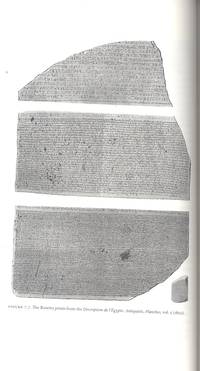
2020rif. 009317Princeton University Press Princeton 2020 2020. 1st Edition 1st Printing. Hardcover. Fine/Fine. 1st ed. 1st printing ; xi 561 pages : illustrations ; 25 cm ; ISBN 9780691200903 9780691233963 0691200904 0691233969 ; OCLC 1110656207 ; dark grey cloth in dustjacket; dustjacket attached to endpapers ; Contents: A Quaker's Odyssey. Dinner at Longman's -- In the classroom of nature -- An errand in the city -- The vocal circle -- Lecturer and physician -- The Herculaneum papyri -- Antiquity Embraced. Words from Egypt's past -- The sounds of an ancient language -- Paris atmospheres -- Rooted in place -- Hier pour demain -- L'Affaire Polycarpe -- An Egyptian geography of Egypt -- Indications -- Scripts and Bones. Summer at Worthing -- Letters from Paris -- The papyri of the Description de l'Egypte -- Seeking uxellodunum -- The master of conditions -- Abandoning the alphabet at Grenoble --Demonstrations -- Iconoclasm at the Academie des Inscriptions et Belles-Lettres -- Reading the Past. The obelisk from Philae -- A singular and puzzling artifact -- A momentous change -- Words and sounds -- Parisian reactions -- Words across the Channel -- Antique Letters. Grey's box -- An opportune encounter -- The "true key" to Egyptian hieroglyphs -- The semantic trap avoided -- The reception of the Precis -- "Hold your laughter friends!" ; "In 1799 a French officer was clearing debris from a military installation when he discovered a stele bearing three scripts: ancient Greek hieroglyphic and a third that could not be definitively identified. This artifact which came to be known as the Rosetta Stone has traditionally played the starring role in the history of decipherment which has until now been understood as an instance of code-breaking a kind of Bletchley Park avant la lettre. In The Riddle of the Rosetta Buchwald and Josefowicz delve into a wide array of British and French sources as well as archival material to produce a comprehensive new history of the decipherment. More than a puzzle-solving exercise based on a single artifact the decipherment engaged with the era's social cultural and intellectual contexts. It grew in the midst of heated disputes about language historical evidence the status of the Bible the nature of polytheism and the importance of classical learning. Jean-Francois Champollion in France and his British rival the medical doctor and polymath Thomas Young approached the decipherment from different standpoints derived from their contrasting temperaments educational experiences and attitudes to antiquity. Imbued with reverence for Greek culture and raised a Quaker Young disdained Egyptian culture and saw Egyptian writing principally as a way to uncover new knowledge about Greco-Roman antiquity. To him the decipherment was akin to a challenge posed by a problem in mathematics or science. Champollion's altogether different motivations and attitude unfolded amidst the political chaos of Restoration France in fierce response to the intrigues of opposing scholars aligned with throne and altar. Unlike Young Champollion admired ancient Egypt and this sympathy coupled with his willingness to upend conventional wisdom about the enigmatic Egyptian signs freed him to travel a path down which Young refused to go. A remarkable intellectual adventure reaching from the filthy back streets of Georgian London to the hushed lecture rooms of the Institut de France from the forgotten byways of provincial France to the splendor of the Valley of the Kings this book reveals the decipherment in its full historical complexity" ; FINE/FINE Princeton University Press, Princeton, 2020 hardcover