102 résultats
1610réf. 310617Arnhem/Amsterdam: Jan Janssonius/Dirk Pietersz Pers 1610. Third edition. With engraved title and 74 half page woodcut illustrations by Geerhardt de Jode printed and numbered recto. 2 74 1 blank leaves. Without final leaf of text including colophon. Small 4to 7-3/8 x 5-5/8 inches. Old vellum manuscript titles. Chip to head and tail of spine very good. Jode Geerhardt de. Third edition. With engraved title and 74 half page woodcut illustrations by Geerhardt de Jode printed and numbered recto. 2 74 1 blank leaves. Without final leaf of text including colophon. Small 4to 7-3/8 x 5-5/8 inches. Compelling emblem book featuring half-page woodcuts by Jode with a biblical text beneath and facing commentary. The third edition of a work first published in 1579. Lacking final leaf of text but with all illustrations. Jan Janssonius/Dirk Pietersz Pers unknown books
1617réf. 001946Amsterdam: D. Pietersz 1617-1622. First Edition except the last work which is a second. Full Calf. Very Good. Vorsteliicke Warande with 125 half-page copper engraved emblem plates; De Helden Godes with vignette title and 38 copper engraved biblical emblems; De Wiernieuwde Gulden Winckel with vignette title and 73 half-page copper engraved biblical emblems. The two other works with vignett title and letterpieces. Emblems of Vorteliicke Warande especially charming with most portraying animals with anthropomorphic brio. Landwehr 886 877. This set has bookplate from Landwehr and was his personal copy. Calf spine dry and rough. Joints dry rubbed and cracked. Interior is tight and attractive. D. Pietersz books
1861réf. 71823London 1861. 8vo. Originalt lilla helshirtingbind med rik gulldekor på deklene og ryggen. Helt gullsnitt. 321 s. Illustrert. James Nisbet and Co Engelsk. unknown
1610réf. 310617Arnhem/Amsterdam: Jan Janssonius/Dirk Pietersz Pers 1610. Third edition. With engraved title and 74 half page woodcut illustrations by Geerhardt de Jode printed and numbered recto. 2 74 1 blank leaves. Without final leaf of text including colophon. Small 4to 7-3/8 x 5-5/8 inches. Old vellum manuscript titles. Chip to head and tail of spine very good. Jode Geerhardt de. Third edition. With engraved title and 74 half page woodcut illustrations by Geerhardt de Jode printed and numbered recto. 2 74 1 blank leaves. Without final leaf of text including colophon. Small 4to 7-3/8 x 5-5/8 inches. Compelling emblem book featuring half-page woodcuts by Jode with a biblical text beneath and facing commentary. The third edition of a work first published in 1579. Lacking final leaf of text but with all illustrations. Jan Janssonius/Dirk Pietersz Pers unknown
1640réf. 21706Antwerp 1640. Folio. Ex Officina Plantiniana Balthasar Moretus Contemporary calf over wooden boards gold-tooled spine blind-tooled boards; rebacked with the original backstrip laid down remnants of clasps 4 small brass corner pieces. With an engraved title page and 126 engraved emblems including the Leo Belgicus map. 8 952 22 pp. First and only edition of the Jubilee masterpiece of the renowned Provincia Flandro-Belgica administrative region of the Society of Jesus and one of the finest books of the Officina Plantiniana under Balthasar Moretus. The Imago primi saeculi was the celebration of the celebration the triumphal arch erected by the Jesuits of the Flemish-Belgian province for the victories of Ignatius of Loyola 1491-1556 and also for the greater glory of God. All the emblems depict scenes of life but also the world map a compass the Leo Belgicus and the printer printing Jesuit propaganda are depicted. The first emblem in this work is the sun shining on the world.With a partially erased manuscript shelfmark label mounted on the front pastedown only "131 A 12" remains legible a manuscript inscriptions at the head of the half-title "Collegii Soc. Jesu Gandaui = Ghent" and "LL. Susanna de Hont" and "T 21". The binding shows signs of wear mainly around the spine and the edges and corners of the boards lacking the clasps some foxing and slight staining throughout. Otherwise in good condition.l De Backer-Sommervogel I col. 1625-6 i.v. Bollandus no. 5; Landwehr Emblem and fable books p. 378; Praz pp. 185-227; STCV 6609299; USTC 1003318. LITERATURE & LINGUISTICS LOW COUNTRIES RELIGION & DEVOTION Belgium Emblems Jesuits Religion 17th Century hardcover
réf. 1021760277.Gpaperback. Good. Access codes and supplements are not guaranteed with used items. May be an ex-library book. paperback
réf. 1024F612175Very Good. Quarles Emblems London.: Chiswick Press/ Whittingham/ Jennings 1818. pp319 with gorgeous b/w plates. 24mo. leather with bright gilt. Touch of edgewear but overall near-fine. hardcover
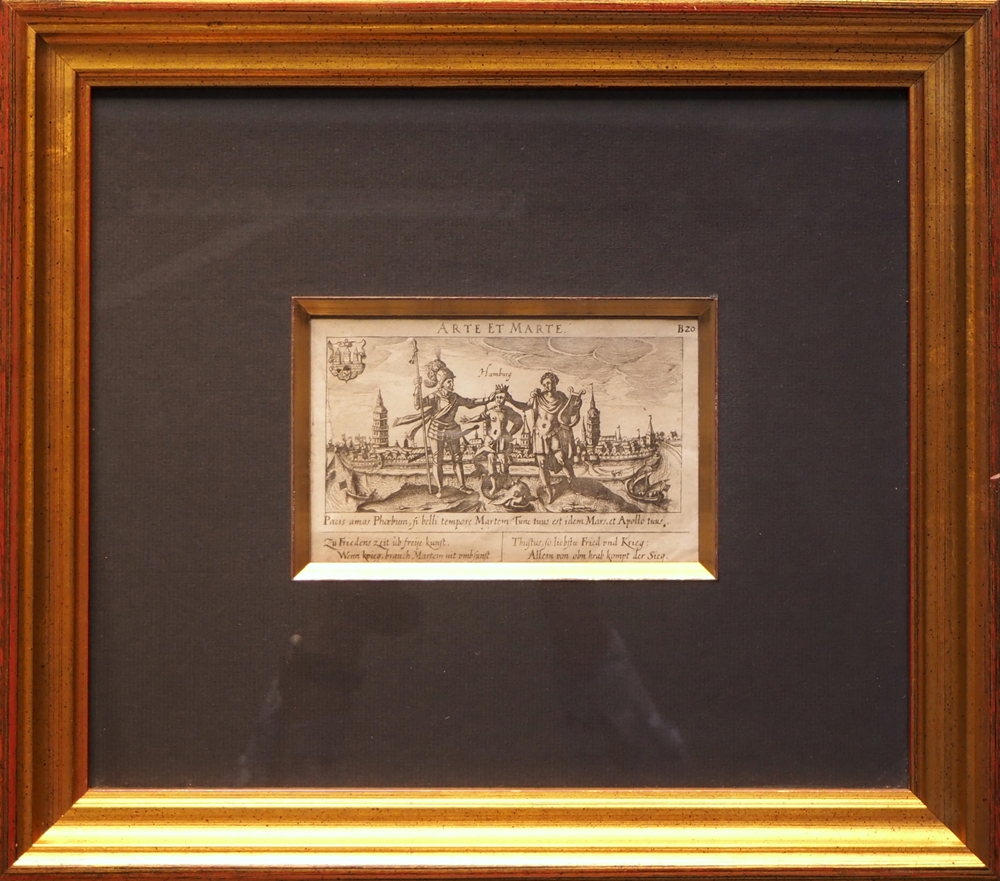
1625réf. 80715Frankfurt a. M. [ca. 1625]. Darstellung 10,0 x 14,5 cm. Unter starkem Schrägschnitt-Passepartout mit vergoldeten Schnittkanten im Rahmen aus vergoldeter Profilleiste (diese etwas bestoßen).
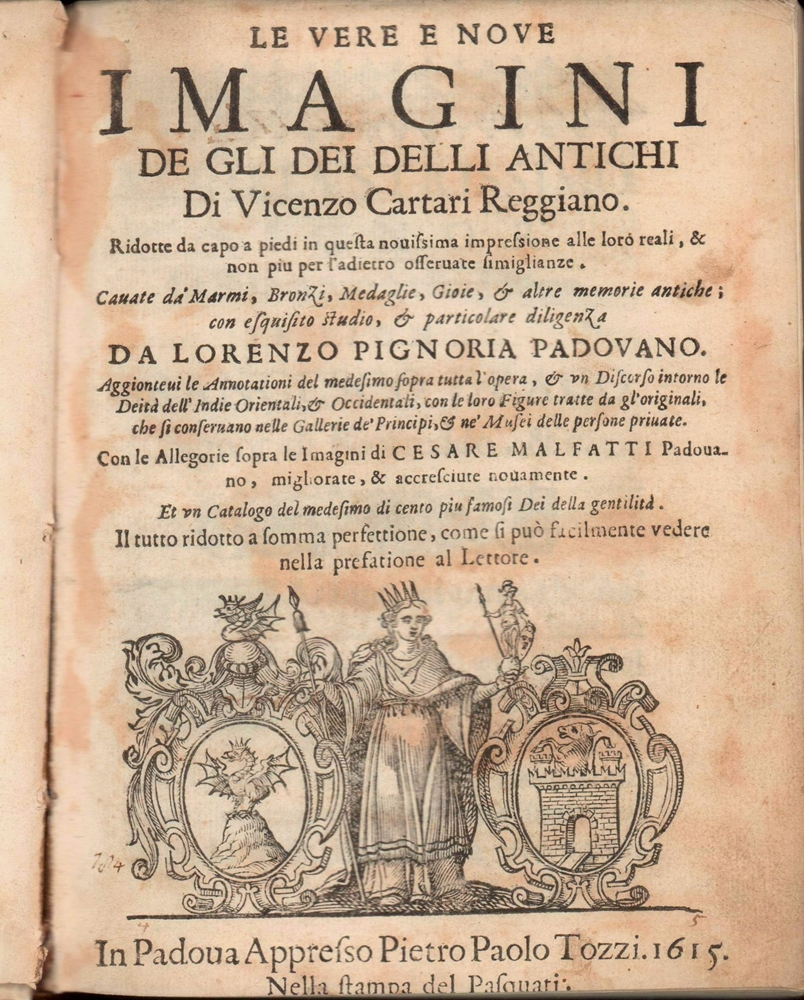
1615réf. 89903Padova [Padua], Pietro Paolo Tozzi, 1615. [16 Bll.], 576 S; [4], lxiii, [1] S. Mit 2 gefalt. u. 227 ganzseit. Holzschnitten. 8vo. Ganzpergament der Zeit mit hs. Rückentitel.
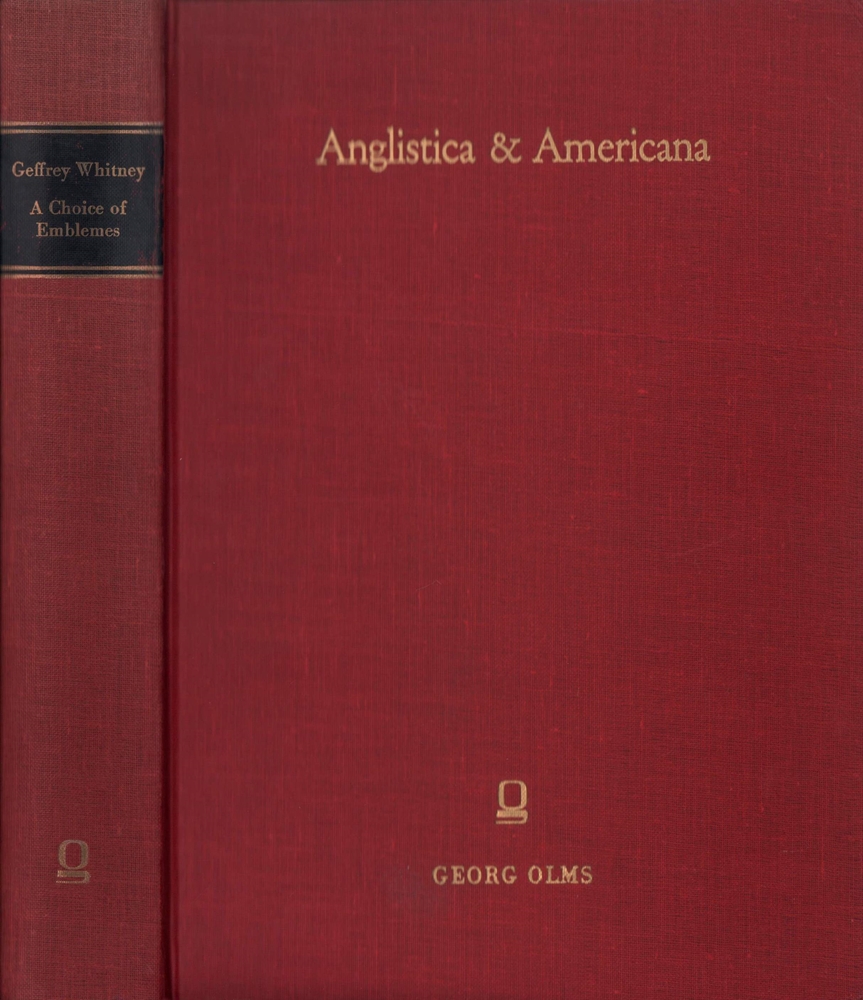
1971réf. 10063N.Y. Georg Olms, 1971. LXXXVII, 440 S. mit Textabb. sowie 63 Taf. (= Anglistica & Americana, 49). Gr.-8vo. OLn.
2004réf. 88829Köln, Taschen, (2004). 352 S. Mit 142 Farbtaf. 26 cm. OPp. mit SU.
1660réf. 44803Danzig, Georg Förster, 1660. (4), 381, (1) SS. Mit gest. Titel und 20 fast ganzseitigen emblematischen Textkupfern. - (Beigebunden) II: Ders. Monita politico-moralia et icon ingeniorum. Ebda., 1664. (4), 171, (1) SS. Mit gest. Titel und Holzschnittvignette am Schluß. Blindgepr. brauner Lederband der Zeit mit hs. Rückentitel. Dreiseitiger gesprenkelter Rotschnitt. 12mo.
[ii] + 16pp. + 153 [154] engraved pages with 15 emblems per page engraved by N.Verien + 24pp. de tables, 1st edition, titlepage is missing, 20cm., cart.cover (marbled plates, spine in leather with gilt title and decorations), marbled endpapers, occassional small stains at pages, Good copy, scarce, T77109, [Detailed content: 2 pages of author's dedication to "Monsiegneur le Dauphin", 16 pages of text: "Explication alphabetique des médailles ou figures hieroglyfiques du Livre second", 154 pages of engravings and 24 pages of tables], This book concerns only the second section of the work [the first section is: "Emblemes et devises latines, espagnoles et italiennes… livre premier", the third one is: "Supports et cimiers pour les ornemens des armes. livre troisième". The work has been reprinted in 1696 and 1724 under the title "recueil d'emblemes"]
vi + 101pp.with illustrations, in-4, softcover, good condition, B88886
3 parts in 1 volume (with the addenda "Enchiridion de Epicteto and "Tabla de Cebes", [18] 207 [1] & 27 [1bl] & [8] 50 [1] pp., illustrated with engraved printer's mark at title page and 103 large emblems and a double-page engraving with the "Tabula Cebetis", the engraved portrait of Venius is missing, title in red and black, some spots and stains mainly at the last 80 pages text always readible very well), modern binding in fine condition (marbled plates, spine in leather with title in gilt), 39cm., Spanish translation of the French edition "Le theatre moral de la vie humaine" (cfr. PRAZ, Studies in seventeenth-century imagery I pp.523-524 & Peeters Fontainas Bibliographie des impr. espagn. des Pays-Bas mérid. 1275), good copy, Y91273
Rare and complete series of 7 emblematical books published by the Flemish Praemonstratensian preacher and poet Jacobus Moons (1639-1721, cannunik and priest at the Praemonstratensian abbey of S. Michael in Antwerp), Uniform contemporary full-leather bindings with 5 raised bands (gilt decorations and title on spines, some traces of use, corners rubbed, some wear and defects at spines and few joints slightly cracked/broken), red edges, text and illustrations are clean and bright, 17cm., text in Flemish (Dutch), rare complete series which is overall in good condition, text and interior in very good condition with only occasional foxing and vague spots, [Detailed content: VOLUME 1: Zedelyk vermaek tonneel vertoonende door zinne-beelden den leerzaemen handel van de onredelyke dieren aen de verkeerde, en beestaerdige wereld Opgeregt van verscheyde zoo Grieksche als Latynsche Schryvers, Antwerpen, P.J. Parys, s.d. [ca. 1765], 2nd impression, [15],436,[4] pp., with engraved title page by P. van Pinxen, engraved Coat of arms and 27 copperplate emblems by P. van Pinxen after G. Bouttats, cfr. Landwehr’s Emblem & fable books no.580 // VOLUME 2: Zedelyke lust-warande vertoonende door zinne-beelden den leerzaemen handel van de onredelyke dieren aen de verkeerde, en beestaerdige wereld, Antwerpen, P.J. Parys, s.d. [1764], [6],533[=523],[i] pp., with engraved vignette on title page and 29 copperplate emblems by G. Bouttats, cfr. Landwehr no.581 // VOLUME III: Sedelyken Vreugden-Berg verthoonende door sinne-beelden den leerzamen handel etc., Antwerpen, P.J. Parys, s.d. [ca. 1764], 2nd impression, 495 [=465],[2] pp., with 31 copperplate emblems within borders of varying designs by G. Bouttats, cfr. Landwehr no.582 // VOLUME IV: Sedelyk vreugde-perk vertoonende door zinne-belden den leersamen Handel van de onredelyke dieren aen de verkeerde en beest aerdige wereld, Antwerpen, P.J. Parys, 1772, 590pp., with engraved vignette on title page and 33 copperplate emblems within borders of varying designs by G. Bouttats, cfr. Landwehr no.583 // VOLUME V: Sedelyken Vermaek-Spiegel etc., Antwerpen, P.J. Parys, s.d. [1764], [6] + 384 + [2] pp., cfr. Landwehr no.584 // VOLUME VI: Zedelyk Vermaek-Veld etc., Antwerpen, P.J. Parys, s.d. [1764], 2nd impression, 307 + [1] pp., cfr. Landwehr 585 // VOLUME VII: Sedelyk Vermaek-Troost in alle lyden, soo wel in Peys als in Oorlogs tyden, voor alle Staten van menschen etc. gesogt en gevonden in de schole van verduldigheyd etc., Antwerpen, P.J. Parys, s.d. [1764], 402 [= 400] + [2] pp., frontispiece is missing, contains numerous emblems described, though without illustrations, as edited), cfr. Landwehr 586, this last part also contains Sidronius Hosschius’ (S.J.) “Spiegel van den loop des menschelijck leven” (pp.354-402)], R97730
Sm. 4to., First Edition, with a portrait frontispiece and very numerous fine full-page facsimiles in the text, neat signature on half-title and verso; original maroon cloth, boards elaborately blocked in blind and lettered in gilt, gilt back, uncut, black endpapers, backstrip moderately sunned else a very good, bright, clean copy. High-quality photo-lithographic facsimile reissue, with an introduction, alphabetical list of all the Latin mottoes and general index. Very scarce.
In-4°; 2 voll. Parte I gennaio - giugno 1840, parte II secondo semestre luglio-dicembre, pp. 424 36 tavole, 425-798, (1) e 36 tavole. Completo delle tavole calcografiche tutte colorate a mano sono incise da Bernieri. Legatura in mezza pergamena coeva con angoli tasselli con titolo in oro al dorso L’opera segue la successione dei mesi, quindi la stagionalità delle piante, per avere fiori tutto l’anno. Antonio Piccioli fu direttore dell’Orto botanico di Firenze, fornisce in questo manuale sia descrizioni scientifiche, che sull’habitat delle piante, che aneddoti, che poesie relative a quel fiore. Ottima copia.
In-8°; pp. XXXII, 416, con antip. (L. Gimignani del. Io. Nolinus sculp.), e un frontespizio (F. Venturinus) calcografici, 35 incisioni su rame a piena pagina incluse nel testo che raffigurano emblemi. Al front. “pars prima” è stato cancellato, in effetti di quest’opera venne data alle stampe solo questa prima parte. Legatura in piena pergamena rigida più tarda. I personaggi qui rappresentati attraverso gli emblemi e alcuni componimenti in versi sono Innocenzo XI, Francesco Xaverio, Francesco Borgia, Luigi Gonzaga, Stanislaus Kostka, Innocenzo X, Clemente IX, Cristina di Svezia, Alessandro VII, Roberto Bellarmino, Antonio Barberini, G. Paolo Oliva e altri.
in-4. cc. 4,12, xii-cxxii. Ottima copia in cartonato antico. prima edizione emblems iconologia iconology iconography mythology marcolini first edition art history
In-4°, 68pp, (4cc), legatura in pergamena, buone condizioni, titolo manoscritto al dorso, l’illustrazione alla carta A2 contiene l’emblema dell’Accademia degli Umoristi. Qualche brunitura. L’Aleandro, scolaro a Padova di Guido Panciroli, ebbe, precocissimo, fama di buon poeta latino e italiano, e più tardi nomea d'epistolografo principe in latino; partecipò, in difesa del Marino, alla celebre polemica suscitata dallo Stigliani contro L'Adone; fu tra i fondatori e i sostenitori dell'Accademia degli Umoristi; ma va ricordato soprattutto come antiquario per le sue dissertazioni di archeologia applicata al diritto, alla storia del costume e della religione, solo in parte edite. L'Accademia degli Umoristi, insieme all'Accademia dell'Arcadia e alla splendida ma effimera Accademia delle Notti Vaticane fu una delle principali accademie letterarie romane del Seicento. Grazie all'appoggio e alla protezione che poi ottenne da parte del cardinale Francesco Barberini, divenne un'istituzione semi-ufficiale. Aveva sede a Roma ma vantava aspirazioni cosmopolite. Come tutte le accademie dei secoli XV-XVI-XVII, era presieduta (o governata) da un Principe, che organizzava le sedute, indirizzava i lavori, la rappresentava presso altre Accademie o di fronte alle autorità. La carica aveva durata annuale, ma poteva essere reiterata. I Principi dell'Accademia degli Umoristi furono tra i più prestigiosi e innovatori letterati del Seicento: Giovanni Battista Guarini (1611), Alessandro Tassoni (1606-1607), Giovan Battista Marino (1623). Le leggi dell'accademia degli Umoristi consentivano anche una limitata partecipazione femminile. «Feminis primariis ætate et forma prestantibus earumque viris eam frequentandi veniam dabant leges». L'Accademia, come tutte le consorelle, aveva un simbolo o impresa. Essa è più di un'immagine e di un motto: è l'autorappresentazione che l'Accademia offre di se stessa, ne indica l'identità. L'Impresa degli Umoristi nacque per insistenza di Giovanni Battista Guarini (allora Principe dell'Accademia) nel 1611: ci furono numerosissime proposte e infine fu accettata quella che divenne definitiva: una nuvola dalla quale cade pioggia sulle onde del mare e sotto il verso lucreziano «Redit Agmine Dulci» (Ritorna dal campo di battaglia alla dolcezza). Nel 1717 il pontefice Clemente XI volle ripristinarla e ne nominò principe Alessandro Albani, non ancora cardinale. Il tentativo non ebbe però successo e di lì a poco l'Accademia scomparve definitivamente. In-4 °, 68pp, (4cc), vellum binding, good condition, handwritten title on the spine, the illustration on leaf A2 contains the emblem of the Academy of Humorists. Some brownings. Aleandro, a pupil of Guido Panciroli in Padua, had a very early reputation as a good Latin and Italian poet, and later he became the name of the main epistolograph in Latin; in defense of Marino, he took part in the famous controversy raised by Stigliani against L'Adone; he was among the founders and supporters of the Academy of Humorists; but it must be remembered above all as an antiquarian for his dissertations on archeology applied to law, the history of customs and religion, only partially published. The Academy of Humorists, together with the Academy of Arcadia and the splendid but ephemeral Academy of Vatican Nights was one of the main Roman literary academies of the seventeenth century. Thanks to the support and protection that it then obtained from Cardinal Francesco Barberini, it became a semi-official institution. It was based in Rome but boasted cosmopolitan aspirations. Like all the academies of the XV-XVI-XVII centuries, it was chaired (or governed) by a Prince, who organized the sessions, directed the work, represented it in other Academies or before the authorities. The office had an annual duration, but could be repeated. The Princes of the Academy of Humorists were among the most prestigious and innovative writers of the seventeenth century: Giovanni Battista Guarini (1611), Alessandro Tassoni (1606-1607), Giovan Battista Marino (1623). The laws of the Academy of Humorists also allowed for limited female participation. "Feminis primariis ætate et forma prestantibus earumque viris eam frequentandi veniam dabant leges". The Academy, like all its sisters, had a symbol or company. It is more than an image and a motto: it is the self-representation that the Academy offers of itself, it indicates its identity. The Coat of arms of the Academy was born on the insistence of Giovanni Battista Guarini (then Prince of the Academy) in 1611: there were numerous proposals and finally what became definitive was accepted: a cloud from which rain falls on the waves of the sea and below towards Lucretian motto « Redit Agmine Dulci »(Returns from the battlefield to sweetness). In 1717 Pope Clement XI wanted to restore it and appointed Alessandro Albani as prince, not yet a cardinal. However, the attempt was unsuccessful and shortly thereafter the Academy finally disappeared.
In-12°, (3cc), 7-233pp, illustrazioni, legatura in pergamena, nervi, buone condizioni, emblema del Re Sole Luigi XIV al frontespizio, 27 emblemi Charles de La Rue (3 agosto 1643, Parigi - 27 maggio 1725, Parigi), noto in latino come Carolus Ruaeus, fu uno dei grandi oratori della Compagnia di Gesù in Francia nel diciassettesimo secolo. Entrò nel noviziato il 7 settembre 1659, ed essendo successivamente professore di lettere e retorica, attirò l'attenzione mentre era ancora giovane da una poesia sulle vittorie di Luigi XIV. Pierre Corneille lo tradusse e lo offrì al re, dicendo che il suo lavoro non eguagliava l'originale del giovane gesuita. Ha scritto diverse tragedie, pubblicato un'edizione di Virgilio e scritto diverse poesie latine. Dopo aver più volte rifiutato di permettergli di andare in Canada, i suoi superiori lo assegnarono alla predicazione; come oratore era molto ammirato dalla corte e dal re. Le sue orazioni funebri sui duchi di Borgogna e del Lussemburgo e quelle su Jacques-Bénigne Bossuet, i suoi sermoni su "Les Calamités publiques" e "The Dying Sinner" sono stati considerati capolavori dai più grandi maestri. Ha predicato missioni tra i protestanti della Linguadoca per tre anni. Era un religioso molto virtuoso e durante i suoi ultimi anni sopportò coraggiosamente grandi infermità. In-12 °, (3cc), 7-233pp, illustrations, vellum binding, bands, good condition, emblem of the Sun King Louis XIV on the title page. 27 emblems. Charles de La Rue (3 August 1643, Paris – 27 May 1725, Paris), known in Latin as Carolus Ruaeus, was one of the great orators of the Society of Jesus in France in the seventeenth century. He entered the novitiate on 7 September 1659, and being afterwards professor of the humanities and rhetoric, he attracted attention while still young by a poem on the victories of Louis XIV. Pierre Corneille translated it and offered it to the king, saying that his work did not equal the original of the young Jesuit. He wrote several tragedies, published an edition of Virgil, and wrote several Latin poems. After having several times refused to permit him to go to Canada, his superiors assigned him to preaching; as an orator he was much admired by the court and the king. His funeral orations on the Dukes of Burgundy and Luxemburg, and that on Jacques-Bénigne Bossuet, his sermons on "Les Calamités publiques" and "The Dying Sinner" have been regarded as masterpieces by the greatest masters. He preached missions among the Protestants of Languedoc for three years. He was a most virtuous religious, and during his last years endured courageously great infirmities.
Toulouse, 1884. Plaquette In-8 brochée de 39 pages. Exemplaire enrichi de pages blanches intercalées sur lesquelles ont été contrecollés de nombreux dessins à la plume légendés représentant des seaux, des cachets, des armoiries, des signatures etc; dans lesquels figurent des fleurs de lys. La couverture est défraichie, le corps de l'ouvrage est en bon état. Une curiosité. Ernest Roschach fut archiviste à Tououse et Conservateur du Musée.
n.p. 12mo. Original printed wraps. A pamphlet explaining a frieze of printers' devices for the expansion of the Morgan Library. **PRICE JUST REDUCED REF9.
Mm 235x240 Volume in copertina rigida, sovraccoperta originale, 211 pagine profusamente illustrate in nero e a colori. Libro in condizioni di nuovo - brandnew. Spedizione in 24 ore dalla conferma dell'ordine.