562 results
ref. 64923aafTaschen, 2000, lg. in-8vo, 95 p., with many colour ilustrations, original ill. wrappers. Several new copies in stock.
1907ref. 91201907 N° 193 à 216 - Année 1907 complète - Edition Goupil et Cie - Revue bimensuelle illustrée - 2 volumes in-folio, cartonnage éditeur pleine percaline bleue à décor floral style Art Nouveau - Nombreuses illustrations en N&B in et hors-texte, couvertures de numéro conservées en couleurs - Prévoir une augmentation de frais de port pour un envoi (> 8kg)
1912ref. 91251912 N° 313 à 336 - Année 1912 complète - Edition Goupil et Cie - Revue bimensuelle illustrée - 2 volumes in-folio, cartonnage éditeur pleine percaline bleue à décor floral style Art Nouveau - Nombreuses illustrations en N&B in et hors-texte, couvertures de numéro conservées en couleurs - Prévoir une augmentation de frais de port pour un envoi (> 8kg)
ref. 35053in-4 reliure toile éditeur avec sa jaquette illustrée - 1971 - 160 pages - Ed. Planète - coll. Redécouvertes - bandes dessinées
1914ref. 1199741914 N° 361 à 373 - Premier semestre de l'Année 1914 - Edition Goupil et Cie - Revue bimensuelle illustrée - 1 volume in-folio, chemise cartonnée éditeur pleine percaline bleue à décor floral style Art Nouveau avec les fascicules brochés à l'intérieur - Nombreuses illustrations en N&B in et hors-texte, couvertures de numéro en couleurs - Prévoir une augmentation de frais de port pour un envoi (> 5kg)
2021ref. AME_9789004444690Brill Aca 2021. 1st. Hardcover. New/New. _ Brill Aca hardcover
1946ref. mon0000572876The Hogarth Press 1946T. hardcover. Acceptable. in x in x in. Ex-library book usual marking. Clean copy in good condition. Library re-bind. Some marking due to age on pages but overall book remains in good condition considering age. Without Dust Cover. The Hogarth Press hardcover
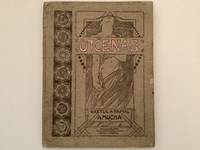
1899ref. 10392AB1899. Prag Ceske Graficke Spolecnosti "Unie" n.d. ca.1899. 255 : 19 cm. 8 illustrated ornamental plates 7 plates and 7 calligraphed plates with ornaments by Alphonse Mucha. Colored illustrated original cloth. A in size reduced reproduction of this important work by Mucha 'Le Pater'. The original is one of the most outstandinding books of French Art Nouveau. "So entstand 'Le Pater' neben 'Ilsée' der wertvollste Druck von seiner Hand. Um seine Persönlichkeit besser begreifen zu können wäre es nötig die Blätter des Vaterunser mit den dekorativen Panneaux der 'Edelsteine' oder der Vignetten für 'Moet et Chandon' zu vergleichen die zur selben Zeit entstanden sind. Sie sind die beiden Seiten ein und derselben Münze. Auf der einen vergeistiger Sensualismus auf der anderen sensueller Spiritualismus. Mitunter sind es die gleichen Mädchengestalten nur ist ihre Funktion eine andere." Prof. Cadik schreibt: ".im ganzen waren es dreißig Blätter auf starkem Zeichenpapier verziert mit Farblithographie und monochromen Lichtdrucken. Auf je einen Lichtdruck entfallen zwei Lithographien. Auf dem herrlichen Titelblatt sehen wir neben dem Genius der Menschheit dessen Stirn sich in den Sternen verliert und in dessen Hand die menschliche Seele bebt die sieben Siegel der Apokalypse. Dann folgen sieben durch Bilder und Texte erläuterte Kapitel mit einem allegorischen Bild und das achte Kapitel ist - wie in einer barocken Kantate - der virtuose Abschluss 'Amen'. Die lateinisch und französisch in einen Kreis und ein Achteck geschriebenen heiligen Worte sind umrahmt von einer wundervollen Arabeske aus abstrakten Ornamenten und naturalistischen Girlanden von Pflanzenmotiven. Die ureigenste Meditation ist jedoch als dramatische Szene konzipiert und mit Anklängen an die biblische Genesis in die Urzeit verlegt." J. Mucha Meister des Jugendstils. - Binding partly a bit stained some pages a bit wrikled. - See for the original edition Carteret V 154; MuchaJ. "The graphik work of Alphonse Mucha" p.131 and plate 24. hardcover
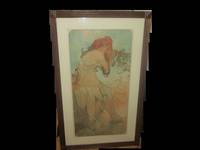
1896ref. 15844AB1896. Paris F.Champenois 1896. 1003 : 505 cm image Lithograph in colours by Alphonse Mucha. Framed in contemporary wooden frame. Alphonse Mucha's poster "Été" "Summer" is part of his series titled The Seasons created in 1896. This poster captures the essence of summer with its warm golden hues and lush flowing forms. Mucha depicts a young woman draped in a light flowing garment that accentuates the curves of her body embodying the sensuality and warmth of the season. She is surrounded by an abundance of flowers and foliage symbolizing the fullness and fertility of summer. Her hair long and wavy cascades down her back adding to the natural unrestrained feel of the image. Mucha's characteristic use of intricate lines and decorative patterns is evident in the detailed borders and the swirling motifs that frame the central figure. The poster exudes a sense of harmony and beauty typical of Mucha's Art Nouveau style where nature femininity and elegance are central themes. The soft color palette dominated by shades of gold green and soft pastels further enhances the idyllic dream-like quality of the work making "Été" a quintessential representation of summer's warmth and beauty. Alphonse Mucha was known for his distinctive Art Nouveau style characterized by its use of natural forms flowing lines and elaborate decoration. His techniques combined both traditional and innovative approaches contributing to his iconic aesthetic. Here are some of the key techniques and elements in Mucha's work: Line Work: Mucha's use of lines is one of the most defining aspects of his style. He employed fine flowing outlines to create graceful organic shapes that mimic the curves found in nature. His lines were often decorative and stylized contributing to the overall harmony and unity of the composition. Color Palette: Mucha favored a soft pastel color palette often using muted tones of gold green pink and blue. These colors were carefully chosen to create a sense of harmony and to evoke specific moods often reflecting the seasons or the subject matter of the piece. Ornamentation and Patterns: Mucha's works are rich in decorative elements and intricate patterns. He incorporated floral motifs arabesques and geometric designs into his compositions often framing the central figure with these ornate details. This ornamentation was not merely decorative but also served to enhance the thematic elements of the piece. Use of Light and Shadow: Although Mucha's work is more stylized than realistic he employed light and shadow to add depth and dimension to his figures. His approach to light was subtle often using gentle shading rather than harsh contrasts which contributed to the soft ethereal quality of his work. Symbolism: Mucha frequently used symbolic elements in his paintings and posters. For example flowers seasons and zodiac signs often carried deeper meanings related to themes of nature femininity and the passage of time. These symbols were seamlessly integrated into the decorative elements of his work. Composition: Mucha's compositions were carefully balanced often centered around a single idealized figure. He employed symmetry and repetition to create a sense of order and harmony with the figure often surrounded by elaborate circular frames or halos that draw the viewer's eye. Media and Techniques: While Mucha is best known for his posters and prints which were typically lithographs he also worked in a variety of media including painting drawing and jewelry design. His lithographic technique involved multiple layers of color carefully aligned to create richly textured and vibrant images. In his paintings he used traditional techniques such as oil on canvas but applied them with the same decorative and stylized approach as in his graphic works. Mucha's techniques were instrumental in defining the Art Nouveau movement blending fine art with applied arts and his work remains a cornerstone of this decorative style. Alphonse Mucha holds a significant place in the history of art particularly as a leading figure of the Art Nouveau movement. His influence extends beyond his immediate contributions to the art world affecting design advertising and popular culture. Here are some key reasons why Mucha is important in the history of art: 1. Pioneer of Art Nouveau: Mucha is often credited with shaping and popularizing the Art Nouveau style which emerged in the late 19th century. This movement was characterized by its use of organic forms flowing lines and intricate decorative patterns all of which are hallmarks of Mucha's work. His designs especially his posters became synonymous with the Art Nouveau movement defining its aesthetic and helping it gain widespread recognition. 2. Innovative Use of Graphic Design: Mucha was a pioneer in using graphic design as a fine art form. His work in advertising and posters elevated these mediums to a new level blending commercial appeal with artistic integrity. His posters for Sarah Bernhardt the famous actress are particularly notable. They not only promoted her plays but also became collectible works of art in their own right. 3. Influence on Decorative Arts: Mucha's influence extended beyond painting and posters to various decorative arts including jewelry furniture and interior design. His aesthetic principles were applied to everyday objects making art more accessible to the public. This blending of fine art with applied arts helped bridge the gap between high art and popular culture a concept that has continued to evolve in modern design. 4. Impact on Visual Culture: Mucha's style has had a lasting impact on visual culture influencing everything from early 20th-century design to contemporary art and popular media. His work has inspired countless artists and designers in the realms of illustration fashion and graphic design. The Art Nouveau style as epitomized by Mucha has seen periodic revivals and continues to be referenced in various cultural contexts demonstrating its enduring appeal. 5. Symbolism and National Identity: Beyond his contributions to Art Nouveau Mucha was also deeply involved in the promotion of Czech national identity. His later works particularly the Slav Epic reflect his interest in Slavic history and mythology aiming to create a visual narrative that celebrated his cultural heritage. This aspect of his work underscores the role of art in expressing and shaping national and cultural identity adding another layer to his importance as an artist. 6. Legacy in Fine Arts: Mucha's ability to blend aesthetics with practical applications laid the groundwork for future movements in art and design particularly in how art could be integrated into everyday life. His legacy is evident in the continued appreciation and study of his work which remains a significant part of museum collections and exhibitions worldwide. Alphonse Mucha's contributions to the art world go beyond his beautiful and iconic images; he played a crucial role in defining an era shaping modern design and influencing the intersection of art culture and commerce. His work continues to inspire and resonate across disciplines making him a central figure in the history of modern art. The panel 'Ètè' Summer out of the series 'Four Seasons'. Mucha made a panel for each of the four seasons. He represents each season with characteristic flair here the sultry Summer. Four Seasons was Mucha's first series of decorative panels and one of his most popular ones. An classic Art Nouveau piece. A highlight in each Mucha collection. - Here contemporary framed therefore in very good condition. unknown
ref. 8364596322.Gpaperback. Good. Access codes and supplements are not guaranteed with used items. May be an ex-library book. paperback
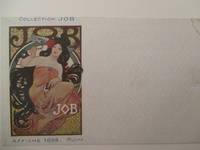
1898ref. 14589AB1898. Paris F. Champenois 1898 85 : 135 cm. Original colour lithograph by Alphonse Mucha. Postcard of one of Mucha's most famous posters. Here reduced to postcard size but still very well to recognize. On the reverse side imprinted Postkarte - CARTE POSTALE -Post card. Union postale universelle and in 8 different languages. This is perhaps one of Mucha's best-known advertising poster. This poster established the iconic image of the 'Mucha woman' with her swirls of exaggeratedly abundant hair. 'JOB' is a trademark for the Joseph Badou Company manufacturing cigarette papers. In this poster Mucha placed the prominent female figure against a background featuring job monograms. Holding a lighted cigarette in her hand the woman leans her head backward sensually and rising smoke forms an arabesque interwining with her hair and the company logo. - Upper right edge a bit demaged the image perfect. unknown
1967ref. 136982New York: McGraw Hill 1967. First Edition; First Printing. Hardcover. Very Good in a Very Good dust jacket. Owner bookplate on both sides of FEP. Owner inscription on rear pastedown. McGraw Hill hardcover
1900ref. 62141900 Paris Calmann levy éditeur 1900 In8 relié demi maroquin havane à coins dos à 2 nerfs titre frappé couvertures conservées 188 pages couverture et cul de lampe illustrés par mucha
1902ref. 16707This illustration is from an issue of the Inland Printer date c. 1902. There are short tears along the outer edge leaving plenty of good border if trimmed clean. The illustration is clean and in very good condition for framing. Page size: 11.75" x 9".; Prints . c. 1902. unknown
1902ref. 16708This illustration is from an issue of the Inland Printer date c. 1902. There are short tears along the outer edge leaving plenty of good border if trimmed. There are a couple of very faint smudges in the bottom portion of the illustration that are barely noticeable. The illustration is in very good condition for framing. Page size: 11.75" x 9".; Prints . c. 1902. unknown
1952ref. 58153NY: Arts Inc. 1952. First US edition. 271 pp. Very good plus in full gray cloth. Lacks dust jacket. Translated from the original Czech by E. Osers. NY: Arts, Inc., hardcover
ref. 25878Paris, Charpentier et Fasquelle, 1897, in-8 carré (19 x 23,7 cm), broché, couverture illustrée en couleurs, 120 pages. Edition originale, couverture ornée en couleurs de la reproduction de l'affiche de MUCHA pour la Samaritaine. Bel envoi autographe signé de l'auteur: “à Mademoiselle Berthilde, dont la voix fut un délice de fraîcheur en ces quatre vers!... avec toute ma gratitude et l’espoir de lui en faire dire davantage...”Représenté pour la première fois, à Paris, sur le Théâtre de La Renaissance le Mercredi saint (14 Avril 1897), cette mademoiselle Berthilde figure parmi les “jeunes filles” de la distribution de la pièce. Quelques rousseurs mais bel exemplaire quand même.
ref. 1308-15Wien Köln Weimar Böhlau 1995. 2 Bde. in 3 geb. gr.-8°. LIII 436; XXXII S. 437-852 u. 34 Taf.; XLV 405 Mit 32 farb. Taf. OLn. Mit OU. In sehr gutem Zustand. In Orig.-Schuber EA. Bd. I/1. Teilband: Österreichische Atlanten 1561-1918. Bd. /2. Teilband: Österreichische Atlanten 1561-1918. Bd.II. KRETSCHMER Ingrid. Österreichische Atlanten 1919-1994. Wien, Köln, Weimar, Böhlau (1995). unknown
2008ref. SONG159370111XPennwell Books 2008-03-18. hardcover. Used: Good. 6.25x0.75x9.25. Buy with confidence. Excellent Customer Service & Return policy. Pennwell Books hardcover
2008ref. G159370111XI2N00PennWell Corporation 2008. Hardcover. As New. Disclaimer:An apparently unread copy in perfect condition. Dust cover is intact; pages are clean and are not marred by notes or folds of any kind. At ThriftBooks our motto is: Read More Spend Less.Dust jacket quality is not guaranteed. PennWell Corporation hardcover
1921ref. 7984The Brooklyn Museum 1921. 1st. Original Wraps. Collectible; Very Good. Uncommon 1921 Brooklyn Museum catalogue of Alfons Mucha's epic series of paintings portraying the "development of the Slavic nations". A VG octavo in its ribbon-tied light-brown wrappers with very light creasing to the front panel and a very light trace of soiling at the foot of several of the pages not at all afffecting the plates which are bright and immaculate. This 1st edition limited to 5000 copies. The Brooklyn Museum unknown
1980ref. 24551980 broché in-octavo, dos blanc, couverture illustrée en couleurs sur le recto / verso, illustrations : très nompbresuses reproductions, 153 pages, 1980 Paris Editions de la Réunion des Musées Nationaux,
1969ref. 88671969 broché in-octavo tellière, dos blanc, couverture rose, nombreuses illustrations in et hors-texte d'après Daumier - Toulouse-Lautrec - Picasso - Chéret - Steilen - Villette - Mucha - Cappiello - Cassandre - Carlu - Colin - Sepo - Paul Grimault - Paxton-Chadwick - Lebedeff - Penfield - Dudovich - Mauzan - Molnar - Adolf Münzer - Bernhard - Ottler - Gipkens - Köhler - etc., 128 pages, 1969 Paris Presse Universitaires de France,
1904ref. 18578paris Beauchamp 1904 in-4 bradel demi-toile un volume, reliure Bradel demi-toile (half cloth-bound) verte grand in-quarto éditeur, dos long (spine without raised band) décoré et imprimé en vert fonçé, plats en plaquage de bois décoré en couleurs d'une fleur de chardon sur le premier plat, d'une cigogne sur le second, médaillon-portrait en ivoirine de Sarah Bernhardt dans Princesse lointaine d'après le tableau de Mucha sur le premier plat de couverture. tête lisse (top edge smooth) dorée (gilt top edge), gouttière et tranche de queue non rognées (no smooth fore-edge and edge of bottom), Textes sur papier vergé, portraits sur papier glacé fort. Portraits, autographes, notices biographiques illustrées de Paul Acker, Portraits humoristiques des célébrités contemporaines par Cappiello (14 lithographies originales hors-texte en couleur). Illustrations de Vogel, Ornement d'Habert-Dys, Orazi et Fraikin , non paginé [66] p.-[28] f. de planches, Janvier 1904 Paris Publication Octave Beauchamp (Imprimerie G. De Malherbe) Editeur,
1904ref. 23494paris Beauchamp 1904 in-4 bradel demi-toile un volume, reliure Bradel demi-toile (half cloth-bound) verte grand in-quarto éditeur avec son étui vert editeur imprimé en vert et "or", dos long (spine without raised band) décoré et imprimé en vert fonçé, plats en plaquage de bois décoré en couleurs d'une fleur de chardon sur le premier plat, d'une cigogne sur le second, médaillon-portrait en ivoirine de Sarah Bernhardt dans Princesse lointaine d'après le tableau de Mucha sur le premier plat de couverture. tête lisse (top edge smooth) dorée (gilt top edge), gouttière et tranche de queue non rognées (no smooth fore-edge and edge of bottom), Textes sur papier vergé, Belle impression sur vergé. Luxueuse publication dont seul le présent volume a paru. Il recèle - et est complet - de ses 28 superbes planches réalisées dans le plus pur style Art Nouveau, avec ornementations de Vogel, Habert-Dys, Orazi ou encore Fraikin. En regard du portrait de chacune des 28 personnalités ici présentées, sa notice biographique ainsi que la reproduction de son autographe. En outre, illustrations dans le texte en sanguine et lettrines. Les portraits photographiques ont été réalisés par Nadar, Boyer, Reutlinger, Pierre Petit ou encore Braun. Figurent dans cet album : Victorien Sardou, Sarah Bernhardt, François Coppée, Mme Edmond Adam, Anatole France, Mme la Duchesse D'Uzès, Jules Lemaître, Mme Réjane, Jules Claretie, Mme Segond-Weber, Jean Richepin, Melle Marthe Brandès, Coquelin aîné, Mme Jeanne Granier, Jules Massenet, Mme Aïno Ackté, Mounet-Sully, Mme Jane Hading, Gérôme, Mme Jane Hatto, Antonin Mercié, Mme Marie Delna, Luc-Olivier Merson, Mme Sibyl-Sanderson, F.-A. Bartholdi, Mme Carrère-Xanrof, Alfred Capus et La reine Ranavalo , non paginé [66] p.-[28] f. de planches, Janvier 1904 Paris Publication Octave Beauchamp (Imprimerie G. De Malherbe) Editeur,