Bartlett, Merrill LBiblio.com

7 473 résultats
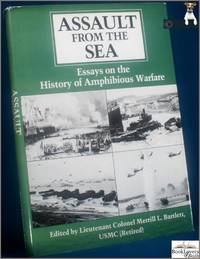
1989réf. 010506Annapolis Maryland U.S.A.: Naval Inst Press 1989. 453pp/illus/maps. This anthology draws together for the first time in one volume a collection of essays that offers a truly comprehensive history of amphibious thought and experience through the ages. Clean. 3rd Printing. Cloth. Near Fine/Near Fine. 4to - over 9¾" - 12" tall. Naval Inst Press Hardcover
1983réf. 195603Annapolis: Naval Institute Press 1983. Hardback in Dust Wrapper. Very Good/Good. Condition Notes: A little wear to the edges of the dust wrapper slight fraying to the spine ends and a nick to the top corner of the lower panel. The contents complete clean and tight; First edition first printing. Hardback. Dust wrapper over green boards with silver titles to the spine; Measures 10¼ x 7¼ 1.7 kg; pp xx 453; Index; Bibliography; Preface by General Robert H. Barrow & Colonel John G. Miller; Includes: Black & white photographs within the text; Maps; 2-column text; The book is on the shelf ready to be appropriately packed and posted from the pastoral paradise of Peasedown St. John Bath by a real bookseller in a real book shop - with my personal guarantee and beady eye on the Consumer Contracts Regulations. REMEMBER! Buying my copy means the book shop Jack Russells get their supper! My Book #195603 Annapolis: Naval Institute Press hardcover
1985réf. 198066Maryland: Naval Institute Press 1985. First Edition; Second Printing. Hardcover. Very Good in a Very Good dust jacket. Small dot sized stain on side text block edge. Naval Institute Press hardcover
1993réf. Q-0870210769Naval Institute Press 1993-01-01. Paperback. New. In shrink wrap. Looks like an interesting title! Naval Institute Press paperback
réf. 698182671Naval Institute Press . Papeback. New. pp. 480 Naval Institute Press unknown
réf. DADAX0870210769Brand: Naval Institute Press 0000-00-00. paperback. New. 6.75x1.00x9.75. Buy with confidence. Excellent Customer Service & Return policy. Brand: Naval Institute Press paperback
réf. 43567981-nnew. unknown
réf. 057896967X.Gpaperback. Good. Access codes and supplements are not guaranteed with used items. May be an ex-library book. paperback
réf. 0578555948.Gpaperback. Good. Access codes and supplements are not guaranteed with used items. May be an ex-library book. paperback
réf. B9780578969671Paperback / softback. New. paperback
réf. B9798985459913Hardback. New. hardcover
2007réf. Q-1845973496Ryland Peters & Small 2007-01-01. Hardcover. New. In shrink wrap. Looks like an interesting title! Ryland Peters & Small hardcover
réf. 1845973488.Ghardcover. Good. Access codes and supplements are not guaranteed with used items. May be an ex-library book. hardcover
réf. DADAX1845973496Ryland Peters & Small 0000-00-00. hardcover. New. 10.00x0.75x8.50. Buy with confidence. Excellent Customer Service & Return policy. Ryland Peters & Small hardcover
2017réf. 1-184975876XRyland Peters & Small 2017. Hardcover. New. 134 pages. 10.25x9.00x0.75 inches. Ryland Peters & Small hardcover
2000réf. Q-1855857464Sterling 2000-06-30. Paperback. New. New. In shrink wrap. Looks like an interesting title! Sterling paperback
réf. 620395490X.Gpaperback. Good. Access codes and supplements are not guaranteed with used items. May be an ex-library book. paperback
1915réf. 028877Sydney Australia: Department of Public Instruction 1915. Book. Very Good. Card Cover - Stapled. 1st Edition. 130mm x 205mm. Covers have moderate general wear and no tears. Internally very clean. Binding good. Very scarce. 32pp. Department of Public Instruction Paperback
réf. 698252561Hart Publishing Ltd. . Papeback. New. pp. 382 Hart Publishing Ltd. unknown
réf. 30620410-nnew. unknown
réf. 30620410like new. unknown
1980réf. Q-006066696xHarperCollins 1980-02-01. Hardcover. New. In shrink wrap. Looks like an interesting title! HarperCollins hardcover
1860réf. 250709New York: H. Dayton 1860. First Edition. Hardcover. Very Good. Duodecimo 354 pages brown embossed publisher's cloth spine dulled heel of spine worn a bit Messrs. Barrett and Bartlett both produced campaign biographies of Lincoln in 1860. Confusing. Campaign biographies of 1860 and their variants were detailed by rare bookman Ernest J. Wessen in the PAPERS IN ILLINOIS HISTORY 1937. This variant of Bartlett is no. 25 in Monaghan's bibliography of Lincoln. Wessen says that both nos. 24 & 25 are first editions; however both of those were published by H. Dayton of NYC. Bartlett hastily devoted only 6 of these pages to Hannibal Hamlin. Sabin 3724; Wessen 2 q.v. - preceded by a 150 page booklet Monaghan 24unuuuuuuuuuuu with no coverage of Hamlin. The frontispiece portrait of Lincoln was engraved by R. S Jones from a photograph by Matthew Brady H. Dayton hardcover
réf. 31064Small folio two pages plus integral address leaf in very good clean and legible condition. 1819 Grandson of a Signer of the Declaration of Independence supports "Toleration" School for religious liberty. The grandson of Josiah Bartlett the fist Governor of New Hampshire and second signer after John Hancock of the Declaration of Independence was not as active in national politics as his brother Josiah Jr. who served in the New Hampshire State Senate and in the US Congress but Levi took a strong interest in political affairs in his hometown of Kingston as reflected in this letter to a Methodist clergyman who was also a pioneer educator heading three schools he helped found: An Academy in his own hometown of New Market August College in Kentucky and Allegheny College in Pennsylvania a distant forerunner of Wesleyan University. Which is why Bartlett informed Ruter about a controversy over the founding of a new Academy in Kingston. But first he gave Ruter an account of proceedings at the town's Annual Meeting. Bartlett was apparently a Democratic-Republican in his politics and details the votes at the meeting between his party's candidates and their Federalist opponents for local offices for the state legislature and US Congress and for Governor and US Senator. But the main subject of the letter was the establishment of a Kingston Academy and where it should be located: "I am confident if the place of setting it can be removed from the obligation to which we all agreed to be bound can be altered the only place must be on Mr. Loverens to be generally satisfactory. North or South of these two places will produce such a collision as can be remedied only by fixing a spot and opening a new subscription for that place. Mr. Sanborn has dealt with the subscribers in such a way that his land now on any terms will be quite out of the question; notwithstanding the good opinion we may formerly have had of it. Justice will lead to Union selfish policy may prove fatal to the best of causes. I shall ever disclaim the honor of being on the list of benefactors where justice and impartiality are thrown into background. I am conscious of the rectitude of my motives for the public good in the part I have taken in this business. But Calumny hath already attributed to my generosity unworthy motives never conceived by me. I have and still wish for the Public Good in this institution; if it can be had on righteous terms; under this view any place between the two corners that will promote the public good will suit me; But placed as I am no consideration would induce me to consent to injustice. I say to you this that I may not be considered as a mere automaton as easily moulded to selfish motives as to the cause of Truth and Justice." If the highfalutin rhetoric about choosing a school site seems curious it can be understood with some background about the history of the proposed school. While it was incorporated by Methodists at Bartlett's urging they had specified that it should be a "Toleration Academy" open to all faiths - which appealed to Bartlett who was himself a Universalist "apostate" from his family's Congregationalist leanings and was instrumental in having the Methodist founders accede to these "toleration" principles: "That this Academy shall never come into the hands of any one Religious sect or Denomination whatever but shall be known by the name of Kingston Toleration Academy….That no sectarian principle of Religion shall be taught in said Academy; only General principles of Doctrine and Rules of Morality Piety Benevolence & strict Virtue be taught enforced & form a basis of Practical Religion. No one sect shall have greater liberties or privileges than another all tolerated & all put upon an equality." This may be seen in the context of the larger "toleration" movement about to be embraced by the entire state of New Hampshire which at that very moment after a long and heated debate was about to pass a "Toleration Act" which provided "That no person shall be compelled to join or support any congregation church or religious society without his express consent first had and obtained . And any person may be leaving a written notice with the clerk of the society be exempt from any future expenses." Specifically no citizen could be required to help pay funds for a school or any other religious-oriented institution which differed from his own religious faith. It was poetic justice that the grandson of a "Founding Father" should be instrumental in supporting this cause of civil liberty within his own community.
réf. 31064Small folio two pages plus integral address leaf in very good clean and legible condition. 1819 Grandson of a Signer of the Declaration of Independence supports "Toleration" School for religious liberty. The grandson of Josiah Bartlett the fist Governor of New Hampshire and second signer after John Hancock of the Declaration of Independence was not as active in national politics as his brother Josiah Jr. who served in the New Hampshire State Senate and in the US Congress but Levi took a strong interest in political affairs in his hometown of Kingston as reflected in this letter to a Methodist clergyman who was also a pioneer educator heading three schools he helped found: An Academy in his own hometown of New Market August College in Kentucky and Allegheny College in Pennsylvania a distant forerunner of Wesleyan University. Which is why Bartlett informed Ruter about a controversy over the founding of a new Academy in Kingston. But first he gave Ruter an account of proceedings at the town's Annual Meeting. Bartlett was apparently a Democratic-Republican in his politics and details the votes at the meeting between his party's candidates and their Federalist opponents for local offices for the state legislature and US Congress and for Governor and US Senator. But the main subject of the letter was the establishment of a Kingston Academy and where it should be located: "I am confident if the place of setting it can be removed from the obligation to which we all agreed to be bound can be altered the only place must be on Mr. Loverens to be generally satisfactory. North or South of these two places will produce such a collision as can be remedied only by fixing a spot and opening a new subscription for that place. Mr. Sanborn has dealt with the subscribers in such a way that his land now on any terms will be quite out of the question; notwithstanding the good opinion we may formerly have had of it. Justice will lead to Union selfish policy may prove fatal to the best of causes. I shall ever disclaim the honor of being on the list of benefactors where justice and impartiality are thrown into background. I am conscious of the rectitude of my motives for the public good in the part I have taken in this business. But Calumny hath already attributed to my generosity unworthy motives never conceived by me. I have and still wish for the Public Good in this institution; if it can be had on righteous terms; under this view any place between the two corners that will promote the public good will suit me; But placed as I am no consideration would induce me to consent to injustice. I say to you this that I may not be considered as a mere automaton as easily moulded to selfish motives as to the cause of Truth and Justice." If the highfalutin rhetoric about choosing a school site seems curious it can be understood with some background about the history of the proposed school. While it was incorporated by Methodists at Bartlett's urging they had specified that it should be a "Toleration Academy" open to all faiths - which appealed to Bartlett who was himself a Universalist "apostate" from his family's Congregationalist leanings and was instrumental in having the Methodist founders accede to these "toleration" principles: "That this Academy shall never come into the hands of any one Religious sect or Denomination whatever but shall be known by the name of Kingston Toleration Academy….That no sectarian principle of Religion shall be taught in said Academy; only General principles of Doctrine and Rules of Morality Piety Benevolence & strict Virtue be taught enforced & form a basis of Practical Religion. No one sect shall have greater liberties or privileges than another all tolerated & all put upon an equality." This may be seen in the context of the larger "toleration" movement about to be embraced by the entire state of New Hampshire which at that very moment after a long and heated debate was about to pass a "Toleration Act" which provided "That no person shall be compelled to join or support any congregation church or religious society without his express consent first had and obtained . And any person may be leaving a written notice with the clerk of the society be exempt from any future expenses." Specifically no citizen could be required to help pay funds for a school or any other religious-oriented institution which differed from his own religious faith. It was poetic justice that the grandson of a "Founding Father" should be instrumental in supporting this cause of civil liberty within his own community. books