GILL, WilliamBiblio.com
12 687 résultats
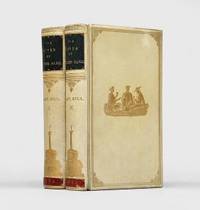
1880réf. 157305London: John Murray 1880. Deluxe presentation copy inscribed to the author's sister and ardent supporter Rare publisher's deluxe edition presentation copy of this classic travel narrative touchingly inscribed on the first blank of volume one "Fanny Gill with the best love of her brother William Gill". In 1883 following Gill's premature death in Sinai Frances "Fanny" Gill 1842-1930 was the driving force behind the creation of the RGS's Gill medal and John Murray's publication of a condensed memorial edition of the text. Captain William Gill 1843-1882 who served with the Royal Engineers between 1864 and 1876 was inspired to explore the relatively unknown Chinese hinterland by the earlier travels of Thomas Blakiston and Baron Ferdinand von Richthofen. In July 1876 Gill visited Berlin to consult with von Richthofen about preparations for the journey and then set sail for Asia. After several months spent visiting Peking Shanghai Chengde Jehol and the sea terminus of the Great Wall he began his expedition in 1877 following the Yangtze to the city of Chongqing in the company of Evelyn Colborne Baber. In Sichuan province he ventured into the remote Min mountains - becoming the first European to explore the region - and then undertook a four-month journey westwards with William Mesny to Yunnan and Tibet following the course of the Jinsha "Golden Sand" river the name given to the upper stretches of the Yangtze. "From Tachienlu Dajianlu 8340 feet he ascended to the summit level of the great Tibetan plateau continuing his journey by Litang 18280 feet to Batang 8546 feet in a tributary valley of the Kinsha; and then crossing that river he turned south travelling parallel to the river to Talifu Dalifu the western capital of Yunnan" ODNB. The scientific results from Gill's epic expedition were first made public in 1878 in the Journal of the Royal Geographical Society with Gill awarded the RGS's gold medal the following year and the gold medal of the Paris Geographical Society in 1880. Fittingly Murray's 1883 condensed edition was edited by his fellow traveller Baber by now Chinese Secretary at the British Legation in Peking. While the number of deluxe copies of the first edition is unknown we have traced only one other example which appeared at Sotheby's in 1989 and again in 2014. 2 vols octavo. Engraved frontispieces 2 folding plates including colour illustration not called for after the original brass memorial plaque to Gill Professor Edward Palmer and Lieutenant Harold Charrington installed in the Nelson Chamber in the crypt of St. Paul's Cathedral 8 folding maps linen-backed general map of China showing author's route unfolding to 450 x 452 mm in rear pocket of vol. I engraved vignettes on title pages. With tissue-guarded portrait of Gill after an etching by Theodore Blake Wirgman 1848-1925 sometime extracted from 1883 edition of present work and laid down on vol. I frontispiece verso. Original full vellum black and red spine labels lettered in gilt spines with gilt vignettes of Tibetan monastery and gilt rolls and tools boards with double-ruled gilt frames and gilt corner devices gilt vignettes of two opium smokers and a tea drinker to front covers board edges and turn-ins rolled in gilt combed marbled endpapers edges red. Early 20th-century ownership signature of one J. A. Barnes in both vols. Binding bright with just a little soiling and rubbing internally clean plates and maps well-preserved folding plate in vol. II slightly proud at top edge where sometime carelessly refolded. A handsome near-fine copy. Howgego III Continental G19; Yakushi G57. hardcover
2018réf. __0198428855Oxford University Press 2018. Paperback. New. 27.95x21.26x10.63 inches. Oxford University Press paperback
1926réf. 127221926-1927. Collection of 64 original wood engravings on various handmade papers printed from the block on 37 sheets for ‘Troilus and Criseyde’ comprising 31 sheets signed and numbered by Eric Gill all from editions of only 10; 2 inscribed ‘proofs’ with ‘proof’ written by Gill and 3 unsigned and unnumbered proofs plus 2 unused wood engraved borders on one sheet signed and numbered by Gill. The margin of each page has a pencil note of Gill’s reference numbers and the relevant page the engraving/s appeared in the book. All inserted loose in a specially made folio album 33 x 28 cm niger backed cloth with ‘Eric Gill: Engravings’ in gilt on the spine spine spotted but otherwise good the front free endpaper has inscribed in pencil ‘Evan Gill collection’.A superb set of wood engraved prints from the first and rarest of Eric Gill’s major works he put together with Robert Gibbings for the Golden Cockerel Press. It was published in 1927 in only 225 copies. The editioned prints we have here are all in superb condition and were the one’s given by the artist to Evan Gill the artist’s brother and bibliographer. The collection includes an near complete set of the wood engravings used in the book including all the full-page engravings as well as an almost all the elaborate border decorations - only 6 borders which are in the book are not in the album. We also have a numbered and signed proof of two of the borders which were not used in the book. A remarkable collection of original signed prints.Physick 403 to 410 415-416 419-430 432-433 435-442 445-459 462-475 487 A remarkable collection of a near complete set of editioned and signed wood engravings for one of Gill’s greatest books given by the artist to his brother and bibliographer Evan Gill hardcover
1958réf. 6173London: The British Computer Society Ltd 1958. First edition. First edition exceptionally rare separately-paginated offprint inscribed by Gill of "the first paper on parallel programming . Subsequent papers on the subject did not appear for another seven years . A decade later interest in parallel programming had increased dramatically" Dauben. Today "parallel computing has become the dominant paradigm in computer architecture mainly in the form of multi-core processors" Wikipedia. . THE BIRTH OF PARALLEL COMPUTING EXCEPTIONALLY RARE INSCRIBED OFFPRINT. First edition exceptionally rare separately-paginated offprint inscribed by Gill of "the first paper on parallel programming . Subsequent papers on the subject did not appear for another seven years . A decade later interest in parallel programming had increased dramatically" Dauben p. 361. The origins of parallel programming can be traced to the early 19th century work of Charles Babbage Luigi Menabrea and Ada Lovelace but it was Gill who first formalised the concept on 16 December 1957 in a lecture he delivered to the British Computer Society published as the offered paper. He summarizes the aims of the paper as follows: "By 'parallel programming' is meant the control of two or more operations which are executed virtually simultaneously and each of which entails following a series of instructions. This can be brought about in a single computer either by equipping it with more than one control unit or by allowing time-sharing of one control unit between several activities; the latter case seems of greater practical interest. Some of the advantages to be gained and some of the programming problems to be solved in putting these ideas into practice are discussed." Gill goes on to discuss the meaning problems and potentialities of parallel programming as well as time-sharing and automatic interruption. The paper concludes with comments and questions from the audience in Gill's lecture together with his responses. This prescient article correctly predicted the future importance of parallel computing: "The use of multiple control units within a single machine will enable still higher overall computing speeds to be achieved when the ultimate speed of a single arithmetical unit has been reached" p. 6. In the 1960s and 1970s parallel computing was heavily utilized in industries that relied on large investments for R&D such as aircraft design and defence as well as modelling scientific problems such as meteorology. Parallelism became of central importance in high-performance computing especially with the advent of supercomputers in the late 1960s that employed multiple physical CPUs on nodes with their respective memory networked together in a hybrid-memory model. Today "parallel computing has become the dominant paradigm in computer architecture mainly in the form of multi-core processors" Wikipedia. Multi-core processors are used not only in modern supercomputers but also in desktop PCs for example Intel's Core Duo was the CPU for the first-generation Apple MacBook Pro. Stanley Gill was one of the most important early computer scientists. From 1946-48 he was employed at the National Physical Laboratory on punch card computing and the design of the Pilot ACE a cut down version of Alan Turing's full ACE design and one of the world's first stored-program computers. From 1952 to 1955 he was a Research Fellow at St John's College Cambridge working in a team led by Maurice Wilkes on the EDSAC the first full-size stored-program computer. With Wilkes and David Wheeler Gill co-authored The Preparation of Programs for an Electronic Digital Computer 1951 "the first book on computer programming" Tomash & Williams. We have been unable to locate any other copy of this offprint either in institutional collections or in commerce. Provenance: Stanley Gill 1926-75 computer pioneer inscribed on front wrapper 'With the author's compliments S. G.'. "Parallel processing is information processing that uses more than one computer processor simultaneously to perform work on a problem. This should not be confused with multitasking in which many tasks are performed on a single processor by continuously switching between them a common practice on serial machines. Computers that are designed for parallel processing are called parallel processors or parallel machines. Many parallel processors can also be described as supercomputers a more general term applied to the class of computer systems that is most powerful at any given time. "The need to coordinate the work of the individual processors makes parallel processing more complex than processing with a single processor. The processing resources available must be assigned efficiently and the processors may need to share information as the work progresses. Parallel processors are used for problems that are computationally intensive that is they require a very large number of computations. Parallel processing may be appropriate when the problem is very difficult to solve or when it is important to get the results very quickly. "Some examples of problems that may require parallel processing are image processing molecular modeling computer animations and simulations and analysis of models to predict climate and economics. Many problems such as weather forecasting can be addressed with increasingly complex models as the computing power is developed to implement them so there is always an incentive to create newer more powerful parallel processors. Although early work in parallel processing focused on complex scientific and engineering applications current uses also include commercial applications such as data mining and risk evaluation in investment portfolios. In some situations the reliability added by additional processors is also important. "Parallel processors are one of the tools used in high-performance computing a more general term that refers to a group of activities aimed at developing and applying advanced computers and computer networks. In 1991 a U.S. federal program the HPCC High Performance Computing and Communications program was introduced to support the development of supercomputing gigabit networking and computation-intensive science and engineering applications. The HPCC program uses the term 'Grand Challenges' to identify computationally intensive tasks with broad economic and scientific impact that will only be solved with high performance computing technologies. "As of 2002 most of the world's fastest computers are parallel processors. The number of processors may be from fewer than fifty to many thousands. Companies manufacturing these machines include IBM SGI Cray Hitachi and Fujitsu . "The two main categories of parallel processor are SIMD and MIMD. In a SIMD Single Instruction Multiple Data machine many processors operate simultaneously carrying out the same operation on many different pieces of data. In a MIMD Multiple Instruction Multiple Data machine the number of processors may be fewer but they are capable of acting independently on different pieces of data . "Different parallel architectures have varying strengths and weaknesses depending on the task to be performed. SIMD machines usually have a very large number of simple processors. They are suited to tasks that are massively parallel in which there are relatively simple operations to be performed on huge amounts of data. Each data stream is assigned to a different processor and the processors operate in lockstep synchronously each performing the same operation on its data at the same time. Processors communicate to exchange data and results either through a shared memory and shared variables or through messages passed on an interconnection network between processors each of which has its own local memory . "There is greater variety in the design of MIMD machines which operate asynchronously with each processor under the control of its own program. In general MIMD machines have fewer more powerful processors than SIMD machines. They are divided into two classes: multiprocessors also called tightly coupled machines which have a shared memory and multicomputers or loosely coupled machines which operate with an interconnection network. Although many of the earlier high-performance parallel processors used in government research were very large highly expensive SIMD machines MIMD machines can be built more easily and cheaply often with off-the-shelf components. Many different experimental designs have been created and marketed. "In a serial algorithm each step in the algorithm is completed before the next is begun. A parallel algorithm is a sequence of instructions for solving a problem that identifies the parts of the process that can be carried out simultaneously. To write a program for a parallel processor the programmer must decide how each sub-task in the algorithm will be assigned to processors and in what order the necessary steps will be performed and at what points communication is necessary. There can be many algorithms for a particular problem so the programmer needs to identify and implement the one best suited for a particular parallel architecture. "Sometimes 'software inertia' the cost of converting programming applications to parallel form is cited as a barrier to parallel processing. Some systems automatically adapt a serial process for parallel processing but this may not result in the best performance that can be obtained for that problem. In general it is difficult to write parallel programs that achieve the kind of high-speed performance of which parallel processors are theoretically capable. Programming languages have been developed specifically for use on parallel processors to handle parallel data structures and functions scheduling and memory management . "The speedup that can be obtained on a parallel machine depends on the number of processors available and also on the size of the problem and the way in which it can be broken into parts. Ideally speedup would be linear so that five processors would give a speedup of five or ten processors a speedup of ten. However a number of factors contribute to sub-linear speedup including additional software overhead in the parallel implementation load balancing to prevent idle processors and time spent communicating data between processors. A critical limitation is the amount of parallel activity that the problem allows. Gene Amdahl's Law says that the speedup of a parallel algorithm is limited by the fraction of the problem that must be performed sequentially" Edie Rasmussen . "The systems with multiple cores and processors were no longer just the domain of supercomputing but rather ubiquitous. The new laptops and even mobile phones contain more than one processing core. The mainstream adoption of parallel computing is a result of the cost of components dropping due to Moore's law that the number of transistors on a microchip doubles every two years though the cost of computers halved . The manufacturers such as Dell and Apple have produced even faster machines for the home market that easily outperform the supercomputers of old that once took a room to house. Devices that contain multiple cores allow us to explore parallel-based programming on a single machine" . Since the 1990s many neuroscientists have argued that the human brain must function by means of parallel computation. Neurons are much slower than silicon-based components of digital computers. For this reason neurons could not execute serial computation quickly enough to match rapid human performance in perception linguistic comprehension decision-making etc. The only viable solution seems to be to replace serial computation with a "massively parallel" computational architecture in brain simulation models. It follows that artificial intelligence which aims to replicate human intelligence in certain areas will also make use of parallel processing. "There are several aspects of artificial intelligence which suggest that the application of some form of parallel computation and distributed systems might be appropriate" Roosta p. 501. "Stanley Gill was born 26 March 1926 in Worthing West Sussex England. He was educated at Worthing High School for Boys and was during his schooldays a member of an amateur dramatic society. In 1943 he was awarded a State Scholarship and went to St John's College Cambridge where he read Mathematics/Natural Sciences. He graduated BA in 1947 and MA in 1950. "Gill worked at the National Physical Laboratory from 1947 to 1950 where he met his wife Audrey Lee whom he married in 1949. From 1952 to 1955 he was a Research Fellow at St John's working in a team led by Maurice Wilkes; the research involved pioneering work with the EDSAC computer in the Cavendish Laboratory. In 1952 he developed a very early computer game. It involved a dot termed a sheep approaching a line in which one of two gates could be opened. The game was controlled via the lightbeam of the EDSAC's paper tape reader. Interrupting it such as by the player placing their hand in it would open the upper gate. Leaving the beam unbroken would result in the lower gate opening. "He gained a PhD in 1953 and following a year as Visiting Assistant Professor at the University of Illinois Urbana joined the Computer Department at Ferranti Ltd. In the UK in 1963 he was appointed Professor of Automatic Data Processing UMIST Manchester and following various consultancies including International Computers Ltd he was appointed in 1964 to the newly created Chair of Computing Science and Computing Unit at Imperial College University of London. This was later merged into the Imperial College Centre for Computing and Automation of which Gill became director whilst he worked as a consultant to the Ministry of Technology . "Gill travelled widely and advised on the establishment of departments of computing in several universities around the world. He was also President of the British Computer Society from 1967 to 1968" Wikipedia. Dauben Abraham Robinson: The Creation of Non-Standard Analysis 1995. Roosta 'Artificial Intelligence and Parallel Processing' pp. 501-534 in: Parallel Processing and Parallel Algorithms 2000. 4to 280 x 210 mm pp. 9 3 blank journal pagination 2-10. Original buff printed wrappers very minor creasing. The British Computer Society Ltd unknown
1619réf. 5791Ditchling: Saint Dominic's Press Ditchling 1916-1923. First Edition. Hardcover. Very good. This is Eric Gill's personal set bound for him as two volumes and with his bookplate in the first book. All thitry-four issues with pagination per the bibliography by Taylor & Sewell pp. 143-44. Complete with wrappers where called for and including the calligraphy item by Edward Johnston in the Christmas 1916 issue. Volumes 1-4 bound in full leather with Gill's bookplate and pencil signature. Volumes 5-7 bound in quarter leather over plain black paper boards. Title page gathering for issue 33 is neatly inserted likely an error at binding. The second book is signed in pencil by Gill and dated 1925 with his note "bound by DA". Books free of markings inside except that Gill has added some changes to his essay "The Control of Industry" in the first issue and a few minor alterations in other issues. All issues complete and untrimmed only minor ordinary wear from being handled by Gill. The plain bindings are secure with spines faded. These were obviously intended to be working books. The Game was the house magazine for one of the great artistic communities of the 20th century. The magazine powerfully expressed the Catholic distributist ideas that were dear to Gill and other Ditchling members. A wonderful and unique set. Saint Dominic's Press Ditchling hardcover
1943réf. 14253London 1943. 885 by 1140mm. 34.75 by 45 inches. Chromolithograph map some minor strengthening to folds. Gill was commissioned by the British Time & Tide magazine 1920-1986 following the World War Two Atlantic Charter agreement between the US President Franklin D. Roosevelt and UK Prime Minister Winston Churchill "for a better future for the world" 14 August 1941 - La Carta del Atlantico. Stunning design featuring detailed colourful pictorial depictions of agriculture and food production industrial raw materials and traditional life around the world including images of people animals trees cattle ships at sea planes flying overhead and markers with a symbol box listing the locations of metals wine crops petroleum tobacco sugar rubber silk coffee fruit precious stones etc. surrounded by clouds on the sides and the sun shining down from The Atlantic Charter in the text box at the top with a black and white image below of an industrial metal worker destroying tanks and machinery and a farming family ploughing a field with horses the cities countries continents and quotes in banners with a seal and a compass point on both sides all framed within a decorative border. Leslie MacDonald Gill 1884- 1947 was a note graphic designer cartographer artist and architect. Born in Brighton he was the younger brother of Eric Gill one of the leading figures of the Arts and Crafts movement. In 1914 his "Wonderground Map" commissioned by Frank Pick and hung at every station helped to save the London Underground by presenting an accurate map which also had a humorous side in cartoon style. Produced in poster form it was also made available for sale to members of the public and proved to be very popular. Elder brother Eric who at that time was engaged in a commission for Westminster Cathedral was included at the bottom of the map. He also designed of the standard upper case lettering used on headstones and war memorials by the Imperial War Graves Commission. But it is perhaps his illustrated maps for which he is most well known. These maps have featured in a series of exhibitions including Magnificent Maps exhibition in 2010 at the British Library an exhibition MacDonald Gill Out of the Shadows in 2011 at the University of Brighton and at the Mind the Map exhibition in 2012 at the London Transport Museum. unknown
1930réf. 0028631930 Lausanne, Gonin et Cie, 1930. Trois volumes dont deux grand in-quarto (252 X 314 mm) en feuilles sous couverture blanche illustrée d'un bois gravé en couleurs sur le premier plat, chemise demi-toile grise, vignette de titre au dos, étui de l'éditeur et un volume grand in-quarto de 15 planches sous chemise papier à rabats, chemise demi-toile grise de l'éditeur. Tome I : 267 pages, (1) page, (1) f. blanc, (1) f. de table des illustrations, (2) ff. blancs ; Tome II : 263 pages, (1) page, (1) f. blanc, (2) ff. de table des illustrations et achevé d'imprimer, (1) f. blanc [&] suite de 15 planches. Petit manque de papier sur un plat de la chemise de la suite.
1931réf. 78694Waltham Saint Lawrence:: Printed and Published at the Golden Cockerel Press 1931. First of this edition; No. 102 of 500 copies 488 on paper. publisher's half pigskin and tan buckram boards t.e.g. by Sangorski & Sutcliffe London. The tan cloth of the binding is foxed as usual with a few small stains; and the rounded back of the pigskin spine is irregularly tanned. The interior is very fine throughout. Folio. With Decorations by Eric Gill. Printed and Published at the Golden Cockerel Press, hardcover
réf. ANAIS-0443103828Churchill Livingstone. paperback. Good. 8.6x0.8x10.6. Buy with confidence. Excellent Customer Service & Return policy. Churchill Livingstone paperback
1942réf. 9566London: George Philip & Son Ltd 1942. Pictorial world map on Mercators projection 90 x 114 cm printed in colours a couple of short closed tears pin holes in corners recently lined on paper and linen. First published in 1942 a second edition bears a new copyright date of 1944 in the lower margin; a third edition revised with a new title and a polar projection of the world inscribed the United Nations was issued in 1948. Commissioned by Time and Tide magazine a British literary and political review it is among the scarcest of Gills pictorial maps. Although Time and Tide attracted well known writers it never enjoyed a wide circulation and was heavily subsidised by its founder the former Suffragette and Lusitania survivor Viscountess Rhondda. The map celebrates the joint declaration released by Churchill and Roosevelt in August 1941 after the Atlantic Conference discussions between the two leaders held on board an American warship off the coast of Newfoundland. Both hoped to mobilise American support for intervention in the war and while this was not immediately forthcoming the Atlantic Charter was a gesture of solidarity at a moment when Nazi Germany had just turned against the USSR and looked all but unstoppable. In time it would form the basis for Allied war aims and the postwar foundation of the United Nations. At such a dark time Gills tone is resolutely optimistic looking ahead to a world of peace and plenty - the text of the charter itself illuminates the world with its rays. In the lower left hand corner is a modern interpretation of Isaiahs prophecy: they shall beat their swords into ploughshares and their spears into pruning hooks. A worker takes a sledgehammer to tanks and munitions in the foreground while in the distance is an idyllic scene of ploughing and reaping. The map is adorned with quotes by Cicero Emerson Pope and Aristotle on the virtues of peace and the body of the map is given over to the worlds resources agricultural and mineral which could once again be used for the prosperity of mankind distributed around the world by a network of shipping lanes. The creator of the map MacDonald Gill brother of Eric was a successful commercial artist in his own right and a noted calligrapher who designed the font used on all headstones by the Commonwealth War Graves Commission. His arts and crafts style 1913 map of the London Wonderground commissioned by Frank Pick helped to popularise a whole new genre of pictorial map making on both sides of the Atlantic. Further work for London Transport included redesigning the map of the network in the early 1920s and other clients included the Post Office and the Empire Marketing Board. Map George Philip & Son, Ltd unknown
1935réf. 1413513New York; London; Windham; Garden City: Various Publishers 1935-1996. Various Editions. Hardcover. A Collection of 55 Brendan Gill items with the majority inscribed to Pulitzer Prize-winning journalist and writer Susan Sheehan who was a close friend and colleague of Gill's at The New Yorker for many years. All shelved in Room F. BOOKS: Octavos 17 items and Quartos 9 items. In Very Good minus condition. Mostly in full or quarter cloth bindings of various colors with some paperback items. Many with dust jackets of various colors all wrapped in archival mylar sleeves. Jackets are generally lightly age toned and moderately worn with scuffing to covers and light rubbing/wrinkling along edges. Some jackets with small closed tears in the edges. Nearly all jackets with prices unclipped. Boards generally show moderate shelving wear with rubbing along edges and at corners. Text blocks show light-to-moderate age toning with light shelving wear along edges. Interiors are largely clean with some very sparse penciling present. A NEW YORK LIFE: OF FRIENDS AND OTHERS. By Brendan Gill. Published by the Poseidon Press in 1990; First Edition First Printing. Light soiling to front cover of jacket. Some pen notation and marginalia throughout. Includes a laid-in letter to Gill discussing an upcoming visit to the a Field Club for the English-Speaking Union of the United States' Greenwich Branch. WAYS OF LOVING. By Brendan Gill. Published by Harcourt Brace Jovanovich in 1974. First Edition First Printing. Scattered foxing to top edge of text block. Inscribed to Susan Sheehan by Gill on the front flyleaf: "For Susan who is not alas on every page- / with love and admiration / Brendan / August 14th 1974". Includes a laid-in photocopy of a typed note from Gill to several drivers providing directions to "the Owl House" with handwritten corrections. MANY MASKS: A LIFE OF FRANK LLOYD WRIGHT. By Brendan Gill. Published by G. P. Putnam's Sons in 1987. First Edition Third Printing. Inscribed to Susan Sheehan by Gill on the front flyleaf: "For Susan / beloved friend colleague denizen of West 43rd Street proprietor of a Gill archive of the most doubtful value- this latest Tome affectionately / Brendan / October 17th / 1988". Includes a laid-in handwritten note to Susan Sheehan from a friend recounting an encounter with Gill wherein Gill described his relationship with Susan calling her the "best of the 'New Yorker' writers". DEATH IN APRIL & OTHER POEMS. By Brendan Gill. Published by Hawthorne House in 1935. First Edition First Printing. One of 160 copies. Gill's first book printed while he was still an undergraduate at Yale. Inscribed on the front flyleaf to Susan Sheehan by Gill: "For Susan with very much love this very early work. It is yours because you wanted it and not because I can bear to look at it. I was given it this year 1982 by John illegible who inherited it from a deceased uncle in Newport. / Brendan". WOOINGS: FIVE POEMS BY BRENDAN GILL. Published by the Plain Wrapper Press in 1980. Limited Edition: #123/150. Signed flat in black ink by Brendan Gill on the colophon. THE TROUBLE OF ONE HOUSE Paperback. By Brendan Gill. Published by Popular Library in 1950. First Trade Paperback Edition. Gill's first novel. Shows heavier shelving wear with scuffing to covers light creasing at the corners cracking along spine and joints and a slant to the spine. Inscribed on title page to Susan Sheehan by Gill: "With love to Susuan January 25th 1965. Poor Richard". THE TROUBLE OF ONE HOUSE Hardcover. By Brendan Gill. Published by Doubleday & Company in 1950. First Edition First Printing. Jacket is much more heavily worn with splitting along the spine and front joint and chipping at the head and tail. Inscribed by Gill to Susan Sheehan on the front flyleaf: "For Susan my best reader- / Brendan Gill / July 28th 1960". THE DAY THE MONEY STOPPED. By Brendan Gill. Published by Doubleday & Company in 1957. First Edition later printing. Gill's second novel. Heavy offsetting on jacket back cover. Slant to spine. Splitting at front hinge. Inscribed by Gill on the front flyleaf: "After the first and before the third comes the second / Brendan Gill / Belated 14th 1960". THE MALCONTENTS. By Brendan Gill. Published by Harcourt Brace Jovanovich in 1973. Limited edition published as a New Year's greeting to friends of the author and publisher. Boards are covered in a lightly chipped protective glassine wrap. Inscribed by Gill to Susan and Neil Sheehan on the front flyleaf: "For Susan and Neil- / affectionate holiday greetings! / Brendan". LATE BLOOMERS. By Brendan Gill. Published by Artisan in 1996. First Edition Second Printing. Boards are negligibly worn. Inscribed by Gill to Susan Sheehan on the front flyleaf: "For Susan / with love- oh so many books surely more than anyone else including me possesses- / Brendan / April 16th 1997". TALLULAH. By Brendan Gill. Published by Holt Reinhart & Winston in 1972. First Edition First Printing. Inscribed by Gill to Susan Sheehan on the title page: "For Susan with love- / her belated Christmas present / 1/26/93". THE U.S. CUSTOM HOUSE ON BOWLING GREEN. By Brendan Gill. Published by the New York Landmarks Conservancy in 1976. First Edition. Paperback lightly worn and age toned. A FAIR LAND TO BUILD IN: AN ARCHITECTURE OF THE EMPIRE STATE. By Brendan Gill. Published by the Preservation League of New York State. First Edition. Paperback with light wear. JOHN F. KENNEDY CENTER FOR THE PERFORMING ARTS. By Brendan Gill. First Edition. Published by Harry N. Abrams in 1981. HAPPY TIMES. By Brendan Gill photographs by Jerome Zerbe. Published by Harcourt Brace Jovanovich in 1973. First Edition First Printing. Inscribed by Gill to Susan Sheehan on the half title page: "For Susan whose happy times go unrecorded here / with love / Brandan / August 15th 1974". THE DREAM COMES TRUE: GREAT HOUSES OF LOS ANGELES. By Brendan Gill Photographs by Derry Moore. Published by Lippincott & Crowell in 1980. Inscribed by Gill to Susan Sheehan on the half title page: "For Susan with love and admiration- / Brendan / at Christmas 1980". ST. PATRICK'S CATHEDRAL. By Leland Cook introduction by Brendan Gill. Published by Quick Fox in 1979. First Edition. Inscribed by Gill to Susan Sheehan on the front flyleaf: "For Susan with love as Keeper of the Gill Archive- / Brendan / November 26/79". EXPLORATIONS. By William Butler Yeats. Published by The Macmillan Company in 1962. First US Edition. With Brendan Gill's bookplate on the front pastedown dated May 23 1963". STATES OF GRACE: EIGHT PLAYS BY PHILLIP BARRY. Edited by Brendan Gill. Published by Harcourt Brace Jovanovich in 1975. First Edition First Printing. Inscribed by Gill to Susan Sheehan on the front flyleaf: "For Susan with love- / shortly after the near-death scene at the pen and pencil- ! / Brendan in perfect health 2/3/76". LETTERS TO PHIL in jacket. By Gene Schermerhorn foreword by Brendan Gill. Published by New York Bound in 1982. First Edition First Printing. Comparatively very light wear to boards. Foreword by Gill. Inscribed to Susan Sheehan by Gill on the title page: "For Susan with love and admiration this lamentably defective copy of a little book Mac provided me with the occasion to celebrate my hundred-year-old friend Ned Perkins. / Brendan / August 11th 1983". LETTERS TO PHIL in slipcase. By Gene Schermerhorn foreword by Brendan Gill. Published by New York Bound in 1982. Limited Edition: #8/250. Moderate shelving wear to slipcase. Negligible wear to boards. Inscribed by a Dan to Gill on the half title page: "For Brendan Gill / with deep appreciation for adding another dimension to the book. / Sincerely / Dan". THE HERO. By Lord Raglan. Published by Watts & Co. in 1949. Thinker's Library edition. Shows some faint soiling to boards with sunning along the spine. Inscribed by Gill to Susan Sheehan here as Susan Black on the front flyleaf: "For Susan Black from Lord Raglan's friend B.G. / Dec. 17th '62". APES MEN AND LANGUAGE: HOW TEACHING CHIMPANZEES TO "TALK" ALTERS MAN'S NOTIONS OF HIS PLACE IN NATURE. By Eugene Linden. Published by the Saturday Review Press in 1974. First Edition First Printing. Foxing on text block edges. Inscribed to Susan Sheehan by Gill on the front flyleaf: "For Susan Sheehan / from the father-in-law of the author father of the artist- / with love / Brendan / February 3rd / 1975". AUGUSTUS JOHN. By Michael Holroyd. Published by Holt Rinehart and Winston in 1975. First Edition. Inscribed to Susan Sheehan by both Holroyd and Gill on the front flyleaf. From Holroyd: "For Susan Sheehan / from Michael Holroyd / 8.9.75". From Gill: "WIth love from Brendan / 9/8/75 / and yes the same day as above!". POLYPHEMUS. By Jeremy Stafford-Deitsch. Published by Vantage Press in 1983. First Edition First Printing. Jacket is price clipped. Two inscriptions on the front flyleaf; one from a Dan to Gill and one from Gill to Susan Sheehan. From Dan to Gill: "April 14- / For Brendan / with my affection / Dan". From Gill to Susan: "Who herewith passes it along to Dan's good friend Susan Sheehan who sends her love to Dan through me just as Dan has sent his love to her. / The grateful go-between / Brendan / August 11th 1983". YALE LITERARY MAGAZINE: SEPTEMBER 1966 ALUMNI ISSUE. Includes "Prologue to a Novel" by Brendan Gill. Published by the Yale Literary Society in 1966. Paperback with some smudging and age toning to covers. EPHEMERA: STANLEY HYMAN AND HIS MAGIC BRIEFCASE Typescript. By Brendan Gill. Folded in half lightly age toned with some rust marks where the paper contacts the staple. Housed in a new card-backed archival sleeve. Inscribed by Gill to Susan Sheehan on the top margin of the first page: For Susan with love- / Brendan 1/23/73". DICKEN'S WORLD AND HOW TO ENTER IT Typescript. By Brendan Gill. Leaves are loose with rust marks where paper clip used to be. Lightly age toned. Housed in a new card-backed archival sleeve. Inscribed "For Susan / Brendan / Nov. 17 1982". DOROTHY PARKER Typescript. By Brendan Gill. In a green binder. Pages are lightly age toned. THE NEW YORK TIMES: SATURDAY OCTOBER 4 1980. Single page folded into fourths moderately age toned. Includes the article "Pray Tell: Who Says The Twain Cannot Be Met" by Brendan Gill. Housed in a new card-backed archival sleeve. PRAY TELL: WHO SAYS THE TWAIN CANNOT BE MET Typescript. By Brendan Gill. Leaves are loose with moderate age toning and offsetting. Untitled on the pages but with same text as the article in the newspaper above. Housed in a new card-backed archival sleeve. The following six items are all housed in the same envelope from The New Yorker which is signed "Gill" and addressed to Susan Sheehan: --TLS FROM GILL TO SUSAN SHEEHAN: Typed letter on The New Yorker letterhead addressed to Susan signed "B-" at the bottom. Folded in half across the center. Discusses the other items included in the envelope "A couple of pieces for the Gill file that you keep. ." --BREAKING GROUND: OPEN SPACES TEMPORARY AND ACCIDENTAL. Booklet photos by Marven E. Newman text by Brendan Gill. Folded in half at the center. Inscribed on the front cover by Gill to Susan: "For Susan with love / Brendan". Additional inscription from gill on the publication page with arrow pointing to designed Lucian Leone: "A young man who like most designers enjoys graphics and consents to words but dislikes context. This type-face is all but totally illegible!!". --A CHILD OF VENICE Typescript --JOHN HUSTON Typescript --LISTENING FOR THE LAUGHTER OF GHOSTS Typescript --COLLECTING HOUSES Typescript All typescripts by Brendan Gill. Folded in half across the center with paperclips in the top corners. Lightly age toned. Some with rust marks around paperclips. EASTERN REVIEW: JULY 1982 Magazine. Reprints Brendan Gill's article "Summer in Muskoka" from Nautical Quarterly. Lightly age toned and scuffed. Curling near the spine. Housed in a new archival mylar sleeve. ST. PATRICK'S DAY IN NEW YORK Typescript. By Brendan Gill. Paperclip in the top left corner with some surrounding rust marks. Creasing in the top right corner. Housed in a new card-backed archival sleeve. CHRISTMAS AT THE OWL HOUSE Typescript. By Brendan Gill. Paperclip in the top left corner. Faint creasing in the bottom right corner. Inscribed by Gill to Susan Sheehan in the top margin of the first page: "For Susan / Brendan / 10/11/92". Housed in a new card-backed archival sleeve. ON PURSUING THE PRIZE Typescript. By Brendan Gill. Paperclip in the top left corner with some rust marks. Very faintly creased in the top right corner. Very faint smudging along edges of the first page. Inscribed by Gill to Susan Sheehan in the top margin of the first page: "For Susan / Brendan / Nov 14 1982". Housed in a new card-backed archival sleeve. UNTITLED TYPESCRIPT OF A CLASS REUNION SPEECH. By Brendan Gill. Paperclip in the top left corner. Lighty age toned. Inscribed by Gill to Susan Sheehan in the top margin of the first page: "For Susan with love- / Brendan / 3/19/73". Housed in a new card-backed archival sleeve. READERS & WRITERS: OCT-NOV 1966 Magazine. Lightly age toned with stress marks along the spine. Includes the Foster Hirsch article "Punching Holes in Gill's Will" which criticises Gill's form of film criticism. The pages containing the article are paperclipped. Housed in a new archival mylar sleeve. UNTITLED TYPESCRIPT OF A SPEECH. By Brendan Gill. Paperclip in the top left corner. Lightly age toned. Dated "Nov. 5/64" in black ink in the top margin. Creased across the center. Some rust marks present due to contact with paperclip. Housed in a new card-backed archival sleeve. EULOGY DELIVERED AT THE MEMORIAL SERVICE FOR E.J. ROUSUCK Typescript. By Brendan Gill. Paperclip in the top left corner. Lightly age toned. Attached is a typed unsigned letter - presumably also from Gill - discussing article ideas. Housed in a new card-backed archival sleeve. IN THE PRESENCE OF THE PAST Typescript. By Brendan Gill. Paperclip in the top left corner with surrounding rust marks. Lightly age toned. Hand-corrected in blue ink on the first page. Housed in a new card-backed archival sleeve. HOW I HAVE HELPED THE FRENCH ECONOMY. Booklet containing a speech given by Brendan Gill in 1962. Lightly smudged and age toned. Rust marks in the top left corner. Housed in a new archival mylar sleeve. FILM COMMENT: JANUARY-FEBRUARY 1973 Magazine. Includes article "Blue Notes" by Brendan Gill. Rubbing wear along spine. Inscribed to Susan Sheehan by Gill on the front cover: "For Susan / who is a little young for this rough stuff / Brendan / 2/22/73". Housed in a new archival mylar sleeve. MR. FORTUNE Typescript. By Brendan Gill. In a brown binder. Binder shows mild scuffing. Lightly age toned with a small smudge on the first page. Inscribed to Susan Sheehan by Gill on the title page: "For Susan Sheehan / March 21 1967". SCRIPT OUTLINE FOR "FAT GIRL" Typescript. By Brendan Gill. Paperclip in top left corner. Lightly age toned. Faint wrinkles along the right edge. Housed in a new card-backed archival sleeve. COLE Typescript. By Brendan Gill. Lightly age toned. Paperclip in the top left corner with surrounding rust marks. Housed in a new card-backed archival sleeve. A POEM FOR ALL TRAVELERS. Single typed sheet. By Brendan Gill. Light wrinkling at the corners with some rust marks in the top margin. Housed in a new card-backed archival sleeve. BIOGRAPHICAL ESSAY ON PHILIP BARRY FROM "STATES OF GRACE" Typescript. By Brendan Gill. Housed in a light blue binder. Pages are lightly age toned. Inscribed to Susan Sheehan by Gill in the top margin of the first page: "For Susan in a frantic week! / Love / Brendan / 3/4/75". THE RIGHT PLACE FOR LOVE Typescript. By Brendan Gill. In a burgundy softcover binder. Some scuffing to binder with some stress marks along spine. UNTITLED TYPESCRIPT. By Brendan Gill. Paperclip in top left corner. Housed in a new card-backed archival sleeve. NEWSWEEK JUNE 10 1974 Newspaper. Two pages. Contains the profile "Brendan of Broadway" about Brendan Gill. Papers are age toned with creasing in the bottom corner of the front page. Pages were folded in half now split across the center. Brendan Gill was an American writer and journalist who wrote for The New Yorker for over 60 years. In that time he wrote over 1200 pieces for the magazine serving as its film critic and architecture critic among other roles. Susan Sheehan was Gill's longtime colleague at The New Yorker and an accomplished writer in her own right. The items included here the vast majority of which are inscribed to Susan over a span of more than 60 years evidence the close and enduring relationship between the two journalists. All of these items were included in Sheehan's personal archive of Gill items which is referenced by Gill in this collection as her "Gill file" or "the Gill Archive". Second Story Books is honored to offer this item from the personal collection of Neil and Susan Sheehan. Neil Sheehan 1936-2021 and Susan Sheehan 1937-2026 were a distinguished husband-and-wife team whose careers helped define American literary journalism in the second half of the twentieth century. Neil Sheehan a Pulitzer Prize-winning reporter for The New York Times is best known for his role in bringing the Pentagon Papers to public attention and for his landmark book "A Bright Shining Lie" while Susan Sheehan built a parallel reputation as a leading voice at The New Yorker crafting deeply reported narrative nonfiction on subjects ranging from mental health to social institutions earning her own Pulitzer Prize in 1983. Their longstanding ties to major publications particularly The New Yorker placed them at the center of an influential cultural and intellectual network and the books from their library carry added provenance through this close connection to the magazine's editorial and artistic community. 1413513. Special Collections - Upstairs. Various Publishers hardcover
1935réf. 1413513New York; London; Windham; Garden City: Various Publishers 1935-1996. Various Editions. Hardcover. A Collection of 55 Brendan Gill items with the majority inscribed to Pulitzer Prize-winning journalist and writer Susan Sheehan who was a close friend and colleague of Gill's at The New Yorker for many years. All shelved in Room F. BOOKS: Octavos 17 items and Quartos 9 items. In Very Good minus condition. Mostly in full or quarter cloth bindings of various colors with some paperback items. Many with dust jackets of various colors all wrapped in archival mylar sleeves. Jackets are generally lightly age toned and moderately worn with scuffing to covers and light rubbing/wrinkling along edges. Some jackets with small closed tears in the edges. Nearly all jackets with prices unclipped. Boards generally show moderate shelving wear with rubbing along edges and at corners. Text blocks show light-to-moderate age toning with light shelving wear along edges. Interiors are largely clean with some very sparse penciling present. A NEW YORK LIFE: OF FRIENDS AND OTHERS. By Brendan Gill. Published by the Poseidon Press in 1990; First Edition First Printing. Light soiling to front cover of jacket. Some pen notation and marginalia throughout. Includes a laid-in letter to Gill discussing an upcoming visit to the a Field Club for the English-Speaking Union of the United States' Greenwich Branch. WAYS OF LOVING. By Brendan Gill. Published by Harcourt Brace Jovanovich in 1974. First Edition First Printing. Scattered foxing to top edge of text block. Inscribed to Susan Sheehan by Gill on the front flyleaf: "For Susan who is not alas on every page- / with love and admiration / Brendan / August 14th 1974". Includes a laid-in photocopy of a typed note from Gill to several drivers providing directions to "the Owl House" with handwritten corrections. MANY MASKS: A LIFE OF FRANK LLOYD WRIGHT. By Brendan Gill. Published by G. P. Putnam's Sons in 1987. First Edition Third Printing. Inscribed to Susan Sheehan by Gill on the front flyleaf: "For Susan / beloved friend colleague denizen of West 43rd Street proprietor of a Gill archive of the most doubtful value- this latest Tome affectionately / Brendan / October 17th / 1988". Includes a laid-in handwritten note to Susan Sheehan from a friend recounting an encounter with Gill wherein Gill described his relationship with Susan calling her the "best of the 'New Yorker' writers". DEATH IN APRIL & OTHER POEMS. By Brendan Gill. Published by Hawthorne House in 1935. First Edition First Printing. One of 160 copies. Gill's first book printed while he was still an undergraduate at Yale. Inscribed on the front flyleaf to Susan Sheehan by Gill: "For Susan with very much love this very early work. It is yours because you wanted it and not because I can bear to look at it. I was given it this year 1982 by John illegible who inherited it from a deceased uncle in Newport. / Brendan". WOOINGS: FIVE POEMS BY BRENDAN GILL. Published by the Plain Wrapper Press in 1980. Limited Edition: #123/150. Signed flat in black ink by Brendan Gill on the colophon. THE TROUBLE OF ONE HOUSE Paperback. By Brendan Gill. Published by Popular Library in 1950. First Trade Paperback Edition. Gill's first novel. Shows heavier shelving wear with scuffing to covers light creasing at the corners cracking along spine and joints and a slant to the spine. Inscribed on title page to Susan Sheehan by Gill: "With love to Susuan January 25th 1965. Poor Richard". THE TROUBLE OF ONE HOUSE Hardcover. By Brendan Gill. Published by Doubleday & Company in 1950. First Edition First Printing. Jacket is much more heavily worn with splitting along the spine and front joint and chipping at the head and tail. Inscribed by Gill to Susan Sheehan on the front flyleaf: "For Susan my best reader- / Brendan Gill / July 28th 1960". THE DAY THE MONEY STOPPED. By Brendan Gill. Published by Doubleday & Company in 1957. First Edition later printing. Gill's second novel. Heavy offsetting on jacket back cover. Slant to spine. Splitting at front hinge. Inscribed by Gill on the front flyleaf: "After the first and before the third comes the second / Brendan Gill / Belated 14th 1960". THE MALCONTENTS. By Brendan Gill. Published by Harcourt Brace Jovanovich in 1973. Limited edition published as a New Year's greeting to friends of the author and publisher. Boards are covered in a lightly chipped protective glassine wrap. Inscribed by Gill to Susan and Neil Sheehan on the front flyleaf: "For Susan and Neil- / affectionate holiday greetings! / Brendan". LATE BLOOMERS. By Brendan Gill. Published by Artisan in 1996. First Edition Second Printing. Boards are negligibly worn. Inscribed by Gill to Susan Sheehan on the front flyleaf: "For Susan / with love- oh so many books surely more than anyone else including me possesses- / Brendan / April 16th 1997". TALLULAH. By Brendan Gill. Published by Holt Reinhart & Winston in 1972. First Edition First Printing. Inscribed by Gill to Susan Sheehan on the title page: "For Susan with love- / her belated Christmas present / 1/26/93". THE U.S. CUSTOM HOUSE ON BOWLING GREEN. By Brendan Gill. Published by the New York Landmarks Conservancy in 1976. First Edition. Paperback lightly worn and age toned. A FAIR LAND TO BUILD IN: AN ARCHITECTURE OF THE EMPIRE STATE. By Brendan Gill. Published by the Preservation League of New York State. First Edition. Paperback with light wear. JOHN F. KENNEDY CENTER FOR THE PERFORMING ARTS. By Brendan Gill. First Edition. Published by Harry N. Abrams in 1981. HAPPY TIMES. By Brendan Gill photographs by Jerome Zerbe. Published by Harcourt Brace Jovanovich in 1973. First Edition First Printing. Inscribed by Gill to Susan Sheehan on the half title page: "For Susan whose happy times go unrecorded here / with love / Brandan / August 15th 1974". THE DREAM COMES TRUE: GREAT HOUSES OF LOS ANGELES. By Brendan Gill Photographs by Derry Moore. Published by Lippincott & Crowell in 1980. Inscribed by Gill to Susan Sheehan on the half title page: "For Susan with love and admiration- / Brendan / at Christmas 1980". ST. PATRICK'S CATHEDRAL. By Leland Cook introduction by Brendan Gill. Published by Quick Fox in 1979. First Edition. Inscribed by Gill to Susan Sheehan on the front flyleaf: "For Susan with love as Keeper of the Gill Archive- / Brendan / November 26/79". EXPLORATIONS. By William Butler Yeats. Published by The Macmillan Company in 1962. First US Edition. With Brendan Gill's bookplate on the front pastedown dated May 23 1963". STATES OF GRACE: EIGHT PLAYS BY PHILLIP BARRY. Edited by Brendan Gill. Published by Harcourt Brace Jovanovich in 1975. First Edition First Printing. Inscribed by Gill to Susan Sheehan on the front flyleaf: "For Susan with love- / shortly after the near-death scene at the pen and pencil- ! / Brendan in perfect health 2/3/76". LETTERS TO PHIL in jacket. By Gene Schermerhorn foreword by Brendan Gill. Published by New York Bound in 1982. First Edition First Printing. Comparatively very light wear to boards. Foreword by Gill. Inscribed to Susan Sheehan by Gill on the title page: "For Susan with love and admiration this lamentably defective copy of a little book Mac provided me with the occasion to celebrate my hundred-year-old friend Ned Perkins. / Brendan / August 11th 1983". LETTERS TO PHIL in slipcase. By Gene Schermerhorn foreword by Brendan Gill. Published by New York Bound in 1982. Limited Edition: #8/250. Moderate shelving wear to slipcase. Negligible wear to boards. Inscribed by a Dan to Gill on the half title page: "For Brendan Gill / with deep appreciation for adding another dimension to the book. / Sincerely / Dan". THE HERO. By Lord Raglan. Published by Watts & Co. in 1949. Thinker's Library edition. Shows some faint soiling to boards with sunning along the spine. Inscribed by Gill to Susan Sheehan here as Susan Black on the front flyleaf: "For Susan Black from Lord Raglan's friend B.G. / Dec. 17th '62". APES MEN AND LANGUAGE: HOW TEACHING CHIMPANZEES TO "TALK" ALTERS MAN'S NOTIONS OF HIS PLACE IN NATURE. By Eugene Linden. Published by the Saturday Review Press in 1974. First Edition First Printing. Foxing on text block edges. Inscribed to Susan Sheehan by Gill on the front flyleaf: "For Susan Sheehan / from the father-in-law of the author father of the artist- / with love / Brendan / February 3rd / 1975". AUGUSTUS JOHN. By Michael Holroyd. Published by Holt Rinehart and Winston in 1975. First Edition. Inscribed to Susan Sheehan by both Holroyd and Gill on the front flyleaf. From Holroyd: "For Susan Sheehan / from Michael Holroyd / 8.9.75". From Gill: "WIth love from Brendan / 9/8/75 / and yes the same day as above!". POLYPHEMUS. By Jeremy Stafford-Deitsch. Published by Vantage Press in 1983. First Edition First Printing. Jacket is price clipped. Two inscriptions on the front flyleaf; one from a Dan to Gill and one from Gill to Susan Sheehan. From Dan to Gill: "April 14- / For Brendan / with my affection / Dan". From Gill to Susan: "Who herewith passes it along to Dan's good friend Susan Sheehan who sends her love to Dan through me just as Dan has sent his love to her. / The grateful go-between / Brendan / August 11th 1983". YALE LITERARY MAGAZINE: SEPTEMBER 1966 ALUMNI ISSUE. Includes "Prologue to a Novel" by Brendan Gill. Published by the Yale Literary Society in 1966. Paperback with some smudging and age toning to covers. EPHEMERA: STANLEY HYMAN AND HIS MAGIC BRIEFCASE Typescript. By Brendan Gill. Folded in half lightly age toned with some rust marks where the paper contacts the staple. Housed in a new card-backed archival sleeve. Inscribed by Gill to Susan Sheehan on the top margin of the first page: For Susan with love- / Brendan 1/23/73". DICKEN'S WORLD AND HOW TO ENTER IT Typescript. By Brendan Gill. Leaves are loose with rust marks where paper clip used to be. Lightly age toned. Housed in a new card-backed archival sleeve. Inscribed "For Susan / Brendan / Nov. 17 1982". DOROTHY PARKER Typescript. By Brendan Gill. In a green binder. Pages are lightly age toned. THE NEW YORK TIMES: SATURDAY OCTOBER 4 1980. Single page folded into fourths moderately age toned. Includes the article "Pray Tell: Who Says The Twain Cannot Be Met" by Brendan Gill. Housed in a new card-backed archival sleeve. PRAY TELL: WHO SAYS THE TWAIN CANNOT BE MET Typescript. By Brendan Gill. Leaves are loose with moderate age toning and offsetting. Untitled on the pages but with same text as the article in the newspaper above. Housed in a new card-backed archival sleeve. The following six items are all housed in the same envelope from The New Yorker which is signed "Gill" and addressed to Susan Sheehan: --TLS FROM GILL TO SUSAN SHEEHAN: Typed letter on The New Yorker letterhead addressed to Susan signed "B-" at the bottom. Folded in half across the center. Discusses the other items included in the envelope "A couple of pieces for the Gill file that you keep. ." --BREAKING GROUND: OPEN SPACES TEMPORARY AND ACCIDENTAL. Booklet photos by Marven E. Newman text by Brendan Gill. Folded in half at the center. Inscribed on the front cover by Gill to Susan: "For Susan with love / Brendan". Additional inscription from gill on the publication page with arrow pointing to designed Lucian Leone: "A young man who like most designers enjoys graphics and consents to words but dislikes context. This type-face is all but totally illegible!!". --A CHILD OF VENICE Typescript --JOHN HUSTON Typescript --LISTENING FOR THE LAUGHTER OF GHOSTS Typescript --COLLECTING HOUSES Typescript All typescripts by Brendan Gill. Folded in half across the center with paperclips in the top corners. Lightly age toned. Some with rust marks around paperclips. EASTERN REVIEW: JULY 1982 Magazine. Reprints Brendan Gill's article "Summer in Muskoka" from Nautical Quarterly. Lightly age toned and scuffed. Curling near the spine. Housed in a new archival mylar sleeve. ST. PATRICK'S DAY IN NEW YORK Typescript. By Brendan Gill. Paperclip in the top left corner with some surrounding rust marks. Creasing in the top right corner. Housed in a new card-backed archival sleeve. CHRISTMAS AT THE OWL HOUSE Typescript. By Brendan Gill. Paperclip in the top left corner. Faint creasing in the bottom right corner. Inscribed by Gill to Susan Sheehan in the top margin of the first page: "For Susan / Brendan / 10/11/92". Housed in a new card-backed archival sleeve. ON PURSUING THE PRIZE Typescript. By Brendan Gill. Paperclip in the top left corner with some rust marks. Very faintly creased in the top right corner. Very faint smudging along edges of the first page. Inscribed by Gill to Susan Sheehan in the top margin of the first page: "For Susan / Brendan / Nov 14 1982". Housed in a new card-backed archival sleeve. UNTITLED TYPESCRIPT OF A CLASS REUNION SPEECH. By Brendan Gill. Paperclip in the top left corner. Lighty age toned. Inscribed by Gill to Susan Sheehan in the top margin of the first page: "For Susan with love- / Brendan / 3/19/73". Housed in a new card-backed archival sleeve. READERS & WRITERS: OCT-NOV 1966 Magazine. Lightly age toned with stress marks along the spine. Includes the Foster Hirsch article "Punching Holes in Gill's Will" which criticises Gill's form of film criticism. The pages containing the article are paperclipped. Housed in a new archival mylar sleeve. UNTITLED TYPESCRIPT OF A SPEECH. By Brendan Gill. Paperclip in the top left corner. Lightly age toned. Dated "Nov. 5/64" in black ink in the top margin. Creased across the center. Some rust marks present due to contact with paperclip. Housed in a new card-backed archival sleeve. EULOGY DELIVERED AT THE MEMORIAL SERVICE FOR E.J. ROUSUCK Typescript. By Brendan Gill. Paperclip in the top left corner. Lightly age toned. Attached is a typed unsigned letter - presumably also from Gill - discussing article ideas. Housed in a new card-backed archival sleeve. IN THE PRESENCE OF THE PAST Typescript. By Brendan Gill. Paperclip in the top left corner with surrounding rust marks. Lightly age toned. Hand-corrected in blue ink on the first page. Housed in a new card-backed archival sleeve. HOW I HAVE HELPED THE FRENCH ECONOMY. Booklet containing a speech given by Brendan Gill in 1962. Lightly smudged and age toned. Rust marks in the top left corner. Housed in a new archival mylar sleeve. FILM COMMENT: JANUARY-FEBRUARY 1973 Magazine. Includes article "Blue Notes" by Brendan Gill. Rubbing wear along spine. Inscribed to Susan Sheehan by Gill on the front cover: "For Susan / who is a little young for this rough stuff / Brendan / 2/22/73". Housed in a new archival mylar sleeve. MR. FORTUNE Typescript. By Brendan Gill. In a brown binder. Binder shows mild scuffing. Lightly age toned with a small smudge on the first page. Inscribed to Susan Sheehan by Gill on the title page: "For Susan Sheehan / March 21 1967". SCRIPT OUTLINE FOR "FAT GIRL" Typescript. By Brendan Gill. Paperclip in top left corner. Lightly age toned. Faint wrinkles along the right edge. Housed in a new card-backed archival sleeve. COLE Typescript. By Brendan Gill. Lightly age toned. Paperclip in the top left corner with surrounding rust marks. Housed in a new card-backed archival sleeve. A POEM FOR ALL TRAVELERS. Single typed sheet. By Brendan Gill. Light wrinkling at the corners with some rust marks in the top margin. Housed in a new card-backed archival sleeve. BIOGRAPHICAL ESSAY ON PHILIP BARRY FROM "STATES OF GRACE" Typescript. By Brendan Gill. Housed in a light blue binder. Pages are lightly age toned. Inscribed to Susan Sheehan by Gill in the top margin of the first page: "For Susan in a frantic week! / Love / Brendan / 3/4/75". THE RIGHT PLACE FOR LOVE Typescript. By Brendan Gill. In a burgundy softcover binder. Some scuffing to binder with some stress marks along spine. UNTITLED TYPESCRIPT. By Brendan Gill. Paperclip in top left corner. Housed in a new card-backed archival sleeve. NEWSWEEK JUNE 10 1974 Newspaper. Two pages. Contains the profile "Brendan of Broadway" about Brendan Gill. Papers are age toned with creasing in the bottom corner of the front page. Pages were folded in half now split across the center. Brendan Gill was an American writer and journalist who wrote for The New Yorker for over 60 years. In that time he wrote over 1200 pieces for the magazine serving as its film critic and architecture critic among other roles. Susan Sheehan was Gill's longtime colleague at The New Yorker and an accomplished writer in her own right. The items included here the vast majority of which are inscribed to Susan over a span of more than 60 years evidence the close and enduring relationship between the two journalists. All of these items were included in Sheehan's personal archive of Gill items which is referenced by Gill in this collection as her "Gill file" or "the Gill Archive". Second Story Books is honored to offer this item from the personal collection of Neil and Susan Sheehan. Neil Sheehan 1936-2021 and Susan Sheehan 1937-2026 were a distinguished husband-and-wife team whose careers helped define American literary journalism in the second half of the twentieth century. Neil Sheehan a Pulitzer Prize-winning reporter for The New York Times is best known for his role in bringing the Pentagon Papers to public attention and for his landmark book "A Bright Shining Lie" while Susan Sheehan built a parallel reputation as a leading voice at The New Yorker crafting deeply reported narrative nonfiction on subjects ranging from mental health to social institutions earning her own Pulitzer Prize in 1983. Their longstanding ties to major publications particularly The New Yorker placed them at the center of an influential cultural and intellectual network and the books from their library carry added provenance through this close connection to the magazine's editorial and artistic community. 1413513. Special Collections - Upstairs. Various Publishers hardcover books
1931réf. 367779London: Jonathan Cape 1931. First edition. Extra-illustrated a with a proof wood-engraving "Mellors" by Eric Gill. With ten wood engravings by the author some full page with title page image repeated in red on front panel of jacket. 1 vols. 8vo. Blue cloth. A very good copy in soiled and torn dust jacket. Gill Eric. First edition. Extra-illustrated a with a proof wood-engraving "Mellors" by Eric Gill. With ten wood engravings by the author some full page with title page image repeated in red on front panel of jacket. 1 vols. 8vo. Clothes is dedicated "To Prudence" a.k.a. Prudence Pelham a young and beautiful sculptor/apprentice of Gill's to whom he was deeply attracted. Gill found her "stimulating and provocative as well as beautiful. She was then eighteen. He encouraged her interest in art. He indoctrinated her into the mysteries of the male anatomy; Eric Gill's was the first penis she had ever seen. She was a frequent visitor at the Pigotts of this period sometimes staying for a week or two working in the workshop alongside Gill's other pupils. She had that English aristocrat's informality. She responded easily to the unknown situation. This was one of the things Gill appreciated in her. He dedicated CLOTHES to her." MacCarthy Eric Gill pp. 250-251. The inscription on the flyleaf written in ink in Gill's beautiful lettering which shows the influence of Edward Johnston Gill's teacher: "P.P. from e.g. June 1931." Of more than passing interest is the Gill wood engraving "Mellors" which Prudence Pelham or Gill himself must have affixed to the rear endpaper. A fine view of a nude male in profile it was intended as an illustration to Lady Chatterly's Lover but according to Cleverdon's note was "never used in any edition." It was incorporated however as the frontispiece to Clothing Without Cloth published by the Golden Cockerel Press in June 1931 - the same date as this inscription to Pelham. According to Evan Gill the date of publication of Clothes was not until July 6 1931 - a month later. Gill Bibliography 22; Physick 727 engraving. Provenance: George Abrams; Felix Dennis Jonathan Cape unknown
1931réf. 367779London: Jonathan Cape 1931. First edition. Extra-illustrated a with a proof wood-engraving "Mellors" by Eric Gill. With ten wood engravings by the author some full page with title page image repeated in red on front panel of jacket. 1 vols. 8vo. Blue cloth. A very good copy in soiled and torn dust jacket. Gill Eric. First edition. Extra-illustrated a with a proof wood-engraving "Mellors" by Eric Gill. With ten wood engravings by the author some full page with title page image repeated in red on front panel of jacket. 1 vols. 8vo. Clothes is dedicated "To Prudence" a.k.a. Prudence Pelham a young and beautiful sculptor/apprentice of Gill's to whom he was deeply attracted. Gill found her "stimulating and provocative as well as beautiful. She was then eighteen. He encouraged her interest in art. He indoctrinated her into the mysteries of the male anatomy; Eric Gill's was the first penis she had ever seen. She was a frequent visitor at the Pigotts of this period sometimes staying for a week or two working in the workshop alongside Gill's other pupils. She had that English aristocrat's informality. She responded easily to the unknown situation. This was one of the things Gill appreciated in her. He dedicated CLOTHES to her." MacCarthy Eric Gill pp. 250-251. The inscription on the flyleaf written in ink in Gill's beautiful lettering which shows the influence of Edward Johnston Gill's teacher: "P.P. from e.g. June 1931." Of more than passing interest is the Gill wood engraving "Mellors" which Prudence Pelham or Gill himself must have affixed to the rear endpaper. A fine view of a nude male in profile it was intended as an illustration to Lady Chatterly's Lover but according to Cleverdon's note was "never used in any edition." It was incorporated however as the frontispiece to Clothing Without Cloth published by the Golden Cockerel Press in June 1931 - the same date as this inscription to Pelham. According to Evan Gill the date of publication of Clothes was not until July 6 1931 - a month later. Gill Bibliography 22; Physick 727 engraving. Provenance: George Abrams; Felix Dennis Jonathan Cape unknown books
1913réf. 127171913. One of an edition of 90 plaster casts this numbered 87 and initialled by the artist on the base together with an inscription “For Evan G”. Gill has added the date ‘1913’ in pencil. Loss to one hand a little chipping to the feet some rubbing and surface soiling. 185 cm high.The edition of 90 were created from casts each to be individually hand-painted although others from the edition remained unpainted for instance the one he gave to Edward Johnston which sold at Bonhams in June 2010 lot 151 for £5400. Our cast is particularly poignant being signed numbered and personally inscribed by Eric Gill.Collins Eric Gill The Sculpture 33 An early work by Gill signed numbered and personally inscribed by Eric Gill to his brother and bibliographer Evan Gill unknown
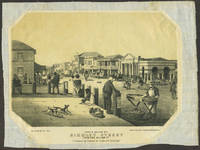
1851réf. 28279Adelaide: Penman & Galbraith 1851. Print. An extraordinarily rare set of four of S. T. Gill's Adelaide views no. 1-3 i.e. Views in Adelaide No. 1. Hindley Street from King William St.; No. 2. Hindley Street Looking East; No. 3 Rundle Street Looking East; with a variant second copy of No. 3 which is black & white. The images are held at the Art Gallery of South Australia; the State Library of New South Wales the National Library of Australia and some a the City of Adelaide. There are tinted lithographs some with a tinted border others not and black & white lithographs as well. The street images appear to be the same in all the recorded prints consistent with these four- there are some minor variations which are noted. The three tinted lithographs are mounted on polished cloth. The period cloth mounting is unusual. It is not known if these were a reference set or perhaps proofs. Views in Adelaide No. 1./ Hindley Street from King William St./ Published by Penman & Galbraith Adelaide/ On Stone by S. T. Gill/ Printed by Penman & Galbraith/ Signed in the stone S T G 1851. Tinted plate with no tinted border outline. Image 17.5 x 22.5 on paper 18 x 23.5 cm. AGSA 684G11; SLNSW nmQdoR5n. SLNSW image has tan border outline this copy does not. Mounted on cream cloth trimmed outside the catty corners with margins. Views in Adelaide No. 2./ Hindley Street Looking East/ Published by Penman & Galbraith Pirie St. Adelaide./ On Stone by S. T. Gill/ Printed by Penman & Galbraith/ Signed in the stone S T G indistinct date. Tinted plate with a faint tinted border outline. Image 18 x 23.1 cm on paper 18.3 x 24 cm. AGSA 684G12; SLNSW 9PQ8kDxn; Nat Lib ID 7566602 Rex Nan Kivell Collection NK3544/B. Slt. foxing on left lower margin. Mounted on saffron cloth trimmed outside the catty corners with margins. Views in Adelaide No. 3/ Rundle Street Looking East/ Published by Penman & Galbraith Pirie St. Adelaide./ On Stone by S. T. Gill/ Printed by Penman & Galbraith/ Signed in the stone S T G 1851 S inverted. Tinted plate with tinted border outline. Image 18 x 22.8 on paper 18.2 x 23.4 cm. AGSA B 2430; SLNSW Yj7djR39 for 3 print set which is colored and without border outlines. Mounted on saffron cloth trimmed outside the catty corners with margins. Views in Adelaide No. 3/ Rundle Street Looking East/ Published by Penman & Galbraith Pirie St. Adelaide./ On Stone by S. T. Gill/ Printed by Penman & Galbraith/ Signed in the stone S T G 1851 S inverted. Black and white plate with no tinted border outline. Image 18 x 22.2 on paper 20.9 x 25.8 cm. AGSA B 2430; NLA Lib ID 7566601 Nan Kivell NK3544/C. Printed on cream paper some watermarks. A rare set of images by one of the master artists of this period in Australia. Penman & Galbraith unknown
1868réf. 42756Paris, Imprimerie G. Towne, 1868-1876. 400 livraisons numérotées 1 à 400, 36 livraisons bis, 7 suppléments, reliés en 9 vol. in-folio, demi-tolie taupe, couvertures annuelles conservées (reliure de l'époque).
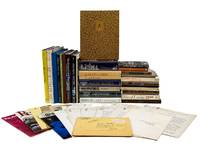
1950réf. 31577AB1950. England / Ireland c.1950 - 1990. Octavo / Quarto. Hardcover Box / Bespoke made Box labelled "General Gill" for the private library of Prof.David Dave Naylor. Very good condition with only minor signs of wear. Gill William Daniel 191692 geologist was born 29 June 1916 at Hillam Yorks. second child among three sons and three daughters of Richard Wells Gill farmer and Eva Gill née Hesselgrave. He was educated at Castleford Grammar School and Leeds University where he had a successful undergraduate career and received a degree in geology 1938. Robert George Spencer Hudson was his professor and the two men remained close friends for the next thirty years. On leaving Leeds he joined the Attock Oil Company 1938 as a field geologist and palaeontologist. During the second world war he worked as a development geologist and petroleum engineer in India including the Punjab later part of Pakistan and Burma and became a leading expert on Himalayan geology. In 1948 he left the oil industry for academia and a lectureship in geology at Nottingham University. Two years later he was awarded a D.Sc. 1950 by Leeds University for his publications on Himalayan geology and in 1953 he was appointed professor of geology and mineralogy at TCD the first non-Irish holder of the position since 1883. Under his direction and with the aid of funds from the earl of Iveagh qv and oil industry contacts the geology department experienced a period of expansion. A vibrant postgraduate school of research was initiated which led eventually to an increase in staff numbers. The museum building which housed the department was internally reconstructed to include new research and teaching facilities. Unfortunately many of the original museum's historic rock collections were discarded in the move. In Ireland his research interests focused on the Upper Carboniferous rocks of Co. Clare and particularly on the deformation features of soft sedimentary structures so clearly exposed there. He published a significant paper on sand volcanoes with P. H. Keunen 1958 and brought his Clare work together in a later publication of the Geological Survey of Ireland 1979. He was in his element in the field where his enthusiasm for his subject was said to be more eloquent than in the lecture theatre. As oil and mineral exploration was initiated in Ireland in the 1950s he took on the role of consultant and with his students was involved in regional geological mapping. He expanded his consultancy role to oil companies in Libya and Greece and in 1961 resigned from Trinity to accept the chair of oil technology at the Royal School of Mines Imperial College London later becoming professor of petroleum geology 1976. Hudson his original professor replaced him at TCD 19616 in the chair of geology. In London Gill introduced the M.Sc. course in petroleum geology and established the first UK-based organic geochemistry laboratory for the study of petroleum-source rocks 1969. He continued to consult with oil companies and governments in Europe the Middle East Africa Australia and Canada. His extraordinary memory and ability to assimilate and synthesise information and data led to successful oil finds in newly explored areas. As a geologist he was most interested in the concepts of large-scale tectonic processes in such places as the Alps the Himalayas and the east African rift. However his impatience with detail meant his publication record never quite kept pace with his achievements. During his career he was elected FTCD 1958 fellow of the Geological Society of London and of the Institute of Petroleum London MRIA 1955 and member of the RDS vice-president 1959 1961. A self-confident and flamboyant man with a large physical presence he is said to have had grandiose plans which did not always come to pass. Known as Dan he was popular with both students and staff and was viewed as warm-hearted and straightforward. University politics however were not his strong point. On the death of Hudson 1966 Gill professed an interest in returning to Trinity provided he did not have to submit a formal application form. However TCD did not respond. He married 1946 in India Margaret Betty Torrance whom he had met in the Yorkshire dales when he was mapping as a student; they had two daughters. Their houses 16 Garville Avenue Rathgar Dublin and 85 Platt's Lane Hampstead London were the frequent hub of late-night parties where Dan would sing and play the piano. An active sportsman he loved cricket and was president of the Trinity boat and rugby clubs. In 1978 he retired to Glusburn Green Glusburn Yorks. but continued consultancy work in the Middle East for some time afterwards. His wife died in 1987; five years later he died 29 October 1992 in Yorkshire. This Biography was authored by Patricia M. Byrne for the Dictionary of Irish Biography - Source: dib.ie The collection includes the following essays papers offprints: 1. Himalaya - William Daniel Gill - "The Orogenesis of the North-West Himalaya" - Summary with several Maps regarding the "Analysis of the Himalayan-Kun Lun Mountain Systems and the Kashmir Basin etc. Original Galley Proofs c. 1953 2. Geology - William Daniel Gill - "Construction of Geological Sections of Folds with Steep-Limb Attenuation" 3. Iveagh Geological Laboratory - W.D.Gill - "The Iveagh Geological Laboratory Trinity College Dublin" 1956 4. Clare County - W.D.Gill and P.H.Kuehnen: "Sand Volcanoes on Slumps in the Carboniferous of County Clare Ireland" 1957 Including original typescript with an abstract on "Sand Volcanoes on Slumps" from W.D.Gill's library stapled 5. Geology General - W.D.Gill - "Geology on the Search for Oil" Inaugural Lecture as Professor of Oil Technology on March 13th 1962 - Includes seven 7 pages of manuscript notes by Dave Naylor on the subject of this work. 5. Geology - W.D.Gill - "Geology - I: "Basement Rock" / II - "The Upper Palaeozoic Systems" Dublin 1957 6. Ireland - Brindley J.C. and W.D.Gill - "Summer Field Meeting in Southern Ireland 1957" 1958 7. Ireland - W.D.Gill - "The Variscan Fold Belt in Ireland" Abstract with Map of Variscan Fold Styles in Ireland 1962 Including a Galley Proof of "The Variscan Fold Belt in Ireland" stapled and a presentation copy of the Variscan Fold-publication given from Gill to the Iveagh Geological Laboratory and subsequently owned by David Naylor 8. Geology - W.D.Gill - "Instability and Sliding in Delta Sediments" - Rough Typescript Contents for Springer Verlag 9. Africa - W.D.Gill - "Salt Basins around Africa" 1963 10. North Sea - W.D.Gill - "The North Sea Basin" 1967 11. Geology - W.D.Gill - "Tectonic role of evaporites" 1973 12. Iran / Pakistan - W.D.Gill - "Petroleum Source Rocks and the Origin of Oil and Gas in Iran Pakistan and the North Sea" Published in Tehran in 1978 - The Bulletin of The Iranian Petroleum Institute" First Quarter - Inscribed and signed by W.D.Gill to his colleague "David Naylor - with all blessings & Regards - Dan Gill" 13. Ireland - W.D.Gill - "Syndepositional Sliding and Slumping in the West Clare Namurian Basin Ireland" Xerox 1979 14. Gill W.D. - Some biographical information on W.D.Gill introducing Postgraduate Courses to TCD in 1963 page 10 of an offprint by G.D.Hobson: "The History of the Oil Technology course and its offshoots" - 1988 15. Pakistan - W.D.Gill - "The Genus Assilina in the Laki Series Lower Eocene of the Kohat-Potwar Basin Northwest Pakistan 16. W.D.Gill - "The Upper Palaeozoic Systems" Stamped "With the author's compliments" and given to Dave Naylor hardcover
1926réf. 2626Limited edition; 4to; original cream buckram and dust jacket. Edition of 250 copies this being number 57. Printed in red and black wood-engraved title vignette and illustrations by Gill. A fine copy end papers uncut and unopened dust jacket very slightly soiled and frayed at edges and wear to the extremities. Loosely inserted are a group of four wood-engravings from "Passio Domini Nostri Jesu Christi" comprising St. Mary Magdalen Physick 349 on japon inscribed by the artist in lower margin "Evan from Eric"; The Kiss of Judas 351 on wove paper with partial watermark inscribed by the artist in lower margin "Evan from Eric" spot within image; The Carrying of the Cross 352 on laid paper initialed by the artist and marked "proof" in lower margin; and an unsigned example of The Crucifixion 353. The wood-engravings come from the collection of Evan Gill the younger brother and biographer of the artist. Golden Cockerel Press hardcover
1925réf. 154041Waltham St Lawrence: Golden Cockerel Press 1925. Gill's remarkable fusion of religious text with erotic illustration First Golden Cockerel edition number 246 of 750 copies. Of all the books Gill illustrated it was perhaps The Song of Songs which gave him the freest reign to explore the relationship of the erotic and the religious the fusion of which characterised his illustrations throughout his career. It stands among his most significant works. "The most important Golden Cockerel editions for which Eric Gill provided the engravings were The Song of Songs 1925 Troilus and Criseyde 1927 The Canterbury Tales 1928 and The Four Gospels of 1931 - Gill's and Gibbings's tour de force. No other wood-engraver of the period comes near to Gill's originality and verve. But once again the explicit eroticism of The Song of Songs and of Gill's later illustrations for E. Powys Mather's Procreant Hymn of 1926 shocked many of his former supporters and drew puzzled reproaches from the Dominicans" ODNB. Quarto. Text printed in red and black. With 19 wood-engraved illustrations throughout by Eric Gill. Original white cloth lettering to spine in gilt. With dust jacket. Corners slightly bumped browning to endpapers as usual a near-fine and sharp copy; dust jacket slightly toned with some minor foxing wear and minor loss to extremities short closed tear to front panel a very good example of a rare jacket. Chanticleer 31; Gill 275. hardcover
1924réf. 22644London: Printed & Published by The Westminster Press 11 Henrietta Street Covent Garden W.C. 1924 but 1927. 750 by 945mm. 29.5 by 37.25 inches. Gill's humorous map of London and its Underground Stations Chromolithograph plan minor repairs to corners and old folds strengthened. Gill's humorous map of London and its underground stations. "During his lifetime MacDonald Gill's acclaim rested on artistic endeavours of amazing diversity; one area of particular celebrity involved the pictorial maps he designed for both governmental and private organisations. The first of these maps was commissioned in 1913 as a poster for use in the stations of the privately held Underground Electric Railways Company. The enthusiasm of the public for this poster was such that a smaller version titled the Wonderground Map of London Town was published for sale the following year. On the occasion of Gill's death in 1947 the Journal of the Royal Institute of British Architects referred to this Wonderground Map as "a cartographical masterpiece." Its groundbreaking design with emphasis on visual and verbal whimsy and bold primary colors awakened a generation of cartographers to the imaginative possibilities of pictorial mapmaking." Elizabeth Burden The text around the map reads: "The Heart of Britain's Empire Here is Spread Out for Your View. It Shows You Many Stations & Bus Routes Not a Few. You Have Not the Time to Admire it All Why not Take a Map Home to Pin on Your Wall." The current example dates from 1927 and bears to the upper left a greyhound above a sign 'On to Wembley'. This is a change from the lion featured in the previous edition of 1924 used to denote the location of The British Empire Exhibition of that year. Printed & Published by The Westminster Press, 11 Henrietta Street, Covent Garden, W.C.,
1928réf. 1071741928. London: Lanston Monotype Corp. for Eric Gill 1928. Very slim small 8vo 17 3 pp. Original black buckram as new. Bookplate by David Jones of Walter Shewring. § A true rarity limited to 55 copies and so inscribed in ink at the back by Eric Gill. Only two copies have sold at auction in the last 40 years; a handful of Institutional copies are noted. The book is a tiny treasure -- the title-page has a lovely device printed in red and the colophon has a large woodcut map of the location of Pigotts where Gill lived and worked at that time. unknown
1928réf. 1071741928. London: Lanston Monotype Corp. for Eric Gill 1928. Very slim small 8vo 17 3 pp. Original black buckram as new. Bookplate by David Jones of Walter Shewring. § A true rarity limited to 55 copies and so inscribed in ink at the back by Eric Gill. Only two copies have sold at auction in the last 40 years; a handful of Institutional copies are noted. The book is a tiny treasure -- the title-page has a lovely device printed in red and the colophon has a large woodcut map of the location of Pigotts where Gill lived and worked at that time. unknown books
réf. 38549London: Faber and Faber 1934. . Folio green cloth gilt b/w plates with tissue guards; the artist’s ink dedication inscription to front free endpaper pale foxing to prelims and fore-edges a very good copy in unclipped dust-jacket which has closed tears across spine and to folds over joints and slight wear to extremities housed in original green slipcase with printed label to front panel which is missing top panel and otherwise rather worn and marked now kept in fine purpose-made solander box with paper title label to spine. This volume was dedicated to Cliff Hoing a local artisan in West Wycombe an associate of Gill’s who was known to have undertaken work fretting out his wood engravings which were then filled with coloured gesso and sold. Inscription reads: ‘Cliff Hoing/from Eric Gill. Sept. 1934/with many thanks for his good work.’ London: Faber and Faber, 1934. hardcover
1931réf. 23238Weimar: Count Harry Kessler at the Cranach Press 1931. First edition. Hardcover. Quarter vellum and gilt lettered tan parchment boards. Fine in fine plain wrapper in matching fine board slipcase. 31 pages 26 x 13.5 cm. Limited edition copy 180 of 200 designed by Count Harry Kessler: printed in red and black in Jenson Antiqua on hand-made Maillol Kessler paper with watermark of the Cranach Press. 11 wood engraved illustrations seven are full page and 18 initials by Eric Gill. Laid-in "Former Publications Of The Cranach Press." which lists three tittles -- The Ecologues of Virgil Hamlet & The Duinese Elegies. An almost as new copy save for a few small toned fore-edge spots. THE ARTIST AND THE BOOK. 121. EVAN GILL 284. Count Harry Kessler at the Cranach Press hardcover