946 résultats
réf. 2170TREDANIEL , bon état , 1990 , 472 pages
2000réf. RO30116551DIDIER-ERUDITION. 2000. In-8. Broché. Bon état, Couv. convenable, Dos satisfaisant, Intérieur frais. 198 pages. Rédigé en anglais.. . . . Classification Dewey : 420-Langue anglaise. Anglo-saxon
réf. SLIVCN-9782360122370LA VILLE BRULE EDITIONS
1995réf. 23800Editions de Fallois, 1995, in-8°, 331 pp, une carte, 8 graphiques et tableaux, annexes, broché, bon état. A partir de témoignages de tous bords et d'archives inédites, Jean Charlot démontre la tactique à contre-courant de Chirac, l'efficacité de ses soutiens et de l'organisation de sa campagne.
réf. RO40027219picard et kaan. Non daté. In-8. Cartonnage d'éditeurs. Etat d'usage, Tâchée, Dos abîmé, Mouillures. 201 pages. Nombreuses gravures en noir et blanc.. . . . Classification Dewey : 840-Littératures des langues romanes. Littérature française
1961réf. RO20262065ROSSIGNOL. 1961. In-8. Cartonné. Etat passable, Couv. convenable, Dos abîmé, Intérieur frais. 91 pages illustrées en couleur et noir/blanc -Dos manquant : plats se désolidarisant. . . . Classification Dewey : 372.4-Livre scolaire : lecture
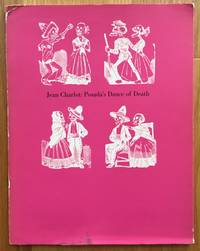
1964réf. 52201200001Pratt Graphic Art Center NY 1964. Paperback. Very Good. Signed by Author. 4 pages of plates. Bound in stapled dark pink wrappers with cover illustration in white and title in black. One wood engraving by Fritz Eichenberg on title page signed by him in pencil and four relief engravings by José Guadalupe Posada. Printed in an edition of 500 numbered copies signed by Charlot on colophon this is No. 130. Wrappers with edge wear. pages clean and unmarked and in like new condition.; 100% Satisfaction Guaranteed! Ships same or next business day! Pratt Graphic Art Center, NY paperback
1964réf. 002757New York: Pratt Graphic Art Center 1964. Paperback. Very Good. Eichenberg Fritz. 8vo. 12 pp. 4 pages of plates. Bound in stapled dark pink wrappers with cover illustration in white and title in black. One wood engraving by Fritz Eichenberg on title page signed by him in pencil and four relief engravings by José Guadalupe Posada. Printed in an edition of 500 numbered copies signed by Charlot on colophon this is No. 67. Very Good internally clean and sound rubbing and wear to extremities - heaviest at spine 1/2" tear to head of spine 1" dark smudge to lower front cover. Pratt Graphic Art Center paperback
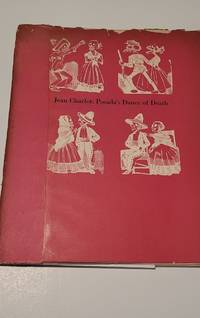
1964réf. 1309Rare copy of this soft hardboard cover work signed by the author - a well know expert on Mexican art. It also includes a signed engraving by Fritz Eichenberg Apprx. 5 x 3.5" and four miniature relief engravings from the Dance of Death series each APPRX 3 X 3" by Posada the famous "peoples" Mexican artist of the twentieth century .This is no 65 of a limited edition of 500. The book is bound by staples. The covers are in good condition. There is a small stain at the top left side of the front cover The pink paper dj is part of the stapled binding. It has many chips and tears. Owner's name is inked twice at the top right of the first flyleaf page. There is some foxing on Posada plates but not on Eischenberg's. The staples have rusted as can be seen from the photos.The middle four pages containing the Posada etchings have loosened from the staples. We acquired the book along with a pamphlet: "Jose Guadalupe Posada 50 anniversario de su muerte" 36 pages text entirely in Spanish. The pamphlet comes with 24 free standing copies of Posada's works each approx. 8.5 x 6.25" Pratt Graphic Art Center paperback
1946réf. 012073NY: Hastings House 1946. 1st Edition. Hardcover. Fine/Near Fine. Rivera Covarrubias Oroozco et al art of. Comprehensive mid-20thC review of Latin American artists in woodcut etchings lithis aquatint etc. 26 pages text and glossary then 37 -186 pages of reproductions by artist and country. An apparently unused copy internals as new in almost fine dw. Hastings House hardcover books
1946réf. 182882New York: Hastings House 1946. Hardcover. VG-/Good light shelfwear to boards and block pages are otherwise clean. Dust jacket has moderate shelfwear. Tan cloth boards with red spine lettering; black and white illustrated dust jacket; 2 preliminary leaves viii 180 pages; profusely illustrated in bw. Text in English and Spanish n parallel columns. "As varied as the land itself is this collection of etchings lithographs engravings drypoints monotypes aquatings and woodcuts depicting the many facets of life in eighteen Latin-American countries. The artists represented include: Acuna Audivert Bonta C. Lesansky Mendez Orozco Portinari Rivera Sabogal Segall Alfara Siqueiros Spilimbergo Urruchua and Zalce. " -dust jacket. Hastings House hardcover books
A fascinating monograph on popular prints in general and on the work of Jean Charlot in particular. This is one of 100 special numbered copies with four original silkscreen prints. It is signed by the author and the artist. 8vo, publisher's cloth, fine.
réf. pu 2127Spiral-bound. Very Good. Comes in original box with Art Linkletter picture and endorsement on the front. Plastic comb binding. Book and box in very good plus condition though the box has mild corner wear unknown
réf. 925Emile Hazan & Cie. Collection "Les Neuf Muses". 1929. In-8° broché. 126 pages. E.O. tirée à 2.315 exemplaires. 1/2.000 sur vergé bouffant.
réf. 926Emile Hazan & Cie. Collection "Les Neuf Muses". 1929. In-8° broché. Couverture rempliée. 126 pages. E.O. tirée à 2.315 exemplaires. 1/300 sur alfa anglais
1944réf. mon0003418393Hollywood House 1944. Hardcover. Very Good. . Scarce. Plastic spiral binding bonded leather. Pages have tanning at edges a bit brittle but clean. Boards clean. Hollywood House hardcover
1999réf. RO80057055OPHRYS. 1999. In-4. Broché. Bon état, Couv. convenable, Dos satisfaisant, Intérieur frais. 200 pages. Nombreuses illustrations et photos en couleurs, dans le texte et hors-texte.. . . . Classification Dewey : 372.65-Livre scolaire : langues
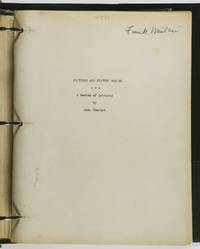
1938réf. 47856Los Angeles: NP 1938. First edition. Ring_bound. vg. Quarto. 183 individual single-sided mimeographed leaves 22 additional leaves of photographic negative prints. Scarce mimeographed document printed from typescript with all leaves and negatives three-hole punched along the left side housed in modern black three-ring binder 11.5x 11". The pagination throughout is only on a per lecture basis and is non-continuous. Printed pages with occasional manuscript corrections. The versos of most of the leaves throughout contain mounted small cutouts from b/w photographic prints either reproducing relevant images from art history or being original technical hand-drawings by Charlot serving as relevant illustrated figures on the rectos for the corresponding text pages opposite 275 in total. An additional thirteen of these images have been directly mimeographed onto the rectos. The 22 leaves of compiled photographic negatives found at the rear of the binder contain most of the same images seen throughout and are organized according to lecture. In 1938 Walt Disney invited the French-born Mexican-American artist Jean Charlot 1898-1979 to deliver a series of eight lectures on art history and technique to the staff of the Disney Animation Studios over the course of two months from April 12th - May 31st of that year. Though Charlot was adamant against having any kind of lecture plan as he states in his opening remarks each of the lectures were still always themed Natural vision composition two-dimensional composition color and subject planes and space etc. Each was accompanied by a series of slides reproduced and mounted here both of Charlot's original impromptu drawings and reproductions of historic works of art. Fortunately a stenographer or recording device was present and took down each lecture including the questions and answers posed by his audience. This extremely scarce mimeographed binder serves as a complete and systematic documentation of those important and significant lectures. At the time of these lectures the company had just come off the massive and groundbreaking success of Snow White and the Seven Dwarfs 1937 and was at work on the shorts "Mickey's Toothache" and the ultimately scrapped "Pluto's Robot Twin". Although there does not seem to be direct evidence or documentation pointing to the affect these lectures ultimately had on the future work of the studio its diffuse influence can be surmised. At the very least these in depth lectures provided a continued boost to the morale and confidence of the Disney staff in placing the relatively new and sometimes belittled art form of animated films on the vast continuum of the fine arts from prehistoric times through classical antiquity and until the present. This reassured the staff of their visual storytelling abilities and the relevance of their chosen work. These assertions have since been reinforced by the the fact that in the wake of these lectures a number of these animators stayed in contact with Charlot and over the years since have asserted the personal impact these lectures had on their outlook. Although the discussions here range widely from all historical periods of art incorporate examples from the relevant work of many of the most famous international figures and touch upon countless technical and specific qualities of the fine arts arguably the most significant and unique aspect the text is Charlot's discussions of art in Mexico where he lived most of the time beginning in 1921. Specifically the art of Mexican murals and the work of Jose Guadeloupe Posada nearly forgotten during this period who had just recently died in 1913 were of interest to Charlot. It is known that he began buying Posada prints and the original printing blocks from Posada's print shop reviving interest which has never abated. Though we could find no specific reference to Posada in any of his lectures the speaker does incorporate Rivera's murals noting in passing that "a man like Rivera has absolutely to shun all textural qualities all brush stroke qualities because all things appear at a distance" Lecture V p. 12. Going further into the influence of Mexico's divergent populations and its effect on art Charlot describes in his following lecture "This static rectangle to me became assimilated to the Indian for a number of reasons and one of them is that the true verticals and true horizontals are admirably fitted to the Indian character; the Indian is always in close contact with the ground which is a true horizontal and the man in squatting takes a very different shape and different proportions from the White man. If you have a white man sitting on a chair you have those two little tooth picks under him and he has no correct relation with the so-called Mother Earth" Lecture VI p. 7. Only in the final lecture does Charlot finally speak on animation humbly noting "I told you the other time I would talk on animation tonight and I felt silly the whole week long because after all you are the people who know most about it; but it will be a good result to me by clearing my mind about it and I hope you won't hiss" Lecture VIII p. 1. The lecturer then goes on to sympathetically compare a close-up of Grumpy's face to a portrait by Raphael. According to Ruel Denny in "A Tale of Two Studios: Artist Jeans Charlot in Walt Disney's Atelier" taken from Feast of Strangers: Selected Prose and Poetry 1999 these lectures although never published "are provocative because they provide a partial but unique record of five concurrent artistic encounters in the twentieth-century: first the intellectual collaboration in artistic research by Disney and Charlot; second the encounter between the fine artist Charlot and a group of craftsmen in popular art; third the connections and disconnections between the visual arts of the pre-cinematic period and those of the cinematic age; four the marriage between cinematic animation techniques of storytelling and our inherited and folkloristic narrative of the oral and print traditions; and five the migration into modern media from primordial sources and picturizations of anthropomorphized animal figures". Some leaves throughout with minor age toning along edges as well as some occasional light stains or adhesive residue from the images pasted on the rectos. Some of the pasted on plates are loosening from the original drying adhesive and it is clear that in a very few instances images have come loose or are missing. Binder and interior in very good condition overall. Extremely scarce. Provinence: It is not known how many of these scarce mimeographed copies were printed but there is another known copy held in the collections of the University of Hawaii the state where Charlot spent his final years. It is known that the content of these lectures was never formally published. This copy bears the name of American television actor comedian and Soupy Sales sidekick Frank Nastasi 1923 - 2004 at the top of the title leaf. There is no evidence of Nastasi's connection to Disney or that he had ever attended these lectures he would have been 15 years old at the time so it is not known how he came to be in possesion of the piece. NP unknown books
1938réf. 47856Los Angeles: NP 1938. First edition. Ring_bound. vg. Quarto. 183 individual single-sided mimeographed leaves 22 additional leaves of photographic negative prints. Scarce mimeographed document printed from typescript with all leaves and negatives three-hole punched along the left side housed in modern black three-ring binder 11.5x 11". The pagination throughout is only on a per lecture basis and is non-continuous. Printed pages with occasional manuscript corrections. The versos of most of the leaves throughout contain mounted small cutouts from b/w photographic prints either reproducing relevant images from art history or being original technical hand-drawings by Charlot serving as relevant illustrated figures on the rectos for the corresponding text pages opposite 275 in total. An additional thirteen of these images have been directly mimeographed onto the rectos. The 22 leaves of compiled photographic negatives found at the rear of the binder contain most of the same images seen throughout and are organized according to lecture. In 1938 Walt Disney invited the French-born Mexican-American artist Jean Charlot 1898-1979 to deliver a series of eight lectures on art history and technique to the staff of the Disney Animation Studios over the course of two months from April 12th - May 31st of that year. Though Charlot was adamant against having any kind of lecture plan as he states in his opening remarks each of the lectures were still always themed Natural vision composition two-dimensional composition color and subject planes and space etc. Each was accompanied by a series of slides reproduced and mounted here both of Charlot's original impromptu drawings and reproductions of historic works of art. Fortunately a stenographer or recording device was present and took down each lecture including the questions and answers posed by his audience. This extremely scarce mimeographed binder serves as a complete and systematic documentation of those important and significant lectures. At the time of these lectures the company had just come off the massive and groundbreaking success of Snow White and the Seven Dwarfs 1937 and was at work on the shorts "Mickey's Toothache" and the ultimately scrapped "Pluto's Robot Twin". Although there does not seem to be direct evidence or documentation pointing to the affect these lectures ultimately had on the future work of the studio its diffuse influence can be surmised. At the very least these in depth lectures provided a continued boost to the morale and confidence of the Disney staff in placing the relatively new and sometimes belittled art form of animated films on the vast continuum of the fine arts from prehistoric times through classical antiquity and until the present. This reassured the staff of their visual storytelling abilities and the relevance of their chosen work. These assertions have since been reinforced by the the fact that in the wake of these lectures a number of these animators stayed in contact with Charlot and over the years since have asserted the personal impact these lectures had on their outlook. Although the discussions here range widely from all historical periods of art incorporate examples from the relevant work of many of the most famous international figures and touch upon countless technical and specific qualities of the fine arts arguably the most significant and unique aspect the text is Charlot's discussions of art in Mexico where he lived most of the time beginning in 1921. Specifically the art of Mexican murals and the work of Jose Guadeloupe Posada nearly forgotten during this period who had just recently died in 1913 were of interest to Charlot. It is known that he began buying Posada prints and the original printing blocks from Posada's print shop reviving interest which has never abated. Though we could find no specific reference to Posada in any of his lectures the speaker does incorporate Rivera's murals noting in passing that "a man like Rivera has absolutely to shun all textural qualities all brush stroke qualities because all things appear at a distance" Lecture V p. 12. Going further into the influence of Mexico's divergent populations and its effect on art Charlot describes in his following lecture "This static rectangle to me became assimilated to the Indian for a number of reasons and one of them is that the true verticals and true horizontals are admirably fitted to the Indian character; the Indian is always in close contact with the ground which is a true horizontal and the man in squatting takes a very different shape and different proportions from the White man. If you have a white man sitting on a chair you have those two little tooth picks under him and he has no correct relation with the so-called Mother Earth" Lecture VI p. 7. Only in the final lecture does Charlot finally speak on animation humbly noting "I told you the other time I would talk on animation tonight and I felt silly the whole week long because after all you are the people who know most about it; but it will be a good result to me by clearing my mind about it and I hope you won't hiss" Lecture VIII p. 1. The lecturer then goes on to sympathetically compare a close-up of Grumpy's face to a portrait by Raphael. According to Ruel Denny in "A Tale of Two Studios: Artist Jeans Charlot in Walt Disney's Atelier" taken from Feast of Strangers: Selected Prose and Poetry 1999 these lectures although never published "are provocative because they provide a partial but unique record of five concurrent artistic encounters in the twentieth-century: first the intellectual collaboration in artistic research by Disney and Charlot; second the encounter between the fine artist Charlot and a group of craftsmen in popular art; third the connections and disconnections between the visual arts of the pre-cinematic period and those of the cinematic age; four the marriage between cinematic animation techniques of storytelling and our inherited and folkloristic narrative of the oral and print traditions; and five the migration into modern media from primordial sources and picturizations of anthropomorphized animal figures". Some leaves throughout with minor age toning along edges as well as some occasional light stains or adhesive residue from the images pasted on the rectos. Some of the pasted on plates are loosening from the original drying adhesive and it is clear that in a very few instances images have come loose or are missing. Binder and interior in very good condition overall. Extremely scarce. Provinence: It is not known how many of these scarce mimeographed copies were printed but there is another known copy held in the collections of the University of Hawaii the state where Charlot spent his final years. It is known that the content of these lectures was never formally published. This copy bears the name of American television actor comedian and Soupy Sales sidekick Frank Nastasi 1923 - 2004 at the top of the title leaf. There is no evidence of Nastasi's connection to Disney or that he had ever attended these lectures he would have been 15 years old at the time so it is not known how he came to be in possesion of the piece. NP unknown
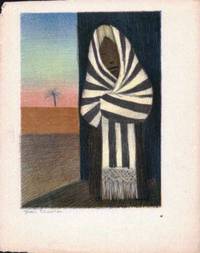
1933réf. 005079New York: John Becker 1933. First Edition. Disbound. Occasional marginal tears. Near Fine. Jean Charlot. Included are 10 of the 32 ORIGINAL LITHOGRAPHS from PICTURE BOOK printed in 6 or 7 colors on zinc signed in the plate by Charlot with a colophon page SIGNED by the artist the printer Lynton Kistler and the designer Merle Armitage. They are laid into a folder made of the same paper as that on which the lithographs are printed. [John Becker] unknown books
1973réf. 021284Los Angeles: Zeitlin & Ver Brugge 1973. First Edition. wraps. Mostly unopened; minor wear to spine. Near Fine lacking the slipcase. Jean Charlot. Quarto 8-3/4" x 11" in illustrated wrappers. Illustrated with 32 ORIGINAL COLOR LITHOGRAPHS. Copy #240 of 1000 copies SIGNED on the colophon page by the artist and the printer Lynton R. Kistler. Zeitlin & Ver Brugge paperback books
réf. 12617Los Angeles: Zeitlin & Ver Brugge 1973. First edition. Softcover. vg. 1/1000. 8vo. Unpaginated. Illustrated wrappers in original paper covered illustrated slipcase. Pages unopened. "'Picture Book II' is the clearest and most direct of titles. Yet its very simplicity calls for some comment in this complex age. It is indeed a book of pictures - pictures which are unified only by being the work of a single man. Jean Charlot considers it a collection of some of his personal motifs analogous to a Liber Studiorum of an earlier age. Many subjects will be familiar to those who know the artist's oeuvre though they wear new colors and new composition." Stunningly illustrated with 32 full page multi-color lithographs which the artist prefers to call 'chromolithographs.' Each plate is accompanied with text written by Charlot. Includes an additional color lithograph "Hawaiian Swimmer" signed in pencil by Charlot which is different from the one depicted in the book. This plate was not part of this edition and is laid-in. Colophon page is also signed by the artist and the printer Lynton R. Kistler. A wonderful edition with both slipcase and book in very good - fine condition. Zeitlin & Ver Brugge unknown books
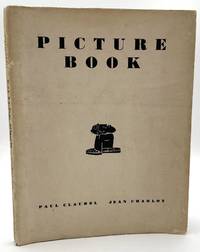
1933réf. 021285New York: John Becker 1933. First Edition. wraps. About Fine in a Good example of the uncommon dustwrapper with wear along the spine and edgewear. Jean Charlot. Quarto 8-3/4" x 11" in printed wrappers with dustwrapper. Inscriptions by Paul Claudel translated onto English by Elise Cavanna. Illustrated with 32 ORIGINAL COLOR LITHOGRAPHS drawn directly onto the plates by Jean Charlot and printed under the technical supervision of Will A. Kistler. Copy #359 of 500 SIGNED on the colophon page by the artist typesetter Lynton R. Kistler and designer Merle Armitage. THE ARTIST & THE BOOK 54: "The beautiful illustrations in this book typical of Charlot's Mexican figure style are these lithographs drawn by the artist on zinc plates rather than stones." John Becker paperback books
réf. 3416Charlot Jean. Elise Cavanna translator. Paul Claudel inscriptions. Picture Book: 32 Original Lithographs by Jean Charlot. New York: John Becker 1933. Limited edition No. 93 of 500 copies. Signed by illustrator Jean Charlot technical supervisor Lynton R. Kistler and designer Merle Armitage. Quarto. 68pp. Illustrated with 32 original color lithographs drawn directly onto the plates by Jean Charlot. Publisher's printed paper wraps spine and front cover lettered and decorated in black. Text in French and English. Spine slightly darkened and creased; covers a bit rubbed creased and soiled; light toning occasional scattered foxing. Very good. . unknown
1974réf. 643Los Angeles: Dawson's Book Shop 1974. Limited Edition. Hardcover. Very Good/Very Good. :: Miniature Book :: Limited Edition of 300 copies. :: Artful tiny color lithograph reproductions of the plates of the original 1932 Picture Book with Jean Charlot's own commentary verses upon each. :: Signed and numbered upon last page by Jean Charlot and initialed by Lynton R. Kistler- whom hand-set the type in the original Picture Book and wrote the introduction for this miniature. :: Bound in publisher's white paper-covered boards front board bears title in black illustration of author's autograph printed down spine. Book itself measures 2 1/8 inches tall x 1 5/8 inches wide; 53 x 42 millimeters. Slightly larger when enclosed in dust jacket and slipcase. Pages unnumbered. Condition: Very Good in Very Good dust jacket & Very Good slipcover. Minimal shelf-wear. Dawson's Book Shop hardcover