9 121 résultats
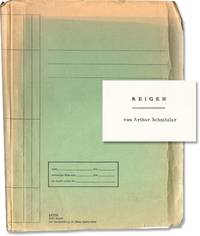
1973réf. 141877Vienna: Lisa Film 1973. Draft script for the 1973 West German film. Text in German. Based on Arthur Schnitzler's controversial 1897 play "Reigen." A satire of the sexual and class mores of the late 1800s not produced on stage until 1920 although published versions in various languages were available as early as 1900. With its frank sexual content and depictions of relationships across class and cultural lines the play was immediately condemned as pornography and withdrawn from the German stage although it remained unsurprisingly popular. Schnitzler's play was adapted for film several times previously most notably by Max Ophuls in 1950 and Roger Vadim in 1964 both using the French title "La Ronde." Set in Vienna. Green untitled wrappers. Title page present with credits for playwright Arthur Schnitzler and director Otto Schenk. 142 leaves with last page of text numbered 138. Mechanical duplication. Pages Very Good plus wrapper Very Good with a gold prong binding. Lisa Film unknown
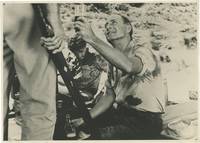
1953réf. 172902N.p.: N.p. 1953. Eight vintage reference photographs from the 1953 film. Two photographs with cropping annotations on the verso and one photograph with cropping annotations on the verso and a tipped-on overlay with additional cropping annotations. Based on the 1951 short story "Cyclists' Raid" by Frank Rooney. Widely considered the original outlaw motorcycle gang film firmly installing the rebel biker figure as an American cultural icon and launching Marlon Brando's career from initial stardom into infamy. Set in Wrightsville CA shot on location in Southern California. 8 x 10 inches. Very Good plus to Near Fine. Scorsese A Personal Journey Through American Movies. Selby US. Spicer US. Weldon 1983. N.p. unknown
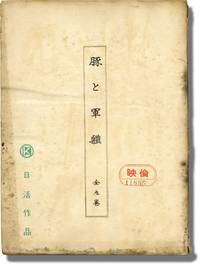
1960réf. 143203Tokyo: Nikkatsu 1960. Post-production script for the 1961 film. Based on the novel by Kazu Otsuka. A literal and metaphorical title to Shohei Imamura's fifth feature depicting postwar Japan's distrust of the west's cultural imperialism and his fascination with the pimps and prostitutes who benefit from the American presence at the naval base Yokosuka. Imamura drew from his own experience as a black market hustler and spent time with gangsters researching the film. Highly controversial upon release Nikkatsu suspended Imamaura from making films for two years with the release of "Pigs and Battleships." Imamura began his film career as an assistant to Yaujiro Ozu a director he veered severely from in style and tone. Imamura quickly realized his interest in focusing on the lower strata of Japanese society seeing himself as more of a cultural anthropologist. Imamura moved on to Japan's oldes major movie studio Nikkatsu and worked as an assistant to Yuzo Kawashima who gave Imamura his first opportunity directing B films targeted toward the postwar youth. Imamura established his own production company in 1965 to free himself of studio interference and is considered a leading figure in Japanese New Wave cinema. Set in Yokosuka. White titled wrappers rubber-stamped production No. 11885. Title page present . 71 leaves with last page of text numbered 9-5. Mechanical duplication. Pages Fine wrapper Very Good mild foxing and mold spores along spine both wrappers and paper edge. Criterion Collection 472. Eureka Masters of Cinema 21. Nikkatsu unknown
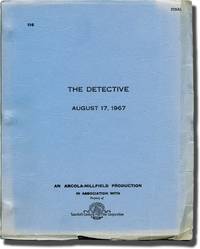
1967réf. 129268Los Angeles: Twentieth Century-Fox 1967. Final Draft script for the 1968 film. Based on the 1966 novel by Roderick Thorp about a brooding detective who becomes embroiled in a case that uncovers a deep vein of police corruption within the department. Frank Sinatra's fourth collaboration with director Gordon Douglas a box office success. One of the first mainstream Hollywood films to include explicit depictions of the lives of gay men including the violence suffered by the gay community due to the indifference of the police. In 1979 Thorp wrote a sequel to "The Detective" entitled "Nothing Lasts Forever" adapted in 1988 as "Die Hard." Although Sinatra had contractual rights to star in the sequel he wisely turned it down due to his age and action movie history-and Bruce Willis' career-were made. Set in New York and shot on location in New York and in California. Light blue titled wrappers noted as Final and production No. 116 on the front wrapper dated August 17 1967. Title page present dated August 17 1967 noted as Final with credits for screenwriter Abby Mann and writer Roderick Thorp. 161 leaves with last page of text numbered 160. Mimeograph duplication rectos only. Pages Fine wrapper Near Fine internally bound with three gold brads. Twentieth Century-Fox unknown
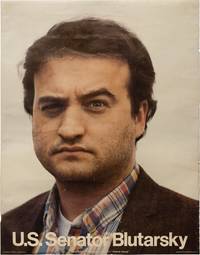
1978réf. 160953New York: Harvey Hutter & Co. Inc 1978. Vintage "US Senator Blutarsky" poster used as an ultimately little known bizarre futuristic advertisement for the 1978 film. National Lampoon was a huge success as an alternative magazine in the early 1970s and irrevocably altered its future in 1978 with the production of this film an irreverent sharp and now classic comedy. A production company was launched making over half a dozen films between 1978-2002 and as a result today's generation associates "National Lampoon" almost completely with its films rather than its pulp origins. And importantly this was the film that catapulted Harold Ramis and Belushi from television into the movies where they would both flourish. Nominated by the Writer's Guild of America for Best Comedy Screenplay in 1979. 24 x 30 inches. Very Good plus with light edgewear including several small closed tears at the extremities and a small chip to the upper right side and light creasing overall. National Film Registry. McPadden Teen Movie Hell. Harvey Hutter & Co., Inc unknown
1957réf. 1901200426Finland: Films Lutétia/S.L.P.F. 1957. No Binding. Fine. An unusual pairing: an original Finnish tour poster for Cette Sacrée Gamine Naughty Girl 1956 the French comedy starring Brigitte Bardot combined with a postcard-sized photographic print hand-signed by Bardot. The poster measures approximately 15.25 × 23.5 inches. Unused no pinholes no tape residue no notable edge wear. Superb condition ideal for display or a serious Bardot collection. Tour poster format; no printer information noted. The hand-signed photograph is a postcard-sized photographic image bearing Bardot's signature. An attractive combined lot for collectors of French cinema memorabilia or Bardot ephemera. Films Lutétia/S.L.P.F. unknown
réf. 133217New York: Warner Brothers 1996. First edition of the draft script for the 1996 film boldly signed by Oliver Stone based on the 1978 musical stage production by Tim Rice and Andrew Lloyd Webber which was in turn based on Rice and Webber's 1976 concept album following the brief life of Argentinean first lady Eva Peron from her impoverished illegitimate beginnings to her later idolatry. The film went through many iterations of production passing between studios and directors with Parker returning to direct in 1994 after having initially rejected the opportunity in 1979. Warner Brothers unknown
1960réf. C63709London 1960. First Edition. Hardback. Dust Jacket. Near fine in slightly toned slightly marked at rear very good plus dust jacket. 8vo. pp 271. Colour dust jacket illustrated by Biro. Original publisher's green buckram cloth lettered white at spine. Ownership signature and address at front flyleaf of Karl Tunberg who wrote the screenplay for the film ""The 7th Dawn"" 1964 based on this novel and directed by Lewis Gilbert. hardcover
1973réf. 62975Los Angeles and New York 1973. Postcard and note paper 4 x 5 inches total of approximately 100 words both signed "Terrence." Accompanied by a simple illustrated program for "Whisky" and a snapshot of one of the friends dated 1969. Among McNally's many awards are an Emmy and four Tonys. All very good. 9740. unknown
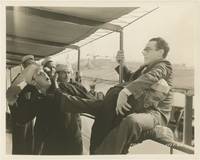
1938réf. 173115N.p.: N.p. 1938. Vintage reference photograph from the 1938 film. A professor who is working on translating the ancient Egyptian tablets of Neferus fears he will face the same fate as he falls in love with an aspiring actress while continuously getting caught up in strange circumstances. Set in Los Angeles shot on location in Los Angeles and Kernville CA. 8 x 10 inches. Near Fine. N.p. unknown
1966réf. 173116N.p.: N.p. 1966. Vintage reference photograph from the 1966 film. Three veterans of the Spanish Civil War get together to go on a rabbit hunt. Set in Castile Spain shot on location in Castilla-La Mancha and Madrid Spain. 7 x 9.75 inches. Very Good plus. Grant Spain. N.p. unknown
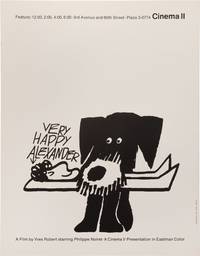
1969réf. 131243N.p.: Cinema V. 1969. Original silkscreen poster designed by legendary title and poster artist Saul Bass for the US release of the 1968 French film "Alexandre le bienheaureux." Printed at the Art Krebs Screen Studios in Los Angeles and used for the film's premiere at the legendary Cinema II Theater in New York City. Bass' initial design proposals were in general too radical for film studios to consider for advertisement and were invariably altered to suit commercial needs. He produced silkscreens of his original designs himself in non-numbered editions of 50 to 200. These posters were then given to fellow artists friends museums and design magazines and never offered directly for sale by Bass. 25 x 33 inches. About Fine with a light crease to the upper left corner. Cinema V. unknown
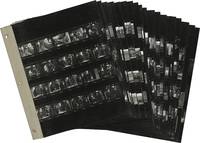
1969réf. 164092N.p.: N.p. 1969. Archive of 339 contact sheets comprising over 6750 studio still and on-the-set images from renowned still photographer Muky from the 1969 film. The archive is bound in two three-ring binders each labeled with the title "Directed by Arthur Penn" and "Still Photographs by Muky" with the binders labeled "Volume 1" and "Volume 2" on the spine respectively. The contact sheets in the archive are nearly all mounted back-to-back and affixed to the left edge with binders tape each with a three-hole punch to the binders tape. Muky born Menyhert Munkacsi was a renowned photographer for over 60 years and one of the foremost still photographers in the movie industry for over 25 years. Beginning as a photographer for theatrical productions in Budapest Hungary Muky was hired by Warner Brothers in the mid 1930s. By the 1950's Muky was one of Hollywood's most well respected still photographers. After relocating to New York in the mid 1950s Muky became perhaps the best known film still photographer in New York. Among the films on which Muky worked include: "12 Angry Men" 1957 "The Apartment" 1960 "The Miracle Worker" 1962 "Midnight Cowboy" 1969 and "Dog Day Afternoon" 1975. Based on Guthrie's 1967 folk protest song a narrative loosely based on Guthrie's own experiences being jailed for littering and later using the record of his arrest to escape the Vietnam draft. Set and shot on location in New York and Massachusetts. 339 Contact Sheets 8.5 x 10 inches all but eleven mounted back-to-back. Near Fine overall. Two Binders 11 x 11.5 x 3.25 inches. Very Good plus with light overall rubbing. N.p. unknown
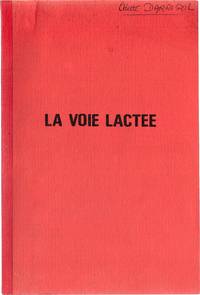
1969réf. 170400Paris: Greenwich Film Production 1969. Draft script for the 1969 French film. Copy belonging to production secretary Odette Darrigol with her name in manuscript ink on the front wrapper. Text in French. Included with the script are four pages of spirit duplication revision pages and eight gatherings of production documents including a shooting schedule and several crew contact lists. A surrealist comedy about a pair of vagrants who take a pilgrimage route from Paris to Santiago de Compostela. The first entry in Luis Buñuel's trilogy about what he called "the search for truth" followed by "The Discreet Charm of the Bourgeoisie" 1972 and "The Phantom of Liberty" 1974. Shot on location in France. Tall red titled wrappers. Title page present undated with credits for Buñuel and screenwriter Jean Claude Carrière and producer Serge Silberman. 115 leaves with last page of text numbered 114. Mimeograph duplication rectos only. Pages Near Fine wrapper Very Good plus perfect bound. Greenwich Film Production unknown
1970réf. 171983Montreal: Cinépix 1970. Vintage pressbook for the 1970 Canadian film. Text in French. A mixed-race car salesman flees to an indigenous reserve after being wrongly accused of killing his half-sister but finds himself just as much an outsider there as in white society. Shot on location in Montreal. 8.5 x 11 inches saddle-stapled. 14 pages. Near Fine. Cinépix unknown
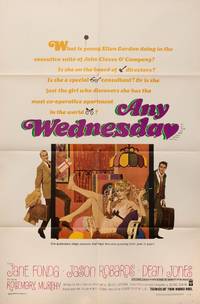
1966réf. 148977Burbank CA: Warner Brothers 1966. Vintage one sheet poster for the 1966 film. Based on the 1964 hit Broadway play by Muriel Resnik. Ellen Gordon Jane Fonda is New York executive John Cleves' Jason Robards mistress who falls for Cleves' young out-of-town associate Cass Henderson Dean Jones when Cleves' secretary unknowingly sends him to the apartment where they have their trysts. The secretary then compounds the error by telling Cleves' wife Dorothy Rosemary Murphy about the apartment. Shot on location in New York City. 27 x 41 inches. Folded as issued one small closed tear else Near Fine. Warner Brothers unknown
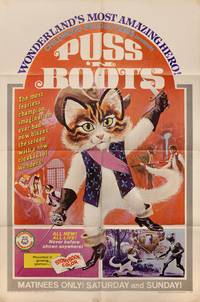
1967réf. 148982N.p.: Childhood Productions Inc 1967. Vintage one sheet poster for the US release of the 1955 German film. Based on the Italian fairy tale particularly the 1812 version found in Jacob and Wilhelm Grimm's "Grimms' Fairy Tales." A fanciful live-action rendition of the tale of the anthropomorphic cat Margitta Sonke who uses fools King Wonnebald F.W. Schroder-Schrom and his daughter Rosine Christa Oenicke into believing the miller's son Hans Harry Wustenhagen is Count Carabas and tricks the evil wizard Saufdichvoll Helmut Ziegner into giving his noble home a knight's castle to Hans. Shot on location at Burg Castle in North Rhine-Westphalia Germany. 27 x 41 inches. Folded as issued. Very Good pinholes to corners small splitting at crease several small closed tears and cello tape at extremities. Childhood Productions, Inc unknown
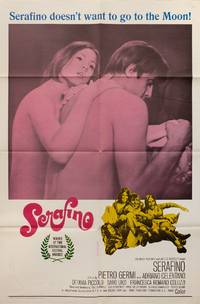
1970réf. 149020N.p.: Columbia Pictures 1970. Vintage one sheet poster for the US release of the 1968 Italian film. Nature-boy shepherd Serafino Adriano Celentano inherits his aunt Gesuina's Nerina Montagnani fortune and proceeds to frivolously spend it on family and friends. After destroying a new convertible his uncle Agenore Saro Urzi files to have him declared mentally incompetent. Shot on location in Marche Lazio and Abruzzo Italy. 27 x 41 inches. Folded as issued. Very Good plus with small split in crease pinholes to top corners and manuscript annotation on verso visible on recto. Columbia Pictures unknown
1960réf. 147196N.p.: N.p. 1960. Draft script for an unproduced film. Text in Spanish. An imagining of the infancy youth and adolescence of Jesus Christ. Set in Jerusalem. Beige titled wrappers with credits for screenwriter Ismael Rodriguez. 114 leaves with last page of text numbered 112. Mimeograph duplication on onionskin stock rectos only. Pages Very Good plus wrapper Very Good bound with a silver prong. N.p. unknown
1960réf. 147288Unknown: Dunas - Murphy Productions 1960. Treatment script for an unproduced television film. The adventures and exploits of a young Irish resistance fighter. Set in Belfast and Dublin. Red titled wrappers. Title page present noted as Screen Treatment with credits for screenwriter Tony Terpiloff. 124 leaves with last page of text numbered 123. Mimeograph duplication on eye-rest green stock rectos only. Pages Very Good with creasing and a few small tears to the first leaf wrapper Very Good bound internally with three gold brads. Dunas - Murphy Productions unknown
1976réf. 172538N.p.: Cinema International 1976. Collection of fourteen vintage borderless reference photographs from the 1976 film. With mimeo snipes affixed to the versos and a Cinema International stamp on the versos. Based on the 1941 novel of the same name by F. Scott Fitzgerald. A studio executive during the golden age of Hollywood tries to prevent unionization on his movie sets and has an affair with an engaged actress. Nominated for one Academy Award. Set in Hollywood. Twelve photographs 8 x 10 inches two photographs trimmed 10 x 7 inches. About Near Fine. Godard Histoires du cinema. Weldon 1983. Cinema International unknown
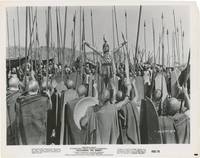
1960réf. 172856Beverly Hills CA: United Artists 1960. Eight vintage studio still photographs from the 1960 re-release of the 1956 film. A fictionalized account of the life of Alexander the Great who conquered the entire known world in his relatively short life. Shot on location in Andalucía and Madrid Spain. 8 x 10 inches. Very Good plus. Twilight Time. United Artists unknown
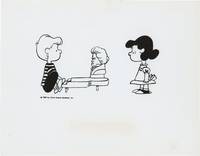
1969réf. 173038New York City: Cinema Center Films 1969. Vintage reference photograph from the 1969 animated film. With a mimeo snipe affixed to the verso. Based on the comic by Charles M. Schultz. Charlie Brown tries to win the National Spelling Bee to boost his confidence after losing a baseball game. 8 x 10 inches. Very Good plus. Cinema Center Films unknown
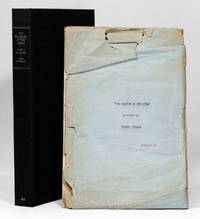
1925réf. 3105California: Universal Pictures 1925. First edition. original wrappers. Good. AN EARLY WORKING DRAFT OF THE 1925 PHANTOM OF THE OPERA PRESERVING THE DARKER SCENARIO UNIVERSAL WROTE BEFORE ITS FRONT OFFICE ORDERED THE TERROR TONED DOWN AND INCLUDING AN ORIGIN STORY FOR THE PHANTOM THAT NEVER REACHED THE SCREEN. Lon Chaney's unmasking in The Phantom of the Opera remains one of the most famous moments in film history. The picture that audiences finally saw in 1925 though came out of a long and difficult production shaped by poorly received previews reshoots and repeated re-editing. Its story begins with Universal staff writer Elliott J. Clawson's adaptation of Gaston Leroux's 1910 novel. The present typescript records his scenario at an early stage before the studio's successive revisions reshaped it. THE PHANTOM'S LOST ORIGIN STORY: The most striking feature of the draft is a lengthy origin episode absent from every filmed version of the story. In it a Sultan condemns the Phantom to die on an anthill and the Persian who becomes his lifelong associate rescues him. Leroux's novel only alludes to its Phantom's past in Persia where a police official spared him from the Shah's death sentence. Clawson turned that background into a full dramatic sequence. The episode though was abandoned before filming began. Philip J. Riley mentions it in his narrative account of the production The Making of the Phantom of the Opera 1999 but the present manuscript preserves it as Clawson actually wrote it. Riley records that by the fifth revised shooting script most of the genuinely frightening scenes like the anthill death scene had been removed because the front office feared the original material would drive audiences out of the theater. RELATIONSHIP TO THE KNOWN RECORD: Riley's study draws on two principal script documents: an early Clawson draft which he quotes in places and the fifth revised shooting script which he reproduces in full. The present manuscript shares the general scope and character of the early draft yet it differs in both scene numbering and the wording of specific directions. At the bedchamber scene Riley's source is numbered 286; here the same scene is numbered 289. The three-scene offset indicates that this manuscript contains material Riley's source lacks at that point suggesting either an earlier compositional layer or a fuller parallel version. Riley does not say where his early draft is held so the relationship between the two documents remains open. Our comparison is limited to the passages Riley chose to quote and a full collation may well reveal further differences. THE ANNOTATIONS: Pencil annotations appear intermittently throughout. They are pointed and analytical raising questions of continuity pacing and plot logic. One asks how Christine could communicate with Raoul while held captive and another asks why certain developments do not occur earlier in a sequence. They suggest close review by a reader with editorial authority over the script. Note: Although the draft breaks off during the climactic rescue attempt by Raoul and Ledoux and does not include the full text as we've come to know the story the draft appears complete as it originally existed. There is no sign of removed pages - in fact the last page with type seems to be on a different stock and serves also as the rear wrapper - which is consistent with an unfinished working draft rather than later loss. RARITY: Universal silent-era screenplays rarely survive. Scripts were typed in small numbers on unstable pulp paper and much of the studio's early paper record was later discarded. This draft documents The Phantom of the Opera before commercial pressure and successive rewrites displaced Clawson's original conception. It preserves a version of the film that Universal chose not to make. Typescript working draft. Universal City California: Universal Pictures ca. 1925. More than 200 pages typed on 8.5 x 13 inch legal-size pulp stock; original blue wrapper; pale toned rear wrapper. Pencil annotations throughout. Front wrapper present but detached; leaves brittle with edge chipping creases foxing marginal staining and small losses as is typical of Universal scripts of the period. Housed in custom archival presentation box. Universal Pictures unknown
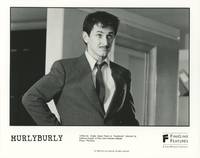
1998réf. 173099N.p.: Fine Line Features 1998. Eight vintage satin-finished studio still photographs from the 1998 film. Based on the 1984 play by David Rabe. Follows a group of Hollywood directors and actors who find purpose in their increasingly hedonistic lifestyles. Set in Hollywood shot on location in California. 8 x 10 inches. Fine. Fine Line Features unknown