10,264 results
1968ref. 161669N.p.: Boxoffice International 1968. Three vintage studio still photographs from the 1968 sexploitation film. All three photographs with provenance stamps on the versos. A fanciful account of the Marquis de Sade and the women who are irresistibly drawn to him. 8 x 10 inches. Very Good plus. Boxoffice International unknown
1968ref. 161669N.p.: Boxoffice International 1968. Three vintage studio still photographs from the 1968 sexploitation film. All three photographs with provenance stamps on the versos. A fanciful account of the Marquis de Sade and the women who are irresistibly drawn to him. 8 x 10 inches. Very Good plus. Boxoffice International unknown books
1950ref. 168155Beverly Hills CA: United Artists 1950. Vintage studio still photograph from the 1950 German documentary film. A re-edited version of a German-Swiss film originally released in 1938 directed by Curt Oertel. Winner of the Academy Award for Best Documentary. 8 x 10 inches. Very Good plus. United Artists unknown books
ref. 166556N.p.: N.p. 1982. Draft script for the 1983 British comedy film. Noted as copy No. 58 in manuscript ink on the title page. Bound in with the script are ten pages of Xerographically duplicated storyboards for the short film-within-the-film "The Crimson Permanent Assurance." The final Monty Python film to star actor and writer Graham Chapman before his death in 1989 and a return to the sketch comedy format which characterized the group's earlier television series. Shot on location in Queensway Strathblane and Lancashire England. Red untitled Script Specialists wrappers with a die-cut title window in the British style. Title page present dated March 1982. 115 leaves with last page of text numbered 115. Mimeograph duplication on eye-rest green stock rectos only with five pink revision pages laid in at the rear of the script dated 26/5/82. Pages Very Good plus wrapper Very Good plus with light foxing throughout bound internally with two silver brads. N.p. unknown
ref. 166556N.p.: N.p. 1982. Draft script for the 1983 British comedy film. Noted as copy No. 58 in manuscript ink on the title page. Bound in with the script are ten pages of Xerographically duplicated storyboards for the short film-within-the-film "The Crimson Permanent Assurance." The final Monty Python film to star actor and writer Graham Chapman before his death in 1989 and a return to the sketch comedy format which characterized the group's earlier television series. Shot on location in Queensway Strathblane and Lancashire England. Red untitled Script Specialists wrappers with a die-cut title window in the British style. Title page present dated March 1982. 115 leaves with last page of text numbered 115. Mimeograph duplication on eye-rest green stock rectos only with five pink revision pages laid in at the rear of the script dated 26/5/82. Pages Very Good plus wrapper Very Good plus with light foxing throughout bound internally with two silver brads. N.p. unknown books
ref. 014295[Monument Catulle Mendès] Romain Coolus (1868-1952), écrivain, scénariste. P.A.S., mai 1909, 1p in-8 oblong. Billet de souscription pré-imprimé pour la soirée de Gala pour l'érection du monument Catulle Mendès (1841-1909), mort le 8 février 1909. Lors de cette soirée, au théâtre Sarah-Bernhardt, la grande actrice joua le rôle de Cyrano de Bergerac et le sculpteur Emile Guillaume (1867-1954) y présenta son buste du poète (il avait aussi fait un masque mortuaire). [341]
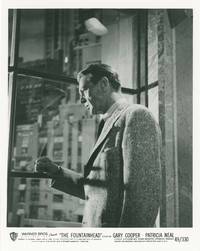
1949ref. 161687Burbank CA: Warner Brothers 1949. Four vintage studio still photographs from the 1949 film. In approaching the film adaptation of Ayn Rand's 1943 work director King Vidor dispensed with typical Hollywood production techniques and focused on creating an expressionistic film one that literally echoed the architectural underpinnings of its characters' philosophies motives and ambitions. Unusual choices included modernist cinematography expressionistic set designs and wardrobe and having Rand herself write the heady screenplay. 8 x 10 inches. Near Fine. Warner Brothers unknown
1949ref. 161625Burbank CA: Warner Brothers 1949. Five vintage promotional photographs four of which are in color from the landmark 1949 film adaptation of Ayn Rand's 1943 novel "The Fountainhead." Each photo with the film's title logo at the bottom margin. One photo framed to look like a "book" to tie in with the popularity of the novel. In approaching the film adaptation of Rand's iconoclastic work Vidor dispensed with typical Hollywood production techniques and focused on creating an expressionistic film one that literally echoed the architectural underpinnings of its characters' philosophies motives and ambitions. Unusual choices included modernist cinematography expressionistic set designs and wardrobe and having Ms. Rand herself write the heady screenplay. 8 x 10 inches. Near Fine. Warner Brothers unknown
1949ref. 161624Burbank CA: Warner Brothers 1949. Four vintage reference photographs from the landmark 1949 film adaptation of Ayn Rand's 1943 novel "The Fountainhead." In approaching the film adaptation of Rand's iconoclastic work Vidor dispensed with typical Hollywood production techniques and focused on creating an expressionistic film one that literally echoed the architectural underpinnings of its characters' philosophies motives and ambitions. Unusual choices included modernist cinematography expressionistic set designs and wardrobe and having Ms. Rand herself write the heady screenplay. 8 x 10 inches. Near Fine. Warner Brothers unknown
1949ref. 161625Burbank CA: Warner Brothers 1949. Five vintage promotional photographs four of which are in color from the landmark 1949 film adaptation of Ayn Rand's 1943 novel "The Fountainhead." Each photo with the film's title logo at the bottom margin. One photo framed to look like a "book" to tie in with the popularity of the novel. In approaching the film adaptation of Rand's iconoclastic work Vidor dispensed with typical Hollywood production techniques and focused on creating an expressionistic film one that literally echoed the architectural underpinnings of its characters' philosophies motives and ambitions. Unusual choices included modernist cinematography expressionistic set designs and wardrobe and having Ms. Rand herself write the heady screenplay. 8 x 10 inches. Near Fine. Warner Brothers unknown books
1949ref. 161687Burbank CA: Warner Brothers 1949. Four vintage studio still photographs from the 1949 film. In approaching the film adaptation of Ayn Rand's 1943 work director King Vidor dispensed with typical Hollywood production techniques and focused on creating an expressionistic film one that literally echoed the architectural underpinnings of its characters' philosophies motives and ambitions. Unusual choices included modernist cinematography expressionistic set designs and wardrobe and having Rand herself write the heady screenplay. 8 x 10 inches. Near Fine. Warner Brothers unknown books
1949ref. 161624Burbank CA: Warner Brothers 1949. Four vintage reference photographs from the landmark 1949 film adaptation of Ayn Rand's 1943 novel "The Fountainhead." In approaching the film adaptation of Rand's iconoclastic work Vidor dispensed with typical Hollywood production techniques and focused on creating an expressionistic film one that literally echoed the architectural underpinnings of its characters' philosophies motives and ambitions. Unusual choices included modernist cinematography expressionistic set designs and wardrobe and having Ms. Rand herself write the heady screenplay. 8 x 10 inches. Near Fine. Warner Brothers unknown books
1995ref. 142143Burbank CA: Buena Vista Pictures 1995. Vintage press kit for the 1995 film. Press kit includes 11 black and white photographs and a pamphlet of production information housed in a titled pictorial studio folder. The second of director Oliver Stone's trilogy of films about US Presidents a semi-biographical film chronicling Nixon's impeachment with flashbacks to his life before the presidency. Director Oliver Stone received some criticism for depicting Nixon in typical dramatic flair as an alcoholic and a fallen hero though the film was well-received. Nominated for four Academy Awards including Best Musical Score and Best Actor. Photos 10 x 8 inches. Production pamphlet 35 pages saddle stapled housed in a 9 x 12 inch folder. Photos and production pamphlet Fine in a Very Good plus folder. Buena Vista Pictures unknown
1995ref. 142143Burbank CA: Buena Vista Pictures 1995. Vintage press kit for the 1995 film. Press kit includes 11 black and white photographs and a pamphlet of production information housed in a titled pictorial studio folder. The second of director Oliver Stone's trilogy of films about US Presidents a semi-biographical film chronicling Nixon's impeachment with flashbacks to his life before the presidency. Director Oliver Stone received some criticism for depicting Nixon in typical dramatic flair as an alcoholic and a fallen hero though the film was well-received. Nominated for four Academy Awards including Best Musical Score and Best Actor. Photos 10 x 8 inches. Production pamphlet 35 pages saddle stapled housed in a 9 x 12 inch folder. Photos and production pamphlet Fine in a Very Good plus folder. Buena Vista Pictures unknown books
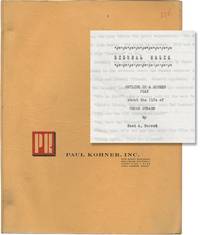
1970ref. 147195N.p.: N.p. 1970. Treatment script for an unproduced film. With two brief manuscript ink annotations to the title page and front wrapper noting the number 778. Based on the life of noted Viennese composer Oscar Straus. Set in Austria and New York. Yellow untitled generic Paul Kohner wrappers. Title page present with credits for screenwriter Kent A. Barret. 41 leaves with last page of text numbered 40. Mimeograph duplication on onionskin stock rectos only. Pages Very Good plus wrapper Very Good with light soil to the wrapper and first and last leaves bound with two gold brads. N.p. unknown
1970ref. 147195N.p.: N.p. 1970. Treatment script for an unproduced film. With two brief manuscript ink annotations to the title page and front wrapper noting the number 778. Based on the life of noted Viennese composer Oscar Straus. Set in Austria and New York. Yellow untitled generic Paul Kohner wrappers. Title page present with credits for screenwriter Kent A. Barret. 41 leaves with last page of text numbered 40. Mimeograph duplication on onionskin stock rectos only. Pages Very Good plus wrapper Very Good with light soil to the wrapper and first and last leaves bound with two gold brads. N.p. unknown books
1972ref. 35001972 16,9 x 25,9 cm, tirage gélatino-argentique d'époque, sans autre mention qu'un "F" au verso de la main du tireur.
1972ref. 35011972 25,5 x 16,4 cm, tirage gélatino-argentique d'époque, sans autre mention qu'un "F" au verso de la main du tireur.
1972ref. 34881972 aucune reliure 25 x 16,9 cm et 25 x 16,8, tirages gélatino-argentiques d'époque, sans autre mention qu'un "F" au verso de la main du tireur.
1958ref. 146435Burbank CA: Walt Disney Productions 1958. Final Shooting script for the first half of the 1958 film thus incomplete as issued dated April 9 1958. With lead actor Sal Mineo's name in manuscript ink on two revision leaves and his character's name in pencil on the front wrapper. Laid in is a small leaf with manuscript ink notations including the name of director Lou Foster actors Fess Parker and Jerome Courtland and characters White Bull and Captain Keogh. Parker was originally hired for the role of Keogh but refused second billing and was replaced by Philip Carey. Jerome Courtland played the role of Lieutenant Henry Nowlan in the film. Based on David Appel's 1951 novel "Comanche: Story of America's Most Heroic Horse" about the bond between a young Sioux boy and the titular horse who end up on opposite sides of the Battle of Little Big Horn. Set in Montana Territory and shot on location in Oregon. Tan titled wrappers noted as FINAL SHOOTING SCRIPT on the front wrapper rubber-stamped copy No. 112 and production No. 5812 dated APRIL 9 1958 with credits for director and screenwriter LEWIS FOSTER. Title page present dated April 9 1958 noted as FINAL SHOOTING SCRIPT with credits for director and screenwriter LEWIS FOSTER. 70 leaves with last page of text numbered 69. Mimeograph duplication rectos only with blue revision pages throughout dated variously between 4/10/58 and 5/15/58. Pages Near Fine wrapper Very Good plus bound with three gold brads. Walt Disney Productions unknown
1958ref. 146435Burbank CA: Walt Disney Productions 1958. Final Shooting script for the first half of the 1958 film thus incomplete as issued dated April 9 1958. With lead actor Sal Mineo's name in manuscript ink on two revision leaves and his character's name in pencil on the front wrapper. Laid in is a small leaf with manuscript ink notations including the name of director Lou Foster actors Fess Parker and Jerome Courtland and characters White Bull and Captain Keogh. Parker was originally hired for the role of Keogh but refused second billing and was replaced by Philip Carey. Jerome Courtland played the role of Lieutenant Henry Nowlan in the film. Based on David Appel's 1951 novel "Comanche: Story of America's Most Heroic Horse" about the bond between a young Sioux boy and the titular horse who end up on opposite sides of the Battle of Little Big Horn. Set in Montana Territory and shot on location in Oregon. Tan titled wrappers noted as FINAL SHOOTING SCRIPT on the front wrapper rubber-stamped copy No. 112 and production No. 5812 dated APRIL 9 1958 with credits for director and screenwriter LEWIS FOSTER. Title page present dated April 9 1958 noted as FINAL SHOOTING SCRIPT with credits for director and screenwriter LEWIS FOSTER. 70 leaves with last page of text numbered 69. Mimeograph duplication rectos only with blue revision pages throughout dated variously between 4/10/58 and 5/15/58. Pages Near Fine wrapper Very Good plus bound with three gold brads. Walt Disney Productions unknown books
ref. 125645N.p.: Matrixbest Production Circa 190. Vintage pre-release promotional poster for the 1980 film featuring Sid Vicious from the film performing "My Way" noted on the bottom banner as "From the forthcoming film." Julien Temple's now-classic mockumentary about an unscrupulous manipulative music manager who takes advantage of a British punk rock band loosely based on the formation rise and fall of the Sex Pistols told from manager Malcolm McLaren's perspective. Set and shot on location in London. 17 x 25 inches. Light wear at the extremities overall Near Fine. Matrixbest Production unknown
ref. 125645N.p.: Matrixbest Production Circa 190. Vintage pre-release promotional poster for the 1980 film featuring Sid Vicious from the film performing "My Way" noted on the bottom banner as "From the forthcoming film." Julien Temple's now-classic mockumentary about an unscrupulous manipulative music manager who takes advantage of a British punk rock band loosely based on the formation rise and fall of the Sex Pistols told from manager Malcolm McLaren's perspective. Set and shot on location in London. 17 x 25 inches. Light wear at the extremities overall Near Fine. Matrixbest Production unknown books
1925ref. 3105California: Universal Pictures 1925. First edition. original wrappers. Good. AN EARLY WORKING DRAFT OF THE 1925 PHANTOM OF THE OPERA PRESERVING THE DARKER SCENARIO UNIVERSAL WROTE BEFORE ITS FRONT OFFICE ORDERED THE TERROR TONED DOWN AND INCLUDING AN ORIGIN STORY FOR THE PHANTOM THAT NEVER REACHED THE SCREEN. Lon Chaney's unmasking in The Phantom of the Opera remains one of the most famous moments in film history. The picture that audiences finally saw in 1925 though came out of a long and difficult production shaped by poorly received previews reshoots and repeated re-editing. Its story begins with Universal staff writer Elliott J. Clawson's adaptation of Gaston Leroux's 1910 novel. The present typescript records his scenario at an early stage before the studio's successive revisions reshaped it. THE PHANTOM'S LOST ORIGIN STORY: The most striking feature of the draft is a lengthy origin episode absent from every filmed version of the story. In it a Sultan condemns the Phantom to die on an anthill and the Persian who becomes his lifelong associate rescues him. Leroux's novel only alludes to its Phantom's past in Persia where a police official spared him from the Shah's death sentence. Clawson turned that background into a full dramatic sequence. The episode though was abandoned before filming began. Philip J. Riley mentions it in his narrative account of the production The Making of the Phantom of the Opera 1999 but the present manuscript preserves it as Clawson actually wrote it. Riley records that by the fifth revised shooting script most of the genuinely frightening scenes like the anthill death scene had been removed because the front office feared the original material would drive audiences out of the theater. RELATIONSHIP TO THE KNOWN RECORD: Riley's study draws on two principal script documents: an early Clawson draft which he quotes in places and the fifth revised shooting script which he reproduces in full. The present manuscript shares the general scope and character of the early draft yet it differs in both scene numbering and the wording of specific directions. At the bedchamber scene Riley's source is numbered 286; here the same scene is numbered 289. The three-scene offset indicates that this manuscript contains material Riley's source lacks at that point suggesting either an earlier compositional layer or a fuller parallel version. Riley does not say where his early draft is held so the relationship between the two documents remains open. Our comparison is limited to the passages Riley chose to quote and a full collation may well reveal further differences. THE ANNOTATIONS: Pencil annotations appear intermittently throughout. They are pointed and analytical raising questions of continuity pacing and plot logic. One asks how Christine could communicate with Raoul while held captive and another asks why certain developments do not occur earlier in a sequence. They suggest close review by a reader with editorial authority over the script. Note: Although the draft breaks off during the climactic rescue attempt by Raoul and Ledoux and does not include the full text as we've come to know the story the draft appears complete as it originally existed. There is no sign of removed pages - in fact the last page with type seems to be on a different stock and serves also as the rear wrapper - which is consistent with an unfinished working draft rather than later loss. RARITY: Universal silent-era screenplays rarely survive. Scripts were typed in small numbers on unstable pulp paper and much of the studio's early paper record was later discarded. This draft documents The Phantom of the Opera before commercial pressure and successive rewrites displaced Clawson's original conception. It preserves a version of the film that Universal chose not to make. Typescript working draft. Universal City California: Universal Pictures ca. 1925. More than 200 pages typed on 8.5 x 13 inch legal-size pulp stock; original blue wrapper; pale toned rear wrapper. Pencil annotations throughout. Front wrapper present but detached; leaves brittle with edge chipping creases foxing marginal staining and small losses as is typical of Universal scripts of the period. Housed in custom archival presentation box. Universal Pictures unknown
1925ref. 3105California: Universal Pictures 1925. First edition. original wrappers. Good. AN EARLY WORKING DRAFT OF THE 1925 PHANTOM OF THE OPERA PRESERVING THE DARKER SCENARIO UNIVERSAL WROTE BEFORE ITS FRONT OFFICE ORDERED THE TERROR TONED DOWN AND INCLUDING AN ORIGIN STORY FOR THE PHANTOM THAT NEVER REACHED THE SCREEN. Lon Chaney's unmasking in The Phantom of the Opera remains one of the most famous moments in film history. The picture that audiences finally saw in 1925 though came out of a long and difficult production shaped by poorly received previews reshoots and repeated re-editing. Its story begins with Universal staff writer Elliott J. Clawson's adaptation of Gaston Leroux's 1910 novel. The present typescript records his scenario at an early stage before the studio's successive revisions reshaped it. THE PHANTOM'S LOST ORIGIN STORY: The most striking feature of the draft is a lengthy origin episode absent from every filmed version of the story. In it a Sultan condemns the Phantom to die on an anthill and the Persian who becomes his lifelong associate rescues him. Leroux's novel only alludes to its Phantom's past in Persia where a police official spared him from the Shah's death sentence. Clawson turned that background into a full dramatic sequence. The episode though was abandoned before filming began. Philip J. Riley mentions it in his narrative account of the production The Making of the Phantom of the Opera 1999 but the present manuscript preserves it as Clawson actually wrote it. Riley records that by the fifth revised shooting script most of the genuinely frightening scenes like the anthill death scene had been removed because the front office feared the original material would drive audiences out of the theater. RELATIONSHIP TO THE KNOWN RECORD: Riley's study draws on two principal script documents: an early Clawson draft which he quotes in places and the fifth revised shooting script which he reproduces in full. The present manuscript shares the general scope and character of the early draft yet it differs in both scene numbering and the wording of specific directions. At the bedchamber scene Riley's source is numbered 286; here the same scene is numbered 289. The three-scene offset indicates that this manuscript contains material Riley's source lacks at that point suggesting either an earlier compositional layer or a fuller parallel version. Riley does not say where his early draft is held so the relationship between the two documents remains open. Our comparison is limited to the passages Riley chose to quote and a full collation may well reveal further differences. THE ANNOTATIONS: Pencil annotations appear intermittently throughout. They are pointed and analytical raising questions of continuity pacing and plot logic. One asks how Christine could communicate with Raoul while held captive and another asks why certain developments do not occur earlier in a sequence. They suggest close review by a reader with editorial authority over the script. Note: Although the draft breaks off during the climactic rescue attempt by Raoul and Ledoux and does not include the full text as we've come to know the story the draft appears complete as it originally existed. There is no sign of removed pages - in fact the last page with type seems to be on a different stock and serves also as the rear wrapper - which is consistent with an unfinished working draft rather than later loss. RARITY: Universal silent-era screenplays rarely survive. Scripts were typed in small numbers on unstable pulp paper and much of the studio's early paper record was later discarded. This draft documents The Phantom of the Opera before commercial pressure and successive rewrites displaced Clawson's original conception. It preserves a version of the film that Universal chose not to make. Typescript working draft. Universal City California: Universal Pictures ca. 1925. More than 200 pages typed on 8.5 x 13 inch legal-size pulp stock; original blue wrapper; pale toned rear wrapper. Pencil annotations throughout. Front wrapper present but detached; leaves brittle with edge chipping creases foxing marginal staining and small losses as is typical of Universal scripts of the period. Housed in custom archival presentation box. Universal Pictures unknown books