11,049 results
1962ref. 167461Los Angeles: Twentieth Century-Fox 1962. Two vintage studio still photographs from the 1962 film. Based on F. Scott Fitzgerald's fourth and final novel published in 1934 about an esteemed psychiatrist who sacrifices his career to marry his patient an emotionally unstable young woman. Director Henry King's final film. Set and shot on location in France Italy and Switzerland. 10 x 8 inches. One Fine one Near Fine with light wear to the finish. Twentieth Century-Fox unknown
1962ref. 167461Los Angeles: Twentieth Century-Fox 1962. Two vintage studio still photographs from the 1962 film. Based on F. Scott Fitzgerald's fourth and final novel published in 1934 about an esteemed psychiatrist who sacrifices his career to marry his patient an emotionally unstable young woman. Director Henry King's final film. Set and shot on location in France Italy and Switzerland. 10 x 8 inches. One Fine one Near Fine with light wear to the finish. Twentieth Century-Fox unknown books
1972ref. 148216N.p.: N.p. 1972. Collection of 24 vintage borderless color photographs from the 1972 film 23 studio still photographs and one photograph of Fellini on the set. A semi-autobiographical impressionistic portrait of Rome featuring two contrasting sections one based on Fellini's first journey to the city as a young man under Mussolini the other featuring scenes of contemporary city life. Set and shot on location in Rome Italy. 8.25 x 10.75 inches. Near Fine. N.p. unknown
1972ref. 148216N.p.: N.p. 1972. Collection of 24 vintage borderless color photographs from the 1972 film 23 studio still photographs and one photograph of Fellini on the set. A semi-autobiographical impressionistic portrait of Rome featuring two contrasting sections one based on Fellini's first journey to the city as a young man under Mussolini the other featuring scenes of contemporary city life. Set and shot on location in Rome Italy. 8.25 x 10.75 inches. Near Fine. N.p. unknown books
1975ref. 161263Beverly Hills CA: United Artists 1975. Six vintage studio still photographs from the 1979 film. Loosely based on the 1899 novella "Heart of Darkness" by Joseph Conrad. The ultimate reflection of the American experience in Vietnam taking Conrad's dark vision of an expedition up the Congo and transplanting it to Vietnam-era Cambodia. Nominated for eight Academy Awards winning two. Winner of the Palme d'Or. Shot on grueling location in the Philippines. 10 x 8 inches. Near Fine. National Film Registry. Ebert I. Godard Histoires du Cinema. Rosenbaum 1000. United Artists unknown
1975ref. 161263Beverly Hills CA: United Artists 1975. Six vintage studio still photographs from the 1979 film. Loosely based on the 1899 novella "Heart of Darkness" by Joseph Conrad. The ultimate reflection of the American experience in Vietnam taking Conrad's dark vision of an expedition up the Congo and transplanting it to Vietnam-era Cambodia. Nominated for eight Academy Awards winning two. Winner of the Palme d'Or. Shot on grueling location in the Philippines. 10 x 8 inches. Near Fine. National Film Registry. Ebert I. Godard Histoires du Cinema. Rosenbaum 1000. United Artists unknown books
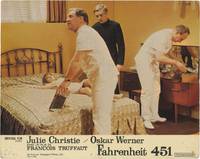
1966ref. 148214Universal City: Universal Film 1966. Collection of 16 vintage color French lobby cards from the 1966 film. Based on the 1953 novel by Ray Bradbury. Set in and shot on location in England. 11.5 x 9.25 inches. Very Good plus pinholes to corners with come corner and edgewear. Universal Film unknown
1966ref. 148214Universal City: Universal Film 1966. Collection of 16 vintage color French lobby cards from the 1966 film. Based on the 1953 novel by Ray Bradbury. Set in and shot on location in England. 11.5 x 9.25 inches. Very Good plus pinholes to corners with come corner and edgewear. Universal Film unknown books
1957ref. 150435N.p.: N.p. 1957. Vintage reference photograph from the 1957 film showing actress Jayne Mansfield leaning over to get a bottle of ginger ale from the refrigerator. With a manuscript pencil annotation identifying Mansfield and the film title on the verso. Based on the 1955 Broadway play which also starred Jayne Mansfield. A satirical take on mid-century Hollywood following an ad man who hires a famous actress to promote a new line of lipstick but must pretend to be the actress' lover in exchange in order to make her real boyfriend jealous. 8 x 10 inches. Near Fine. National Film Registry. Rosenbaum 1000. N.p. unknown
1957ref. 150435N.p.: N.p. 1957. Vintage reference photograph from the 1957 film showing actress Jayne Mansfield leaning over to get a bottle of ginger ale from the refrigerator. With a manuscript pencil annotation identifying Mansfield and the film title on the verso. Based on the 1955 Broadway play which also starred Jayne Mansfield. A satirical take on mid-century Hollywood following an ad man who hires a famous actress to promote a new line of lipstick but must pretend to be the actress' lover in exchange in order to make her real boyfriend jealous. 8 x 10 inches. Near Fine. National Film Registry. Rosenbaum 1000. N.p. unknown books
1971ref. 167739Beverly Hills CA: United Artists 1971. Vintage reference photograph from the 1971 "surrealist documentary" rock film showing Frank Zappa. In 1970 Zappa completely re-formed the Mothers of Invention to include drummer Aynsley Dunber jazz keyboardist George Duke and three members of The Turtles. Zappa began to write a film for the new lineup and recorded "Chunga's Revenge" 1970 with them as a "preview." Subsequently Zappa met conductor Zubin Mehta and worked with him to produce a concert in May 1970 wherein the Los Angeles Philharmonic was augmented by the Mothers or vice versa as you like and referred to this as "the second preview." The film itself shot in a week at Pinewood Studios outside London was a tripped-out documentary about life as a musician on the road and Zappa characteristically chose an eclectic group of celebrities to join the proceedings including Theodore Bikel Ringo Starr and Keith Moon. The resulting soundtrack is a matter of debate among Zappa enthusiasts but is notable for its orchestral finale "Strictly Genteel" a touchstone for the variety of classical music experimentations Zappa would subsequently pursue. 8 x 10 inches. Near Fine. United Artists unknown
1971ref. 167739Beverly Hills CA: United Artists 1971. Vintage reference photograph from the 1971 "surrealist documentary" rock film showing Frank Zappa. In 1970 Zappa completely re-formed the Mothers of Invention to include drummer Aynsley Dunber jazz keyboardist George Duke and three members of The Turtles. Zappa began to write a film for the new lineup and recorded "Chunga's Revenge" 1970 with them as a "preview." Subsequently Zappa met conductor Zubin Mehta and worked with him to produce a concert in May 1970 wherein the Los Angeles Philharmonic was augmented by the Mothers or vice versa as you like and referred to this as "the second preview." The film itself shot in a week at Pinewood Studios outside London was a tripped-out documentary about life as a musician on the road and Zappa characteristically chose an eclectic group of celebrities to join the proceedings including Theodore Bikel Ringo Starr and Keith Moon. The resulting soundtrack is a matter of debate among Zappa enthusiasts but is notable for its orchestral finale "Strictly Genteel" a touchstone for the variety of classical music experimentations Zappa would subsequently pursue. 8 x 10 inches. Near Fine. United Artists unknown books
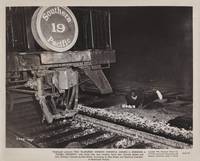
1944ref. 171768Hollywood: Paramount Pictures 1944. Vintage studio still photograph from the classic 1944 film noir showing Tom Powers on the train tracks. Annotations in manuscript pencil on the verso. Director Billy Wilder making the right decision at the right time as usual decided it was time to bring in lauded hard-boiled crime fiction author Raymond Chandler to work on a great crime drama using James Cain's seminal hard-boiled novella. Wilder and Chandler worked on the script for several weeks together and at one point Cain was even brought in to resolve some questions. The result was a film that set the standard for all that would follow in what came to be known as the noir style using a cut-up time structure Barbara Stanwyck in a blonde wig Fred MacMurray as a soulless sucker and Edward G. Robinson as the straight man who brings pathos to the proceedings. Nominated for seven Academy Awards a rare feat for a genre picture including Best Picture Best Director Best Screenwriter Best Cinematography and Best Actress. 10 x 8 inches. Near Fine. National Film Registry. Ebert I. Grant US. Penzler 101. Rosenbaum 1000. Scorsese A Personal Journey Through American Movies. Selby US Canon. Selby US Masterwork. Spicer US. Paramount Pictures unknown
1944ref. 171768Hollywood: Paramount Pictures 1944. Vintage studio still photograph from the classic 1944 film noir showing Tom Powers on the train tracks. Annotations in manuscript pencil on the verso. Director Billy Wilder making the right decision at the right time as usual decided it was time to bring in lauded hard-boiled crime fiction author Raymond Chandler to work on a great crime drama using James Cain's seminal hard-boiled novella. Wilder and Chandler worked on the script for several weeks together and at one point Cain was even brought in to resolve some questions. The result was a film that set the standard for all that would follow in what came to be known as the noir style using a cut-up time structure Barbara Stanwyck in a blonde wig Fred MacMurray as a soulless sucker and Edward G. Robinson as the straight man who brings pathos to the proceedings. Nominated for seven Academy Awards a rare feat for a genre picture including Best Picture Best Director Best Screenwriter Best Cinematography and Best Actress. 10 x 8 inches. Near Fine. National Film Registry. Ebert I. Grant US. Penzler 101. Rosenbaum 1000. Scorsese A Personal Journey Through American Movies. Selby US Canon. Selby US Masterwork. Spicer US. Paramount Pictures unknown books
1952ref. 160495N.p.: N.p. 1952. Vintage borderless reference photograph of screenwriter Carl Foreman on the set of the 1952 film. Provenance stamp on the verso. A town marshal faces off against three vengeful killers on the eve of his wedding. Nominated for seven Academy Awards winning four including Best Actor for Gary Cooper. Set in New Mexico shot on location in Warnerville and Jamestown California. 8.25 x 10 inches. Fine. Pitts 1877. N.p. unknown
1948ref. 156004N.p.: N.p. 1948. Vintage reference photograph of William Wyler visiting the set of the 1948 film talking to director Fred Zinnemann and actress Jarmila Novotná between takes. A young Auschwitz survivor searches for his mother in the years following World War II. Actor Ivan Jandl was presented with a special juvenile Academy Award but was unable to travel to the US to receive the award due to restrictions by the communist government of his native Czechoslovakia. Shot on location in postwar Germany in Ingolstadt Munich Nuremberg and Würzburg. 8 x 10 inches. Very Good plus with light creasing at the corners and bottom edge. N.p. unknown
1952ref. 160495N.p.: N.p. 1952. Vintage borderless reference photograph of screenwriter Carl Foreman on the set of the 1952 film. Provenance stamp on the verso. A town marshal faces off against three vengeful killers on the eve of his wedding. Nominated for seven Academy Awards winning four including Best Actor for Gary Cooper. Set in New Mexico shot on location in Warnerville and Jamestown California. 8.25 x 10 inches. Fine. Pitts 1877. N.p. unknown books
1948ref. 156004N.p.: N.p. 1948. Vintage reference photograph of William Wyler visiting the set of the 1948 film talking to director Fred Zinnemann and actress Jarmila Novotná between takes. A young Auschwitz survivor searches for his mother in the years following World War II. Actor Ivan Jandl was presented with a special juvenile Academy Award but was unable to travel to the US to receive the award due to restrictions by the communist government of his native Czechoslovakia. Shot on location in postwar Germany in Ingolstadt Munich Nuremberg and Würzburg. 8 x 10 inches. Very Good plus with light creasing at the corners and bottom edge. N.p. unknown books
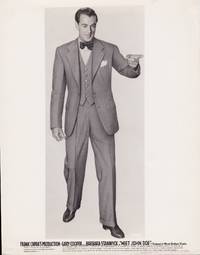
1941ref. 170358Los Angeles: Vitagraph 1941. Vintage publicity photograph from the 1941 film showing actor Gary Cooper in his iconic role. When a laid-off reporter is asked to write one final column she fabricates a letter from a John Doe planning on committing suicide on Christmas Eve in protest of society's ills. When the letter becomes a sensation Ann convinces the papers to hire her back and turns the letters into a series of articles. The only problem is in order to convince the public John Doe is real they need to find someone to impersonate him. Enter down-on-his-luck homeless man John Willoughby. 8 x 10 inches. Very Good plus. Vitagraph unknown
1941ref. 170358Los Angeles: Vitagraph 1941. Vintage publicity photograph from the 1941 film showing actor Gary Cooper in his iconic role. When a laid-off reporter is asked to write one final column she fabricates a letter from a John Doe planning on committing suicide on Christmas Eve in protest of society's ills. When the letter becomes a sensation Ann convinces the papers to hire her back and turns the letters into a series of articles. The only problem is in order to convince the public John Doe is real they need to find someone to impersonate him. Enter down-on-his-luck homeless man John Willoughby. 8 x 10 inches. Very Good plus. Vitagraph unknown books
1988ref. 160846Los Angeles: Paramount Pictures 1988. Final Draft script for Season 2 Episode 2 of the 1987-1994 classic television series originally aired in syndication on November 28 1988. Printed on blue leaves. Bound in preceding the script are three pages for "Cast" "Sets" and a "Pronunciation Guide." 20 years after the classic NBC 1966-1968 television series Gene Roddenberry was tasked with creating "Star Trek: The Next Generation" for Paramount Pictures. Set a century after the events in the original series and starring a new cast of characters "The Next Generation" succeeded in becoming an equally beloved series in the franchise and created four spin-off films from the series "Star Trek Generation" 1994 "Star Trek: First Contact" 1996 "Star Trek: Insurrection" 1998 and "Star Trek: Nemesis" 2002. The Enterprise becomes enveloped and trapped by a black-hole like phenomenon they are investigating when a hostile Romulan war ship appears. Yellow illustrated wrappers noted as Final Draft on the front wrapper dated September 26 1988. Title page present dated September 26 1988 noted as Final Draft with credits for screenwriter Jack B. Sowards and director Winrich Kolbe. 64 leaves with last page of text numbered 60. Xerographic duplication rectos only. Pages Near Fine wrapper Very Good plus bound with two gold brads. Paramount Pictures unknown
1988ref. 160846Los Angeles: Paramount Pictures 1988. Final Draft script for Season 2 Episode 2 of the 1987-1994 classic television series originally aired in syndication on November 28 1988. Printed on blue leaves. Bound in preceding the script are three pages for "Cast" "Sets" and a "Pronunciation Guide." 20 years after the classic NBC 1966-1968 television series Gene Roddenberry was tasked with creating "Star Trek: The Next Generation" for Paramount Pictures. Set a century after the events in the original series and starring a new cast of characters "The Next Generation" succeeded in becoming an equally beloved series in the franchise and created four spin-off films from the series "Star Trek Generation" 1994 "Star Trek: First Contact" 1996 "Star Trek: Insurrection" 1998 and "Star Trek: Nemesis" 2002. The Enterprise becomes enveloped and trapped by a black-hole like phenomenon they are investigating when a hostile Romulan war ship appears. Yellow illustrated wrappers noted as Final Draft on the front wrapper dated September 26 1988. Title page present dated September 26 1988 noted as Final Draft with credits for screenwriter Jack B. Sowards and director Winrich Kolbe. 64 leaves with last page of text numbered 60. Xerographic duplication rectos only. Pages Near Fine wrapper Very Good plus bound with two gold brads. Paramount Pictures unknown books
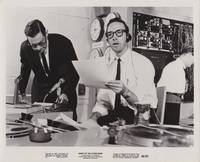
1968ref. 170416N.p.: Continental 1968. Vintage studio still photograph from the 1968 film showing actors Charles Craig and Frank Doak as television anchormen breaking the bad news of the Living Dead. One of the earliest scariest and most influential zombie films shot in black and white on a shoestring budget. Romero's feature film debut criticized upon release for its unprecedented explicit gore and now rightfully considered a cult classic. Shot on location throughout Pennsylvania near Evans City in Butler County. 10 x 8 inches. Near Fine. Continental unknown
1968ref. 170416N.p.: Continental 1968. Vintage studio still photograph from the 1968 film showing actors Charles Craig and Frank Doak as television anchormen breaking the bad news of the Living Dead. One of the earliest scariest and most influential zombie films shot in black and white on a shoestring budget. Romero's feature film debut criticized upon release for its unprecedented explicit gore and now rightfully considered a cult classic. Shot on location throughout Pennsylvania near Evans City in Butler County. 10 x 8 inches. Near Fine. Continental unknown books
1929ref. 165828Universal City: Universal Pictures 1929. Vintage borderless portrait photograph of "Sunny" Jim McKeen by photographer Ray Jones from the 1929 comedy short. Jones' signature etched in the negative on the lower right with children's illustrations also etched into the negative about the child. With a mimeo snipe on the verso here under the working title "The Newlyweds and Their Child." From the archive of noted Hollywood still photographer Ray Jones. Born in Wisconsin on January 1 1901 Jones worked for Paramount Pictures in the early 1930s and went on to be the head of the still photography department at Universal Pictures in 1935 where he worked well into the 1950s. Based on the George McManus comic strip "The Newlyweds" created in 1904. One of a series of 39 comic shorts which featured "Sunny" Jim McKeen as Baby Snookums. 8 x 10 inches. Near Fine. Universal Pictures unknown