10,190 results
1936ref. 150710Culver City CA: Columbia Pictures 1936. Vintage double weight press portrait photograph of Frank Capra by photographer Alfredo Valente to promote the 1937 film. Mimeo snipe stamp of photographer Alfredo Valente filing stamp with annotations in manuscript pencil dated "6-25-36" and "Kenneth G. Lawrence" stamp all on the verso. Based on the 1933 novel by James Hilton. Remade in 1973 as a musical directed by Charles Jarrott and starring Peter Finch and Liv Ullmann. A British diplomat and his entourage crash in the Himalayas are rescued and taken to the mystical valley of Shangri-La. Shot on location in Griffith Park Ojai Palms Springs Victorville and Sherwood Forest California. 8 x 10 inches. Light edgewear and crease in top right margin else Near Fine. National Film Registry. Columbia Pictures unknown books
1931ref. 141666Vienna: Illustrierter Film-Kurier 1931. Vintage Austrian program for the 1931 German film. Lang's first sound film Peter Lorre's breakthrough role and the film Lang considered to be his masterpiece-an assertion that has found much agreement since. The only second piece of ephemera from the film we have ever offered. Text in German. Issue No. 262 of "Illustrierter Film-Kurier" one of the oldest European film magazines which ran weekly from 1929 to 1956. Like its German counterpart "Film-Kurier" each issue focused on a single film and used a gravure process to reproduce images from the film making for striking images and design. 6 x 9 inches. Six pages saddle stapled. Ink annotations throughout seemingly regarding layout affecting a bit of text but no images. Very Good plus with a faint horizontal crease and light toning to the wrappers. Criterion Collection 30. Grant Germany. Godard Histoires de cinema. Ebert I. Eureka Masters of Cinema 9. Rosebaum 1000. Illustrierter Film-Kurier unknown
1931ref. 141666Vienna: Illustrierter Film-Kurier 1931. Vintage Austrian program for the 1931 German film. Lang's first sound film Peter Lorre's breakthrough role and the film Lang considered to be his masterpiece-an assertion that has found much agreement since. The only second piece of ephemera from the film we have ever offered. Text in German. Issue No. 262 of "Illustrierter Film-Kurier" one of the oldest European film magazines which ran weekly from 1929 to 1956. Like its German counterpart "Film-Kurier" each issue focused on a single film and used a gravure process to reproduce images from the film making for striking images and design. 6 x 9 inches. Six pages saddle stapled. Ink annotations throughout seemingly regarding layout affecting a bit of text but no images. Very Good plus with a faint horizontal crease and light toning to the wrappers. Criterion Collection 30. Grant Germany. Godard Histoires de cinema. Ebert I. Eureka Masters of Cinema 9. Rosebaum 1000. Illustrierter Film-Kurier unknown books
1930ref. 148510N.p.: N.p. 1930. Vintage photograph of F.W. Murnau cinematographer Floyd Crosby a sound engineer and extras on location during shooting of the 1931 film. Considered the first example of "docufiction." The fourth and final film made by Murnau during his time in the US. Murnau and Robert J. Flaherty wrote the unpublished story "Turia" based on a South Sea legend Flaherty had heard while working on W.S. Van Dyke's "White Shadows in the South Seas" 1928 which would later evolve into "Tabu." Two young lovers on the idyllic island of Bora Bora find themselves in danger when an old warrior declares the girl to be the Chosen Maid. Refusing the lovers run off to a "westernized" island were the boy earns a living as a pearl diver and lands in debt. When the old warrior discovers their location they plan another escape requiring the boy paying off his debts by pearl diving in shark-infested waters. Winner of an Academy Award for Best Cinematography. Shot on location in Tahiti and the Leeward Islands French Polynesia. 5.75 x 3.5 inches. Near Fine lightly faded. National Film Registry. Rosenbaum 1000. Godard Histoires du Cinema. Eureka! 61. N.p. unknown
1930ref. 148510N.p.: N.p. 1930. Vintage photograph of F.W. Murnau cinematographer Floyd Crosby a sound engineer and extras on location during shooting of the 1931 film. Considered the first example of "docufiction." The fourth and final film made by Murnau during his time in the US. Murnau and Robert J. Flaherty wrote the unpublished story "Turia" based on a South Sea legend Flaherty had heard while working on W.S. Van Dyke's "White Shadows in the South Seas" 1928 which would later evolve into "Tabu." Two young lovers on the idyllic island of Bora Bora find themselves in danger when an old warrior declares the girl to be the Chosen Maid. Refusing the lovers run off to a "westernized" island were the boy earns a living as a pearl diver and lands in debt. When the old warrior discovers their location they plan another escape requiring the boy paying off his debts by pearl diving in shark-infested waters. Winner of an Academy Award for Best Cinematography. Shot on location in Tahiti and the Leeward Islands French Polynesia. 5.75 x 3.5 inches. Near Fine lightly faded. National Film Registry. Rosenbaum 1000. Godard Histoires du Cinema. Eureka! 61. N.p. unknown books
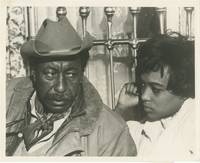
1969ref. 166018Burbank CA: Warner Brothers 1969. Two vintage reference photographs from the 1969 film both showing director Gordon Parks on the set. One with a printed mimeo snipe affixed to the verso. Based on director Gordon Parks' semi-autobiographical 1963 novel. The first major studio production directed by an African American and one of few dramas of the period to focus exclusively on Black life in America depicting the life of a teenager in late 1920s Kansas who grows up quickly as he experiences events related to racial and economic injustice in his community. Set and shot on location in Kansas. 8 x 10 inches one with a wide bottom margin. Near Fine. National Film Registry. Warner Brothers unknown
1969ref. 166018Burbank CA: Warner Brothers 1969. Two vintage reference photographs from the 1969 film both showing director Gordon Parks on the set. One with a printed mimeo snipe affixed to the verso. Based on director Gordon Parks' semi-autobiographical 1963 novel. The first major studio production directed by an African American and one of few dramas of the period to focus exclusively on Black life in America depicting the life of a teenager in late 1920s Kansas who grows up quickly as he experiences events related to racial and economic injustice in his community. Set and shot on location in Kansas. 8 x 10 inches one with a wide bottom margin. Near Fine. National Film Registry. Warner Brothers unknown books
1972ref. 160117Los Angeles: Omnibus Productions Inc. / National Broadcasting Company NBC 1972. Second Draft script for the 1973 television movie originally aired on March 18 1973 on NBC. Working copy belonging to screenwriter Ron Bishop with an annotation in manuscript pencil on the title page noting "Bishop only" and 18 manuscript revision pages in Bishop's hand laid in. Based on the 1937 novella by John Steinbeck filmed once before by Lewis Milestone in 1949. Winner of two Primetime Emmy awards and nominated for seven more. Shot on location in Sonora California. Beige generic agency wrappers. Title page present undated noted as Second Draft with credits for screenwriter Ron Bishop and novelist John Steinbeck. 126 leaves with last page of text numbered 124. Xerographic duplication rectos only with 18 undated manuscript revision pages laid in. Pages Near Fine wrapper Near Fine bound internally with two gold brads. Omnibus Productions Inc. / National Broadcasting Company [NBC] unknown books
1976ref. 156769Los Angeles: Twentieth Century-Fox 1976. Revised Final script for the 1977 film. A portrait of the second wave of feminism at its turning point in the late 1970s about two former dancers whose lives have gone separate ways one having become a professional dancer the other a housewife and whose unexpected reunion yields dramatic consequences. Nominated for eleven Academy Awards including Best Picture Best Director and Best Screenplay. Shot on location in Oklahoma City. Green titled Twentieth Century-Fox wrappers dated July 2 1976. Title page present dated July 2 1976 noted as REVISED FINAL with credits for screenwriter Arthur Laurents. 119 leaves with last page of text numbered 118. Xerographic duplication on eye-rest green stock rectos only. Pages Near Fine wrapper Near Fine bound with two gold brads. Housed in a custom cloth slipcase. Twentieth Century-Fox unknown books
1961ref. 166734N.p.: N.p. 1961. First Draft script for the 1962 film. Based on Louis O. Coxe and Robert H. Chapman's 1949 play which was based in turn on Herman Melville's 1924 novella. A seaman's innocence and optimism win him the affection of the entire crew except the abusive master-at-arms who eventually wrongly accuses the seaman of conspiracy to mutiny. The feature film debut of Terence Stamp who was nominated for a Best Supporting Actor Academy Award for his performance. Yellow wrappers with a die-cut title window in the British style. Title page present dated March 21 1961 noted as FIRST DRAFT with credit for screenwriter Peter Ustinov. 127 leaves with last page of text numbered 123. Mimeograph duplication rectos only with pink and blue revision pages throughout dated variously between May 5 and August 22 1961. Title page lightly toned else pages Near Fine wrapper about Near Fine bound internally with three silver brads. N.p. unknown
1957ref. 166733N.p.: N.p. 1957. Final script for the 1962 film. Early draft preceding the film's release by five years credited to screenwriter Robert Rossen. Rossen was ultimately uncredited in the film but was involved in this early stage of the script's development. Based on Louis O. Coxe and Robert H. Chapman's 1949 play which was based in turn on Herman Melville's 1924 novella. A seaman's innocence and natural beauty wins him the affection of the entire crew except the abusive master-at-arms who eventually wrongly accuses the seaman of conspiracy to mutiny. The feature film debut of Terence Stamp who was nominated for a Best Supporting Actor Academy Award for his performance. Yellow titled wrappers noted as FINAL SCREENPLAY and dated October 15 1957 with credit for screenwriter Robert Rossen. 122 leaves with last page of text numbered 122. Mimeograph duplication rectos only. Pages Near Fine wrapper Near Fine bound with three gold brads. N.p. unknown
1961ref. 166734N.p.: N.p. 1961. First Draft script for the 1962 film. Based on Louis O. Coxe and Robert H. Chapman's 1949 play which was based in turn on Herman Melville's 1924 novella. A seaman's innocence and optimism win him the affection of the entire crew except the abusive master-at-arms who eventually wrongly accuses the seaman of conspiracy to mutiny. The feature film debut of Terence Stamp who was nominated for a Best Supporting Actor Academy Award for his performance. Yellow wrappers with a die-cut title window in the British style. Title page present dated March 21 1961 noted as FIRST DRAFT with credit for screenwriter Peter Ustinov. 127 leaves with last page of text numbered 123. Mimeograph duplication rectos only with pink and blue revision pages throughout dated variously between May 5 and August 22 1961. Title page lightly toned else pages Near Fine wrapper about Near Fine bound internally with three silver brads. N.p. unknown books
1957ref. 166733N.p.: N.p. 1957. Final script for the 1962 film. Early draft preceding the film's release by five years credited to screenwriter Robert Rossen. Rossen was ultimately uncredited in the film but was involved in this early stage of the script's development. Based on Louis O. Coxe and Robert H. Chapman's 1949 play which was based in turn on Herman Melville's 1924 novella. A seaman's innocence and natural beauty wins him the affection of the entire crew except the abusive master-at-arms who eventually wrongly accuses the seaman of conspiracy to mutiny. The feature film debut of Terence Stamp who was nominated for a Best Supporting Actor Academy Award for his performance. Yellow titled wrappers noted as FINAL SCREENPLAY and dated October 15 1957 with credit for screenwriter Robert Rossen. 122 leaves with last page of text numbered 122. Mimeograph duplication rectos only. Pages Near Fine wrapper Near Fine bound with three gold brads. N.p. unknown books
1975ref. 166618N.p.: N.p. 1975. Revised Second Draft script for the 1976 film here under the working title "Invitation to Death." Copy belonging to actor Nick Dimitri with manuscript pencil and ink annotations throughout amending dialog and underlining his character "Steve." Bound in following the script are two pages of extensive handwritten notes in pencil elaborating on the actions and motivations of the character "Steve" in specific scenes likely written by screenwriter and director Howard Avedis. Laid in is a 24 page schedule with manuscript pencil annotations underlining the character "Steve" throughout with the manuscript marker annotation of Dimitri's name along the top edge of the first leaf. Connie Stevens stars as a sexy and horny federal narcotics agent who goes undercover to investigate heroin smuggler Cesare Danova. Director and screenwriter Howard Avedis' exploitation take on William Fiedkin's 1971 classic "The French Connection" with a female cop in the lead including an outrageous chase scene involving Ms. Stevens in a dunebuggy. A cult classic. Set in and shot on location in Seattle King County and Kirkland Washington and Portland Oregon. Burgundy untitled wrappers. Title page present dated June 6 1975 noted as Second Draft Revised with credits for screenwriter Hikmet Avedis. 98 leaves with last page of text numbered 111. Mimeograph duplication rectos only. Pages Near Fine wrapper Very Good plus bound internally with three silver brads. N.p. unknown
1942ref. 116171N.p.: N.p. 1942. Revised Final Script for the 1942 film. Two blue revision pages dated 8/8/42 paper clipped to the rear wrapper of the script. One the greatest Technicolor musicals produced by Fox in the 1940s employing Harry James and his orchestra at their peak and pulling out all the stops on the musical numbers. Featuring Carmen Miranda's version of "Chattanooga Choo-Choo" and the debut of the classic song "I Had the Craziest Dream." Red titled wrappers noted as Revised Final on the front wrapper rubber-stamped copy No. 47 and production No. 763 dated June 11 1942. Distribution page present with receipt intact. Title page present dated June 11 1942 noted as Revised Final. 131 leaves with last page of text numbered 129. Mimeograph duplication rectos only with blue revision pages throughout dated variously between 6/13/42 and 7/20/42. Pages Near Fine wrapper Very Good bound internally with two gold brads. N.p. unknown
1942ref. 116171N.p.: N.p. 1942. Revised Final Script for the 1942 film. Two blue revision pages dated 8/8/42 paper clipped to the rear wrapper of the script. One the greatest Technicolor musicals produced by Fox in the 1940s employing Harry James and his orchestra at their peak and pulling out all the stops on the musical numbers. Featuring Carmen Miranda's version of "Chattanooga Choo-Choo" and the debut of the classic song "I Had the Craziest Dream." Red titled wrappers noted as Revised Final on the front wrapper rubber-stamped copy No. 47 and production No. 763 dated June 11 1942. Distribution page present with receipt intact. Title page present dated June 11 1942 noted as Revised Final. 131 leaves with last page of text numbered 129. Mimeograph duplication rectos only with blue revision pages throughout dated variously between 6/13/42 and 7/20/42. Pages Near Fine wrapper Very Good bound internally with two gold brads. N.p. unknown books
1968ref. 143480Tokyo: Toei Animation 1968. Vintage post-production script for the animated 1968 Japanese film "Horus: Prince of the Sun" also known under the title "The Little Norse Prince." This listing also includes a pamphlet of character designs for the film. A milestone in the history of Japanese animation heralded as the first animated feature to successfully disrupt the Walt Disney paradigm and seen as one of the first to intentionally address an adult audience. Isao Takahata's directorial debut and the first major film of famed Studio Ghibli director Hayao Miyazaki who worked on scene design and key animation for the film. Ostensibly a film about young boy living in ancient Scandinavia who must help instill a community to fight against a great oppressor it carried a strong pro-union and pro-Socialist subtext as Takahata and Miyazaki were staunch union organizers. Studio Toei executives in part in retaliation released the film into theaters for only ten days and it would be some years before the feature would be appreciated fully. Off white wrappers perfect-bound with black titles. Title page present. 164 leaves with last page of text numbered 61. Mimeograph duplication with pink orange green and yellow revision pages. Pages lightly toned else Fine wrapper Near Fine. Toei Animation unknown
1968ref. 143480Tokyo: Toei Animation 1968. Vintage post-production script for the animated 1968 Japanese film "Horus: Prince of the Sun" also known under the title "The Little Norse Prince." This listing also includes a pamphlet of character designs for the film. A milestone in the history of Japanese animation heralded as the first animated feature to successfully disrupt the Walt Disney paradigm and seen as one of the first to intentionally address an adult audience. Isao Takahata's directorial debut and the first major film of famed Studio Ghibli director Hayao Miyazaki who worked on scene design and key animation for the film. Ostensibly a film about young boy living in ancient Scandinavia who must help instill a community to fight against a great oppressor it carried a strong pro-union and pro-Socialist subtext as Takahata and Miyazaki were staunch union organizers. Studio Toei executives in part in retaliation released the film into theaters for only ten days and it would be some years before the feature would be appreciated fully. Off white wrappers perfect-bound with black titles. Title page present. 164 leaves with last page of text numbered 61. Mimeograph duplication with pink orange green and yellow revision pages. Pages lightly toned else Fine wrapper Near Fine. Toei Animation unknown books
1964ref. 158398N.p.: Southern Cross Productions 1964. Draft script for an unproduced film. Specially bound copy likely belonging to screenwriter Ivan Reiner with annotations in manuscript pencil throughout 31 leaves. Reiner was a producer and screenwriter best known for the low budget sci-fi "Gamma One" film series with director Antonio Margheriti as well as the films "The Wild Wild Planet" 1966 "The War of the Planets" 1966 "War Between the Planets" 1966 and "Snow Devils" 1967. As the United Democracies Space Command UDSCO begins their New Years Eve celebrations unusual light patterns are observed on Delta 2 and Delta 2's captain Captain Jacques Dubois is nowhere to be found. Bound in red cloth-covered boards with gilt rule and title on spine. Title page present dated 1964 with credits for screenwriter Ivan Reiner. 120 leaves with last page of text numbered 118. Spirit duplication rectos only. Pages Near Fine wrapper Near Fine binding Very Good plus. Southern Cross Productions unknown books
1971ref. 160751N.p.: Cinema Center Films 1971. Second Draft script for the 1973 film. An early draft dated February 22 1971 two years before the film's release and a year before the film went into production. Novelized by screenwriter Steve Shagan in 1972 immediately prior to the film's release. Jack Lemmon stars as a garment industry executive who is faced with tough moral decisions amidst a failing business and a mid-life crisis. Winner of the Academy Award for Best Actor for Jack Lemmon nominated for two others including Best Screenplay. Set and shot on location in Los Angeles. Green titled wrappers noted as Second Draft on the front wrapper production No. 8010 dated February 22 1971 with credits for screenwriter Steve Shagan. Title page present dated February 22 1971 noted as Second Draft with credits for screenwriter Steve Shagan. 156 leaves with last page of text numbered 143. Mimeograph duplication rectos only with white revision pages throughout dated 2/22/71 and 2/25/71. Pages Near Fine wrapper Near Fine bound internally with two gold brads. Cinema Center Films unknown
1960ref. 140402France / Italy: Filmsonor 1960. Collection of 16 vintage borderless single weight still photographs from the 1960 French film noir. A remarkable collection including still photographs from the film candid shots and shots from the set. On-set images include director Jacques Becker with his camera and with the actors actors Marc Michel and Michel Constantin and other members of the cast and crew. Notations in manuscript pencil on the versos of nearly the photos. Based on Jose Giovanni's 1957 first novel "Le Trou" The Break. True story of the 1947 Le Sante Prison break with one of the real escapees Keraudy playing his own character in the film. Four photos 7 x 9.5 inches twelve photos 5 x 7 inches. Very Good plus to Near Fine. Buss French Film Noir. Criterion Collection 129. Godard Histoires du Cinema. Grant France. Hayden and Schneider 1001. Selby France. Spicer France. Filmsonor unknown
1960ref. 140402France / Italy: Filmsonor 1960. Collection of 16 vintage borderless single weight still photographs from the 1960 French film noir. A remarkable collection including still photographs from the film candid shots and shots from the set. On-set images include director Jacques Becker with his camera and with the actors actors Marc Michel and Michel Constantin and other members of the cast and crew. Notations in manuscript pencil on the versos of nearly the photos. Based on Jose Giovanni's 1957 first novel "Le Trou" The Break. True story of the 1947 Le Sante Prison break with one of the real escapees Keraudy playing his own character in the film. Four photos 7 x 9.5 inches twelve photos 5 x 7 inches. Very Good plus to Near Fine. Buss French Film Noir. Criterion Collection 129. Godard Histoires du Cinema. Grant France. Hayden and Schneider 1001. Selby France. Spicer France. Filmsonor unknown books
1979ref. 137104Los Angeles: Columbia Broadcasting System CBS 1979. Two Draft scripts for the 1981 film. One is a Second Draft script dated December 1979 the other is an Agency script in generic Agency wrappers undated. Directed by Bob Rafelson and based on the 1939 novel by James M. Cain "Postman" was one of the gems of early 1980 cinema along with "The Verdict" and neo-noir and brought David Mamet to the attention of the filmmaking world leading to his working not only as a screenwriter but an important director. Mamet's grim update of Cain's classic hard-boiled novel was largely panned on release but is today held in high regard and is considered a major influence on the genre. Shot on location in Santa Barbara California. 1979 script: Red titled wrappers. Title page present dated December 1979 noted as SECOND DRAFT with credits for screenwriter Mamet and novelist Cain. 123 leaves with last page of text numbered 121. Xerographically reproduced. Pages and wrapper Near Fine bound with two gold brads. Undated script: Black titled pictorial wrappers. Title page present undated with credits for screenwriter Mamet and novelist Cain. 118 leaves with last page of text numbered 117. Xerographically reproduced. Pages Near Fine wrapper Very Good plus perfect-bound. Silver Classic Noir. Spicer US. Columbia Broadcasting System [CBS] unknown
1979ref. 137104Los Angeles: Columbia Broadcasting System CBS 1979. Two Draft scripts for the 1981 film. One is a Second Draft script dated December 1979 the other is an Agency script in generic Agency wrappers undated. Directed by Bob Rafelson and based on the 1939 novel by James M. Cain "Postman" was one of the gems of early 1980 cinema along with "The Verdict" and neo-noir and brought David Mamet to the attention of the filmmaking world leading to his working not only as a screenwriter but an important director. Mamet's grim update of Cain's classic hard-boiled novel was largely panned on release but is today held in high regard and is considered a major influence on the genre. Shot on location in Santa Barbara California. 1979 script: Red titled wrappers. Title page present dated December 1979 noted as SECOND DRAFT with credits for screenwriter Mamet and novelist Cain. 123 leaves with last page of text numbered 121. Xerographically reproduced. Pages and wrapper Near Fine bound with two gold brads. Undated script: Black titled pictorial wrappers. Title page present undated with credits for screenwriter Mamet and novelist Cain. 118 leaves with last page of text numbered 117. Xerographically reproduced. Pages Near Fine wrapper Very Good plus perfect-bound. Silver Classic Noir. Spicer US. Columbia Broadcasting System [CBS] unknown books
1967ref. 168996Paris: Magnum 1967. Vintage borderless double weight reference photograph of Jane Fonda from the 1968 film with a "David Hurn-magnum" photographer's stamp on the verso. Based on the adult comic book by Jean-Claude Forest published in the French magazine "V" in 1962 and 1964. Likely the campiest space-opera sex comedy in film history. Though not popular upon its release it was re-released to greater acclaim in 1977 and has since influenced countless fashion designers films and musicians including Duran Duran whose name is a play on that of the main villain. Set in outer space and shot in Rome. 10.5 x 8.25 inches. Near Fine. Vogel Film as a Subversive Art. Magnum unknown