Mikio Naruse (director); Toshiro Mifune, Hideko Takamine (starring);Toshiro Ide (screenwriter)Biblio.com
11,045 results
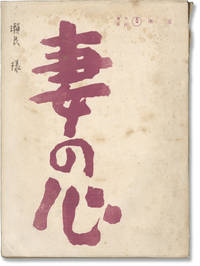
1956ref. 143200Tokyo: Toho Company 1956. Draft script for the 1956 film. Copy belonging to an unknown cast or crew member with their annotations in manuscript pencil throughout. Text and titles in Japanese. A neglected wife begins an affair with a bank teller who offers to loan money for her husband to open a cafe. Actress Hideko Takamine would appear in many of director Mikio Naruse's films usually embodying the plight of contemporary women in Japan longing for emancipation. Set in Japan. White titled perfect-bound wrappers. 67 pages with last page of text numbered e-26. Mimeograph duplication printed on rectos and versos. Pages Near Fine wrapper Very Good lightly foxed. Toho Company unknown
1956ref. 143200Tokyo: Toho Company 1956. Draft script for the 1956 film. Copy belonging to an unknown cast or crew member with their annotations in manuscript pencil throughout. Text and titles in Japanese. A neglected wife begins an affair with a bank teller who offers to loan money for her husband to open a cafe. Actress Hideko Takamine would appear in many of director Mikio Naruse's films usually embodying the plight of contemporary women in Japan longing for emancipation. Set in Japan. White titled perfect-bound wrappers. 67 pages with last page of text numbered e-26. Mimeograph duplication printed on rectos and versos. Pages Near Fine wrapper Very Good lightly foxed. Toho Company unknown books
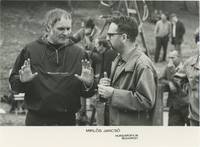
1967ref. 167722Budapest: Hungarofilm 1967. Collection of 23 vintage borderless reference photographs from the 1967 film including one showing director Miklós Jancsó on the set. Annotations in manuscript ink and pencil along with provenance labels on the versos. A Russian-Hungarian co-production the film was originally commissioned to celebrate the 50th anniversary of the 1917 October Revolution led by Lenin's Bolsheviks. However Jancsó chose to set the action two years later in 1919 focusing on the Hungarian soldiers supporting the Red Army in fighting the Whites. Instead of an idealized depiction of the revolution the resultant release was bleak and profoundly antiheroic and is today considered one of the masterpieces of Hungarian cinema. Generally 7 x 5 inches some with wide bottom margins. Very Good plus to Near Fine. Rosebaum 1000. Vogel Film as a Subversive Art. Hungarofilm unknown
1967ref. 167722Budapest: Hungarofilm 1967. Collection of 23 vintage borderless reference photographs from the 1967 film including one showing director Miklós Jancsó on the set. Annotations in manuscript ink and pencil along with provenance labels on the versos. A Russian-Hungarian co-production the film was originally commissioned to celebrate the 50th anniversary of the 1917 October Revolution led by Lenin's Bolsheviks. However Jancsó chose to set the action two years later in 1919 focusing on the Hungarian soldiers supporting the Red Army in fighting the Whites. Instead of an idealized depiction of the revolution the resultant release was bleak and profoundly antiheroic and is today considered one of the masterpieces of Hungarian cinema. Generally 7 x 5 inches some with wide bottom margins. Very Good plus to Near Fine. Rosebaum 1000. Vogel Film as a Subversive Art. Hungarofilm unknown books
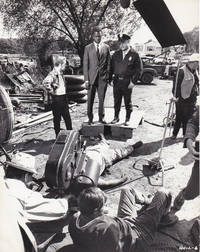
1967ref. 149503Beverly Hills CA: United Artists 1967. Three vintage borderless black-and-white photographs taken on the set of the 1967 film: 1 director Norman Jewison sitting alone 2 Jewison directing Rod Stieger and 3 Jewison directing a key early scene featuring actors Arthur Malet Sidney Poitier and Rod Steiger. With manuscript ink annotations regarding layout on the verso. From the collection of film historian and author Joel Finler. Based on John Ball's 1965 novel. An African American police detective from Philadelphia is recruited to help solve a murder in a small bigoted Mississippi town. The film dealt skillfully with the topic of race relations in the South during the Civil Rights movement and included a controversial scene in which a white actor Larry Gates slaps Poitier in the face at which point Poitier slaps him right back. It was said you could determine the racial makeup of a theater by their verbal reaction to the scene: cheers for a predominantly Black audience or whispers for a predominantly white one. Winner of five Academy Awards including Best Picture and nominated for two others. Though set in the fictional town of Sparta Mississippi Poitier refused to travel below the Mason-Dixon Line so the film was shot largely in Illinois. One photograph 7.5 x 10 inches one photograph 10 x 8 inches. Near Fine. National Film Registry. Penzler 101. United Artists unknown
1967ref. 149503Beverly Hills CA: United Artists 1967. Three vintage borderless black-and-white photographs taken on the set of the 1967 film: 1 director Norman Jewison sitting alone 2 Jewison directing Rod Stieger and 3 Jewison directing a key early scene featuring actors Arthur Malet Sidney Poitier and Rod Steiger. With manuscript ink annotations regarding layout on the verso. From the collection of film historian and author Joel Finler. Based on John Ball's 1965 novel. An African American police detective from Philadelphia is recruited to help solve a murder in a small bigoted Mississippi town. The film dealt skillfully with the topic of race relations in the South during the Civil Rights movement and included a controversial scene in which a white actor Larry Gates slaps Poitier in the face at which point Poitier slaps him right back. It was said you could determine the racial makeup of a theater by their verbal reaction to the scene: cheers for a predominantly Black audience or whispers for a predominantly white one. Winner of five Academy Awards including Best Picture and nominated for two others. Though set in the fictional town of Sparta Mississippi Poitier refused to travel below the Mason-Dixon Line so the film was shot largely in Illinois. One photograph 7.5 x 10 inches one photograph 10 x 8 inches. Near Fine. National Film Registry. Penzler 101. United Artists unknown books
1974ref. 160151Burbank CA: Warner Brothers / First Artists / Coleytown / Turman-Foster 1974. Revised Final Shooting script for the 1974 film. Based on the 1950 Lew Archer novel by Ross Macdonald. Private investigator Harper returns in this sequel to the eponymous 1966 film investigating a blackmail plot in a Louisiana bayou where he finds himself in between an ex-lover an oil tycoon and the local police. In this early draft of the script Paul Newman's character is named Lew Ryan perhaps evidence that the production did not begin as a direct sequel to "Harper" but simply as an adaptation of the source material. Set in Louisiana and shot there on location. Blue studio wrappers. Title page present dated September 16 1974 noted as FINAL SHOOTING SCRIPT with credits for screenwriter Keenan Wynn and novelist Ross Macdonald. 128 leaves with last page of text numbered 130. Xerographic duplication rectos only with pink yellow goldenrod and green revision pages throughout dated variously between 9/30/74 and 10/6/74. Pages and wrapper Near Fine bound with two gold brads. Grant US. Silver and Ward Neo-Noir. Spicer US Neo-Noir. Warner Brothers / First Artists / Coleytown / Turman-Foster unknown
1974ref. 160151Burbank CA: Warner Brothers / First Artists / Coleytown / Turman-Foster 1974. Revised Final Shooting script for the 1974 film. Based on the 1950 Lew Archer novel by Ross Macdonald. Private investigator Harper returns in this sequel to the eponymous 1966 film investigating a blackmail plot in a Louisiana bayou where he finds himself in between an ex-lover an oil tycoon and the local police. In this early draft of the script Paul Newman's character is named Lew Ryan perhaps evidence that the production did not begin as a direct sequel to "Harper" but simply as an adaptation of the source material. Set in Louisiana and shot there on location. Blue studio wrappers. Title page present dated September 16 1974 noted as FINAL SHOOTING SCRIPT with credits for screenwriter Keenan Wynn and novelist Ross Macdonald. 128 leaves with last page of text numbered 130. Xerographic duplication rectos only with pink yellow goldenrod and green revision pages throughout dated variously between 9/30/74 and 10/6/74. Pages and wrapper Near Fine bound with two gold brads. Grant US. Silver and Ward Neo-Noir. Spicer US Neo-Noir. Warner Brothers / First Artists / Coleytown / Turman-Foster unknown books
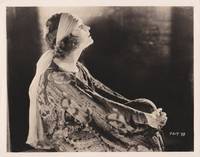
1923ref. 166685Hollywood: Paramount Pictures 1923. Vintage publicity photograph of Pola Negri in profile taken to promote her appearance in the 1923 film. Paramount stamps and annotations in manuscript pencil on the verso. Based on Paramount's 1915 film of the same name which was based in turn on Hichens' 1909 novel about the titular seductress and the men who fall into her love trap. Early noir antecedent. 10 x 8 inches. Very Good plus moderately age toned. Paramount Pictures unknown
1923ref. 164284Hollywood: Paramount Pictures 1923. Vintage reference photograph taken on the set of the 1923 silent film showing director actress Pola Negri and George Fitzmaurice between takes together consulting a copy of Robert Hichens' source novel. Mimeo snipe provenance stamp and Famous Players-Lasky stamp on the verso. Based on Paramount's 1915 film of the same name which was based in turn on Hichens' 1909 novel about the titular seductress and the men who fall into her love trap. Early noir antecedent. 10 x 8 inches. Very Good plus with a two-inch flaw in the finish affecting the bottom left corner. Paramount Pictures unknown
1923ref. 164284Hollywood: Paramount Pictures 1923. Vintage reference photograph taken on the set of the 1923 silent film showing director actress Pola Negri and George Fitzmaurice between takes together consulting a copy of Robert Hichens' source novel. Mimeo snipe provenance stamp and Famous Players-Lasky stamp on the verso. Based on Paramount's 1915 film of the same name which was based in turn on Hichens' 1909 novel about the titular seductress and the men who fall into her love trap. Early noir antecedent. 10 x 8 inches. Very Good plus with a two-inch flaw in the finish affecting the bottom left corner. Paramount Pictures unknown books
1923ref. 166685Hollywood: Paramount Pictures 1923. Vintage publicity photograph of Pola Negri in profile taken to promote her appearance in the 1923 film. Paramount stamps and annotations in manuscript pencil on the verso. Based on Paramount's 1915 film of the same name which was based in turn on Hichens' 1909 novel about the titular seductress and the men who fall into her love trap. Early noir antecedent. 10 x 8 inches. Very Good plus moderately age toned. Paramount Pictures unknown books
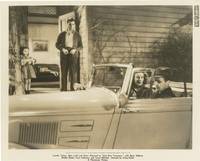
1944ref. 172390Los Angeles CA: Paramount Pictures 1944. Collection of 14 vintage double weight studio still photographs from the 1944 film. With provenance stamps on the verso. Based on the 1942 novel of the same name by Rachel Field. A poor doctor is hired to cure a wealthy woman's deafness whose fiancé is having an affair with her sister. 8 x 10 inches. Generally Near Fine. Paramount Pictures unknown
1944ref. 172390Los Angeles CA: Paramount Pictures 1944. Collection of 14 vintage double weight studio still photographs from the 1944 film. With provenance stamps on the verso. Based on the 1942 novel of the same name by Rachel Field. A poor doctor is hired to cure a wealthy woman's deafness whose fiancé is having an affair with her sister. 8 x 10 inches. Generally Near Fine. Paramount Pictures unknown books
1921ref. 143526US: Metro Pictures Corporation 1921. Vintage photograph from the 1921 film. With a mimeo snipe on the verso. Based on the 1916 anti-war novel by Vincent Basco Ibanez about a French and German family on both sides of World War I. Along with "The Sheik" later the same year the film the catapulted Rudolph Valentino to stardom and helped create his "Great Lover" image. The film also launched the career of director Rex Ingram made screenwriter June Mathis one of the most powerful woman in Hollywood inspired a tango craze and was the first to gross over $1000000 at the box office. 10 x 8 inches. Very Good plus with a partial and faint studio stamp on the recto light soil and edgewear. National Film Registry. Metro Pictures Corporation unknown
1921ref. 143526US: Metro Pictures Corporation 1921. Vintage photograph from the 1921 film. With a mimeo snipe on the verso. Based on the 1916 anti-war novel by Vincent Basco Ibanez about a French and German family on both sides of World War I. Along with "The Sheik" later the same year the film the catapulted Rudolph Valentino to stardom and helped create his "Great Lover" image. The film also launched the career of director Rex Ingram made screenwriter June Mathis one of the most powerful woman in Hollywood inspired a tango craze and was the first to gross over $1000000 at the box office. 10 x 8 inches. Very Good plus with a partial and faint studio stamp on the recto light soil and edgewear. National Film Registry. Metro Pictures Corporation unknown books
1969ref. 133199N.p.: N.p. 1969. Vintage oversize double weight candid photograph of Alan Arkin Art Garfunkel and Martin Sheen on the set of Mike Nichols' "Catch-22" in 1969. Shot and struck by the film's still photographer Bob Willoughby. The photographer has written at the top of the verso in manuscript pencil: "Candid during rehearsal / The boys break up in briefing room scene / Art Garfunkel Alan Arkin Martin Sheen." Also with Willoughby's ASMP rubber stamp for both his New York and Ireland addresses. Full provenance available. After studying with Saul Bass at the Kann Institute of Art in Los Angeles photographer Robert Willoughby began working for magazines such as "Life" "Look" and "Harper's Bazaar" in the late 1940s. He spent the next 20-plus years as a set photographer for every major studio and magazine with his images seen in print literally every week of his career. Willoughby's photographs are in the permanent collections of ten museums including The National Portrait Galleries in Washington DC and London the Bibliotheque Nationale de France The Museum of Modern Art and The Tate Modern. In a custom museum-quality frame archivally mounted with UV glass. 13.5 x 10 inches. Near Fine. National Film Registry. N.p. unknown
1969ref. 133199N.p.: N.p. 1969. Vintage oversize double weight candid photograph of Alan Arkin Art Garfunkel and Martin Sheen on the set of Mike Nichols' "Catch-22" in 1969. Shot and struck by the film's still photographer Bob Willoughby. The photographer has written at the top of the verso in manuscript pencil: "Candid during rehearsal / The boys break up in briefing room scene / Art Garfunkel Alan Arkin Martin Sheen." Also with Willoughby's ASMP rubber stamp for both his New York and Ireland addresses. Full provenance available. After studying with Saul Bass at the Kann Institute of Art in Los Angeles photographer Robert Willoughby began working for magazines such as "Life" "Look" and "Harper's Bazaar" in the late 1940s. He spent the next 20-plus years as a set photographer for every major studio and magazine with his images seen in print literally every week of his career. Willoughby's photographs are in the permanent collections of ten museums including The National Portrait Galleries in Washington DC and London the Bibliotheque Nationale de France The Museum of Modern Art and The Tate Modern. In a custom museum-quality frame archivally mounted with UV glass. 13.5 x 10 inches. Near Fine. National Film Registry. N.p. unknown books
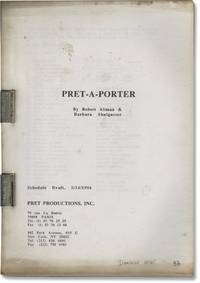
1994ref. 168325N.p.: N.p. 1994. Draft script for the 1994 film here called a "Schedule Draft". Annotations in manuscript ink on the title page noting copy No. 33 and the name of supervising accountant Danielle Sotet. Robert Altman's sardonic take on Paris Fashion Week featuring an enormous star-studded ensemble cast of international actors models and designers. Set and shot on location in Paris France. Mylar front wrapper white card rear wrapper. Title page present dated January 14 1994 noted as Schedule Draft with credit for Altman and screenwriter Barbara Shulgasser. 82 leaves with last page of text numbered 81. Xerographic duplication rectos only. Pages Near Fine wrapper Very Good moderately soiled bound with two silver clasps. N.p. unknown
1994ref. 168325N.p.: N.p. 1994. Draft script for the 1994 film here called a "Schedule Draft". Annotations in manuscript ink on the title page noting copy No. 33 and the name of supervising accountant Danielle Sotet. Robert Altman's sardonic take on Paris Fashion Week featuring an enormous star-studded ensemble cast of international actors models and designers. Set and shot on location in Paris France. Mylar front wrapper white card rear wrapper. Title page present dated January 14 1994 noted as Schedule Draft with credit for Altman and screenwriter Barbara Shulgasser. 82 leaves with last page of text numbered 81. Xerographic duplication rectos only. Pages Near Fine wrapper Very Good moderately soiled bound with two silver clasps. N.p. unknown books
1987ref. 149579N.p.: Xanadu 1987. Six vintage borderless reference photographs from the 1987 film. With the label of Xanadu Film on the verso. Co-directed by acclaimed photographer and filmmaker Robert Frank his only feature-length fiction film and experimental novelist Rudolph Wurlitzer who wrote the screenplay. A musician's road movie heavily influenced by the lives of Frank and Wurlitzer and featuring a cast full of notable musicians such as Tom Waits Leon Redbone Dr. John Joe Strummer Arto Lindsay and David Johansen. Set in and shot on location in New York and Cape Breton Island Nova Scotia. Shot on location in New York and Nova Scotia Canada. 7 x 5 inches. Fine. Rosenbaum 1000. Xanadu unknown
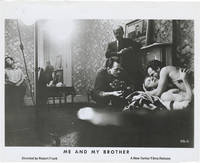
1969ref. 161197New York: New Yorker Films 1969. Vintage studio still photograph taken on the set of the 1969 film showing director Robert Frank capturing a passionate scene between two men. Stamp of photographer Tom Conroy on the verso. Frank's first feature film and Sam Shepard's screenwriting debut following Frank as he accompanies poet Peter Orlovsky and Orlovsky's catatonic mentally ill brother Julius through the late 1960s Beat scene. When Julius wanders off he is replaced in the film by actor Joseph Chaikin pushing the boundaries of cinematic reality. The film was released by Steidl in 2007 in a new restoration alongside a book publication outlining the film which notes: "Frank's feature debut was first screened in 1968 at the Venice Film Festival. Everything which had defined Frank's art up to that point turns up in this film - the look at America 'from the outside' the poetic libertinage of the Beats the marginal in a central role. It celebrates the return of the poetic essay as assemblage the affirmation of the underground as a wild cinematic analysis in the form of a collage and skillfully weaves together opposites plays counterfeits against the authentic pornography against poetry acting against being Beat cynicism against hippie romanticism monochrome against colored. The story contains bizarre twists and turns and appears to be a rather artless-film-within-a-film being shown at a rundown movie theater." 10 x 8 inches. Near Fine. New Yorker Films unknown
1987ref. 149579N.p.: Xanadu 1987. Six vintage borderless reference photographs from the 1987 film. With the label of Xanadu Film on the verso. Co-directed by acclaimed photographer and filmmaker Robert Frank his only feature-length fiction film and experimental novelist Rudolph Wurlitzer who wrote the screenplay. A musician's road movie heavily influenced by the lives of Frank and Wurlitzer and featuring a cast full of notable musicians such as Tom Waits Leon Redbone Dr. John Joe Strummer Arto Lindsay and David Johansen. Set in and shot on location in New York and Cape Breton Island Nova Scotia. Shot on location in New York and Nova Scotia Canada. 7 x 5 inches. Fine. Rosenbaum 1000. Xanadu unknown books
1969ref. 161197New York: New Yorker Films 1969. Vintage studio still photograph taken on the set of the 1969 film showing director Robert Frank capturing a passionate scene between two men. Stamp of photographer Tom Conroy on the verso. Frank's first feature film and Sam Shepard's screenwriting debut following Frank as he accompanies poet Peter Orlovsky and Orlovsky's catatonic mentally ill brother Julius through the late 1960s Beat scene. When Julius wanders off he is replaced in the film by actor Joseph Chaikin pushing the boundaries of cinematic reality. The film was released by Steidl in 2007 in a new restoration alongside a book publication outlining the film which notes: "Frank's feature debut was first screened in 1968 at the Venice Film Festival. Everything which had defined Frank's art up to that point turns up in this film - the look at America 'from the outside' the poetic libertinage of the Beats the marginal in a central role. It celebrates the return of the poetic essay as assemblage the affirmation of the underground as a wild cinematic analysis in the form of a collage and skillfully weaves together opposites plays counterfeits against the authentic pornography against poetry acting against being Beat cynicism against hippie romanticism monochrome against colored. The story contains bizarre twists and turns and appears to be a rather artless-film-within-a-film being shown at a rundown movie theater." 10 x 8 inches. Near Fine. New Yorker Films unknown books
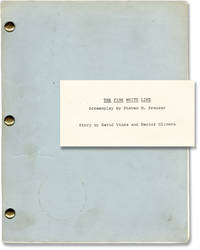
1985ref. 160776Buenos Aires: Aries Film International 1985. Final Draft script for the 1985 film here under the working title "The Fine White Line" with manuscript ink and pencil annotations on the rectos and/or versos of 36 pages regarding dialogue and character motivation with three pages with annotated post-its regarding wardrobe attached to the versos. Script preceded by a two page "Character Notes." An undercover DEA agent played by John Schneider has infiltrated South America's largest cocaine cartel and is ordered by the organization's kingpin to assassinate a journalist running for president. One of ten films produced by Roger Corman in Argentina during the 1980s. Set in Bolivia shot on location in Argentina and Mexico. Blue untitled wrappers. Title page present dated 2/16/85 noted as FINAL DRAFT - revised with credits for screenwriter Steven M. Krauzer and story by David Vinas and Hector Olivera. 131 leaves with last page of text numbered 114. Xerographic duplication rectos only with goldenrod revision pages throughout dated 3/12/85. Pages Near Fine wrapper Very Good plus bound with three gold brads. Aries Film International unknown