1967ref. 149909New York: Andy Warhol Film 1967. Vintage poster for the 1967 film. The film originally screened at the Hudson Theater in a 95-minute version although this cut is considered lost. A 109-minute version would screen in 1968 as the first film shown at the New Andy Warhol Garrick Theater renamed as such after Warhol recovered from being shot by Valerie Solanas. One of several sexploitation influenced films made by Warhol an episodic story of a biker who has no bike and is both eroticized by the camera and emasculated by various Warhol superstars throughout. 19 x 25 inches rolled. Near Fine with some light soil and an almost imperceptible professional repair to a tear at the top edge. Murphy The Black Hole of Cinema. Warholstars. Andy Warhol Film unknown
1967ref. 149869New York: Andy Warhol Film 1967. Vintage poster for the 1967 film. Two versions of the film were shot - one with an all nude all male cast that was never released publicly and one with both male and female actors wearing G-strings which was originally screened at the Hudson Theater in New York. A stylistic breakthrough in that the film entirely jettisons any pretense to plot dramatic action or sex found in Andy Warhol's previous sexploitation experiments instead featuring extended monologues by superstar Viva and conversations with others that touch on a variety of controversial topics. One of Warhol's most overtly political films also starring draft resister Andrew Duggan and the first pairing of Viva with Taylor Mead who would appear together in several more Warhol films. 19 x 25 inches rolled on archival linen with a small amount of professional restoration and repair. Near Fine with minor soil. Murphy The Black Hole of the Camera. Warholstars. Andy Warhol Film unknown
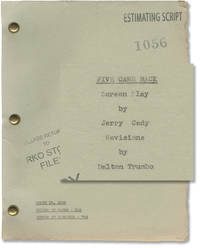
1939ref. 152589Culver City CA: RKO Radio Pictures 1939. Estimating script for the 1939 film. In his 1970 biography of Nathanael West Jay Martin notes: "On June 6 1938 West was hired for his 'established' salary of $350 a week by RKO Pictures-the first of five major studios to employ him-to make a screenplay from an original story by Richard Carroll. Putting everything else aside within a week he outlined his plans for treating the material. He fretted all weekend over whether the outline would be accepted knowing that he could be out of a job again on Monday. On late Monday afternoon he was persuaded to telephone the executive producer Lee Marcus who told him to go ahead at once to the screenplay. On July 20 West finished a first draft for what would be one of his most successful films. After eight weeks in all having polished his script West was released by RKO. At this point it appeared that West had a good chance to earn a single credit for this high budget B-quality movie but the studio called in a hack writer Jerry Cady to polish West's script. After Cady's work on it proved unsatisfactory Dalton Trumbo came in to do a revision before the film went into production. Trumbo eliminated most of the revisions made by Cady restored some of West's material and made still other alterations. By this time West had returned to New York and although his secretary demanded that he ask the guild to arbitrate the credits he appeared indifferent and nearly missed getting any screen credit at all." An aerial melodrama about nine passengers on a commercial flight from Los Angeles to Panama City who crash-land in the Amazon rainforest. The production helped launch the career of a then-unknown Lucille Ball and paved the way for later disaster epics of the 1970s as well as the popular television sitcom "Gilligan's Island." Set in Los Angeles and the Amazon rainforest. Green titled wrappers stamped ESTIMATING DRAFT on the front wrapper dated March 15 1939 with credits for screenwriters Jerry Cady and Dalton Trumbo. Title page integral with the first page of text. 133 leaves with last page of text numbered 133. Carbon typescript on yellow onionskin stock. Pages and wrapper Near Fine bound with three gold brads. RKO Radio Pictures unknown
1959ref. 139477Paris: Les Films du Carrosse 1959. Original French Grande poster for the 1959 film. Poster design by Boris Grinsson. Truffaut's auspicious debut winner of Best Director at Cannes nominated for the Palme d'Or and also nominated for a Best Original Screenplay Oscar the following year. 47 x 62 inches. Linen backed and rolled. Bright and Fine. Capitaine 207. Warren Vol. 1 p. 159. Les Films du Carrosse unknown
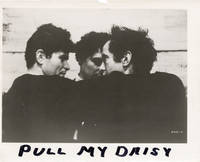
1959ref. 160564N.p.: N.p. 1959. Four vintage reference photographs by John Cohen from the 1959 short film. Three with the title in manuscript ink on the bottom margin of the recto and one with a provenance label on the verso. Based on a purportedly true incident in the life of Beat icons Neal and Carolyn Cassady wherein a couple's dinner party for a visiting bishop is crashed by their zany bohemian friends. Adapted by Jack Kerouac from the third act of his play "Beat Generation" with voiceover narration by Kerouac and a title taken from the poem of the same name co-written by Kerouac Cassady and Allen Ginsberg. For years the film was rumored to have been entirely unscripted capturing a real event at co-director Alfred Leslie's loft in the Bowery until Leslie revealed in a 1968 interview that the film had in fact been scripted heavily rehearsed and shot in a photography studio. 10 x 8 inches. Small chips at the top edges else about Near Fine. National Film Registry. N.p. unknown
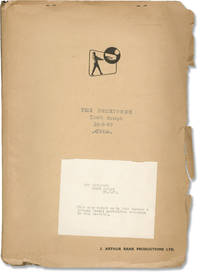
1957ref. 151146London: J. Arthur Rank 1957. Third Draft script for an unproduced film. Copy belonging to novelist and screenwriter John Masters with his name in manuscript pencil on the front wrapper his manuscript pencil annotations to virtually every page and two handwritten pages stapled to the verso of the front wrapper noting concerns about the script and deletions. Based on Masters' 1952 novel about a British officer who goes undercover to infiltrate a thuggee cult ritually murdering travelers in colonial India. Masters who served in the Indian Army from 1933 to 1949 was best known for his historical fiction set in India most notably his 1954 novel "Bhowani Junction" which was adapted for film by director George Cukor in 1956. Modern scholars have acknowledged Masters' influence on British historical fiction and in later works his relative sympathy towards Indian nationalists while simultaneously criticizing his revisionist occasionally imperialist tone. Masters also released three successful autobiographical volumes "Bugles and a Tiger" 1956 "Road Past Mandalay" 1961 and "Pilgrim Son" 1971. Beige titled wrappers noted as Draft Script on the front wrapper dated 26-3-57 with a typed label affixed to the front wrapper dated 26.3.57 crediting novelist and screenwriter John Masters and screenwriter Anthony Perry and noting Masters' annotations throughout. Title page present noted as DRAFT THREE with credits for novelist and screenwriter John Masters. 114 leaves with last page of text numbered 112. Mimeograph duplication rectos only. Pages Near Fine wrapper Very Good plus bound internally with a silver prong. J. Arthur Rank unknown
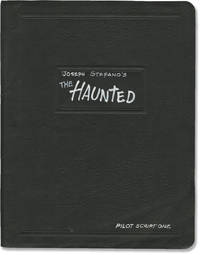
1964ref. 147167Los Angeles: Villa di Stefano Productions 1964. First Draft script for the 1964 television film originally aired on CBS. With actor Martin Landau's copied annotations throughout. Included are a set of synopses for proposed episodes a shooting schedule a distributor's announcement booklet and various other documents related to production. Also included is an original celluloid print of the film on a single reel in its original mailing case with cloth straps dated 2/18/65 addressed from director Joseph Stefano to Landau on the mailing label in manuscript black ink and INSCRIBED by Stefano to Landau at the top left corner of the case in the same ink: "To Martin / Whose splendid brilliance and warmth put the special spark in this bright fire / Your grateful and admiring friend / Joe Stefano." Fearful of being buried alive a woman installs a phone in the crypt in which she plans to be in case of emergencies. Months after her death the phone begins to ring presenting a new ghostly case for Landau's paranormal investigator. The film was intended to be the pilot for a new paranormal thriller series tentatively titled "The Haunted" as titled on the front wrapper but the series wasn't picked up and the pilot was released as a television movie after additional footage was shot. Black titled wrappers with credits for director-screenwriter Joseph Stefano noted as PILOT SCRIPT ONE. Title page present dated July 27 1964 noted as PILOT SCRIPT ONE with credits for director-screenwriter Joseph Stefano. 77 leaves with last page of text numbered 76. Early Xerox rectos only. Pages Near Fine wrapper Near Fine bound internally with three silver brads. Film reel and film stock are unexamined. Villa di Stefano Productions unknown
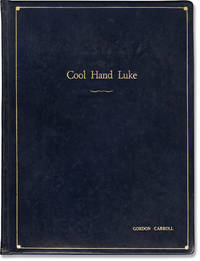
1966ref. 160717Burbank CA: Warner Brothers / Jalem Productions 1966. Draft script for the 1967 film. Specially bound copy belonging to producer Gordon Carroll bound in full blue leather with Carroll's name in gilt on the bottom right corner of the front board. Based on the 1965 novel by Donn Pearce who co-wrote the screenplay about the experiences of a hard-nosed Vietnam veteran after he is sentenced to two years on a chain gang in a prison camp. Winner of a Best Supporting Actor Oscar for George Kennedy and nominated for three others including Best Adapted Screenplay. Set in Florida. Title page present dated 9/29/66 with credits for screenwriters Frank R. Pierson and Hal Dresner and novelist Donn Pearce. 152 leaves with last page of text numbered 143A. Mimeograph duplication on eye-rest green stock rectos only with blue revision pages throughout dated variously between 10/23/66 and 2/9/67. Pages Near Fine. National Film Registry. Ebert III. Warner Brothers / Jalem Productions unknown
1966ref. 141453Tokyo: Toho Company 1966. Draft script for the 1966 film. Text in Japanese. A pornographer is keeping a low profile to keep out of the way of the mob while also is trying to keep the various people in his life happy including his stepdaughter stepson mistress and wife who believes her first husband was reincarnated as a carp. White titled perfect-bound wrappers. Title page present. 178 leaves with last page of text numbered 27. Mechanical duplication. Pages Near Fine wrapper Near Fine. Criterion Collection 207. Toho Company unknown
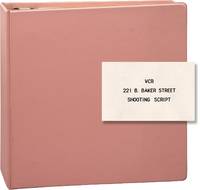
ref. 171865Los Angeles: Antler Productions 1987. Shooting Script for the 1987 hybrid VHS board game copy belonging to screenwriter Stephen Sustarsic with manuscript pencil and ink annotations of his name and an address on the title page. An internally duplicated copy with the majority of pages with copied punch holes with occasional manuscript pencil annotations checking characters or scenes. A unique and important example of video game construction from the heart of its era one that pulled Sherlockiana into its concept. Deluxe 304-page script housed in a large generic pink three-ring binder with ten-page dividers nine labeled for each of the game's ten mysteries. Each mystery includes a title page noting screenwriters and draft date a one or two page Short Rundown and a cast page followed by the segment's script. Three "Promo" segments are interspersed throughout the script to assist and instruct players through gameplay. Bound in following the script is a six-page Staff List two copies of a 15-page Shooting Schedule dated 8/3/87 and a 15-page Shooting Schedule dated 8/7/87. Laid in the binder's pockets are two copies of a four-page Shooting Schedule dated 8/9/87 and a copy of directions to "The Complex" in West Los Angeles. "221B Baker Street" was a popular board game developed by Jay Moriarty and produced by Antler Productions in 1975 in which players solve up to 75 mysteries with Sherlock Holmes and his associate Dr. Watson by using clues provided by visiting locations on the game board and using Scotland Yard Badges and Skeleton Keys cards to control opponents' access to locations. In 1987 on the centennial anniversary of Arthur Conan Doyle's first published Sherlock story Moriarty and Antler released two new adaptations of the board game: a video game produced by Datasoft and a VCR board game the latter featuring ten new mysteries and a videocassette of dramatized briefings and reenactments-represented by the script on offer here. VCR board games were a short-lived fad in the mid-to-late-1980s in which board games would include a VHS tape to be played at certain points in the game to act as a timer reveal clues or advance a plot. The concept was an attempt by the game developers to remain relevant by incorporating the latest technological innovations prior to the ascension of modern video game consoles. Screenwriter and producer Sustarsic is best known as an Emmy Award winning screenwriter for the 1988-1991 animated Disney series "The New Adventures of Winnie the Pooh" the 2004 Independent Comedy Horror film "Lucky" and the 2017 animated Disney XD series "Xiaolin Chronicles - Special Edition." Other screenwriting credits from Sustarsic's 35 year career in television and film include episodes for "The Jeffersons" 1981 "One Day at a Time" 1982 "Alice" 1985 "Newhart" 1989 "Alf" 1990 and "Dilbert" 2000 among many others. Front wrapper integral with first uncredited title page dated 1987 noted as SHOOTING SCRIPT. Second title page dated 1987 with credits for screenwriters Mark Chambers Jay Moriarty and Stephen Sustarsic. 304 leaves with last page of text numbered 13. Xerographic duplication rectos only. Pages Near Fine overall with first title page separated housed in a Near Fine generic pink three-ring binder. Staff List and Shooting Schedules saddle-stapled with a single staple to the top left corner. Near Fine. Antler Productions unknown
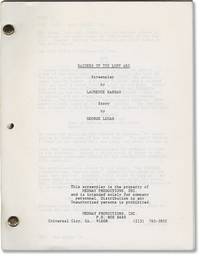
ref. 171961Universal City: Medway Productions 1981. Draft script for the 1981 film. Dated June 3 1979 a full two years prior to its release. A well-loved homage to the serialized Saturday matinee films of the 1930s and 1940s "Raiders" is the first entry in the lauded Spielberg/Lucas high-adventure trilogy starring Harrison Ford as roguish archaeology professor Indiana Jones. Still one of the highest grossing films of all time. Winner of five Academy Awards and nominated for four others including Best Picture. Set in Peru Egypt Nepal and Washington DC shot on location in England France Tunisia California and Hawaii. Self wrappers. Title page present undated with credits for George Lucas and Lawrence Kasdan. 103 leaves with last page of text numbered 102. Xerographic duplication rectos only. Pages Near Fine bound with two gold brads. National Registry. Ebert II. Medway Productions unknown
1969ref. 137209Burbank CA: American Broadcasting Company ABC 1969. Collection of 217 individually numbered contact sheets amounting to 2650 images from the 1969 film. Housed in two original three-ring binders from the film's publicity department. The occasional frame is circled or crossed through in red marker. A robust collection that documents nearly every facet of the film's production including numerous candid images of the cast and crew at work. Woody Allen's first film as a director one of the great American comedies the film that set the template for Allen's 1970s work. A massive archive documenting the birth of an utterly new and unique voice in cinema one that would become something even bigger in 1979. Set and shot in San Francisco and inside the walls of San Quentin State Prison. Sheets 8 x 10 inches most in three-hole mylar sleeves some with holes punched directly in left margin others laid in. Very Good overall few frames excised general modest edgewear. Binders with signs of use as expected one spine label missing other partially lacking but with titles intact. American Broadcasting Company [ABC] unknown
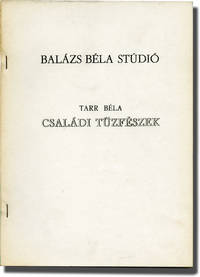
ref. 145506Budapest: Balsz Bela Studio 1977. Vintage post-production promotional script for the 1977 Hungarian film. Includes a prose narrative describing the film story reviews quotes and critical essays. Text in Hungarian. Easily the most rigidly philosophical promotional script ever issued with the narrative portion being essentially one long run-on sentence wherein Tarr describes his intentions for his first film. It would be 30 years before the rest of the world caught on to his genius and he would retire just 10 years after that. He passed away in 2026 at the age of 70. Off-white titled card wrappers saddle stapled. Title page present followed by a cast and credits list dated 1977. 56 leaves with last page of text numbered 54. Mimeograph front wrapper printed with offset duplication. Rectos only. Pages and wrapper about Near Fine with light toning at the edges of the wrappers. Balsz Bela Studio unknown
1957ref. 156242Los Angeles: Twentieth Century-Fox 1957. Final Draft script for the 1957 film. The first screen adaptation of the 1926 novel by Ernest Hemingway. One of the most honest film adaptations of its era attributable mainly to the screenplay by novelist and Hemingway acolyte Peter Viertel. Featuring a standout performance by Errol Flynn as the hedonistic hard-drinking burned-out Mike Campbell. in other words as himself. Shot on location in Pamplona Paris Biarritz and Mexico. Blue titled wrappers noted as FINAL on the front wrapper rubber-stamped copy No. 97 and production No. 683 dated February 20 1957. Distribution page present with receipt removed. Title page present dated February 20 1957 noted as Final Script. 154 leaves with last page of text numbered 142. Mimeograph duplication rectos only with blue revision pages throughout dated variously between 3/11/57 and 6/3/57. Pages with silverfish damage to the corners of the first few pages and final revision page else Near Fine wrapper Very Good plus with toning and creasing at the extremities and a small dampstain to the heel bound internally with three gold brads. Twentieth Century-Fox unknown
1924ref. 141664Berlin: Film-Kurier 1924. Vintage German programs for the two-part film series "Die Nibelungen" including one for "Die Nibelungen: Siegfried" and one for "Die Nibelungen: Kriemhild's Revenge" produced by German film magazine "Film-Kurier." Text in German. Based on the thirteenth century epic poem "Nibelungenlied." "Film-Kurier" was the first German film journal published daily beginning in 1919. The journal's classic era lasted until 1933 when its publisher Alfred Weiner had to flee Germany due to his Jewish origins. The issues from this era remain striking to this day because they were printed using a gravure reproduction process. Each day's issue would focus on a single film. 9 x 11.75 inches. Each program six pages folded loose leaves as issued. Very Good plus with a horizontal fold tiny pinholes to the corners and an occasional short closed tear. Masters of Cinema 46. Film-Kurier unknown
1948ref. 152186N.p.: N.p. 1948. Draft script for the 1948 British film. Copy belonging to production manager Mickey Delamar with his name in manuscript pencil to the title page and his manuscript annotations throughout. With revision pages laid in throughout the script along with a distribution receipt signed by Delamar and with a reference photograph from the film showing actors Vivien Leigh and Ralph Richardson. Delamar worked as a producer production manager and assistant director on over 30 films and was active in the film industry for four decades. His credits include Charlie Chaplin's "A King in New York" 1957 Francois Truffaut's "Fahrenheit 451" 1966 and Terence Young's "Mayerling" 1968. Based on the classic 1877 novel by Leo Tolstoy about how all happy families are alike but each unhappy family is unhappy in its own way. Set in St. Petersburg. Black titled wrappers. Title page present with credits for novelist Tolstoy and screenwriters Jean Anouilh Julien Duvivier and Guy Morgan. 190 leaves with last page of text numbered 165. Mimeograph duplication rectos only with pink and white undated revision pages throughout. Housed in a navy spring binder as originally used. Pages supple but Very Good only overall with curling at the edges. Photograph about Very Good with moderate soil and toning. Binder Good with soil overall. N.p. unknown
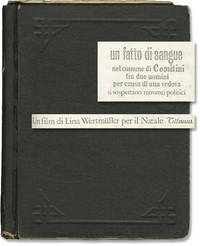
ref. 148341London: Lord Grade 1978. Draft script for the 1978 film here under the working title "Titoli di Testa." Copy belonging to script supervisor Franca Invernizzi with her extensive manuscript annotations on nearly every page and many page versos regarding camera shots takes timing and dialogue. Bound in after the script is an annotated list of scenes and several handwritten pages of Invernizzi's notes. Text in Italian. In 1920s Sicily a capitalist and a socialist vie for the affections of a grief-stricken woman whose husband was killed by a fascist mafioso. The follow-up to director Lina Wertmuller's Oscar-nominated 1976 film "Seven Beauties" and a lyrical formidable film in its own right. Set and shot on location in Sicily. Script: Black faux-leather untitled wrappers. Title page present with credits for director Lina Wertmuller. 326 leaves with last page of text numbered 301. Xerographic duplication rectos only with white undated revision pages throughout. Pages Very Good with some revision pages lightly worn and toned to the edges wrapper Very Good lightly edgeworn with several tape repairs to the spine with perfect binding. List of scenes: 10 leaves with last page numbered 10. Xerographic duplication rectos only. Pages Very Good plus with light edgewear. Lord Grade unknown
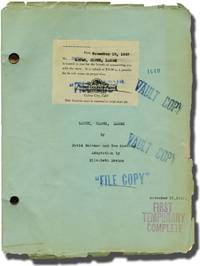
1927ref. 134524Beverly Hills CA: Metro-Goldwyn-Mayer MGM 1927. Shooting script for the 1928 film. Metro-Goldwyn-Mayer file copy with rubber stamps on the front wrapper indicating such. Carbon typescript with descriptive text and intertitles in black type. A few typeovers and annotations in manuscript pencil throughout. A rare example of a silent film screenplay. Based on the 1923 stage adaptation by David Belasco and Tom Cushing about professional clowns Tito Chaney and Simon Siegel who take in an abandoned child and name her Simonetta Young who was 15 at the time. When Simonetta is older she joins the circus and meets Count Luigi Ravelli Asther who becomes infatuated with her. Ravelli consults a doctor about his fits of uncontrollable laughter and there he meets Tito who has come to seek help for his fits of uncontrollable weeping. The two decide to help each other but soon find they are both vying for Simonetta's love. Nominated for an Academy Award in 1929 for Best Title Writing the only year for that category. Set in Italy shot on location in Elysian Park a suburb of Los Angeles California. Blue studio wrappers noted as FIRST TEMPORARY INCOMPLETE on the front wrapper rubber-stamped production No. 1640 and copy No. 5236 dated November 19 1927 with credits for playwrights Belasco and Cushing and screenwriter Meehan. 72 leaves carbon typescript on watermarked onionskin stock. Pages Near Fine wrapper Very Good now encapsulated in mylar bound with two gold brads. Blake 2001 US. Metro-Goldwyn-Mayer [MGM] unknown
1960ref. 143342Tokyo: Toho Company 1960. Draft script for the 1960 film. With the stamp of cast/crew member Takahashi Toshihiro to the page edges and manuscript ink annotations to the rear wrapper. Text and titles in Japanese. A film that bought depictions of modern life into Japanese films of the 1960s particularly with respect to the idea of the independent woman. A young widowed bar hostess finds herself torn between a conventional life and potential financial independence when she must decide to either remarry or open her own bar. Set in Tokyo's Ginza district shot on location in Tokyo. White titled wrappers noted as 2 on the front wrapper. Title page present. 94 leaves with last page of text numbered f-31. Mimeograph duplication printed on rectos and versos. Pages Near Fine wrapper Good with foxing wear to the binding and light soil overall. With perfect binding. BFI 694. Criterion Collection 377. Toho Company unknown
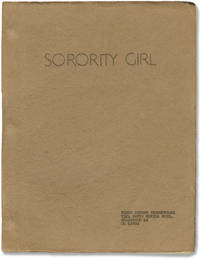
1957ref. 154176Hollywood: Roger Corman Productions 1957. Draft script for the 1957 film. Copy belonging to actor Dick Miller who had a sizable role in the film with his name to the title page and his manuscript pencil and ink annotations throughout. The finished film runs a little over an hour so the script at 127 pages was cut down substantially in the filming and editing process leaving a remarkable amount of content for study. An alienated wealthy coed at an all-girls boarding school inflicts increasing cruelties on the other students until her manipulation goes too far. An early role for Miller who appeared in 14 films directed by legendary independent filmmaker Roger Corman between 1955 and 1961 and would continue to work with Corman throughout his career. Brown titled wrappers. Title page present undated with credits for screenwriter Ed Waters. 128 leaves with last page of text numbered 127. Mimeograph duplication rectos only. Pages and wrapper Near Fine bound internally with three silver brads. Roger Corman Productions unknown
1958ref. 141439Tokyo: Nikkatsu 1958. Draft script for the 1958 film. Text in Japanese. The first film to be credited to Suzuki by his assumed name a man released from prison needs money and goes to retrieve diamonds sought after by fellow yakuza members. White titled perfect-bound wrappers. Title page present. 107 leaves with last page of text numbered 12. Mechanical duplication. Pages Very Good plus wrapper Very Good plus. Nikkatsu unknown
1958ref. 141434Tokyo: Nikkatsu 1958. Draft script for the 1958 film. Text in Japanese. Based on a novel by Shinju Fujiwara. Five people assemble ten years after the end of the Pacific War at a military station to uncover a stash of morphine worth a fortune now whcih was buried by the medical officer Mashimoto at the abdication of the Emperor. One of members of the group does not belong there. Orange titled perfect-bound wrappers. Title page present. 131 leaves with last page of text numbered 46. Mechanical duplication. Pages Near Fine wrapper Near Fine bound with two gold brads. Nikkatsu unknown
1958ref. 141432Tokyo: Nikkatsu 1958. Draft script for the 1958 film. Text in Japanese. Title based on a song popularized by the leading actor Frank Nagai. A comedy featuring a drugstore owner who begins an extramarital affair when his wife and child go on vacation. White illustrated titled perfect-bound wrappers. Title page present. 95 leaves with last page of text numbered 18. Mechanical duplication. Pages Near Fine wrapper Near Fine. Nikkatsu unknown
ref. 160647Hollywood: Motown-Weston-Furie Productions 1971. Final Shooting script for the 1972 film. Copy belonging to early production designer Harry Horner with his name in manuscript ink on the title page. Noted as copy No. 23 on the lower right corner of the title page with manuscript pencil and ink annotations on six pages. According to the AFI Catalog immediately prior to the commencement of photography several last-minute changes were made to the production crew including the replacement of Harry Horner with Carl Anderson. The script found here also co-credits director Sidney J. Furie as screenwriter with Terence McCloy. Furie did not receive a screenwriting credit in the final film. Based on Billie Holiday's 1956 autobiography co-authored by William Duffy which recounts Holiday's troubled rise to fame failed romantic relationships and drug addiction. Diana Ross' film debut. Set in New York and Baltimore. Red untitled wrappers. Title page present dated November 11 1971 noted as Final Shooting Script with credits for screenwriters Sidney J. Furie and Terence McCloy. 134 leaves with last page of text numbered 130. Xerographic duplication rectos only. Pages Near FIne wrapper Near FIne bound in a Near Fine red three-ring binder. Motown-Weston-Furie Productions unknown
1922ref. 158284Beverly Hills CA: Warner Brothers 1922. Set of three vintage hand-tinted lobby cards for the 1922 film. Based on F. Scott Fitzgerald's 1922 novel. A young husband and wife spend money with aplomb anticipating a large payout once the man's grandfather dies. When the patriarch passes away and they discover they have been left nothing in his will. Considered today to be a lost film. 14 x 11 inches. Very Good plus some with pinholes to the corners lightly and evenly toned. Warner Brothers unknown