4,914 results
1981ref. 157696London: GTO Films 1981. Vintage pressbook from the 1981 British film. Kit includes one full-color bi-fold booklet and three studio still photographs. A comic documentary film following the exploits of British pop group Madness following their rise to fame from their humble pub-band origins. Booklet: 11.5 x 8.5 inches. Very Good plus with a light vertical crease on the fore-edges. Photographs 8 x 10 inches. Very Good plus one with annotations in manuscript ink on the recto. GTO Films unknown
1968ref. 161669N.p.: Boxoffice International 1968. Three vintage studio still photographs from the 1968 sexploitation film. All three photographs with provenance stamps on the versos. A fanciful account of the Marquis de Sade and the women who are irresistibly drawn to him. 8 x 10 inches. Very Good plus. Boxoffice International unknown
ref. 166556N.p.: N.p. 1982. Draft script for the 1983 British comedy film. Noted as copy No. 58 in manuscript ink on the title page. Bound in with the script are ten pages of Xerographically duplicated storyboards for the short film-within-the-film "The Crimson Permanent Assurance." The final Monty Python film to star actor and writer Graham Chapman before his death in 1989 and a return to the sketch comedy format which characterized the group's earlier television series. Shot on location in Queensway Strathblane and Lancashire England. Red untitled Script Specialists wrappers with a die-cut title window in the British style. Title page present dated March 1982. 115 leaves with last page of text numbered 115. Mimeograph duplication on eye-rest green stock rectos only with five pink revision pages laid in at the rear of the script dated 26/5/82. Pages Very Good plus wrapper Very Good plus with light foxing throughout bound internally with two silver brads. N.p. unknown
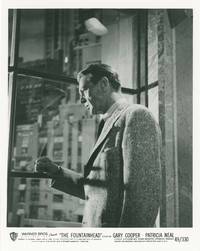
1949ref. 161687Burbank CA: Warner Brothers 1949. Four vintage studio still photographs from the 1949 film. In approaching the film adaptation of Ayn Rand's 1943 work director King Vidor dispensed with typical Hollywood production techniques and focused on creating an expressionistic film one that literally echoed the architectural underpinnings of its characters' philosophies motives and ambitions. Unusual choices included modernist cinematography expressionistic set designs and wardrobe and having Rand herself write the heady screenplay. 8 x 10 inches. Near Fine. Warner Brothers unknown
1949ref. 161625Burbank CA: Warner Brothers 1949. Five vintage promotional photographs four of which are in color from the landmark 1949 film adaptation of Ayn Rand's 1943 novel "The Fountainhead." Each photo with the film's title logo at the bottom margin. One photo framed to look like a "book" to tie in with the popularity of the novel. In approaching the film adaptation of Rand's iconoclastic work Vidor dispensed with typical Hollywood production techniques and focused on creating an expressionistic film one that literally echoed the architectural underpinnings of its characters' philosophies motives and ambitions. Unusual choices included modernist cinematography expressionistic set designs and wardrobe and having Ms. Rand herself write the heady screenplay. 8 x 10 inches. Near Fine. Warner Brothers unknown
1949ref. 161624Burbank CA: Warner Brothers 1949. Four vintage reference photographs from the landmark 1949 film adaptation of Ayn Rand's 1943 novel "The Fountainhead." In approaching the film adaptation of Rand's iconoclastic work Vidor dispensed with typical Hollywood production techniques and focused on creating an expressionistic film one that literally echoed the architectural underpinnings of its characters' philosophies motives and ambitions. Unusual choices included modernist cinematography expressionistic set designs and wardrobe and having Ms. Rand herself write the heady screenplay. 8 x 10 inches. Near Fine. Warner Brothers unknown
1995ref. 142143Burbank CA: Buena Vista Pictures 1995. Vintage press kit for the 1995 film. Press kit includes 11 black and white photographs and a pamphlet of production information housed in a titled pictorial studio folder. The second of director Oliver Stone's trilogy of films about US Presidents a semi-biographical film chronicling Nixon's impeachment with flashbacks to his life before the presidency. Director Oliver Stone received some criticism for depicting Nixon in typical dramatic flair as an alcoholic and a fallen hero though the film was well-received. Nominated for four Academy Awards including Best Musical Score and Best Actor. Photos 10 x 8 inches. Production pamphlet 35 pages saddle stapled housed in a 9 x 12 inch folder. Photos and production pamphlet Fine in a Very Good plus folder. Buena Vista Pictures unknown
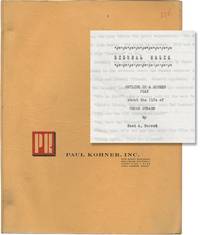
1970ref. 147195N.p.: N.p. 1970. Treatment script for an unproduced film. With two brief manuscript ink annotations to the title page and front wrapper noting the number 778. Based on the life of noted Viennese composer Oscar Straus. Set in Austria and New York. Yellow untitled generic Paul Kohner wrappers. Title page present with credits for screenwriter Kent A. Barret. 41 leaves with last page of text numbered 40. Mimeograph duplication on onionskin stock rectos only. Pages Very Good plus wrapper Very Good with light soil to the wrapper and first and last leaves bound with two gold brads. N.p. unknown
1958ref. 146435Burbank CA: Walt Disney Productions 1958. Final Shooting script for the first half of the 1958 film thus incomplete as issued dated April 9 1958. With lead actor Sal Mineo's name in manuscript ink on two revision leaves and his character's name in pencil on the front wrapper. Laid in is a small leaf with manuscript ink notations including the name of director Lou Foster actors Fess Parker and Jerome Courtland and characters White Bull and Captain Keogh. Parker was originally hired for the role of Keogh but refused second billing and was replaced by Philip Carey. Jerome Courtland played the role of Lieutenant Henry Nowlan in the film. Based on David Appel's 1951 novel "Comanche: Story of America's Most Heroic Horse" about the bond between a young Sioux boy and the titular horse who end up on opposite sides of the Battle of Little Big Horn. Set in Montana Territory and shot on location in Oregon. Tan titled wrappers noted as FINAL SHOOTING SCRIPT on the front wrapper rubber-stamped copy No. 112 and production No. 5812 dated APRIL 9 1958 with credits for director and screenwriter LEWIS FOSTER. Title page present dated April 9 1958 noted as FINAL SHOOTING SCRIPT with credits for director and screenwriter LEWIS FOSTER. 70 leaves with last page of text numbered 69. Mimeograph duplication rectos only with blue revision pages throughout dated variously between 4/10/58 and 5/15/58. Pages Near Fine wrapper Very Good plus bound with three gold brads. Walt Disney Productions unknown
ref. 125645N.p.: Matrixbest Production Circa 190. Vintage pre-release promotional poster for the 1980 film featuring Sid Vicious from the film performing "My Way" noted on the bottom banner as "From the forthcoming film." Julien Temple's now-classic mockumentary about an unscrupulous manipulative music manager who takes advantage of a British punk rock band loosely based on the formation rise and fall of the Sex Pistols told from manager Malcolm McLaren's perspective. Set and shot on location in London. 17 x 25 inches. Light wear at the extremities overall Near Fine. Matrixbest Production unknown
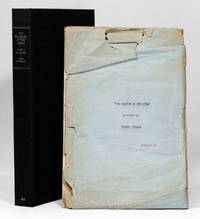
1925ref. 3105California: Universal Pictures 1925. First edition. original wrappers. Good. AN EARLY WORKING DRAFT OF THE 1925 PHANTOM OF THE OPERA PRESERVING THE DARKER SCENARIO UNIVERSAL WROTE BEFORE ITS FRONT OFFICE ORDERED THE TERROR TONED DOWN AND INCLUDING AN ORIGIN STORY FOR THE PHANTOM THAT NEVER REACHED THE SCREEN. Lon Chaney's unmasking in The Phantom of the Opera remains one of the most famous moments in film history. The picture that audiences finally saw in 1925 though came out of a long and difficult production shaped by poorly received previews reshoots and repeated re-editing. Its story begins with Universal staff writer Elliott J. Clawson's adaptation of Gaston Leroux's 1910 novel. The present typescript records his scenario at an early stage before the studio's successive revisions reshaped it. THE PHANTOM'S LOST ORIGIN STORY: The most striking feature of the draft is a lengthy origin episode absent from every filmed version of the story. In it a Sultan condemns the Phantom to die on an anthill and the Persian who becomes his lifelong associate rescues him. Leroux's novel only alludes to its Phantom's past in Persia where a police official spared him from the Shah's death sentence. Clawson turned that background into a full dramatic sequence. The episode though was abandoned before filming began. Philip J. Riley mentions it in his narrative account of the production The Making of the Phantom of the Opera 1999 but the present manuscript preserves it as Clawson actually wrote it. Riley records that by the fifth revised shooting script most of the genuinely frightening scenes like the anthill death scene had been removed because the front office feared the original material would drive audiences out of the theater. RELATIONSHIP TO THE KNOWN RECORD: Riley's study draws on two principal script documents: an early Clawson draft which he quotes in places and the fifth revised shooting script which he reproduces in full. The present manuscript shares the general scope and character of the early draft yet it differs in both scene numbering and the wording of specific directions. At the bedchamber scene Riley's source is numbered 286; here the same scene is numbered 289. The three-scene offset indicates that this manuscript contains material Riley's source lacks at that point suggesting either an earlier compositional layer or a fuller parallel version. Riley does not say where his early draft is held so the relationship between the two documents remains open. Our comparison is limited to the passages Riley chose to quote and a full collation may well reveal further differences. THE ANNOTATIONS: Pencil annotations appear intermittently throughout. They are pointed and analytical raising questions of continuity pacing and plot logic. One asks how Christine could communicate with Raoul while held captive and another asks why certain developments do not occur earlier in a sequence. They suggest close review by a reader with editorial authority over the script. Note: Although the draft breaks off during the climactic rescue attempt by Raoul and Ledoux and does not include the full text as we've come to know the story the draft appears complete as it originally existed. There is no sign of removed pages - in fact the last page with type seems to be on a different stock and serves also as the rear wrapper - which is consistent with an unfinished working draft rather than later loss. RARITY: Universal silent-era screenplays rarely survive. Scripts were typed in small numbers on unstable pulp paper and much of the studio's early paper record was later discarded. This draft documents The Phantom of the Opera before commercial pressure and successive rewrites displaced Clawson's original conception. It preserves a version of the film that Universal chose not to make. Typescript working draft. Universal City California: Universal Pictures ca. 1925. More than 200 pages typed on 8.5 x 13 inch legal-size pulp stock; original blue wrapper; pale toned rear wrapper. Pencil annotations throughout. Front wrapper present but detached; leaves brittle with edge chipping creases foxing marginal staining and small losses as is typical of Universal scripts of the period. Housed in custom archival presentation box. Universal Pictures unknown
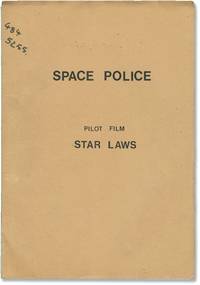
1985ref. 146211Berkshire England: Anderson Burr Pictures 1985. Second Draft script for "Star Laws" a never-aired 55-minute pilot episode for a proposed series called "Space Police" brainchild of "supermarionation" creator Gerry Anderson. Copy belonging to unknown crew member with a few manuscript ink annotations on the front wrapper and leaves. Screenwriter Anderson's early attempt at an intergalactic police procedural one that would would eventually become the British sci-fi series "Space Precinct" which was broadcast on October 3 1994 on Sky One. The pilot carries many similarities to the show that would eventually air-a hardboiled New York cop is transferred to the eponymous "space precinct" in Demeter City on the planet Altor in 2040-although the pilot features far fewer human characters with a greater reliance on Anderson's trademark blend of live action prosthetics puppetry a process he called "Supermarionation." Tan titled wrappers. Title page present dated November 1985 noted as SECOND DRAFT with credits for screenwriters Gerry Anderson and Tony Barwick. 86 leaves with last page of text numbered 83. Xerographic duplication rectos only. Pages Near Fine wrapper Near Fine with some rust to the wrapper versos near the binding with silver prong binding. Anderson Burr Pictures unknown
1959ref. 140346Italy / France: Riama Film 1959. Collection of 12 vintage single weight still photographs from the 1959 Italian-French film. Seen in the images are starring actress Magnani Masina singer Perry Como director Castellani and two images of Magnani and adoring fan author Tennessee Williams. Notations on the verso of nearly all photos in manuscript ink and as many rubber-stamped on the verso crediting photographers A. di Giovanni Licio D'Aloisio and the Italy's News Photos agency in Rome. Housed in a vintage French Kodak brand photo paper box. Overlooked Italian exploitation of the popular women's prison theme based on Isa Mari's 1960 novel "Roma Via della Mantellate" or "Cage of Passio" with the usual elements including domineering and submissive female characters. Masina plays the role of a victimized woman turned criminal. All photos approximately 7 x 9.25 inches a few slightly larger. Very Good plus overall photos with moderate curling and photo box Very Good. Riama Film unknown
1978ref. 168320N.p.: Momentum Productions 1978. Treatment script for an unproduced film. An English-language feature-length treatment based on the 1965 Dutch short film co-written by René Daalder and his childhood friend and noted architect Rem Koolhaas under the auspices of experimental film collective the 1 2 3 Group. Counting Jan de Bont and Robby Müller among its members the 1 2 3 Group opposed the concept of the auteur with each person in the group serving variously as writer director actor and more on each production. The collective is perhaps best remembered today for "The White Slave" 1969 co-written by Koolhaas and Daalder. Self wrappers. Title page present copyright date noted as 1978 with credit for Daalder. 48 leaves with last page of text numbered 48. Xerographic duplication rectos only. Pages Very Good plus partially bound at the top left corner with a paper clip. Momentum Productions unknown
1980ref. 154937London: Atlantic Releasing 1980. Vintage studio still photograph from the 1980 film. A blend of fiction and music documentary featuring extensive footage of The Clash on tour and in the studio about a young Clash fan who leaves his job at a Soho sex shop to become a roadie for the band. The Clash would later express their dissatisfaction with the completed project due to what they considered to be racist portrayals of Black characters in the film and printed button-badges reading "I don't want Rude Boy Clash Film" before the film's theatrical release in 1980. 10 x 8 inches. Near Fine. Carlson and Connolly Destroy All Movies. Atlantic Releasing unknown
1991ref. 142140Culver City CA: TriStar Pictures 1991. Vintage press kit for the 1991 film. Press kit includes six black and white photographs and a pamphlet of production information housed in a titled pictorial studio folder. Oliver Stone a self-professed Doors fan directs this star studded over-the-top biopic whose production struggled through over ten years of negotiations with the families and surviving band members depicted in the film. Val Kilmer delivers a convincing portrayal of Jim Morrison with Kevin Dillon Kyle MacLachla and Meg Ryan in supporting roles. Photos 10 x 8 inches. Production pamphlet 29 pages saddle stapled housed in a 9 x 12 inch folder. Photos and production pamphlet Fine in a Near Fine folder. TriStar Pictures unknown
1969ref. 164325N.p.: Miracle Films 1969. Two vintage photographs from the UK release of the 1969 Italian-French anthology film both showing scenes from Bernardo Bertolucci's segment "Agonia." From the archive of film historian and author Joel Finler. Largely dealing with themes of religion and spirituality the film featured segments written and directed by five Italian directors and one French director. Bertolucci's segment starred members of The Living Theatre including noted actor and director Julian Beck. Distributed by the notoriously versatile Miracle Films a significant force in both international cinema and American pornography in the late 1960s and 1970s. 10 x 8 inches. One Very Good plus one Very Good both slightly curled. Miracle Films unknown
1939ref. 170757N.p.: N.p. 1939. Vintage reference photograph from the 1939 film showing the Marx brothers fending off a gorilla. Provenance stamp and layout annotations on the verso. The brothers unite to help save a circus from bankruptcy. Featuring songs by MGM songwriting team Harold Arlen and Yip Harburg best known their work in "The Wizard of Oz" the same year. 10 x 8 inches. About Fine. N.p. unknown
1940ref. 171406N.p.: N.p. 1940. Vintage reference photograph from the 1940 film showing three Marx brothers. Mimeo snipe on the verso. A late Marx Brothers effort. A confidence man Groucho heads west to make his fortune but is grifted by two crafty simpletons Harpo and Chico at a train station. Soon the three of them bond as usual and get down to the business of making mayhem. 10 x 8 inches. Very Good with dampstains to the bottom right corner. N.p. unknown
2011ref. 167669Burbank CA: DMP Productions 2011. Vintage set designer's reference bible for the 2011 film with 18 full-color film sets represented. The seventh Muppets feature film in which Kermit and two human friends attempt to reunite the Muppets who have been disbanded for years in order to save the Muppet Theater from destruction. Intended to revive the franchise after years of inactivity following Disney's acquisition of the Muppets in 2004. Winner of the Academy Award for Best Original Song for Bret McKenzie's "Man or Muppet." Set in Los Angeles Paris Reno and the fictional city of Smalltown and shot on location in Los Angeles Reno and Zürich. Housed in a generic white three-ring binder with board inserts noting the film's title and the names email addresses and phone numbers of leadman Lou Mugavero decorator Tracey Doyle and assistant decorator Leighanne Haddock. Binder and contents about Fine. DMP Productions unknown
1975ref. 153977London: Hemdale International Films 1975. Vintage borderless reference photograph of Pete Townshend Keith Moon and John Entwistle performing onstage in the 1975 film. Printed mimeo label affixed to the verso. Based on the 1969 rock opera written by The Who about a deaf dumb and blind kid who sure plays a mean pinball and subsequently becomes the idol of a religious cult. The cast included among others every member of The Who Jack Nicholson Tina Turner and Eric Clapton. Shot on location in Cumbria Buckinghamshire and Hampshire England. 10 x 8 inches. Near Fine. Hemdale International Films unknown
1947ref. 144819Culver City CA: Columbia Pictures 1947. Vintage photograph of director Charles Vidor and stars Rosalind Russell and Melvyn Douglas speaking to Orson Welles on the set of the 1947 film. Welles was directing the classic Columbia Pictures film "The Lady from Shanghai" at the same time. Mimeo snipe and agency stamps on the verso. Janet Ames Rosalind Russell seeks out five soldiers who her husband sacrificed his life for during World War II. After suffering a serious injury she meets Smithfield "Smitty" Cobb Melvyn Douglas who helps her find the men her husband saved though he does not tell her he is one of them. He tries to help her reconcile her pain and guilt while he treats his own pain from the war with heavy drinking. 8 x 10 inches. Near Fine. Columbia Pictures unknown
ref. 258559 August 1927. On letterhead of New Grove Petworth Sussex. Mason was according to E. V. Lucas ‘famous in both hemispheres’. His entry in the Oxford DNB ends with this assessment: ‘His books were best-sellers for fifty years and the films made from them notably The Drum 1938 for which he wrote his own scenario and The Four Feathers 1939 were among the most popular in their time.’ 1p 12mo. In good condition lightly aged. Folded twice for postage. The valediction is in Mason's autograph: 'Yours sincerely / A. E. W. Mason'. The rest of the note is typed: 'Dear Rosemary Barron / I am very happy to send you my autograph since you are kind enough to say that you would like to have it.' 9 August 1927. On letterhead of New Grove, Petworth, Sussex. unknown
1970ref. 143943Hollywood: N.p. 1970. Draft script for an unproduced film. Don and Irene are a young and unhappy married couple whose lives and relationship are thrown asunder as Don gravitates toward Spiritology a spiritual organization that promises the 'Ultimate Release." Gold titled wrappers. Title page present with credits for screenwriter Aaron Nash. 101 leaves with last page of text numbered 100. Xerographically reproduced. Pages Fine wrapper Fine bound with three gold brads. N.p. unknown
1984ref. 153832N.p.: N.p. 1984. Draft script for an unproduced film. Laid in with the script is a letter from Kodiak Films producer Wolf Schmidt to agent Walter Kohner declining to produce the film. A group of scientists accidentally create a deadly chemical compound which is promptly stolen by a rival scientist who threatens to kill thousands of people with the compound unless he is given one billion dollars. Two spies from the mysterious Sub Rosa agency are sent to retrieve the chemical. Blue card wrappers with a printed title label affixed to the front wrapper. Title page present dated 1984 with credits for screenwriter R. Delano Brown. 99 leaves with last page of text numbered 98. Xerographic duplication rectos only. Pages Near Fine wrapper Near Fine bound internally with a silver prong. N.p. unknown