11,066 results
1961ref. 152049Hollywood: Pad-Ram Enterprises 1961. Vintage pressbook for the 1961 film. With his fourth feature a 68-minute quickie Russ Meyer continued to market the "nudie" film genre he basically invented in 1959 with his first film "The Immoral Mr. Teas." He also continues to advertise the "French" sensibility "bon vivant" of his films-once described as "a narrated Playboy magazine" with no real plot per se just lots of buxom women shedding their clothing at every opportunity. One leaf bi-fold. 8.5 x 11 inches. Near Fine. Pad-Ram Enterprises unknown books
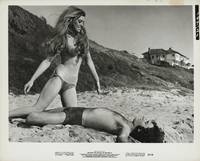
1969ref. 139328Middlesex England: Eve Productions Cinecenta 1969. Vintage black-and-white double weight British still photograph from the 1968 US film. Rubber stamp on the verso of COLTMAN DISPLAYS LTD a distributor in Middlesex England. "Vixen!" was one of Meyer's best sleaziest and most commercially successful films made at the peak of his independent productions after "Faster Pussycat! Kill! Kill!" in 1965 and before "Beyond the Valley of the Dolls" in 1970. What is less well known is that this film by way of Ms. Gavin marked a breakthrough in the onscreen portrayal of women in terms of sexual aggression using the then-new platform of late 1960s American independent cinema and the aftermath of the Summer of Love as a canvas. Gavin's titular character is a married woman whose sexual boundaries are none but instead of being a typical sex romp the film heads off into areas that can be reasonably described as unexplored by sexploitation films including communism race relations political debate and terrorist activity. But also present in the film are many of the genre's more familiar themes breast size incest nonstop sexual activity and a generous dose of humor. 8 x 10 inches. Very Good plus with edge creasing and a single short tear. Eve Productions Cinecenta unknown books
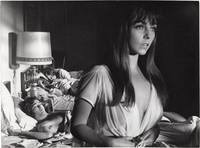
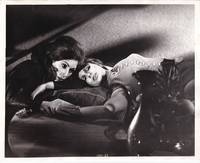
1968ref. 139327California: Eve Productions 1968. Two vintage black-and-white still photographs from the 1968 film. Seen in the stills is Erica Gavin Vixen and Jon Evans Judd and a split image with Erica Gavin and Harrison Page Niles the duo responsible for the film's thick racial tensions. "Vixen!" was one of Meyer's best sleaziest and most commercially successful films made at the peak of his independent productions after "Faster Pussycat! Kill! Kill!" in 1965 and before "Beyond the Valley of the Dolls" in 1970. What is less well known is that this film by way of Ms. Gavin marked a breakthrough in the onscreen portrayal of women in terms of sexual aggression using the then-new platform of late 1960s American independent cinema and the aftermath of the Summer of Love as a canvas. Gavin's titular character is a married woman whose sexual boundaries are none but instead of being a typical sex romp the film heads off into areas that can be reasonably described as unexplored by sexploitation films including communism race relations political debate and terrorist activity. But also present in the film are many of the genre's more familiar themes breast size incest nonstop sexual activity and a generous dose of humor. 8 x 10 inches. One still with a faint tape ghost and two short tears else Near Fine overall. Eve Productions unknown books
1989ref. 139236France: Eve Productions 1989. Original French grande poster for the 1989 release of the 1970 US film. Scarce. A small-town border sheriff and marijuana smuggler sets out to kill a rival drug dealer while his girlfriend has a dalliance with another woman. The first Meyer film to feature full frontal male nudity a rarity even in sexploitation films at the time and quite the introduction to soon-to-be Meyer's regular Charles Napier. Meyer shot several new sequences late in production about a quarter of the film's runtime either to replace footage lost by a photo lab or because an actress left the shoot early the reason is disputed. The new sequences unrelated to the original ones give the film an almost surreal quality leading Roger Ebert to call it "possibly the only narrative film ever made without a narrative." The film was one of the most successful of Meyer's career leading him to return to and refine this style in subsequent films peaking with Beneath the Valley of the Ultra-Vixens in 1979. 47 x 63 inches folded as issued. Near Fine. Eve Productions unknown books
1968ref. 152051California: Eve Productions 1968. Vintage pressbook for the 1968 film. The owner of a strip club on the Sunset Strip is knocked out and robbed by his girlfriend the mistress of a brothel. One leaf bi-fold. 8.5 x 11 inches. Very Good plus lightly creased and toned. Eve Productions unknown books
1964ref. 170432N.p.: Eve Productions 1964. Vintage studio still photograph from the 1964 sexploitation film. The first of Russ Meyer's "noir" cycle 1964-1965 sexploitation films shot in black-and-white featuring powerful psycho-sexual female characters male impotence and a serious dramatic plot involving less of the "nudie" filmmaking style so prominent in the director's early films. "Lorna" a voluptuous sexually unfulfilled newlywed becomes sexually awakened after being raped by an escaped convict while she is skinny-dipping in a river and proceeds to invite the convict into her home while her husband is out working in the salt mines. 10 x 8 inches. Near Fine. Eve Productions unknown books
1970ref. 148340Los Angeles: Twentieth Century-Fox 1970. Vintage studio still photograph of Edy Williams and David Gurian from the 1970 film. Based on an original story by Roger Ebert who also helped write the screenplay. Three girls come to Hollywood to make it big with their rock band "The Kelly Affair" stopping first to visit Kelly MacNamara's 1966 Playboy Playmate Dolly Read estranged aunt. Kelly's aunt introduces the band comprised of Kelly Read Casey Anderson 1968 Playboy Playmate Cynthia Myers and Petronella Danforth Marcia McBroom to a flamboyant producer named Ronnie "Z-Man" Barzell John LaZar who changes their name to "The Carrie Nations" and has them perform at one of his orgiastic parties after a set by Strawberry Alarm Clock. Throughout the success of the new band the girls use drugs and alcohol attempt to maintain romantic relationships even a lesbian tryst with Erica Gavin director Meyer's "Vixen" and find "Z-Man" to be a murderous transsexual. The film proved to be sexploitation and exploitation to its psychedelic limits at the time was Meyer's biggest box-office draw to date and gave the director a new audience: mainstream filmgoers in mainstream cinemas. Originally intended as a sequel to "Valley of the Dolls" 1967 with an original screenplay by Jacqueline Susann Twentieth Century-Fox found the script unsatisfactory and sought new material. The film was released as part of a settlement with Susann with the disclaimer "This is not a sequel to VALLEY OF THE DOLLS." One of few X-rated films released by Twentieth Century-Fox another being "Myra Breckenridge" 1970. Pam Grier got her start in this film as an uncredited party attendant. Meyer regulars like Charles Napier Lavelle Roby and Haji all make appearances. Set in Los Angeles. 8 x 10 inches. CONDITION. Criterion Collection 836. Meyer US. Twentieth Century-Fox unknown
1970ref. 163758N.p.: N.p. 1970. Six vintage reference photographs from the 1970 film. One with a mimeo snipe on the verso. After nearly a decade as one of America's most successful independent filmmakers sexploitation auteur Russ Meyer first reached out for the brass ring of major studio success with this frantic and most entertaining cult favorite once described by Meyer and screenwriter Roger Ebert as "the first exploitation-horror-camp-musical." The film follows three members of an all-girl rock band called The Kelly Affair who relocate to Hollywood in search of fame and fortune. Their success comes at the price of their friendship and integrity however and the girls eventually succumb to a nonstop train of decadence drugs and betrayal. Featuring one-hit wonders the Strawberry Alarm Clock supporting performances by Meyer regulars Charles Napier and Haji and a bit part from future Blaxploitation icon Pam Grier the film proved to be Meyer's biggest box-office success. Set and shot on location in Hollywood. 10 x 8 inches. Very Good plus. Criterion Collection 836. N.p. unknown
1970ref. 156306N.p.: N.p. 1970. Three vintage reference photographs taken on the set of the 1970 film two showing director Russ Meyer with actress Phyllis Davis between takes and one showing Meyer directing Dolly Read and Michael Blodgett. One photograph with a printed mimeo snipe affixed to the verso and all three photographs with library stamps and provenance labels on the versos. After nearly a decade as one of America's most successful independent filmmakers sexploitation auteur Russ Meyer first reached out for the brass ring of major studio success with this frantic and most entertaining cult favorite once described by Meyer and screenwriter Roger Ebert as "the first exploitation-horror-camp-musical." The film follows three members of an all-girl rock band called The Kelly Affair who relocate to Hollywood in search of fame and fortune. Their success comes at the price of their friendship and integrity however and the girls eventually succumb to a nonstop train of decadence drugs and betrayal. Featuring one-hit wonders the Strawberry Alarm Clock supporting performances by Meyer regulars Charles Napier and Haji and a bit part from future Blaxploitation icon Pam Grier the film proved to be Meyer's biggest box-office success. Set and shot on location in Hollywood. 8 x 10 inches. Near Fine. Criterion Collection 836. N.p. unknown
1970ref. 158260N.p.: N.p. 1970. Five vintage borderless reference photographs from the 1970 film. Four with printed mimeo snipes affixed to the versos. After nearly a decade as one of America's most successful independent filmmakers sexploitation auteur Russ Meyer first reached out for the brass ring of major studio success with this frantic and most entertaining cult favorite once described by Meyer and screenwriter Roger Ebert as "the first exploitation-horror-camp-musical." The film follows three members of an all-girl rock band called The Kelly Affair who relocate to Hollywood in search of fame and fortune. Their success comes at the price of their friendship and integrity however and the girls eventually succumb to a nonstop train of decadence drugs and betrayal. Featuring one-hit wonders the Strawberry Alarm Clock supporting performances by Meyer regulars Charles Napier and Haji and a bit part from future Blaxploitation icon Pam Grier the film proved to be Meyer's biggest box-office success. Set and shot on location in Hollywood. 9.5 x 7 inches. Near Fine. Criterion Collection 836. N.p. unknown
1970ref. 155647N.p.: N.p. 1970. Vintage reference photograph from the 1970 film showing actors Cynthia Myers and Erica Gavin. Dealer label affixed to the verso. After nearly a decade as one of America's most successful independent filmmakers sexploitation auteur Russ Meyer first reached out for the brass ring of major studio success with this frantic and most entertaining cult favorite once described by Meyer and screenwriter Roger Ebert as "the first exploitation-horror-camp-musical." The film follows three members of an all-girl rock band called The Kelly Affair who relocate to Hollywood in search of fame and fortune. Their success comes at the price of their friendship and integrity however and the girls eventually succumb to a nonstop train of decadence drugs and betrayal. Featuring one-hit wonders the Strawberry Alarm Clock supporting performances by Meyer regulars Charles Napier and Haji and a bit part from future Blaxploitation icon Pam Grier the film proved to be Meyer's biggest box-office success. Set and shot on location in Hollywood. 10 x 8 inches. Near Fine. Criterion Collection 836. N.p. unknown
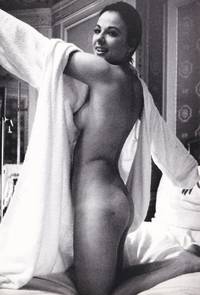
1970ref. 153231N.p.: N.p. 1970. Vintage oversize borderless reference photograph from the 1970 film showing a near-nude Edy Williams. With the stamp of still photographer Willy Rizzo on the verso. After nearly a decade as one of America's most successful independent filmmakers sexploitation auteur Russ Meyer first reached out for the brass ring of major studio success with this frantic and most entertaining cult favorite once described by Meyer and screenwriter Roger Ebert as "the first exploitation-horror-camp-musical." The film follows three members of an all-girl rock band called The Kelly Affair who relocate to Hollywood in search of fame and fortune. Their success comes at the price of their friendship and integrity however and the girls eventually succumb to a nonstop train of decadence drugs and betrayal. Featuring one-hit wonders the Strawberry Alarm Clock supporting performances by Meyer regulars Charles Napier and Haji and a bit part from future Blaxploitation icon Pam Grier the film proved to be Meyer's biggest box-office success. Set and shot on location in Hollywood. 8 x 12 inches. Near Fine. Criterion Collection 836. N.p. unknown
1975ref. 149729N.p.: N.p. 1975. Vintage oversize borderless reference photograph from the set of the 1970 film showing actresses Erica Gavin and an uncredited model with cinematographer Fred J. Koenekamp behind the camera at the far left. With the film's French 1975 release title "Orgissimo" at the bottom right. After nearly a decade as one of America's most successful independent filmmakers sexploitation auteur Russ Meyer first reached out for the brass ring of major studio success with this frantic and most entertaining cult favorite once described by Meyer and screenwriter Roger Ebert as "the first exploitation-horror-camp-musical." The film follows three members of an all-girl rock band called The Kelly Affair who relocate to Hollywood in search of fame and fortune. Their success comes at the price of their friendship and integrity however and the girls eventually succumb to a nonstop train of decadence drugs and betrayal. Featuring one-hit wonders the Strawberry Alarm Clock supporting performances by Meyer regulars Charles Napier and Haji and a bit part from future Blaxploitation icon Pam Grier "Beyond the Valley of the Dolls" proved to be Meyer's biggest box-office success. Set and shot on location in Hollywood. 12 x 9.5 inches. Near Fine with light wear to the corners. Criterion Collection 836. N.p. unknown
1989ref. 139236France: Eve Productions 1989. Original French grande poster for the 1989 release of the 1970 US film. Scarce. A small-town border sheriff and marijuana smuggler sets out to kill a rival drug dealer while his girlfriend has a dalliance with another woman. The first Meyer film to feature full frontal male nudity a rarity even in sexploitation films at the time and quite the introduction to soon-to-be Meyer's regular Charles Napier. Meyer shot several new sequences late in production about a quarter of the film's runtime either to replace footage lost by a photo lab or because an actress left the shoot early the reason is disputed. The new sequences unrelated to the original ones give the film an almost surreal quality leading Roger Ebert to call it "possibly the only narrative film ever made without a narrative." The film was one of the most successful of Meyer's career leading him to return to and refine this style in subsequent films peaking with Beneath the Valley of the Ultra-Vixens in 1979. 47 x 63 inches folded as issued. Near Fine. Eve Productions unknown
1961ref. 152049Hollywood: Pad-Ram Enterprises 1961. Vintage pressbook for the 1961 film. With his fourth feature a 68-minute quickie Russ Meyer continued to market the "nudie" film genre he basically invented in 1959 with his first film "The Immoral Mr. Teas." He also continues to advertise the "French" sensibility "bon vivant" of his films-once described as "a narrated Playboy magazine" with no real plot per se just lots of buxom women shedding their clothing at every opportunity. One leaf bi-fold. 8.5 x 11 inches. Near Fine. Pad-Ram Enterprises unknown
1963ref. 161702N.p.: Eve Productions 1963. Vintage studio still photograph from the 1963 film. Famed director Russ Meyer's documentary about the underground world of sex work in Europe. According to film critic Roger Ebert's article "Russ Meyer: King of the Nudies" published in the Jan/Feb 1973 issue of "Film Comment" Meyer "concealed a 16-mm camera in a suitcase and got footage in the red-light districts of Paris Amsterdam and elsewhere." 8 x 10 inches. Near Fine. Eve Productions unknown
1963ref. 151457N.p.: N.p. 1963. Two vintage borderless reference photographs from the 1963 film. Included is a distributor's pamphlet. A mondo documentary following the sexual exploits of buxom women across Europe. Photographs 7 x 9.5 inches. Near Fine. Pamphlet bi-fold 8.5 x 11 inches. Very Good moderately chipped and soiled. N.p. unknown
1968ref. 152051California: Eve Productions 1968. Vintage pressbook for the 1968 film. The owner of a strip club on the Sunset Strip is knocked out and robbed by his girlfriend the mistress of a brothel. One leaf bi-fold. 8.5 x 11 inches. Very Good plus lightly creased and toned. Eve Productions unknown
1964ref. 170432N.p.: Eve Productions 1964. Vintage studio still photograph from the 1964 sexploitation film. The first of Russ Meyer's "noir" cycle 1964-1965 sexploitation films shot in black-and-white featuring powerful psycho-sexual female characters male impotence and a serious dramatic plot involving less of the "nudie" filmmaking style so prominent in the director's early films. "Lorna" a voluptuous sexually unfulfilled newlywed becomes sexually awakened after being raped by an escaped convict while she is skinny-dipping in a river and proceeds to invite the convict into her home while her husband is out working in the salt mines. 10 x 8 inches. Near Fine. Eve Productions unknown
1966ref. 152053California: Eve Productions 1966. Vintage pressbook for the 1966 film. A sexploitation "documentary" following several buxom strippers as they discuss their lives in 1960s San Francisco. One leaf bi-fold. 11 x 17 inches. Folded once horizontally. Very Good plus overall. Eve Productions unknown
1965ref. 152052California: Eve Productions 1965. Vintage pressbook for the 1965 film. The final film in Russ Meyer's "noir" cycle 1964-1965 or "Gothic" period as Meyer puts it a series of sexploitation films shot in black and white with powerful and vengeful female characters male impotence and a serious dramatic plot involving less of the "nudie" filmmaking style so prominent in the director's early films. One of the first films to discuss post-traumatic stress disorder in a Vietnam War veteran. Six pages saddle stitched 11 x 17 inches. Folded once horizontally. Very Good plus overall. Eve Productions unknown
1965ref. 152050Los Angeles: Delta Films 1965. Vintage pressbook for the 1965 film. Based on Raymond Friday Locke's 1958 novel "Streets Paved With Gold." A melodramatic tale about a drifter who falls in love with his employer's married niece a beautiful young woman with an abusive alcoholic husband. The first film in Russ Meyer's "noir" cycle 1964-1965 or "Gothic" period as Meyer puts it a series of sexploitation films shot in black and white with powerful female characters male impotence and a serious dramatic plot involving less of the "nudie" filmmaking style so prominent in the director's early films. Set in Spooner Missouri. Six leaves saddle stitched 11 x 17 inches. Folded once horizontally. Very Good plus overall. Delta Films unknown
1964ref. 139221California: Art Theatre Guild / Eve Productions 1964. Original black-and-white program for the 1964 film printed for the Art Theatre Guild. The Art Theatre Guild ATG began in 1961 as an independent agency distributing films mostly Japanese rejected by major studios. The company operated until the 1980s with theaters in Arizona California Colorado Illinois Kentucky Massachusetts Missouri New Mexico Ohio and Tennessee. The first of Meyer's "noir" cycle 1964-1965 or "Gothic" period as Meyer puts it a series of sexploitation films shot in black-and-white powerful psycho-sexual female characters male impotence and a serious dramatic plot involving less of the "nudie" filmmaking style so prominent in the director's early films. Other films in his "Gothic" period include "Mudhoney" 1965 "Motorpsycho!" 1965 and the epic and legendary "Faster Pussycat! Kill! Kill! " 1965. "Fanny Hill" 1964 snuck in right after "Lorna" although that film is generally left out of the "Gothic" period. "Lorna" was written by James Griffith who stars as the Preacher narrator of the film and stars Lorna Maitland as a voluptuous sexually unfulfilled newlywed. Her husband Jim Rucker works in a salt mine all day and studies all night giving Lorna too much time to herself. One day while Lorna skinny-dips in a nearby river an escaped convict Bradley rapes her in the reeds. The vile act could otherwise have been exploited perhaps comically by Meyer but here the scene acts as a catalyst for one repressed woman's sexual awakening. Lorna invites the convict into her home while her husband is gone prompting Jim's coworkers among them the underrated Hal Hopper to tease him about Lorna's infidelity. Things take a bitter fatal turn when Jim returns home to discover Lorna and her object of desire. 5.5 x 8.5 inches folded once as issued. Two horizontal creases and faint foxing else Near Fine. Art Theatre Guild / Eve Productions unknown
1975ref. 161301N.p.: N.p. 1975. Vintage reference photograph from the 1975 film showing actress Shari Eubank. After his wife is murdered a gas station attendant at a remote desert station finds himself sexually pursued by several different but equally buxom women. Shot on location in New Mexico Arizona and California. 10 x 8 inches. Very Good plus lightly toned on the right edge. N.p. unknown
1975ref. 159139N.p.: Russ Meyer 1975. Vintage studio still photograph from the 1975 film showing actress Uschi Digard. From the archive of film historian and author Joel Finler. After his wife is murdered a gas station attendant at a remote desert station finds himself sexually pursued by several different but equally buxom women. Shot on location in New Mexico Arizona and California. 10 x 8 inches. Near Fine. Russ Meyer unknown