11,160 results
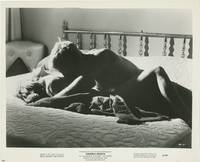
1963ref. 161531N.p.: Griffith Productions 1963. Three vintage studio still photographs from the 1963 film two with provenance stamps on the versos. Early sexploitation film directed and shot by Herschell Gordon Lewis who would become better known a year later with the release of "Two Thousand Maniacs" and many other Z-budget blood-soaked horror films. A young millionaire is obsessed by a woman appearing in a dream. After an investigation he discovers burlesque performer Gina Adair and searches for her at her favorite nudist camp. Shot on location in Miami Florida. 8 x 10 inches. Very Good plus. Griffith Productions unknown
1963ref. 161557N.p.: Box Office Spectaculars 1963. Three vintage studio still photographs from the 1963 film. One photograph with a provenance stamp on the verso. Al and Bob are two businessmen who decide they could make there own "nudie cutie" movie better than the ones they've seen until everything goes wrong. Shot on location in Barrington Illinois. 8 x 10 inches. Very Good plus with light edgewear one with a crease to the far right corner and one with faint creasing in the right margins. Box Office Spectaculars unknown
1963ref. 154904N.p.: Dore Productions 1963. Vintage pressbook for the 1963 musical film. Considered the first nudie musical about a nightclub singer and a comedian who are drawn into the world of nudism through their girlfriends. Two pages bi-fold. 11 x 17 inches. Near Fine. Dore Productions unknown
1968ref. 161839N.p.: Unusual Films International 1968. Two vintage still photographs from the 1968 film. A backwards and lonely professor builds female robots to satisfy his carnal desires. Shot on location in Miami Florida. 8 x 10 inches. Near Fine. Unusual Films International unknown
1967ref. 162262N.p.: Unusual Films International 1967. Two vintage studio still photographs from the 1967 film. Director Herschell Gorden Lewis' take on 1960s suburbia wherein a newlywed couple moves into an ideal suburban neighborhood only to be drawn into a dangerous game of parties and spouse swapping. Shot on location in Wood Dale and Addison Illinois. 8 x 10 inches. One photograph with an ink annotation to the lower right margin else Near Fine. Unusual Films International unknown
1955ref. 142718Hollywood: DuMont Television Network 1955. Draft script for Season One episode 25 of the 1954-1955 television series originally broadcast on March 8 1955 on the DuMont Television Network. Script belonging to Lyn Thomas who played Val in the episode with her manuscript name in ink on the front wrapper and her lines circled in manuscript ink throughout shooting schedule laid in. Circus drama involving a brother and sister aerial act and their new partner. "Studio 57" also known as "Heinz Studio 57" was an American anthology series broadcast on the now-defunct DuMont Television Network from September 1954 to July 1955 and in syndication from 1955 to 1958. Notably "It's a Small World" the pilot episode for the iconic series "Leave It to Beaver" was broadcast on the show on April 23 1957. White titled self wrappers production No. 1324 with credits for screenwriter James Gunn and story by Nancy Moore. Title page integral with front wrapper. 38 leaves with last page of text numbered 36. Mechanical duplication. Pages Near Fine wrapper Very Good plus bound with single staple. DuMont Television Network unknown books
1955ref. 142718Hollywood: DuMont Television Network 1955. Draft script for Season One episode 25 of the 1954-1955 television series originally broadcast on March 8 1955 on the DuMont Television Network. Script belonging to Lyn Thomas who played Val in the episode with her manuscript name in ink on the front wrapper and her lines circled in manuscript ink throughout shooting schedule laid in. Circus drama involving a brother and sister aerial act and their new partner. "Studio 57" also known as "Heinz Studio 57" was an American anthology series broadcast on the now-defunct DuMont Television Network from September 1954 to July 1955 and in syndication from 1955 to 1958. Notably "It's a Small World" the pilot episode for the iconic series "Leave It to Beaver" was broadcast on the show on April 23 1957. White titled self wrappers production No. 1324 with credits for screenwriter James Gunn and story by Nancy Moore. Title page integral with front wrapper. 38 leaves with last page of text numbered 36. Mechanical duplication. Pages Near Fine wrapper Very Good plus bound with single staple. DuMont Television Network unknown
1980ref. 147395N.p.: N.p. 1980. Set of two treatment scripts for an unproduced television project variously described as a television series or prospective feature film. Text in German and English. Based on Nobel Prize-winning author Hermann Hesse's 1934 novel set to the music of Johann Sebastian Bach. Centuries into the future a closed utopian society is dedicated solely to intellectual pursuits encapsulated in the "glass bead game" an esoteric competition which requires a limitless knowledge of music math and culture to win. Hesse's novel follows Joseph Knecht as he becomes a master of the game eventually rising to the top of the hierarchy to become Magister Ludi the executive officer of the game administrators. Although "Das Glasperienspiel" was begun in 1931 publication in Germany was stalled due to the novel's anti-fascist messages leading Hesse to eventually seek publication in Switzerland in 1943. Set in Castalia a fictional province of central Europe in the 25th century. Yellow text in German: Ordered but unbound leaves housed in a yellow plastic folder. Title page present with credits for screenwriter Titus Leber. 22 leaves not numbered. Xerographically reproduced on blue and white stock rectos only. Pages Very Good plus. Black text in English: Ordered but unbound leaves housed in a black plastic folder. Title page present with credits for screenwriter Titus Leber. 22 leaves with last page of text numbered 20. Xerographically reproduced on blue and white stock rectos only. Pages Very Good plus. N.p. unknown books
1983ref. 146495N.p.: N.p. 1983. Treatment script for an unproduced television project variously described as a television series or prospective feature film. Text in German. Based on Nobel Prize-winning author Hermann Hesse's 1934 novel set to the music of Johann Sebastian Bach. Centuries into the future a closed utopian society is dedicated solely to intellectual pursuits encapsulated in the "glass bead game" an esoteric competition which requires a limitless knowledge of music math and culture to win. Hesse's novel follows Joseph Knecht as he becomes a master of the game eventually rising to the top of the hierarchy to become Magister Ludi the executive officer of the game administrators. Although "Das Glasperienspiel" was begun in 1931 publication in Germany was stalled due to the novel's anti-fascist messages leading Hesse to eventually seek publication in Switzerland in 1943. Set in Castalia a fictional province of central Europe in the 25th century. Clear untitled plastic wrappers. Title page present dated 1983 noted as Treatment with credits for screenwriter TITUS LEBER novelist Hermann Hesse and music credits to Johann Sebastian Bach. 21 leaves with last page of text numbered 20. Xerographic duplication rectos only. Pages Very Good plus wrapper Very Good plus with white clip binding. N.p. unknown books
1971ref. 142743New York: Magic Lantern Inc 1971. Draft script for the 1974 film. Based on the 1927 novel by Hermann Hesse. A depressed half-man half-animal played by Max von Sydow is introduced to the hallucinogenic world of the "Magic Theater" where he seeks redemption via a metaphysical transcendence. The film took seven years of complicated pre-production to create including building a relationship with the Hesse family in order to acquire the rights. While "Steppenwolf" is a precisely-realized film replete with Jungian symbols and created with some of the best special effects available at the time the film has remained somewhat obscure due to problems with its marketing and distribution including the color of the prints having been incorrectly developed. Set in 1920s Germany shot on location in Germany and Switzerland. Black titled Studio Duplicating Service wrappers with credits for novelist Hermann Hesse. Title page present dated April 1971 with credits for screenwriter Fred Haines. 104 leaves with last page of text numbered 103. Mimeograph duplication with blue undated revision pages throughout. Pages Fine wrapper Near Fine bound with two gold brads. Magic Lantern Inc unknown books
1980ref. 147395N.p.: N.p. 1980. Set of two treatment scripts for an unproduced television project variously described as a television series or prospective feature film. Text in German and English. Based on Nobel Prize-winning author Hermann Hesse's 1934 novel set to the music of Johann Sebastian Bach. Centuries into the future a closed utopian society is dedicated solely to intellectual pursuits encapsulated in the "glass bead game" an esoteric competition which requires a limitless knowledge of music math and culture to win. Hesse's novel follows Joseph Knecht as he becomes a master of the game eventually rising to the top of the hierarchy to become Magister Ludi the executive officer of the game administrators. Although "Das Glasperienspiel" was begun in 1931 publication in Germany was stalled due to the novel's anti-fascist messages leading Hesse to eventually seek publication in Switzerland in 1943. Set in Castalia a fictional province of central Europe in the 25th century. Yellow text in German: Ordered but unbound leaves housed in a yellow plastic folder. Title page present with credits for screenwriter Titus Leber. 22 leaves not numbered. Xerographically reproduced on blue and white stock rectos only. Pages Very Good plus. Black text in English: Ordered but unbound leaves housed in a black plastic folder. Title page present with credits for screenwriter Titus Leber. 22 leaves with last page of text numbered 20. Xerographically reproduced on blue and white stock rectos only. Pages Very Good plus. N.p. unknown
1983ref. 146495N.p.: N.p. 1983. Treatment script for an unproduced television project variously described as a television series or prospective feature film. Text in German. Based on Nobel Prize-winning author Hermann Hesse's 1934 novel set to the music of Johann Sebastian Bach. Centuries into the future a closed utopian society is dedicated solely to intellectual pursuits encapsulated in the "glass bead game" an esoteric competition which requires a limitless knowledge of music math and culture to win. Hesse's novel follows Joseph Knecht as he becomes a master of the game eventually rising to the top of the hierarchy to become Magister Ludi the executive officer of the game administrators. Although "Das Glasperienspiel" was begun in 1931 publication in Germany was stalled due to the novel's anti-fascist messages leading Hesse to eventually seek publication in Switzerland in 1943. Set in Castalia a fictional province of central Europe in the 25th century. Clear untitled plastic wrappers. Title page present dated 1983 noted as Treatment with credits for screenwriter TITUS LEBER novelist Hermann Hesse and music credits to Johann Sebastian Bach. 21 leaves with last page of text numbered 20. Xerographic duplication rectos only. Pages Very Good plus wrapper Very Good plus with white clip binding. N.p. unknown
1971ref. 142743New York: Magic Lantern Inc 1971. Draft script for the 1974 film. Based on the 1927 novel by Hermann Hesse. A depressed half-man half-animal played by Max von Sydow is introduced to the hallucinogenic world of the "Magic Theater" where he seeks redemption via a metaphysical transcendence. The film took seven years of complicated pre-production to create including building a relationship with the Hesse family in order to acquire the rights. While "Steppenwolf" is a precisely-realized film replete with Jungian symbols and created with some of the best special effects available at the time the film has remained somewhat obscure due to problems with its marketing and distribution including the color of the prints having been incorrectly developed. Set in 1920s Germany shot on location in Germany and Switzerland. Black titled Studio Duplicating Service wrappers with credits for novelist Hermann Hesse. Title page present dated April 1971 with credits for screenwriter Fred Haines. 104 leaves with last page of text numbered 103. Mimeograph duplication with blue undated revision pages throughout. Pages Fine wrapper Near Fine bound with two gold brads. Magic Lantern Inc unknown
1963ref. 135122Burbank CA: Warner Brothers 1963. Final script for the 1964 film. Based on Herman Wouk's 1962 novel. Youngblood Hawke Franciscus is a Kentucky truck driver who comes to New York City to start a career as a writer. He meets editor Jeanne Green Pleshette who falls for him while putting together a book deal. Throughout his first three books his hops from woman to woman and book deal to book deal including a Broadway adaptation and an affair with a woman whose jealous husband intends to destroy Hawke. He returns to Kentucky to work on writing contracts pneumonia and realizes that Jeanne was the only woman he truly loved. Set in Kentucky and New York shot on location in New York. Self wrappers noted as FINAl on the front wrapper dated February 15 1963 with credits for screenwriter Daves and novelist Wouk. Title page integral with front wrapper DATE. 160 leaves with last page of text numbered 157. Mimeograph on eye-rest green stock. Near Fine overall bound with two gold brads. Warner Brothers unknown books
1963ref. 135122Burbank CA: Warner Brothers 1963. Final script for the 1964 film. Based on Herman Wouk's 1962 novel. Youngblood Hawke Franciscus is a Kentucky truck driver who comes to New York City to start a career as a writer. He meets editor Jeanne Green Pleshette who falls for him while putting together a book deal. Throughout his first three books his hops from woman to woman and book deal to book deal including a Broadway adaptation and an affair with a woman whose jealous husband intends to destroy Hawke. He returns to Kentucky to work on writing contracts pneumonia and realizes that Jeanne was the only woman he truly loved. Set in Kentucky and New York shot on location in New York. Self wrappers noted as FINAl on the front wrapper dated February 15 1963 with credits for screenwriter Daves and novelist Wouk. Title page integral with front wrapper DATE. 160 leaves with last page of text numbered 157. Mimeograph on eye-rest green stock. Near Fine overall bound with two gold brads. Warner Brothers unknown
1943ref. 140944Burbank CA: Warner Brothers 1943. Collection of twelve vintage still photographs from the 1943 film. Two of these are linen-backed keybook photographs both test shots of Bette Davis. One is a third test shot single weight of Davis with some wax pencil annotations on the recto and a snipe on the verso. The remaining nine photographs are studio stills. Based on Lillian Hellman's 1941 play of the same name. A German-born Engineer and his family escape to the US after engaging in anti-Fascist activities in Europe. The screen rights for this World War II drama were attained by Jack L. Warner who saw its potential as a propaganda film. After a difficult production the film was released to positive reviews and received an Academy Award for Best Actor. 8 x 10 inches. Condition Very Good to Very Good plus. Some cello tape to the recto of some of the studio stills and some fading occasional pin holes to a few of same. Warner Brothers unknown books
1943ref. 140944Burbank CA: Warner Brothers 1943. Collection of twelve vintage still photographs from the 1943 film. Two of these are linen-backed keybook photographs both test shots of Bette Davis. One is a third test shot single weight of Davis with some wax pencil annotations on the recto and a snipe on the verso. The remaining nine photographs are studio stills. Based on Lillian Hellman's 1941 play of the same name. A German-born Engineer and his family escape to the US after engaging in anti-Fascist activities in Europe. The screen rights for this World War II drama were attained by Jack L. Warner who saw its potential as a propaganda film. After a difficult production the film was released to positive reviews and received an Academy Award for Best Actor. 8 x 10 inches. Condition Very Good to Very Good plus. Some cello tape to the recto of some of the studio stills and some fading occasional pin holes to a few of same. Warner Brothers unknown
1961ref. 166734N.p.: N.p. 1961. First Draft script for the 1962 film. Based on Louis O. Coxe and Robert H. Chapman's 1949 play which was based in turn on Herman Melville's 1924 novella. A seaman's innocence and optimism win him the affection of the entire crew except the abusive master-at-arms who eventually wrongly accuses the seaman of conspiracy to mutiny. The feature film debut of Terence Stamp who was nominated for a Best Supporting Actor Academy Award for his performance. Yellow wrappers with a die-cut title window in the British style. Title page present dated March 21 1961 noted as FIRST DRAFT with credit for screenwriter Peter Ustinov. 127 leaves with last page of text numbered 123. Mimeograph duplication rectos only with pink and blue revision pages throughout dated variously between May 5 and August 22 1961. Title page lightly toned else pages Near Fine wrapper about Near Fine bound internally with three silver brads. N.p. unknown books
1957ref. 166733N.p.: N.p. 1957. Final script for the 1962 film. Early draft preceding the film's release by five years credited to screenwriter Robert Rossen. Rossen was ultimately uncredited in the film but was involved in this early stage of the script's development. Based on Louis O. Coxe and Robert H. Chapman's 1949 play which was based in turn on Herman Melville's 1924 novella. A seaman's innocence and natural beauty wins him the affection of the entire crew except the abusive master-at-arms who eventually wrongly accuses the seaman of conspiracy to mutiny. The feature film debut of Terence Stamp who was nominated for a Best Supporting Actor Academy Award for his performance. Yellow titled wrappers noted as FINAL SCREENPLAY and dated October 15 1957 with credit for screenwriter Robert Rossen. 122 leaves with last page of text numbered 122. Mimeograph duplication rectos only. Pages Near Fine wrapper Near Fine bound with three gold brads. N.p. unknown books
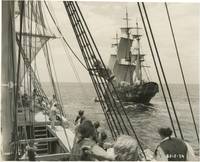
1962ref. 172536Buckinghamshire England: Rank Productions 1962. Two vintage borderless reference photographs from the 1962 film. With mimeo snipes affixed to the versos and with a Rank Productions stamp on the verso. Based on the 1924 novella by Herman Melville and the 1949 play by Louis O. Coxe and Robert H. Chapman. A British Naval ship during the Napoleonic Wars takes on a merchant sailor who is framed by the master-at arms for planning a mutiny. Nominated for one Academy Award. Shot on location in Valencia Spain and the Mediterranean Sea. 9.25 x 7.5 inches. Very Good plus with toning. Rank Productions unknown books
1962ref. 172536Buckinghamshire England: Rank Productions 1962. Two vintage borderless reference photographs from the 1962 film. With mimeo snipes affixed to the versos and with a Rank Productions stamp on the verso. Based on the 1924 novella by Herman Melville and the 1949 play by Louis O. Coxe and Robert H. Chapman. A British Naval ship during the Napoleonic Wars takes on a merchant sailor who is framed by the master-at arms for planning a mutiny. Nominated for one Academy Award. Shot on location in Valencia Spain and the Mediterranean Sea. 9.25 x 7.5 inches. Very Good plus with toning. Rank Productions unknown
1961ref. 166734N.p.: N.p. 1961. First Draft script for the 1962 film. Based on Louis O. Coxe and Robert H. Chapman's 1949 play which was based in turn on Herman Melville's 1924 novella. A seaman's innocence and optimism win him the affection of the entire crew except the abusive master-at-arms who eventually wrongly accuses the seaman of conspiracy to mutiny. The feature film debut of Terence Stamp who was nominated for a Best Supporting Actor Academy Award for his performance. Yellow wrappers with a die-cut title window in the British style. Title page present dated March 21 1961 noted as FIRST DRAFT with credit for screenwriter Peter Ustinov. 127 leaves with last page of text numbered 123. Mimeograph duplication rectos only with pink and blue revision pages throughout dated variously between May 5 and August 22 1961. Title page lightly toned else pages Near Fine wrapper about Near Fine bound internally with three silver brads. N.p. unknown
1957ref. 166733N.p.: N.p. 1957. Final script for the 1962 film. Early draft preceding the film's release by five years credited to screenwriter Robert Rossen. Rossen was ultimately uncredited in the film but was involved in this early stage of the script's development. Based on Louis O. Coxe and Robert H. Chapman's 1949 play which was based in turn on Herman Melville's 1924 novella. A seaman's innocence and natural beauty wins him the affection of the entire crew except the abusive master-at-arms who eventually wrongly accuses the seaman of conspiracy to mutiny. The feature film debut of Terence Stamp who was nominated for a Best Supporting Actor Academy Award for his performance. Yellow titled wrappers noted as FINAL SCREENPLAY and dated October 15 1957 with credit for screenwriter Robert Rossen. 122 leaves with last page of text numbered 122. Mimeograph duplication rectos only. Pages Near Fine wrapper Near Fine bound with three gold brads. N.p. unknown
1970ref. 141642Vienna: N.p. 1970. Treatment script for an unproduced film. Text in German. Based on Herman Hesse's last full-length novel "Das Glasperlenspiel" or "The Glass Bead Game" published in 1943. Years into the future a class of intellectuals is concerned only with running boys' boarding schools and playing the Glass Bead Game which involves a sophisticated synthesis of arts science and culture in order to excel. Hesse's novel was published in Switzerland because German government officials considered it a critique of the Nazi regime. Title page present noted as Treatment with credits for author Herman Hesse and screenwriter Dr. Titus Leber. 26 leaves with last leaf of text numbered 25. Xerographic duplication. Pages Near Fine housed in a Near Fine orange prong binder with clear front wrapper. Text in German. N.p. unknown books
1970ref. 141642Vienna: N.p. 1970. Treatment script for an unproduced film. Text in German. Based on Herman Hesse's last full-length novel "Das Glasperlenspiel" or "The Glass Bead Game" published in 1943. Years into the future a class of intellectuals is concerned only with running boys' boarding schools and playing the Glass Bead Game which involves a sophisticated synthesis of arts science and culture in order to excel. Hesse's novel was published in Switzerland because German government officials considered it a critique of the Nazi regime. Title page present noted as Treatment with credits for author Herman Hesse and screenwriter Dr. Titus Leber. 26 leaves with last leaf of text numbered 25. Xerographic duplication. Pages Near Fine housed in a Near Fine orange prong binder with clear front wrapper. Text in German. N.p. unknown