11,058 results
1953ref. 152724N.p.: N.p. 1953. Vintage oversize borderless matte-finish double weight photograph of Charlton Heston receiving a massage on the set of the 1953 film. With the stamp of photographer Bill Avery on the verso. A Chief of Scouts mistrusts the Apache tribe after the chief refuses to sign a peace treaty but his concerns are disregarded by the US Army. Bill Avery worked as a photographer at Columbia Pictures in the early twentieth century with a brief interlude working as a combat cameraman during World War II. He also worked at MGM under noted photographer C.S. Bill and occasionally worked as a freelance publicity photographer shooting iconic images of Elvis Presley Jack Lemmon Katharine and Audrey Hepburn and Shirley MacLaine among many others. Shot on location in Texas. 9 x 13.5 inches. Near Fine. Pitts 166. N.p. unknown
1984ref. 153156New York: Robert Halmi Productions 1984. Draft script for the 1984 television film here under the working title "Nairobi." The film originally premiered on October 17 1984 on CBS. The Kenyan government hires a former Green Beret to stop a group of violent and unpredictable poachers. Blue untitled front wrapper lacking rear wrapper. Title page present dated April 1984 with credits for screenwriter David Epstein. 96 leaves with last page of text numbered 95. Xerographic duplication rectos only. Pages Near Fine wrapper Near Fine bound with two gold brads. Robert Halmi Productions unknown
1966ref. 166074N.p.: N.p. 1966. Vintage reference photograph from the 1966 British film showing Charlotte Rampling and Alan Bates. Based on the 1965 novel by Margaret Forster a portrait of 1960s Swinging London about a young woman who is torn between romances with her father's employer and the boyfriend of her pregnant flatmate. 10 x 8 inches. Near Fine. N.p. unknown books
1966ref. 166074N.p.: N.p. 1966. Vintage reference photograph from the 1966 British film showing Charlotte Rampling and Alan Bates. Based on the 1965 novel by Margaret Forster a portrait of 1960s Swinging London about a young woman who is torn between romances with her father's employer and the boyfriend of her pregnant flatmate. 10 x 8 inches. Near Fine. N.p. unknown
1918ref. 158606N.p.: N.p. 1918. Vintage borderless vernacular photograph of actor Charlie Chaplin writer Upton Sinclair and editor and publisher Rob Wagner on the set of the 1918 silent film. Annotations in manuscript ink on the verso identifying subjects. Wagner was the editor and publisher of "Script" a left-leaning weekly literary film magazine published in Beverly Hills between 1929 and 1949. A lifelong Socialist and advocate for progressive causes Wagner used "Script" to give a voice to blacklisted screenwriters including Dalton Trumbo and Gordon Kahn and prominent leftists including Sinclair Max Eastman and William C. deMille. Wagner served as something of a father figure to Chaplin who was about 17 years Wagner's junior after the two men met sometime in the mid-1910s. The pair formed a close friendship with Wagner serving as Chaplin's part-time secretary for a period and accompanying the actor on his Third Liberty Loan tour through the American south in 1918. Wagner introduced Chaplin to Sinclair and Max Eastman and together the three writers exerted a strong influence over Chaplin's political world view. Chaplin would go on to co-found the Motion Picture Relief Fund which later became the Motion Picture and Television Fund with Wagner in 1929. Approximately 5 x 4 inches. About Near Fine lightly age toned. N.p. unknown books
1952ref. 157989N.p.: N.p. 1952. Vintage reference photograph from the 1952 film showing actor and director Charlie Chaplin in costume as a clown. From the archive of film historian and author Joel Finler. Autobiographically reflective of screen icon Charlie Chaplin's fears of being left behind in the fading vaudeville and silent film era depicting the final years of a washed-up stage clown who briefly maintains an impossible relationship with a young dancer representative of a new generation of performers. The first and only time that Chaplin and fellow silent film star Buster Keaton would appear onscreen together and the only Chaplin picture to win an Academy Award albeit for the original score of the 1972 re-release. 10 x 8 inches with wide margins image measuring 5 x 6.25 inches. Very Good plus lightly toned. Criterion Collection 756. Godard Histoires du cinema. Rosenbaum 1000. N.p. unknown books
1952ref. 153204N.p.: N.p. 1952. Vintage reference photograph from the 1952 film showing a ballet performance from the perspective of the audience with the orchestra pit and conductor visible in the foreground. From the archive of film historian and author Joel Finler. Autobiographically reflective of screen icon Charlie Chaplin's fears of being left behind in the fading vaudeville and silent film era depicting the final years of a washed-up stage clown who briefly maintains an impossible relationship with a young dancer representative of a new generation of performers. The first and only time that Chaplin and fellow silent film star Buster Keaton would appear onscreen together and the only Chaplin picture to win an Academy Award albeit for the original score of the 1972 re-release. 10 x 8 inches. Very Good plus overall. Criterion Collection 756. Godard Histoires du cinema. Rosenbaum 1000. N.p. unknown books
1959ref. 159651Beverly Hills CA: Charles Chaplin Productions / United Artists 1959. Vintage studio still photograph from the 1959 re-release of the 1928 silent film showing actor and director Charlie Chaplin. Several manuscript ink and pencil annotations on the verso. A man wanders into the middle of a circus performance and accidentally becomes a hit. He is hired as a performer later falling in love with the ringmaster's stepdaughter. Shot on location in West Hollywood Los Angeles and Glendale California. 8 x 10 inches. Very Good plus. Criterion Collection 996. Ebert IV. Charles Chaplin Productions / United Artists unknown books
1940ref. 171507Beverly Hills CA: United Artists 1940. Two vintage programs from the premiere of Charlie Chaplin's classic satire held in New York on October 15 1940. Includes a large-format 14-page illustrated program and smaller bi-fold black-and-white program. Color program with illustrations by noted artist Al Hirschfeld. Affixed to the title page of the color program are two ticket stubs for an October 30 1940 showing of the film at the Astor Theatre. The premiere was held at both the Astor and the Capitol Theatres in New York to accommodate high patron turnout. For his follow-up to his 1936 classic "Modern Times" Chaplin chose to do what only a handful of other films dared to do in 1940-make fun of Hitler. Though several of Chaplin's previous films had made use of music and sound effects and while Chaplin had sung briefly in "Modern Times" "The Great Dictator" marked the first time he spoke dialogue onscreen. Large-format program 9 x 10 inches saddle-stapled. Smaller program 6.25 x 9.5 inches bi-fold. Both programs Very Good plus to Near Fine with some light foxing toning and soil to the extremities. Criterion Collection 565. United Artists unknown books
1952ref. 157989N.p.: N.p. 1952. Vintage reference photograph from the 1952 film showing actor and director Charlie Chaplin in costume as a clown. From the archive of film historian and author Joel Finler. Autobiographically reflective of screen icon Charlie Chaplin's fears of being left behind in the fading vaudeville and silent film era depicting the final years of a washed-up stage clown who briefly maintains an impossible relationship with a young dancer representative of a new generation of performers. The first and only time that Chaplin and fellow silent film star Buster Keaton would appear onscreen together and the only Chaplin picture to win an Academy Award albeit for the original score of the 1972 re-release. 10 x 8 inches with wide margins image measuring 5 x 6.25 inches. Very Good plus lightly toned. Criterion Collection 756. Godard Histoires du cinema. Rosenbaum 1000. N.p. unknown
1952ref. 153204N.p.: N.p. 1952. Vintage reference photograph from the 1952 film showing a ballet performance from the perspective of the audience with the orchestra pit and conductor visible in the foreground. From the archive of film historian and author Joel Finler. Autobiographically reflective of screen icon Charlie Chaplin's fears of being left behind in the fading vaudeville and silent film era depicting the final years of a washed-up stage clown who briefly maintains an impossible relationship with a young dancer representative of a new generation of performers. The first and only time that Chaplin and fellow silent film star Buster Keaton would appear onscreen together and the only Chaplin picture to win an Academy Award albeit for the original score of the 1972 re-release. 10 x 8 inches. Very Good plus overall. Criterion Collection 756. Godard Histoires du cinema. Rosenbaum 1000. N.p. unknown
1918ref. 158606N.p.: N.p. 1918. Vintage borderless vernacular photograph of actor Charlie Chaplin writer Upton Sinclair and editor and publisher Rob Wagner on the set of the 1918 silent film. Annotations in manuscript ink on the verso identifying subjects. Wagner was the editor and publisher of "Script" a left-leaning weekly literary film magazine published in Beverly Hills between 1929 and 1949. A lifelong Socialist and advocate for progressive causes Wagner used "Script" to give a voice to blacklisted screenwriters including Dalton Trumbo and Gordon Kahn and prominent leftists including Sinclair Max Eastman and William C. deMille. Wagner served as something of a father figure to Chaplin who was about 17 years Wagner's junior after the two men met sometime in the mid-1910s. The pair formed a close friendship with Wagner serving as Chaplin's part-time secretary for a period and accompanying the actor on his Third Liberty Loan tour through the American south in 1918. Wagner introduced Chaplin to Sinclair and Max Eastman and together the three writers exerted a strong influence over Chaplin's political world view. Chaplin would go on to co-found the Motion Picture Relief Fund which later became the Motion Picture and Television Fund with Wagner in 1929. Approximately 5 x 4 inches. About Near Fine lightly age toned. N.p. unknown
1940ref. 171507Beverly Hills CA: United Artists 1940. Two vintage programs from the premiere of Charlie Chaplin's classic satire held in New York on October 15 1940. Includes a large-format 14-page illustrated program and smaller bi-fold black-and-white program. Color program with illustrations by noted artist Al Hirschfeld. Affixed to the title page of the color program are two ticket stubs for an October 30 1940 showing of the film at the Astor Theatre. The premiere was held at both the Astor and the Capitol Theatres in New York to accommodate high patron turnout. For his follow-up to his 1936 classic "Modern Times" Chaplin chose to do what only a handful of other films dared to do in 1940-make fun of Hitler. Though several of Chaplin's previous films had made use of music and sound effects and while Chaplin had sung briefly in "Modern Times" "The Great Dictator" marked the first time he spoke dialogue onscreen. Large-format program 9 x 10 inches saddle-stapled. Smaller program 6.25 x 9.5 inches bi-fold. Both programs Very Good plus to Near Fine with some light foxing toning and soil to the extremities. Criterion Collection 565. United Artists unknown
1970ref. 142976Culver City CA: Columbia Pictures 1970. Draft script for the 1970 film. One of the more notable scripts from character actor and writer Leo Gordon whose Hollywood career began after his dishonorable discharge during WWll for robbing patrons at a bar. Throughout his 40 years as an actor art imitated life as the burly Gordon typically played an outlaw typecast predominately in Westerns. Peter Collinson fresh off "The Italian Job" was reportedly a brute force in addition to excruciating temperatures on a set that was 200 miles outside of Istanbul. The pairing of the leads was lauded as Charles Bronson was at the height of European fame alongside a well-established Tony Curtis. Set in 1922 Greco-Turkish War shot on location in Turkey. Blue titled wrappers. Title page present with credits for Leo V. Gordon. 129 leaves with last page of text numbered 129. Xerographically reproduced. Pages Near Fine wrapper Very Good plus bound internally with three gold brads. Columbia Pictures unknown books
1970ref. 142976Culver City CA: Columbia Pictures 1970. Draft script for the 1970 film. One of the more notable scripts from character actor and writer Leo Gordon whose Hollywood career began after his dishonorable discharge during WWll for robbing patrons at a bar. Throughout his 40 years as an actor art imitated life as the burly Gordon typically played an outlaw typecast predominately in Westerns. Peter Collinson fresh off "The Italian Job" was reportedly a brute force in addition to excruciating temperatures on a set that was 200 miles outside of Istanbul. The pairing of the leads was lauded as Charles Bronson was at the height of European fame alongside a well-established Tony Curtis. Set in 1922 Greco-Turkish War shot on location in Turkey. Blue titled wrappers. Title page present with credits for Leo V. Gordon. 129 leaves with last page of text numbered 129. Xerographically reproduced. Pages Near Fine wrapper Very Good plus bound internally with three gold brads. Columbia Pictures unknown
1960ref. 125432Los Angeles: Twentieth Century-Fox 1960. Original pressbook for the 1960 film noir. Based on the novel "All the Way" by noted hard-boiled author Charles Williams. Edmond O'Brien is hired to impersonate a murdered businessman and dominates nearly every scene mostly on the phone as the "third voice" in this strange film post-noir entry. The first adaptation of a of Charles Williams novel and one of only a few American film adaptations of his work. One sheet folded twice as issued with one insert 13 x 16 inches. Very Good plus with a faint horizontal fold crease at the center of the wrapper and pages a few short closed tears and light rubbing. Spicer p. 424. Twentieth Century-Fox unknown books
1960ref. 125432Los Angeles: Twentieth Century-Fox 1960. Original pressbook for the 1960 film noir. Based on the novel "All the Way" by noted hard-boiled author Charles Williams. Edmond O'Brien is hired to impersonate a murdered businessman and dominates nearly every scene mostly on the phone as the "third voice" in this strange film post-noir entry. The first adaptation of a of Charles Williams novel and one of only a few American film adaptations of his work. One sheet folded twice as issued with one insert 13 x 16 inches. Very Good plus with a faint horizontal fold crease at the center of the wrapper and pages a few short closed tears and light rubbing. Spicer p. 424. Twentieth Century-Fox unknown
1964ref. 158812Beverly Hills CA: Metro-Goldwyn-Mayer MGM 1964. One vintage studio still photograph and one vintage reference photograph from a 1964 re-release of the 1953 film. One photograph with a mimeo snipe on the verso. Based on the 1950 short story "The Seven Souls of Clement O'Reilly" by Paul Gallico. A young girl takes up a job at a carnival in a puppet act unaware that the puppeteer is in love with her. Nominated for six Academy Awards and the Palm D'or. Set in provincial France. One photograph 8 x 10 inches one photograph 10 x 8 inches. Very Good plus with one photograph missing a chip along the left edge. Godard Histoires du cinema. Metro-Goldwyn-Mayer [MGM] unknown books
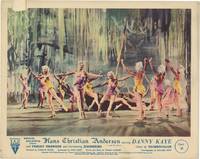
1952ref. 172537Culver City CA: RKO Radio Pictures 1952. Three vintage hand-tinted color British front-of-house cards still from the 1952 film. A fictionalized account of the life of Hans Christian Anderson who creates some of his famous fairy tales through his interactions with the people of Copenhagen. Nominated for six Academy Awards. Set in Denmark. 8 x 10 inches. Very Good plus with creasing and one photograph with bruising at the top left corner. RKO Radio Pictures unknown books
1952ref. 172537Culver City CA: RKO Radio Pictures 1952. Three vintage hand-tinted color British front-of-house cards still from the 1952 film. A fictionalized account of the life of Hans Christian Anderson who creates some of his famous fairy tales through his interactions with the people of Copenhagen. Nominated for six Academy Awards. Set in Denmark. 8 x 10 inches. Very Good plus with creasing and one photograph with bruising at the top left corner. RKO Radio Pictures unknown
1985ref. 147293N.p.: N.p. 1985. Treatment script for an unproduced television series. Text in Spanish. A seven-part television series exploring the cultural heritage of Mexico using noted director John Huston's reflections on his time spent in Puerto Vallarta Mexico as a reference. Set in Mexico. White untitled wrappers. Title page present dated 1985 noted as Treatment and Images with credits for screenwriters. Approximately 50 leaves not numbered. Xerographic duplication rectos only. Pages Very Good plus wrapper Very Good with a light partial circle stain on the front wrapper and bottom edges bound internally with three gold brads. N.p. unknown books
1985ref. 146600N.p.: N.p. 1985. Treatment script for an unproduced television series. A seven-part television series exploring the cultural heritage of Mexico using noted director John Huston's reflections on his time spent in Puerto Vallarta Mexico as a reference. Set in Mexico. White untitled generic Paul Kohner casting agency wrappers. Title page present noted as Tratamiento with credits for screenwriters Charles Pavlich and Patrick Griffin. 22 leaves. Xerographic duplication rectos only. Pages Very Good plus wrapper Very Good with light dampstaining on the front wrapper bound internally with three gold brads. N.p. unknown books
1985ref. 147293N.p.: N.p. 1985. Treatment script for an unproduced television series. Text in Spanish. A seven-part television series exploring the cultural heritage of Mexico using noted director John Huston's reflections on his time spent in Puerto Vallarta Mexico as a reference. Set in Mexico. White untitled wrappers. Title page present dated 1985 noted as Treatment and Images with credits for screenwriters. Approximately 50 leaves not numbered. Xerographic duplication rectos only. Pages Very Good plus wrapper Very Good with a light partial circle stain on the front wrapper and bottom edges bound internally with three gold brads. N.p. unknown
1985ref. 146600N.p.: N.p. 1985. Treatment script for an unproduced television series. A seven-part television series exploring the cultural heritage of Mexico using noted director John Huston's reflections on his time spent in Puerto Vallarta Mexico as a reference. Set in Mexico. White untitled generic Paul Kohner casting agency wrappers. Title page present noted as Tratamiento with credits for screenwriters Charles Pavlich and Patrick Griffin. 22 leaves. Xerographic duplication rectos only. Pages Very Good plus wrapper Very Good with light dampstaining on the front wrapper bound internally with three gold brads. N.p. unknown
1969ref. 162236N.p.: N.p. 1969. Two vintage studio still photographs from the 1969 film. Provenance stamps on the verso. Not to be confused with the 1924 silent German film of the same name by Carl Boese. A tribe of Amazon women are able to pull down airplanes flying over their island using a mysterious magnetic force and put all the men on the planes to use as sex slaves. 8 x 10 inches. One photograph with a small diagonal crease to the top left corner else Near Fine. N.p. unknown books