11,049 results
1967ref. 156031N.p.: N.p. 1967. Two vintage borderless reference photographs of Suzy Kendall Terence Morgan and Norman Rodway from the 1967 British film. Loosely based on the 1967 play "The Meter Man" by Scott Forbes. A pair of oafish thugs break into a wealthy London penthouse apartment planning to terrorize the couple they find within-only to discover the couple ready and willing to explore a number of bizarre sexual fetishes. Set in London. 7.25 x 7.25 inches. Near Fine. N.p. unknown
1967ref. 156031N.p.: N.p. 1967. Two vintage borderless reference photographs of Suzy Kendall Terence Morgan and Norman Rodway from the 1967 British film. Loosely based on the 1967 play "The Meter Man" by Scott Forbes. A pair of oafish thugs break into a wealthy London penthouse apartment planning to terrorize the couple they find within-only to discover the couple ready and willing to explore a number of bizarre sexual fetishes. Set in London. 7.25 x 7.25 inches. Near Fine. N.p. unknown books
1970ref. 147686Los Angeles: AVCO Embassy Pictures 1970. Collection of 20 vintage black and white reference photographs from the 1970 film. A cautionary tale following a suburban couple who discover their teenage daughter is addicted to LSD and cocaine. Set in New York. 8 x 10 inches. Near Fine. AVCO Embassy Pictures unknown
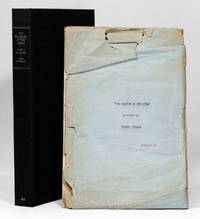
1973ref. 146856Rome: Audiovisual Editorial Programs 1973. Treatment script for an unproduced thirteen-part documentary series. Laid in with the script is a prospective budget for the film in English and an overview of the film in Italian as well as a typed letter from producer Sam Marx to casting agent Paul Kohner with manuscript ink annotations likely written by Kohner. Screenwriter George A. Vicas was best known for his documentary films for television especially for his involvement in the 1963 film "The Kremlin" notable for being the first time an American film crew was allowed to enter and record footage of Soviet Russia's government. "The Peoples of the USS.R." was intended to follow in its footsteps with each episode focusing on a different region of Russia. Set in the USSR. Green untitled wrappers. Title page present with credits for screenwriter GEORGE A. VICAS. 49 leaves with last page of text numbered XIII/45. Xerographic duplication rectos only. Pages Very Good plus wrapper Very Good plus with light offsetting on the front and rear wrappers bound internally with two gold brads. Audiovisual Editorial Programs unknown
1951ref. 148080Beverly Hills CA: Metro-Goldwyn-Mayer MGM 1951. Vintage studio still photograph of John Hodiak and Frank Korvac from the 1951 film. "7 AUG 27 51" stamp over blind stamp on the verso. John Sturges' deft adaptation of Eleazar Lipsky's 1950 novel is one of the best and most underrated courtroom-based noirs anchored by a performance by Spencer Tracy at the peak of his powers. Set in New York City shot on location in New York and California. 8 x 10 inches. Very Good plus with light creasing and edgewear. Selby US. Spicer US. Silver and Ward US. Grant US. Metro-Goldwyn-Mayer [MGM] unknown books
1970ref. 147686Los Angeles: AVCO Embassy Pictures 1970. Collection of 20 vintage black and white reference photographs from the 1970 film. A cautionary tale following a suburban couple who discover their teenage daughter is addicted to LSD and cocaine. Set in New York. 8 x 10 inches. Near Fine. AVCO Embassy Pictures unknown books
1977ref. 139656N.p.: American International Pictures AIP 1977. Vintage black-and-white studio still photograph from the 1977 film. Based on Edgar Rice Burroughs' 1918 novel of the same name. Based on the work of famous science fiction author Edgar Rice Burroughs best known for his classic "Tarzan." The second film in the Caspak Trilogy. Set in the fictional island of Caprona shot on location in the Canary Islands and England. 10 x 8 inches. Very Good plus with pin holes to the top left and bottom corners and manuscript annotations to the verso. American International Pictures [AIP] unknown books
1973ref. 146856Rome: Audiovisual Editorial Programs 1973. Treatment script for an unproduced thirteen-part documentary series. Laid in with the script is a prospective budget for the film in English and an overview of the film in Italian as well as a typed letter from producer Sam Marx to casting agent Paul Kohner with manuscript ink annotations likely written by Kohner. Screenwriter George A. Vicas was best known for his documentary films for television especially for his involvement in the 1963 film "The Kremlin" notable for being the first time an American film crew was allowed to enter and record footage of Soviet Russia's government. "The Peoples of the USS.R." was intended to follow in its footsteps with each episode focusing on a different region of Russia. Set in the USSR. Green untitled wrappers. Title page present with credits for screenwriter GEORGE A. VICAS. 49 leaves with last page of text numbered XIII/45. Xerographic duplication rectos only. Pages Very Good plus wrapper Very Good plus with light offsetting on the front and rear wrappers bound internally with two gold brads. Audiovisual Editorial Programs unknown books
1971ref. 162070N.p.: Manson Distributing 1971. Three vintage studio still photographs from the US release of the Canadian/US film. Provenance stamps and labels on the versos. Barbara Mills stars as a sexually unfulfilled housewife of a film producer. She begins an affair with a writer and the two break down en route to Las Vegas. There they encounter a group of thugs where things take a very dark turn. 8 x 10 inches. Near Fine. Manson Distributing unknown
1959ref. 164252N.p.: N.p. 1959. Four vintage reference photographs from the 1959 film including one of Tony Curtis and others on the set. One with a provenance label and annotations in manuscript pencil on the verso. A sex-starved soldier stationed at an Arctic station wins a date in Paris with a bombshell film star although a couple of military policemen and a female lieutenant are tasked with following the soldier in order to ensure the date stays chaste. 10 x 8 inches. Very Good plus. N.p. unknown
1971ref. 162070N.p.: Manson Distributing 1971. Three vintage studio still photographs from the US release of the Canadian/US film. Provenance stamps and labels on the versos. Barbara Mills stars as a sexually unfulfilled housewife of a film producer. She begins an affair with a writer and the two break down en route to Las Vegas. There they encounter a group of thugs where things take a very dark turn. 8 x 10 inches. Near Fine. Manson Distributing unknown books
1959ref. 164252N.p.: N.p. 1959. Four vintage reference photographs from the 1959 film including one of Tony Curtis and others on the set. One with a provenance label and annotations in manuscript pencil on the verso. A sex-starved soldier stationed at an Arctic station wins a date in Paris with a bombshell film star although a couple of military policemen and a female lieutenant are tasked with following the soldier in order to ensure the date stays chaste. 10 x 8 inches. Very Good plus. N.p. unknown books
1931ref. 170382Paris: Les Films Osso 1931. Vintage lobby card for the 1931 French film. Annotations in manuscript pencil on the verso. Based on the 1980 novel by Gaston Leroux. Featuring set designs by Russian art director Pierre Schild who worked on a number of notable films throughout the 1930s and 1940s including "L'Age d'Or" 1930. 11.5 x 9.5 inches. Very Good plus with some light soil and wear to the margins. Les Films Osso unknown
1931ref. 170382Paris: Les Films Osso 1931. Vintage lobby card for the 1931 French film. Annotations in manuscript pencil on the verso. Based on the 1980 novel by Gaston Leroux. Featuring set designs by Russian art director Pierre Schild who worked on a number of notable films throughout the 1930s and 1940s including "L'Age d'Or" 1930. 11.5 x 9.5 inches. Very Good plus with some light soil and wear to the margins. Les Films Osso unknown books
1984ref. 168022Los Angeles: The Samuel Goldwyn Company 1984. Two vintage reference photographs from the 1984 softcore film. Loosely based on the bondage-themed comics of John Willie and on his original character Sweet Gwendoline. After being kidnapped at a Chinese port a courageous young woman is rescued by a mercenary kicking off a string of wild adventures. 10 x 8 inches. About Fine. The Samuel Goldwyn Company unknown
1984ref. 168022Los Angeles: The Samuel Goldwyn Company 1984. Two vintage reference photographs from the 1984 softcore film. Loosely based on the bondage-themed comics of John Willie and on his original character Sweet Gwendoline. After being kidnapped at a Chinese port a courageous young woman is rescued by a mercenary kicking off a string of wild adventures. 10 x 8 inches. About Fine. The Samuel Goldwyn Company unknown books
1925ref. 3105California: Universal Pictures 1925. First edition. original wrappers. Good. AN EARLY WORKING DRAFT OF THE 1925 PHANTOM OF THE OPERA PRESERVING THE DARKER SCENARIO UNIVERSAL WROTE BEFORE ITS FRONT OFFICE ORDERED THE TERROR TONED DOWN AND INCLUDING AN ORIGIN STORY FOR THE PHANTOM THAT NEVER REACHED THE SCREEN. Lon Chaney's unmasking in The Phantom of the Opera remains one of the most famous moments in film history. The picture that audiences finally saw in 1925 though came out of a long and difficult production shaped by poorly received previews reshoots and repeated re-editing. Its story begins with Universal staff writer Elliott J. Clawson's adaptation of Gaston Leroux's 1910 novel. The present typescript records his scenario at an early stage before the studio's successive revisions reshaped it. THE PHANTOM'S LOST ORIGIN STORY: The most striking feature of the draft is a lengthy origin episode absent from every filmed version of the story. In it a Sultan condemns the Phantom to die on an anthill and the Persian who becomes his lifelong associate rescues him. Leroux's novel only alludes to its Phantom's past in Persia where a police official spared him from the Shah's death sentence. Clawson turned that background into a full dramatic sequence. The episode though was abandoned before filming began. Philip J. Riley mentions it in his narrative account of the production The Making of the Phantom of the Opera 1999 but the present manuscript preserves it as Clawson actually wrote it. Riley records that by the fifth revised shooting script most of the genuinely frightening scenes like the anthill death scene had been removed because the front office feared the original material would drive audiences out of the theater. RELATIONSHIP TO THE KNOWN RECORD: Riley's study draws on two principal script documents: an early Clawson draft which he quotes in places and the fifth revised shooting script which he reproduces in full. The present manuscript shares the general scope and character of the early draft yet it differs in both scene numbering and the wording of specific directions. At the bedchamber scene Riley's source is numbered 286; here the same scene is numbered 289. The three-scene offset indicates that this manuscript contains material Riley's source lacks at that point suggesting either an earlier compositional layer or a fuller parallel version. Riley does not say where his early draft is held so the relationship between the two documents remains open. Our comparison is limited to the passages Riley chose to quote and a full collation may well reveal further differences. THE ANNOTATIONS: Pencil annotations appear intermittently throughout. They are pointed and analytical raising questions of continuity pacing and plot logic. One asks how Christine could communicate with Raoul while held captive and another asks why certain developments do not occur earlier in a sequence. They suggest close review by a reader with editorial authority over the script. Note: Although the draft breaks off during the climactic rescue attempt by Raoul and Ledoux and does not include the full text as we've come to know the story the draft appears complete as it originally existed. There is no sign of removed pages - in fact the last page with type seems to be on a different stock and serves also as the rear wrapper - which is consistent with an unfinished working draft rather than later loss. RARITY: Universal silent-era screenplays rarely survive. Scripts were typed in small numbers on unstable pulp paper and much of the studio's early paper record was later discarded. This draft documents The Phantom of the Opera before commercial pressure and successive rewrites displaced Clawson's original conception. It preserves a version of the film that Universal chose not to make. Typescript working draft. Universal City California: Universal Pictures ca. 1925. More than 200 pages typed on 8.5 x 13 inch legal-size pulp stock; original blue wrapper; pale toned rear wrapper. Pencil annotations throughout. Front wrapper present but detached; leaves brittle with edge chipping creases foxing marginal staining and small losses as is typical of Universal scripts of the period. Housed in custom archival presentation box. Universal Pictures unknown
1944ref. 146004Hollywood: Republic Productions 1944. Shooting script for the 1944 film. Single manuscript pencil notation on the front wrapper. A physician researching life-after-death is possessed by the spirit of an executed murderer who uses the doctor's body to exact vengeance on those involved in his death. A Jekyll-and-Hyde-style supernatural horror B-movie unusual for Republic Productions who were better known for their Western pictures. Tan partial titled wrapper noted as SHOOTING SCRIPT on the front wrapper noted as production No. 1463 dated October 3 1944 with credits for screenwriter John K. Butler. Title page integral to the first page of text dated October 3 1944. 82 leaves with last page of text numbered 80. Mimeograph duplication rectos only with blue revision pages throughout dated 10/14/44. Pages Near Fine wrapper Very Good plus with splashes on the front wrapper bound with two gold brads. Republic Productions unknown
1925ref. 157313N.p.: Wardour Films 1925. Vintage double weight studio still photograph from the US release of the 1925 French silent film showing actress Sandra Milovanoff. Contemporary annotation in manuscript ink on the verso noting the film's title in English. From the archive of film historian and author Joel Finler. A man's soul is released from his body by a hypnotist at the Moulin Rouge nightclub leading him to go on a mischievous havoc-wreaking spree around the city of Paris. Set in Paris. 8 x 10 inches. Good only with brief creasing at the corners and faint overall age toning. Wardour Films unknown
1925ref. 157313N.p.: Wardour Films 1925. Vintage double weight studio still photograph from the US release of the 1925 French silent film showing actress Sandra Milovanoff. Contemporary annotation in manuscript ink on the verso noting the film's title in English. From the archive of film historian and author Joel Finler. A man's soul is released from his body by a hypnotist at the Moulin Rouge nightclub leading him to go on a mischievous havoc-wreaking spree around the city of Paris. Set in Paris. 8 x 10 inches. Good only with brief creasing at the corners and faint overall age toning. Wardour Films unknown books
1983ref. 148397Los Angeles: CBS Television Network 1983. Two vintage reference photographs of actor Michael York from the 1983 television film originally aired on January 29 on CBS. Based on the 1910 novel by Gaston Leroux. The composer for the Budapest Opera House seeks revenge for his wife's suicide and his own disfigured face after the opera house owner sets fire to the theatre. Set in Budapest and shot on location at the József Katona Theatre in Kecskemét Budapest. 8 x 10 inches. Near Fine. CBS Television Network unknown books
1925ref. 3105California: Universal Pictures 1925. First edition. original wrappers. Good. AN EARLY WORKING DRAFT OF THE 1925 PHANTOM OF THE OPERA PRESERVING THE DARKER SCENARIO UNIVERSAL WROTE BEFORE ITS FRONT OFFICE ORDERED THE TERROR TONED DOWN AND INCLUDING AN ORIGIN STORY FOR THE PHANTOM THAT NEVER REACHED THE SCREEN. Lon Chaney's unmasking in The Phantom of the Opera remains one of the most famous moments in film history. The picture that audiences finally saw in 1925 though came out of a long and difficult production shaped by poorly received previews reshoots and repeated re-editing. Its story begins with Universal staff writer Elliott J. Clawson's adaptation of Gaston Leroux's 1910 novel. The present typescript records his scenario at an early stage before the studio's successive revisions reshaped it. THE PHANTOM'S LOST ORIGIN STORY: The most striking feature of the draft is a lengthy origin episode absent from every filmed version of the story. In it a Sultan condemns the Phantom to die on an anthill and the Persian who becomes his lifelong associate rescues him. Leroux's novel only alludes to its Phantom's past in Persia where a police official spared him from the Shah's death sentence. Clawson turned that background into a full dramatic sequence. The episode though was abandoned before filming began. Philip J. Riley mentions it in his narrative account of the production The Making of the Phantom of the Opera 1999 but the present manuscript preserves it as Clawson actually wrote it. Riley records that by the fifth revised shooting script most of the genuinely frightening scenes like the anthill death scene had been removed because the front office feared the original material would drive audiences out of the theater. RELATIONSHIP TO THE KNOWN RECORD: Riley's study draws on two principal script documents: an early Clawson draft which he quotes in places and the fifth revised shooting script which he reproduces in full. The present manuscript shares the general scope and character of the early draft yet it differs in both scene numbering and the wording of specific directions. At the bedchamber scene Riley's source is numbered 286; here the same scene is numbered 289. The three-scene offset indicates that this manuscript contains material Riley's source lacks at that point suggesting either an earlier compositional layer or a fuller parallel version. Riley does not say where his early draft is held so the relationship between the two documents remains open. Our comparison is limited to the passages Riley chose to quote and a full collation may well reveal further differences. THE ANNOTATIONS: Pencil annotations appear intermittently throughout. They are pointed and analytical raising questions of continuity pacing and plot logic. One asks how Christine could communicate with Raoul while held captive and another asks why certain developments do not occur earlier in a sequence. They suggest close review by a reader with editorial authority over the script. Note: Although the draft breaks off during the climactic rescue attempt by Raoul and Ledoux and does not include the full text as we've come to know the story the draft appears complete as it originally existed. There is no sign of removed pages - in fact the last page with type seems to be on a different stock and serves also as the rear wrapper - which is consistent with an unfinished working draft rather than later loss. RARITY: Universal silent-era screenplays rarely survive. Scripts were typed in small numbers on unstable pulp paper and much of the studio's early paper record was later discarded. This draft documents The Phantom of the Opera before commercial pressure and successive rewrites displaced Clawson's original conception. It preserves a version of the film that Universal chose not to make. Typescript working draft. Universal City California: Universal Pictures ca. 1925. More than 200 pages typed on 8.5 x 13 inch legal-size pulp stock; original blue wrapper; pale toned rear wrapper. Pencil annotations throughout. Front wrapper present but detached; leaves brittle with edge chipping creases foxing marginal staining and small losses as is typical of Universal scripts of the period. Housed in custom archival presentation box. Universal Pictures unknown books
1944ref. 146004Hollywood: Republic Productions 1944. Shooting script for the 1944 film. Single manuscript pencil notation on the front wrapper. A physician researching life-after-death is possessed by the spirit of an executed murderer who uses the doctor's body to exact vengeance on those involved in his death. A Jekyll-and-Hyde-style supernatural horror B-movie unusual for Republic Productions who were better known for their Western pictures. Tan partial titled wrapper noted as SHOOTING SCRIPT on the front wrapper noted as production No. 1463 dated October 3 1944 with credits for screenwriter John K. Butler. Title page integral to the first page of text dated October 3 1944. 82 leaves with last page of text numbered 80. Mimeograph duplication rectos only with blue revision pages throughout dated 10/14/44. Pages Near Fine wrapper Very Good plus with splashes on the front wrapper bound with two gold brads. Republic Productions unknown books
1970ref. 168158Burbank CA: Warner Brothers 1970. Vintage studio still photograph from the 1970 film showing a line of men in drag. A rock-and-roll quartet is sent to Albania where they are tasked with recovering American hostages who have been kidnapped by Communists. Featuring numerous celebrity cameos by Busby Berkeley Xavier Cugat Andy Devine Ruby Keeler Dorothy Lamour Guy Lombardo Richard Pryor Colonel Sanders Ed Sullivan Rudy Vallee and many others. Shot on location in Ãvila. 10 x 8 inches. Very Good plus with a bruise at the bottom left corner. Warner Brothers unknown books
2001ref. 133189Paris: Jean-Louis Seigner 2001. Vintage oversize photograph of Roman Polanski on location in Warsaw in 2001 during the production of his 2002 film. Based on the 1946 memoir by Wladslaw Szpilman about his survival in the Nazi-occupied Warsaw Ghetto during World War II. Winner of the Palme d'Or at Cannes and three Academy Awards including Best Director and Best Screenplay. Nominated for four others including Best Picture. Set in Warsaw shot on location in Brandenberg and Berlin and Warsaw. 9.5 x 12 inches. Fine. In a custom museum-quality frame archivally mounted with UV glass. Jean-Louis Seigner unknown