CollectifLivre Rare Book

47 265 résultats
1962réf. bj1456Ciné Monde Revue 1962 In-4 (26,5 x 34,8 cm), revue dos agrafé, 42 pages ; exemplaire plié en deux, coin supérieur du quatrième plat corné, assez bon état général. Livraison a domicile (La Poste) ou en Mondial Relay sur simple demande.
1977réf. dz980Cinématographe Revue 1977 In-4 (21,5 x 27,5 cm), revue dos agrafé, 48 pages, photographies en noir et blanc ; plats défraîchis, coin inférieur du quatrième plat corné, intérieur frais, assez bon état général. Livraison a domicile (La Poste) ou en Mondial Relay sur simple demande.
1979réf. dz981Cinématographe Revue 1979 In-4 (21,5 x 27,5 cm), revue dos agrafé, 94 pages, photographies en noir et blanc ; dos et bord des plats usés, moitié de la dernière page découpée dans la longueur (manque de texte), état moyen. Livraison a domicile (La Poste) ou en Mondial Relay sur simple demande.
1964réf. sd1440Les Presses de la cité Revue 1964 In-4 (19,3 x 26 cm), revue dos agrafé, 65 pages ; dos de biais, frottements au premier plat, par ailleurs assez bon état. Livraison a domicile (La Poste) ou en Mondial Relay sur simple demande.
réf. ve591Société E.T.C. Revue In-8 (16 x 23,5 cm), revue dos carré collé, 352 pages, sans date [1980?] ; plats et dos frottés, quelques chocs et petites pliures sur les plats, rousseurs aux tranches, état moyen. Livraison a domicile (La Poste) ou en Mondial Relay sur simple demande.
1989réf. ra1339Kino Verlag GmbH Revue 1989 In-4 (21 x 28 cm), revue dos carré collé, 193 pages, texte en allemand ; coiffes frottées, pliures d'usage aux plats, quelques traces au quatrième plat, bon état général. Livraison a domicile (La Poste) ou en Mondial Relay sur simple demande.
1936réf. wx400Cinémonde Revue 1936 In-folio (27 x 43,5 cm), revue dos agrafé, paginé de 231 à 276, avec 4 pages de photos de Marlene Dietrich ; dos usé, rousseurs, froissements et brunissures aux plats, mouillure au quatrième plat ayant traversé la seconde moitié du corps d'ouvrage, état moyen. Livraison a domicile (La Poste) ou en Mondial Relay sur simple demande.
2014réf. cv3107Cinémas Revue 2014 In-8 (15,4 x 22,9 cm), revue dos carré collé, 268 pages, iconographie en noir et blanc, texte en anglais et français ; très bon état. Livraison a domicile (La Poste) ou en Mondial Relay sur simple demande.
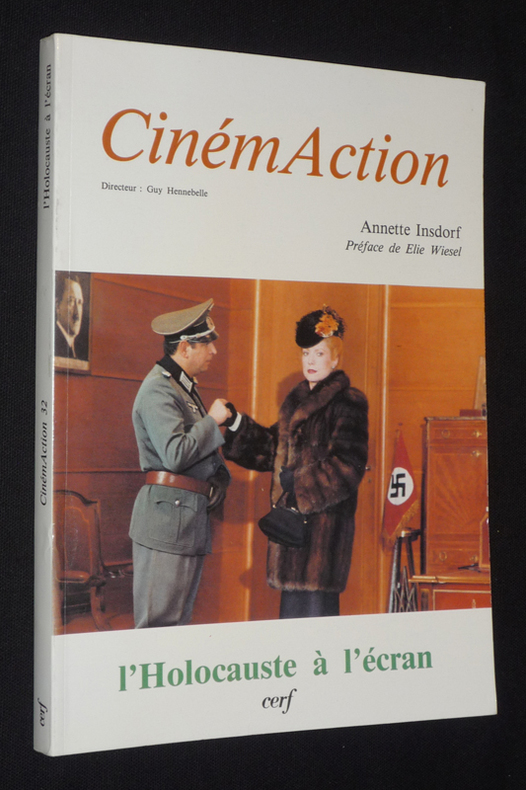
1985réf. yd1075Editions du Cerf Revue 1985 In-8 (17 x 24 cm), broché, 189 pages ; très bon état. Livraison a domicile (La Poste) ou en Mondial Relay sur simple demande.
2012réf. 100074950Paris. 15 cm x 23 5 cm. 2012. Broché. 190 pages. Paris La Revue des Deux Mondes juillet-août 2012. Broché 15 cm x 23 5 cm 190 pages. Interview de Keith Richards par Michel Crépu textes de Michka Assayas Michel Crépu Charles Ficat Gérard Hocmard Marc Lambron Jean-Pierre Naugrette Eric Neuhoff et Arnaud Viviant. Très bon état
1970réf. vb352Denoël Médiations Broché 1970 In-8 (13,7 x 21,3 cm), broché, 304 pages ; papier bruni, couverture défraîchie, légère pliure au dos, assez bon état. Livraison a domicile (La Poste) ou en Mondial Relay sur simple demande.
réf. 1778Esprit, janvier 1983. In-8. Broché. 288 pages. Couverture légèrement insolée.
réf. 16033Image et son, n°188, novembre 1965. In-12, broché.
2001réf. 99790Paris Léo Scheer 2001 1 vol. broché in-8, broché, couverture illustrée d'une vignette, 159 pp., nombreuses reproductions en noir et en couleurs. Au sommaire : travellings soviétiques, Yasujiro Ozu et Yuhary Atsuta, etc. Très bon état.
2001réf. 99790Paris Léo Scheer 2001 1 vol. broché in-8, broché, couverture illustrée d'une vignette, 159 pp., nombreuses reproductions en noir et en couleurs. Au sommaire : travellings soviétiques, Yasujiro Ozu et Yuhary Atsuta, etc. Très bon état.
1933réf. 38355Edinburgh: G. D. Robinson 1933. First edition. Hardcover. g. Large octavo. 245 3 2 262pp. Contemporary olive cloth with gold lettering on spines. Paul Burnford's Ex Libris on inside of each front cover. Complete collection of the first eight issues two years of "Cinema Quarterly" a film magazine published in Edinburgh Scotland between 1932 and 1935. Featuring regular contributions from John Grierson Basil Wright Stuart Legg and Alberto Cavalcanti the magazine became a critical centre for the emerging British Documentary movement. Some of Grierson's defining pieces on Documentary cinema first appeared within these pages championing and defining 'Documentary or the creative treatment of actuality' as a 'new art.' Forsyth Hardy would serve as review editor and Paul Rotha as London correspondent. In later years the magazine would increasingly include contributions from noted literary figures including Graham Greene Aldous Huxley T.S. Eliot and Somerset Maugham. The magazine was renamed "World Film News and Television Progress" in 1936. After changing its name for three issues to "SEE: World Film News" the magazine ceased publication at the end of 1938. Each issue contains from 8 to 10 pages of b/w photographic reproductions depicting mostly movie scenes. Some of the documentaries and movies featured in this work are the following: Robert J. Flaherty's "Man of Aran;" Stuart Legg's "The New Generation;" Fritz Lang's "M;" Sergei M. Eisenstein's "Que Viva Mexico!;" Eric Waschneck's "Zwei Menschen;" Arthur Elton's "Voice of the World" a documentary dealing with the manufacture of radio sets and the influence of wireless; E. Dzigan's "Woman" a Soviet film dealing with the 'fuller' life experienced by women in the USSR; Andrew Buchanan's "Dance Flaws;" René Clair's "Le Quatorze Juillet;" G. W. Pabst's "Don Quixote;" Alexander Korda's "The Private Life of Henry VIII;" Rouben Mamoulian's "The Song of Songs;" George Roland's "The Wandering Jew;" Jean Vigo's "Zéro de Conduite;" Alfred Hitchcock's "Waltzes from Vienna;" Basil Wright's "Windmill in Barbados;" Pudovkin's "Deserter;" etc. Head and tail of spine rubbed and partly chipped. Moderate and sporadic age-toning along paper margin. Bindings in overall good- interior in good to very good condition. Paul Burnford 1914-1999 produced or directed over 100 academic films on subjects ranging from zoology to history to art. Documentarians John Grierson and Paul Rotha offered Paul his first professional job as a film maker and became his mentors. His first film was "Rooftops of London" followed by "Statues of London." Paul also made a film about the hardships of the miners in Wales and later worked for MGM in London. Having made a name for himself as a documentary film maker he was officered a job as head photographer at the London Zoo by Sir Julian Huxley the famed biologist and scientist and soon Burnford became known for his filming of animals. Many years later when the San Diego zoo opened Sir Julian was there to be honored for his work in modernizing zoos and asked Paul to join him. Burnford later used the San Diego Zoo and Wild Animal Park in Escondido as locations for many of his films. In the mid-1930s he edited Sergei Eisenstein's classic film "Qué Viva México." In 1939 when he was 25 years old Burnford's book "Filming for Amateurs" was published and was soon in use as a text book in the film school at the university of Southern California. In the World War II era Burnford arrived in the U.S. as a drafted civilian working for the British Ministry of Agriculture in conjunction with the U.S. Department of Agriculture. Based in Washington D.C. he was soon making films about crop conservation flying over the Midwest and shooting various farmlands. He was never allowed to edit his film or even see a finished project but instead was instructed to take his footage to an office in Rockefeller Center. Sometimes he with film in hand would board a camouflaged military transport and be flown back to London to deposit the film there. He was under strict orders not to contact any friends or family while in England. As later revealed in William Stevenson's "A Man Called Intrepid" microdots were placed on such films made by various filmmakers as a means of carrying intelligence between the United States and Great Britain. Through friend Sidney Solow Burnford was introduced to Samuel Mayer and soon began a short tenure as a director of short films at MGM and worked on George Cukor's "It Should Happen to You." He also served a short stint at Columbia Pictures. Burnford soon realized that he wanted to run his own film company and be more in charge of the end product. Along with teacher Irwin Irv Braun he founded Film Associates a company specializing in educational films. Every film he made won an award. Paul was now recognized as one of the top educational film producers. Eventually Film Associated was bought by CBS and merged with Bailey Films to become Bailey Film Associates BFA. From that point onward he worked as an independent producer. G. D. Robinson hardcover
1933réf. 38355Edinburgh: G. D. Robinson 1933. First edition. Hardcover. g. Large octavo. 245 3 2 262pp. Contemporary olive cloth with gold lettering on spines. Paul Burnford's Ex Libris on inside of each front cover. Complete collection of the first eight issues two years of "Cinema Quarterly" a film magazine published in Edinburgh Scotland between 1932 and 1935. Featuring regular contributions from John Grierson Basil Wright Stuart Legg and Alberto Cavalcanti the magazine became a critical centre for the emerging British Documentary movement. Some of Grierson's defining pieces on Documentary cinema first appeared within these pages championing and defining 'Documentary or the creative treatment of actuality' as a 'new art.' Forsyth Hardy would serve as review editor and Paul Rotha as London correspondent. In later years the magazine would increasingly include contributions from noted literary figures including Graham Greene Aldous Huxley T.S. Eliot and Somerset Maugham. The magazine was renamed "World Film News and Television Progress" in 1936. After changing its name for three issues to "SEE: World Film News" the magazine ceased publication at the end of 1938. Each issue contains from 8 to 10 pages of b/w photographic reproductions depicting mostly movie scenes. Some of the documentaries and movies featured in this work are the following: Robert J. Flaherty's "Man of Aran;" Stuart Legg's "The New Generation;" Fritz Lang's "M;" Sergei M. Eisenstein's "Que Viva Mexico!;" Eric Waschneck's "Zwei Menschen;" Arthur Elton's "Voice of the World" a documentary dealing with the manufacture of radio sets and the influence of wireless; E. Dzigan's "Woman" a Soviet film dealing with the 'fuller' life experienced by women in the USSR; Andrew Buchanan's "Dance Flaws;" René Clair's "Le Quatorze Juillet;" G. W. Pabst's "Don Quixote;" Alexander Korda's "The Private Life of Henry VIII;" Rouben Mamoulian's "The Song of Songs;" George Roland's "The Wandering Jew;" Jean Vigo's "Zéro de Conduite;" Alfred Hitchcock's "Waltzes from Vienna;" Basil Wright's "Windmill in Barbados;" Pudovkin's "Deserter;" etc. Head and tail of spine rubbed and partly chipped. Moderate and sporadic age-toning along paper margin. Bindings in overall good- interior in good to very good condition. Paul Burnford 1914-1999 produced or directed over 100 academic films on subjects ranging from zoology to history to art. Documentarians John Grierson and Paul Rotha offered Paul his first professional job as a film maker and became his mentors. His first film was "Rooftops of London" followed by "Statues of London." Paul also made a film about the hardships of the miners in Wales and later worked for MGM in London. Having made a name for himself as a documentary film maker he was officered a job as head photographer at the London Zoo by Sir Julian Huxley the famed biologist and scientist and soon Burnford became known for his filming of animals. Many years later when the San Diego zoo opened Sir Julian was there to be honored for his work in modernizing zoos and asked Paul to join him. Burnford later used the San Diego Zoo and Wild Animal Park in Escondido as locations for many of his films. In the mid-1930s he edited Sergei Eisenstein's classic film "Qué Viva México." In 1939 when he was 25 years old Burnford's book "Filming for Amateurs" was published and was soon in use as a text book in the film school at the university of Southern California. In the World War II era Burnford arrived in the U.S. as a drafted civilian working for the British Ministry of Agriculture in conjunction with the U.S. Department of Agriculture. Based in Washington D.C. he was soon making films about crop conservation flying over the Midwest and shooting various farmlands. He was never allowed to edit his film or even see a finished project but instead was instructed to take his footage to an office in Rockefeller Center. Sometimes he with film in hand would board a camouflaged military transport and be flown back to London to deposit the film there. He was under strict orders not to contact any friends or family while in England. As later revealed in William Stevenson's "A Man Called Intrepid" microdots were placed on such films made by various filmmakers as a means of carrying intelligence between the United States and Great Britain. Through friend Sidney Solow Burnford was introduced to Samuel Mayer and soon began a short tenure as a director of short films at MGM and worked on George Cukor's "It Should Happen to You." He also served a short stint at Columbia Pictures. Burnford soon realized that he wanted to run his own film company and be more in charge of the end product. Along with teacher Irwin Irv Braun he founded Film Associates a company specializing in educational films. Every film he made won an award. Paul was now recognized as one of the top educational film producers. Eventually Film Associated was bought by CBS and merged with Bailey Films to become Bailey Film Associates BFA. From that point onward he worked as an independent producer. G. D. Robinson hardcover books
1975Une revue brochée de format in 8° carré de 120 pp. Bon état. Voir les photos.
1945Un volume broché de format petit in 8° de 258 pp.; nombreux hors texte photographiques. Bon état. Voir photo.
réf. 70436E.T.A.I. 1989, fascicule broché, 74pp avec figures et photographies in-texte - très bon état
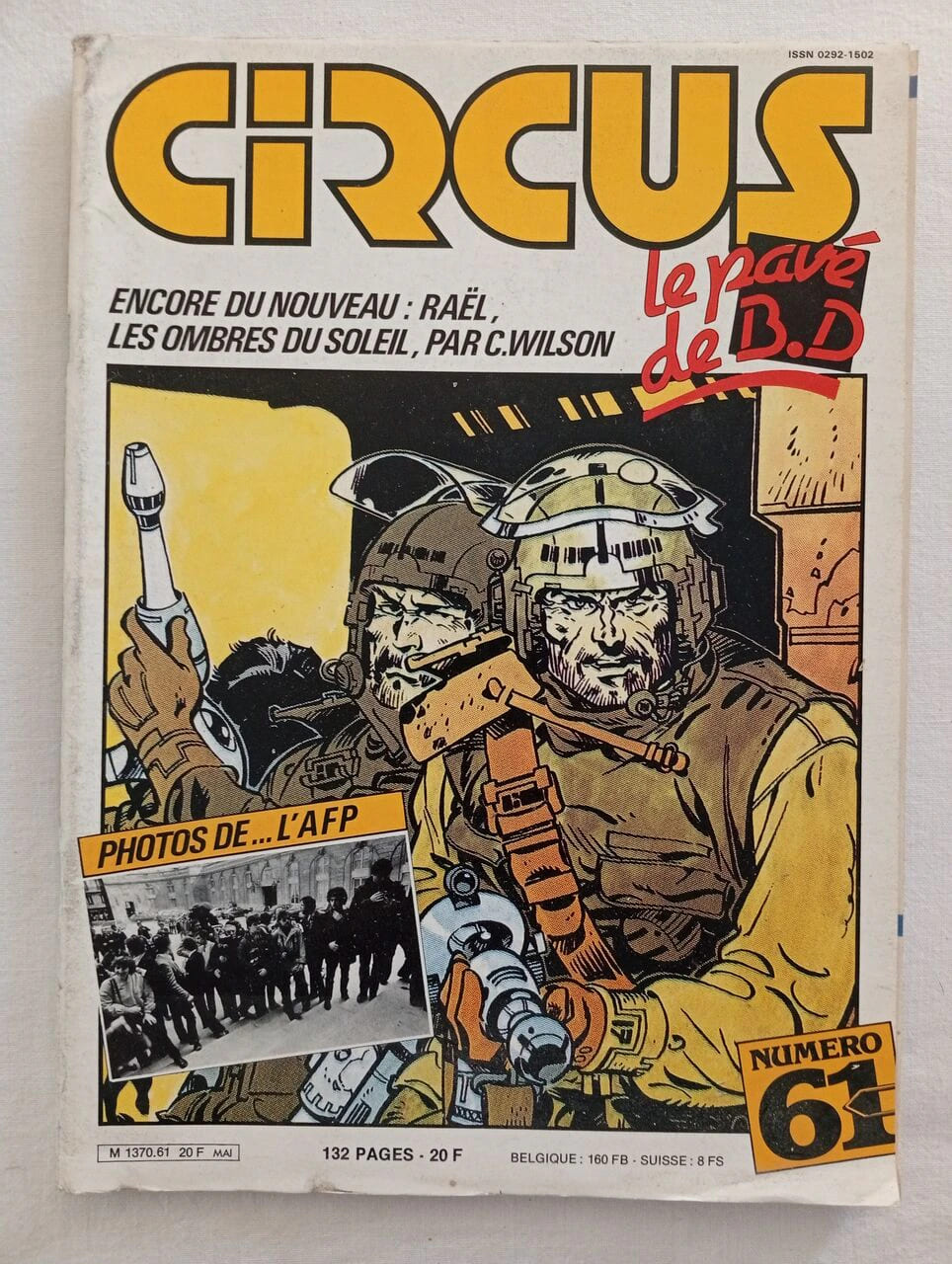
réf. 500470197132 pages collection le pavé de B.D. Sans date. 132 pages.
1976réf. nc1120Glénat Circus Broché 1976 "In-4 (21x29 cm), broché, couverture illustrée, 66 pages, n°8 de la revue de bande dessinée ""Circus"", septembre 1976, contient ""La Consigne ardente"" de Gabriel et Porfirio ; coiffes et bords frottés, des marques d'usage aux plats, bon état général. Livraison a domicile (La Poste) ou en Mondial Relay sur simple demande."
réf. 500355172Glénat Sans date. Le contenu concerne la revue de bande dessinée Circus de Glénat en décembre 1978 où est publié le premier chapitre de la série Félina créée par Victor Mora et Annie Goetzinger. Cette série a marqué le début de la reconnaissance de Goetzinger qui a remporté un prix à la Foire du livre de jeunesse de Bologne
1980Une revue de format in 8° brochée de 100 pp.; nombreuses illustrations de Lauzier, Quino, Pichard, Giardino, Serre... Bon état. Photos.
réf. 7121Cistre Essais 9 de 1980 - Ed. l'Age d'Homme - in-8 broché