877 résultats
2019réf. 9784Newark VT: Janus Press 2019. Hard Cover. Fine binding. Quarto. 6 pp. illus. Limited edition one of 120 numbered copies. Bound in a digital print on heavily textured paper over boards. Colophon inside the front cover the textblock is a 5-panel accordion foldout: the first three panels comprise a large vitreograph print by Van Vliet printed by Judith O'Rourke at Littleton Studios; this is followed by two panels each containing a poem by Ensing letterpress printed by Andrew Miller-Brown. The rear pastedown is a foldout digital print. All housed in a paper portfolio with author title and "Janus Press" on the front. A fine copy. Born in the Netherlands Ensing moved to New Zealand as a young girl. As a poet she has become a voice of New Zealand and these two evocative poems "Muriwai" and "At Muriwai" capture both a sense of place but also a certain transience of time. Beautifully illustrated by Van Vliet's images. A book that can be leafed through or folded out to striking effect displaying Van Vliet's images of the reef at Muriwai in New Zealand. Janus Press unknown
réf. B9781464811142Paperback. New. paperback
réf. B9781430219958Paperback / softback. New. This book by Microsoft technology specialist Philo Janus shows readers how to exploit the full power of Analysis Services. paperback
réf. 0929371879.Gpaperback. Good. Access codes and supplements are not guaranteed with used items. May be an ex-library book. paperback
réf. 2414506679.Gpaperback. Good. Access codes and supplements are not guaranteed with used items. May be an ex-library book. paperback
réf. 2414539496.Gpaperback. Good. Access codes and supplements are not guaranteed with used items. May be an ex-library book. paperback
réf. 241447341X.Gpaperback. Good. Access codes and supplements are not guaranteed with used items. May be an ex-library book. paperback
réf. 2414496592.Gpaperback. Good. Access codes and supplements are not guaranteed with used items. May be an ex-library book. paperback
1705réf. 952276Leipzig: Christian Goetze 1705. paperback. 16 Seiten. Geheft mit Rückenstreifen. Oktav 200 x 162 mm. Wohlerhalten. "Eine weitere Dissertation über den Fleiß der Gelehrten." Veröffentlichungsangabe: "Lipsiae Litteris Christiani Goezii." - VD18 14874687. Sehr selten. Über KVK und OCLC konnten wir nur sechs Exemplare in Bibliotheken weltweit nachweisen. Die Dissertation von Daniel Friedrich Janus Präses geboren in Bad Schmiedeberg 1683 - 1760 war Philologe Gymnasiallehrer Rektor und Privatdozent und Johann Christian Barthel Respondent belegt mit zahlreichen Belegstellen antiker und zeitgenössischer Autoren den Fleiß und Eifer der Gelehrten. - First edition wrappers good. - Erste Ausgabe. - RFM - Weitere Bilder auf Anfrage oder auf unserer Homepage. Wegen Urlaub kann Ihre Bestellung / Anfrage erst nach dem 12.10.2026 bearbeitet werden. - Because of holidays your order / question can be handled only after 10/12/2026. Christian Goetze paperback
réf. B9781021036032Hardback. New. hardcover
réf. 0934831009.Ghardcover. Good. Access codes and supplements are not guaranteed with used items. May be an ex-library book. hardcover
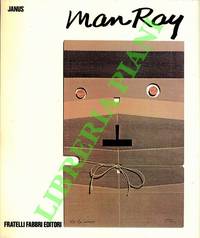
réf. 3-86194Milano Fabbri 1973 4to legatura editoriale in tutta tela verde con sovraccoperta illustrata a colori cofanetto editoriale in tela verde pp. 189 con moltissime illustrazioni in nero e a colori nel testo. Ottime condizioni. hardcover
réf. 078536322X.GGood. Access codes and supplements are not guaranteed with used items. May be an ex-library book. unknown
réf. 6694575University of Wisconsin Press . Papeback. New. pp. 324 University of Wisconsin Press unknown
réf. A9789535134138Hardback. New. hardcover
réf. 1793627428.Ghardcover. Good. Access codes and supplements are not guaranteed with used items. May be an ex-library book. hardcover
réf. 74477Frankfurt am Main Senckenbergische Naturforschende Gesellschaft AND Deutsche Malakozoologische Gesellschaft 1962-1982. Three volumes in 37 Issues. Folio 30.0 x 21.5 cm. 1360 pp. 284; 424; 543 68 xxxviii; plate with portraits. No wrappers issued except for the index to the third volume. = An uninterrupted run from the start of this very informative German periodical. It comprises Volumes 1-3 alternatively numbered per issue 1-36 a supplement and an index to the third part. A few issues are combined viz. 328-29 and 333-34. Founding editors were Adolf Zilch and Horst Janus. Unmarked. Very good copies. unknown
réf. 159134Leiden Lugduni Batavorum Apud Franciscum Hegerum 1631. Colophon at the end: 'Impressa Lugduni Batavorum in nova officina typographica Wilhelmi Christiani 1631' 12mo. XXVIII384 recte 3821 colophon1 blank p. Vellum. 13.5 cm 'The kissing poet' Ref: STCN ppn 833698613; Brunet 5257; Willems 1669; Graesse 6339; Ebert 20786 Details: 5 thongs laced through the joints. Short title in ink on the back. Engraved title with the portrait of the first love of the neolatin poet Janus Secundus Julia locked within a kind of medallion and surrounded by 2 cornucopiae; the text reads: 'Vatis amatoris Iulia sculpta manu' i.e. 'a portrait sculped by the hand of the author'. On p. 10 verso an almost full-page engraved portrait of Janus Secundus himself holding in his hand the medal or medallion he made with the portrait of Julia; underneath the portrait a 4 line poem by his brother Hadrianus Marius Condition: Vellum age-tanned. Front pastedown detached. Some irregular pagination Note: The Dutch neolatin poet Janus Secundus Nicolai Hagiensis was born on the 15th of november 1511 the day of the martyr Secundus in The Hague. He died very young in 1536. In 1528 he moved to Mechelen where his father was appointed president of the 'High Council'. This town was the residence of the Austrian vicequeen Margaretha of Parma. The southern part of the Netherlands was in this time the center of a florishing urban civilization. In May 1530 Secundus met a young prostitute from Mechelen called Julia and fell in love with her. Julia became the subject of his first book of elegies his 'Julia Monobiblos' in which he tells how he won and lost his love. During his studies in Bourges under the famous jurist Alciati he wrote his first 'Basia'. Alciati introduced Secundus there also to the newest Italian poetry. A humanist poet often started his career with erotic poetry like Piccolomini and Beza. Secundus' 'kiss-poems' are a variation on two 'kiss-poems' of the Latin poet Catullus ca. 84-54 B.C who became during the Renaissance a model for love-poetry. Secundus wrote in his short live 6835 lines of poetry of which only 425 lines were printed during his lifetime. He wrote 'with equal fluency all kinds of lyrical heroic and elegiac verse. Down to the present day Secundus lives in literary history as the kissing poet' . 'Until far in the 18th century Secundus is mentioned as one of the classics of love poetry' IJsewijn Companion to Neo-Latin studies I Leuven 1990 p. 152 The first edition of his collected works was posthumously published in 1541 in Utrecht and was edited by Secundus brother Marius. All later editions are based on this edition. The manuscript with the collected works used for this edition came later in the possession of the Dutch classicist Petrus Scriverius 1576-1660. He produced a new edition in 1612 in which he also incorporated poems of Secundus which had been omitted in the 1541 edition because they were thought to be disagreeable to the French and English king. In this second edition of 1631 Scriverius incorporated more material from other sources and manuscripts. Best source for Secundus is J.P. Guépin 'De kunst van Janus Secundus' Amst. 1991. It opens with 18 page with 'testimoni'a and 'iudicia' on Secundus. After the poems of Secundus Scriverius added some poems of his brother Marius: 'Cymba amoris et alia poemata'. p. 249/266 This is followed by Secundus' prose letters though with some poetry that he wrote during his 3 voyages through France and his trip to Spain. p. 269/345 At the end have been added some letters and a treatise on the family of Secundus 'De Nicolao Patre & gente Nicolaia' Collation: 8between leaf 4 and 5 have been inserted the leaves pi5 and pi6 4; A-Q12 Between the gatherings C and D the pagination of 72/79 is skipped.Leaf H11 p. 195/96 misnumbered 159/196 is a cancel. Leaves K11 & K12 have also irregular pagination the numbers of the pages 244/45 are doubly used. Leaf L8 is a blank leaf. Leaf Q12 verso blank Photographs on request hardcover
réf. 120208Leiden Lugduni Batavorum 1757. 12mo in 8 & 4 sheets. 3 volumes in 1: IVIV124 p. a portrait of Beza; X106 p. a portrait of Muretus; IV3-156 p. Green morocco 16 cm Ref: Brunet 1239; Graesse cf 1359 where we find the imprint Paris 1757 Details: Green morocco; red morocco shield on the back; gilt floral decoration on the back; boards with gilt triple fillet borders; inside dentelles gilt; marbled endpapers; edges of the bookblock gilt; woodcut printers' mark of Joseph Gérard Barbou on all three titles depicting an old man who stands in the shade of a vine-entwined elmtree. The motto is 'Non solus'. The 2 portraits have been etched by Fiquet Condition: Some wear to the extremes. A small bump in the bottom edge of the front board. Two tiny and almost invisible wormholes in the front joint Note: All three titles in this book have a false imprint 'Lugduni Batavorum' i.e. Leiden in the Dutch Republic. It was according to Brunet actually published in Paris by Barbou. He does not explain but the printer's mark paper printing and layout looks indeed very Barbou. The Short Title Catalogue Netherlands STCN is not sure either about Leiden it adds 'printed in France' § In Latin elegiac and epigrammatic poetry from Roman times to the Renaissance there is constant reference to the 'poetry of youth' as 'standing in contrast to a kind of poetry suitable to be written in old age. The poets characterize the latter poetry as serious moral and austere touching on wars and politics and patriotism. The former is filled with passion and exuberance concerned not with weighty national issues but with jokes and laughter and erotic affaires'. K.M. Summers 'The Iuvenilia of Marc-Antoine Muret' Columbus 2006 p. XXV-XXVI § The first edition of 'poemata juvenilia' of the young Calvinist theologian Theodore de Bèze or Theodorus Beza 1519-1605 was published in Paris in 1548. 'It had certain rather free pieces printed which were afterwards made a matter of bitter reproach against him. He therefore suppresed them in the following editions'. Ebert This first edition including the erotic love poems which Beza later regretted having ever published was clandestinely reprinted. Beza was considered to be among the best Neo-Latin poets of his time. He is however best known for his Latin translation of the New Testament his critical Greek edition of the New Testament and for being the founder of the University of Geneva. § The Frenchman Marc Antoine Muret latinized as Marcus Antonius Muretus 1526-1585 'exemplifies the essence of French Renaissance humanism. A master of Latin and student of Classical Antiquity he not only engaged in the recovery and exposition of ancient texts he also actively employed the old genres and skills in the contemporary ecclesiastical and public spheres. He wrote Latin poetry both sacred and profane delivered public orations in Latin and lectured in various schools throughout France and Italy on authors as diverse as Catullus and Tacitus and on topics as varied as Greek philosophy and Roman law'. K.M. Summers 'The Iuvenilia of Marc-Antoine Muret' Columbus 2006 p. XIII His 'Iuveninlia' were first published in 1552. § The Dutch neolatin poet Janus Secundus Nicolai Hagiensis was born on the 15th of november 1511 the day of the martyr Secundus in The Hague. He died very young in 1536. In 1528 he moved to Mechelen the residence of the Austrian vicequeen Margaretha of Parma. The southern part of the Netherlands was in this time the center of a florishing urban civilization. In May 1530 Secundus met a young prostitute from Mechelen called Julia and fell in love with her. Julia became the subject of his first book of elegies his 'Julia Monobiblos' in which he tells how he won and lost his love. During his studies in Bourges under the famous jurist Alciati he wrote his first 'Basia'. Alciati introduced Secundus there also to the newest Italian poetry. A humanist poet often started his career with erotic poetry like Piccolomini and Beza. Secundus' 'kiss-poems' are a variation on two 'kiss-poems' of the Latin poet Catullus ca. 84-54 B.C who became during the Renaissance a model for love-poetry. Secundus wrote in his short life 6835 lines of poetry of which only 425 lines were printed during his lifetime. He wrote 'with equal fluency all kinds of lyrical heroic and elegiac verse. Down to the present day Secundus lives in literary history as the kissing poet' . 'Until far in the 18th century Secundus is mentioned as one of the classics of love poetry' IJsewijn Companion to Neo-Latin studies I Leuven 1990 p. 152 The first edition of his collected works was posthumely published in 1541 in Utrecht and was edited by Secundus brother Marius. § After the poems of Janus Secundus we find 46 pages with the 'Pancharis Joan. Bonefonii Averni ad Jacobum Guellium p. 111-156 Provenance: On the verso of the front flyleaf: 'John Wordsworth Edinburgh 1827'. This is the English classical scholar John Wordsworth 1805-1839 nephew of the Romantic poet William Wordsworth. 'In October 1824 he entered Trinity College Cambridge. His university career was distinguished. In 1825 he obtained the Bell scholarship in 1826 a scholarship at his own college and was second for the Porson prize; in 1827 he obtained it. In 1828 he proceeded to the B.A. degree but was disqualified for classical honours through distaste for mathematics. In 1830 he was elected fellow of his college. . In 1834 he was appointed a classical lecturer in Trinity College and undertook to edit Richard Bentley's Correspondence afterwards completed by his brother Christopher Wordsworth'. Source Wikipedia Collation: pi4 plus portrait; A8 B4 C8 D4 etc. K4 L2; Portrait A8 B4 etc. X8 Y4 Photographs on request hardcover
réf. 120511Paris Parisiis Sumtibus Societatis 1748. 12mo. II3821 corrigenda p. portrait. Vellum 14.5 cm Ref: cf. Willems 1669 Details: 5 thongs laced through the joints. An engraved portrait on the title of the first love of Janus Secundus Julia locked within a kind of medallion and surrounded by 2 cornucopiae; the text reads: Vatis amatoris Iulia sculpta manu i.e. a portrait sculped by the hand of the author; opposite the title is a full-page engraved portrait of Janus Secundus himself holding in his hand the medal or medallion he made with the portrait of Julia; underneath the portrait a 4 line poem by his brother Hadrianus Marius Condition: Binding soiled. Old ownership entry on the first flyleaf. Outer margin of the portrait & the title thumbed. Paper yellowing Note: The Dutch neolatin poet Janus Secundus Nicolai Hagiensis was born on the 15th of november 1511 the day of the martyr Secundus in The Hague. He died very young in 1536. In 1528 he moved to Mechelen where his father was appointed president of the High Council. This town was the residence of the Austrian vicequeen Margaretha of Parma. The southern part of the Netherlands was in this time the center of a florishing urban civilization. In May 1530 Secundus met a young prostitute from Mechelen called Julia and fell in love with her. Julia became the subject of his first book of elegies his Julia Monobiblos in which he tells how he won and lost his love. During his studies in Bourges under the famous jurist Alciati he wrote his first Basia. Alciati introduced Secundus there also to the newest Italian poetry. A humanist poet often started his career with erotic poetry like Piccolomini and Beza. Secundus' kiss-poems are a variation on two kiss-poems of the Latin poet Catullus ca. 84-54 B.C who became during the Renaissance a model for love-poetry. Secundus wrote in his short live 6835 lines of poetry of which only 425 lines were printed during his lifetime. He wrote 'with equal fluency all kinds of lyrical heroic and elegiac verse. Down to the present day Secundus lives in literary history als the kissing poet' . 'Until far in the 18th century Secundus is mentioned as one of the classics of love poetry' IJsewijn Companion to Neo-Latin studies I Leuven 1990 p. 152 The first edition of his collected works was posthumely published in 1541 in Utrecht and was edited by Secundus' brother Marius. All later editions are based on this edition. The manuscript with the collected works used for this edition came later in the possession of the Dutch classicist Petrus Scriverius 1576-1660. He produced a new edition in 1619 in which he also incorporated poems of Secundus which had been omitted in the 1541 edition because they were thought to be disagreeable to the French and English king. In his second edition of 1631 Scriverius incorporated more material from other sources and manuscripts. Best source for Secundus is J.P. Guépin De kunst van Janus Secundus Amst. 1991 § The book on offer here is a reissue of the third edition of 1651. Willems says about the edition of 1651: 'L'édition de 1651 reproduit textuellement la précédente' id est that of 1631. The book opens with 18 pages testimonia and iudicia on Secundus. After these preliminary pages and before Secundus' text we find on page 27 a kind of half title: Joannis Secundi poemata quae reperiri potuerunt omnia. Ex tertia editione Petri Scriverii anno 1650. The year 1650 seems to be a printing error of the French printer. At the end are added some letters and a treatise on the family of Secundus De gente Nicolaia Provenance: on front flyleaf the old ownership entry of 'Frid. Guil. von Knebel'. We found on the internet a Friedrich Wilhelm von Knebel 1735-1799 who seems to have been a rigid and at the same time sloppy Prusian state official. § On the front pastedown is written in a different hand 'Ostheide'. Ostheide might refer to the Samtgemeinde collective municipality in the district of Lüneburg south of Hamburg in Lower Saxony Germany. Ostheide is also a German family name Collation: pi1 = A12 A12 minus leaf A12 B-Q12 R1 corrigenda Photographs on request hardcover
réf. ria9781793627452_inpHardcover. New. New Book; Fast Shipping from UK; Not signed; Not First Edition; In Systemic Constellations: Theory Practice and Applications Damian Janus examines systemic constellations a breakthrough method of psychotherapy coaching and consulting developed by Bert Hellinger. Janus examines numerous case st hardcover
1989réf. 14704BB1989. Erstausgabe Pfaffenweiler Centaurus = Reihe Psychologie Band 19 1989. XIV 478 S. original Kartonage Paperback tadelloses sauberes Exemplar frisch ungelesen. Von Janus auf Vorstzaseite handschriftlich wie folgt gewidmet und signiert: "Mit den besten Wünschen L. Janus''. Abholung im Ladengeschäft in Frankfurt am Main Nordend ggü. Musterschule möglich. Das spart die Portokosten. Pickup at the store in Frankfurt am Main Nordend close to Musterschule is possible. It saves the shipping costs. paperback
réf. 0669130478.Ghardcover. Good. Access codes and supplements are not guaranteed with used items. May be an ex-library book. hardcover
réf. 41569Print: 74x45 mm. Mount: 181x137 mm. Mounted on paper. Print shows some soiling trimmed edges. unknown
2003réf. __0252028023Univ of Illinois Pr 2003. Hardcover. New. 276 pages. 9.25x6.25x1.00 inches. Univ of Illinois Pr hardcover