2 806 résultats
1781réf. 28962Philadelphia and Lancaster: John Dunlap and Francis Bailey 1781. 18 session laws in one small folio. 12 1/8 x 7 3/4 inches. 71 2 51-177 1 177-417 1 395-432 2 459-488pp. Early twentieth century black morocco spine with raised bands lettered in gilt The extraordinarily rare session laws from the Revolution including the flight to Lancaster. First editions with the exception of the first two parts which are second printings of the so-called "Dunlap Laws" the excessively rare session laws of Pennsylvania passed during the Revolution and printed by John Dunlap and in some instances Francis Bailey. Both the meetings of the Assembly and the printing of the laws themselves were conducted under gravely difficult conditions as witness the displacement of the meeting and printings from Philadelphia to Lancaster when the British occupied the city between September 1777 and June 1778. This collection includes all four of Dunlap and Bailey's Lancaster printings which are the most difficult examples to find of the early Pennsylvania session laws. The onset of the Revolution ushered in an exciting and innovative period in American politics as states made the transition from colonial political systems to independent legislatures. New constitutions were written Pennsylvania's being among the most radical and new classes of men came into political office often displacing entrenched aristocrats and men of capital. The state legislatures functioned as miniature "laboratories of democracy" as new laws were passed for governance the raising of public money and the training and outfitting of a military force to contribute to the Revolutionary cause. Pennsylvania's Assembly was especially noteworthy for its sharp political divisions between ardent supporters of independence and those suspected of being Loyalists. The session laws collected here document the creation of the state's new political and civic structure spelling out the roles and responsibilities of the governor the Assembly and the courts the organization of the state militia and the requirements for serving therein the creation of taxes and other means for raising public funds and much much more. This collection contains the journals of eighteen sessions of the Pennsylvania legislature representing the period from November 28 1776 the first meeting of the Pennsylvania General Assembly through the fourth sitting of the Fifth General Assembly in 1781 this last work and one other here known only in two copies. The only two comparable collections of Pennsylvania laws are those formed in the 19th century by Pennsylvania lawyer Charlemagne Tower and one set of twenty-eight laws sold by William Reese Company lacking one very rare imprint included here. In his catalogue of the Tower collection noted bibliographer Charles Hildeburn called Tower's grouping of Pennsylvania laws "unequalled" and rightly so as it spanned more than 100 years and contained more than 150 separate items. Tower's collection of colonial American laws which contained all of the Pennsylvania laws found in the present collection was given to the Historical Society of Pennsylvania in 1890. The collection here includes Tower's numbers 757 through 773 a complete run of Pennsylvania session laws for the years 1776 to 1781. The present collection of eighteen session laws from 1776 to 1785 outstrips the holdings of the next nearest institutions - the Library of Congress which has only sixteen of the titles and the American Antiquarian Society which holds only twelve. The next nearest after that is the University of Pennsylvania with only seven of the titles. Of the eighteen printings of laws in this collection two are known in only one other copy each the fifth and last items; most other works are known in less than three four or six copies. It is likely that the laws were produced in very small numbers mainly for the use of the legislators and the earlier ones would have suffered losses in the British invasion of Philadelphia and eastern Pennsylvania in 1777. Within these laws are found much of the day-to-day politics and business of running a state during the Revolution with details of the war dominating. The very first laws establish a quorum authorize the courts issue Continental currency establish a militia and cover many military matters. By the third session the legislature had been forced to flee Philadelphia in front of the British invasion and the next four session laws are printed in Lancaster by Francis Bailey and John Dunlap. The fourth sitting of the second General Assembly reconvened in Philadelphia on August 4 1778. Virtually all of the laws in this period are concerned with the prosecution of the war whether attainting traitors organizing supplies passing military regulations or controlling prices. But there is much of importance besides; in January 1780 the Assembly passed "An Act for the Gradual Abolition of Slavery" as well as incorporating the American Philosophical Society. Beginning with the Fourth General Assembly in October 1779 Thomas Paine became the Clerk and all the published laws are subscribed by him in type until September 1780. The contents here include the following: 1 Laws Enacted in the First Sitting of the First General Assembly of Pennsylvania which began at Philadelphia November 28 1776 and was continued by adjournments to March 21 1777. Philadelphia. 1779. Evans 16427; Hildeburn 3902; Tower Collection 763. 2 Laws Enacted in the Second Sitting of the First General Assembly.which commenced at Philadelphia the Twelfth day of May One Thousand Seven Hundred and Seventy-Seven and continued to the Nineteenth day of June in the same year. Philadelphia. 1779. Evans 16427; Hildeburn 3902; Tower Collection 763. 3 Laws Enacted in a General Assembly.held at Philadelphia the 12th day of May 1777 and continued by adjournment to Lancaster until the 14th day of Oct. 1777. Lancaster. 1777. Evans 15540; Hildeburn 3580; Tower Collection 757. 4 Laws Enacted in the Second General Assembly.At the Sitting which began at Lancaster on the Twenty-Seventh day of October A.D. One Thousand Seven Hundred and Seventy-Seven and continued by adjournment to the Second day of January A.D. One Thousand Seven Hundred and Seventy-Eight. Lancaster. 1778. Evans 15968; Hildeburn 3730; Tower Collection 758. 5 Laws Enacted in the Second Sitting of the Second General Assembly.which began at Lancaster on Wednesday the Eighteenth day of February A.D. One Thousand Seven Hundred and Seventy-Eight. Lancaster. 1778. Evans 15969; Hildeburn 3730; Tower Collection 759. 6 Laws Enacted in the Third Sitting of the Second General Assembly.which began at Lancaster on Wednesday the 13th day of May 1778. Lancaster. 1778. Evans 15970; Hildeburn 3730; Tower Collection 760. 7 Laws Enacted in the Fourth Sitting of the Second General Assembly.which commenced at Philadelphia on the Fourth day of August A.D. One Thousand Seven Hundred and Seventy-Eight. Philadelphia. 1778. Evans 15971; Hildeburn 3730; Tower Collection 761. 8 Laws Enacted in the Third General Assembly.which met at Philadelphia on Monday the Twenty-Sixth day of October in the year of Our Lord A.D. One Thousand Seven Hundred and Seventy-Eight and in the Third Year of the Independence of the United States of North-America. Philadelphia. 1778. Evans 15972; Hildeburn 3731; Tower Collection 762. 9 Laws Enacted in the Second Sitting of the Third General Assembly.which commenced at Philadelphia on Monday the First day of February A.D. One Thousand Seven Hundred and Seventy-Nine and continued till Monday the Fifth day of April of the same year. Philadelphia. 1779. Evans 16428; Hildeburn 3901; Tower Collection 764. 10 Laws Enacted in the Third Sitting of the Third General Assembly.which commenced at Philadelphia on Monday the Thirtieth day of August A.D. One Thousand Seven Hundred and Seventy-Nine. Philadelphia. 1779. Evans 16429; Hildeburn 3901; Tower Collection 765. 11 Laws Enacted in the First Sitting of the Fourth General Assembly.which met at Philadelphia on Monday the Twenty-Fifth day of October in the Year of Our Lord One Thousand Seven Hundred and Seventy-Nine. Philadelphia. 1779. Evans 16430; Hildeburn 3902; Tower Collection 766. 12 Laws Enacted in the Second Sitting of the Fourth General Assembly.which commenced at Philadelphia on Wednesday the 19th day of January in the Year of Our Lord One Thousand Seven Hundred and Eighty. Philadelphia. 1780. Evans 16930; Hildeburn 4016; Tower Collection 767. 13 Laws Enacted in the Third Sitting of the Fourth General Assembly.which commenced at Philadelphia on Wednesday the Tenth day of May One Thousand Seven Hundred and Eighty. Philadelphia. 1780. Evans 16931; Hildeburn 4016; Tower Collection 768. 14 Laws Enacted in the Fourth Sitting of the Fourth General Assembly.which commenced at Philadelphia on Friday the First day of September One Thousand Eeven Hundred and Eighty. Philadelphia. 1780. Evans 16932; Hildeburn 4016; Tower Collection 769. 15 Laws of the First Sitting of the Fifth General Assembly.which met at Philadelphia on Tuesday the Twenty-Third day of October in the Year One Thousand Seven Hundred and Eighty. Philadelphia. 1780. Evans 16933; Hildeburn 4017; Tower Collection 770. 16 Laws Enacted in the Second Sitting of the Fifth General Assembly.which commenced at Philadelphia on Tuesday the Sixth day of February in the Year of Our Lord One Thousand Seven Hundred Eighty and One. Philadelphia. 1781. The first issue printed as pp. 395-434; a later issue bears the correct continuous pagination pp. 419-458. Evans 17289; Hildeburn 4120; Tower Collection 771. 17 Laws Enacted in the Third Sitting of the Fifth General Assembly.which commenced at Philadelphia on Thursday the Twenty-Fourth day of May in the Year of Our Lord One Thousand Seven Hundred Eighty and One. Philadelphia. 1781. Evans 17290; Hildeburn 4017; Tower Collection 772. 18 Laws Enacted in the Fourth Sitting of the Fifth General Assembly.which commenced at Philadelphia on Tuesday the Fourth day of September in the Year of Our Lord One Thousand Seven Hundred and Eighty-One. Philadelphia. 1781. Evans 17291; Hildeburn 4120; Tower Collection 773. A remarkable collection of rare and important Revolutionary era Pennsylvania laws. John Dunlap [and Francis Bailey] unknown books
1742réf. 29116Williamsburg: William Parks 1742. 6 volumes in one folio. 12 7/8 x 8 1/8 inches. Caption titles as issued. 1-51; 1-48; 1-52; 1-21; 1-2; 1-58pp. Expertly bound to style in full period calf spine with raised bands ruled in blind morocco lettering piece. A remarkable run of early Virginia imprints. An extraordinary run of the earliest Virginia imprints the most extensive group of material to come on the market in perhaps a century. This remarkable volume contains six Assembly session laws published in Williamsburg between 1734 and 1742 from the press of Virginia's first printer William Parks. The beginnings of printing in Virginia can be traced in a sense to 1682 when William Nuthead went to Jamestown with a press to print the acts of the Assembly; Governor Thomas Culpeper tossed him out and Nuthead left without issuing a single publication. Culpeper's successor Francis Howard banned printing entirely and it was fifty years before another attempt was made. In February 1728 William Parks the official printer to the Maryland Assembly since 1726 seeking to expand his business petitioned the Virginia Assembly for a similar position. Receiving the commission Parks opened an office in Williamsburg in 1730. That year he published what is generally credited as Virginia's first imprint: John Markland's Typographia: an ode to printing a 15pp. paean to Sir William Gooch the governor who had approved the invitation to Parks. This survives in a single copy at the John Carter Brown Library. Indeed the handful of early Virginia imprints prior to 1735 that are not laws only survive in unique copies. Parks moved to Williamsburg himself in 1731 although he would continue to maintain his Annapolis press until 1737. In 1733 he published the first locally printed collection of Virginia laws. The present imprints follow directly after that volume with new legislation issued over the next decade. He was certainly with Benjamin Franklin the most significant and enterprising printer in the American colonies south of Boston in the first half of the 18th century prior to his death in 1750. During this time Parks sometimes quarreled with the Virginia House of Burgesses over fees and articles in his newspaper but always retained the lucrative contract for printing the legislative materials of the colony. The present collection of session laws contains the fourth and final session of the 1727-1734 Assembly all four sessions of the 1735-1740 Assembly and the first session of the 1742-1747 Assembly. The first of the above is significant as it was "the first time the public and private acts of a session were printed in full" Swem the previous session laws including the titles of the private acts only. The acts within these sessions includes those addressing tobacco duties on slaves judicial matters regulating liquor for the encouragement of the College of William and Mary dividing counties relating to Native Americans the raising of the militia for an expedition against the Spanish among other matters. Of particular note is an act within the final session which establishes the town of Richmond on the falls of the James River. All early Virginia imprints are of great rarity. The legislative material was probably printed in editions of several hundred copies at the most. Berg locates eight to ten copies of each of the imprints listed here; in virtually all cases these copies have been held since before the First World War and only a few individual imprints can be traced in sale records. The collection is comprised of: 1 Virginia General Assembly of 1727-1734 fourth session Anno Regni Georgii II . At a General Assembly begun and held at Williamsburg the First Day of February in the First Year of the Reign of our Sovereign Lord George II . to the Twenty Second Day of August 1734. Being the Fourth Session of this present General Assembly caption title. Williamsburg: William Parks 1734. 51pp. Berg Williamsburg Imprints 14 "The economy education and public safety were matters of concern for the burgesses and councilmen at this session." - Berg; Clayton-Torrence 127; Evans 3849; Swem III:22518. 2 Virginia General Assembly of 1735-1740 first session Anno Regni Georgii II . At a General Assembly summoned to be held at the Capitol in the City of Williamsburg on the First Day of August in the Ninth Year of the Reign of our Sovereign Lord George II . to the Fifth Day of August in the Tenth Year of His said Majesty's Reign in the Year of our Lord 1736 caption title. Williamsburg: William Parks 1736. 48pp. Berg Williamsburg Imprints 20. ".the Assembly passed legislation which affected many aspects of daily life in the Virginia colony."- Berg; Clayton-Torrence 136; Evans 4094; Swem III:22521. 3 Virginia General Assembly of 1735-1740 second session Anno Regni Georgii II . At a General Assembly summoned to be held at the Capitol in the City of Williamsburg on the First Day of August in the Ninth Year of the Reign of our Sovereign Lord George II . to the First Day of November in the Twelfth Year of His said Majesty's Reign in the Year of our Lord 1738 caption title. Williamsburg: William Parks 1738. 52pp. Berg Williamsburg Imprints 25; Clayton-Torrence 152; Evans 4317; Swem III:22526. Much information on the duties of officials fines and fees. 4 Virginia General Assembly of 1735-1740 third session Anno Regni Georgii II . At a General Assembly summoned to be held at the Capitol in the City of Williamsburg on Friday the First Day of August in the Ninth Year of the Reign of our Sovereign Lord George II . to the Twenty Second Day of May in the Thirteenth Year of His said Majesty's Reign in the Year of our Lord MDCCXL caption title. Williamsburg: William Parks 1740. 21pp. Berg Williamsburg Imprints 34; Clayton-Torrence 164; Evans 4616; Swem III:22531. Important information on public expenditures for the War of Jenkins' Ear against Spain. 5 Virginia General Assembly of 1735-1740 fourth session Anno Regni Georgii II . At a General Assembly summoned to be held at the Capitol in the City of Williamsburg on Friday the First Day of August in the Ninth Year of the Reign of our Sovereign Lord George II . to the Twenty First Day of August in the Fourteenth Year of His said Majesty's Reign in the Year of our Lord MDCCXL: Being the Fourth Session of this present General Assembly caption title. Williamsburg: William Parks 1740. 2pp. BergWilliamsburg Imprints 35; Clayton-Torrence 165; Evans 4617; Swem III:22534. Another imprint devoted to expenditures due to the war with Spain. 6 Virginia General Assembly of 1742-1747 first session Anno Regni Georgii II . At a General Assembly begun and held at the Capitol in the City of Williamsburg the Sixth Day of May in the Fifteenth Year of the Reign of our Sovereign Lord George II . in the Year of our Lord 1742: Being the First Session of this Assembly caption title. Williamsburg: William Parks 1742. 58pp. BergWilliamsburg Imprints 43; Bristol B1192; Clayton-Torrence 171; Swem III:22537. Includes the act founding Richmond. A unique opportunity to acquire some of the earliest Virginia imprints. A. Franklin Parks William Parks The Colonial Printer In The Transatlantic World. University Park 2012. William Parks unknown books
1776réf. 287591Williamsburg: Printed by Alexander Purdie Printer to the Commonwealth 1776. First Edition. Quarter Leather. Very Good binding. First Edition of the Journal of the House of Delegates of Virginia. Anno Domini 1776. The first session of the Virginia House of Delegates after the Declaration of Independence in the midst of the American Revolution. An important document which includes among others an act guaranteeing religious liberty to citizens of Prince Edwards County the raising of Continental regiments and the confiscation of Lord Dunmore's property. John Murray 4th Earl of Dunmore was the last royal governor of Virginia who famously offered freedom to any slave to defect from the Patriots. Thomas Jefferson features heavily in the journal as do the other prominent Virginia statesmen of their day. Previous owner's name on the title page of Abraham Hite an important Virginia landowner and representative who served as a member of the Virginia House of Burgesses from 1769 to 1774 in the State Convention of 1776 and a listed member of the Virginia boycott of British manufactures 1774. Three leaves are lacking R2; T1; Mm1 and facsimile pages are bound in. Else collates complete; 145 1 pp. The title page is original though has been "silked" for reinforcement. Modern rebinding. Quarter leather over marbled paper covered boards. Red leather label with gilt lettering on the spine. Ten institutional holdings listed on OCLC. ESTC W23645. Evans 15204. Bellet Some Prominent Virginia Families pp. 343-344 . Very Good binding. Printed by Alexander Purdie, Printer to the Commonwealth unknown books
1726réf. 28889New York: William Bradford 1726. Folio. 12 1/4 x 7 5/8 inches. 10 124 i.e. 128 121-252 261-319 1 blank pp. mispaginated as issued. Woodcut arms of King George I on the title. Head of title clipped without loss of text and expertly repaired. Expertly bound to style in half calf over period marbled paper covered boards spine with raised bands in six compartments ruled in gilt on either side of each band red morocco lettering piece Provenance: Richard Price early owner's signature on title and manuscript additions to the final page of the table An early New York imprint from the press of William Bradford the "pioneering printer of the English middle colonies" DAB and first printer of New York. Bradford 1663-1752 originally settled in Pennsylvania where he began operating a printing press in 1685 and a bookstore in 1688. Controversies within the Quaker community with Bradford supporting the dissident George Keith led to the temporary seizure of his type and paper in 1692 and in 1693 he moved to New York. The present acts of Assembly cover the legislation passed between 1691 and 1725. Laws here include acts "for quieting and settling the Disorders that have lately happened within this Province" 1691 "for restraining and punishing Privateers and Pyrates" 1693 and 1698 and "against Jesuites and Popish Priests" 1700 as well as numerous acts "for Regulating Slaves" and one for "Baptizing them" 1706. Other Acts include those relating to Queen Anne's War as well as the continuing conflicts with the French and Indians. A major early New York imprint from the press of its first printer. Evans 2785; Tower 613. William Bradford unknown books
réf. 144688hardcover. Began the 9th Day of April 1691; and Ended the 27th of September 1743. Vol. I. Published by Order of the General Assembly. title vignette. iv 840 2pp. folio contemporay calf; expertly rebacked in modern calf with leather labels; first few and last few leaves heavily foxed in margins; some light browning to text; binding moderately rubbed edges of corners worn small rubberstamp of a former owner on margin of t.p. N.Y.: Hugh Gaine 1764. "The largest issue of Gaine's press and the first piece of government printing he secured. The pp. 2 is `An Act of reversing the Attainder of Jacob Leisler and others' and is often lacking. The work was edited and the index made by Abraham Lott Junr." Ford The Journals of Hugh Gaine I p. 113 This work is complete in itself vol. II was published in 1766. Evans 9756. unknown
réf. 144688hardcover. Began the 9th Day of April 1691; and Ended the 27th of September 1743. Vol. I. Published by Order of the General Assembly. title vignette. iv 840 2pp. folio contemporay calf; expertly rebacked in modern calf with leather labels; first few and last few leaves heavily foxed in margins; some light browning to text; binding moderately rubbed edges of corners worn small rubberstamp of a former owner on margin of t.p. N.Y.: Hugh Gaine 1764. "The largest issue of Gaine's press and the first piece of government printing he secured. The pp. 2 is `An Act of reversing the Attainder of Jacob Leisler and others' and is often lacking. The work was edited and the index made by Abraham Lott Junr." Ford The Journals of Hugh Gaine I p. 113 This work is complete in itself vol. II was published in 1766. Evans 9756. unknown books
1769réf. 28883Williamsburg: W. Rind A. Purdie and J. Dixon 1769. Folio. 13 3/4 x 8 5/8 inches. 2 577 1 blank pp. Woodcut arms of Virginia on the title title within an ornamental border. Expertly bound to style in half eighteenth century russia over period marbled paper covered boards spine with raised bands in seven compartments red morocco lettering piece in the second the others with a repeat decoration in gilt The final compilation of Virginia laws published before the Revolution: a beautifully printed work from the Williamsburg press. Printed by William Rind this compilation of the laws passed by the General Assembly details the legal code of the colony beginning in 1661 and spanning over a century. The Acts of Assembly cover many issues pertinent to Virginians in this era most notably laws regarding slavery and tobacco farming. An Appendix containing the titles of all the private acts passed since 1748 is included in the rear pp.489-497 as is a comprehensive index by subject pp. 499-577. A beautifully printed work 1200 copies were ordered to be printed by the Assembly who interestingly chose Williamsburg printing rivals William Rind and Alexander Purdie to jointly publish the large work. Evans 11511; Sabin 100391; ESTC W14164; Tower 921; Swem III:22646; Clayton-Torrence 359. W. Rind, A. Purdie and J. Dixon unknown books
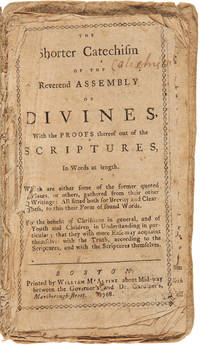
1768réf. 37724Boston: Printed by William M'Alpine 1768. Rare Presbyterian Catechism A very rare Boston catechism this issue not in Evans Bristol or Shipton & Mooney. The so-called "Shorter Catechism" was codified in 1647 by the Westminster Assembly and remains to this day part of the doctrinal standards of many Presbyterian churches. It was first printed in America at Cambridge in 1665 and frequently reprinted though many of these are represented by a single surviving copy. We locate only two copy in institutional holdings one at the American Antiquarian Society and the other at the Historical Society of Pennsylvania. The AAS copy of a variant of this issue Evans 11115 lacks pages 29-34. Sewn into contemporary plain paper wrappers manuscript paper label. Contemporary ink inscriptions on titlepage the word "Catechism" beside title and verso of terminal leaf signatures of Eunice Barnard and Hepzibah Flagg. Wrappers worn. Titlepage creased and slightly chipped near gutter affecting a few words of text. Fore-edge of second leaf frayed with loss of several words on pp.3-4. Wear and mild foxing and soiling throughout. Good. In a half morocco and cloth box. ESTC W24488. EVANS 11115 variant. hardcover
1768réf. WRCAM37724Boston: Printed by William M'Alpine 1768. 33pp. Sewn into contemporary plain paper wrappers manuscript paper label. Contemporary ink inscriptions on titlepage the word "Catechism" beside title and verso of terminal leaf signatures of Eunice Barnard and Hepzibah Flagg. Wrappers worn. Titlepage creased and slightly chipped near gutter affecting a few words of text. Fore-edge of second leaf frayed with loss of several words on pp.3-4. Wear and mild foxing and soiling throughout. Good. In a half morocco and cloth box. A very rare Boston catechism this issue not in Evans Bristol or Shipton & Mooney. The so-called "Shorter Catechism" was codified in 1647 by the Westminster Assembly and remains to this day part of the doctrinal standards of many Presbyterian churches. It was first printed in America at Cambridge in 1665 and frequently reprinted though many of these are represented by a single surviving copy. The single other known copy is held by the American Antiquarian Society and has a damaged titlepage. The AAS copy of a variant of this issue Evans 11115 lacks pages 29- 34. ESTC W24488. EVANS 11115 variant. Printed by William M'Alpine hardcover books
xii, 119, 15 pp ads. Fifty-six illustrations including seven black and white photographic plates with frontis photo of a complete 12" apparatus. "An effort to place in the hands of advanced amateurs in electrical science a practical working manual on the construction of high-frequency coils, now so useful in scientific investigation." - from Introduction. Publisher's tag affixed to front free endpaper. Errata slip affixed to page 5. Tanning to outer half of each endpaper. Faint evidence something has been peeled from back of half-title page. Prior owner's inkstamp upon back of frontispiece. Prior owner's details written atop title page. Binding sound. Moderate wear to greenish-black boards. Some loss from white lettering upon front board. White lettering to backstrip is gone. A quality copy. Book
1658réf. TS341London: PUBLISHED BY E.M. For Company of Stationers 1658. 2nd Edition . Hardback. Fine. 4to. xii inc. title-page with typographic border design and an errata page 108PP TOGETHER WITH THE HUMBLE ADVISE OF THE ASSEMBLY OF DIVINES Now By Authority of Parliament sitting at Westminster Concerning a Larger Catechism et PUb. by S. Griffiths for the Company of Stationers pp151-155 xii table pp BOUND WITH AN ORDINANCE OF THE LORDS AND COMMONS Assembled in Parliament 1658 viiipp. FULL TITLE; The Confession of Faith Together with the Larger and Shorter Catechisms composed by the Reverend Assembly of Divines sitting at Westminster presented to both Houses of Parliament again published with the Scriptures at large and the emphasis of the Scriptures in a different character together with the directory and all other additions that have been hitherto printed. FINE COPY with no cropping. REBOUND IN FULL CALF IN FINE QUALITY nineteenth century binding by Riviere. No ticket or stamp but in the quality and style often found in Riviere's work. Typical swirling marbled end-papers and rectangular black lines and decoration with raised bands and dentilles used by Riviere on bibles etc. PLEASE EMAIL FOR PHOTOS. Raised bands and blind ruled covers. Gilt morocco label to the spine. PLEASE EMAIL FOR PHOTOGRAPHS. WING C5796 PUBLISHED BY E.M. For Company of Stationers hardcover
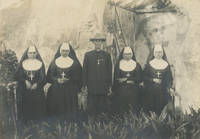
1900réf. List518Most Cuba or Jacksonville 1900. Silver gelatin or albumen photographs various sizes ranging from 3 x 3 to 6 x 8 most captioned to verso. With handwritten manuscript four leaves discussing various diseases. The Spanish-American War was the first war in which nurses formed their own dedicated units as well as the first war in which they were accepted within military hospitals. While no nurses died in battle 153 died during the war from disease. Nurses were responsible for both treating soldiers as well as maintaining sanitary conditions within the camps. Conditions were often poor leading some to work until they were too sick to continue. The current collection of photographs documents the experiences of a Mrs. Waters who was originally from Groton Massachusetts. The collection begins with a couple early photographs including a portrait as a young woman and a cyanotype of one of Waters' leprosy patients at Johns Hopkins Hospital in Baltimore. The next section shows Waters' training in Jacksonville Florida with either the Fourth or Seventh Army Corps at what was called Camp Cuba Libre both Corps trained there in 1898. The photographs of Jacksonville show life around the military camp and environs with some notable photographs of African-American inhabitants of the region. Three photographs quite notably show the Congregation of American Sisters a small group of American Indian nuns led by Reverend Francis Craft. The photographs taken in Cuba are notable for their portrayal of local life. Several photographs of military installations are taken around the "trocha" or line established by General Valeriana Weyler from Mariel to Majana. Another notable photograph is a cabinet card of a large group of nurses taken by the Havana photographer R. Testar. The group overall shows very early photographic records of military nurses in training as well as a scarce photographic record from a woman in a combat situation. The photographs are generally well preserved in very good to excellent condition with some light fading. Accompanying the photographs is a four page manuscript essay presumably by Waters discussing leprosy as well as the booklet Spanish Phrase Book for American Soldiers and Sailors published by the National Relief Commission of Philadelphia. Offered in partnership with Daniel / Oliver Gallery. books
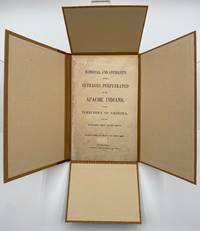
1871réf. 020376San Francisco CA: Francis & Valentine printers 1871. Book. Good condition. Paper Wrappers. First Edition. Octavo 8vo. 32 pages of text; complete. A very worn and ragged example of this rare imprint. Ex-library with rectangular ink stamp on the title page and five numbers handwritten on the blank verso. Title page and final page of text are chipped torn soiled. A couple other pages of text with smaller chips. Most but not all pages are discolored from exposure to damp. Three leaves have archival Japanese tissue repairs. Protected in archival mylar. Enclosed in a leather-backed four flap enclosure with gilt-stamped spine. On November 8 1870 Marcus D. Dobbins was elected to the House of Representatives of the Sixth Arizona Legislature and was elected as the Speaker of the House. Howes D372. First edition. Francis & Valentine, printers Paperback
1771réf. WRCAM42530N.p. but likely New Haven 1771. 1p. plus integral docketing leaf. Folio. Backed with tissue. Faint old fold lines. A few small edge tears at folds repaired. Minor soiling. Very good. In a red half morocco and cloth clamshell case spine gilt. List of monies paid to twelve members of the House of Assistants of the Connecticut General Assembly signed by several of them including two future signers of the Declaration of Independence Roger Sherman and Oliver Wolcott. Sherman is notable as the only person to sign all four of the major foundational documents of United States: the Continental Association the Declaration of Independence the Articles of Confederation and the U.S. Constitution. He also served on the Committee of Five that drafted the Declaration of Independence and later drafted the Connecticut Compromise for the U.S. Constitution which proposed a bicameral representative government and guaranteed equal representation in the Senate for every state no matter its size. Wolcott signed not only the Declaration but also the Articles of Confederation and later served as Connecticut's fourth governor. This document was likely written in New Haven which served as the joint capital of Connecticut with Hartford until 1776 hosting the October legislative sessions. In addition to Sherman and Wolcott it is signed by representatives William Pitkin Robert Walker Abraham Davenport William Samuel Johnson and Joseph Spencer. The remaining members are noted as having been "paid by receipt." It is docketed on the verso and signed by Joseph Trumbull deputy to the Assembly. For his time in the House of Assistants later the Connecticut Senate Sherman was paid £6/18/0; Wolcott £5/15/4. hardcover books
réf. elala6217Toronto: M.Reynolds Printer to the Hon. the House of Assembly 1835. First Edition of this famous report an eloquent and forceful indictment of the Family Compact Government largely written by Scottish-Canadian journalist and politician William Lyon Mackenzie who chaired the committee. The grievances of the Reformers are listed in detail: concern regarding the excessive power of the executive branch in Upper Canada and the campaigning of government officials for Tory politicians during elections criticism of companies like the Welland Canal Company that mismanaged funds given to them by the government and the salaries of officials who received patronage appointments. Demands are made for an elective legislative council and responsible government. A landmark document in the political history of Upper Canada. Mackenzie represented York County in the Legislative Assembly of Upper Canada and was elected the first mayor of Toronto in 1834. He led the rebels in the Upper Canada Rebellion in 1837 and after its defeat he unsuccessfully rallied American support for an invasion of Upper Canada as part of the Patriot War against British imperialism. Interestingly this is a signed presentation copy given the year of publication by lawyer politician and later judge Archibald McLean who was a rising member of the Family Compact. As a colonel of the militia during the 1837 rebellion he was involved in routing the rebels in Toronto commanding the left flank of the loyalist forces under Colonel James Fitzgibbon in the attack on Montgomery’s Tavern. Fleming 892. Gagnon I 2196. Lande 859. Sabin 10577. TPL 1929. Watters p. 885. 8vo. pp. 6 p.l. 76index 2errata li 1 372 vi 26 A-I K-Y. with half-title. A very good copy in original cloth-backed bds. paper spine label chipped. Signed Presentation copy dated 1835 to Dr. Alexander Wylie Matilda from his friend Archibald McLean M.P.P. 1791-1865. elala6217 Toronto: M.Reynolds, Printer to the Hon. the House of Assembly, 1835 hardcover
1766réf. 363001New York: Printed by Hugh Gaine at his Book-Store and Printing Office at the Bible & Crown in Hanover-Square 1766. Hardcover. Good. First edition. Two volume set. Thick folios. Contemporary full calf. Binding is worn with the boards nearly detached small bookplate on the front pastedowns else a good sound set. Volume one prints the proceedings from April 1691–September 1743; volume two from November 1743–December 1765. This edition includes: "the act for reversing the attainder of Jacob Leisler and others" on the last leaf of volume one. An invaluable resource for the early political social and economic history of New York. ESTC W6332; Evans 9756 10418. Printed by Hugh Gaine, at his Book-Store and Printing Office, at the Bible & Crown, in Hanover-Square hardcover
1782réf. 29845Philadelphia: Printed and sold by Francis Bailey 1782. Folio. 11 3/4 x 7 1/2 inches. 4 xxxi 1 527 1 viii pp. Expertly bound to style in half russia and period marbled paper covered board flat spine ruled and lettered in gilt The first collection of Pennsylvania laws to be published following the American Revolution. Edited by Pennsylvania Chief Justice and Signer of the Declaration Thomas McKean this collection of Pennsylvania laws from the Revolutionary period includes printings of the Declaration of Independence the Pennsylvania constitution and the Articles of Confederation. Evans 17656; Sabin 59821; NAIP W006513; Hildeburn 4179; Tower 774. Printed and sold by Francis Bailey unknown books
1787réf. 030967Albany New York: J. Newlands P. Sim et al Printed By Charles R. Webster 1787. Published at Albany NY 1787. Rare. Plain gray softcover stitched binding 40 pages. Includes A Scheme of Prayer beginning at page 36. Covers worn creased and lightly chipped probably restitched long ago contents age-toned but clean with some minor edge chipping and minor dampstaining to upper edges of final few pages name Lucy Burn or Burk inside front cover. Evans 25030. Soft Cover. Fair. 16mo - over 5¾" - 6¾" tall. J. Newlands, P. Sim et al, Printed By Charles R. Webster Paperback
réf. elala60988vo. pp. 6 p.l. 76index 2errata li 1 372 vi 26 A-I K-Y. with half-title. original cloth-backed bds. covers soiled & worn but binding solid spine label chipped scattered light foxing. First Edition of this famous report an eloquent and forceful indictment of the Family Compact Government inspired and largely written by William Lyon Mackenzie. The grievances of the Reformers are listed in detail: concern regarding the excessive power of the executive branch in Upper Canada and the campaigning of government officials for Tory politicians during elections criticism of companies like the Welland Canal Company that mismanaged funds given to them by the government and the salaries of officials who received patronage appointments. Demands are made for an elective legislative council and responsible government. A landmark document in the political history of Upper Canada. Fleming 892. Gagnon I 2196. Lande 859. Sabin 10577. TPL 1929. Watters p. 885. Toronto: M.Reynolds, Printer to the Hon. the House of Assembly, 1835. hardcover
1658réf. 41382London: The Company of Stationers E.M. Printer. Fair. 1658. Second Edition. Hardcover. Banded brown full leather binding rubbed/chipped at extremities; front board detached; 1.5" chip to spine head; boards & backstrip scuffed & abraded; feps missing; back hinge a few points in textblock cracked and one point separating; one signature detached but present; owners' names inked on title-page; outer leaves chipped at edges; leaf edges tp & some margins foxed else a complete very clean copy of this historic volume. ; "An Ordinance of the Lords and Commons Assembled at Parliament for the Calling of an Assembly." sixteen pages and "A Table of the Chief Points Spoken to in the Confession." eight pages bound in at rear. ; 8vo; 329ordinance & table pages . The Company of Stationers (E.M., Printer) hardcover
1709réf. R96665Firenze, Nella Stamperia di Michele Nestenus, e Antonmaria Borghigiani 1709 xii + 276pp. + 1 full-page engraving out-of-text (depicting S. Romuald), engraved vignette on title page, with ornamented initials and head- and tailpieces, contains an extensive index (pp.221-276), 22cm., two libr.stamps and small libr.number on title page, text in Italian, text is clean and bright with only few occasional small stains, contemporary full leather binding (some defects on spine and on boards have been repaired professionally, title label on paper at spine, few blind-tooled decorations on both boards), very rare (not in OCLC), [This work contains the constitution of the hermite Camaldolese congregation, based on the rule of S. Benedict. The "Ordo Camaldulensium" (O.Camald.) was established by S. Romuald (ca.950-1027) in Camaldoli (near Arezzo in Tuscany, Italy). Romuald attempted to merge the cenobitical life of the West with the eremitical life of the East (nicely illustrated by this excerpt from their 'Brief Rule': "Sit in your cell as in Paradise"), and he also (re)introduced the idea of the lavra in Western monasticism. Feature of the rules is an extreme way of ascetism and rigour, making the Camaldolese order one of the most severe orders of all times (e.g. most of the time an abstinence on water and bread & living in separate cells). Romuald did not leave any written rule though ; the first attempts were made in 1080 by Rudolph I and the rules underwent changes over time. This work is a second edition of the rules published in 1671], R96665
xii + 276pp. + 1 full-page engraving out-of-text (depicting S. Romuald), engraved vignette on title page, with ornamented initials and head- and tailpieces, contains an extensive index (pp.221-276), 22cm., two libr.stamps and small libr.number on title page, text in Italian, text is clean and bright with only few occasional small stains, contemporary full leather binding (some defects on spine and on boards have been repaired professionally, title label on paper at spine, few blind-tooled decorations on both boards), very rare (not in OCLC), [This work contains the constitution of the hermite Camaldolese congregation, based on the rule of S. Benedict. The "Ordo Camaldulensium" (O.Camald.) was established by S. Romuald (ca.950-1027) in Camaldoli (near Arezzo in Tuscany, Italy). Romuald attempted to merge the cenobitical life of the West with the eremitical life of the East (nicely illustrated by this excerpt from their 'Brief Rule': "Sit in your cell as in Paradise"), and he also (re)introduced the idea of the lavra in Western monasticism. Feature of the rules is an extreme way of ascetism and rigour, making the Camaldolese order one of the most severe orders of all times (e.g. most of the time an abstinence on water and bread & living in separate cells). Romuald did not leave any written rule though ; the first attempts were made in 1080 by Rudolph I and the rules underwent changes over time. This work is a second edition of the rules published in 1671], R96665
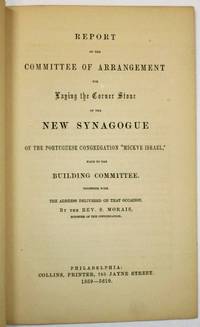
réf. 36315Philadelphia: Collins Printer 705 Jayne Street 5619. 15 1 blank pp. Stitched in original printed wrappers blindstamp and 'withdrawn' rubberstamp in blank upper portion of front wrapper. Else Very Good. Mickve Israel Hope of Israel one of the oldest Philadelphia synagogues was founded in the 1740s by Sephardic Jews. Known as the 'Synagogue of the American Revolution' its early members included Haym Solomon and the Gratz family. Benjamin Franklin contributed to its first building fund. This was its third building constructed on 7th Street north of Arch. Isaac Leeser presided over the congregation from 1829 to 1850; Sabato Morais succeeded him. Morais was its Rabbi for 46 years. The list of corner-stone and door-post purchasers included A.S. Wolf who purchased the North door-post of the north door for fifteen dollars in honor of H. Polock. Other luminaries of Philadelphia Jewry participated in the ceremonies. Wolf was treasurer and Gabay of the Congregation. Articles deposited in the cornerstone are listed including newspapers coins and tokens dated 1859 "A gold quarter dollar of California mintage being deposited by Clarence A. Hart aged 9 years." The Committee of Arrangement consisted of Edwd. S. Mawson Joseph L. Moss and Isaac J. Phillips. Rabbi Morais's discourse is printed. Morais an abolitionist and founder of the Jewish Theological Seminary of New York counsels "If there be pride in us if the vanity of exhibiting a more sightly structure than others possess impelled us to designate this place as our future Synagogue.let us then bury first such unholy feelings in the bosom of the earth." Also printed is a prayer in Hebrew composed by Morais. Singerman 1593. OCLC 21968693 6 U PA JTS Yeshiva U NYPL Hebrew Union Natl Lib. Israel as of October 2019. Collins, Printer, 705 Jayne Street unknown books
1790réf. 018292Paris: Chez Cuchet Libraire rue & hotel Serpente 1790. 1st Edition First Thus. Calf. Good/No Jacket. 16mo - over 5¾ - 6¾" tall. 1790 edition. Text is in French. Size 12mo 6.75" tall. Pagination; xxiv then parts 1 and 2 are 223 pages part 3 86 pages and part 4 104 pages. Brown calf binding with gilt compartment lines and vignettes to the spine with gilt titles on burgundy morocco label. Condition good minus the calf is rubbed and worn at the corners edges and hinges 1 inch of the backstrip is missing from the top of the spine and the calf is starting to come away for an inch at the bottom edge internally the pages are a little toned and dust darkened there are 2 previous owners' names one on the title page is M. B. D'angreville and is not dated. One on the verso of the title page is either Pelombardy or Delombardy and is dated 1847. Part 3 of the book contains a fold out chart with engravings of the Coats of Arms of the different Bataillons batallions for each district and the names of their Commandant commanding officer and Aide Major assistant major. The chart is a bit rubbed at the folds with 2 small tears without loss the page is a little browned at the edges otherwise clean the fine printing still sharp. Full title reads: Almanach National Pour L'Annee 1790 Contenant 1. Les epoques des Etats Generaux anciens; la liste des Membres de l'Assemblee nationale; le journal de ses travaux depius le 27 Mai; les arretes & decrets qui en font emanes. 2. Les nom des Membres des Departemens & des Municipalites des villes principales du Royaume; les arretes & reglemens relatifs a leur regime interieur & aux loclites. 3. L'Etat militaire de la Garde nationale de Paris & des Milices patriotiques etablies dans les diverses villes. 4. Les Societes de bienfaisance qui se sont formees dans la Capitale & ailleurs avec la liste de ceux qui les composent l'esprit de leurs reglemens & les resultats de leur operations. Full Title in English: Full title reads: National Almanac For the Year 1790 Containing 1. The periods of the ancient Estates General; the list of Members of the National Assembly; the diary of his work since May 27; the orders & decrees which emanate from it. 2. The names of the Members of the Departments & Municipalities of the main cities of the Kingdom; the decrees & regulations relating to their internal regime & localities. 3. The military state of the National Guard of Paris & the patriotic militias established in the various cities. 4. The Benevolent Societies which were formed in the Capital and elsewhere with the list of those who compose them the spirit of their regulations and the results of their operations. A very rare work. The true first printing of the Almanach with its new title of Almanach National predating the official first edition the first printed by Testu. Printed at the birth on the new French Republic. Chez Cuchet, Libraire, rue & hotel Serpente unknown
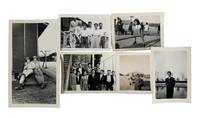
1944réf. 211521944. Japanese American incarceration photographs dating from World War II document civilian life and military presence at several internment and assembly centers established after the forced removal of Japanese Americans from the West Coast. Following Executive Order 9066 in 1942 more than 120000 people of Japanese ancestry were confined in temporary assembly centers and longer term relocation camps administered by the War Relocation Authority. The photographs record daily activities of men women and children within these camps and illustrate the physical environment of the barracks settlements created to house incarcerated civilians during the war. Archive contains six original silver gelatin photographs measuring approximately 2.5 × 2.75 inches to 3.5 × 5.75 inches. The images depict Japanese American families and individuals at Heart Mountain Relocation Center in Wyoming Camp Amache in Granada Colorado and Pomona Assembly Center in California. Several photographs show families gathered in front of barracks style housing units typical of the camps. One image from Amache shows a family of six standing on the steps of their assigned unit with the wooden barracks structure visible behind them. Another photograph from Pomona shows two United States soldiers seated on a storage trunk outside a camp building likely serving as patrol or security personnel. One image from Heart Mountain shows a military medic standing beside an ambulance truck while gesturing toward camp structures in the distance. Other photographs include a group portrait of Japanese American young men standing in front of a brick building possibly a school building within the camp and a separate image of the same individual standing beside a lake. Another photograph shows a young Japanese American girl playing on a see saw while families watch a sports game in the background with camp buildings visible beyond the field. Pomona Assembly Center served as one of the temporary detention facilities established in 1942 before incarcerated families were transferred to permanent camps such as Heart Mountain. Heart Mountain became the fourth largest relocation center eventually housing nearly fourteen thousand people while Amache in Colorado confined more than seven thousand internees the majority of whom were American citizens by birth. Living quarters in these camps consisted of small rooms within hastily constructed wooden barracks assigned to individual families. The photographs preserve small moments of social life and recreation within these confined communities illustrating how families attempted to maintain routines despite the conditions of incarceration. Photographs remain clear and well preserved with light age wear consistent with vernacular prints. Very good condition overall and a revealing visual record of Japanese American life within wartime relocation centers. unknown