Cyril of Jerusalem c 313-386Biblio.com
429 résultats
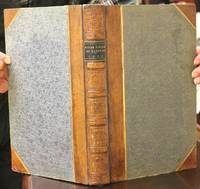
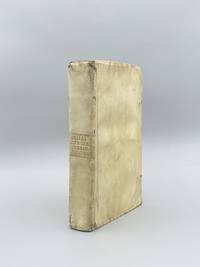
1564réf. 12258Paris: G. Morel 1564. Contemporary gilt-ruled vellum over flexible paper boards gilt-lettered authors and titles in a gilt compartment in the middle of the spine evidence of four ties. With: Athenagoras. c. 133-c.190. Greek title apologia pro Christianis. Geneva H. II Estienne 1557. 8vo. 208p. Greek roman and italic type woodcut initials woodcut Estienne title device. Ad I-II: AN ELEGANT VOLUME WITH LANDMARK TREATISES BY TWO EARLY GREEK THEOLOGIANS - one from a Catholic press and the other from a Protestant press: both in the famous Grecs du Roi types. THIS COPY WAS ANNOTATED BY TWO SCHOLARS. Antoine-Joseph-Amable Feydeau 1659-1741 prior general of the Carmelite Order corrected the Greek text of the first work and noted that the printer and editor were "damned heretics" tr. In the second work a 19th-century reader penned nearly one thousand words with alternate readings largely from BnF ms. Grec 174 theological concepts and extracts of other authorities. Both books are in very nice condition; from the library of T.K. Brooker. Ad I: THE FIRST APPEARANCE OF ANY PORTION OF THE ORIGINAL GREEK TEXT OF CYRIL'S CATECHETICAL LECTURES. Based on a manuscript owned by collector Henri de Mesmes now BnF ms. Grec 954 this edition has seven of the eighteen lectures for the catechumens of Jerusalem. The complete Greek text did not appear for nearly half a century. Variously attributed to Cyril or his successor John II of Jerusalem c. 356-417 the Mystagogic Catecheses follows. Together these prepared the newly baptized for first communion and provide some of the earliest details of liturgical practices in the Eastern church. Small rust hole touching a few letters deleted inscriptions of the Carmelites of Angoulême. ¶Hoffmann Bibliographisches Lexicon der gesammten Litteratur der Griechen I: 495; BP16 114497. Ad II: EDITIO PRINCEPS of the Embassy for the Christians. An ex-Platonist Church Father Athenagoras makes the philosophical case for Christianity to the famously intellectual emperor Marcus Aurelius and defends the new religion against accusations of cannibalism promiscuity and atheism. Conrad Gessner 1516-65 edited the Greek text and translated it into Latin from a now lost manuscript family. This edition closes with Athenagoras' On the Resurrection of the Dead edited and translated by Dutch humanist P. Nannick 1496-1557 and philological notes by both Estienne and Gessner. ¶Pouderon "Les Éditions d'Athénagore imprimées aux XVIe et XVIIe siècles" in Bibliothèque d'Humanisme et Renaissance 52 1990 5; Wellisch Conrad Gessner: a Bio-Bibliography 44.1; Schreiber The Estiennes 140; Renouard Annales.des Estienne 115; Hoffmann I: 399; GLN-2020. G. Morel unknown
1792réf. B5645Vienna: c.1792. . A fine example. Text is very clean and crisp. Frontispiece is backed and last three leaves are restored. Bound in contemporary decorative half calf. . Edition: First Arabic edition Binding: Contemporary half calf with gilt borders to decorative silver floral designed cloth. Rebacked expertly saving the original spine with five raised bands and compartments tooled with triple fillet borders and central gilt designs. Notes: In 1788 Anthimos 1717-1808 became Greek or Eastern Orthodox Patriarch of Jerusalem or simply ‘Patriarch of Jerusalem’ meaning the head bishop of the Greek Orthodox Patriarchate of Jerusalem; he held this position until his death. Along with his ecclesiastical duties Anthimos was also a scholar known particularly for his facility with languages. “Anthimos became well known as a fervent defender of Orthodoxy against Catholic proselytism which at that time was very active in Palestine. It was then that he composed first in Greek and then in Arabic his ‘Theological Treatise’ and ‘Interpretation of the Psalms.’ Having had them published in Vienna in 1791 – 92 he distributed thousands of copies of these works among the Arab Christians of the region. At the same time he enjoyed friendly relations with Sultan Selim III 1789-1807 who supported him in consolidating Orthodox rights in the Holy Land.“ Today this important Arabic book on Orthodox Christianity is very rarely seen. Text in Arabic with an introductory note by Bernardus de Jenisch Consiliarius Aulicus in Arabic and Latin. Size: Folio 358x214mm. Illustration: Illustrated with engraved frontis portrait of author. Main text within a decorative border with original psalm text in red and Anthimos’ psalm commentary and exegesis in black ink; also few decorative head- and tailpieces. Provenance: Ex libris William Rammage pasted on endpaper References: Arabic Books in the British Museum p. 283; Discourses of Collective Identity in Central and Southeast Europe 1700-1945 Vol 1: Late Enlightenment: Emergence of modern national ides edited by Balázs Trencsényi Michal Kope p. 304 Transation: Arabic from Greek Pages: Frontis introduction 503 pages in black and red ink. Category: Book Asia Middle East Holy Land; Book Religious Christianity hardcover
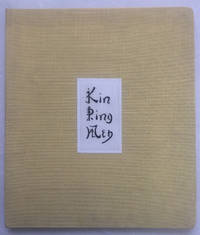
1930réf. ABE-1656467827810Roderich Jerusalem von Safft ca. 1930 1930 Folder size: 36.531.2cm plate size:3529.7cm image size: 19.314.6cm. Cloth folder with 10 original erotic etchings by Roderich Jerusalem von Safft plus 1 table of contents leaf describing each etching. Privately produced UNDATED but clearly around 1930. Mounted on folder is a smaller etching as the title-piece. Each etching signed by the artist and with the note "Eigendruck" which means the etching was produced by the artist himself. Etchings signed by Roderich Jerusalem von Safft as "vS" most of them etched at the lower right corner above his signature in pencil. Extremely scarce. More photos available upon request. Signed by Illustrators. 1st Edition. No Binding. Fine/No Jacket. Roderich Jerusalem von Safft, ca. 1930 hardcover
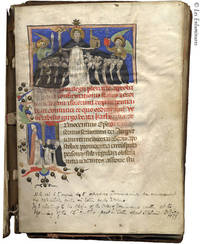
réf. TM 656ILLUMINATED MEDIEVAL MANUSCRIPT IN LATIN ON PARCHMENT Northern Italy c. 1440-1470. 203 x 153 mm. 70 folios complete collation i-vii10 remnants of quire and leaf signatures flourished vertical catchwords written in a humanist minuscule on 30 long lines justification 147-149 x 95-100 mm horizontal lines ruled very lightly in ink single vertical bounding lines ruled in lead prickings remain in top and bottom margins on some leaves rubrics and paragraph marks in pale red two-line red or blue initials with contrasting pen flourishes in violet or red two five-line blue initials ff. 29v and 35 infilled and on square grounds of elaborate penwork; f. 64v seven-line polished GOLD INITIAL with white vinestem decoration extending along twenty lines of text and into the upper margin infilled and edged in deep red and blue with numerous tiny silver dots; f. 1 five-line polished GOLD HISTORIATED INITIAL of St. Jerome bearded and dressed in red standing before a Crucifix with a hilly landscape in the background on a white vinestem ground extending into a FULL WHITE VINESTEM BORDER infilled and edged in deep red and blue with tiny silver dots and an erased coat of arms in lower margin with modern F.A. BINDING: Early almost certainly contemporary reddish-brown leather over wooden boards flat spine with three slightly raised bands head and tail bands clasp and catch fastening front to back with brass catch lettered ave front cover decorated most likely in the nineteenth century with an attractive painted border in green orange and gray connecting four brass studs and the title De laudibus et miraculis divi Hieronymi with initials F.C. at the bottom back pastedown is leaf from a late fourteenth-century Italian copy of Donatuss Latin grammar front pastedown shows offset script from removed pastedown from a fourteenth-century Italian text in Latin verse. TEXT: This manuscript is a vivid witness to the importance of St. Jerome in fifteenth-century Italy and includes the foundational texts for his cult: three letters regarding his death miracles and titles to glory and veneration and purporting to be written by three contemporaries of St. Jerome c. 347-420 namely St. Eusebius of Cremona d. 423 St. Augustine of Hippo 354-430 and Bishop Cyril of Jerusalem c. 313-386 but probably written in Rome at the end of the thirteenth or beginning of the fourteenth century; a life of St. Jerome by an unknown author probably writing in Italy in the twelth century; and Jeromes own life of St. Paul the Hermit written in 374 or 375. These texts were widely disseminated in both Latin and in vernacular translations and they influenced the work of numerous writers and visual artists. ILLUSTRATION: The iconographical choice in the historiated initial f. 1 to depict the ascetic Jerome contemplating the Crucifixion dates from c. 1400 in Italy and can be particularly associated with Hieronymite congregations in Tuscany. PROVENANCE: Copied in Northern Italy in the middle years of the fifteenth century as suggested by the evidence of the script and decoration; the penwork initials in particular seem to point to Northern Italy. The manuscript almost certainly once included the coat of arms of its original owner in the lower margin of the illuminated border on f. 1. Three sets of initials are inscribed in three different hands all possibly initials of owners: within the roundel on f. 1 a modern owner inscribed an outline of a shield in pen and the initials F.A.; inside front cover white embossed seal with the initials L.F.; on front cover as part of the added decoration F. C. CONDITION: Slight loss of the leather at the back top of the spine and over the lower band of the binding; top of the painted border on f. 1 is very slightly trimmed; f. 1 is darkened; and there is some soiling throughout but overall in very good condition. Full description and photos available TM 656. hardcover