John CalvinBiblio.com
6 754 résultats
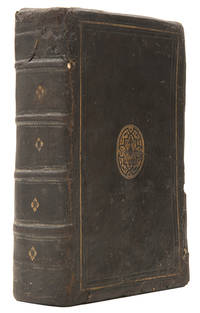
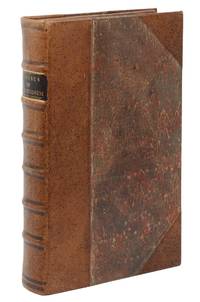
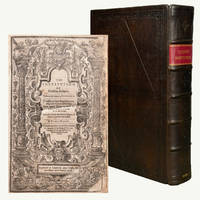
1634réf. U27Summary: Folio 11" x 7.5".An attractive copy of this significant work that is John Calvin's magnum opus considered one of the most important works to emerge from the Reformation. Description: Woodcut title page 1634 within ornamental frame. Each of the four chapters begins within a headpiece and decorative initial. Text presented in single-column Roman font within ruled border. Outer margin contains cross-references and few notes. Includes two indexes at the rear. Calvin explores both "knowledge of God" and "knowledge of ourselves" with profound theological insight in four books. The first book discusses God the Father; the second God the Son; the third the Holy Spirit; the fourth the Church. Calvin began his work as a catechism in 1536 and it grew to an extensive systematic theology by 1560. Pagination: 20 749 159 pp. Complete. Collation: 6 A4 B-Z6 Aa-Zz6 Aaa-Zzz6 Aaaa-Gggg6 Hhhh4. Binding: Attractively rebound in blind paneled black calf. Spine with five raised bands and a red gilt-lined label with the words "Calvin's Institution" and the date "1634" lettered in gilt. Endpapers renewed. Condition: Intermittent staining; title page frayed to fore-edge and upper corner with loss of printed outer border otherwise good margins throughout; T with small marginal hole to fore-edge; lower marginal loss to final leaf of Tables; an attractive copy of Calvin's most important work. References: ESTC S107163; STC 4425. Anne Griffin for Joyce Norton hardcover
1634réf. U27Summary: Folio 11" x 7.5".An attractive copy of this significant work that is John Calvin's magnum opus considered one of the most important works to emerge from the Reformation. Description: Woodcut title page 1634 within ornamental frame. Each of the four chapters begins within a headpiece and decorative initial. Text presented in single-column Roman font within ruled border. Outer margin contains cross-references and few notes. Includes two indexes at the rear. Calvin explores both "knowledge of God" and "knowledge of ourselves" with profound theological insight in four books. The first book discusses God the Father; the second God the Son; the third the Holy Spirit; the fourth the Church. Calvin began his work as a catechism in 1536 and it grew to an extensive systematic theology by 1560. Pagination: 20 749 159 pp. Complete. Collation: 6 A4 B-Z6 Aa-Zz6 Aaa-Zzz6 Aaaa-Gggg6 Hhhh4. Binding: Attractively rebound in blind paneled black calf. Spine with five raised bands and a red gilt-lined label with the words "Calvin's Institution" and the date "1634" lettered in gilt. Endpapers renewed. Condition: Intermittent staining; title page frayed to fore-edge and upper corner with loss of printed outer border otherwise good margins throughout; T with small marginal hole to fore-edge; lower marginal loss to final leaf of Tables; an attractive copy of Calvin's most important work. References: ESTC S107163; STC 4425. Anne Griffin for Joyce Norton hardcover books
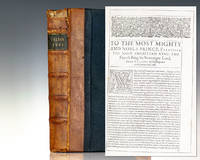
1611réf. 132719London: John Norton 1611. Rare 1611 edition of Calvin's seminal work on systematic theology regarded as one of the most influential works of Protestant theology. Quarto bound in three quarter calf with five raised bands to the spine elaborate architectural borders to the title page woodcut headpieces and tailpieces. In good condition. Upper portion of title page removed. Written as an introductory textbook on the Protestant creed for those with some previous knowledge of theology John Calvin's Institutes of the Christian Religion was first published in Latin in 1536. The text covers theological topics from the doctrines of church and sacraments to justification by faith alone and Christian liberty. It vigorously attacked the teachings of those Calvin considered unorthodox particularly Roman Catholicism. The Institution Of Christian Religion overshadowed earlier Protestant theologies and is regarded as a classic in theology on the level of Augustine's The City of God and Aquinas's Summa Theologica. John Norton hardcover
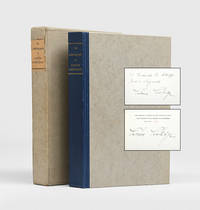
1929réf. 184437New York: Cosmopolitan Book Corporation 1929. Presentation copy of the limited edition Signed limited edition presentation copy inscribed by the author on the front free endpaper: "To Frederick W. Skiff with regards Calvin Coolidge". This is number 177 of 1000 copies signed by the 30th President. Skiff 1867-1947 was a prominent collector and author of Adventures in Americana 1935 and Landmarks and Literature 1937. Coolidge's memoirs chart his rise from a lawyer to Massachusetts governor vice-president and finally president. Coolidge's emphasis on low taxes and laissez-faire economics fuelled the Roaring Twenties. While some blame these policies as leading to the 1929 Crash he remains an icon for the American conservative movement; Ronald Reagan placed his portrait in the White House Cabinet Room. Octavo. Original blue quarter cloth grey marbled boards spine lettered in gilt top edge gilt others untrimmed. Housed in the original card slipcase. Very minor wear at slipcase extremities: a fine copy in near-fine slipcase. hardcover
1953réf. mon0000028063Herald Press 1953. Unknown Binding. Acceptable. in x in x in. Hardcover. Herald Press unknown
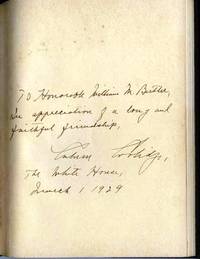
1929réf. 013152Washington: U.S. Government Printing Office 1929. First Edition. Hardcover. Fine and exceptionally scarce item with a superb association. Small octavo 5-1/2" x 7-1/2" bound in flexible blue morocco leather lettered in gilt including Coolidge's name at the bottom right and decorated in gilt with stars in the corners and the Presidential coat-of-arms in the center. With a printed title page but the 19 text pages mimeographed rather than printed on paper with three holes in the gutter margin. Obviously a very limited production likely printed for Coolidge's personal use and quite possibly unique. OCLC does not record any printed copy of this speech though it lists about 70 others. Given the same day as the 1927 State of the Union address this speech was given to a much smaller more selective audience. In the audience was William Butler a Massachusetts Senator who was Coolidge's campaign manager and the Republican Party Chairman. This is his copy and is INSCRIBED and SIGNED to him by the President two days before Coolidge left office: "To Honorable William M. Butler/In appreciation of a long and/faithful friendship/ Calvin Coolidge /The White House/March 1 1929." In the third sentence of his speech Coolidge acknowledges Butler: "Both the primary and the election were under the immediate direction of the present Chairman William M. Butler." In his AUTOBIOGRAPHY Coolidge remarks: "The campaign was magnificently managed by William M. Butler." Two minor text corrections in ink likely by Coolidge. U.S. Government Printing Office hardcover books
1565réf. 82337Ex officina Francisci Perrini | Genevae [Genève] 1565 | 12 x 19.50 cm | relié
1891réf. 19852Washington D. C.: Gpo. Fine. 1891-1895. First Edition. Hardcover. Slightest handling at a few spots. In their original three-quarter leather bindings. Brown leather and green cloth. Included are a number of "addition and correction" brochures. ; Folio 13" - 23" tall . Gpo hardcover
1562réf. 60991562 Genève : Jacques Bourgeois, 1562, In-4 (257 x 162 mm). Première édition en français, de format in-4 (il y avait une édition in-8 publiée l'année précédente) de la traduction par Jean Calvin de son important traité sur la religion. D'abord publiée en latin en 1535, cette édition est encore dédiée à François Ier. L'Institution de la religion chrétienne est l'oeuvre maitresse de CALVIN, Le manuel de la Somme Chretienne Réformée. "N'oublions pas la traduction française de ce traité, faite par Calvin lui-même [...] C'est un des premiers ouvrages où notre langue ait pris un certain essor" (Brunet). Cette edition , trés rare, est dans un etat exceptionnel, relié par Gruel: veau fauve, triple encadrement doré dur les plats, dos à quatre nerfsA noter, Gruel (le relieur) a inséré un portrait de Jean Calvin par Eugene Delacroix en guise de frontispice .
1929réf. 013152Washington: U.S. Government Printing Office 1929. First Edition. Hardcover. Fine and exceptionally scarce item with a superb association. Small octavo 5-1/2" x 7-1/2" bound in flexible blue morocco leather lettered in gilt including Coolidge's name at the bottom right and decorated in gilt with stars in the corners and the Presidential coat-of-arms in the center. With a printed title page but the 19 text pages mimeographed rather than printed on paper with three holes in the gutter margin. Obviously a very limited production likely printed for Coolidge's personal use and quite possibly unique. OCLC does not record any printed copy of this speech though it lists about 70 others. Given the same day as the 1927 State of the Union address this speech was given to a much smaller more selective audience. In the audience was William Butler a Massachusetts Senator who was Coolidge's campaign manager and the Republican Party Chairman. This is his copy and is INSCRIBED and SIGNED to him by the President two days before Coolidge left office: "To Honorable William M. Butler/In appreciation of a long and/faithful friendship/ Calvin Coolidge /The White House/March 1 1929." In the third sentence of his speech Coolidge acknowledges Butler: "Both the primary and the election were under the immediate direction of the present Chairman William M. Butler." In his AUTOBIOGRAPHY Coolidge remarks: "The campaign was magnificently managed by William M. Butler." Two minor text corrections in ink likely by Coolidge. U.S. Government Printing Office hardcover
1891réf. JMM8514Washington: U.S. Gov't 1891. Published between 1891-1895; Published under the direction of the Hon. Daniel S. Lamont Secretary of War; The Board of Publication consisted of Maj. George R. Davis Leslie J. Perry & Joseph W. Kirkby; CLXXV Plates; 3/4 black leather & textured black cloth over boards gilt spine titles pale green heavier paper title page to each section & color to maps & uniform plate; Very good plates textblock in a good bindings freshly rebacked in the original manner. Size: 15"x18.5". Hardcover. [U.S. Gov't] hardcover
réf. 111185London Excudebat Thomas Vautrollerius Typographus 1576. . First edition printed in England; 8vo 19.5 x 12.5 cm; text in Latin a few ink marks to title and rear endpapers woodcut device to title and last f. of text; contemporary English gilt calf quadruple blind ruled with single gilt fillet oval centrepiece of interlacing ribbons and tendrils to upper and lower panels spine with gilt fleurons in 5 raised compartments crude early repairs to head and foot of spine and edges old wormhole at foot of lower cover tightly bound otherwise internally clean; 28 742 134pp. The first edition printed in England of Calvin's seminal work of systematic theology arguably the most important doctrinal work of the sixteenth century. Bound in contemporary English gilt calf. Institutes of the Christian Religion established a framework for Reformed Christianity to rival the comprehensive belief-system of the Catholic Church exerting a powerful influence over the later stages of the Reformation in England and the emergence of Puritanism toward the end of the century. 'It discusses ancient and medieval philosophy the Church Fathers the contemporary Roman Church and the Reformers. Calvin is much indebted to St Augustine four thousand quotations from him have been counted in Calvin's works Luther Zwingli and Martin Bucer but he was greatly influenced also by his classical training quoting Plato Seneca and other ancient writers' PMM. ESTC S104872; cf.PMM 65. London, Excudebat Thomas Vautrollerius Typographus, 1576. unknown
1561réf. 73201561 "en lisant & conférant ceste édition avec les autres, vous cognoistrez évidemment que l'auteur a le tout reveu et augmenté, & que la traduction est comme réduite en saperfection". [Genève] : imprimé par Conrad Badius, 1561 " le XXX jour du mois d'avril " Edition tres rare , des exemplaires d'une édition de 1562 sont visibles dans des bibliothèques renomés....In 8 plein bazane Sans lieu (numérotation par pages doubles 595 pages (x2), plus table ) Etat exceptionnel ....
1891réf. 28636Washington: Government Printing Office 1891-1895. 3 volumes. FIRST EDITION. With 175 numbered double-page lithographed color maps and plates on 178 sheets by Bien. Large folio original bright red cloth covered boards lettered in gilt on the upper covers the backs and corner pieces in red morocco the spines ruled in blind on tall bands with two black morocco lettering labels gilt ruled and boldly lettered endpapers renewed. 29 pp preface and contents plates 1-70; plates 71-135; plates 136-175. A beautiful set of this rare and impressive collection of maps of the Civil War. The maps are all well preserved fresh and bright some expected minor wear to the cloth otherwise the bindings are also fine. AN EXTREMELY IMPRESSIVE ATLAS PRODUCED BY THE UNITED STATES GOVERNMENT PRINTING OFFICE TO ILLUSTRATE THE OFFICIAL RECORDS OF THE AMERICAN CIVIL WAR. A beautiful and fascinating accompaniment to the official records of the Civil War. Each massive plate is either an impressively detailed and informative map or contains multiple images providing detailed plans of cities towns and fortresses views panoramas uniforms battlefields bridges engagements lookouts etc. etc. The maps and plans were primarily reproduced from those that had been drawn during the war by engineers draftsmen and sometimes even generals themselves for actual military use. Only a few maps drawn later by cartographers were added for historical purposes. Tactical and strategic maps indicate troop disposition; defense lines redoubts and fortifications of key sites are clearly shown. Terrain maps often contain picket positions signal stations and lines of march. Some were taken from what had been only rough sketches some from cartographic masterpieces. All are informative and reveal the knowledge or lack of knowledge that both sides possessed about the terrain and the strength and the position of opposing troops. The index to the maps refers to campaigns and battles rivers creeks lakes bays islands bridges fords ferries landings roads railroads mountains towns churches forts and much more. An indispensable source of information and imagery from the American Civil War. The atlas was not reprinted till 1958. Government Printing Office hardcover
1563réf. 140949498Geneva Switzerland: Henricus Stephanus Henri Estienne 1563. First edition. First edition of Calvin's Harmony of the Pentateuch the final biblical commentary published during his lifetime. 2º 12 339 1 625 27 pp. 35.5 x 23 x 6 cm. Folio in sixes. Collation complete: 1-6 Dedication; a1-ee8 Genesis; a1-fff6 2 Harmony; ggg1- unsigned index 12 leaves. Recent half brown mottled calf over marbled boards six raised bands panels ruled in black previous black morocco label preserved reading "Calvinus in Pentateuchum" fresh endsheets in addition to original flyleafs. Red rubricated margins red spotted edges red-ruled text Woodcut dropcaps beginning Genesis and Harmony map of the land of the patriarchs. In Latin. Near Fine with limited smudging and staining prelims vertically creased small circular chip to title page ink splotch to tail edge scant pen notations in tidy and minuscule hand two tiny worm holes from rear terminating at p. 432 and 313 of the Harmony. Otherwise a very clean and fresh copy. French theologian John Calvin intended to compile a "Harmony of the Law" combing the five Books of Moses for paranetic sayings and sorting them according to a Decalogue rubric. This was novel approach among Christian scholars following the precedent of many medieval rabbis whom Calvin cites regularly. Here we see in Calvin's final discourse on the Law the full flowering of his thought on the matter which had come to occupy so much of his concern in the final edition of the Institutes four years prior. Occupying 286 pages in the heart of the book it stands as Calvin's most mature and sustained treatment of the law a masterful legal treatise in addition to its theological and exegetical dimensions. He brought the full powers of his renaissance humanist training to bear on one of the few segments of Scripture on which he had not published: the final four books of Moses. Following a revised edition of his translation and commentary on Genesis he sought to do for the deuteronomic books what he had previously done in his Harmony of the Gospels. Strikingly he was the first commentator-- Jewish or Christian-- to attempt a harmony of the Torah. With his cherished literary ideals of clarity and brevity Calvin explicitly sought to avoid duplication of comment where the scriptural writer is redundant. In the process he reorganizes the narrative structure implementing the textual critical skills he learned in Paris as a law student. In spite of Calvin's own piety and insistence that he is not seeking to improve upon the given form of Scripture many have found here the spores which would germinate in the higher critical movement of the coming centuries. In addition to the narrative restructuring Calvin organizes all legal passages of the Torah under the rubric of the 10 commandments a first among Christian scholars following the precedent of many medieval rabbis whom he cites regularly. Here we see in Calvin's final discourse on the Law the full flowering of his thought on the matter which had come to occupy so much of his concern in the final edition of the Institutes four years prior. Sources: Renouard Estienne 121.1; Adams C 275 281; Peter & Gilmont Bibliotheca Calviniana 63/16; Wulfert de Greef The Writings of John Calvin 88-90. Parker T. H. L. Calvin's Old Testament Commentaries; Barbara Pitkin. Calvin's Mosaic Harmony: Biblical Exegesis and Early Modern Legal History. Henricus Stephanus [Henri Estienne] unknown
1563réf. 140949498Geneva Switzerland: Henricus Stephanus Henri Estienne 1563. First edition. First edition of Calvin's Harmony of the Pentateuch the final biblical commentary published during his lifetime. 2º 12 339 1 625 27 pp. 35.5 x 23 x 6 cm. Folio in sixes. Collation complete: 1-6 Dedication; a1-ee8 Genesis; a1-fff6 2 Harmony; ggg1- unsigned index 12 leaves. Recent half brown mottled calf over marbled boards six raised bands panels ruled in black previous black morocco label preserved reading "Calvinus in Pentateuchum" fresh endsheets in addition to original flyleafs. Red rubricated margins red spotted edges red-ruled text Woodcut dropcaps beginning Genesis and Harmony map of the land of the patriarchs. In Latin. Near Fine with limited smudging and staining prelims vertically creased small circular chip to title page ink splotch to tail edge scant pen notations in tidy and minuscule hand two tiny worm holes from rear terminating at p. 432 and 313 of the Harmony. Otherwise a very clean and fresh copy. French theologian John Calvin intended to compile a "Harmony of the Law" combing the five Books of Moses for paranetic sayings and sorting them according to a Decalogue rubric. This was novel approach among Christian scholars following the precedent of many medieval rabbis whom Calvin cites regularly. Here we see in Calvin's final discourse on the Law the full flowering of his thought on the matter which had come to occupy so much of his concern in the final edition of the Institutes four years prior. Occupying 286 pages in the heart of the book it stands as Calvin's most mature and sustained treatment of the law a masterful legal treatise in addition to its theological and exegetical dimensions. He brought the full powers of his renaissance humanist training to bear on one of the few segments of Scripture on which he had not published: the final four books of Moses. Following a revised edition of his translation and commentary on Genesis he sought to do for the deuteronomic books what he had previously done in his Harmony of the Gospels. Strikingly he was the first commentator-- Jewish or Christian-- to attempt a harmony of the Torah. With his cherished literary ideals of clarity and brevity Calvin explicitly sought to avoid duplication of comment where the scriptural writer is redundant. In the process he reorganizes the narrative structure implementing the textual critical skills he learned in Paris as a law student. In spite of Calvin's own piety and insistence that he is not seeking to improve upon the given form of Scripture many have found here the spores which would germinate in the higher critical movement of the coming centuries. In addition to the narrative restructuring Calvin organizes all legal passages of the Torah under the rubric of the 10 commandments a first among Christian scholars following the precedent of many medieval rabbis whom he cites regularly. Here we see in Calvin's final discourse on the Law the full flowering of his thought on the matter which had come to occupy so much of his concern in the final edition of the Institutes four years prior. Sources: Renouard Estienne 121.1; Adams C 275 281; Peter & Gilmont Bibliotheca Calviniana 63/16; Wulfert de Greef The Writings of John Calvin 88-90. Parker T. H. L. Calvin's Old Testament Commentaries; Barbara Pitkin. Calvin's Mosaic Harmony: Biblical Exegesis and Early Modern Legal History. Henricus Stephanus [Henri Estienne] unknown books
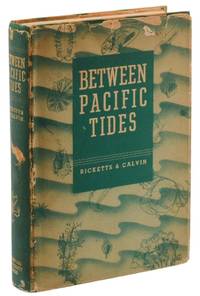
1939réf. 140949517Stanford CA: Stanford University Press 1939. First Edition. Near Fine/Good. First edition first printing. xxii 320pp. Bound in publisher's tan and green decorated cloth. Near Fine Condition with faint dampstaining to the bottom edge of the textblock affecting the bottom edge of the rear endsheet. In a Good unclipped dust jacket with wear and chipping closed tears and heavy-handed tape repairs to the verso. One of the canonical texts in ecology and a perennial bestseller. Between Pacific Tides is the book that almost didn't happen; Ricketts lost his library and papers in a fire at his laboratory in 1936. Fortunately for the ensuing generations of ecologists the manuscript had been sent to the publisher at the time of the fire. Ricketts is remembered most today as the friend and co-author of John Steinbeck and the inspiration for "Doc" in Steinbeck's Cannery Row. Stanford University Press unknown
1939réf. 140949517Stanford CA: Stanford University Press 1939. First Edition. Near Fine/Good. First edition first printing. xxii 320pp. Bound in publisher's tan and green decorated cloth. Near Fine Condition with faint dampstaining to the bottom edge of the textblock affecting the bottom edge of the rear endsheet. In a Good unclipped dust jacket with wear and chipping closed tears and heavy-handed tape repairs to the verso. One of the canonical texts in ecology and a perennial bestseller. Between Pacific Tides is the book that almost didn't happen; Ricketts lost his library and papers in a fire at his laboratory in 1936. Fortunately for the ensuing generations of ecologists the manuscript had been sent to the publisher at the time of the fire. Ricketts is remembered most today as the friend and co-author of John Steinbeck and the inspiration for "Doc" in Steinbeck's Cannery Row. Stanford University Press unknown books
réf. 1634London: T. Dawson for G. Byshop 1584. Hardcover. Good. Quarto. 48 806 2; 8 464 22pp. 3 5 a8 B6 A8 3 dots2 A8-Z8 Aa8-Zz8 Aaa8-Ddd8 Eee4 dagger4 A8-Z8 Aa8-Gg8 Hh4 - Hh4. Modern half green calf over marbled boards. Yellow stain at top of title-page; couple of marginal wormholes not affecting any text. Stamp of Trinity College Library on verso of title-page. Outer margin of the "A Table of the harmonies" closely shaved affecting some letters but very legible. 0 London: T. Dawson for G. Byshop 1584. hardcover
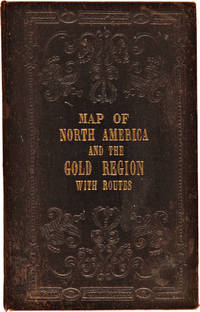
1849réf. 54260New York: Sherman & Smith 1849. With an Inset Map of the California Gold Regions A rare early version of Smith's MAP OF NORTH AMERICA with an inset of California with the gold regions highlighted. Another edition was published the same year by John Disturnell and it was reissued the following year to accompany the third edition of Disturnell's EMIGRANT'S GUIDE. The routes to California and Oregon from Independence Fort Smith and Port Lavaca are indicated in red and the gold regions of California are shaded yellow. OCLC records only two copies of this edition at Berkeley and UC Davis and Wheat notes one further at the California State Library. Folding map approximately 22 x 19¾ inches partially handcolored. 24mo. Original publisher's cloth stamped in blind and lettered in gilt. Very light wear to cloth. 20th-century bookplate on front pastedown. A near mint copy of this map in remarkable fine condition. In a half pebbled cloth and printed paper board clamshell box. WHEAT GOLD REGION 124. WHEAT TRANSMISSISSIPPI 643. HOWES D351 ref. KURUTZ 196 ref. hardcover
1849réf. 54260New York: Sherman & Smith 1849. With an Inset Map of the California Gold Regions A rare early version of Smith's MAP OF NORTH AMERICA with an inset of California with the gold regions highlighted. Another edition was published the same year by John Disturnell and it was reissued the following year to accompany the third edition of Disturnell's EMIGRANT'S GUIDE. The routes to California and Oregon from Independence Fort Smith and Port Lavaca are indicated in red and the gold regions of California are shaded yellow. OCLC records only two copies of this edition at Berkeley and UC Davis and Wheat notes one further at the California State Library. Folding map approximately 22 x 19¾ inches partially handcolored. 24mo. Original publisher's cloth stamped in blind and lettered in gilt. Very light wear to cloth. 20th-century bookplate on front pastedown. A near mint copy of this map in remarkable fine condition. In a half pebbled cloth and printed paper board clamshell box. WHEAT GOLD REGION 124. WHEAT TRANSMISSISSIPPI 643. HOWES D351 ref. KURUTZ 196 ref. hardcover books
1565réf. 31656Genève François Perrin 1565 fort vol. in-8 vélin ivoire sur ais de bois, dos à nerfs portant le titre manuscrit, décor estampé à froid recouvrant les plats, avec bordures ornées de motifs floraux et de portraits en médaillon des champions de la Réforme et cartouche portant la date de 1577, tranches bleues, traces de lacets [Rel. de l'époque]
1891réf. 26210Washington: Government Printing Office 1891-1895. In the original 36 parts. FIRST EDITION. With 175 numbered double-page lithographed color maps and plates on 178 sheets by Bien. Large elephant folio presented in the original 36 large folio fascicles with their original printed paper wrappers now housed together in a blue cloth portfolio case with string ties the spine of the case is lettered in gilt. A handsome and impressive set in fully original condition overall very excellent and especially well preserved. The original wrappers show some occasional minor wear along the edges and spines occasional small tears at folds or minor creasing or separation. Sets in the original fascicles with wrappers intact are very rare and very elusive in the open market. This is a very fine example of the most rare state of the first edition. SCARCE IN ORIGINAL FOLIO PARTS AND AN EXTREMELY IMPRESSIVE ATLAS PRODUCED BY THE UNITED STATES GOVERNMENT PRINTING OFFICE TO ILLUSTRATE THE OFFICIAL RECORDS OF THE AMERICAN CIVIL WAR. The first of the 36 fascicles contains the index and preface and also included is the 1902 additions and corrections insert each of the following 35 fascicles contain five of the large double page plates. A beautiful and fascinating accompaniment to the official records of the Civil War. Each massive plate is either an impressively detailed and informative map or contains multiple images providing detailed plans of cities towns and fortresses views panoramas uniforms battlefields bridges engagements lookouts etc. etc. The maps and plans were primarily reproduced from those that had been drawn during the war by engineers draftsmen and sometimes even generals themselves for actual military use. Only a few maps drawn later by cartographers were added for historical purposes. Tactical and strategic maps indicate troop disposition; defense lines redoubts and fortifications of key sites are clearly shown. Terrain maps often contain picket positions signal stations and lines of march. Some were taken from what had been only rough sketches some from cartographic masterpieces. All are informative and reveal the knowledge or lack of knowledge that both sides possessed about the terrain and the strength and the position of opposing troops. The index to the maps refers to campaigns and battles rivers creeks lakes bays islands bridges fords ferries landings roads railroads mountains towns churches forts and much more. An indispensable source of information and imagery from the American Civil War. The atlas was not reprinted until 1958. Government Printing Office hardcover
1576réf. 33142-158Lausanne François Le Preux 1576. 16 380 72 leaves. With coat of armes of the city of Berne in woodcut on title. 8vo. Old calf blind-stamped back with title red edges. Lausanne François Le Preux 1576. First systematical statement of the Reformed Church PMM here present in a re-edition of the authorative Latin text. Taking its final form in 1559 and subsequently much revised enlarged and later re-oublished again from this present edition. The "Institutio Christianae" is certainly one of the most influential books of all time. It was composed in its first form when Jean Calvin 1509-1564 was twenty-six and dedicated his book to Francis I. Highly influential in the Western world and still widely read by theological students today. The book was written as an introductory textbook on the Protestant faith for those with some previous knowledge of theology and covered a broad range of theological topics from the doctrines of church and sacraments to justification by faith alone and Christian liberty. This edition was prepered by: 1 Nicolas Colladon c. 1530 - 1586 a French Calvinist pastor and son of French parents who in 1536 took shelter in Switzerland for religious reasons. He studied theology at Lausanne and Geneva and was a friend of John Calvin and pastor at Vandoevres and Geneva. In 1564 he became chancellor of the Academy where he taught theology until the death of Calvin. With Theodore Beza he worked on a famous monography on the French Reformed Church in France 1560. 2 Augustinus Marlorat du Pasquier 1506 - 1562 a French later a Protestant Reformer after he became indoctrinated with the principles of Protestantism. He left France in 1535 and took refuge in Geneva where he worked as a proof-reader for Greek and Hebrew. The dismissal of Viret in the controversy on excommunication however led Pasquier who approved the rigidly Calvinistic procedure to resign. After a short time in Geneva he went in July to Paris as pastor of the Evangelical congregation there. A nice copy with some contemp. marginalia. _ _ _ - Erichson 34; Adams C 364; Peter/Gilmont 76/3; Index aurel. no. 130.146; Senebier Histoire littéraire de Genevè I. 398; vlg. PMM 65. Lausanne, François Le Preux unknown
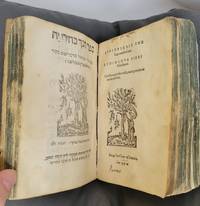
1525réf. 1403641Geneva; Genevae; Argentoriati i.e. Strassburg; Hagenau; Coloniae: Robertus Stephanus; Roberto Stephano; Johann Knobloch d. Ä.; Setzer; Apud Ioan. Gymnicum Johann Gymnich 1554; 1551; 1526; 1525; 1531. Octavo 5 parts. In Very Good condition. Bound in contemporary worn vellum. Ties at front hinge separated. Edges of text block dyed blue/black. Part three with rubrication and red ink marginalia. A sammelband in 5 parts of Calvinistic theology. 1 Calvin John Jean; Tremellius Immanuel translator; SEFER HINUKH BEHIRE YAH; Geneva : Nidpas be-bet Robertus Stephanus 1554. 8 152 8 pages. Translation by Immanuel Tremellius of Jean Calvin's Catéchisme de l'Eglise de Genève. Hebrew title romanized. Primarily in Hebrew; afterword a letter from Tremellius to Duke Christoph of Württemberg dated April 3 1554 in Strasbourg in Latin. First Edition. Tremellius was the first professor of Hebrew at Cambridge University. He converted to Christianity and died in 1580. USTC: 450063. GLN-306. Index Aureliensis; 129.892. Vinograd Geneva 1. 2 Calvin John Jean; STOICHEIOSIS TES CHRISTIANON PISTEOS = RUDIMENTA FIDEI CHRISTIANAE : LIBELLUS APPRIME UTILIS NUNC PRIMUM IN LUCEM AEDITUS; Genevae : Para RÅvertÅ tÅ StephanÅ etei Roberto Stephano Robert Estienne 1551. 126 2 pages. First book printed at Geneva by Robert Estienne. Greek translation by Henri Estienne of Calvin's Catéchisme de l'église de Genève. Greek colophon dated 14 Dec. 1551. USTC: 450041. Renouard: I 80. GLN-222. 3 Bader Johann; Meyer Tobias; AD ILLUSTREM PRINCIPEM D. LUDOVICUM COMITEM PALATINUM RHENI DUCEM BAUARIAE COMITEM VELDENSEM ETC. DE ANSERE QUI SACRAMENTUM EDISSE DICITUR; Argentoriati i.e. Strassburg: Johann Knobloch d. Ä. 1526; 20 leaves. USTC: 608905. VD16 B 106. VD16 B 114 Index Aureliensis; 111.457 4 Bugenhagen Johannes; Georg Spalatin; POSTILLATIO IOAN. BVGENHAGII POMERANI IN EVANGELIA USUI TEMPORUM&SANCTORUM TOTIUS ANNI SERUIENTIA; Hagenau: Setzer ca. 1525; 32 leaves. USTC: 685333. VD16 B 9351. 5 Augustine of Hippo Saint; D. AURELI AUGUSTINI HIPPONENSIS EPISCOPI DE BONO CONJUGALI LIBER UNUS. EIUSDEM DE SANCTA VIRGINITATE LIBER UNUS.; Coloniae : Apud Ioan. Gymnicum Johann Gymnich 1531 56 unnumbered leaves. Title within woodcut border with date 1530. USTC: 625891. VD16 ZV 27243. Shelved case 3. The present sammelband presents a cross-section of sixteenth-century theological writing encapsulating both the intellectual and polemical ferment of the Reformation as well as the enduring theological authority of the patristic tradition. At its heart are two translations of Jean Calvin's Catechism of the Church of Geneva one in Hebrew by Immanuel Tremellius and the other in Greek by Henri Estienne each printed by Robert Estienne at Geneva. The existence of these translations are illustrative of Reformation theologian's claim to return ad fontes back to the languages of Scripture itself. By representing a catechetical summary of Christian doctrine in both Hebrew and Greek the reformers in Geneva sought to demonstrate that their theology was rooted in the sources of revelation and the 'pure' teachings of the early Church in a manner capable of addressing both learned audiences and hoped-for Jewish or Eastern interlocutors. Alongside Calvin's catechisms are two early Lutheran texts: Johann Bader and Tobias Meyer's sacramental tract printed in Strasbourg in 1526 and Johannes Bugenhagen's postils printed at Hagenau ca.1525. These works reflect both the polemical and pastoral concerns of the early Lutheran movement on the one hand grappling with the meaning of the Eucharist and on the other providing sermons for the liturgical year. A close ally of Luther Bugenhagen sought to stabilize the reformation communities through pragmatic instruction. Bader's text by contrast exemplifies the more combative dimension of then current theological controversies. Taken together these two texts are illustrative of how Reformation figures not only produced works of doctrinal innovation but also sought new forms of preaching and pastoral practice. Also present is a Cologne edition of two treatises by St. Augustine of Hippo De bono coniugali and De sancta virginitate. Augustine's authority among the reformers Lutheran and Calvinist with John Calvin and his followers in particular invoking him as a guarantor of continuity with the early church. In this sammelband which includes works by both Lutherans and Reform theologians the presence of these texts demonstrate how Augustine's writings on marriage and virginity provided a moral theology that could be appropriated across these still-porous confessional divisions. By binding Augustine with Calvin Bugenhagen and other reformers the volume exemplifies how early Protestants claimed authority from the Church Fathers attempting to demonstrate that their reforms did not represent a novelty within the Christian but rather a recovery of the authentic early Christian church. The assemblage of these particular and diverse works in this volume suggests that they were likely bound together in the mid-16th century. The presence of Calvinist catechisms Lutheran sermons and polemics and works by Augustine indicates that these texts were brought together during a time in which the boundaries between "Lutheran" and "Reformed" identities were still porous likely before the Lutheran Formula of Concord in 1577 and the Reformed Synod of Dordt in 1618. After these key moments confessional lines between the two traditions became far sharper. In the period between 1540 and 1570 the Reformation was still a popular evangelical movement with significant overlapping sympathies and theological tendencies sharing both a robust humanist disposition and a common appeal to the authority of Scripture and the patristic tradition. A collector of these works during this period would likely have seen these as complementary expressions of the same reforming enterprise. The translations of Calvin's catechism into Greek and Hebrew in particular suggest a distinct cosmopolitanism: a theology that could be directed outward to Jews Eastern Orthodox Christians and the broader "republic of letters". Taken together the works gathered in this sammelband are representative of the emergence of a distinctly Protestant culture one that sought to articulate a developing form of Christianity across languages confessions and centuries. The significance of the present volume lies not only in the rarity and importance of its individual components but in their relation to one another - their diversity and unity consonance and dissonance - and is a fine example of the breadth of Reformation theological and cultural engagement across confessional lines and with both the humanist and patristic traditions. 1403641. Shelved Dupont Bookstore. Robertus Stephanus; [Roberto Stephano]; [Johann Knobloch d. Ä.]; [Setzer]; Apud Ioan. Gymnicum [Johann Gymnich] unknown