9 209 résultats
1848réf. 10602416mo original red cloth decoratively stamped in gilt and blind illustrated with 125 engravings 234 pp. and folding map 52 x 67 cm 20 1/2" x 26 1/4" plus decorative border. Old ink name on front pastedown with catalogue entry glued in some light foxing within map slightly darkened a few short splits at folds; otherwise very good. Smith was a prominent mapmaker in the mid 19th century. He competed with the likes of Colton and Mitchell and was associated with John Disturnell back in the 1840s.He published a number of city maps around that time. In 1843 Smith published a large map of the United States and three years later in 1846 he published the first edition of this map. Considered a really good map it basically covers the eastern and midwestern part of the U.S. California and Oregon are featured in an inset and part of Texas is also shown. Some railroad and canal routs in the northeast are also highlighted. Ristow: American Maps. Sherman & Smith, books
2016réf. Adhya-9781454868330WOLTERS KLUWER 2016. HB. New. WOLTERS KLUWER hardcover
2016réf. Adhya-9781454868330WOLTERS KLUWER 2016. HB. New. WOLTERS KLUWER hardcover
réf. 9781607412564NOVA SCIENCE PUBLISHERS INC
1984réf. BN333715Asaph Verlag 1984. 1984. Der Sänger: Ein poetisches Gleichnis Claren-Dichtung Der Sänger: Ein poetisches Gleichnis Claren-Dichtung Miller Calvin Dirk Schmalenbach Michael Claren u. a. Asaph Verlag unknown
1974réf. SET55297Baker Books 1974. Soft cover. Near Fine. 19x23x25. WE SHIP DAILY! Books show very little use. Hardcover set. Includes Shepherd's Notes booklet. PROMPT PROFESSIONAL SERVICE! Baker Books paperback
1984réf. DADAX0824772539CRC Press 1984-11-30. 1. hardcover. New. 6.26x0.82x9.28. Buy with confidence. Excellent Customer Service & Return policy. CRC Press hardcover
1981réf. DADAX0824712463CRC Press 1981-02-01. 1. hardcover. New. 5.96x0.85x9.20. Buy with confidence. Excellent Customer Service & Return policy. CRC Press hardcover
1982réf. DADAX0824718682CRC Press 1982-08-25. 1. hardcover. New. 5.94x0.70x9.22. Buy with confidence. Excellent Customer Service & Return policy. CRC Press hardcover
1975réf. DADAX0824762061CRC Press 1975-05-01. hardcover. New. 6.30x0.77x9.26. Buy with confidence. Excellent Customer Service & Return policy. CRC Press hardcover
1980réf. DADAX0824769600CRC Press 1980-06-01. hardcover. New. 6.24x0.78x9.26. Buy with confidence. Excellent Customer Service & Return policy. CRC Press hardcover
1984réf. DADAX0824770757CRC Press 1984-01-30. 1. hardcover. New. 6.24x0.70x9.24. Buy with confidence. Excellent Customer Service & Return policy. CRC Press hardcover
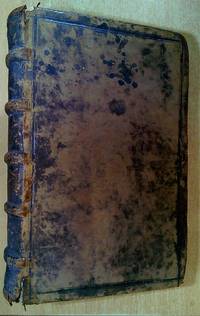
1595réf. 280753United Kingdom: In Officina Sanctandreana Geneva 1595. Book. Good. hardback. hardback small folio measuring 13" x 9" bound in reverse calf worn and scuffed and with some loss to the bottom leading corner of the lower board. The stitching remains tight. Full title reads - Ioannis Caluini in quinque libros Mosis commentarii : Genesi seorsum reliqui quatuor in formam harmoniae digesti : cum triplici indice quorum primus Geneseos alter quatuor librorum in formam harmoniae dispositorum res notabiliores tertius singulorum harmoniae capitum versus sparsim explicatos continet : eiusdem Caluini in librum Iosue commentarius. A good copy pastedowns have lifted from the boards. Creased and rubbed to the bottom leading corner of the title page and two leaves following. The front and rear blanks are creased and worn with some loss and while the body of text is unmarked these blanks have been used to list a large number of names in a neat and uniform hand of the period. The purpose of these names is unclear and seems to include Masons Princes Clarks & Common-Labourers. Printers device head and tail pieces divisional title for the Book of Joshua. xii 320 594 xxvi 79 2pp . In Officina Sanctandreana [Geneva] Hardcover
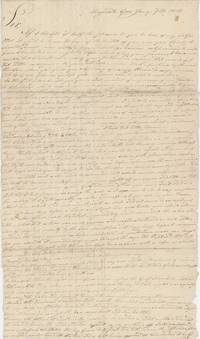
1818réf. List2715Augusta Georgia 1818. Single letter three 9 x 16 inch pages letters with some tape repairs and stray holes at folds still quite legible. Very good. A letter written by Calvin Barnard to his friend Asa Holman of Bolton Massachusetts describing the former’s trip from Boston to Augusta South Carolina from November 25 to January 1. Barnard first traveled from Boston to Charleston South Carolina by boat from which he notes “almost a continual gagging and vomiting” from the passengers. In Charleston Barnard observes that the city is inelegant the unpaved streets “filled with mud” and views “the breastworks which were thrown up during the last war”. This would have been the War of 1812 of which Barnard was likely a veteran. South Carolina had engaged upwards of 5000 soldiers and had put up defenses along the coastline in anticipation of the war but it did not come to the mainland – although South Carolina was under naval blockade and the Sea Islands were targeted by the British. Barnard reaches Savannah Georgia on the 25th of December; similarly he finds it “although a place of considerable business” “about as dissatisfactory a place I ever was in.” Augusta which he reaches by foot “is much handsomer built and situated than Savannah but not less dissipated” – he remarks that “Being the first day of the year is in this part of the country another great day for getting drunk.” After spending some time in Augusta he finishes the letter with some pointed observations about its residents: “I have had a better opportunity of becoming acquainted with the manners customs and dispositions of the citizens of Augusta . I shall not do them injustice by dividing them into three classes in which the Negroes are excepted. The first class of which are the gentry as they would expect to be called made up of men from all parts who have become rich here mostly by avaricious and unjust means . And this class we cannot expect to see drink more than once a week. The second is mostly the natives of this state and South Carolina who are men of a little property of a little education and very little of an honorable principle of any kind and these are not often seen drunk in the forenoon. The third class appears to me to be made up of the off-scouring of every bad place on earth for I never saw their equal for drunkenness lying stealing fighting swearing from morning till morning again. It is not possible that the continent of America has in any other place their equal. If it had I think the whole world soon be sunk.” He finds Augusta’s African-American residents the only trustworthy ones despite local opinions: “If any stealing is done here it is laid to the Negroes but I had my surtout a shirt and handkerchief stolen on Friday night last but have too good an opinion of the blacks to think they have them.” Of interest as an outsider’s views on the early Antebellum South and on drinking – another pressing social issue of the day. unknown
1818réf. List2715Augusta Georgia 1818. Single letter three 9 x 16 inch pages letters with some tape repairs and stray holes at folds still quite legible. Very good. A letter written by Calvin Barnard to his friend Asa Holman of Bolton Massachusetts describing the former’s trip from Boston to Augusta South Carolina from November 25 to January 1. Barnard first traveled from Boston to Charleston South Carolina by boat from which he notes “almost a continual gagging and vomiting” from the passengers. In Charleston Barnard observes that the city is inelegant the unpaved streets “filled with mud” and views “the breastworks which were thrown up during the last war”. This would have been the War of 1812 of which Barnard was likely a veteran. South Carolina had engaged upwards of 5000 soldiers and had put up defenses along the coastline in anticipation of the war but it did not come to the mainland – although South Carolina was under naval blockade and the Sea Islands were targeted by the British. Barnard reaches Savannah Georgia on the 25th of December; similarly he finds it “although a place of considerable business” “about as dissatisfactory a place I ever was in.” Augusta which he reaches by foot “is much handsomer built and situated than Savannah but not less dissipated” – he remarks that “Being the first day of the year is in this part of the country another great day for getting drunk.” After spending some time in Augusta he finishes the letter with some pointed observations about its residents: “I have had a better opportunity of becoming acquainted with the manners customs and dispositions of the citizens of Augusta . I shall not do them injustice by dividing them into three classes in which the Negroes are excepted. The first class of which are the gentry as they would expect to be called made up of men from all parts who have become rich here mostly by avaricious and unjust means . And this class we cannot expect to see drink more than once a week. The second is mostly the natives of this state and South Carolina who are men of a little property of a little education and very little of an honorable principle of any kind and these are not often seen drunk in the forenoon. The third class appears to me to be made up of the off-scouring of every bad place on earth for I never saw their equal for drunkenness lying stealing fighting swearing from morning till morning again. It is not possible that the continent of America has in any other place their equal. If it had I think the whole world soon be sunk.” He finds Augusta’s African-American residents the only trustworthy ones despite local opinions: “If any stealing is done here it is laid to the Negroes but I had my surtout a shirt and handkerchief stolen on Friday night last but have too good an opinion of the blacks to think they have them.” Of interest as an outsider’s views on the early Antebellum South and on drinking – another pressing social issue of the day. unknown books
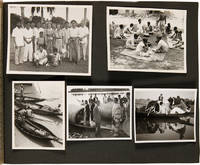
1956réf. 56756Various locations in Pakistan including Peshawar Lahore Dacca and Karachi. 1956. U.S.-Pakistani Educational Cooperation During the Cold War A likely-unique assemblage of photographs and ephemera relating to an educational workshop conducted by the United States Educational Foundation in Pakistan USEFP in the mid-20th century. A non-governmental organization still active more than seventy years after its founding the USEFP's goal is to promote educational cooperation between the U.S. and Pakistan. After gaining its independence from Britain in 1947 Pakistan sought to remain technically non-aligned with regard to Cold War international politics but over time developed a significant relationship with the United States including the leasing of the Peshawar Air Station for American use beginning in 1956. Most of the larger photographs in this album have typed captions and document various Pakistani officials and USEFP members speaking and teaching during an educational workshop in "West Pakistan" running discussion groups and meetings and attending receptions and other activities. There is also a "Group photo of the members and the Delegation of the Education Foundation." One of the speakers who worked for the USEFP and is pictured here leading a discussion group is Calvin Cope who seems to be the compiler of the present album; two newspaper articles on Cope's experiences in Pakistan are mounted in the rear of the album. Cope was a university professor and administrator at Monterey Peninsula College in California who spent a year in a teaching program after receiving a Fulbright grant. In addition to the professional photographs Cope has included thirty vernacular photos in the album two of which picture him and his wife in traditional Pakistani dress one of these is reproduced in one of the newspaper clippings about Cope. Most of the other vernacular pictures show Pakistani students in school and at play and include multiple shots of Pakistani friends as well as additional photos from the educational workshop providing a deeper look into the event. Besides the two newspaper articles an article on the Karachi educational workshop is laid in. Other ephemeral items include a small handwritten card with the numbers one through ten translated into Pakistani along with two Pakistani phrases and a certificate from the USEFP and the Directorate of Education in Peshawar inviting the bearer to attend the "Certificate Awarding Ceremony" of the teacher's workshop in that city to be held at the "No. 1 Govt. High School Peshawar." The United States Educational Foundation in Pakistan was established in 1950 and is still an active organization devoted to educational cooperation between the United States and Pakistan. According to their website: "USEFP is guided by a binational commission composed of an equal number of Pakistanis and Americans with the Chair alternating each year between a Pakistani and an American. USEFP is one of 49 'Fulbright Commissions' located throughout the world. Since 1951 when the first group of Pakistani grantees traveled to America and in 1952 when the first American grantees visited Pakistan the USEFP has fostered mutual understanding between the people of Pakistan and the people of the United States through educational and cultural exchange. More than 8000 Pakistanis and around 935 Americans have participated in USEFP administered exchange programs. The Foundation receives support and counsel from both the Pakistan and U.S. governments but it is not an agency of either. The Foundation supervises a variety of programs that send Pakistani students and scholars to American campuses while bringing American scholars to universities in Pakistan. The goal of all USEFP programs is to help Pakistanis learn more about the U.S. and to help Americans learn more about Pakistan and its people." An interesting and unique record of the early years of the USEFP's efforts at educational diplomacy in Pakistan. Twenty-two large-format professional photographs 6 x 8 inches with decorated tissue guards most with typed captions mounted beneath the images. Thirty smaller format vernacular photographs a partially-printed certificate a small handwritten card and three newspaper or magazine articles pasted in or laid in. Oblong quarto. Contemporary maroon textured leatherette photograph album made in Pakistan string tied paper label taped to the front board reading: "With Compliments from the Education Department Lahore Pakistan." Minor soiling to binding moderate wear to paper label. Contents generally clean and in excellent condition. Very good overall. hardcover
1956réf. 56756Various locations in Pakistan including Peshawar Lahore Dacca and Karachi. 1956. U.S.-Pakistani Educational Cooperation During the Cold War A likely-unique assemblage of photographs and ephemera relating to an educational workshop conducted by the United States Educational Foundation in Pakistan USEFP in the mid-20th century. A non-governmental organization still active more than seventy years after its founding the USEFP's goal is to promote educational cooperation between the U.S. and Pakistan. After gaining its independence from Britain in 1947 Pakistan sought to remain technically non-aligned with regard to Cold War international politics but over time developed a significant relationship with the United States including the leasing of the Peshawar Air Station for American use beginning in 1956. Most of the larger photographs in this album have typed captions and document various Pakistani officials and USEFP members speaking and teaching during an educational workshop in "West Pakistan" running discussion groups and meetings and attending receptions and other activities. There is also a "Group photo of the members and the Delegation of the Education Foundation." One of the speakers who worked for the USEFP and is pictured here leading a discussion group is Calvin Cope who seems to be the compiler of the present album; two newspaper articles on Cope's experiences in Pakistan are mounted in the rear of the album. Cope was a university professor and administrator at Monterey Peninsula College in California who spent a year in a teaching program after receiving a Fulbright grant. In addition to the professional photographs Cope has included thirty vernacular photos in the album two of which picture him and his wife in traditional Pakistani dress one of these is reproduced in one of the newspaper clippings about Cope. Most of the other vernacular pictures show Pakistani students in school and at play and include multiple shots of Pakistani friends as well as additional photos from the educational workshop providing a deeper look into the event. Besides the two newspaper articles an article on the Karachi educational workshop is laid in. Other ephemeral items include a small handwritten card with the numbers one through ten translated into Pakistani along with two Pakistani phrases and a certificate from the USEFP and the Directorate of Education in Peshawar inviting the bearer to attend the "Certificate Awarding Ceremony" of the teacher's workshop in that city to be held at the "No. 1 Govt. High School Peshawar." The United States Educational Foundation in Pakistan was established in 1950 and is still an active organization devoted to educational cooperation between the United States and Pakistan. According to their website: "USEFP is guided by a binational commission composed of an equal number of Pakistanis and Americans with the Chair alternating each year between a Pakistani and an American. USEFP is one of 49 'Fulbright Commissions' located throughout the world. Since 1951 when the first group of Pakistani grantees traveled to America and in 1952 when the first American grantees visited Pakistan the USEFP has fostered mutual understanding between the people of Pakistan and the people of the United States through educational and cultural exchange. More than 8000 Pakistanis and around 935 Americans have participated in USEFP administered exchange programs. The Foundation receives support and counsel from both the Pakistan and U.S. governments but it is not an agency of either. The Foundation supervises a variety of programs that send Pakistani students and scholars to American campuses while bringing American scholars to universities in Pakistan. The goal of all USEFP programs is to help Pakistanis learn more about the U.S. and to help Americans learn more about Pakistan and its people." An interesting and unique record of the early years of the USEFP's efforts at educational diplomacy in Pakistan. Twenty-two large-format professional photographs 6 x 8 inches with decorated tissue guards most with typed captions mounted beneath the images. Thirty smaller format vernacular photographs a partially-printed certificate a small handwritten card and three newspaper or magazine articles pasted in or laid in. Oblong quarto. Contemporary maroon textured leatherette photograph album made in Pakistan string tied paper label taped to the front board reading: "With Compliments from the Education Department Lahore Pakistan." Minor soiling to binding moderate wear to paper label. Contents generally clean and in excellent condition. Very good overall. hardcover books
réf. 43071Photograph of Calvin Coolidge by Harris & Ewing. Inscribed in the lower border "To Frederick I. Cox With regards Calvin Coolidge.” Blindstamped in the lower left by Harris & Ewing. The photograph measures 8 inches by 12 inches. Double matted and framed. The entire piece measures 16.25 inches by 20.25 inches. The 30th President of the United States Calvin Coolidge began his political career in Massachusetts state politics. His response to the Boston Police Strike of 1919 thrust him into the national spotlight and gave him a reputation as a man of decisive action. Soon after he was elected as the 29th Vice President in 1920 and succeeded to the presidency upon the sudden death of Warren G. Harding in 1923. unknown
1919réf. 13271Boston: Houghton Mifflin 1919. Second Edition. Very good-. Octavo 275pp. illustrated. Stated "Second edition enlarged" with date on the title page thus probably the first printing of this edition. Front inner hinge cracked but holding private library stamp to the front free endpaper and the ownership signature of Harold Peabody on that same leaf; overall about very good. Laid in are three interesting documents; first a typed letter on Coolidge's official stationery as Governor of Massachusetts SIGNED and dated November 5 1920 addressed to Peabody and thanking him for his "gracious message." The message in question was undoubtedly congratulating Coolidge on his victory in the 1920 election in which he had been elected Vice President under Warren G. Harding. Next is a 12pp. pamphlet 16mo containing two pieces of Coolidge's writing namely his Inaugural Address before the U. S. Senate given on March 4 1921 and a prize-winning essay he wrote while attending Amherst College in 1895 entitled "The Principles Fought For in the American Revolution." Finally a seemingly unrelated menu dated 1929 for a dinner honoring General Pershing with a long split at one fold. Harold Peabody was a prominent Bostonian who was married to Marian Lawrence Peabody whose diaries were published in 1967 under the title "To Be Young Was Very Heaven." The small pamphlet was published by the United Shoe Machinery Corporation headquartered in Boston and no doubt inclined to heap praises on their sitting Governor who had just been elected Vice President. The pamphlet is retained by just three institutions per OCLC: AAS Harvard and the University of Michigan. As far as we can tell it seems to represent the only printing of Coolidge's college essay--at least the only one locatable in OCLC--until David Pietrusza's 2012 book: "Calvin Coolidge on the Founders" which also reproduced the essay. Houghton Mifflin unknown
1919réf. 16117Boston: Houghton Mifflin Company 1919. Second Enlarged Edition. Cloth. Very good/very good. Signed copy of Have Faith In Massachusetts: A Collection of Speeches and Messages by the Governor of Massachusetts Calvin Coolidge. Octavo x 275pp. Blue cloth title in gilt on spine and cover. Light wear from handling to cloth and spine. Frontispiece portrait with tissue cover. Bumped lower corner of front panel. In the publisher's scarce dust jacket stated "Seventieth Thousand" on front cover bright illustrations on cover and spine chips along bottom edge faint toning to spine. Inscribed on front free endpaper by author and future president Calvin Coolidge: "To Edwin Duffy / with regards / 1920. Houghton Mifflin Company unknown
1929réf. 14750New York: Cosmopolitan Book Corporation 1929. First Edition First Printing. Cloth. Fine/good. The first edition of The Autobiography of Calvin Coolidge signed by President Coolidge. Octavo 10 247pp. Green cloth title in gilt on spine. Stated "first trade edition" on copyright page. Top edge dyed green. Illustrated endpapers. Solid text block a fine example. In the publisher's first state dust jacket $3.00 on front flap chipping and toning to spine tissue repairs to verso to secure spine a scarce jacket with noted issues. Inscribed on the second free endpaper: "To Milton Boyd Brown With Regards Calvin Coolidge." Calvin Coolidge 1872-1933 the 30th President of the United States wrote this autobiography titled "The Autobiography of Calvin Coolidge" four years after he left the presidency In his autobiography Coolidge reflects on his New England upbringing his service as a local official governor of Massachusetts and his unexpected rise to the presidency following the death of Warren G. Harding. Cosmopolitan Book Corporation unknown
1919réf. 16117Boston: Houghton Mifflin Company 1919. Second Enlarged Edition. Cloth. Very good/very good. Signed copy of Have Faith In Massachusetts: A Collection of Speeches and Messages by the Governor of Massachusetts Calvin Coolidge. Octavo x 275pp. Blue cloth title in gilt on spine and cover. Light wear from handling to cloth and spine. Frontispiece portrait with tissue cover. Bumped lower corner of front panel. In the publisher's scarce dust jacket stated "Seventieth Thousand" on front cover bright illustrations on cover and spine chips along bottom edge faint toning to spine. Inscribed on front free endpaper by author and future president Calvin Coolidge: "To Edwin Duffy / with regards / 1920. Houghton Mifflin Company unknown books
1929réf. 14750New York: Cosmopolitan Book Corporation 1929. First Edition First Printing. Cloth. Fine/good. The first edition of The Autobiography of Calvin Coolidge signed by President Coolidge. Octavo 10 247pp. Green cloth title in gilt on spine. Stated "first trade edition" on copyright page. Top edge dyed green. Illustrated endpapers. Solid text block a fine example. In the publisher's first state dust jacket $3.00 on front flap chipping and toning to spine tissue repairs to verso to secure spine a scarce jacket with noted issues. Inscribed on the second free endpaper: "To Milton Boyd Brown With Regards Calvin Coolidge." Calvin Coolidge 1872-1933 the 30th President of the United States wrote this autobiography titled "The Autobiography of Calvin Coolidge" four years after he left the presidency In his autobiography Coolidge reflects on his New England upbringing his service as a local official governor of Massachusetts and his unexpected rise to the presidency following the death of Warren G. Harding. Cosmopolitan Book Corporation unknown books
1989réf. DADAX0830693181Brand: Tab Books 1989-01-01. First Edition. hardcover. New. 0.00x0.00x0.00. Buy with confidence. Excellent Customer Service & Return policy. Brand: Tab Books hardcover
réf. Z1-C-005-01065Publishamerica Inc. Used - Like New. Used - Like New. Book is new and unread but may have minor shelf wear. Ships from UK in 48 hours or less usually same day. Your purchase helps support Sri Lankan Children's Charity 'The Rainbow Centre'. 100% money back guarantee. We are a world class secondhand bookstore based in Hertfordshire United Kingdom and specialize in high quality textbooks across an enormous variety of subjects. We aim to provide a vast range of textbooks rare and collectible books at a great price. Our donations to The Rainbow Centre have helped provide an education and a safe haven to hundreds of children who live in appalling conditions. We provide a 100% money back guarantee and are dedicated to providing our customers with the highest standards of service in the bookselling industry. Publishamerica Inc unknown