31 744 résultats
réf. 35707London: Printed for the Author: and sold by Debrett; and Murray & Highley 1797. First edition small 8vo 159 x 114 mm 6 139 1 pp. with half-title 3 engraved plates nineteenth century cloth spine gilt a good copy. Attributed to Isaac Brandon but possibly written by William Combe author of "Doctor Syntax" who undoubtedly knew Stern in France and in England. London: Printed for the Author: and sold by Debrett; and Murray & Highley, 1797 hardcover
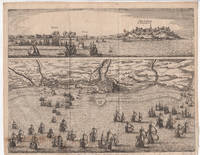
1652réf. 44394Amsterdam: Jodocus Janssonius 1652. Very good edges reinforced on verso light soiling mostly to margins minor foxing dampstained along bottom edge image clean. 1 sheet. Copper engraved map. 11.75 x 13.5 inches. Double-page copper engraved plate from "Fredrick Hendrick Van Nassauw Prince Van Orangien Zyn Leven En Bedryf." page 128. Labeled "Fig. 10 Fol. 100" in top left corner. The two views depict the 1630 attack on the Portuguese city of Olinda in Brazil by the Dutch. When Spanish Crown and the Kingdom of Portugal formed a dynastic union 1580-1640 uniting the entire Iberian peninsula as well as their colonies the Dutch saw their opportunity to take advangage of Portuguese weakness by attacking their colonies occupying large sections of Brazil including the whole Brazilian northeast and in 1630 capturing Recife and Olinda in the captaincy of Pernambuco the largest and richest sugar-producing area in the world. [Jodocus Janssonius] unknown
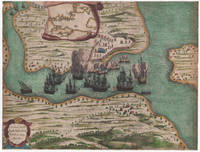
1652réf. 44393Amsterdam: Jodocus Janssonius 1652. About very good margins cut to neat line edges lightly browned and soiled few small chips along edges two small tears repaired on th verso some staining on reverse image sharp. 1 sheet. Hand-colored copper-engraved map. 11 x 14.5 inches. Double-page copper engraved plate from "Fredrick Hendrick Van Nassauw Prince Van Orangien Zyn Leven En Bedryf." page 31. Labeled "Fol. 23" along bottom edge. Image Depicts the Dutch fleet under Piet Heyn capturing the fort at the entrance to the Baia de Todos os Santos. When Spanish Crown and the Kingdom of Portugal formed a dynastic union 1580-1640 uniting the entire Iberian peninsula as well as their colonies the Dutch saw their opportunity to take advangage of Portuguese weakness by attacking their colonies occupying large sections of Brazil including the whole Brazilian northeast and in 1630 capturing Recife and Olinda in the captaincy of Pernambuco the largest and richest sugar-producing area in the world. [Jodocus Janssonius] unknown
1652réf. 44394Amsterdam: Jodocus Janssonius 1652. Very good edges reinforced on verso light soiling mostly to margins minor foxing dampstained along bottom edge image clean. 1 sheet. Copper engraved map. 11.75 x 13.5 inches. Double-page copper engraved plate from "Fredrick Hendrick Van Nassauw Prince Van Orangien Zyn Leven En Bedryf." page 128. Labeled "Fig. 10 Fol. 100" in top left corner. The two views depict the 1630 attack on the Portuguese city of Olinda in Brazil by the Dutch. When Spanish Crown and the Kingdom of Portugal formed a dynastic union 1580-1640 uniting the entire Iberian peninsula as well as their colonies the Dutch saw their opportunity to take advangage of Portuguese weakness by attacking their colonies occupying large sections of Brazil including the whole Brazilian northeast and in 1630 capturing Recife and Olinda in the captaincy of Pernambuco the largest and richest sugar-producing area in the world. [Jodocus Janssonius] unknown books
1652réf. 44393Amsterdam: Jodocus Janssonius 1652. About very good margins cut to neat line edges lightly browned and soiled few small chips along edges two small tears repaired on th verso some staining on reverse image sharp. 1 sheet. Hand-colored copper-engraved map. 11 x 14.5 inches. Double-page copper engraved plate from "Fredrick Hendrick Van Nassauw Prince Van Orangien Zyn Leven En Bedryf." page 31. Labeled "Fol. 23" along bottom edge. Image Depicts the Dutch fleet under Piet Heyn capturing the fort at the entrance to the Baia de Todos os Santos. When Spanish Crown and the Kingdom of Portugal formed a dynastic union 1580-1640 uniting the entire Iberian peninsula as well as their colonies the Dutch saw their opportunity to take advangage of Portuguese weakness by attacking their colonies occupying large sections of Brazil including the whole Brazilian northeast and in 1630 capturing Recife and Olinda in the captaincy of Pernambuco the largest and richest sugar-producing area in the world. [Jodocus Janssonius] unknown books
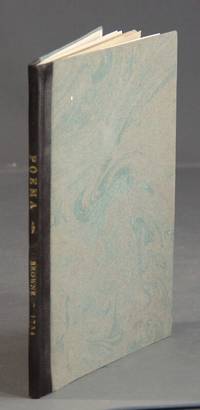
1754réf. 58056Londini: impensis J. & R. Tonson & S. Draper 1754. 4to pp. 4 40; modern boards gilt lettering on spine; some toning of the text and the textblock trimmed to 23.5 x 18.5 cm; all else very good. This is the variant with the price 1 s. 6 d. on the title page. Painfully common but Browne's best known work a poem on the immortality of the soul. impensis J. & R. Tonson & S. Draper unknown
1754réf. 58056Londini: impensis J. & R. Tonson & S. Draper 1754. 4to pp. 4 40; modern boards gilt lettering on spine; some toning of the text and the textblock trimmed to 23.5 x 18.5 cm; all else very good. This is the variant with the price 1 s. 6 d. on the title page. Painfully common but Browne's best known work a poem on the immortality of the soul. impensis J. & R. Tonson & S. Draper unknown books
1850réf. 68036Northumberland NY and Tuolumne County CA. 1850–1857. New Yorker in the "Land of Gold" A scattered but intriguing collection of manuscripts related to New York native Isaac Vanderwerker or Vanderwarker who made for the California gold mines in 1850 and remained out west until at least 1857. This group consists primarily of letters written to Isaac by his brother at home in Northumberland inquiring after Isaac's activities in the gold fields and commenting on matters at home though it also contains a detailed letter from Isaac himself a letter from his ill-fated sister Joann and two letters written by business partners in California. The earliest letter here written by Isaac's brother who signs only with initials is dated October 7 1850 shortly after Isaac arrived in California. Isaac was apparently one of many gold-seekers who elected to take a slow sailing ship from Panama rather than wait on the heavily delayed steamships though he weathered the journey better than most. Isaac's brother also notes several acquaintances who "have returned without making their fortune" and still more who are leaving regularly for the mines including a "Justus" who "made a vendue and sold his personal property" in order to fund the journey. Everyone in town it seems either wants to head to California or has an excuse not to. "I hope you will be one of the lucky ones and get well paid for all your toil sufferings and anxieties" he writes to his brother. "We have most of the California news every month. I saw in the last paper an account of the riot and burning of Sacramento City it spoke of some large lumps of gold being taken out weighing from one to forty pounds at Carsons new diggings on the Stanislaw another instance where a man took out four thousand dollars in two days at Murphy diggings but these cases are something extra John L. Cramer is at the Northern Mines on the Yuba…." The Vanderwerkers were early settlers of upstate New York and appear to have done well for themselves – Isaac and his brother are involved in several substantial properties and much of their correspondence relates to the management of their farms. The next letter in the group comes from the following summer written by Isaac's sister Joann. Joann discusses more details of the family's properties and notes that her health is poor enough that she is not sure to see the end of the week. Regardless news of California remains at front of mind: "There is a story in circulation that Aron Bliss Jaines Brother in law has stoll 15 thousand dollars at San Francisco and the owner has followed him here and there a going to take him back and hang him. John Cramer is on the yube never his Father said he guest by his writing he was not doing very well." From here we skip two years to October 16 1853 when Isaac's brother writes to tell him that large numbers are still heading for California. Joann has been holding on the last two years and "Old Frank" who used to work with them before moving to Canada would like to know if Isaac has work for him in California. He also goes on to discuss a bit of contentious New York politics: "We shall have five state tickets this fall viz whig Barnburner or soft hunker Adamantine or hard Temperance & abolition. The whigs no dout will carry the Election. The Barnburners had quite a majority in the State Convention….the Canal board are Barnburners & they are making a clean sweep of the hunkers." The letters continue over the next few years regarding more transcontinental legal matters real estate dealings Joann's eventual death in 1855 and the usual litany of deaths and marriages at home. The most content rich letter in the group is the only one written by Isaac himself sent to New York from Tuolumne County on May 18 1857. As Isaac describes his life in the west he also reveals himself to be a talented writer: "Dear Brother I will again endeavour to correspond with you by a few rude caught characters on paper which may put you in mind that you have a Brother Still in the land of gold…." He sends some gold home not present describes a chance meeting with the aforementioned John Cramer remarks on the high cost of goods in the mines and recent fires in San Francisco and Stockton. Business isn't cheap in the "land of gold" and he claims he "can do as much business in the States for 10 Dollars as I can Here for one Hundred." With that in mind he adds a postscript stating that he has sold out his plot and mining apparatus for $1500 and will try to go into business burning lime or supplying bricks and lumber in Benicia. He describes the new town and the rapid pace of development in California: "Benicia is situated about thirty miles up the Bay from San Francisco and about Six miles from the present Capital of the state named Vallejo. About three months ago the first building was erected which is a Hotel about two weeks ago they commenced building there is now about twenty small houses up and one three story Hotel. The government officers reside at Vallejo after the 10 of this month. I had an introduction to the governor at Vallejo last week he is a clever sort of man but not Dignified hardly fit for the Station…." Isaac's brother responds to this letter a few months later curious about his sibling's new business ventures. He also comments that "by what I can learn of the character of the Mexicans and Indians I should hate to travel alone without being well armed. I see by our papers that Lynch Law is that that governs all the mines I saw an account of a man being hung at San Francisco by Mr. Lynch at short notice." Unsurprisingly more and more are returning home by 1857 including a man named Wells " come in the same steamer your letter did he was sick but made out to keep up till he got home and died less than a week after he was not very successful in California." A heartfelt letter from a friend about the health of Isaac's mother also present seems to have convinced him and Isaac returned home for a visit to New York in the latter part of 1857. A September 3rd letter from his business partner John W. Kelly sent from Sawmill Flatt is addressed to Isaac in Saratoga and discusses business dealings in California. It would appear Isaac never pulled completely out of mining as the letter regards efforts to secure mortgage payments for Isaac's "ditch." The final letter in this collection is dated December 17 1857 and is addressed to Isaac from the offices of A.C. Goodrich in Columbia California. Goodrich describes a large flume his company has built 180 miles long and twelve feet wide by three feet deep "exclusive of the artificial embankment or five hundred ton stream capacity this day and night as we have reservoirs in abundance to hold the night & Sunday water. Would give 1000 ton streams which sold at the precent price viz $4.00 per day would pay ten per cent on a Capital of $1000.000. This would give a large basis for waste and reduction in price and still leave room for handsome profits on our Capital stock of $450000. The present cost of the work we can only approximate to but it is not far from 100000$." They hope that Isaac can become their agent and help them find investors. An interesting group of letters sent between brothers in California and New York during the Gold Rush stretching across seven long years of separation. Old folds occasional light tanning and staining. Very good. unknown
1850réf. 68036Northumberland NY and Tuolumne County CA. 1850–1857. New Yorker in the "Land of Gold" A scattered but intriguing collection of manuscripts related to New York native Isaac Vanderwerker or Vanderwarker who made for the California gold mines in 1850 and remained out west until at least 1857. This group consists primarily of letters written to Isaac by his brother at home in Northumberland inquiring after Isaac's activities in the gold fields and commenting on matters at home though it also contains a detailed letter from Isaac himself a letter from his ill-fated sister Joann and two letters written by business partners in California. The earliest letter here written by Isaac's brother who signs only with initials is dated October 7 1850 shortly after Isaac arrived in California. Isaac was apparently one of many gold-seekers who elected to take a slow sailing ship from Panama rather than wait on the heavily delayed steamships though he weathered the journey better than most. Isaac's brother also notes several acquaintances who "have returned without making their fortune" and still more who are leaving regularly for the mines including a "Justus" who "made a vendue and sold his personal property" in order to fund the journey. Everyone in town it seems either wants to head to California or has an excuse not to. "I hope you will be one of the lucky ones and get well paid for all your toil sufferings and anxieties" he writes to his brother. "We have most of the California news every month. I saw in the last paper an account of the riot and burning of Sacramento City it spoke of some large lumps of gold being taken out weighing from one to forty pounds at Carsons new diggings on the Stanislaw another instance where a man took out four thousand dollars in two days at Murphy diggings but these cases are something extra John L. Cramer is at the Northern Mines on the Yuba…." The Vanderwerkers were early settlers of upstate New York and appear to have done well for themselves – Isaac and his brother are involved in several substantial properties and much of their correspondence relates to the management of their farms. The next letter in the group comes from the following summer written by Isaac's sister Joann. Joann discusses more details of the family's properties and notes that her health is poor enough that she is not sure to see the end of the week. Regardless news of California remains at front of mind: "There is a story in circulation that Aron Bliss Jaines Brother in law has stoll 15 thousand dollars at San Francisco and the owner has followed him here and there a going to take him back and hang him. John Cramer is on the yube never his Father said he guest by his writing he was not doing very well." From here we skip two years to October 16 1853 when Isaac's brother writes to tell him that large numbers are still heading for California. Joann has been holding on the last two years and "Old Frank" who used to work with them before moving to Canada would like to know if Isaac has work for him in California. He also goes on to discuss a bit of contentious New York politics: "We shall have five state tickets this fall viz whig Barnburner or soft hunker Adamantine or hard Temperance & abolition. The whigs no dout will carry the Election. The Barnburners had quite a majority in the State Convention….the Canal board are Barnburners & they are making a clean sweep of the hunkers." The letters continue over the next few years regarding more transcontinental legal matters real estate dealings Joann's eventual death in 1855 and the usual litany of deaths and marriages at home. The most content rich letter in the group is the only one written by Isaac himself sent to New York from Tuolumne County on May 18 1857. As Isaac describes his life in the west he also reveals himself to be a talented writer: "Dear Brother I will again endeavour to correspond with you by a few rude caught characters on paper which may put you in mind that you have a Brother Still in the land of gold…." He sends some gold home not present describes a chance meeting with the aforementioned John Cramer remarks on the high cost of goods in the mines and recent fires in San Francisco and Stockton. Business isn't cheap in the "land of gold" and he claims he "can do as much business in the States for 10 Dollars as I can Here for one Hundred." With that in mind he adds a postscript stating that he has sold out his plot and mining apparatus for $1500 and will try to go into business burning lime or supplying bricks and lumber in Benicia. He describes the new town and the rapid pace of development in California: "Benicia is situated about thirty miles up the Bay from San Francisco and about Six miles from the present Capital of the state named Vallejo. About three months ago the first building was erected which is a Hotel about two weeks ago they commenced building there is now about twenty small houses up and one three story Hotel. The government officers reside at Vallejo after the 10 of this month. I had an introduction to the governor at Vallejo last week he is a clever sort of man but not Dignified hardly fit for the Station…." Isaac's brother responds to this letter a few months later curious about his sibling's new business ventures. He also comments that "by what I can learn of the character of the Mexicans and Indians I should hate to travel alone without being well armed. I see by our papers that Lynch Law is that that governs all the mines I saw an account of a man being hung at San Francisco by Mr. Lynch at short notice." Unsurprisingly more and more are returning home by 1857 including a man named Wells " come in the same steamer your letter did he was sick but made out to keep up till he got home and died less than a week after he was not very successful in California." A heartfelt letter from a friend about the health of Isaac's mother also present seems to have convinced him and Isaac returned home for a visit to New York in the latter part of 1857. A September 3rd letter from his business partner John W. Kelly sent from Sawmill Flatt is addressed to Isaac in Saratoga and discusses business dealings in California. It would appear Isaac never pulled completely out of mining as the letter regards efforts to secure mortgage payments for Isaac's "ditch." The final letter in this collection is dated December 17 1857 and is addressed to Isaac from the offices of A.C. Goodrich in Columbia California. Goodrich describes a large flume his company has built 180 miles long and twelve feet wide by three feet deep "exclusive of the artificial embankment or five hundred ton stream capacity this day and night as we have reservoirs in abundance to hold the night & Sunday water. Would give 1000 ton streams which sold at the precent price viz $4.00 per day would pay ten per cent on a Capital of $1000.000. This would give a large basis for waste and reduction in price and still leave room for handsome profits on our Capital stock of $450000. The present cost of the work we can only approximate to but it is not far from 100000$." They hope that Isaac can become their agent and help them find investors. An interesting group of letters sent between brothers in California and New York during the Gold Rush stretching across seven long years of separation. Old folds occasional light tanning and staining. Very good. unknown books
1827réf. 134261827 P., Chez G. Dufour et Ed. D'Ocagne et Amsterdam, même maison de commerce, 1827, 12 tomes reliés à l'époque en 6 vol. in-18 (136 x 85 mm) 1/2 basane marron, dos lisse, titré "Recueil de Voyages intéressans" et tomaison dorés, plats de papier marbré bleu, tranches marbrées, pagination sur demande.Mors légèrement épidermés, petite galerie de vers marginale au début du tome 3, quelques rousseurs éparses, bel exemplaire.
réf. 37848WYOMING VALLEY. CHAPMAN Isaac A. A Sketch of the History of Wyoming.To Which is Added an Appendix Containing a Statistical Account of the Valley and Adjacent Country. Wilkes Barre 1830. 209pp. Later 3/4 morocco and marbled boards. Very good. Howes C-292. unknown
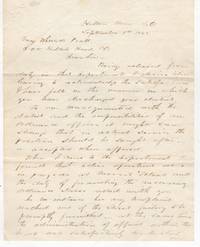
1865réf. 44826Hilton Head SC 1865. Very good folded staples removed from top corners lightly creased minor soiling and fading contents clean. 2 pp rectos only. 8 x 10 inches. September 3rd 1865 from Isaac Arnold Jr. Chief of Ordnance Department of the South at Hilton Head S. C. This letter acknowledges the service of Major Wheelock Pratt before Arnold departs to serve as Asst. Ordinance Officer in for Allegheny PA. Arnold praises the competencies of Pratt claiming that "In no instance has any complaint reached me. At the same time the achievements of affairs within the Depot was satisfactorily constructed upon the arrival of Genl Sherman's Army. with you again rested the responsibility of. a large part of it. And the dispatch with which you completed this duty is deserving of the greater credit.Upon hearing your being mustered out of service I made an effort to have you retained in position but am sorry to say it failed as the request made was contrary to the rules of the War Dept." In his closing Arnold warmly wishes Pratt happiness should he choose civilian life but would "extend the right hand of fellowship" if he chose to remain in service. But Pratt would die a year later due to injuries Isaac Arnold Jr. 1839-1901 graduated from the Military Academy in 1862 and over the years had earned the ranks of Brevet Captain Captain Major and Lieutenant Colonel. He died Oct. 15 1901 at Allegheny Arsenal PA. Major Wheelock Pratt 1829-1866 enlisted in In Sept. 1861 in "C" Company United-States Engineer Battalionwhere he served through the peninsular campaign at Antietam South Mountain and Fredericksburg. But due to his serving as leader of a "Black" company a written protest by by Engineers kept him from being placed in charge of the reconstruction of Battery Wagner; he was " placed in charge of Battery Chatfield in rear of Cummings Point. While superintending the construction of that work a shell from Fort Moultrie exploded near him inflicting a slight wound on his face and causing a permanent injury to the brain which three years later Dec. 30 1866 resulted in coma paralysis and death." References: 1. edu/Thayer/E/Gazetteer/Places/America/United_States/Army USMA/ Cullums_Register/1979.html. 2. Charles Barnard Fox: Record of the Service of the Fifty-fifth Regiment of Massachusetts Volunteer Cambridge 1868 pp. 90-1. unknown
réf. 1236Philadelphia: Druck von H. B. Ashmead 1863. . 8vo printed buff wrappers front pictorial small loss to front bottom outer corner; bottom outer corners of text slightly dog-eared A collection of articles on northern sedition against the Union and foreign intervention culled from leading newspapers. There is also a signed declaration by the officers of 150th Pennsylvania Volunteer Regiment scorning northern traitors who were trying to harm the efforts of the army. Funk is credited with the section "Rede eines braven alten Patrioten" and Rousseau with "Die Worte eines patriotischen Soldaten". Includes a quote from Oliver Cromwell and a call by a Democrat for both Republicans and Democrats to join together to defeat traitors to the Northern cause Philadelphia: Druck von H. B. Ashmead, 1863. unknown
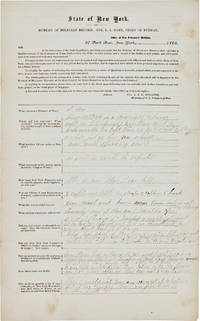
1865réf. 67047New York. 1865. Completed Postwar Questionnaire for Union P.O.W.s A partially-printed questionnaire issued by New York's Office of War Prisoners' Division in an attempt to gather intelligence on the treatment of Union prisoners in the Confederacy filled out in manuscript by a noncommissioned officer held in the notorious Andersonville and Florence prisons in 1864. Built in 1864 in an effort to increase both security and access to food for prisoners of the Confederate Army Andersonville quickly deteriorated into squalor. Of the forty-five thousand soldiers imprisoned there thirteen thousand died from either malnutrition poor sanitation mistreatment or exposure. Florence was little better with nearly three of the eighteen thousand prisoners meeting a similar fate. In this document issued by the State of New York's Bureau of Military Record to "procure a detailed account of the treatment of Union Soldiers form this State in rebel prisons and a record of the deaths in said prisons" Sergeant Isaac Spears of the 13th New York Infantry later 140th reports on his experiences with chilling frankness. In his own words Spears was captured "June 17th 1864 on a Midnight Charge. Kept in Petersburgh 3 days then went to Andersonville Ga. & kept there till Sept 12 went to Florence S.C. until Feb 28 then was released." The questions on this form relate to various aspects of the prisoners' treatment including food medical care punishments and more. For food Spears was given "Corn meal and bacon sometimes beefe or not any thing" and for medicine "Scarcely any if there was I did not see them" and his health "was well until Feb. 20 then taken with the feaver. Was sick when releaced. That was not a day too soon." About his jailers he bluntly states that "Treatment was hard guards would shoot if a man would get over the ded line." In response to the question "What were the manner and treatment of the Rebels in regard to the burial of the dead" he describes it "Like burying dogs. If they had anything about them worth taken they would take it of and say 'Another dam Yank ded another pint of corn meal saved every day.'" He also recounts an escape attempt from Florence where he "traveled 10 nights got about 60 miles" before he was captured again and sent back to the prison "Lived high while in the open country but after got back to Florance sic got nothing to eat for 3 days." Perhaps the most appalling anecdote relayed in his typical fashion recounts how "There was 2 men in the creek washing and they got in a fight one of them took the other by the scruff of the neck put him under the ded line and the guard shot him and the other laughed." A rare and valuable questionnaire recording a Union soldier's harrowing experiences in two of the Civil War's most infamous prison camps. Partially-printed form accomplished in manuscript. Light tanning a few small stains. Very good plus. unknown
1865réf. 44826Hilton Head SC 1865. Very good folded staples removed from top corners lightly creased minor soiling and fading contents clean. 2 pp rectos only. 8 x 10 inches. September 3rd 1865 from Isaac Arnold Jr. Chief of Ordnance Department of the South at Hilton Head S. C. This letter acknowledges the service of Major Wheelock Pratt before Arnold departs to serve as Asst. Ordinance Officer in for Allegheny PA. Arnold praises the competencies of Pratt claiming that "In no instance has any complaint reached me. At the same time the achievements of affairs within the Depot was satisfactorily constructed upon the arrival of Genl Sherman's Army. with you again rested the responsibility of. a large part of it. And the dispatch with which you completed this duty is deserving of the greater credit.Upon hearing your being mustered out of service I made an effort to have you retained in position but am sorry to say it failed as the request made was contrary to the rules of the War Dept." In his closing Arnold warmly wishes Pratt happiness should he choose civilian life but would "extend the right hand of fellowship" if he chose to remain in service. But Pratt would die a year later due to injuries Isaac Arnold Jr. 1839-1901 graduated from the Military Academy in 1862 and over the years had earned the ranks of Brevet Captain Captain Major and Lieutenant Colonel. He died Oct. 15 1901 at Allegheny Arsenal PA. Major Wheelock Pratt 1829-1866 enlisted in In Sept. 1861 in "C" Company United-States Engineer Battalionwhere he served through the peninsular campaign at Antietam South Mountain and Fredericksburg. But due to his serving as leader of a "Black" company a written protest by by Engineers kept him from being placed in charge of the reconstruction of Battery Wagner; he was " placed in charge of Battery Chatfield in rear of Cummings Point. While superintending the construction of that work a shell from Fort Moultrie exploded near him inflicting a slight wound on his face and causing a permanent injury to the brain which three years later Dec. 30 1866 resulted in coma paralysis and death." References: 1. edu/Thayer/E/Gazetteer/Places/America/United_States/Army USMA/ Cullums_Register/1979.html. 2. Charles Barnard Fox: Record of the Service of the Fifty-fifth Regiment of Massachusetts Volunteer Cambridge 1868 pp. 90-1. unknown books
réf. 1236Philadelphia: Druck von H. B. Ashmead 1863. . 8vo printed buff wrappers front pictorial small loss to front bottom outer corner; bottom outer corners of text slightly dog-eared A collection of articles on northern sedition against the Union and foreign intervention culled from leading newspapers. There is also a signed declaration by the officers of 150th Pennsylvania Volunteer Regiment scorning northern traitors who were trying to harm the efforts of the army. Funk is credited with the section "Rede eines braven alten Patrioten" and Rousseau with "Die Worte eines patriotischen Soldaten". Includes a quote from Oliver Cromwell and a call by a Democrat for both Republicans and Democrats to join together to defeat traitors to the Northern cause Philadelphia: Druck von H. B. Ashmead, 1863. unknown books
1865réf. 67047New York. 1865. Completed Postwar Questionnaire for Union P.O.W.s A partially-printed questionnaire issued by New York's Office of War Prisoners' Division in an attempt to gather intelligence on the treatment of Union prisoners in the Confederacy filled out in manuscript by a noncommissioned officer held in the notorious Andersonville and Florence prisons in 1864. Built in 1864 in an effort to increase both security and access to food for prisoners of the Confederate Army Andersonville quickly deteriorated into squalor. Of the forty-five thousand soldiers imprisoned there thirteen thousand died from either malnutrition poor sanitation mistreatment or exposure. Florence was little better with nearly three of the eighteen thousand prisoners meeting a similar fate. In this document issued by the State of New York's Bureau of Military Record to "procure a detailed account of the treatment of Union Soldiers form this State in rebel prisons and a record of the deaths in said prisons" Sergeant Isaac Spears of the 13th New York Infantry later 140th reports on his experiences with chilling frankness. In his own words Spears was captured "June 17th 1864 on a Midnight Charge. Kept in Petersburgh 3 days then went to Andersonville Ga. & kept there till Sept 12 went to Florence S.C. until Feb 28 then was released." The questions on this form relate to various aspects of the prisoners' treatment including food medical care punishments and more. For food Spears was given "Corn meal and bacon sometimes beefe or not any thing" and for medicine "Scarcely any if there was I did not see them" and his health "was well until Feb. 20 then taken with the feaver. Was sick when releaced. That was not a day too soon." About his jailers he bluntly states that "Treatment was hard guards would shoot if a man would get over the ded line." In response to the question "What were the manner and treatment of the Rebels in regard to the burial of the dead" he describes it "Like burying dogs. If they had anything about them worth taken they would take it of and say 'Another dam Yank ded another pint of corn meal saved every day.'" He also recounts an escape attempt from Florence where he "traveled 10 nights got about 60 miles" before he was captured again and sent back to the prison "Lived high while in the open country but after got back to Florance sic got nothing to eat for 3 days." Perhaps the most appalling anecdote relayed in his typical fashion recounts how "There was 2 men in the creek washing and they got in a fight one of them took the other by the scruff of the neck put him under the ded line and the guard shot him and the other laughed." A rare and valuable questionnaire recording a Union soldier's harrowing experiences in two of the Civil War's most infamous prison camps. Partially-printed form accomplished in manuscript. Light tanning a few small stains. Very good plus. unknown books
1973réf. 44846AB1973. Princeton Princeton University Press/Bollingen 1973. Large Octavo. 1000 pages. Frontispiece portrait of Sevi. With 15 plates. Original Hardcover with original illustrated dustjacket in protective Mylar. Very good or better in like dust jacket spine-sunned. From the library of Isaac Bernard Cohen with his bookplate to the pastedown and bearing a gift inscription on the front blank addressed to him. Bollingen Series XCIII. Includes for Example: Historical and sociological explanations of the Sabbatian movement and their deficiencies/ Messianism in Jewish history and its two conflicting tendencies: the catastrophic-utopian and the rationalistic forms/ The messianic idea in the kabbalah/ Lurianic kabbalah and its myth of exile and redemption/ The historical role and social significance of Lurianic kabbalah/ Kabbalism in Poland. The messianic expectations for the year 1648. Contemporary reactionms to the great massacres of that year/ Utopian messianism in Christianity: chiliasm and millenarian movements/ The beginnings of Sabbatai Sevi/ His sojourn in Jerusalem and mission to Egypt. His marriage to Sarah/ The beginnings of the movement in Palestine/ Abraham Nathan Ashkenazi and his prophetic experience/ Sabbatai's return from Egypt to Gaza/ The great prophetic revelation and messianic illumination in 1665/ The apocalypse "The Vision of R. Abraham"/ Sabbatai Sevi in Gaza and his excommunication by the rabbis of Jerusalem/ Sabbatai's travels through Safed and Aleppo to Smyrna/ The messianic agitation in Gaza after Sabbatai's departure/ The prophet Nathan's letter to the chelebi Raphael Joseph in Egypt/ Nathan's penitential tracts/ Nathan's "Treatise on the Dragons" and its principal doctrines/ The movement up to Sabbatai's imprisonment in Gallipoli/ Rumors of conquests by the armies of the Ten Tribes in Persia Arabia and North Africa/ The movement in Smyrna until December 1665/ Mass prophecy and the appointment of kings by the messiah. Sabbatai's departure for Constantinople/ Conditions and factors making for the success and spread of the movement/ General description of the penitential awakening/ The movement in the East and the center in Gallipoli until Sabbatai's Apostasy/ The spread of the movement in Turkey Egypt and North Africa/ Abraham Miguel Cardozo/ The movement in Yemen/ Nehemiah Kohen and his visit to Sabbatai Sevi/ Complaints to the Turkish authorities regarding an alleged Jewish revolt/ After the Apostasy/ Nathan's departure from Palestine/ The prophet Sabbatai Raphael and his travels in Europe/ The letter "Magen Abraham" by Abraham Miguel Cardozo/ The consolidation of the Sabbatian group in Adrianople/ The revelations of the year 1668 and the tract "The Testimony of the Faith"/ Israel Hazzan's commentary on the Psalms/ The imprisonment and trial of Sabbatai Sevi in 1672/ Sabbatai's banishment to Dulcigno/ The messianic revival in the years 1674-75 in Amsterdam and in North America etc. hardcover
réf. 1578Marseille. Cahiers du Sud. 1950. Grand in-8° broché. 439 pages. E.O. sur papier ordinaire. Etat neuf, pages non coupées.
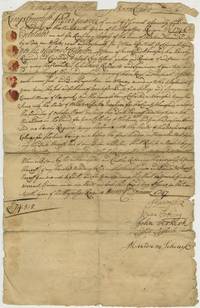
1789réf. List3854Kings County Province of New York Brooklyn 1789. Three manuscript documents on two pages measuring approximately 8 ¼ x 13 inches; relating to county taxation and court administration in Kings County including two early colonial warrants directed to the assessors and collector of "Brookland"; i.e. Brooklyn. Extensively repaired with archival tape with damage especially to right margin and at folds intersecting with text. Fair. Two colonial-era Kings County tax warrants issued in the twenty-first year of the reign of George II commanding the assessors and collector of Brookland to raise the town's share of the county rate. Addressed "To the assessors & Collector of Brookland" the documents open in formal warrant language: "Kings County. To the assessors & Collector of Brookland These We hereunder written being Supervisors for the Respective towns of the County abovesaid in the Province of New York; To the Assessors and Collector of Brookland Greeting in his Majesty's name you and each of you are hereby . strictly required and commanded ." One warrant directs the local officers "to assess collect and gather of and from every shop scholar inhabitants & resident neighbors within your town and precincts thereof their equal part share & proportion" of the town's tax burden specified as "the full and just sum of twenty six pounds & four pence Current Money of New York." The money was to be paid to "Mr. Peter Lefferts Treasurer for the County aforesaid" by the appointed February deadline. The second 1747 document directs the local officers to collect "Tax on Estates real and Personal for the More Effectuall fortifying of this Colony &c." to the tune of thirteen thousand pounds. The language is especially useful for showing the practical mechanics of colonial local government: the county supervisors apportioning the tax the town assessors and collector gathering it from inhabitants and the county treasurer receiving it. It further gives the collector authority in the event of nonpayment: "if any person or persons shall long refuse or neglect to pay their parts shares or proportions of the said sum of twenty six pounds and four pence being assessed as abovesaid it shall and may be lawful to and for you to levy illegible due to fold split and crease on the goods & chattels of the defaulters having regard to the laws of this Colony ." The document closes in the usual form "hereof you are not to fail" adding that the warrant is given "under our hands & seals this Sixth day of paper loss in the twenty first year of his Majesty's Reign Anno Dom'i 1747." Both are signed by Kings County supervisors S. Gerritsen Isaac Sebring John Verkerk Marten Schenck and Leffert Lefferts with one signature illegible. Lefferts of the prominent Lefferts family co-founded and served as the first president of the Long Island Bank Brooklyn's first bank and was the first judge of Kings County. On the verso of the first colonial-era warrant is a later Kings County account 1789-90 submitted to Sheriff Charles Turnbull a Revolutionary War veteran who took office as Brooklyn's High Sheriff in 1789. The account records ordinary county legal expenses including: "April 20 / To Summoning Grand Jury - £1-4 - To Making a List of Freeholders 1-10 - Sept. 4 To Summoning Grand Jury of Supreme Court 1-4 - . Term To Cash paid for Candles &c. 0-5 - 1790 To Summoning Grand Jury 1-4 - fall term / To Summoning Grand Jury 1-4 - £6-11" Taken together the two documents offer an appealing Kings County grouping: two colonial Brookland tax warrants and an early Federal sheriff's account. The 1747 warrants are the stronger piece particularly for the direct address to the town's assessors and collector county tax language and reference to Peter Lefferts as county treasurer. The later sheriff's account is less dramatic but it pairs naturally as another Kings County administrative document this time showing court-related duties such as summoning grand juries and preparing a list of freeholders. . unknown
1789réf. List3854Kings County Province of New York Brooklyn 1789. Three manuscript documents on two pages measuring approximately 8 ¼ x 13 inches; relating to county taxation and court administration in Kings County including two early colonial warrants directed to the assessors and collector of "Brookland"; i.e. Brooklyn. Extensively repaired with archival tape with damage especially to right margin and at folds intersecting with text. Fair. Two colonial-era Kings County tax warrants issued in the twenty-first year of the reign of George II commanding the assessors and collector of Brookland to raise the town's share of the county rate. Addressed "To the assessors & Collector of Brookland" the documents open in formal warrant language: "Kings County. To the assessors & Collector of Brookland These We hereunder written being Supervisors for the Respective towns of the County abovesaid in the Province of New York; To the Assessors and Collector of Brookland Greeting in his Majesty's name you and each of you are hereby . strictly required and commanded ." One warrant directs the local officers "to assess collect and gather of and from every shop scholar inhabitants & resident neighbors within your town and precincts thereof their equal part share & proportion" of the town's tax burden specified as "the full and just sum of twenty six pounds & four pence Current Money of New York." The money was to be paid to "Mr. Peter Lefferts Treasurer for the County aforesaid" by the appointed February deadline. The second 1747 document directs the local officers to collect "Tax on Estates real and Personal for the More Effectuall fortifying of this Colony &c." to the tune of thirteen thousand pounds. The language is especially useful for showing the practical mechanics of colonial local government: the county supervisors apportioning the tax the town assessors and collector gathering it from inhabitants and the county treasurer receiving it. It further gives the collector authority in the event of nonpayment: "if any person or persons shall long refuse or neglect to pay their parts shares or proportions of the said sum of twenty six pounds and four pence being assessed as abovesaid it shall and may be lawful to and for you to levy illegible due to fold split and crease on the goods & chattels of the defaulters having regard to the laws of this Colony ." The document closes in the usual form "hereof you are not to fail" adding that the warrant is given "under our hands & seals this Sixth day of paper loss in the twenty first year of his Majesty's Reign Anno Dom'i 1747." Both are signed by Kings County supervisors S. Gerritsen Isaac Sebring John Verkerk Marten Schenck and Leffert Lefferts with one signature illegible. Lefferts of the prominent Lefferts family co-founded and served as the first president of the Long Island Bank Brooklyn's first bank and was the first judge of Kings County. On the verso of the first colonial-era warrant is a later Kings County account 1789-90 submitted to Sheriff Charles Turnbull a Revolutionary War veteran who took office as Brooklyn's High Sheriff in 1789. The account records ordinary county legal expenses including: "April 20 / To Summoning Grand Jury - £1-4 - To Making a List of Freeholders 1-10 - Sept. 4 To Summoning Grand Jury of Supreme Court 1-4 - . Term To Cash paid for Candles &c. 0-5 - 1790 To Summoning Grand Jury 1-4 - fall term / To Summoning Grand Jury 1-4 - £6-11" Taken together the two documents offer an appealing Kings County grouping: two colonial Brookland tax warrants and an early Federal sheriff's account. The 1747 warrants are the stronger piece particularly for the direct address to the town's assessors and collector county tax language and reference to Peter Lefferts as county treasurer. The later sheriff's account is less dramatic but it pairs naturally as another Kings County administrative document this time showing court-related duties such as summoning grand juries and preparing a list of freeholders. . unknown books
1646réf. 7CJGU701U79OAmsterdam: Johannes Janssonius 1646. Contemporary vellum. Oblong 4to 22 x 25 cm. With 230 engravings including 2 richly engraved frontispieces the first signed by J. van Meurs large folding world map large folding map of the East Indies maps views plans and plates. 2 volumes. The most important collection of voyages to the North around the world and to the East Indies made by the Dutch between 1595 and 1640 here bound in two volumes. It is one of the most valuable collections of voyages ever made in any language. All these journals are either reprinted with slight variations from the original editions or from autograph manuscripts placed at the disposal of the editor or from personal narratives. The compiler is the learned Isaac Commelin 1598-1676 bookbinder and well-known citizen of Amsterdam. The vast mass of plates and maps was either excellently copied from the original editions or from the autograph maps of the navigators.The collection contains 21 voyages 12 of them published here for the first time namely: the voyages to the East Indies by Pieter Both Jac. van Neck Steven vander Hagen Wolphert Hermansz Van Warwijck & De Weert Corn. Matelief Paul van Caerden Wybrant Schram H. Hagenaer and the voyages to the East Indies China and the Philippines by P. Verhoeven. It is one of the most important sources for the history of the Dutch VOC. In the preliminaries the founding-charter of the Dutch VOC from 1602 as well as the charter from 1622 and other important data in the formation of the VOC are given.Folding plate 16 cut short and a small hole in page 7 of part 8 with loss of a few letters; each spine has a minor hole. Very good copy of a rare and important work from the Webster collection.l Alt-Japan-Kat. 370; Landwehr & v.d. Krogt VOC 250; Mendelssohn I pp. 373-374; Tiele Bibl. 82; Tiele Mém. p. 13; cf. Sabin 14959. Johannes Janssonius], hardcover
1960réf. 22145London: Atlas Publishing & Distributing Co. Very Good- with no dust jacket. 1960. Softcover. Moderate creasing and rubbing to spines and covers. Fading to spines. March 1960 issue with heavy rubbing and abrasions to spine. May 1960 issue with 20mm tear at head of spine. August 1960 issue with piece of adhesive tape at tail of spine. Moderate age toning / browning to leaves. ; A run of 6 issues of the British edition of "The Magazine of Fantasy and Science Fiction". Six issues March through August 1960. The March 1960 issue includes the story "Gentlemen Be Seated" by Robert A. Heinlein. The April 1960 issue includes the stories "Nor Custom Stale" by Joanna Russ and "The Long Watch" by Robert Heinlein. The June 1960 issue includes the stories "Like Young" by Theodore Stugreon and "The Wrens in Grampa's Whiskers" by Edgar Pangborn. The July and August issues include the first two parts of three of Robert Heinlein's "Starship Soldier". There is a science column by Isaac Asimov in each of the six issues. . Atlas Publishing & Distributing Co. paperback
1953réf. 22146Sydney: Consolidated Press. Good with no dust jacket. 1953-1956. Softcover. Spines rubbed and worn. Foxing. Heavy foxing / browning to page edges. ; 9 issues. No dates printed on Contents pages Dates taken from copyright page on inside of rear covers. Page dimensions: 188 x 134mm. Number 2 includes the stories "The Fun They Had" by Isaac Asimov; "Rustle of Wings" by Fredric Brown; "Superiority" by Arthur C. Clarke. Numbers 5 and 6 include the second and third parts only of three parts of Robert Heinlein's story "Star Lumox". Number 9 includes the stories "The Dying Night" by Isaac Asimov; "No Morning After" by Arthur C. Clarke; "The Club Secretary" by Lord Dunsany. Number 10 includes the story "And the Light is Risen" by Walter M. Miller Jr. . Consolidated Press paperback
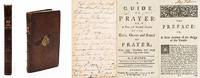
1730réf. 31377AB1730. The Fifth Edition. London Printed for Emanuel Matthews 1730. Small Octavo. 5 156 1 pages. Hardcover / Original early 18th century full-leather with armorial embossing to both boards. New spine-label. Ruth Corker's Library-stamp verso the titlepage. This used to be Ruth Corker's mother's book prior to her own and the name Mary Falkiner is written in ink on top of the Preface-page. Manuscript entry "Ruth Corker Her Book 1731" on halftitle with several entries informing on marriages and relationships within the Falkiner and Corker and Robinson - family added obviousy by a later relative Ruth Robinson who was married to Robert Robinson. Excellent condition with only minor signs of wear. Armorial Bindings held in University of Toronto Libraries: Corker Ruth 1693 -1760 Mrs Ruth Corker of 41 St Stephen's Green Dublin was born Ruth Falkiner the only daughter of Richard Falkiner and Mary Mason of Dublin. She married Thomas Corker 1700-1772 merchant of Dublin. She died in 1760. Her name appears as one of the subscribers to Oldmixons The history of England during the reigns of King William and Queen Mary London 1735. Stamp Information of the Armorial Binding of Ruth Corker: Monogram: R R C Source: utoronto.ca Isaac Watts 17 July 1674 25 November 1748 was an English Congregational minister hymn writer theologian and logician. He was a prolific and popular hymn writer and is credited with some 750 hymns. His works include "When I Survey the Wondrous Cross" "Joy to the World" and "Our God Our Help in Ages Past". He is recognized as the "Godfather of English Hymnody"; many of his hymns remain in use today and have been translated into numerous languages. Wikipedia hardcover