Jacob Kaufmann CompanyBiblio.com

56.487 risultati
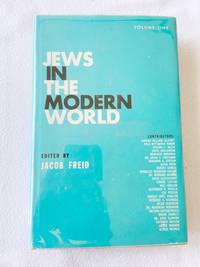
rif. 1396769129.Ghardcover. Good. Access codes and supplements are not guaranteed with used items. May be an ex-library book. hardcover
1936rif. 0001914EUSKIRCHEN GERMANY. Good. 1936. On offer is a superb 1936 manuscript relic titled 'Fahrt: Lieder und Bilder' being one German soldier's patriotic paean to forgotten German wars and heroic songs. Handwritten by Jacob Winkel in Euskirchen Germany the soldier presents a very historical German perception of war and the songs of conquerors. This soldier had a passion for the very historical Lion of Brabant which has a history dating back to the 11th century. This may also be a clue to his background as in WWII the Brabant Lion was associated moreso with the Flemish Lion which is understandable as many Belgium produced many troops and even SS soldiers for Germany. They were incredibly anti-communist so most went to serve at the Russian Front. There are more contemporary and lost songs all in the context of the upcoming World War II. The notebook has 26 well filled pages and is illustrated by hand with historical notes which include the drawing of the sword and the harp with the words Platoff refers to Count Platoff general in chief; Hetman of the Don Cossacks refers to Matvei Platov who was the leader of the Don Cossacks and a feared commander of cavalry. Platov's tactics became famous in the 1812 French invasion of Russia when his men lived off the land and constantly harried the much stronger French forces. Using the harsh Russian winter to its best advantage Platov continually punished the beleaguered French infantry on its retreat from Moscow. There is a real photo postcard tucked in the notebook which we can assume was the author himself. A note on the back which we cannot translate may confirm. Overall the 7½ x 5 inch book is G.; Manuscript; 12mo - over 6¾" - 7¾" tall; KEYWORDS: HISTORY OF JACOB WINKEL EUSKIRCHEN GERMAN GERMANY GERMANIC PATRIOTIC SONGS HEROIC SONGS BRABANT LION PRE WORLD WAR II WWII WW1 FAHRT: LIEDER UND BILDER HANDWRITTEN MANUSCRIPT AUTOGRAPHED AUTHORS MANUSCRIPT DOCUMENT LETTER AUTOGRAPH KEEPSAKE WRITER HAND WRITTEN DOCUMENTS SIGNED LETTERS MANUSCRIPTS HISTORICAL HOLOGRAPH WRITERS AUTOGRAPHS PERSONAL MEMOIR MEMORIAL PERSONAL HISTORY ARCHIVE DIARY DIARIES antiquité contrat vélin document manuscrit papier Antike Brief Pergament Dokument Manuskript Papier oggetto d'antiquariato atto velina documento manoscritto carta antigüedad hecho vitela documento manuscrito Papel . unknown
1951rif. 907Y43London : The Book Club; Sampson Low 1951-1964. Hardback. Very Good/Very Good. 7.5" by 5". None . A smart set of seven modern fiction novels covering an array of plots from romance to Spanish mystery to political controversy. A set of seven modern fiction novels by Frances Parkinson Keyes Naomi Jacob and more. All of these works are Book Club Editions except for 'Over the Hills' which is a new impression published by Sampson Low. The set comprises:Over the Hills: A Romance of the Fifteen 1951 - A romantic thrilling story involving a mystery of the protagonist's birth and his threatened manhood as he is used as a pawn for revenge. The Irish Boy: A Romantic Biography c1955 - Based on a true story of an Irish boy who rose to international fame as an opera singer this work recreates the Dublin of his childhood. The Gold Slippers 1958 - A mystery surrounding the death of the son of Lavinia Villac who features as the heroine of the author's previous work 'Blue Camellia'. No Love for Johnnie 1959 - The story of an M.P. named Johnnie Byrne who leads a controversial life within Parliament. The work was written by former M.P. Wilfred Fienburgh who tragically died in a car accident soon after the manuscript was sent. I Thank a Fool 1959 - A concerned husband allocates a woman named Harriet to look over his wife Liane who develops a habit of disappearing without explanations in longing of the freedom of her childhood. The Letter from Spain 1959 - When Allan Lambert receives a letter from an anonymous prisoner in Spain offering a large sum of money to assist him in recovering a suitcase he seeks the thrill of investigating and travels over. Late Call 1964 - A satirical romance focused on a character named Sylvia and her ludicrous would-be womaniser husband. 6 Vols are in the original unclipped dust wrappers. 'Over the Hills' dust wrapper is price clipped. All in the original cloth bindings. Externally very smart with shelf wear to the extremities heaviest to the spines of 'No Love' 'Over the Hills' and 'The Irish Boy'. Dust wrappers are edge worn and sunned heaviest to the spines of 'The Irish Boy' 'No Love' and 'The Letter'. Marks to the wraps. A couple small chips to 'Over the Hills' and 'No Love' wraps. Internally all firmly bound. Pages are generally bright and clean. Slight offsetting to the endpapers of 'The Letter' and 'No Love' and 'I Thank a Fool'. Contemporary ink inscription to 'I Thank a Fool' front free endpaper. Very Good The Book Club; Sampson Low hardcover
1962rif. vb-pa22Twayne New York 1962. hardcover. Good/DUST JACKET. 0x0x0. Pages are crisp and clean no marking. Cover is verygood. Binding is tight/good. Twayne New York hardcover
1965rif. BTETM0002293London: John M Watkins 1965. 1st Edition Thus. Hardcover. Very Good/Very Good. Octavo Standard 8vo 6 נ9 in 152 נ229 mm . 2nd Printing Please email for Photographs or further information.1965 Second Impression Re-set 2nd Printing Two VolumesMYSTERIUM MAGNUMBy Boehme Jacob; Sparrow John Trans.KEY DETAILSCondition: Very GoodFormat: Hardcover Octavo Standard 8vo 6 נ9 in 152 נ229 mm Note: Binding/size selection follows standard bibliographic conventions and is approximate; exact measurements may vary.Published By: John M Watkins London 1965Language: EnglishCollation: Vol. I: xxvi 407 pp.; Vol. II: 4 409849 pp.; Complete in two volumes.SKU: BTETM0002293Shipping Info: Approximate Package Dimensions H: 12.5 L: 30 W: 25 Units: cm W: 3KgTracked Shipping Insurance Coverage as per Customer RequestDESCRIPTIONMysterium MagnumAn Exposition of the First Book of Moses Called GenesisWritten Anno 1623By Jacob BoehmeTranslated by John SparrowEdited by C. J. B.A complete and appealing two-volume set of Jacob Boehmes Mysterium Magnum one of the major works of seventeenth-century Christian mysticism and theosophy. Written in 1623 during the final period of Boehmes life the work takes the Book of Genesis as the foundation for an extensive mystical cosmology embracing the nature of God creation the Fall divine manifestation the kingdoms of Nature and Grace and the spiritual regeneration of humanity.This John M. Watkins edition was first published in 1924; the present set is the Second Impression re-set 1965 as stated on the copyright page. Issued in two substantial octavo volumes and retaining both original dust jackets.The edition preserves the distinctive early English form of John Sparrows translation and reproduces the historical title-page material of the seventeenth-century English edition. The complete set includes the four Tables of Divine Revelation and associated facsimile material making this an attractive edition for collectors of Boehme Western esotericism Christian mysticism and Watkins publications.A particularly well-preserved set internally: clean complete and tightly bound with no inscriptions bookplates stamps or annotations; no damp staining mustiness or evidence of mould; and all tables diagrams and facsimile material present.CONDITION COLLATION & COPY NOTESA complete and sound two-volume set in the original dust jackets. Both volumes firmly and tightly bound with hinges sound and no loose gatherings. Internally clean and well preserved with light age-toning only. No inscriptions bookplates ownership stamps or annotations. No damp staining musty odour or evidence of mould.The original dust jackets remain complete and presentable with general age-toning and browning particularly towards the margins together with scattered light marking and rubbing minor edge wear and small nicks. One jacket has a small puncture/loss near the upper margin. Despite the expected age-related wear both jackets retain their typography and considerable visual appeal.All four tables/diagrams and facsimile material are present. The seventeenth-century-style title pages reproduced within the volumes are facsimiles forming part of this Watkins edition.A clean complete and attractive example of an increasingly uncommon jacketed set of this important Boehme text.Please see Photos as part of condition report.REFERENCESJohn M. Watkins edition first published 1924; Second Impression re-set 1965.The original English Mysterium Magnum was published in London in 1654 translated by John Ellistone and John Sparrow; bibliographical records describe the separate title pages for Parts II and III and the accompanying Four Tables of Divine Revelation.Bibliographical records for the 1965 Watkins issue confirm it as the second impression with Vol. I comprising xxvi 407 pages and Vol. II 4 409849 pages.SYNOPSISTHIS book of the Mysterium Magnum being an exposition of Genesis if it be read through and weighed with good attention will remove those - For full description please contact the seller John M Watkins hardcover
1975rif. ac-bs2Mcgraw Hill Intl Eds 1975. paperback. Good. 5x1x8. This book has some underline writing but still in good condition in general no lost page no tear. Mcgraw Hill Intl Eds paperback
1983rif. 100131842S. Hirzel 1983. bon état général intérieurs propres bonne tenue couverture un peu marquées en bon état rousseurs et terrnissures sur la tranche. in4. 1983. Relié. 2 volumes. S. Hirzel unknown
rif. mon0004221275Heritage Books 6/13/2019 12:00:01 A. paperback. Very Good. 1.6929 10.8661 8.5433. Heritage Books paperback
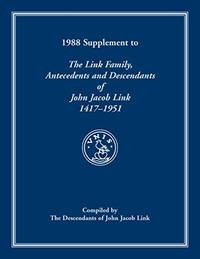
rif. ria9780788418174_inpPaperback. New. New Book; Fast Shipping from UK; Not signed; Not First Edition; Contains a history of John Jacob Link and his family their immigration to America in 1733 their antecedents in Germany and all known American descendants. This supplemental volume extends the family data through 11 generations and p paperback
rif. A9780788418174Paperback / softback. New. paperback
rif. Q-0788418173Heritage Books. Paperback. New. New. In shrink wrap. Looks like an interesting title! Heritage Books paperback
rif. 0788418173.Gpaperback. Good. Access codes and supplements are not guaranteed with used items. May be an ex-library book. paperback
rif. B9780788418174Paperback / softback. New. paperback
rif. DADAX0788418173Heritage Books 2019-06-13. paperback. New. 8.50x0.90x11.00. Buy with confidence. Excellent Customer Service & Return policy. Heritage Books paperback
1992rif. S41982Hildesheim Zürich und New York: Olms-Weidmann 1992. hardcover. gebraucht sehr gut Gebundene Ausgabe SEHR GUTES EXEMPLAR. Für Ihre Zufriedenheit versenden wir mit DHL und ausschließlich mit Trackingcode für eine sichere Sendungsverfolgung! Weitere Angebote unter antiquariat-kastanienhof Hildesheim, Zürich und New York: Olms-Weidmann hardcover
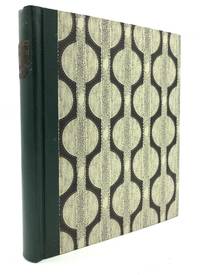
1738rif. H21444Amsterdam: Martin Schagen 1738. Hardcover. Good. Small quarto 10 x 7.5 inches bound in modern patterned paper-covered boards green cloth spine preserving the remains of the original 18th century spine label contents very good light tanning and occasional light wear and some gentle diagonal creases to upper corner of first third of book; preliminary pages have faint tidemark from old dampstain to fore-edge margin. 2 copperplate title-pages engraved portrait engraved frontispiece 88 plates. Later enlarged edition first published in Antwerp in 1615 and 1627 and later in Berlin in 1705 and including 12 equestrian portraits of the Caesars engraved by C. de passe after Johannes Stradanus. The remaining 76 copper-engraved plates depict a total of 912 coin impressions. The binding is nice enough but clearly the work of an amateur. Martin Schagen hardcover
1970rif. 26646California Federation Republican Women 1970 2 Religious PROGRAM 1 with small light stain Cvr both have Blue & White Drawing White House on front. 6 1/2 X 9 in. VG Nice Condition Light Wear Stamp excellent condition 17th Annual Republcan Womens Conference PROGRAMhas B/W photo of 4 in Nixon Family & has foxing edge of program forward together Banquet Honor of Mrs. Richard Nixon Miss Patricia Nixon & Mrs. David Eisenhower April 16th. Sheraton Hall Washington Prayer By Reverend Dr. Norman Vincent Peale. 1st Edition. Printer Wrapper. California Federation Republican Women paperback
2023rif. BN125276Skandalon Uitgeverij B.V. 2023. 2023. Hardcover. 2-pak Talmoed Sanhedrien I II hfst 1-6 2-pak Talmoed Sanhedrien I II hfst 1-6 de Leeuwe Jacob Skandalon Uitgeverij B.V. hardcover
1985rif. 3227Kassel, Weber & Weidemeyer 1985. EA. 631, 343, 156 Seiten = 1130 S. 26x21 cm , mit zahlreichen s/w und farbigen Abbildungen 4° Broschiert, im Schuber, Exemplar in gutem Erhaltungszustand, Exemplare in gutem Erhaltungszustand
2000rif. ja-bs44Amer College of Physicians 2000. paperback. Very Good. 5x0x8. Pages are crisp and clean no marking. Cover is verygood. Binding is tight/good. Amer College of Physicians paperback
2014rif. 287839San Francisco: AIDS Emergency Fund & Positive Resource Center 2014. Calendar. 28p 10x10 inches color photos of the 12 shirtless hunks with personal inscriptions signed to the previous owner who has made a few marks on dates in July and August hole for hanging very worn else good wall calendar in stapled color covers. Inscribed & signed by all 12 models. AIDS Emergency Fund & Positive Resource Center unknown books
1968rif. 387331968. Jacob Francois 1920- ; Monod Jacques 1910-75; Lwoff Andre 1902-94; & Brenner Sydney 1927- . Group of 22 offprints mimeographs etc. on molecular biology and bacterial genetics together with 2 related papers by other authors. Various sizes. 1947-1968. Together in one volume cloth "Institut Pasteur" in gilt on the spine. Overall good to very good; see detailed condition descriptions below. From the library of G. G. and Elinor Meynell authors of Theory and Practice in Experimental Biology 1970 with their address label on the front endpaper and ownership signatures on several of the offprints. First / First Separate Editions. Jacob Monod and Lwoff all colleagues at the Institut Pasteur received the 1965 Nobel Prize in physiology / medicine for their discoveries concerning genetic control of enzyme and virus synthesis-discoveries that "opened up a new field of research that deserved to be called 'molecular biology'" Magill The Nobel Prize Winners: Physiology or Medicine II p. 921. Their work answered the fundamental question of how the hereditary information contained in DNA can be translated into the chemical processes that synthesize cellular proteins this question had been posed most succinctly and explicitly in Francis Crick's theoretical paper "On protein synthesis" 1957 which laid the groundwork for over a decade's worth of research in this area. Brenner another key figure in this field worked with Jacob and Matthew Meselson on providing experimental evidence for messenger RNA; he was awarded a share of the 2002 Nobel Prize for his discoveries concerning genetic regulation of organ development and programmed cell death. The collection we are offering here focuses largely on the Nobel Prize-winning work done by the Institut Pasteur group-Lwoff Jacob and Monod-in the 1950s and 1960s. The work can be divided into four sections: 1 lysogeny and bacterial conjugation 2 expression of the genetic material via messenger RNA 3 the regulation of the genetic activity of bacterial cells by operons 4 the organization of bacterial genetic material. In the following paragraphs we will attempt to highlight the more important papers in this remarkable collection; however all the papers here touch upon these central questions of molecular biology. Lysogeny defined as the hereditary ability to produce the bacteriophage virus is a peculiar type of infection in which the phage becomes part of the genetic material of a bacterial cell; in this non-infective form prophage it can then be inherited by succeeding generations of cells becoming virulent only when some environmental stimulus causes the bacterium to produce and release phage. "Lysogeny brought a model for the interrelation between a virus and a cell. And also a model for the possible mode of action of carcinogenic agents which could disturb something in this balance" Judson p. 368. Lwoff studied this phenomenon intensively in the late 1940s and early 1950s successfully demonstrating the genetic nature of lysogeny which was disputed by several scientists including Delbruck and discovering how it is induced. In 1953 he published an important review of the subject "Lysogeny" Bacteriological Review 17; see no. 2 below. Lysogeny was also studied by Jacob and Elie Wollman whose paper "Induction of phage development in lysogenic bacteria" CSH Symposia on Quant. Biol. 18 1953; see no. 5 below summarizes what had been learned about lysogeny as of that date. Lwoff's work on lysogeny inspired Jacob and Wollman to investigate the phenomenon of bacterial conjugation the transfer of genetic information from a male donor bacterium to a female recipient resulting in genetic recombination to see if they could discover where in the bacterium's genetic material the prophage was located. In 1955 working with a highly recombinant strain of E. coli K12 discovered by William Hayes Jacob and Wollman performed what came to be known as their "coitus interruptus" experiment in which they used a Waring blender to interrupt the mating bacteria at various stages of their conjugation. They found that the donor cell's genetic characteristics were not transferred all at once but rather sequentially over time-a discovery of great importance. "Wollman and Jacob had stumbled upon a way to measure off the genes on the bacterial chromosome as directly and physically as a child squeezes toothpaste onto a brush or a carpenter unrolls a coiled steel tape measure. As they saw instantly and reported in a note in mid-June 1955 in the weekly Comptes rendus of the Academie des Sciences "Sur le mecanisme du transfert de materiel genetique au cours de la recombinaison chez E. coli K12"; see no. 6 below they had the means to make a genetic map of biochemical characteristics expressed in units of time" Judson p. 385. In 1956 Wollman and Jacob published the first albeit rudimentary timed map of the K12 strain of E. coli in a paper published in France. This map was printed again in their English-language paper "Conjugation and genetic recombination in E. coli K-12" CSH Symposia on Quant. Biol. 21 1956; see no. 8 below which also contained the first publication of Thomas Anderson's famous electron micrograph of two conjugated bacteria. In 1958 Jacob delivered his paper "Transfer and expression of genetic information in E. coli K12" see no. 9 below at a symposium in Brussels; this paper together with one given by Jacob's sometime colleague Arthur Pardee "ranged over the whole matter of transfer of genes between bacteria and the regulation of their expression" Judson p. 400. Jacob and Wollman had originally represented the hereditary material in linear form while stating that the genetic map could be formally represented as a circle. In 1963 at a Cold Spring Harbor conference the researcher J. Cairns provided physical evidence that the E. coli chromosome was circular; at this same conference Jacob Brenner and co-author Francois Cuzin presented their paper "On the regulation of DNA replication in bacteria" CSH Symposia on Quant. Biol. 28; see no. 16 below containing their "replicon model of chromosome replication in bacteria a model that almost required circularity of chromosomal and F factor DNA" Brock p. 103. Experimental proof of the existence of messenger RNA the substance responsible for coding protein synthesis was announced in Brenner Jacob and Meselson's landmark paper "An unstable intermediate carrying information from genes to ribosomes for protein synthesis" Nature 190 1961; see no. 1 below. The theoretical groundwork for messenger RNA had been laid in Crick's "On protein synthesis" 1957; demonstration of the substance's existence had been foreshadowed by Volkin and Astrachan's discovery of a high-turnover unstable RNA distinct from the ribosomal and transfer varieties 1956 and by the famous "PaJaMo" experiment demonstrating the negative control mechanism of enzyme induction 1958. However it was not until the spring of 1960 that these previous findings were combined by Brenner Jacob and Francis Crick into a biological model setting forth the exact means of communication between gene and cytoplasm while eliminating the various problems associated with earlier ribosome-based theories of gene expression. As Brock puts it the ribosome was now seen as "simply a nonspecific translation machine something like a computer whose behavior depended on what software it contained" Brock p. 306. Working with Matthew Meselson who had developed experimental techniques for tagging and separating ribosomes Brenner and Jacob performed the critical experiment described in their paper which provided direct evidence for the existence of an unstable rapidly turning over messenger RNA. The concept of the operon-a group of adjacent genes functioning as a unit under the control of another gene the operator gene-developed between 1958 and 1960 on the basis of work done by Monod and Jacob who were investigating the repressor model of gene regulation. Jacob developed the idea that gene regulation was based on a repression system that operated like an on-off switch and that "genetic units of a higher order existed . . . that contained several genes subject to unitary expression. . . . On the basis of these ideas and observations Jacob and Monod developed the concept of two kinds of genes structural which coded for the synthesis of proteins and regulatory which did not" Brock p. 300. In October 1959 Jacob and Monod published the theoretical basis for the operon in "Genes de structure et genes de regulation dans la biosynthese des proteines" C. r. Acad. Sci. 249; see no. 11 below. Their paper "established the sharp distinction between the familiar genes that determined protein structures and the new class of genes that regulated. It even looked to them then as though the product of the regulatory gene were not a protein by RNA. But the fact to be underlined they said was that in every known case when several structural genes had their expression controlled by the same regulatory gene-'that is to say in all probability by a unique repressor'-the structural genes were grouped tightly together. . . . The best fit to the evidence was that the group of genes had among them a single element: the operator target of the repressor" Judson p. 410. The Jacob/Monod operon model of gene expression was further explored in their 1961 paper "On the regulation of gene activity CSH Symposia on Quant. Biol. 26; see no. 14 below which presented a more detailed examination of the mechanics of protein synthesis. For further information see Judson The Eighth Day of Creation 2nd ed. and Brock The Emergence of Bacterial Genetics; specific references are given below. 1. Brenner Sydney; Jacob Francois; & Meselson Matthew. An unstable intermediate carrying information from genes to ribosomes for protein synthesis. Offprint from Nature 190 May 13 1961. 576-581pp. Diagrams. Without wrappers as issued. Light toning. Ownership signature of E. W. Meynell on the first page. Garrson-Morton 256.10. Brock ch. 10.12. Judson pp. 414-27. 2. Lwoff Andre. Lysogeny. Offprint from Bacteriological Review 17 1953. 269-337pp. Without wrappers. Small stamp on first page. Brock ch. 7.4. 3. Monod Jacques. Inhibition de l'adaptation enzymatique chez une bacterie E. coli infectee par un bacteriophage. Offprint from C. r. Acad. Sci. 224 1947. 2 2 blankpp. Without wrappers. Light browning creased horizontally with small tear along crease. Ownership stamp and ms. annotations of A. A. Miles. 4. Lwoff & Siminovitch Louis. Induction de la lyse d'une bacterie lysogene sans production de bactÈrophage. Offprint from C. r. Acad. Sci. 233 1951. 3pp. Fore-edge frayed marginal tear affecting a few words. A. A. Miles's signature. 5. Jacob Francois & Wollman Elie. Induction of phage development in lysogenic bacteria. Offprint from CSH Symposia on Quant. Biol. 18 1953. 101-121pp. Without wrappers. Light soiling a few annotations. Owner's name on first page. Judson p. 382. 6. Wollman & Jacob. Sur le mecanisme du transfert de materiel genetique au cours de la recombinaison chez E. coli K12. Offprint from C. r. Acad. Sci. 240 1955. 3pp. Without wrappers. Creased horizontally light toning. Ownership signature of Elinor Meynell. Brock ch. 5.7. 7. Jacob; Alfoldi Lajos; & Wollman Elie. Zygose letale dans des croisements entre souches colicinogenes et non colicinogËnes d'E. coli. Offprint from C. r. Acad. Sci. 244 1957. 3pp. Without wrappers. Small marginal tears. Elinor Meynell signature. 8. Wollman; Jacob & Hayes W. Conjugation and genetic recombination in E. coli K-12. Offprint from CSH Symposia on Quant. Biol. 21 1956. 141-162pp. Without wrappers. Brock ch. 5.11. 9. Jacob. Transfer and expression of genetic information in E. coli K12. Manuscript for the Symposium of the Society for Cell Biology Brussels 1958. 29 3pp. Dittoed table. Mimeographed. Without wrappers. Edges a bit frayed. E. Meynell signature. Judson p. 400. 10. Jacob & Fuerst Clarence R. The mechanism of lysis by phage studied with defective lysogenic bacteria. Offprint from J. Gen. Microbiol. 18 1958. 518-526pp. Without wrappers. E. Meynell signature. 11. Jacob & Monod. Genes de structure et genes de regulation dans la biosynthese des proteines. Offprint from C. r. Acad. Sci. 249 1959. 3pp. Without wrappers. Creased horizontally. E. Meynell signature. Brock ch. 10.10. Judson p. 410. 12. Changeux Jean-Pierre. Sur l'expression biochimique de determinants genetiques d'E. coli introduits chez Salmonella typhimurium. Offprint from C. r. Acad. Sci. 250 1960. 3pp. Creased horizontally. Meynell signature. 13. Jacob. Comments. Offprint from Cancer Research 20 1960. 695-697pp. Without wrappers. 14. Jacob & Monod. On the regulation of gene activity. Offprint from CSH Symposia on Quant. Biol. 26 1961. 193-211pp. Without wrappers. Meynell signature. Brock ch. 10.13. 15. Jacob & Monod. Elements of regulatory circuits in bacteria. Unesco Symposium on Biological Organization. Paris 1962. Mimeographed. 27pp. plus tables and figures. Without wrappers. Light browning. 16. Jacob; Brenner Sydney; & Cuzin Francois. On the regulation of DNA replication in bacteria. Offprint from CSH Symposia on Quant. Biol. 28 1963. 329-348pp. Without wrappers. Meynell signature. Brock ch. 5.11. 17. Jacob & Ryter Antoinette. Etude au microscope Èlectronique des relations entre mÈsosomes et noyaux chez Bacillus subtilis. Offprint from C. r. Acad. Sci. 257 1963. 4pp. Plate. Without wrappers. Meynell signature. 18. Lennox Edwin S. ; Novick Aaron; & Jacob. Relation between repression level and rate of enzyme synthesis. Offprint from Colloques Internationaux du Centre Nat. de la Recherche Scientifique. No. 124. Mecanismes de regulation des activites cellulaires chez les microorganisms 1965. 209-219pp. Orig. wrappers. Meynell signature. 19. Sebald Madeleine & Schaeffer Pierre. Toxinogenese et sporulation chez Clostridium histolyticum. Offprint from C. r. Acad. Sci. 260 1965. 3pp. Without wrappers. 20. Jacob & Ryter. Segregation des noyaux chez Bacillus subtilis au cours de la germination des spores. Offprint from C. r. Acad. Sci. 263 1966. 4pp. Plate. Without wrappers. Meynell signature. 21. Jacob & Ryter. Segregation des noyaux pendant la croissance et la germination de B. subtilis. Offprint from C. r. Acad. Sci. 264 1967. 3pp. Plate. Without wrappers. 22. Jacob. Genetics of the bacterial cell. Offprint from Science 152 1966. 9pp. Orig. printed self-wrappers. Nobel address. Meynell signature. 23. Jacob; Pereira da Silva Luiz; & Eisen Harvey. Sur la rÈplication du bacteriophage l. Offprint from C. r. Acad. Sci. 266 1968. 3pp. Without wrappers. 24. Ryter A.; Hirota Y.; & Jacob. DNA-Membrane complex and nuclear segregation in bacteria. Offprint from CSH Symposia on Quant. Biol. 33 1968. 669-676pp. . unknown
1968rif. 387331968. Jacob Francois 1920- ; Monod Jacques 1910-75; Lwoff Andre 1902-94; & Brenner Sydney 1927- . Group of 22 offprints mimeographs etc. on molecular biology and bacterial genetics together with 2 related papers by other authors. Various sizes. 1947-1968. Together in one volume cloth "Institut Pasteur" in gilt on the spine. Overall good to very good; see detailed condition descriptions below. From the library of G. G. and Elinor Meynell authors of Theory and Practice in Experimental Biology 1970 with their address label on the front endpaper and ownership signatures on several of the offprints. First / First Separate Editions. Jacob Monod and Lwoff all colleagues at the Institut Pasteur received the 1965 Nobel Prize in physiology / medicine for their discoveries concerning genetic control of enzyme and virus synthesis-discoveries that "opened up a new field of research that deserved to be called 'molecular biology'" Magill The Nobel Prize Winners: Physiology or Medicine II p. 921. Their work answered the fundamental question of how the hereditary information contained in DNA can be translated into the chemical processes that synthesize cellular proteins this question had been posed most succinctly and explicitly in Francis Crick's theoretical paper "On protein synthesis" 1957 which laid the groundwork for over a decade's worth of research in this area. Brenner another key figure in this field worked with Jacob and Matthew Meselson on providing experimental evidence for messenger RNA; he was awarded a share of the 2002 Nobel Prize for his discoveries concerning genetic regulation of organ development and programmed cell death. The collection we are offering here focuses largely on the Nobel Prize-winning work done by the Institut Pasteur group-Lwoff Jacob and Monod-in the 1950s and 1960s. The work can be divided into four sections: 1 lysogeny and bacterial conjugation 2 expression of the genetic material via messenger RNA 3 the regulation of the genetic activity of bacterial cells by operons 4 the organization of bacterial genetic material. In the following paragraphs we will attempt to highlight the more important papers in this remarkable collection; however all the papers here touch upon these central questions of molecular biology. Lysogeny defined as the hereditary ability to produce the bacteriophage virus is a peculiar type of infection in which the phage becomes part of the genetic material of a bacterial cell; in this non-infective form prophage it can then be inherited by succeeding generations of cells becoming virulent only when some environmental stimulus causes the bacterium to produce and release phage. "Lysogeny brought a model for the interrelation between a virus and a cell. And also a model for the possible mode of action of carcinogenic agents which could disturb something in this balance" Judson p. 368. Lwoff studied this phenomenon intensively in the late 1940s and early 1950s successfully demonstrating the genetic nature of lysogeny which was disputed by several scientists including Delbruck and discovering how it is induced. In 1953 he published an important review of the subject "Lysogeny" Bacteriological Review 17; see no. 2 below. Lysogeny was also studied by Jacob and Elie Wollman whose paper "Induction of phage development in lysogenic bacteria" CSH Symposia on Quant. Biol. 18 1953; see no. 5 below summarizes what had been learned about lysogeny as of that date. Lwoff's work on lysogeny inspired Jacob and Wollman to investigate the phenomenon of bacterial conjugation the transfer of genetic information from a male donor bacterium to a female recipient resulting in genetic recombination to see if they could discover where in the bacterium's genetic material the prophage was located. In 1955 working with a highly recombinant strain of E. coli K12 discovered by William Hayes Jacob and Wollman performed what came to be known as their "coitus interruptus" experiment in which they used a Waring blender to interrupt the mating bacteria at various stages of their conjugation. They found that the donor cell's genetic characteristics were not transferred all at once but rather sequentially over time-a discovery of great importance. "Wollman and Jacob had stumbled upon a way to measure off the genes on the bacterial chromosome as directly and physically as a child squeezes toothpaste onto a brush or a carpenter unrolls a coiled steel tape measure. As they saw instantly and reported in a note in mid-June 1955 in the weekly Comptes rendus of the Academie des Sciences "Sur le mecanisme du transfert de materiel genetique au cours de la recombinaison chez E. coli K12"; see no. 6 below they had the means to make a genetic map of biochemical characteristics expressed in units of time" Judson p. 385. In 1956 Wollman and Jacob published the first albeit rudimentary timed map of the K12 strain of E. coli in a paper published in France. This map was printed again in their English-language paper "Conjugation and genetic recombination in E. coli K-12" CSH Symposia on Quant. Biol. 21 1956; see no. 8 below which also contained the first publication of Thomas Anderson's famous electron micrograph of two conjugated bacteria. In 1958 Jacob delivered his paper "Transfer and expression of genetic information in E. coli K12" see no. 9 below at a symposium in Brussels; this paper together with one given by Jacob's sometime colleague Arthur Pardee "ranged over the whole matter of transfer of genes between bacteria and the regulation of their expression" Judson p. 400. Jacob and Wollman had originally represented the hereditary material in linear form while stating that the genetic map could be formally represented as a circle. In 1963 at a Cold Spring Harbor conference the researcher J. Cairns provided physical evidence that the E. coli chromosome was circular; at this same conference Jacob Brenner and co-author Francois Cuzin presented their paper "On the regulation of DNA replication in bacteria" CSH Symposia on Quant. Biol. 28; see no. 16 below containing their "replicon model of chromosome replication in bacteria a model that almost required circularity of chromosomal and F factor DNA" Brock p. 103. Experimental proof of the existence of messenger RNA the substance responsible for coding protein synthesis was announced in Brenner Jacob and Meselson's landmark paper "An unstable intermediate carrying information from genes to ribosomes for protein synthesis" Nature 190 1961; see no. 1 below. The theoretical groundwork for messenger RNA had been laid in Crick's "On protein synthesis" 1957; demonstration of the substance's existence had been foreshadowed by Volkin and Astrachan's discovery of a high-turnover unstable RNA distinct from the ribosomal and transfer varieties 1956 and by the famous "PaJaMo" experiment demonstrating the negative control mechanism of enzyme induction 1958. However it was not until the spring of 1960 that these previous findings were combined by Brenner Jacob and Francis Crick into a biological model setting forth the exact means of communication between gene and cytoplasm while eliminating the various problems associated with earlier ribosome-based theories of gene expression. As Brock puts it the ribosome was now seen as "simply a nonspecific translation machine something like a computer whose behavior depended on what software it contained" Brock p. 306. Working with Matthew Meselson who had developed experimental techniques for tagging and separating ribosomes Brenner and Jacob performed the critical experiment described in their paper which provided direct evidence for the existence of an unstable rapidly turning over messenger RNA. The concept of the operon-a group of adjacent genes functioning as a unit under the control of another gene the operator gene-developed between 1958 and 1960 on the basis of work done by Monod and Jacob who were investigating the repressor model of gene regulation. Jacob developed the idea that gene regulation was based on a repression system that operated like an on-off switch and that "genetic units of a higher order existed . . . that contained several genes subject to unitary expression. . . . On the basis of these ideas and observations Jacob and Monod developed the concept of two kinds of genes structural which coded for the synthesis of proteins and regulatory which did not" Brock p. 300. In October 1959 Jacob and Monod published the theoretical basis for the operon in "Genes de structure et genes de regulation dans la biosynthese des proteines" C. r. Acad. Sci. 249; see no. 11 below. Their paper "established the sharp distinction between the familiar genes that determined protein structures and the new class of genes that regulated. It even looked to them then as though the product of the regulatory gene were not a protein by RNA. But the fact to be underlined they said was that in every known case when several structural genes had their expression controlled by the same regulatory gene-'that is to say in all probability by a unique repressor'-the structural genes were grouped tightly together. . . . The best fit to the evidence was that the group of genes had among them a single element: the operator target of the repressor" Judson p. 410. The Jacob/Monod operon model of gene expression was further explored in their 1961 paper "On the regulation of gene activity CSH Symposia on Quant. Biol. 26; see no. 14 below which presented a more detailed examination of the mechanics of protein synthesis. For further information see Judson The Eighth Day of Creation 2nd ed. and Brock The Emergence of Bacterial Genetics; specific references are given below. 1. Brenner Sydney; Jacob Francois; & Meselson Matthew. An unstable intermediate carrying information from genes to ribosomes for protein synthesis. Offprint from Nature 190 May 13 1961. 576-581pp. Diagrams. Without wrappers as issued. Light toning. Ownership signature of E. W. Meynell on the first page. Garrson-Morton 256.10. Brock ch. 10.12. Judson pp. 414-27. 2. Lwoff Andre. Lysogeny. Offprint from Bacteriological Review 17 1953. 269-337pp. Without wrappers. Small stamp on first page. Brock ch. 7.4. 3. Monod Jacques. Inhibition de l'adaptation enzymatique chez une bacterie E. coli infectee par un bacteriophage. Offprint from C. r. Acad. Sci. 224 1947. 2 2 blankpp. Without wrappers. Light browning creased horizontally with small tear along crease. Ownership stamp and ms. annotations of A. A. Miles. 4. Lwoff & Siminovitch Louis. Induction de la lyse d'une bacterie lysogene sans production de bactÈrophage. Offprint from C. r. Acad. Sci. 233 1951. 3pp. Fore-edge frayed marginal tear affecting a few words. A. A. Miles's signature. 5. Jacob Francois & Wollman Elie. Induction of phage development in lysogenic bacteria. Offprint from CSH Symposia on Quant. Biol. 18 1953. 101-121pp. Without wrappers. Light soiling a few annotations. Owner's name on first page. Judson p. 382. 6. Wollman & Jacob. Sur le mecanisme du transfert de materiel genetique au cours de la recombinaison chez E. coli K12. Offprint from C. r. Acad. Sci. 240 1955. 3pp. Without wrappers. Creased horizontally light toning. Ownership signature of Elinor Meynell. Brock ch. 5.7. 7. Jacob; Alfoldi Lajos; & Wollman Elie. Zygose letale dans des croisements entre souches colicinogenes et non colicinogËnes d'E. coli. Offprint from C. r. Acad. Sci. 244 1957. 3pp. Without wrappers. Small marginal tears. Elinor Meynell signature. 8. Wollman; Jacob & Hayes W. Conjugation and genetic recombination in E. coli K-12. Offprint from CSH Symposia on Quant. Biol. 21 1956. 141-162pp. Without wrappers. Brock ch. 5.11. 9. Jacob. Transfer and expression of genetic information in E. coli K12. Manuscript for the Symposium of the Society for Cell Biology Brussels 1958. 29 3pp. Dittoed table. Mimeographed. Without wrappers. Edges a bit frayed. E. Meynell signature. Judson p. 400. 10. Jacob & Fuerst Clarence R. The mechanism of lysis by phage studied with defective lysogenic bacteria. Offprint from J. Gen. Microbiol. 18 1958. 518-526pp. Without wrappers. E. Meynell signature. 11. Jacob & Monod. Genes de structure et genes de regulation dans la biosynthese des proteines. Offprint from C. r. Acad. Sci. 249 1959. 3pp. Without wrappers. Creased horizontally. E. Meynell signature. Brock ch. 10.10. Judson p. 410. 12. Changeux Jean-Pierre. Sur l'expression biochimique de determinants genetiques d'E. coli introduits chez Salmonella typhimurium. Offprint from C. r. Acad. Sci. 250 1960. 3pp. Creased horizontally. Meynell signature. 13. Jacob. Comments. Offprint from Cancer Research 20 1960. 695-697pp. Without wrappers. 14. Jacob & Monod. On the regulation of gene activity. Offprint from CSH Symposia on Quant. Biol. 26 1961. 193-211pp. Without wrappers. Meynell signature. Brock ch. 10.13. 15. Jacob & Monod. Elements of regulatory circuits in bacteria. Unesco Symposium on Biological Organization. Paris 1962. Mimeographed. 27pp. plus tables and figures. Without wrappers. Light browning. 16. Jacob; Brenner Sydney; & Cuzin Francois. On the regulation of DNA replication in bacteria. Offprint from CSH Symposia on Quant. Biol. 28 1963. 329-348pp. Without wrappers. Meynell signature. Brock ch. 5.11. 17. Jacob & Ryter Antoinette. Etude au microscope Èlectronique des relations entre mÈsosomes et noyaux chez Bacillus subtilis. Offprint from C. r. Acad. Sci. 257 1963. 4pp. Plate. Without wrappers. Meynell signature. 18. Lennox Edwin S. ; Novick Aaron; & Jacob. Relation between repression level and rate of enzyme synthesis. Offprint from Colloques Internationaux du Centre Nat. de la Recherche Scientifique. No. 124. Mecanismes de regulation des activites cellulaires chez les microorganisms 1965. 209-219pp. Orig. wrappers. Meynell signature. 19. Sebald Madeleine & Schaeffer Pierre. Toxinogenese et sporulation chez Clostridium histolyticum. Offprint from C. r. Acad. Sci. 260 1965. 3pp. Without wrappers. 20. Jacob & Ryter. Segregation des noyaux chez Bacillus subtilis au cours de la germination des spores. Offprint from C. r. Acad. Sci. 263 1966. 4pp. Plate. Without wrappers. Meynell signature. 21. Jacob & Ryter. Segregation des noyaux pendant la croissance et la germination de B. subtilis. Offprint from C. r. Acad. Sci. 264 1967. 3pp. Plate. Without wrappers. 22. Jacob. Genetics of the bacterial cell. Offprint from Science 152 1966. 9pp. Orig. printed self-wrappers. Nobel address. Meynell signature. 23. Jacob; Pereira da Silva Luiz; & Eisen Harvey. Sur la rÈplication du bacteriophage l. Offprint from C. r. Acad. Sci. 266 1968. 3pp. Without wrappers. 24. Ryter A.; Hirota Y.; & Jacob. DNA-Membrane complex and nuclear segregation in bacteria. Offprint from CSH Symposia on Quant. Biol. 33 1968. 669-676pp. . unknown books