Smith Adam.ABAA
31 402 résultats
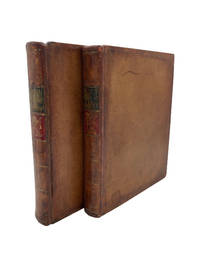
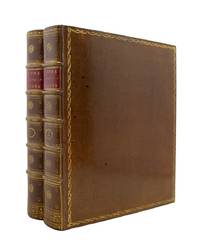
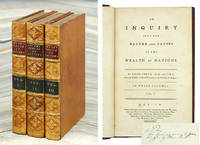
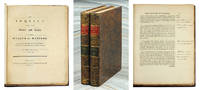
réf. 110446London: W. Strahan and T. Cadell 1776. 2 vols. 4to 12 x 9.25 inches or 305 x 240 mm large-paper top edge just trimmed other edges untrimmed; 12 510 pp.; 4 587 588 ads pp. Volume I: A4 a2 B-Z Aa-Zz 3A-3S4 T4 -3T4 blank as usual; Volume II: A2 B-Z Aa-Zz Aaa-Zzz 4A-4E4 4F2. With the usual cancels: M3 Q1 U3 2Z3 3A4 and 3O4 in volume I cancels D1 & 3Z4 in volume II. In vol. 2 p. 288 is misprinted as 289. Old speckled calf recently rebacked edges untrimmed and substantially larger than 2 copies recently sold as in “original boards”. Copious annotations in ink in a neat early hand. Some soiling to a few leaves in the press and occasional spotting or foxing as usual. § First edition the issue without the Edinburgh imprint of W. Creech as copies with his imprint have cancel titles those lacking the Edinburgh imprint such as this probably have priority of "the first and greatest classic of modern economic thought. Where the political aspects of human rights had taken two centuries to explore Smith's achievement was to bring the study of economic aspects to the same point in a single work" PMM. The records of copies at auction and through the trade in the last several years all show copies measuring at least an inch shorter and narrower than this copy -- the Schiff copy alone was almost as tall the Bradley Martin copy an inch shorter. The annotations are “memory aids” clearly written by an attentive reader who wanted to be able to refer back quickly to the key points of interest to him or her; they are not attempts to dispute or correct the text or even comment on it and one might surmise the reader to have been a high-level student or more likely a teacher. The two suggested errata have both been corrected by a different hand. ESTC T96668; Goldsmith 11392; Kress 7621; PMM 221; Rothschild 1897. W. Strahan hardcover books
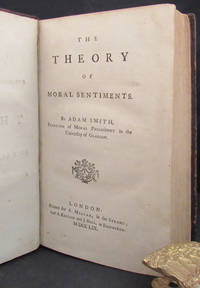
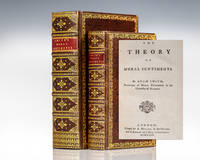
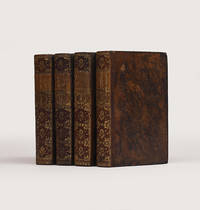
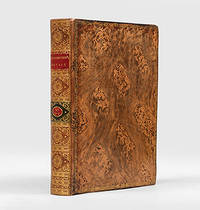
1759réf. 31208London: Printed for A. Millar in the Strand and A. Kincaid and J. Bell in Edinburgh 1759 1759. First Edition. Thick 8vo 202 x 123 mm. bound in its original contemporary binding of full calf neatly and very sympathetically and skillfully restored at the back with the original spine panel laid down preserving all but ca. 2cm at the foot a nearly invisible sophistication the original morocco label replaced free endleaves renewed sympathetically with antique paper. xii 551 1 errata uncorrected in the text with an error: 412 should read 413; pp. 317-336 omitted from pagination as usual; complete with the half-title pp. A very handsome copy crisp and unpressed clean throughout the binding strong and in good order the occasional spot as to be expected but truly a pleasing copy of this monumental work. THE ESPECIALLY RARE FIRST EDITION IN ORIGINAL CONTEMPORARY BINDING OF ADAM SMITH'S FIRST BOOK PUBLISHED IN 1759. A TRULY RARE BOOK AND ONE OF THE MOST IMPORTANT WORKS IN ALL OF ENGLISH PHILOSOPHY. 'THE THEORY OF MORAL SENTIMENTS was a true scientific breakthrough. It shows that our moral ideas and actions are a product of our very nature as social creatures. It argues that this social psychology is a better guide to moral action than is reason. It identifies the basic rules of prudence and justice that are needed for society to survive and explains the additional beneficent actions that enable it to flourish. As individuals we have a natural tendency to look after ourselves. That is merely prudence. And yet as social creatures explains Smith we are also endowed with a natural sympathy – today we would say empathy – towards others. When we see others distressed or happy we feel for them – albeit less strongly. Likewise others seek our empathy and feel for us. When their feelings are particularly strong empathy prompts them to restrain their emotions so as to bring them into line with our less intense reactions. Gradually as we grow from childhood to adulthood we each learn what is and is not acceptable to other people. Morality stems from our social nature. So does justice. Though we are self-interested we again have to work out how to live alongside others without doing them harm. That is an essential minimum for the survival of society. If people go further and do positive good – beneficence – we welcome it but cannot demand such action as we demand justice. Virtue. Prudence justice and beneficence are important. However the ideal must be that any impartial person real or imaginary – what Smith calls an impartial spectator – would fully empathize with our emotions and actions. That requires self-command and in this lies true virtue. Morality says Smith is not something we have to calculate. It is natural built into us as social beings. When we see people happy or sad we feel happy or sad too. We derive pleasure when people do things we approve of and distress when we believe they are doing harm. Of course we do not feel others’ emotions as strongly as they do. And through our natural empathy with others we learn that an excess of anger or grief or other emotions distresses them. So we try to curb our emotions to bring them into line with those of others. In fact we aim to temper them to the point where any typical disinterested person – an impartial spectator says Smith – would empathise with us. Likewise when we show concern for other people we know that an impartial spectator would approve and we take pleasure from it. The impartial spectator is only imaginary but still guides us: and through experience we gradually build up a system of behavioural rules – morality. Punishments and rewards have an important social function. We approve and reward acts that benefit society and disapprove and punish acts that harm it. Nature has equipped us with appetites and aversions that promote the continued existence of our species and our society. It is almost as if an invisible hand were guiding what we do. For society to survive there must be rules to present its individual members harming each other. As Smith comments it is possible for a society of robbers and murderers to exist – but only insofar as they abstain from robbing and murdering each other. These are the rules we call justice. If people do not help others when they could or fail to return a good deed we may call them uncharitable or ungrateful. But we do not punish people to force them to do good: only for acts of real or intended harm. We force them only to obey the rules of justice because society could not otherwise survive. But nature has given us something even more immediate than punishment namely our own self-criticism. We are impartial spectators not only of other people’s actions thanks to conscience. It is nature’s way of reminding us that other people are important too. In the process of making such judgments on a countless number of actions we gradually formulate rules of conduct. We do not then have to think out each new situation afresh: we now have moral standards to guide us. This constancy is beneficial to the social order. By following our conscience we end up surely but unintentionally promoting the happiness of mankind. Human laws with their punishments and rewards may aim at the same results; but they can never be as consistent immediate or effective as conscience and the rules of morality engineered by nature. Smith ends THE THEORY OF MORAL SENTIMENTS by defining the character of a truly virtuous person. Such a person he suggests would embody the qualities of prudence justice beneficence and self-command. Prudence moderates the individual’s excesses and as such is important for society. It is respectable if not endearing. Justice limits the harm we do to others. It is essential for the continuation of social life. Beneficence improves social life by prompting us to promote the happiness of others. It cannot be demanded from anyone but it is always appreciated. And self-command moderates our passions and reins in our destructive actions. Freedom and nature Smith concludes are a surer guide to the creation of a harmonious functioning society than the supposed reason of philosophers and visionaries.' The Adam Smith Institute The phrase that he is especially known for is first used here and would be repeated in THE WEALTH OF NATIONS: that the rich ".led by an invisible hand to make nearly the same distribution of the necessities of life which would have been made had the earth been divided into equal portions among all its inhabitants and thus without intending it without knowing it advance the interest of the society and afford means to the multiplication of the species." Part IV Section 1 pp. 350. Both THE THEORY OF MORAL SENTIMENTS Adam Smith's first book and his later WEALTH OF NATIONS demonstrate "a great unifying principle.Smith's ethics and his economics are integrated by the same principle of self-command or self-reliance which manifests itself in economics in laissez faire" Spiegel. "The fruit of his Glasgow years The Theory of Moral Sentiments would be enough to assure the author a respected place among Scottish moral philosophers and Smith himself ranked it above the Wealth of Nations. Its central idea is the concept closely related to conscience of the impartial spectator who helps man to distinguish right from wrong. For the same purpose Immanuel Kant invented the categorical imperative and Sigmund Freud the superego" Niehans 62 Printed for A. Millar, in the Strand and A. Kincaid and J. Bell, in Edinburgh, 1759 unknown
1759réf. 150275London: For A. Milar and A. Kincaid and J. Bell 1759. Rare first edition of Adam Smith's first book with a recorded “print run of 1000 copies” Sher “Editions of Adam’s Smith’s Books” 13. Octavo bound in full calf gilt titles and tooling to the spine front and rear panels morocco spine label marbled endpapers. In near fine condition. Housed in a custom full calf clamshell box. Rare. Adam Smith's Theory of Moral Sentiments his first book is "one of the truly outstanding books in the intellectual history of the world" Amartya Sen. First published in 1759 it laid the foundation for Wealth of Nations and proposed the theory repeated in the later work: that self-seeking men are often "led by an invisible hand… without knowing it without intending it to advance the interest of the society." "The fruit of his Glasgow years… Moral Sentiments would be enough to assure the author a respected place among Scottish moral philosophers and Smith himself ranked it above the Wealth of Nations… Its central idea is the concept closely related to conscience of the impartial spectator who helps man to distinguish right from wrong. For the same purpose Immanuel Kant invented the categorical imperative and Sigmund Freud the superego" Niehans 62. Basing moral sentiment on "the power one man has of putting himself in the place of another" in contrast to Hume's idea of self-interest "Smith was henceforth recognized as one of the first authors of the day" DNB. With Moral Sentiments and Wealth of Nations Smith created "not merely a treatise on moral philosophy and a treatise on economics but a complete moral and political philosophy in which the two elements of history and theory were to be closely conjoined" Palgrave III:412-13. To Smith when man pursues "his own private interests the original and selfish sentiments of Moral Sentiments he will in the economic realm choose those endeavors which will best serve society. Herein lies the connection between the two great works which make them the work of a single and largely consistent theorist" Paul "Adam Smith" 293. In his Theory of Moral Sentiments Smith develops an ethics based on a “unifying principle—in this case of sympathy—which would shed light on the harmonious and beneficial order of the moral world. As such it was of considerable interest to Smith’s contemporaries who were groping for an ethics that would flow from man’s impulses or sentiments rather than from his reason from ‘innate ideas’ or from theological precepts. If Smith had written only The Theory of Moral Sentiments he would enjoy in the philosophers hall of fame a niche not unlike that reserved for Shaftesbury or Hutcheson.” Both Moral Sentiments and Wealth of Nations reflect Smith’s “attempt to anchor the new science of political economy in a Newtonian universe mechanical albeit harmonious and beneficial in which society is shown to benefit from the unintended consequences of the pursuit of individual self-interest. There is thus a considerable affinity between the structure of The Theory of Moral Sentiments and that of The Wealth of Nations. Each work is integrated by a great unifying principle. What sympathy accomplishes in the moral world self-interest does in the economic one. Either principle in its respective realm is shown to produce a harmony such as the one that characterizes Newton’s order of nature… Smith’s ethics is one of self-command or self-reliance just as is his laissez faire economics…. Smith’s ethics and his economics are integrated by the same principle of self-command or self-reliance which manifests itself in economics in laissez faire” Spiegel Growth of Economic Thought 229-231. For A. Milar, and A. Kincaid and J. Bell unknown
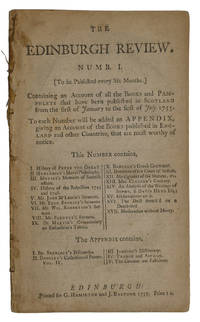
1755réf. 8154Edinburgh: Printed for G. Hamilton and J. Balfour 1755. 2 vols. bound as 1. 8vo pp. ii iv 77 1 79 1 ads. Extracted from a volume. A little toned first and last leaves dustsoiled a few openings a little marked. Final leaf detached and a little chipped to edges. Several contributors including Adam Smith identified in pencil. The complete run of this famously rare short-lived but enormously important Scottish Enlightenment periodical containing not only what has been called ‘a manifesto of the Scottish enlightenment’ but also Adam Smith’s first published works of philosophical interest - the review of Johnson’s Dictionary in the appendix to no. 1 and the letter to the editor that concludes no. 2. Smith’s first publication of any kind was his edition of the poems of William Hamilton in 1748 accompanied by a brief preface; his second eight years later established him as a rising star of the Scottish Enlightenment. Smith’s letter here running to 17 pages displays a breadth of interest and reading taking in an overview of French philosophy and thought including his thoughts on the Encyclopedie project of Diderot and the recently-published discourses of Rousseau and comparing the state of French thought with that in England and Scotland. The review of the Dictionary is shorter and more constrained in its focus but does represent the first published critical work of a giant of 18th-century economics and philosophy. Other contributors to the periodical include William Robertson who contributes eight pieces mostly on historical subjects and Hugh Blair and its editor was Alexander Wedderburn 1st Earl of Rosslyn whose introduction to the project was called a manifesto by Mossner in his biography of Hume. The importance of Smith’s contributions and the rarity of the pages in which they were published were recognised early on: the ‘Letter’ was translated into French by Pierre Provost and published in his edition of the Essays on Philosophical Subjects in 1797 with a note that the original edition was rare and he expended significant effort in finding one to borrow. There was then a second English edition in 1818 the preface stating that the first has ‘now become so rare that it is not to be found in the Libraries of some of the most curious Collectors’. This assessment is upheld by its minimal appearances on the market since: we have traced a copy of the first issue only in a Maggs catalogue of 1963 an example in modern half calf at Sotheby’s in 1979 and Hume’s copy in 1987 described as ‘a noted rarity’ and unsold at £20-25000; nothing further in the four decades since. ESTC P2185. Printed for G. Hamilton and J. Balfour unknown
1778réf. 001569London: W. Strahan and T. Cadell 1778. Two volumes complete - Volume One - 9 2-510pp and Volume Two - 9 2-589pp 1. Full contemporary calf smooth back divided into six panels by gilt rule title label to second panel contrasting volume label to third. Rebacked with original back strips laid on volume label of first volume chipped with some loss some wear to outer joints with a couple of minor splits corners bumped. Closed tear to fore edge margin of G1 in volume one O-P2 lightly foxed a few notes in pencil to margins former owner's name and address in ink to ffep William Philip Haslewood. Signature N in the second volume is lightly foxed the bottom corner of 3U4 is torn away not affecting text and there is a minor worm trail to lower pastedown and rear free endpapers. Half title to volume two only as called for but both volumes lack the final blank. With a modern cloth slipcase. An attractive copy one of five hundred printed of the second edition of Smith's magnum opus the only other quarto edition after the first of 1776. Smith did slightly revise this edition with Todd noting "a number of alterations large and small some providing new information some correcting matters of fact some perfecting the idiom and a large number now documenting references in footnotes" Todd 'The Text and Apparatus' in volume one of the 1976 edition of the 'Wealth of Nations' page 62. Einaudi 5329; Goldsmith's 11663; Kress B.154; see PMM 221 for the first edition. Second Edition. Hardback. Good. 4to. W. Strahan and T. Cadell Hardcover
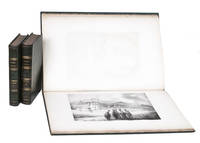
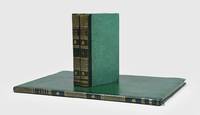
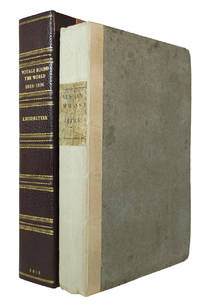
1821réf. ABC_48814Paris 1821. 8vo and folio atlas. Librairie de Gide et Fils Contemporary blind-tooled dark green goatskin with a dark green morocco title label and a dark green morocco volume label on the spine dark green buckram sides marbled end papers. The atlas in contemporary gold- and blind-tooled dark green quarter goatskin with the title lettered in gold on the spine blue green cloth sides marbled end papers. With 30 engraved plates 21 views and portraits 9 maps and charts of which 3 folding. 2 text volumes and 1 atlas. XII 418 2 blank; 2 blank 4 531 1 blank; 4 pp. 30 plates. Very scarce first French edition of the very important and significant account of the discoveries of Krusenstern. Borba de Moraes writes: "The expedition became famous as the beginning of Russian exploration in the North Pacific on the Asian coast as well as the American. Krusenstern explored the northern part of the Sakhalin Island concluding erroneously that it was a peninsula. This mistake was only corrected fifty years later by Nevelskoi. Besides its geographical interest Krusenstern's account is also valuable for the study of the fur trade in the extreme north. From the Brazilian point of view the interest lies in the description of the expedition's stay in Santa Catharina."The descriptions of the Marquesas Islands Hawaii and Japan are of great scientific importance. The views in the atlas show among others the Marquesans with five plates concerning Japan and two of the Ainu people. Among the charts are those of the Washington Isles Port Ana Maria at Nukuhiva Port Tschitschagoff Nagasaki Sakhalin the Kuriles and Awatscha Bay.With a paper label R. D. P. on the front pastedown of volume 1 and the atlas a manuscript shelf mark "A. 14. R. 2." on the first flyleaf of the two text volumes. The edges and corners of the boards of the text volumes are slightly scuffed. Some of the leaves are somewhat foxed around the margins. The joints of the boards of the atlas are slightly weakened without affecting the structural integrity of the binding. The first and last few leaves are browned with a water stain in the lower outer corner of the first few leaves not affecting the images. Otherwise in good condition.l Borba de Moraes I 442; Forbes I 530; Hill 167-168; Sabin 38332; O'Reilly and Reitman 732 & 4728. AMERICAS ASIA AUSTRALIA NEW ZEALAND & PACIFIC ISLANDS TRAVEL & VOYAGES Alaska Circumnavigation North America Pacific Islands Russia incl. Siberia Travel & Voyages Asia Travel & Voyages North America Travel & Voyages Pacific hardcover
réf. LCS-17953Premier tirage de ce recueil du Cabinet du Roi publié sur ordre de Louis XIV en divers formats et planches séparées. Paris, 1685-1686. Grand in-folio de 34 grandes planches. Petites déchirures aux pliures des vues 8, 9 et 13, restaurations sans manques aux vues 1, 6, 11,19 et 28. Maroquin rouge, double cadre de triple filet doré avec chiffre royal couronné aux angles, armes frappées or au centre, dos à nerfs orné du chiffre royal couronné, répété 7 fois, au sein de fleurs-de-lys et roulette fleurdelysée, filets dorés sur les coupes, roulette intérieure dorée, tranches dorées. Reliure de l’époque. 560 x 420 mm.
réf. 94665Edinburgh Adam and Charles Black n.d. but circa 1730-1740 1762 1811. . First edition folio 55 x 38.4 cm. Printed title two leaves with 'List of the Plans &c.' in double columns listing 160 plates and 180 engraved plates numbered 1 - 160 including the unnumbered plates 71 and 148 and 20 'bis' plates with duplicate numbers 20 double-page and one large folding plate on two sheets; plates mounted on paper tabs from sheets of the same work throughout the title and text leaves on wove paper with the watermark '1809' the plates on laid paper with the watermark 'LLAR' and a fleur-de-lys countermark and others as per RIBA the sheets retaining deckle edges throughout. Sheet size: c. 53.4 x 35.6 cm; double-page plates: c. 53.4 x 71.2 cm; title and text: 51.8 x 35.8 cm. Contemporary calf-backed marbled paper boards later protective box. A beautiful unsophisticated copy of the notoriously rare Vitruvius Scoticus the paramount source for the history of classical architecture in Scotland. What was to become William Adam's 1689 - 1748 magisterially-intentioned yet still mysterious Vitruvius Scoticus was first mentioned in a letter in 1726 and by late 1727 Adam was issuing subscription receipts for a book of 'My Designs for Buildings &c. in 150 Plates'. Initially proposed as a book in the manner of James Gibbs' Book of Architecture 'the first book in England to be devoted entirely to the designs of a living architect' Adam intended clearly to rival Gibbs to publicise his own work and to seek promotion and patronage from the new King George II. By 1733 Adam had found an Edinburgh-based engraver suitable for the task and one who may have shouldered some of the cost in Richard Cooper a student of John 'Friar' Pine and 'an acknowledged teacher and connoisseur of the fine arts'. Indeed it may have been Cooper who was the first to suggest a generalisation of the work and the assumption of a distinct Scottish character with the new title Vitruvius Scoticus. Cooper worked solely from the limited resource of Adam's own designs and under the stricture that there would be no theoretical work in the publication and was therefore limited and slow in what he was able to achieve. It is clear that Cooper's engravings were finished by the early 1740s but the reasons the work was then abandoned - not for the last time - are rather less so. It has been suggested that William Adam hesitated to publish for a number of reasons: financial pressure and the inherent costs of paper printing and publication; the curtailment of opportunities for promotion and patronage; a conflict of copyright; the 1745 Jacobite rising; Adam's advancing age; and finally the possibility of unflattering comparisons to Colen Campbell's Vitruvius Britannicus. At William's death in 1748 his son John revised the project adding additional plates including several taken from designs by his brothers Robert and James and it seemed at least briefly that the book would finally appear. At the time of the crash of the Fairholme brothers' bank in 1764 all was in readiness but the added financial burden on all of the brothers led John to sell the publishing rights to the London-based Andrew Millar and his partner Thomas Cadell; they issued subscription proposals in 1766. The agreement between John and the Londoners stipulated that of the existing sheets adequate for 950 copies they would require material for 750 and would allow the remainder to be retained by John for the existing subscribers. No copies were issued - it has been suggested that the reason was related to copyright although Robert and James Adam's opposition to a family association with 'outmoded taste' has been offered as more compelling - and on Millar's retirement in 1767 the sheets were in storage where they remained for 40 years. In 1804 Thomas Cadell's son wrote to John Adam's son another William that he was no longer able to store the sheets but that a scrap-paper merchant had offered £100 for them. Cadell's advice was to accept and it has been assumed subsequently that William did not: a story likely to be apocryphal states that the unused sheets were returned to Edinburgh and stored in a garret at the Royal Infirmary. It seems rather likelier that William did accept the £100 for the paper and his ongoing negotiations to have Vitruvius Scoticus published in 1808 - 1810 involved only those sheets that remained in Scotland. That the eventual publisher Adam Black issued only 120 copies - a very small run for a book of more than limited appeal - supports very strongly the idea that the remaining sheets were pulped an idea that the present copy with the plates mounted on paper guards composed of sections of those same plates corroborates. The final word on the mystery and indeed on the publication belongs to Eileen Harris: 'It is ironical that to be commercially viable Vitruvius Scoticus clearly the grandest of any architectural book published in Scotland had to be sold in the end as a remainder '. 'A resounding silence greeted Adam Black's announcement in the 'Edinburgh Weekly Chronicle' on 29 May 1811 that Vitruvius Scoticus was 'this day. completed in fifteen numbers'. Not only was William Adam's book Vitruvius Scoticus a century too late to have the bearing on Scottish architecture that its title promised; but with no preface explanatory text or date of publication it was silent also about itself about the intentions of its author and above all about its complicatred past.' Eileen Harris. 'The best and most jinxed of all the great 18th century British architectural books William Adam's Vitruvius Scoticus was three times abandoned by successive generations of the Adam family before finally in 1811 a young Edinburgh bookseller named Adam Black. published an edition of 'only 120 complete sets' hastily assembled from sheets printed nearly 50 years before. Ill-planned and muddled as the book was from its inception it was a sad irony that Vitruvius Scoticus should end up as an obscure bookseller's remainder totally unremarked upon at the time. 'We are left therefore with the virtually inescapable conclusion that a decision to publish Vitruvius Scoticus was definitely made almost certainly in the early 1760s; that this decision was modified after the Fairholme crash to the extent that a London publisher agreed to buy the unsubscribed portion of the edition; and finally that the entire edition was deliberately withheld under the pretence that the work was undergoing revision by the engraver. Such an extraordinary fiasco might seem more far-fetched were it not possible to detect behind the scenes as it were the influence of Robert and James Adam's rising star south of the border where any publication connected with the family name might do more harm than good if it failed to evince the most advanced and novel taste of the day.' BAL RIBA. Of the utmost scarcity on the market we can trace very few copies at auction or in institutions and of those copies that can be traced many appear to be incomplete; it is worth noting that Weinreb priced the example in his catalogue 2 'Books and Drawings Before 1800' at £285 in contrast the 1485 first edition of Alberti's De Re Aedificatoria was £845 and in catalogue 58 'Fine Architectural Books Part 2' in 1988 at £28000. BAL RIBA 30 incomplete; Millard 3 disbound and mounted; Harris 8; Weinreb 2:4 & 58:1; see 'British Architectural Books and Writers 1556 - 1785' by Eileen Harris Cambridge 1990 pp. 94 - 104. Edinburgh, Adam and Charles Black, n.d. [but circa 1730-1740, 1762, 1811]. hardcover
1821réf. 143059Paris: Gide fils 1821. A beautiful set with the rare atlas First edition in French of the first Russian circumnavigation one of the most significant Pacific voyages after Cook presented here in superior condition in a choice period binding complete with the rare atlas of plates "very important and. difficult to obtain" Hill. A highly desirable set. Krusenstern Ivan Fedorovich Kruzenshtern 1770-1846 had served in the British Navy between 1793 and 1799. He was given command of the two-ship expedition under "a brilliant corps of officers" Hill intended to establish trade with China and Japan facilitate trade in South America and examine California for a possible colony. His expedition encompassed the Canary Islands Brazil the Marquesas Kamschatka Nagasaki Sakhalin and Macao. "The voyage made a significant contribution to the knowledge of the hydrography of the Pacific coast of North America. Krusenstern took the first Russian embassy of Nikolai Rezanov to Japan" Howgego. The first edition published at St Petersburg between 1809 and 1814 with a folio atlas of 105 plates and issued in both Russian and German is a signal rarity of travel literature. Editions in Dutch English and Italian followed although none were accompanied by a plate volume which marks the present first edition in French as being the first edition following the original publication to include an atlas of plates. The illustrations are re-drawn versions of images in the original and includes a portrait of Krusenstern views and images of native people of the Marquesas Japan Sakhalin Island Kamtchatka etc. as well as nine maps. The translation is by the French geographer Jean-Baptiste Benoît Eyriès 1776-1846 a founder member of the Société de Géographie a member of the Société Asiatique and Académie des Inscriptions et Belles-Lettres awarded the Legion of Honour and in 1841 elected a Foreign Honorary Member of the American Academy of Arts and Sciences. However he is best remembered for a non-geographical work: his Fantasmagoriana 1812 an anthology of German ghost stories was read by the Byron-Shelley circle during their stay at the Villa Diodati the most famous child of that famous excursion being Mary Shelley's Frankenstein. 2 octavo vols letterpress 199 x 123 mm atlas vol. of plates 425 x 280 mm. Atlas with 30 plates including lithograph portrait of Krusenstern by G. Engelmann after Baptiste 19 lithograph plates 10 engraved maps 3 double-page. Contemporary dark green straight-grain half calf flat spines gilt lettered direct and divided into compartments by zig-zag rolls two broad panels filled with a reticulated pattern highlighted with a quatrefoil device at the interstices sailing ship motif in third and sixth compartments green vellum corner tips green marbled sides. Vol. I with superficial crack and minor wear at head of front joint a few light abrasions to spine of atlas occasional toning and scattered foxing. An excellent set with the half-titles in the letterpress vols. Arctic Bibliography 9377; Forbes 530; Hill 952; Howes K 272; Lada-Mocarski 61 and 62; Nissen Zool. 2310; Sabin 38332. hardcover
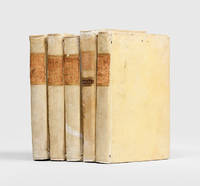
1790réf. 189815Naples: Giuseppe Policarpo Merande 1790-91. Adam Smith in the birthplace of political economy First edition in Italian of the Wealth of Nations among the scarcest of the 18th-century translations. Barring certain insubstantial references in journals "Smith's ideas did not reach Italy until 1790" Gioli p. 153. The translation was a quintessential product of the Neapolitan Enlightenment which had seen the development of political economy itself by Galiani and Genovesi in the 1750s. According to the preface the anonymous translator had corresponded with Smith and had received advice as to his translation. The edition takes its wider lead from Blavet's French translation which appeared from 1779 to 1780 while adapting various phrases and concepts to an Italian context. The second edition in Italian was not published until 1851. 5 vols octavo 173 x 114 mm. Complete with all half-titles and index leaves; vols. I III and V lacking rear free endpaper final leaf of vol. II fixed as rear pastedown. Contemporary vellum spines with orange calf label vol. IV with additional brown calf label edges sprinkled blue and red. Light soiling slight foxing and damp staining to contents paper flaw to leaf E2 of vol. III touching several words: a very good copy. Einaudi 5343; Goldsmiths' 14107; Kress B.1987; Tribe 39; Vanderblue p. 29 but lacking the fifth volume. Gabriella Gioli "The Knowledge of Adam Smith's Wealth of Nations in Italy in the Eighteenth Century shortened and translated by the author" in Cheng-chung Lai ed. Adam Smith Across Nations: Translations and Receptions of The Wealth of Nations 2000. hardcover
1821réf. 34467Paris: Gide fils 1821. 3 volumes text: 2 volumes 8vo 8 x 5 1/2 inches; atlas: folio 18 1/2 x 12 inches. xii 418; 4 531 1pp. 30 engraved plates portrait 9 maps and 20 plates; 2 double-page maps. Uncut. Text in period patterned paper wrappers the atlas bound to style in uniform period panelled wrappers. Housed in black morocco backed boxes. First edition in French of Krusenstern's seminal account of the first Russian expedition to circumnavigate the globe: complete with the rare atlas of plates. Capt. Ivan von Krusenstern's voyage was one of the most important post-Cook Pacific voyages specifically aimed at obtaining more knowledge of the northern Pacific region establishing diplomatic and commercial relations with Japan and visiting the Russian trading posts in Alaska and on the west coast of America. It comprised the first Russian expedition to circumnavigate the globe under the command of Krusenstern between 1803 and 1806. Sailing in 1803 the expedition touched on Brazil and rounded Cape Horn visiting the Marquesas Islands Hawaii Kamchatka and Japan. In Hawaii the expedition separated with ships under Langsdorff and Lisianski sailing to the Northwest Coast while Krusenstern himself undertook the delicate Japan expedition returning via Macao and the Cape of Good Hope. "The importance of this work stems from its being the official account of the first Russian expedition to circumnavigate the globe and form the discoveries and rectifications of charts that were made especially in the North Pacific and on the northwest coast of America" Hill. First published in St. Petersburg between 1809 and 1814 with issues in both Russian and German that first edition with its folio atlas of 105 plates is a major rarity of travel literature. Dutch English and Italian editions followed although none contained an atlas of plates. The present first edition in French is the first edition following the original publication to include an atlas of plates. The images are re-engraved versions of images in the original and includes a portrait of Krusenstern views and images of natives of the Marquesas Japan Sakhalin Island Kamtchatka etc. as well as nine maps of various Pacific regions visited. cf. Lada-Mocarski 62; Sabin 38332; Arctic Bibliography 9377; Howes K272 "c;" Borba de Moraes pp.374-75; Hill 952 ref; cf. Forbes Hawaii 407. Gide fils unknown books
1778réf. 184198A La Haye though Zweibrücken: no publisher stated though the ducal French press of Deux-Ponts 1778-79. The first foreign-language appearance of a milestone in economics Very rare first edition in French of the Wealth of Nations the first translation following its publication in English in 1776. "This translation of the 1776 English edition of WN has remained a mystery. Was it printed in The Hague If not where was it printed Who was M identified on the title pages as the translator Copies are rare within French libraries" Carpenter p. 20. Carpenter & Sabbagh's recent scholarship identifies the printer as the ducal press of Deux-Ponts now Zweibrücken. Though a commercial venture the press used a fictitious imprint to avoid problems when printing French-language works that risked running afoul of the censor. The translator was Jean-Louis Carra 1742-1793 an active contributor to the Encyclopédie d'Yverdon later in the French Revolution to join the Jacobins where he was appointed joint head of the Bibliothèque nationale but clashed with Robespierre and was guillotined in 1793. The text follows the original closely omitting a section on religious instruction alongside other minor religious changes. The edition was preceded in French translation only by an extract Fragment sur les colonies en général et sur celles des anglois en particulier translated by Reverdil which had been published in Lausanne and Basel earlier in 1778 to test public demand for the work. 4 vols duodecimo in 4s and 8s 162 x 95 mm collates complete with half-titles and blank "table des matieres" bound following title pages rather than at rear. Contemporary calf twin brown and green labels smooth spines with gilt floral decoration marbled endpapers red edges. Contemporary ownership signature of Mats Zachrisson to front free endpaper. Light rubbing and insect abrasion with some loss to lettering on labels bindings otherwise with little wear and without repair staining to Vol. IV and a few leaves in Vol. I else fresh. A very good copy. Goldsmiths' 11664; Kress B155; Tribe 16; Vanderblue 24. Kenneth E. Carpenter The Dissemination of the Wealth of Nations in French and in France 2002; Kenneth Carpenter & Gabriel Sabbagh "Unveiling the First French Translation of Adam Smith's Wealth of Nations" in Oeconomia vol. 14 no. 1 2024. unknown
1778réf. 67993London: Printed for W. Strahan; and T. Cadell 1778. Full Description: SMITH Adam. An Inquiry into the Nature and Causes of the Wealth of Nations. In two volumes. The second edition. London: Printed for W. Strahan; and T. Cadell 1778. Second edition first published in 1776 and the only other edition to be published in quarto format. One of 500 copies printed. Two quarto volumes 10 3/4 x 8 7/8 inches; 273 x 225 mm. 8 510; 8 589 1 blank pp. With half-title in Volume II no half-title called for in Volume I. Full newer speckled calf. Boards tooled in gilt. Spines with red morocco spine labels lettered in gilt. Spines stamped and numbered in gilt. Gilt board edges. Gilt dentelles. Newer endpapers. Volume one with some newly invisible repairs to the title-page at gutter along top margin and to a tiny hole not affecting text. Text of volume I with some foxing throughout. Volume II with some neat pencil marginalia and a pin-sized wormhole to outer blank margin from signature 3A through the end. Still volume II internally very clean. Overall a very good copy. The second edition is the rarest of the early editions of The Wealth of Nations. Only 500 copies were printed. The third edition consisted of 1000 copies and the fourth 1250 copies. It is unknown how many copies of the more common first edition were published. "The second edition exhibits a number of alterations large and small some providing new information some correcting matters of fact some perfecting the idiom and large number now documenting references in footnotes" William B. Todd in the 1976 Oxford edition of The Wealth of Nations. Adam Smith 1723-1790 spent ten years in the writing and perfecting of The Wealth of Nations. "The book succeeded at once and the first edition was exhausted in six months.Whether it be true or not as Buckle said that the 'Wealth of Nations' was 'in its ultimate results probably the most important that had ever been written'.it is probable that no book can be mentioned which so rapidly became an authority both with statesmen and philosophers" D.N.B. "The history of economic theory up to the end of the nineteenth century consists of two parts: the mercantilist phase which was based not so much on a doctrine as on a system of practice which grew out of social conditions; and the second phase which saw the development of the theory that the individual had the right to be unimpeded in the exercise of economic activity. While it cannot be said that Smith invented the latter theory. his work is the first major expression of it. He begins with the thought that labour is the source from which a nation derives what is necessary to it. The improvement of the division of labour is the measure of productivity and in it lies the human propensity to barter and exchange. Labour represents the three essential elements- wages profit and rent- and these three also constitute income. From the working of the economy Smith passes to its matter- 'stock'- which compasses all that man owns either for his own consumption or for the return which it brings him. The Wealth of Nations ends with a history of economic development a definitive onslaught on the mercantile system and some prophetic speculations on the limits of economic control.The Wealth of Nations is not a system but as a provisional analysis it is complete convincing. The certainty of its criticism and its grasp of human nature have made it the first and greatest classic of modern economic thought" Printing and the Mind of Man 221 describing the 1776 first edition. Kress B.154. Goldsmiths' 11663. Printing and the Mind of Man 221. Sabin 82303. Grolier 100 English 57 describing the 1776 first edition. HBS 67993. $28500. Printed for W. Strahan; and T. Cadell unknown
1821réf. 34467Paris: Gide fils 1821. 3 volumes text: 2 volumes 8vo 8 x 5 1/2 inches; atlas: folio 18 1/2 x 12 inches. xii 418; 4 531 1pp. 30 engraved plates portrait 9 maps and 20 plates; 2 double-page maps. Uncut. Text in period patterned paper wrappers the atlas bound to style in uniform period panelled wrappers. Housed in black morocco backed boxes. First edition in French of Krusenstern's seminal account of the first Russian expedition to circumnavigate the globe: complete with the rare atlas of plates. Capt. Ivan von Krusenstern's voyage was one of the most important post-Cook Pacific voyages specifically aimed at obtaining more knowledge of the northern Pacific region establishing diplomatic and commercial relations with Japan and visiting the Russian trading posts in Alaska and on the west coast of America. It comprised the first Russian expedition to circumnavigate the globe under the command of Krusenstern between 1803 and 1806. Sailing in 1803 the expedition touched on Brazil and rounded Cape Horn visiting the Marquesas Islands Hawaii Kamchatka and Japan. In Hawaii the expedition separated with ships under Langsdorff and Lisianski sailing to the Northwest Coast while Krusenstern himself undertook the delicate Japan expedition returning via Macao and the Cape of Good Hope. "The importance of this work stems from its being the official account of the first Russian expedition to circumnavigate the globe and form the discoveries and rectifications of charts that were made especially in the North Pacific and on the northwest coast of America" Hill. First published in St. Petersburg between 1809 and 1814 with issues in both Russian and German that first edition with its folio atlas of 105 plates is a major rarity of travel literature. Dutch English and Italian editions followed although none contained an atlas of plates. The present first edition in French is the first edition following the original publication to include an atlas of plates. The images are re-engraved versions of images in the original and includes a portrait of Krusenstern views and images of natives of the Marquesas Japan Sakhalin Island Kamtchatka etc. as well as nine maps of various Pacific regions visited. cf. Lada-Mocarski 62; Sabin 38332; Arctic Bibliography 9377; Howes K272 "c;" Borba de Moraes pp.374-75; Hill 952 ref; cf. Forbes Hawaii 407. Gide fils unknown
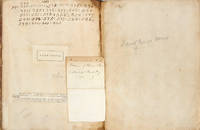
réf. 119583Edinburgh Printed by Evan Tyler printer to the Kings most Excellent Majestie 1644. . First edition from the library of Adam Smith; folio 26 x 18.5 cm; MS page notes in pen bookplate and tipped-in auction lot description to front pastedown loose MS pen note pencil ownership inscription to front free endpaper recto distinctive horizontal ampersand-form pen marginalia corresponding to page numbers noted on front pastedown dated ownership inscription for 'George Dickson' to fore-edge of the verso of ff P1 P3 2Q4 and 3F1 partially obscured on all ff but P3 early pen annotations to 2D6 recto later pen annotation in different hand to 2M4 recto lacking front blank f. and final 2ff of text title soiled with closed tears and lower portion repaired first few ff torn at lower corner with slight loss to text intermittent dampstaining; contemporary half glazed marbled paper vellum corners coloured to match rebacked contrasting red morocco lettering-piece to spine joints expertly restored; 16 211 3 205-436pp. A rare survival from the personal library of the economist Adam Smith. A rare survival from the personal library of the Scottish Enlightenment philosopher and economist Adam Smith 1723-1790. The Library: Upon his death on 17th July 1790 Smith's library passed to his sole heir David Douglas Lord Reston 1769-1819. Reston lived until 1819 whereupon the library was divided between his two daughters Mrs Cunningham and Mrs Bannerman. The Bannerman portion was donated intact to New College Edinburgh now housed in the University of Edinburgh Library. By contrast the Cunningham inheritance was dispersed over a period of some 50 years beginning in 1878 when part of the collection was sold upon the death of Cunningham's husband. Further sales are recorded in the early 20th century with a large contingent some 141 items bought by Professor Nitobe of Tokyo University in 1920 and subsequently donated to the University. A retained portion of the collection was donated by Cunningham's son Professor R.O. Cunningham to Queen's College Belfast on his death in 1918. With regards to the size of Smith's library 'MacCulloch who saw the books before the dispersion reckons their number at 5000. Dugald Stewart says Adam Smith possessed "a small but excellent library which he had gradually formed with great judgement in the selection". The whole collection was more probably 3000 than 5000' Bonar. The most thorough catalogue of Smith's library to date see Hiroshi Mizuta Adam Smith's Library Oxford Clarendon Press 2000 records 1808 individual works. Book's from Smith's library can now be found in institutional holdings at Edinburgh University 898 titles Tokyo University 148 titles Queen's College Belfast 110 titles Glasgow University 68 titles New York Public Library 5 titles Nihon University Law Library 4 titles Keio University 2 titles Kyoto University Library 1 title and Reading University Library 5 titles. The Book: The first edition of David Hume of Godscroft's History of the Houses of Douglas and Angus. Smith was related to the Douglas family through his mother Margaret née Douglas a granddaughter of the prominent fife landowner and member of parliament Sir William Douglas of Kirkness a descendant of the Earls of Morton. The library would eventually be inherited by Smith's young cousin David Douglas Lord Reston. Hume's History is listed in the original 1781 manuscript catalogue of the library at Panmure House where it is to be found 'Lying on the Top' of the 'Books in the Locked Press'. It is further recorded in James Bonar's A Catalogue of the Library of Adam Smith p.52 London Macmillan and Co. 1894 and by Professor Hiroshi Mizuta in his up-to-date catalogue which lists this work item 832 as one of the known-unknown 'unlocated' books. Annotations & Marginalia: An old printed auction lot description tipped-in to the front pastedown makes reference to a manuscript list of page numbers located on the front pastedown of the book. These correspond to distinctive horizontal ampersand-form annotations scattered throughout the second part of the work where the family name 'Hume' occurs. The note speculates that this could relate to Smith's intimacy with the philosopher David Hume 1711-1776 however in our opinion these annotations likely pre-date Adam Smith's ownership of the work. By contrast a single unique one-word marginal annotation 'Apolug' in a later hand appears on p.265 in a passage quoting the speech made by Smith's ancestor Sir George Douglas d.1552 promoting the marriage of Mary Queen of Scots and Prince Edward of England in which he '"told them of the apologue of the ass"' p.265. Given the context of this passage and its relevance to Smith's family history as well as the hand's outward similarity to marginal annotations found in Smith's copy of Locke's Two Treatises held by Kirkcaldy Museum which have been attributed to Adam Smith himself see C. Smith Adam Smith's library: recent work on his books and marginalia' The Adam Smith Review vol. 11 2018 this annotation is worthy of further study and research. A further inscription is found on the fore-edge margin of pp.102 106 298 and 396 relating to a previous owner: 'George Dickson His Book the Year of God 1747'. ESTC R398; Bonar p.52; Mizuta 831 'unlocated'. Edinburgh, Printed by Evan Tyler, printer to the Kings most Excellent Majestie, 1644. hardcover
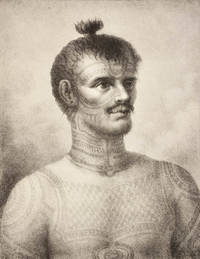
réf. 98388Paris Gide fils A. Egron 1821. . First edition in French; 3 vols comprising 2 vols 8vo text & folio atlas 44 x 28.5 cms; 21 lithograph plates by Engelmann 9 engraved maps 3 folding French blue half morocco gilt atlas bound to match a fine set. Complete with the rare atlas volume not published with the English translation. A very attractive example of the French edition of the first Russian circumnavigation complete with the atlas volume not published with the English translation. Though unsigned the plates are thought to be the work of Tilesius a naturalist on the voyage. They include a portrait of Krusentern four of Nukuhiwa eight of Japan including the Ainu. The maps include three of the Marquesas and four of Japanese interest. 'The atlas volume is very important and is difficult to obtain' Hill. Paris, Gide fils (A. Egron), 1821. unknown
réf. 110826Dublin: Printed for Messrs. Whitestone Chamberlaine Watson et al. 1776. 3 vols. 8vo viii 1-391; viii- 1-524 3 ads; iv 1-412 pp. Diced calf with gilt rules recently rebacked. Lady Davy’s bookplate and inscription in each vol. purple ink signature of a later owner upon each bookplate occasional marginal staining closed tear to p.259 of vol. 3. Preserved in an archival clamshell box. § The Adam Smith-John Playfair-Humphry Davy copy an incomparable association. First Dublin edition the only edition printed in the same year as the first London 1776. Lady Davy’s copy with her bookplate and ink inscription in each volume stating the books were given by Adam Smith to John Playfair. As a tangible record of the connections between these three influential Enlightenment figures this book is intriguing. Adam Smith 1723-1790 who established the foundations of modern economics with this book and John Playfair 1748-1819 the mathematician and geologist were friends in later life. They both belonged to the Oyster Club in Edinburgh and each owned copies of the other's books. Smith’s library catalogue lists a presentation copy from Playfair and the sale catalogue 1820 of Playfair’s library includes books by Smith but not this one. Jane Davy formerly Apreece 1780-1855 was a well-known and widely-travelled literary hostess. As a young wealthy widow she rejected a proposal of marriage from John Playfair in favour of Humphry Davy 1778-1829 whom she married in 1812 a few days after he had received his knighthood. The binding style with wove paper endpapers and diced calf boards postdates Smith’s death in 1790. The first volume has the binders ticket ‘Lycett Nelson Street City Road’ and records show that the firm was declared bankrupt in 1829 making it possible that Jane Davy received the book perhaps as a gift from Playfair during their courtship or on his death. Both Playfair and Davy visited London and could have commissioned the binding.This copy is the only evidence we have that Smith owned a copy of this Dublin edition which appeared in the same year as the first and is the only other edition printed in that year but surely Lady Davy's attestation suffices. The copy has a small ink correction to page 368 in vol. 3. This correction was not made to the printed text until the 4th edition. Smith was known to make authorial marginal notes in books; though the hand that made this correction cannot be known it is unlikely that anyone else would have felt emboldened to emend the great man's text. More about the relationships between Adam Smith and John Playfair and John Playfair and Jane Davy remains to be discovered stimulated by the discovery of this extraordinary association copy. A fascinating copy of a great Enlightenment text. PMM 221. Printed for Messrs. Whitestone hardcover books
1813réf. 124187London: Printed by C. Roworth vol. II T. Davison; for John Murray 1813. The first Russian circumnavigation First edition in English of the first Russian circumnavigation. Krusenstern's account was first published at St Petersburg in 1810. Krusenstern Ivan Fedorovich Kruzenshtern had served in the British Navy in 1793-99. He was given command of the two-ship expedition under "a brilliant corps of officers" Hill intended to establish trade with China and Japan facilitate trade in South America and examine California for a possible colony. It proved to be one of the most important Pacific voyages after Cook encompassing the Canary Islands Brazil the Marquesas Kamschatka Nagasaki Sakhalin and Macao. "The voyage made a significant contribution to the knowledge of the hydrography of the Pacific coast of North America. Krusenstern took the first Russian embassy of Nikolai Rezanov to Japan" Howgego. The translator Hoppner 1786-1872 was an English diplomat also remembered for his friendship with Byron. 2 vols bound in one quarto 277 x 210 mm. Engraved folding map Japan with coastline of China and Korea based on D. F. Sotzmann's map of 1811 2 hand-coloured aquatint plates by J. A. Atkinson a native of Nuku Hiva in the Marquesas view of Nagasaki. Contemporary tree calf professionally rebacked to style richly gilt spine red and green morocco twin labels red morocco numbering ovals gilt floriate roll tool border on sides gilt Greek-key turn ins marbled endpapers. Neat oval book label of the distinguished travel bibliophile Martin Greene. Vol. I title lightly creased and upper right blank corner restored frontispiece of vol. II lightly offset to title short closed tear at foot of same title. A very good handsome copy clean and generously margined. Abbey Travel 1; Cordier 459; Hill 952; Howgego II K23; Sabin 38331. unknown
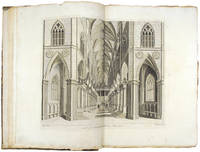
1688réf. 1669671688. PERELLE Gabriel Adam and Nicholas. Recueil de Veues des Plus Beaux Lieux de France. Comprised of seven parts in one volume each part with individual title. Illustrated with a total 281 etched and/or engraved plates on 253 leaves comprising 267 views and 14 plans and/or maps 3 being large folding. Oblong folio 295 x 382 mm bound in contemporary French mottled calf with intricate gilt-stamped floral ornaments in spine compartments red leather title label. Paris: Chez Nicolas Langlois ca. 1688. Early impressions of the finest most complete series of etched views to document French gardens and châteaux. A comparable or more authentic portrayal of seventeenth-century French architecture and garden design does not exist. Of the total 267 etched and/or engraved views over 150 concentrate specifically on seventeenth-century French landscapes and garden designs. These views represent the gardens in their original splendour the landscape populated with elegant figures in contemporary costume. Regrettably several of the private châteaux and most of the accompanying gardens no longer exist. The contents of the volume begins with etched views of Parisian edifices city portals fountains gardens and monumental buildings such as the Louvre Palais Royal Palais du Luxembourg L'Hotel de Ville etc. Then a number of the surrounding châteaux and their estates are pictured including Versailles which we see literally rise before our eyes as the plates were executed over a period of several years while the palace and gardens were under construction Vincennes Chantilly St. Cloud and Fontainebleau plus sixteen views of Rome and its environs including the gardens of Pamphili and Tivoli. Most importantly this set is comprised of early Nicolas Langlois 1640-1703 impressions of these grand plates. Gabriel Perelle 1595-1677 studied drawing with Daniel Rabel official artist of the court of Henry III and then Perelle entered the atelier of the French painter Simon Vouet. Perelle had two sons Nicolas Perelle born 1631 and Adam Perelle 1640-1695. The engraved work by the three Perelles is so similar in style that their work is often signed: "Fait par Perelle" as it frequently is in the present album. The majority of impressions are sharp and dark. A few tears repaired a three inch crack to bupper hinge however still strong and perfectly intact. Overall an exceptional copy. Fowler 245. Brunet IV 494. Berlin Katalog 2483. See: Millard I 136 & 137. hardcover books
réf. 121308Philadelphia Published by Anthony Finley No 33 South Fourth Street. J. Maxwell Printer 1817. . First American edition; 8vo 22 x 14 cm; 2pp ads to rear ownership inscriptions in pen and pencil to title and endpapers extensive pencil notes to rear endpapers textblock browned with dampstaining throughout occasional fold marks; contemporary tree calf contrasting red morocco lettering-piece to spine a little rubbed and marked a good copy of a very rare book; vii 1 598 2 adspp. The first American edition of Adam Smith's first book. The elusive first American edition of Adam Smith's first book published by Anthony Finley 178401836 in Philadelphia in 1817. Very rare in commerce. We can trace no record at auction since 1990. This edition follows the text of the twelfth Edinburgh edition which appeared in 1813 and included for the first time Smith's essay on the origin of languages titled in full 'Considerations concerning the first formation of Languages and the different genius of original and compounded Languages'. It precedes the edition published by Well & Lilly in Boston later the same year. Finley was best known as a cartographic publisher operating out of premises on Fourth and Chestnut Street from 1809 with maps engraved for Daniel Edward Clarke's Travels in Various Countries of Europe Asia and Africa appearing in 1811 and his Atlas Classica in 1818. Further to his work as a bookseller-publisher Finley ran on a Democratic ticket for the Philadelphia Common Council in 1818 and was an early supporter of the American Colonization Society. Smith devoted the years from 1755 to 1759 to writing and publishing The Theory of Moral Sentiments having been appointed Professor of Logic at the University of Glasgow in 1751 and elected Professor of Moral Philosophy a year later. It was this period at Glasgow which Smith was later to describe as 'the period of thirteen years which I spent as a member of that society I remember as by far the most useful and therefore as by far the happiest and most honourable period of my life'. First published in 1759 the book immediately established Smith's reputation as a serious scholar worthy of international acclaim. Kress B.7052 '1st American'; Tribe 120. Philadelphia, Published by Anthony Finley, No 33, South Fourth Street. J. Maxwell, Printer, 1817. unknown
1866réf. 99950St Petersburg: I. I. Glazunov 1866. First edition of the much-improved second Russian translation of Adam Smith's Wealth of Nations reproducing the notes and apparatus from the 1843 Blanqui edition. This translation published following the growing public dissatisfaction with an earlier version encumbered with obsolete prose and unspecific terminology appeared in the Library of Classical European Writers translated by P. A. Bibikov. "The first Russian translation of the Wealth by N. R. Politkovsky had appeared between 1802 and 1806; in its first volume the translator himself had referred to the difficulty of rendering Smith's specific terminology in Russian writing that 'he vas a novice in the subject himself although Smith also seemed to have some difficulty in elaborating his ideas with clarity'" Tribe p. 156. "By the middle of the nineteenth century the first translation of Wealth of Nations was increasingly unsatisfactory to Russian readers working in a language that had developed considerably since the early part of the century. Bibikov already had a reputation as a historian philosopher and literary critic and this undoubtedly had a part in the generally high level of presentation of the translations which have notes indexes and supplements. However Bibikov's translation was not made from the English original but from Blanqui's version of Garnier's French edition including an apparatus that drew upon the commentary of Buchanan Garnier McCulloch and others which Bibikov retained in the Russian translation" ibid. pp. 160-161. 3 vols octavo 202 x 134 mm. Contemporary black calf spines over black speckled boards cloth corners spines ruled and lettered gilt. Housed in a black cloth flat-back box by the Chelsea Bindery. Joints a little rubbed gilt on spine faded; paper covering on boards a little cockled and worn lifted in places and repaired. Pale waterstain to first few leaves of volume 1. Without pages 7-8 of volume 1 as in all recorded copies. Withal a very good set. Tribe 184; Vanderblue p. 30. OCLC lists three copies besides the Vanderblue copy: at the University of Illinois at Ohio State University and at the National Diet Library in Japan. hardcover
1767réf. 324743London: A Millar 1767. Third. hardcover. good/no dustjacket. 8vo. pp.478 half title page missing boards starting to detach A Millar hardcover
1891réf. 52249Sous étui bordé. Reliure plein maroquin janséniste de diverses couleurs (bleu, orange, rouge, vert, havane, etc.). Dos à nerfs avec date dorée au talon. Plats décorés de fleurs dorées et mosaïquées aux angles, dentelle intérieure. Tranches dorées sur témoins. Couvertures conservée. Reliure signée NOULHAC. Quelques dos sont très légèrement éclaircis.
1813réf. 67660The First Russian Voyage around the World KRUSENSTERN Adam Johann von. Voyage round the World in the Years 1803 1804 1805 & 1806 by order of His Imperial Majesty Alexander the First on board the ships Nadeshda and Neva under the command of Captain A.J. von Krusenstern of the Imperial Navy. In two volumes. Translated from the original German by Richard Belgrave Hoppner Esq. Vol. I. II. London: Printed by C. Roworth for John Murray 1813. First edition in English. Two quarto volumes in one. vii 1 blank 4 contents ix-xxxii 314; 9 1 blank 404 pp. Folding engraved map ìChart of the Northwest Part of the Great Oceanî and two hand-colored aquatint frontispieces for each volume. Original quarter parchment over drab blue boards. Original printed paper spine label. Uncut. Previous owner's light ink signature on title-page. Very light small library stamp to title-page. Leaf a2 with a few closed tears neatly repaired. Original paper label a bit rubbed and unreadable. Boards with some light soiling and bumping. A very clean and handsome copy. Housed in a custom quarter morocco clamshell. Overall an excellent copy. Laid in is a hand-written half-page letter dated March 1815. The identity of the author is unknown. The letter reads: "Capt. Krusenstern of the Russian navy presents his compliments to Dr. Thomsen and takes the liberty to send him a publication of Professor Carrol which Capt. Krusenstern has just received from . He at the same time must make every apology for intruding himself on Dr Thomsen the of Dr Thomsens personal acquaintance. 34 Upper Berkley Street 4 March 1815" Krusenstern 1770-1846 ìappointed to command the first Russian round-the-world expedition had serving with him a brilliant corps of officers including Lisiansky Langsdorff and Kotzebue. The expedition was to attempt to ëopen relations with Nippon and the Sandwich Islands to facilitate trade in South America to examine California for a possible colony and make a thorough study and report of the Northwest coast its trade and its future.í.The importance of this work is due to its being the official account of the first Russian expedition to circumnavigate the globe and the discoveries and rectifications of charts that were made especially in the North Pacific and on the northwest coast of America.The introduction is particularly important and interesting because of the information it contains respecting the state of Russian commerce during the eighteenth century the Russian voyages and discoveries in the Northern Ocean and the Russian fur tradeî Hill. A Russian edition was published in 1809-1814 and a German edition from which this English edition was translated in 1810-1814. Abbey Travel 1. Arctic Bibliography 9377. Borba de Moraes pp. 374-5. Hill pp. 167-8. Howes K271. Sabin 38331. HBS 67660. $22500 Printed by C. Roworth...for John Murray hardcover books
1813réf. 67660London: Printed by C. Roworth.for John Murray 1813. Voyage Round the World in the Years 1803 1804 1805 & 1806. By order of His Imperial Majesty Alexander the First on board the ships Nadeshda and Neva under the command of Captain A.J. von Krusenstern of the Imperial Navy. In two volumes. Translated from the original German by Richard Belgrave Hoppner Esq. Vol. I. II. London: Printed by C. Roworth.for John Murray 1813. Full Description: KRUSENSTERN Adam Johann von. Voyage round the World in the Years 1803 1804 1805 & 1806 by order of His Imperial Majesty Alexander the First on board the ships Nadeshda and Neva under the command of Captain A.J. von Krusenstern of the Imperial Navy. In two volumes. Translated from the original German by Richard Belgrave Hoppner Esq. Vol. I. II. London: Printed by C. Roworth for John Murray 1813. First edition in English. Two quarto volumes in one. vii 1 blank 4 contents ix-xxxii 314; 9 1 blank 404 pp. Folding engraved map "Chart of the Northwest Part of the Great Ocean" and two hand-colored aquatint frontispieces one for each volume. Original quarter parchment over drab blue boards. Original printed paper spine label. Uncut. Previous owner's light ink signature on title-page. Very light small library stamp to title-page. Leaf a2 with a few closed tears neatly repaired. Original paper label a bit rubbed and unreadable. Boards with some light soiling and bumping. A very clean and handsome copy. Housed in a custom quarter morocco clamshell. Overall an excellent copy. Laid in is a hand-written half-page letter dated March 1815. The identity of the author is unknown. The letter reads: "Capt. Krusenstern of the Russian navy presents his compliments to Dr. Thomsen and takes the liberty to send him a publication of Professor Carrol which Capt. Krusenstern has just received from . He at the same time must make every apology for intruding himself on Dr Thomsen the of Dr Thomsens personal acquaintance. 34 Upper Berkley Street/ 4 March 1815" Krusenstern 1770-1846 "appointed to command the first Russian round-the-world expedition had serving with him a brilliant corps of officers including Lisiansky Langsdorff and Kotzebue. The expedition was to attempt to 'open relations with Nippon and the Sandwich Islands to facilitate trade in South America to examine California for a possible colony and make a thorough study and report of the Northwest coast its trade and its future.'.The importance of this work is due to its being the official account of the first Russian expedition to circumnavigate the globe and the discoveries and rectifications of charts that were made especially in the North Pacific and on the northwest coast of America.The introduction is particularly important and interesting because of the information it contains respecting the state of Russian commerce during the eighteenth century the Russian voyages and discoveries in the Northern Ocean and the Russian fur trade" Hill. A Russian edition was published in 1809-1814 and a German edition from which this English edition was translated in 1810-1814. Abbey Travel 1. Arctic Bibliography 9377. Borba de Moraes pp. 374-5. Hill pp. 167-8. Howes K271. Sabin 38331. HBS 67660. $18500. Printed by C. Roworth...for John Murray unknown