2.555 Ergebnisse
1865Best.-Nr. 47188Librairie Chrétienne de Bauchu & Cie | Paris & Lyon 1865 | 13.50 x 22 cm | 3 volumes reliés
1994Best.-Nr. X71855Taiwan, Shang wu yin shu guan 1994 complete in 2 vols.: 43pp.with ills. + reproduction of one long scroll folded into 31 leaves with a total length of 1635cm., 33cm., vol.1: softcover, vol.2: cloth, in cart.slipcase, VG, ISBN 957-05-0434-X, X71855
1994complete in 2 vols.: 43pp.with ills. + reproduction of one long scroll folded into 31 leaves with a total length of 1635cm., 33cm., vol.1: softcover, vol.2: cloth, in cart.slipcase, VG, ISBN 957-05-0434-X, X71855
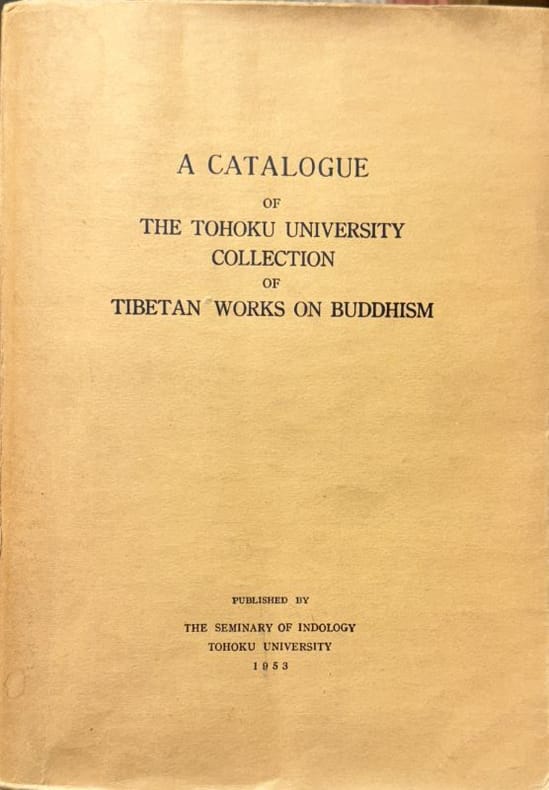
1953Best.-Nr. 110397Sendai Tohoku University, The Seminary of Indology 1953 1 vol. broché fort vol. gr. in-8, broché, 5 + 6 + 3 + 531 + 16 + 3 pp. Edition originale de ce précieux catalogue donnant, pour chaque référence, le titre tibétain, sa translittération et ses traductions japonaises et anglaises. Texte bilingue japonais-anglais. Très bon état. Rare.
1891Best.-Nr. PHO-1643Paris : chez Georges Carré, 1891-92, 2 volumes in-8, relié demi veau blond, papier dominoté, dos à nerfs avec pièce d’auteur et titre rouge et date en pied, couvertures conservées, frottements et manque au dos (t2), Exlibris du Comte de Keller.
1973Best.-Nr. X72494Budapest, Akadémiai Kiadó 1973 complet en 2 vols. [volume de texte + index verborum]: 146 + 339pp., 21cm., dans la série "Monumenta linguae mongolicae collecta" vol.4 [vol. de texte] & "Indices verborum linguae mongolicae monumentis traditorum" vol.4 [index], reliure toile, jaq. (peu d'usage), bel état, [contient l'édition et l'index verborum de la traduction mongole par Sonom Gara du texte tibétain "Subhasitaratnanidhi" de Sa-Skya Pandita], X72494
1973complet en 2 vols. [volume de texte + index verborum]: 146 + 339pp., 21cm., dans la série "Monumenta linguae mongolicae collecta" vol.4 [vol. de texte] & "Indices verborum linguae mongolicae monumentis traditorum" vol.4 [index], reliure toile, jaq. (peu d'usage), bel état, [contient l'édition et l'index verborum de la traduction mongole par Sonom Gara du texte tibétain "Subhasitaratnanidhi" de Sa-Skya Pandita], X72494
1930Best.-Nr. X114761s.l. [Chine], Imprimerie de Hien-Hien 1930 418 + [2] pp., 2e édition revue et augmentée, 25cm., reliure cart. (plats marbrés, dos en toile grise avec titree doré), texte et intérieur sont frais, bon état, X114761
1991Best.-Nr. X74873Oxford, Pali Text Society 1991 complete in 3 vols.: vi,454 + 542 + vi,363pp., 28cm., text printed in 2 columns, cloth, very good condition, [bilingual: Pali-English], X74873
1991complete in 3 vols.: vi,454 + 542 + vi,363pp., 28cm., text printed in 2 columns, cloth, very good condition, [bilingual: Pali-English], X74873
1929Very Good French In contemporary 1/3 leather bdg. Small folio. (33 x 26 cm). In French. [10] ,214, [4] p., 'c' numerous b/w plates. La peinture Indienne a l'epoque des Grands Moghols. First Edition. Rare. Sour cadette de la rayonnante miniature persane, la peinture moghole ne fut étudiée qu'à dater du début de ce siècle. Elle n'était considérée jusqu'à ce jour que sous l'aspect d'une branche souvent inférieure des expressions esthétiques iraniennes. Vue sous l'angle de l'art indien, elle retrouve la place importante qui lui était due. Nous avons rendu compte dans les notes bibliographiques de ce Bulletin, M. Parmentier en 1919, nous-même en 1929, d'un ouvrage de M. E. B. Havell intitulé Indian Sculpture and Painting. Cet auteur eut le premier le mérite de placer l'école moghole et l'école néo-indienne à leur rang légitime. M. I. S. rend un juste hommage à M. Havell ainsi qu'à ses successeurs dans l'appréciation des choses sous cet angle nouveau. Il était cependant fort regrettable de constater la pauvreté de la littérature française sur cette question. Nous ne pouvons donc que féliciter vivement M. I. S. de nous avoir offert un important volume sur un sujet à peu près neuf dans notre langue. La nouveauté de ce dernier exigeait la méthode rigoureuse qui a présidé à l'élaboration de ce travail. Dans une première partie historique, M. I. S. étudie la filiation des traditions anciennes avec l'école moghole et néo-indienne. L'auteur insiste sur la continuité de la tradition artistique indienne. Les moyens d'expression des formes picturales de l'homme, puis de la nature, leur définition et leur classement font l'objet d'une seconde partie analytique. Enfin, l'auteur entreprend de déterminer la formation esthétique de la peinture moghole dans une dernière partie, où il étudie, synthétiquement, le rythme de la composition et de la couleur, II est un fait certain : c'est la peinture qui s'est le moins bien conservée au cours des siècles. Cependant, quelques épaves ont miraculeusement survécu aux intempéries, aux invasions et aux guerres. Comme, d'autre part, de nombreuses allusions littéraires font mention de peintures, nous avons en mains les données suffisantes pour que l'historien d'art puisse reconstituer les étapes de l'évolution de cet art. Quoique notre connaissance des débuts soit nécessairement déformée par la légende, la peinture semble avoir tenu à cette époque lointaine une grande place dans la pensée indienne. Elle était le délassement préféré des princes, et la bibliographie amoureuse y trouve largement son compte. Toute personne cultivée avait chez elle le matériel nécessaire à l'exécution d'un portrait, et ceux-ci étaient, paraît-il, fort ressemblants. Mais le caractère profane de la représentation des personnages fut tel qu'au début il était interdit aux moines bouddhiques de séjourner dans les lieux où de pareilles images étaient exposées. Cette interdiction ne dura d'ailleurs pas et l'Eglise bouddhique comprit rapidement la nécessité d'user à son tour de ce puissant moyen de favoriser sa propagande. La connaissance de ces interdictions suffit à déterminer l'origine laïque de la peinture indienne. Les canons aux règles impérieuses ne font leur apparition que vers le VIIe siècle et superposent la formule d'école à l'inspiration directe de la nature. Ces lois enrayeront ainsi graduellement l'évolution de cette forme d'art. En ce qui concerne la décoration des monuments, les plus anciennes fresques sont celles delà grotte Jogimarâ (Orissâ) datant du début de notre ère et celles d'Ajantâ qui remontent, pour certaines «caves», aux deux premiers siècles. Ces représentations, dont le thème est emprunté aux Jàtakas, révèlent une technique en possession de moyens très développés. Notons en passant que les différents auteurs qui ont traité de ce sujet ne sont pas parfaitement d'accord sur les différents moyens mis en ouvre par cette technique. La symétrie des volumes, la sécheresse, une raideur générale, sont les
Best.-Nr. 90889aafBruxelles, Institut belge des hautes études bouddhiques, 1969/ 1975, in-4to, IV + 114 p./ 119 p., brochures originales.
1978Best.-Nr. 43630Mount Shasta CA Shasta Abbey 1978. Paperback First Edition Thus; First Printing indicated. INSCRIBED AND SIGNED BY AUTHOR. First Edition Thus; First Printing indicated. Also signed by the author's Zen student student Daizui MacPhillamy. Near Fine in Wraps: shows only the most minute indications of use: just a hint of wear to extremities; mildest rubbing. Binding square and secure; text clean. Very close to 'As New'. NOT a Remainder Book-Club or Ex-Library. 8vo. 304pp. Shasta Abbey is the Headquarters of the Refomred Soto Zen Church. Denominational Press Paperback. Jiyu-Kennett 1924 1996 born Peggy Teresa Nancy Kennett was a British roshi most famous for having been the first female to be sanctioned by the Soto School of Japan to teach in the West. As a young woman she found herself questioning gender roles in society and grew to become disillusioned with Christianity. She studied medieval music at Durham University and then received a scholarship to Trinity College of Music in London England. Though attracted to Buddhism she felt during this period that she was called to serve the Church of England as a priest. However church policies at the time did not allow women to be ordained and this enhanced her previous disillusionment with Christianity. She first became interested in Theravada Buddhism during this period of questioning and searching joining the London Buddhist Vihara. In 1954 she joined the London Buddhist Society where she continued her Buddhist studies and lectured. While there she met the scholar D.T. Suzuki and developed a strong interest in Zen Buddhism. In 1960 when Keido Chisan Koho of Sojiji in Japan came to the society she was asked to make the arrangements for his stay. Koho asked if she would consider becoming his student back in Japan. She accepted the offer and two years passed before she arrived at Sojiji to study under him. In January 1962 Kennett traveled to Malaysia to accept an award she had been honored with for setting a Buddhist hymn "Welcome Joyous Wesak Day" by Sumangalo to music. Before leaving for Japan Kennett was ordained a novice nun by Venerable Seck Kim Seng in the Linji Chan school and given the Buddhist name Jiyu meaning compassionate friend. Jiyu-Kennett arrived in Japan in 1962. She trained at Sojiji under Keido Chisan Koho Zenjifrom whom she received Dharma transmission in 1963. Because Koho was often preoccupied with administrative affairs Jiyu-Kennett spent much of her time studying under one of Koho Zenji's senior officers Suigan Yogo roshi. She remained until after the death of her master Koho in 1967. By 1969 she received authorization to begin teaching Soto Zen in London England. That year she visited the United States on a lecture tour and decided to remain.6 At this time Jiyu-Kennett was not in good health as during her time in Japan she had experienced many illnesses.7 In 1969 Jiyu-Kennett founded the Zen Mission Society in San Francisco and in 1970 Shasta Abbey in Mount Shasta California8 the first Soto Zen school in the United States to be established by a woman. In 1972 Jiyu-Kennett's British chapter of the Zen Mission Society established Throssel Hole Priory in Northumberland England.39 In 1978 Jiyu-Kennett changed the name of the Zen Mission Society to the Order of Buddhist Contemplatives. In 1975 Jiyu-Kennett was stricken with illness yet again and this time she became bedridden. In 1976 she resigned from her position as abbess of Shasta Abbey and went into retreat in Oakland California. Still rather ill of unknown causes she had her student Daizui MacPhillamy with her often to tend to her care. Following a kensho experience he had she conferred Dharma transmission to him at her bedside in 1976. Not long after she began having visions. Stephen Batchelor describes these episodes "The visions lasted for 12 months until 26 January 1977 the first twelve occurring in Oakland the rest at Shasta where she returned on 25 October. Each vision unfolded as a dream-like episode charged with Western and Buddhist religious symbolism superimposing itself on whatever she saw around her. She compared the series of visions to an elaborated contemporary version of the classical Zen images of the ten 'ox-herding' pictures. By the time the final vision faded she was cured. She interpreted the experience as that of a 'third kensho"." Jiyu-Kennett had a commanding presence about her both intellectually as well as physically. Of a rather husky build she had a tremendous laughter and was known to be gifted at storytelling. To some her demeanor appeared rather persistent at times as author James Ishmael Ford writes "She followed in the authoritarian style of her Japanese inheritance.She had genuine insight into the boundless realm and also pushed me toward my own deepest experience of the great matter." Her adaptation of Zen for Westerners has been likened to Japanese Soto Zen with a flavor of the Church of England for she believed that Zen in North America should adopt Western monastic dress and liturgical forms. For example she set the traditional Buddhist liturgy to music based on Gregorian chants. Jiyu-Kennett was an advocate for equality between the sexes and was herself swayed by the idea that women would never be deemed as equal to men if they were not understood to possess souls. She asserted that no woman will be certain she is equal "until she knows with the certainty that I know that her own Buddha-nature or her own soul exists." The Order of Buddhist Contemplatives founded by Jiyu-Kennett now has chapters in the United States the Netherlands Canada the West Indies the United Kingdom and Germany. INSCRIBED AND SIGNED BY AUTHOR. Shasta Abbey, paperback
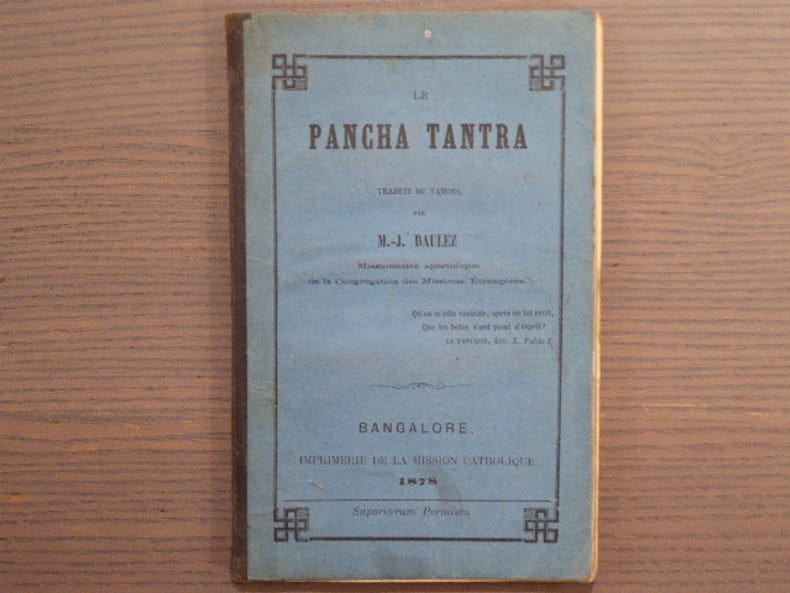
Best.-Nr. 240648Imprimerie De La Mission Catholique Bangalore 1878 In-8 ( 195 X 125 mm ) de 148 pages, broché sous couverture imprimée. EDITION ORIGINALE rare de cette traduction. Rousseurs passim, bel exemplaire.
1981Best.-Nr. 028200Bruxelles 1981 Institut Belge des Hautes Etudes Chinoises Soft cover Good
2000Best.-Nr. 167432London: London Gallery 2000. First Edition. Hardcover. First Edition. Text in English and Japanese. Published in conjunction with an exhibition held at the Okura Museum from November 2 through December 24 2000 in collaboration with London Gallery. Fine with no dust jacket as issued in publisher's about Fine paper slipcase. London Gallery unknown
2000Best.-Nr. 167432London: London Gallery 2000. First Edition. Hardcover. First Edition. Text in English and Japanese. Published in conjunction with an exhibition held at the Okura Museum from November 2 through December 24 2000 in collaboration with London Gallery. Fine with no dust jacket as issued in publisher's about Fine paper slipcase. London Gallery unknown books
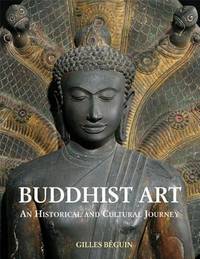
2009Best.-Nr. A155024127VT9River Books Co. Ltd. 2009. First Thus . Oversized Hardcover. Very Good-/Very Good -. Folio - over 12" - 15" tall. 400 Pages. Original black cloth covered boards. 680 color illustrations. 22 maps and 78 plans. Pages are clean unmarked. Binding is tight and secure. Boards have slight bumping to head/heel of spine light rubbing to corners. Unclipped pictorial dust jacket is slightly scuffed with slight bumping to head/heel of spine slight rubbing to extremities. We have added a removable mylar covering to the dust jacket for protection. Nice copy. River Books Co., Ltd. hardcover
1981Best.-Nr. X77132New Delhi, 1981 pp. (nos.) 5367-5901, editor's hardback (green cloth with gilt lettering, corners bit bumped), 29cm., in the series "Sata-Pitaka Series. Indo-Asian Literatures (reproduced in original scripts and languages, translated, annotated and critically evaluated by specialists of the East and the West) vol.258, some foxing at edges, Good condition, Rare, [this volume contains; pag.no.5367: Rgyud-bzhi KHA (continued, GA-TSA, in Tibetan and Mongolian (MONG. 05.46-47), 5792: Rgyud-bzhi bsad-rgyud section, in Tibetan and Mongolian (MONG. 05.48), 5839: Medical prescriptions, in Tibetan and Mongolian (MONG. 05.49) & 5854: Subhasita-ratna-karanda-vyuha nama bhotasya sanketa-sastra (Bod-kyi brdahi bstan-bcos Legs-par-bsad-pa rin-po-chehi za-ma-tog bkod-pa zhes-bya-ba), in Tibetan and Mongolian (MONG. 05.52)], X77132
1981pp. (nos.) 5367-5901, editor's hardback (green cloth with gilt lettering, corners bit bumped), 29cm., in the series "Sata-Pitaka Series. Indo-Asian Literatures (reproduced in original scripts and languages, translated, annotated and critically evaluated by specialists of the East and the West) vol.258, some foxing at edges, Good condition, Rare, [this volume contains; pag.no.5367: Rgyud-bzhi KHA (continued, GA-TSA, in Tibetan and Mongolian (MONG. 05.46-47), 5792: Rgyud-bzhi bsad-rgyud section, in Tibetan and Mongolian (MONG. 05.48), 5839: Medical prescriptions, in Tibetan and Mongolian (MONG. 05.49) & 5854: Subhasita-ratna-karanda-vyuha nama bhotasya sanketa-sastra (Bod-kyi brdahi bstan-bcos Legs-par-bsad-pa rin-po-chehi za-ma-tog bkod-pa zhes-bya-ba), in Tibetan and Mongolian (MONG. 05.52)], X77132
1865- Librairie Chrétienne de Bauchu & Cie, Paris & Lyon 1865, 13,5x22cm, 3 volumes reliés. - Edition originale. Reliures en plein veau caramel, dos à cinq nerfs sertis de pointillés dorés et de doubles filets noirs, dates dorées en queue, pièces de titre de maroquin marine, pièces de tomaison de maroquin souris, petites traces de frottements sur les mors, roulettes dorées sur les coiffes, armes héraldiques et devise dorées frappées aux centres des plats, encadrement de triples filets noirs sur les plats qui comportent de petites traces de frottements, doubles filets dorés sur les coupes, encadrement de dentelle noire sur les contreplats, gardes et contreplats de papier à la cuve, quelques coins émoussés, tranches marbrées, remarquables reliures aux armes signées de Bourlier. Légères rousseurs sans gravité. Provenance : de la bibliothèque de Guillaume Pavée de Vendeuvre Exemplaire parfaitement établi dans une élégante reliure aux armes du grand bibliophile Guillaume Pavée de Vendeuvre. [ENGLISH DESCRIPTION ON DEMAND]
1909Best.-Nr. 006662London: Kegan Paul Trench Trubner & Co. Ltd. 1909. Book. Near Fine. Half-Leather. Fourth Impression. 4to - over 9¾" - 12" tall. SCARCE. Handsomely bound in half-leather and orange cloth gilt lettering and rules at spine 624 pp. Near Fine a few spots light soiling to edges of page block. Kegan Paul, Trench, Trubner & Co. Ltd. Hardcover
1909Best.-Nr. 006662London: Kegan Paul Trench Trubner & Co. Ltd. 1909. Book. Near Fine. Half-Leather. Fourth Impression. 4to - over 9¾" - 12" tall. SCARCE. Handsomely bound in half-leather and orange cloth gilt lettering and rules at spine 624 pp. Near Fine a few spots light soiling to edges of page block. Kegan Paul, Trench, Trubner & Co. Ltd. Hardcover books
1981Best.-Nr. 2090202120701283Heiraku tera shoten 1981. Soft Cover. Fine. Number of pages: 538 pages Size: chrysanthemum Heiraku tera shoten paperback