3180 risultati
1927rif. 23734BBHeidelberg, Carl Winters Universitätsbuchhandlung, 1927. VII, 93 Seiten. kart. Buchrücken u. Kanten etwas gebräunt, ans. guter, altersgem. Zustand.
1921rif. 1263712München, O. Schloss, 1921. Gr.-8vo. 2 Bl., 387, (3) S., 6 Taf. OPpbd (lichtrandig, Papier gebräunt).
1913rif. 1512529Leipzig, 1913. Gr.-8vo. 8, 76 S., 1 Bl. Br.
1916rif. 1158832Leipzig Berlin, Reichsdruckerei, 1916. 1 Bl., 77 S. Br. (angestaubt).
1960rif. 1083408Heidelberg, 1960. 186 S. Br.
1942rif. 1313304München, Verlag der Bayerischen Akademie der Wissenschaften, 1942. 46 S., 1 Bl. (Bayerische Akademie der Wiss., Phil.-hist. Klasse, Sitzungsberichte 1942/8). OBr. (Stempel a. Titel, unaufgeschnitten).
1929rif. 1267812Gotha, Klotz, 1929. 4to. 8, 52 S., 68 fotogr. Taf., 2 Bl. OKart. (Kapitale m. kl. Fehlstellen, Buchblock gelockert u. eselsohrig, Tafeln durch Nässewirkung am Innensteg aneinander haftend, teils m. Rasurspuren, Einrissen u. Fehlstellen, jedoch nur mit geringen Beeinträchtigungen der Abb.).
1919rif. 10341621919. Gr.-8vo. 91, (1) S., 29 Taf. OPp. (Rücken fehlt).
1957rif. 1018524(1957). 317, (1) S., 1 Bl. m. 1 ganzs. Karte. OLwd.
1923rif. 1193331(Berlin-)Zehlendorf, Neubuddhist. Vlg, 1923. 1 Bl., 353, (1) S., 1 Bl. Neuer Lwdbd mit aufgezogenem OUmschl.
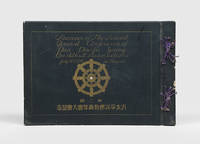
1934rif. 196537Tokyo: Bukkyo shashin tsushinsha 1934. First edition celebrating this conference held from 18 to 23 July 1934 against a backdrop of growing condemnation of the invasion of Manchuria. Over 600 delegates gathered for the event and the photographic illustrations show the cultural performances speeches visits to temples and military hospitals and workshops that they participated in. We have traced no copies on WorldCat. Inspired by the 1915 World Buddhist Conference and the 1925 East Asian Buddhist Conference the Pan-Pacific conferences were established to galvanize "international and ecumenical Buddhist solidarity as a means to transform East Asia and the world" Stein p. 1468. Delegates gathered from across the Japanese Empire and further afield to listen to prominent Japanese speakers who emphasized the role of Buddhism in uniting the world. However the conference's themes were in sharp contrast to the realities of the situation in Manchuria. Only eight delegates represented China as the conference chose to treat Manchukuo as a separate country causing outrage in the Chinese press. Several speakers were also involved with the invasion such as foreign minister Hirota Koki and vice-foreign minister Shigemitsu Mamoru. This made the conference a "flashpoint in the relationship between Japanese and Chinese Buddhists" Stein p. 1487. Oblong folio. With halftone photographic illustrations throughout title-page vignette of Buddhist prayer wheel; title page and text printed in brown text in Japanese. Original black leather-grain paper over bevelled boards spine wrapped in brown cloth and tied through four holes with purple string front board lettered and decorated with vignette of Buddhist prayer wheel in gilt light green endpapers. Binding rubbed and scratched with boards exposed at spine front board a little cockled endpapers lightly browned contents clean and bright: a very good copy. Justin B. Stein "Japanese imperialism and the Chinese delegation to the Second General Conference of Pan-Pacific Young Buddhists' Associations 1934" Modern Asian Studies vol. 58 no. 6 2024. hardcover
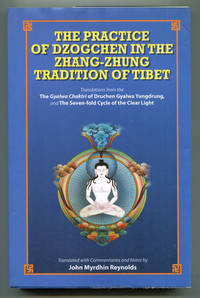
2015rif. 019953Kathmandu Nepal: Vajra Books 2015. Softcover. Fine. 344pp; Covers clean & bright text unmarked binding is tight as new Fine condition. Translations from the Bonpo Dzongchen Practice Manual: The Gyalwa Chaktri of Druchen Gyalwa Yungdrung and The Seven-Fold Cycle of the Clear Light. The Dark Retreat Practice from the Zhang-zhung Nyan-gyud. With commentaries and notes. Vajra Books paperback
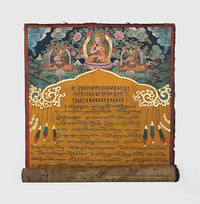
1900rif. 185518Tibet: c. 1900. Finely painted on linen A beautiful devotional manuscript the decoration at the head showing Je Tsongkhapa the founder of the Gelug school of Tibetan Buddhism and his two spiritual sons Gyaltsabje and Khedrupje. The three figures at the foot are dharmapalas "hell protectors" who protect Buddhists and the Dharma. This example was deaccessioned by the Samye monastery to pay for damages sustained during the Cultural Revolution 1966-76. It was purchased by Martin Schøyen b. 1940 the Norwegian collector of rare books and manuscripts from the Rhythm of Tibet Gallery Lhasa in June 2006. His black ink annotation including his pressmark MS 5337/2 is on the verso. Manuscript and hand-painting on linen 135 x 53 mm. Black block and cursive Tibetan manuscript on yellowish brown panel colour illustrations and adornments at head and foot red border. Three characters in red script on reverse. Housed in long grey archival box Recent pencilled label at foot. Some soiling and mild discolouration but an attractive example. unknown
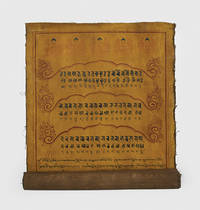
1875rif. 185517Tibet: c. 1875. Finely brushed on linen An attractively executed devotional manuscript decorated with Buddhas an endless knot a Wheel of Dharma shells and other imagery. This example was deaccessioned by the Samye monastery to pay for damages sustained during the Cultural Revolution 1966-76. It was purchased by Martin Schøyen b. 1940 the Norwegian collector of rare books and manuscripts from the Rhythm of Tibet Gallery Lhasa in June 2006. His black ink annotation including his pressmark MS 5337/1 is on the verso. Manuscript and hand-painting on linen 144 x 53 mm. Black block and cursive Tibetan manuscript on yellowish brown background adornments and frames in red and blue red seal. Housed in long grey archival box. Recent pencilled labels at foot. Some soiling and mild discolouration but an attractive example. unknown
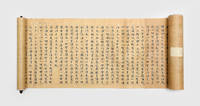
rif. 190864Nara: late 13th century. A superb example of 13th-century printing A well-preserved example of early temple printing in Japan inscribed by Tachibana Otome a daughter of the influential Tachibana family. This type of scroll was printed between the 12th and 14th centuries and this example has the thick bold strokes typical of the process. "Kasuga-ban" scrolls refer to woodblock printed sutras originating in the early-mid Kamakura period. The first examples were produced at Kofuku-ji temple and all contained the word "Kasuga" the patron deity of the temple in their colophons. However over time "the term Kasuga-ban became used more loosely in a wider sense to denote publications of the Nara monasteries in general not only of the Kofuku-ji. The printing of Kasuga-ban in this broader sense flourished throughout the Kamakura period and up to the end of Muromachi ca. 1570" Gardner p. 159. This example was printed using blocks first cut at Kofuku-ji in the Karoku period 1222-1227 sometimes referred to as the "Karoku-ban" set. The inscription at the end of the scroll reveals that it was commissioned by Tachibana Otome. We have traced two other complete chapters with the same inscription held at the National Museum of Japanese History and Tsurumi University Library which were commissioned in approximately 1285. The Tachibana was one of the four noble houses that held the most sway in the Nara and Heian periods although they were eclipsed by the Fujiwara family in the 10th century and scattered across the country. Handscroll 261 mm wide unravelling to 850 cm 19 conjoined text sheets on yellow Japanese paper each approximately 265 x 43 cm contemporary wooden rod dowel and endsheet. Lacking cord. With 17 characters per line; text in Chinese occasional punctuation in red. Manuscript paper labels on endsheet recto. Wrapped in modern cloth and housed in modern wooden box. Signs of age as expected some light staining on endsheet verso worm-holing along top edge especially on sheets 9 and 10 but rarely encroaching on text: a very good example. K. B. Gardner "Centres of Printing in Medieval Japan: late Heian to early Edo period" British Library Occasional Papers 11. Japanese Studies 1990. hardcover
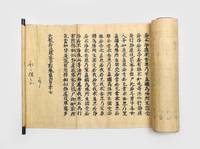
rif. 190967Japan: c. 11-12th century. Spreading the word of the Buddha in the 12th century An early Japanese manuscript of one of the core texts of Mahayana Buddhism. This example was brushed in mid-late Heian period during a period of religious fervour brought on by fears of a coming dark age. The approximate age of the manuscript can be pinpointed by the scented paper and more free-flowing calligraphic style compared to older Chinese models. In the late Heian period fear of the mappo dark age led wealthy temple donors and patrons to invest in increasingly extravagant gifts. In Buddhist cosmic history the death of the Buddha would be followed by three ages: the "true law" shobo the "copied law" zobo and the "degeneration of the law" mappo the latter of which would only be fixed by the future incarnation of the boddhisatva Maitreya Miroku in Japanese. Japanese buddhists calculated the final age to being in approximately 1052 AD leading the rise of many new sects such as True Land and Nichiren Buddhism. Sutras were naturally a popular option for wealthy temple donors and texts such as the Great Sutra of the Perfection of Wisdom were copied in great quantities. During this time handwriting styles became softer and smoother developing a distinctly Japanese style that would give rise to the hiragana alphabet. The Great Sutra of the Perfection of Wisdom Sanskrit: Mahaprajnaparamita sutra is a 600-volume collection of 16 different sutras including the Diamond Sutra each traditionally believed to represent teachings conveyed by the Buddha to a different assembly of followers. The sutra expands on the idea that the path to finding one's true self lies in detachment from the vanity of everything. The collection was first translated into Chinese by the Tang dynasty monk Xuanzang 602-664 and subsequently introduced into Japan. Handscroll 246 mm wide unravelling to 7267 mm 19 conjoined text sheets on yellow Japanese paper each approximately 246 x 390 mm contemporary wooden rod dowel and endsheet recent orange cloth cord paper infused with camphor perfume. With 17 characters per line pale ink guidelines; text in Chinese. Housed in recent cypress box and brown card sleeve. Worn and creased worm-holing along edges sometime heavily repaired on verso with Japanese paper one line on sheet 1 repaired with old paper and a few characters retouched in manuscript: a very good example. hardcover
rif. 191103Kawachi Province: c. 12th century. The dharma burns An exceptional example of late Heian-period sutra production bearing the telltale burn marks from when flames engulfed the temple where it was stored. "The accidental incineration is a reminder of the transience of all material phenomena and fragments. are cherished by collectors and connoisseurs of calligraphy" Carpenter p. 20. Only the lower margin was damaged; the manuscript is untouched. This fragment is from Volume 35 of a 60-volume Flower Ornament Sutra thought to have been held in Senpuku-ji in Kawachi province now Osaka Prefecture. This temple burned down sometime in the Edo period although no concrete records of this event survive and since then the remains of its manuscripts have entered the market. The majority of these fragments are only a couple of lines in length and suffer extensive fire damage encroaching onto the text itself whereas this example is both long and barely touched by flames. The only fragment comparable to this one in length and condition in the West is held at the Metropolitan Museum of Art 2024.412.1. Others are held at the National Museum of Asian Art F2014.6.4 Waseda University Keio University the Naritasan Museum of Calligraphy and the Tokyo National Museum. In the late Heian period the idea of "one character one Buddha" began to become prominent wherein every individual character of a piece of scripture was viewed as a manifestation of the Buddha and should be treated accordingly. As such high-quality sutras on dyed papers became popular as expressions of devotion. We have traced one other fragment at a Western auction Christies 22 March 2022 Japanese and Korean Art Including the Collection of David and Nayda Utterberg Lot 1. Single sheet of pale indigo-dyed paper flecked with gold 246 x 377 mm gold manuscript guidelines 21 columns 17 characters per column 2 contemporary manuscript corrections; text in Chinese. Mounted on 20th-century orange patterned cloth hanging scroll 1094 x 566 mm green cloth backing ribbed orange cloth inner mount manuscript framed with green-and-gilt-patterned cloth infused with camphor perfume wooden brackets upper bracket covered with green cloth lower bracket capped with foliate-engraved metal two decorative green and gilt cloth hanging cords white and black thread hanging. With 5 burn marks in lower margin each approximately 10 x 40 mm. Lower bracket protected with modern cypress hinged tube. Housed in modern cypress box and black lacquered wood box with purple ties. Outer box with recent manuscript paper label. Fragment in exceptional condition green cloth backing rubbed copper mounts slightly tarnished. John Carpenter The Three Perfections Japanese Poetry Calligraphy and Painting 2025. hardcover
1501rif. 192527Japan: 1150-1185. Commissioned by the emperor in the late 12th century A bright and shining example of a late-Heian period sutra stored for 800 years in Jingoji Temple Kyoto. The complete set was commissioned by Emperors Toba and Go Shirakawa from 1150 to 1185 exemplifying the highest standard of craftsmanship available at the time. Other examples have been named Important Cultural Properties in Japan. The Jingoji Tripitaka refers to a set of approximately 5390 scrolls written in gold on indigo-dyed paper; a complete canon of Buddhist scripture. According to the Jingoji ryakuki "Records of Jingoji" the project was started by Emperor Toba and completed by his successor Go Shirakawa over 35 years. The Jingoji Tripitaka scrolls can be identified by three main features: the foliate hosoge design on the cover the frontispiece showing the Buddha teaching at the foot of Vulture Mountain his preferred location to give sermons and the red seal of Jingoji Temple found on the first text sheet. Of the approximately 5390 scrolls currently 2317 reside in the temple. The remainder were sold over the 19th century to finance repairs and the majority of those are now untraced. In the West examples are found in many of the principal art museums such as the Art Institute of Chicago British Museum Cincinnati Art Museum Detroit Institute of Arts Harvard University Metropolitan Museum of Art and Smithsonian Institution. Jujuritsu ch. Shisong lu Taisho 1435 Nanjio 1135 is a collection of vinayas monastic rules and precepts dating from the fifth century. It was the first Vinaya text to be translated into Chinese and "introduced standardized terminology that significantly influenced subsequent translations of Vinaya texts and profoundly impacted Chinese Buddhism during the Six Dynasties period" Chi p. 1. These precepts governed adherents' daily lives eating habits personal possessions and interpersonal relations laying the groundwork for Buddhist ethics. Handscroll 295 x 55 mm unravelling to 12635 mm 23 conjoined text sheets each approximately 530 mm opening sheet with gilt frontispiece illustration of the Buddha teaching at foot of Vulture Mountain first text sheet with red stamp of Jingoji Temple final sheet blank with silver guidelines only. Manuscript in gilt 17 characters per column silver ink guidelines; text in Chinese. Contemporary indigo-dyed paper cover decorated with feather patterns in gilt manuscript title in gilt wooden rod with contemporary copper ends engraved with foliate pattern wooden dowel lacking cord. Housed in 20th-century cypress wood box. Twentieth-century manuscript lettering and shelf label on box. Manuscript bright frontispiece unfaded minor worm-holing at margins and occasionally in text repaired in some cases: a stunning example. Limei Chi "The Transmission and Textual Transformation of the Shisong lü from the 6th to 13th Centuries" Religions vol. 15 no. 1057 2024. unknown
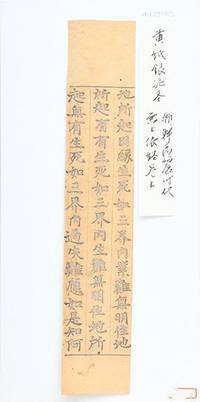
rif. 191076Korea: c. 14th century. An example of ritualized sutra-copying in Korea the Chinese text presenting part of the foundational text of Huayan Buddhism. The calligraphy is balanced and well-composed indicative of the hand of a professional copyist. This fragment comes from a copy of Volume 42 of the sutra. Provenance: Ekky Chung collection Indonesia and Beverly Hills California; acquired by the London bookseller Sam Fogg in May 1998 - Martin Schøyen b. 1940 the Norwegian collector of rare books and manuscripts with his pencilled pressmark on the card sheet. Sheet of white paper 290 x 55 mm ruled into 3 columns in gilt gilt calligraphic characters 17 characters per column. Sheet sometime lined with tissue on verso. Recently tipped to sheet of white card 315 x 158 mm calligraphic label. Traces of old bookseller's sticker at foot of sheet of card. A little black spotting large central stain lighter mark at foot worming touching one character: very good. unknown
rif. 185522Korea: c. 16th century. An example of ritualized sutra-copying in Korea the Chinese text presenting one of the 48 vows of Amitabha a highly revered Buddha in the Pure Land tradition. The style of gold characters on blue paper was popular in Korea in the 14th-16th centuries. Here the characters have the look of a private devotee rather than a professional copyist. This vow the 33rd of the 38 in the Amitayus Sutra pledges Amitabha to the spiritual nourishment of countless beings. Provenance: Ekky Chung collection Indonesia and Beverly Hills California; acquired by the London bookseller Sam Fogg in May 1998 - Martin Schøyen b. 1940 the Norwegian collector of rare books and manuscripts with his pencilled pressmark on the card sheet. Sheet of indigo-dyed paper 295 x 58 mm ruled into 3 columns in silver gilt calligraphic characters 17 characters per column. Recently tipped to sheet of white card 315 x 156 mm calligraphic label. Traces of old bookseller's sticker at foot of sheet of card. Old repair at foot: very good. unknown
rif. 185524Korea: c. 14th century. An example of ritualized sutra-copying in Korea the Chinese text presenting part of a Mahayana sutra on the innate buddhahood of all things. The calligraphy is balanced and well-composed indicative of the hand of a professional copyist. Provenance: Ekky Chung collection Indonesia and Beverly Hills California; acquired by the London bookseller Sam Fogg in May 1998 - Martin Schøyen b. 1940 the Norwegian collector of rare books and manuscripts with his pencilled pressmark on the card sheet. Sheet of yellow paper 290 x 55 mm ruled into 3 columns in silver silver calligraphic characters 17 characters per column. Sheet sometime lines with tissue on verso. Recently tipped to sheet of white card 315 x 158 mm calligraphic label. Traces of old bookseller's sticker at foot of sheet of card. A little soiling faint stain along left edge: very good. unknown
rif. 116227ABLondon: The Pali Text Society by Henry Frowde Oxford University Press; 1913. xvii 446 S. Abb. OHln. Kapitale bestossen. Rücken und Papier etw. gebräunt. Ausgeschiedenes Bibliotheksexemplar mit gelöschtem Stempel auf Titelblatt "Sammlung für Kultur und Geschichte Indiens Hamburg". 1913 unknown
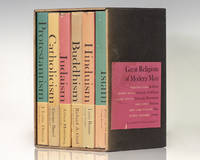
1961rif. 140432New York: George Braziller 1961. First editions of this classic collection of works. Octavo original cloths 6 volumes original slipcase. Near fine in near fine dust jackets. Jacket design by Joseph Low. George Braziller hardcover
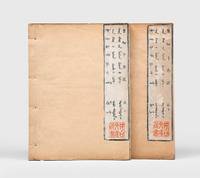
1774rif. 159690Likely Beijing: no stated publisher 1774. One polity many languages First edition of this unusual quintilingual work exhibiting the artistic skill of Chinese woodblock carvers. Compiled by the personal Buddhist tutor to the Qianlong emperor - China's Louis XIV - it lists slightly over 1000 buddhas destined to appear in the present Buddhist aeon. We have traced just three institutional copies. Print was a vital vehicle for spreading Buddhist thought throughout the multicultural Qing empire. This compilation based on the Bhadrakalpa Sutra served as an invaluable scholarly and devotional reference for practising and aspiring Buddhists as well as for those charged with producing religious commentaries. It begins with Kakusandha an esteemed buddha of antiquity and lists four names per page with the five different languages Chinese Manchu Mongolian Tibetan and Sanskrit phoneticized in Tibetan arranged vertically. The compilation process was led by the senior court figure Changkya Rölpé Dorjé 1717-1786 Qianlong's principal Buddhist advisor who also oversaw the translation of the Tibetan Buddhist canon into Mongolian and Manchu. The Bhadrakalpa Sutra is a key text in Mahayana Buddhism. Without it the names of many buddhas would otherwise have been lost. The text was first translated into Chinese by Dharmaraska c.233-310 one of the most significant scholarly influences on the growth of Buddhism in East Asia. China's Qing emperors presided over an ethnically heterogeneous empire which continued to expand in the early 18th century with the conquest of Tibet in 1720. Buddhism enjoyed significant state support; for example Qianlong 1735-1796 commissioned paintings depicting him in the form of a Buddhist in an advanced stage of enlightenment. Provenance: several ownership seals of Taijun Inokuchi 1922-2018 a leading Japanese scholar of Buddhism at Kyoto's Ryukoku University with his manuscript cataloguing notes on a sheet of personalized notepaper affixed to the lower flap of the folding case. In 1989 he published a preliminary catalogue of the famous manuscripts unearthed by Paul Pelliot at Dunhuang now housed in the Bibliothèque Nationale de France which have revolutionized scholarly understanding of Buddhism. Volume I contains in-text numerical annotations in red pencil most likely by Inokuchi. This copy then passed to a private collector in the UK. Copies can be found in the Library of Congress Harvard and the Austrian National Library. 2 vols quarto 270 x 200 mm. Original brown paper wrappers recently renewed xianzhuang stitching front covers with original quadrilingual xylographic title labels. Housed in 19th-century custom blue cloth folding case bone toggles. Wrappers with some chips and nicks as well as a few small closed tears one sometime repaired by pasting vol. II front wrapper to first blank at head moderate foxing and browning internally. A very good copy in the like case. hardcover
rif. 159500Huzhou: c. 1250. Printed almost 800 years ago A surviving fascicle from a famous early Chinese edition of the Buddhist canon printed during the Song dynasty at the Yuanjue later Zifu temple in Huzhou. The respect given to Buddhist texts has ensured the institutional survival of a couple of near-complete Yuanjue sets but any examples of Chinese printing of this age are exceptionally scarce in commerce. We have traced only three works on paper printed before 1300 in Western auctions since 1980. Multiple characteristics suggest that this particular example is from the Yuanjue edition. Phonetic glosses at the end the size of the printed area and the number of pages columns and characters per sheet are consistent with other examples. The first sheet also gives the name of the block carver as Shi Hong. A carver of the same name was active in the Huzhou region during the Southern Song period and was involved in other projects including editions of the Shuijing zhu an ancient geographical treatise and the Lotus Sutra. Carving of the blocks for the Yuanjue edition commenced at some point between the 1110s and 1140s. The blocks were used to print copies until being burned by Mongol invaders in 1276. Subsequently this edition was unknown in China until the bibliophile Yang Shoujing 1839-1915 brought an almost complete set back from Japan in the late 19th century. Li & He write that surviving volumes from the Yuanjue edition "are already very rare in China". Near-complete copies are held at the National Library of China and Tokyo's Sanenzan Zojo Temple. Scattered volumes are found in other institutions including the Gansu Provincial Library the National Palace Museum in Taipei and several other temples in Japan. Slim quarto concertina-style 305 x 115 mm. With 17 xylographic sheets each with 5 pages of 6 columns of 17 characters joined sequentially with adhesive near-contemporary semi-stiff brown paper wallet binding strengthened with bamboo rod front cover with manuscript title in Chinese single page from another sutra used as binder's waste on rear cover verso. Housed in custom blue cloth folding case. Wallet binding fragile with losses rear cover detached and front cover just holding at head worming and splits to first leaf with old paper repair along one fold contents otherwise unaffected. A well-preserved example. Li Fuhua & He Mei Hanwen Fojiao dazangjing yanjiu "Research on the Chinese Buddhist Canon" 2003. hardcover