Editorial staffMareMagnum
Bukkyo Dendo KyokaiAntiquariat.de
The Teaching of Buddha.
1972réf. 51444Tokio, Selbstverlag, 1972. 300 SS. Kl.-8°, Original-Leinen.

Antiquariat Dennis R. Plummer · Allemagne5,10 €
3 297 résultats
1997. English-Japanese edition. Hardcover, very good condition, w. ltly slanted, v. ltly compressed sp, v. ltly bumped corners. Ltly tanned p. edges. Clean, tight, unmarked. Dj very good, ltly rubbed, lt marks. Sme v. lt edgwr, bending at top, bottom.
1972réf. 51444Tokio, Selbstverlag, 1972. 300 SS. Kl.-8°, Original-Leinen.
1961réf. 110464London Rieder 1961 1 vol. relié in-8, cartonnage de l'éditeur, IX + 146 pp. (sans la jaquette). Première édition anglaise. Bon exemplaire.
1961réf. 110464London Rieder 1961 1 vol. relié in-8, cartonnage de l'éditeur, IX + 146 pp. (sans la jaquette). Première édition anglaise. Bon exemplaire.
réf. 119170London, Pali Text Society and Luzac & Company 1966, 220x145mm, XV - 250pages, editor's cloth binding. Title, publisher and date embossed in gold on the spine. Very faint foxing at the top edge. Owner's name in the upper corner of the front cover and a few rare annotations in the margins of some pages, otherwise clean interior. Book in good condition.
1931réf. 2081502111803399Toho shoin 1931. Soft Cover. Fine. Volume: 1 Toho shoin paperback
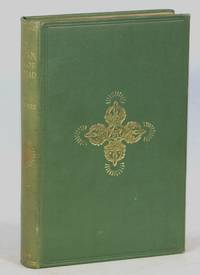
1927réf. 000013000Oxford: Oxford University Press 1927. First English language edition. Hardcover. Near Fine. 8vo. 9 x-xliv 1 2-248 pp. Green cloth with a gold design stamped on the front board the Hindu/Buddhist swastika at the center of the design gold lettering and a gold decoration on the spine; top edge gilt. Title page printed in red and black. Illustrated with a double-sided frontispiece and with several plates of black and white photographs. Foreword by Sir John Woodroffe. World History Encyclopedia Joshua J. Mark "Tibetan Book of the Dead". According to the traditional story Lotus Guru Padmasambhava and a female disciple Yeshe Tsogyal wrote the texts that would become the Bardo Thodol the Tibetan Book of the Dead during the eighth century of the Common Era. The texts became lost to time until they were found and disseminated orally by Karma Lingpa in the fourteenth century. Although written as a guide to assist and comfort the dead the work has taken on a new life as a guide for the living on spiritual transformation and self-improvement. The buddhist text is divided into six sections beginning with the moment of death until the moment that the deceased soul is either reborn or breaks the cycle of reincarnation samsara. The book was intended to shepherd the recently deceased through these cycles of the intermediate stages of reality and was read aloud at funeral rites for either days or weeks at a time by a monk. It was not until the twentieth century that the work was published in English. Walter Evans-Wentz was an anthropologist and scholar of Tibet and sought Dawa-Samdup's help in translating the texts from Tibetan into English. Dawa-Samdup died in 1922 after completing the funerary section of the book and Evans-Wentz filled in the rest accourding to his own knowledge. The Tibetan Book of the Dead is an excellent example of the core tenets of Buddhism and of eastern philosophy in general. A contemporary bookplate on the front pastedown very light foxing to the title page. Overall a beautiful copy. Oxford University Press hardcover
réf. 22921Shetrup Akong Tarap.; Peter Wren Howard
1998réf. GIT00b8aNew York Snow Lion Publications 1998. In-8 broché couverture illustrée 217pp. Illustrations dans le texte. Traces de brûlure sur le 2e plat de couverture et les 7 derniers feuillets.
1984réf. 2092902141502206Heiraku tera shoten 1984. Soft Cover. Fine. Size: 46 size Heiraku tera shoten paperback
réf. 119168London, Pali Text Society and Luzac & Company 1964 - 1984, 220x145mm, editor's cloth binding. Title, author, volume number, and publisher embossed in gold on the spine. Very faint foxing at the top edge. Book in good condition.
19994to, 519 pages. eng
1979réf. 11157Indianapolis, Bobbs-Merrill, 1979. Broschiert, 8°, XXXI, 226 S.; -Einband stärker berieben, sonst gutes Exemplar/ soft board, 8vo, xxxi, 226 pp; -cover worn and a little bumped, good copy.
1957236p. Vintage paperback. OCC 5
1991xix + 158pp., softcover, 22cm., very good condition, X78875
1991réf. X78875Ithaca, Snow Lion Publications 1991 xix + 158pp., softcover, 22cm., very good condition, X78875
1978réf. 43630Mount Shasta CA Shasta Abbey 1978. Paperback First Edition Thus; First Printing indicated. INSCRIBED AND SIGNED BY AUTHOR. First Edition Thus; First Printing indicated. Also signed by the author's Zen student student Daizui MacPhillamy. Near Fine in Wraps: shows only the most minute indications of use: just a hint of wear to extremities; mildest rubbing. Binding square and secure; text clean. Very close to 'As New'. NOT a Remainder Book-Club or Ex-Library. 8vo. 304pp. Shasta Abbey is the Headquarters of the Refomred Soto Zen Church. Denominational Press Paperback. Jiyu-Kennett 1924 1996 born Peggy Teresa Nancy Kennett was a British roshi most famous for having been the first female to be sanctioned by the Soto School of Japan to teach in the West. As a young woman she found herself questioning gender roles in society and grew to become disillusioned with Christianity. She studied medieval music at Durham University and then received a scholarship to Trinity College of Music in London England. Though attracted to Buddhism she felt during this period that she was called to serve the Church of England as a priest. However church policies at the time did not allow women to be ordained and this enhanced her previous disillusionment with Christianity. She first became interested in Theravada Buddhism during this period of questioning and searching joining the London Buddhist Vihara. In 1954 she joined the London Buddhist Society where she continued her Buddhist studies and lectured. While there she met the scholar D.T. Suzuki and developed a strong interest in Zen Buddhism. In 1960 when Keido Chisan Koho of Sojiji in Japan came to the society she was asked to make the arrangements for his stay. Koho asked if she would consider becoming his student back in Japan. She accepted the offer and two years passed before she arrived at Sojiji to study under him. In January 1962 Kennett traveled to Malaysia to accept an award she had been honored with for setting a Buddhist hymn "Welcome Joyous Wesak Day" by Sumangalo to music. Before leaving for Japan Kennett was ordained a novice nun by Venerable Seck Kim Seng in the Linji Chan school and given the Buddhist name Jiyu meaning compassionate friend. Jiyu-Kennett arrived in Japan in 1962. She trained at Sojiji under Keido Chisan Koho Zenjifrom whom she received Dharma transmission in 1963. Because Koho was often preoccupied with administrative affairs Jiyu-Kennett spent much of her time studying under one of Koho Zenji's senior officers Suigan Yogo roshi. She remained until after the death of her master Koho in 1967. By 1969 she received authorization to begin teaching Soto Zen in London England. That year she visited the United States on a lecture tour and decided to remain.6 At this time Jiyu-Kennett was not in good health as during her time in Japan she had experienced many illnesses.7 In 1969 Jiyu-Kennett founded the Zen Mission Society in San Francisco and in 1970 Shasta Abbey in Mount Shasta California8 the first Soto Zen school in the United States to be established by a woman. In 1972 Jiyu-Kennett's British chapter of the Zen Mission Society established Throssel Hole Priory in Northumberland England.39 In 1978 Jiyu-Kennett changed the name of the Zen Mission Society to the Order of Buddhist Contemplatives. In 1975 Jiyu-Kennett was stricken with illness yet again and this time she became bedridden. In 1976 she resigned from her position as abbess of Shasta Abbey and went into retreat in Oakland California. Still rather ill of unknown causes she had her student Daizui MacPhillamy with her often to tend to her care. Following a kensho experience he had she conferred Dharma transmission to him at her bedside in 1976. Not long after she began having visions. Stephen Batchelor describes these episodes "The visions lasted for 12 months until 26 January 1977 the first twelve occurring in Oakland the rest at Shasta where she returned on 25 October. Each vision unfolded as a dream-like episode charged with Western and Buddhist religious symbolism superimposing itself on whatever she saw around her. She compared the series of visions to an elaborated contemporary version of the classical Zen images of the ten 'ox-herding' pictures. By the time the final vision faded she was cured. She interpreted the experience as that of a 'third kensho"." Jiyu-Kennett had a commanding presence about her both intellectually as well as physically. Of a rather husky build she had a tremendous laughter and was known to be gifted at storytelling. To some her demeanor appeared rather persistent at times as author James Ishmael Ford writes "She followed in the authoritarian style of her Japanese inheritance.She had genuine insight into the boundless realm and also pushed me toward my own deepest experience of the great matter." Her adaptation of Zen for Westerners has been likened to Japanese Soto Zen with a flavor of the Church of England for she believed that Zen in North America should adopt Western monastic dress and liturgical forms. For example she set the traditional Buddhist liturgy to music based on Gregorian chants. Jiyu-Kennett was an advocate for equality between the sexes and was herself swayed by the idea that women would never be deemed as equal to men if they were not understood to possess souls. She asserted that no woman will be certain she is equal "until she knows with the certainty that I know that her own Buddha-nature or her own soul exists." The Order of Buddhist Contemplatives founded by Jiyu-Kennett now has chapters in the United States the Netherlands Canada the West Indies the United Kingdom and Germany. INSCRIBED AND SIGNED BY AUTHOR. Shasta Abbey, paperback
1977réf. 49292San Francisco CA Sino-American Buddhist Association: Buddhist Text Translation Society 1977. Paperback First Edition First Printing 1977 so stated. First Edition First Printing 1977 so stated. Twenty-three pages early in the text show neat UNDERLINING IN PENCIL and a few interlinear notations. Else Very Good in Wraps: shows just a touch of wear to the extremities and mild rubbing to the wrapper covers. The Binding is square and secure. Free of any ownership names dates addresses notations inscriptions stamps plates or labels. A handsome nearly-new copy showing a couple of very minor flaws - and of course the underlining. In overall appearance very close to 'As New'. NOT a Remainder Book-Club or Ex-Library. 8vo. 8.5 x 5.5 x 0.3 inches. x 66 pages Index. Primary Translation by Bhikshuni Heng Yin and reviewed by Bhikshuni Heng Ch'ih. Edited by Upasika Kuo-Lin Lethcoe. Translation also credited to The Buddhist Text Translation Society.Language: English. Weight: 4.8 ounces. Trade Paperback. Sino-American Buddhist Association: Buddhist Text Translation Society, paperback
1906réf. 10211London: Swan Sonnenschein & Co. Ltd 1906. First edition. 8vo 338pp. Publisher's red cloth ruled in blind and lettered in gilt on spine. Spine toned corners bumped. Text block toned some foxing to endpapers otherwise clean internally and very good. Very scarce historical religious novel exploring the origins of Christianity through the Essenes Gnosticism and other ancient currents. Arthur Lillie 1831-1911 was a Buddhist convert and wrote on Buddhist influence on early Christianity. He was also very critical of Helena Blavatsky and the Theosophical Society. Interestingly Aleister Crowley reviewed this book in The Equinox his concise take consisting of a single word: "Slobber." OCLC cites just 9 physical holdings. Swan Sonnenschein & Co., Ltd unknown
1984réf. 55127London, Thames and Hudson, 1984. Original-Broschur, 4°,308 Seiten. With 297 illustrations, 82 in colour. 215 photographs, drawings and maps.
1993308pp.with 297 illustrations (of which 82 in colour & 215 photographs, drawings and maps), 30cm., illustrated softcover, good cond., X78879
1993réf. X78879London, Thames and Hudson 1993 308pp.with 297 illustrations (of which 82 in colour & 215 photographs, drawings and maps), 30cm., illustrated softcover, good cond., X78879
1962Small grey octavo in cardboard slipcase, black spine, paged in groupings, approx. 120 pages, b&w illus, 20 cm. Zen Buddhism, Japan.
1984réf. 2091202133406464A5 size 1984. Soft Cover. Fine. Number of pages: 188p Size: 21cm A5 size paperback
1978réf. 2090502124900364Nakayama shobo 1978. Soft Cover. Fine. The book is in fine condition. Nakayama shobo paperback