3 436 résultats
1930réf. R53705Vatican, Imprimerie polyglotte vaticane 1930 xxxii + 563pp., br.orig. (dos peu restauré), 18cm., bon état, rare
2006réf. R56496Citta del Vaticano, Biblioteca Apostolica Vaticana 2006 lxxx + 203pp., 25cm., in the series "Studi e Testi" vol.427 (Studi e documenti sulla formazione della bibliotheca apostolica Vaticana" vol.V), pages uncut, fine condition
2010Mm 190x260 Collana "Le boe". Volume nella sua brossura originale con alette, 134 pagine. Opera in ottime condizioni. Spedizione in 24 ore dalla conferma dell'ordine.
1930xxxii + 563pp., br.orig. (dos peu restauré), 18cm., bon état, rare
1948LIBRO MOLTO VECCHIO IN LINGUA LATINA COPERTINA CON BORDI LEGGERMENTE USURATI
1665Cm. 14,8, perg. floscia originale, pag. XXII (su XXIV: manca l'occhiello), 320. Piccola mancanza al dorso, internamente ottimo esemplare.
1909réf. THEO0068Osnabrück, Pillmeyer 1909. 132 S., 5 nn. S. Vlgsanz., OLn., leicht berieben, vord. Gelenk etwas beschäd., kl. Buchhändlerstemp. am hint. Nachsatz, einige hs. Bleistiftziffern auf Innentit.
2006lxxx + 203pp., 25cm., in the series "Studi e Testi" vol.427 (Studi e documenti sulla formazione della bibliotheca apostolica Vaticana" vol.V), pages uncut, fine condition
1935Nuovissima guida storico, artistica, geografica, cronologica, onomastica e toponomastica. - Un volume in 8vo (24 cm) di 284 pagine, con illustrazioni e numerose pagine di pubblicità varie. Stampato a caratteri azzurri. Non comune guida del Vaticano, da non confondersi con gli Annuari. - Brossura editoriale, qualche strappo fra dorso e copertina.
1792réf. 3602Rome: Presso Lazzarini 1792. FIRST EDITION. Hardcover. Fine. Printed on blue paper. In contemporary mottled calf the spine and boards tooled in gold. A very fine copy of the very rare first catalogue of the Museo Pio-Clementino - founded by Pope Clement XIV in 1771 and greatly expanded his successor by Pius VI- written for the use of visitors by the keeper of the museum Pasquale Massi of Cesena. Rare. The Museo Pio-Clementino was the first major curatorial museum within what are known today collectively as the Vatican Museums. In 1771 Pope Clement XIV had Michelangelo Simonetti adapt the Belvedere Pavilion to accommodate the papal collection of ancient art. When Clement's successor the avid art collector Pius VI was elevated to the pontificate in 1775 the pace of acquisition increased dramatically and very soon the collections outgrew the rooms arranged for them by Simonetti. In 1776 Pius VI called for a radical restructuring of the existing museum and the construction of new grand spaces to house the ever-expanding collection. Massi's catalogue a room-by-room guide of the museum with descriptions of all of the artifacts and artworks housed therein is an invaluable record of how the greatly expanded museum of antiquities looked in the late 18th century with its newly constructed series of rooms and the recently installed masterpieces of ancient sculpture -the fruits of some of the most important excavations in Italy including the excavation of Hadrian's villa at Tivoli. In addition to providing a record of the arrangement of the exhibits Massi's catalogue in which he provides details of provenance acquisition and attribution of each artwork described serves as a history of the museum's formation and preserves valuable information about the art trade and the function of archaeology in the late 18th century. Massi has used a system of numbers and letters to indicate which works were added to the museums by Julius II and his various successors above all Clement XIV and the then-current pope Pius VI. In his introduction Massi tells us that he has designed his guide for portability and easy reference by tourists by arranging the descriptions of the objects in each room in the form of a walking itinerary. Since it is necessary at two points to retrace one's steps Massi's guide leads us along one side of each room as we proceed through the galleries. When it is time to reverse our course he leads us along the opposite side of the rooms already traversed thus keeping us engaged and entertained as we retrace our steps through the vast complex. Our tour begins at the new entrance to the museum in the corridor of Cleopatra also known as the corridor of the inscriptions just within the new entrance to the museum. We then pass through two vestibules. The first one is square with frescoes by Giovanni da Udine in the vault. In it we encounter the tomb of the Scipios and the Belvedere Torso. The second vestibule is round and in its center is a large bowl made of pavonazzetto. From here we proceed through a corridor into the porticoed octagonal courtyard of the Belvedere the site of Julius II's first installation of ancient sculpture transformed by Simonetti in the 1770's. Massi then leads us through the hall of the animals the gallery of statues the gallery of busts and the "loggia scoperta" the room of masks. We make our way back through these galleries to arrive at the series of rooms created by Simonetti in the 1780's. The first of these is the hall of the muses. We then enter the breathtaking Sala Rotonda with its immense newly installed ancient porphyry basin from the Domus Aurea through which we make our way to the Sala of the Greek Cross where we find the newly installed ancient porphyry sarcophagus of Constantine's daughter Constantia. From here Massi takes us via Simonetti's new staircase up past the unfinished hall of the biga to Bramante's vast gallery of the candelabra which is itself divided into numerous rooms with vases statuary and jewelry. Exiting by the stairs we visit the library and trace our way back through the new wing and via the Belvedere courtyard where we marvel at the Laocoön and the Belvedere Apollo to the cortile the great open court of he complex where our tour ends. Presso Lazzarini hardcover
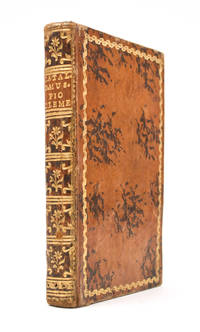
1792réf. 3602Rome: Presso Lazzarini 1792. FIRST EDITION. Hardcover. Fine. Printed on blue paper. In contemporary mottled calf the spine and boards tooled in gold. A very fine copy of the very rare first catalogue of the Museo Pio-Clementino - founded by Pope Clement XIV in 1771 and greatly expanded his successor by Pius VI- written for the use of visitors by the keeper of the museum Pasquale Massi of Cesena. Rare. The Museo Pio-Clementino was the first major curatorial museum within what are known today collectively as the Vatican Museums. In 1771 Pope Clement XIV had Michelangelo Simonetti adapt the Belvedere Pavilion to accommodate the papal collection of ancient art. When Clement's successor the avid art collector Pius VI was elevated to the pontificate in 1775 the pace of acquisition increased dramatically and very soon the collections outgrew the rooms arranged for them by Simonetti. In 1776 Pius VI called for a radical restructuring of the existing museum and the construction of new grand spaces to house the ever-expanding collection. Massi's catalogue a room-by-room guide of the museum with descriptions of all of the artifacts and artworks housed therein is an invaluable record of how the greatly expanded museum of antiquities looked in the late 18th century with its newly constructed series of rooms and the recently installed masterpieces of ancient sculpture -the fruits of some of the most important excavations in Italy including the excavation of Hadrian's villa at Tivoli. In addition to providing a record of the arrangement of the exhibits Massi's catalogue in which he provides details of provenance acquisition and attribution of each artwork described serves as a history of the museum's formation and preserves valuable information about the art trade and the function of archaeology in the late 18th century. Massi has used a system of numbers and letters to indicate which works were added to the museums by Julius II and his various successors above all Clement XIV and the then-current pope Pius VI. In his introduction Massi tells us that he has designed his guide for portability and easy reference by tourists by arranging the descriptions of the objects in each room in the form of a walking itinerary. Since it is necessary at two points to retrace one's steps Massi's guide leads us along one side of each room as we proceed through the galleries. When it is time to reverse our course he leads us along the opposite side of the rooms already traversed thus keeping us engaged and entertained as we retrace our steps through the vast complex. Our tour begins at the new entrance to the museum in the corridor of Cleopatra also known as the corridor of the inscriptions just within the new entrance to the museum. We then pass through two vestibules. The first one is square with frescoes by Giovanni da Udine in the vault. In it we encounter the tomb of the Scipios and the Belvedere Torso. The second vestibule is round and in its center is a large bowl made of pavonazzetto. From here we proceed through a corridor into the porticoed octagonal courtyard of the Belvedere the site of Julius II's first installation of ancient sculpture transformed by Simonetti in the 1770's. Massi then leads us through the hall of the animals the gallery of statues the gallery of busts and the "loggia scoperta" the room of masks. We make our way back through these galleries to arrive at the series of rooms created by Simonetti in the 1780's. The first of these is the hall of the muses. We then enter the breathtaking Sala Rotonda with its immense newly installed ancient porphyry basin from the Domus Aurea through which we make our way to the Sala of the Greek Cross where we find the newly installed ancient porphyry sarcophagus of Constantine's daughter Constantia. From here Massi takes us via Simonetti's new staircase up past the unfinished hall of the biga to Bramante's vast gallery of the candelabra which is itself divided into numerous rooms with vases statuary and jewelry. Exiting by the stairs we visit the library and trace our way back through the new wing and via the Belvedere courtyard where we marvel at the Laocoön and the Belvedere Apollo to the cortile the great open court of he complex where our tour ends. Presso Lazzarini hardcover books
1830in-12, pp. (4), 83, (3), legatura coeva cart. zigrino verde. Dedica al Card. Pietro Franc. Galleffi. Prima parte (l'indicazione si legge in fine, a pag. 83) di questa succinta descrizione di oltre 300 oggetti d'arte antica presenti nei Musei Vaticani. Bell'esempl. (timbro di biblioteca privata sul tit.).. Non riscontrato nei vari reperori consultati..
1806In 12° (15x8,3 cm); 35, (1) pp. Senza legatura ma non slegato. Bello stemma papale di PIO VII al frontespizio. Papa Pio VII, nato Barnaba Niccolò Maria Luigi (in religione Gregorio) Chiaramonti (Cesena, 14 agosto 1742 – Roma, 20 agosto 1823), è stato il 251º vescovo di Roma e papa della Chiesa cattolica (1800-1823). L’opera raccoglie le indulgenze date Pio VII nell’anno 1806. Opera non comune, due soli esemplari censiti in ICCU, in questa edizione romana stampata da Lazzarini. A parte la mancanza della brossura in buone condizioni di conservazione.
1910réf. R120403Rome & Roulers, Desclée et cie. & Jules De Meester 1910-1912 Ouvrage complet en 3 volumes (le tout paru), vi,712 + vi,602 + 1102pp. + frontispice dans chacun des tomes + resp. 21 & 14pp. de tables alphabétiques, 23cm., reliures uniformes avec dos en toile rouge et titre doré, brochures originales conservées et reliées, texte frais, exemplaire de la collection du savant belge Lucien Ceyssens O.F.M. (spécialiste en matière du Jansénisme) avec sa signature, poids: 4.6 kg., bon état, rare, R120403
1969réf. LFA-126748227Un ouvrage de 215 pages, format 135 x 180 mm, broché, publié en 1969, Editions du Centurion, Collection "Références", bon état
1961réf. B116045Bruxelles-Rome, Institut historique belge de Rome 1961 228pp., dans la série "Analecta Vaticano-Belgica, publiés par l'Institut historique belge de Rome, 2e série section C: Nonciature de Bruxelles" vol.4, brochure originale, les pages sont toujours non coupées, 2 cachets au verso de la page de titre, 25cm., bon état, R116045
1886Rerum . Mortalium . Vices . Virtute . Relicta . Miserae . et . Lamentabiles: Concupiscentia carnis - Concupiscentia oculorum - Superbia vitae - De ratione vitae in Pontificatu degendae---- Carmina: De invaletudine sua - De Seipso - Frustrata Impiorum Spe...- Ad Beatam Virginem Mariam ...ecc. 1
Roma, Typis Polyglottis Vaticanis, 1937, in-8, brossura editoriale, pp. 94. Con vignetta papale alla copertina e al frontespizio. Buone condizioni.
1979PERFETTO, LIEVISSIMI SEGNI DEL TEMPO. Un giallo religioso in cui aleggiano il pensiero di un delitto, la mano leggera della Provvidenza e un segreto che può sconvolgere l'esistenza della Chiesa. Inofrmazioni bibliografiche Titolo: Intervento divino Titolo originale dell'opera: Act of God Autore: Charles Templeton Traduzione di: Ettore Capriolo Editore: Milano: Arnoldo Mondadori, 1979 Collana: Omnibus Lunghezza: 331 pagine; 22 cm Soggetti: Letteratura americana, canadese, Narrativa contemporanea, Romanzi, Gialli, Mistero, Spy story, Mar Morto, Tomba, Papa, Cardinali, Delitti, Vaticano, Enclave, Gerusalemme, Londra, New York, Dan Brown, Prime edizioni, libri vintage, anni settanta Parole e frasi comuni Amman archdiocese asked basement Benedetti bones breath called Cardinal Maloney Catherine Cookson chair church Copeland dead Dead Sea Scrolls desk Dick Francis dinner door Eminence eyes face Father Jamieson floor Francis Dick glass Glucagon hair hand Harris Gordon Harris's heart Holy Father Israel Jack Higgins Jennifer Jennifer's Jesus kitchen Lady Hambleton lips living looked manuscript Michael mind minutes Miss Pritchard morning museum night Onedin Line ossuary paused pope priest question Qumran reason residence response Rinsonelli Roman Catholic church Schultz scroll seemed shook his head shrugged silence slowly smile Sophie sorry stairs street suddenly talk telephone tomb took turned ULVERSCROFT Uncle Vatican Vatican City voice What's word York
In Roma nella stamperia della Rev. Camera Apostolica, 1796. Editto di quattro pagine, senza legatura. (mm. 285 x 200).
1835In 4°, pp. 314. Brossura originale.
1922Mm 125x200 Brossura originale, 43 pagine con immagine del Pontefice su tavola in nero in apertura. Buona copia, spedizione in 24 ore dalla conferma dell'ordine.
2005In 8°, pp. 271 con 8 tav. in nero f.t. Leg. in cart. edit. con sovracc. ill. a col. Etichetta applicata al piatto e dorso.
1931TAURINI (GIà MARIETTI) 1931 XVI-355 PP. PRIMO FOGLIO LENTO E QUASI PER INTERO SCIOLTO (FINO ALLA P. XVI), SEGNI DEL TEMPO, PER IL RESTO BUONE CONDIZIONI GENERALI, CONSIDERATI I QUASI 90 ANNI DEL VOLUME.