Brynie PhD, Faith Hickman h DBiblio.com

5 093 résultats
1998réf. DADAX0764105957Barrons Educational Series 1998-09-01. paperback. New. 6.00x0.63x9.00. Buy with confidence. Excellent Customer Service & Return policy. Barrons Educational Series paperback
2010réf. __0252035577Univ of Illinois Pr 2010. Hardcover. New. 1st edition. 616 pages. 9.75x6.50x1.75 inches. Univ of Illinois Pr hardcover
réf. 0738846430.Ghardcover. Good. Access codes and supplements are not guaranteed with used items. May be an ex-library book. hardcover
réf. DADAX0816540985New unknown
réf. 1025510704.Ghardcover. Good. Access codes and supplements are not guaranteed with used items. May be an ex-library book. hardcover
réf. SKU1000256Authorhouse. Very Good. Signed by the author with a gift note. Book is in very good shape no tears scribbles highlighting or underlining a little general wear from a smoke-free environment. Authorhouse unknown
réf. 0671417843.Gpaperback. Good. Access codes and supplements are not guaranteed with used items. May be an ex-library book. paperback
réf. 0259798614.Gpaperback. Good. Access codes and supplements are not guaranteed with used items. May be an ex-library book. paperback
réf. DADAX0415913128New unknown
réf. 9619207like new. unknown
réf. DADAX1933410590New unknown
réf. 185732949X.Gpaperback. Good. Access codes and supplements are not guaranteed with used items. May be an ex-library book. paperback
2016New English Paperback. Pbo. Demy 8vo. (21 x 14 cm). In English. 522 p. Elemterefis: Superstitious beliefs and occult in the Ottoman Empire, (1839-1923). This book is about the social history of superstitious beliefs and especially magic and sorcery. I mainly tried to examine how superstitious beliefs and magic transformed the daily life of the Ottoman Empire into a world of superstitions in the nineteenth century. However, I had to go further back when I deepened my research into the origin of superstitious beliefs and magic seen in almost every period of the Ottoman Empire. I looked at polytheistic religions like shamanism, Animism, Manichaenism, Buddhism and Hinduism, which were the common religious beliefs of the former Turkish world. I included various other pagan religions and cultures underlying the past of the Ottoman geography over three continents as well as Judaism, Zoroastrianism, Christianity, the Sky God belief in Central Asia and finally Islam. In the Ottoman Empire, ¿professional¿ magicians were of the ulema class who were not reluctant to utilize religious knowledge for their personal interests. In fact, they began to live immorally; ¿amateur¿ magicians were composed of occult groups, a.k.a. pseudo-clergy. I followed magic and magicians included in the documents of the Prime Ministry Ottoman State Archives only as they were caught as a result of a complaint. Füsun and Efsun, daughters of Cinci Arif Hoca, and their story add local and authentic flavor to the points made in the book.
réf. 0806906235.Gpaperback. Good. Access codes and supplements are not guaranteed with used items. May be an ex-library book. paperback
réf. B9780071602433Hardback. New. The eagerly anticipated follow-up to Way of the Turtle hardcover
2009réf. DBS.Management-9780071602Mcgraw Hill 2009. 1st. Hardcover. New. Mcgraw Hill hardcover
2009réf. DBS.Management-9780071602Mcgraw Hill 2009. 1st. Hardcover. New. Mcgraw Hill hardcover
2017réf. 1-3337201822hansebooks 2017. Paperback. New. 432 pages. 8.50x5.99x0.98 inches. hansebooks paperback
réf. DADAX8484453294New unknown
réf. B9783639075175Paperback / softback. New. paperback
réf. B9783639059304Paperback / softback. New. paperback
réf. DADAX0718003438New unknown
réf. GOR015004439Paperback. Like New. paperback
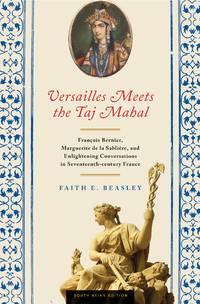
réf. SB-9789395474030Versailles Meets the Taj Mahal identifies and explores the traces that exposure to India left on the cultural artifacts and mindset of France's "Great Century" and the early Enlightenment. Focusing on the salon of Marguerite de la Sablière and its encounter with the traveler and philosopher François Bernier this book resurrects the conversations about India inspired by Bernier's travels and inscribed in his influential texts produced in collaboration with la Sablière's salon. The literary works correspondences and philosophical texts produced by the members of this eclectic salon bear the traces of this engagement with India. Faith E. Beasley's analysis of these conversations reveals France's unique engagement with India during this period and challenges prevailing images derived from a nineteenth-century "orientalism" imbued with colonialism. The India encountered in la Sablière's salon through François Bernier and others is not the colonized India that has come to dominate any image of the Orient. Versailles Meets the Taj Mahal adds a new chapter to literary and cultural history by adopting a new approach to the study of salon culture exploring how texts cultural artifacts and patterns of thought were shaped by the collective reading and by the conversations emanating from these practices. Beasley's analysis highlights the unique role of French salon culture in the evolution of western thought during the early modern period. Sanctum Books hardcover
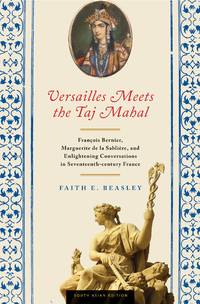
réf. SB-9789395474030Versailles Meets the Taj Mahal identifies and explores the traces that exposure to India left on the cultural artifacts and mindset of France's "Great Century" and the early Enlightenment. Focusing on the salon of Marguerite de la Sablière and its encounter with the traveler and philosopher François Bernier this book resurrects the conversations about India inspired by Bernier's travels and inscribed in his influential texts produced in collaboration with la Sablière's salon. The literary works correspondences and philosophical texts produced by the members of this eclectic salon bear the traces of this engagement with India. Faith E. Beasley's analysis of these conversations reveals France's unique engagement with India during this period and challenges prevailing images derived from a nineteenth-century "orientalism" imbued with colonialism. The India encountered in la Sablière's salon through François Bernier and others is not the colonized India that has come to dominate any image of the Orient. Versailles Meets the Taj Mahal adds a new chapter to literary and cultural history by adopting a new approach to the study of salon culture exploring how texts cultural artifacts and patterns of thought were shaped by the collective reading and by the conversations emanating from these practices. Beasley's analysis highlights the unique role of French salon culture in the evolution of western thought during the early modern period. Sanctum Books hardcover