19.456 resultados
ref. 591197Genève, Librairie Droz, 1976. In-8 broché, 150 pp., 7 pl. de reprod. photogr. en n/b., 89 retranscriptions, appendices, index.
1985ref. 31723Zürich, Manesse, 1985. 831 S. mit 34 Ill. 18 x 12 cm, Leinen mit OSchU [3 Warenabbildungen]
1901ref. rx1152Taffin-Lefort Relié 1901 In-4 (16,5 x 25 cm), reliure demi-peau, dos à 4 nerfs, 504 pages ; dos insolé, épidermures sur le cuir, rousseurs aux tranches, par ailleurs assez bon état général. Livraison a domicile (La Poste) ou en Mondial Relay sur simple demande.
1922ref. 56700ABHamburg, Berlin, Hoffmann und Campe, 1922. XXXII, 330 S. Mit Abbildungen. Orig.-Halbleinwand mit Deckelillustration.
2006ref. 137869Darmstadt : WBG, 2006. 334 S., Ill. OPp., gebundene Ausgabe, SU.
ref. 595365London, British museum, 1996. In-4 broché, couv. ill. en coul., 174 pp., très nb. fig., cartes, tableaux en n/b. in-t., 32 pl. de reprod. photogr. en n/b. et en coul., texte en anglais, 9 contributions.
1895ref. 44386Trassburg, Karl J. Trübner, 1895. 25 S. mit einer Tafel und 2 Abb. 27 x 18 cm, Broschur [4 Warenabbildungen]
1923ref. A1517London, Martin Hopkinson and co., 1923. Ganzleinen , großes 8°, 160 S., First (1.) Edition, with Hieroglyphic Texts of Hymns to Amen and Aten, Translations and Illustrations by Sir E. Wallis Budge, keeper of the Egyptian and Assyrian Antiquities in the British Museum
2001ref. 156275Vercelli : White Star, 2001. 434 S.; farb. Ill. 4°, Pb.; mit Schutzumschlag
1951ref. 74295Hildesheim : Gerstenberg, 1951. Zwei Aufsätze 64, VI S. Broschierte Ausgabe
1974ref. 23412Zürich, Archäologisches Institut, 1974. 71 S. , 4 Bll. Zahlr. Abb. auf Tafeln. Kl.-4°. OKart. (kl. Gebrssprn.)
1982ref. 11529Köln, DuMont, (1982). 277 S., 1 Bl. mit zahlr. teils ganzseit., teils doppelblattgr., teils farb. Textabb. 8°. OKart. (kl. Gebrspprn., leicht gebräunt).
1963ref. 5874Wien, Böhlau, 1963. 50 S. Zahlr. teils farb. Abb. auf Tafeln. 4°. OKart. (Gebrssprn.).
2000ref. 13065(Hamburg, Nikol, 2000). XV, 883 S. mit 199 Textabb. Gr.-8°. OPp. (geringe Gebrssprn.) mit OU.
1888ref. 19532Berlin, Pormetter, 1888. 105 S., 2 Bll. (Vita und Druckfehler). 8°. Interims-Brosch. der Zeit (etw. lädiert).
1977ref. 19529Hldesheim, Olms, 1977. 8°. OLwd. (kl. Gebrssprn.) mit OU.
1967ref. 12689Graz, Adeva, 1967. 2. erweiterte und verbesserte Aufl. 122 S., 1 Bl. Gr.-8°. OKart. (Gebrssprn., gebräunt, vorderer Einbanddeckel mit kleiner Quetschfalte).
1931ref. 6124Brüssel, Fonadtion egyptologiques Reine Elisabeth, 1931. XVI, 307 S. mit zahlr. teils ganzseit. Textabb. Gr.-8°. HLwd. der Zeit mit Rückenschild (bestoßenj, Gebrssprn.).
1913ref. 22435München, Isaria, (1913). XVI, 738 S., 1 Bl. mit zahlr. Abb., Plänen und Karten im Text und auf teils mehrfach gefalt. Tafeln. Kl.-8°. OLwd. (berieben, bestoßen und gebräunt).
1950ref. 5747Lorch, Renatus, 1950. 3. Aufl. 96 S., 2 Bll. mit einigen Textabb. Gr.-8°. OKart. (kl. Gebrssprn.).
1953ref. 8453Heidelberg, Kerle, (1953). XXVI, 730 S. mit zahlr. Abb. im Text und auf Tafeln. Gr.-8°. OLwd. (kl. Gebrssprn.)
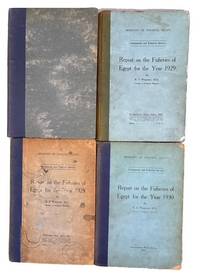
1932ref. 2638Cairo: Government Press 1932. Hardcover. Good. 6 vols. bound in 4. folding map inside back pocket. 28 cm. Some cover soil. Ex. lib. Six individual annual reports covering 1928-1933. The first three reports are in English and the last three in French titled "Rapport sur les Pecheries d'Égypte". Government Press hardcover books
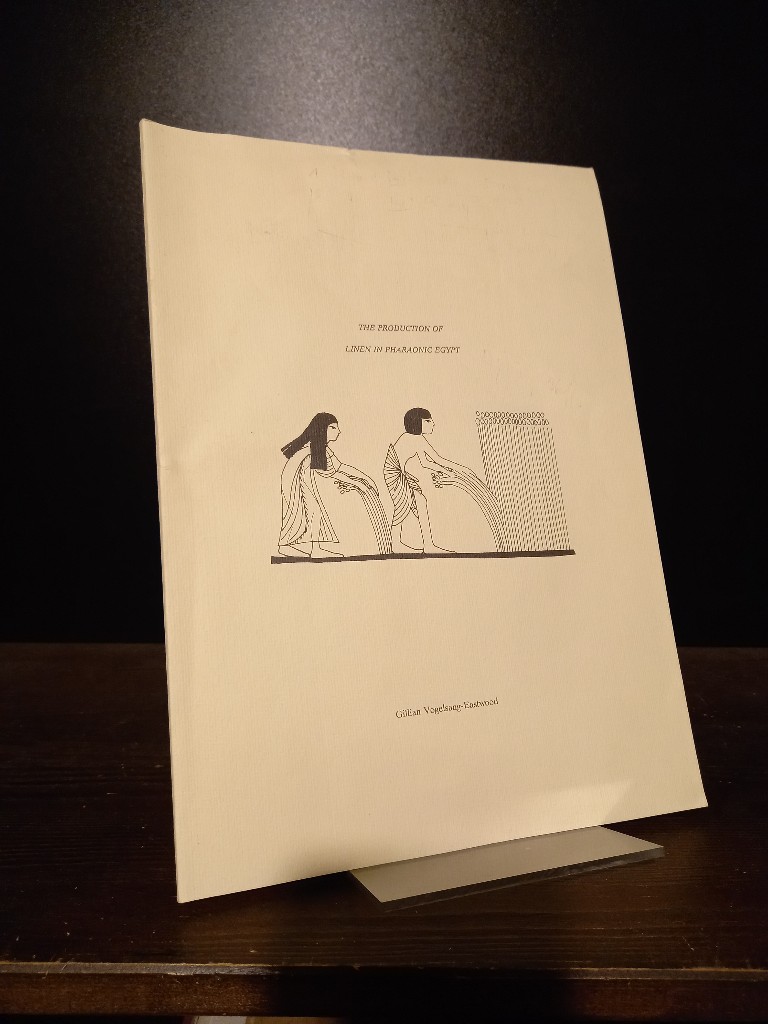
1992ref. 2131115Leiderdorp: Vogelsang 1992. 48 Seiten. Mit mehreren schwarz-weißen Illustrationen der Produktionsschritte. 4° (29,5 x 21 cm). Illustrierte Orig.-Broschur. [Softcover / Paperback].
1979Fine Turkish Paperback. Pbo. Roy. 8vo. (24 x 17 cm). Reprint in Arabic; large introduction, and annotations in Turkish. [4], [xLvi], 236 p. El-Bark el-Sâmî. [= Kitab al-Barq al-Shami]. Abridged by Al-Bundârî. Published, prepared and introduction by Ramazan Sesen. Muhammad ibn Hamed Isfahan was a Persian historian, scholar, and rhetorician. He left a valuable anthology of Arabic poetry to accompany his many historical works and worked as a man of letters during the Zengid and Ayyubid period. He was born in Isfahan in the year 1125, and studied at the Nizamiyya school in Baghdad. He graduated into the bureaucracy, and held jurisdiction over Basra and Wasit. He then became a deputy of the vizier ibn Hubayra. After the death of ibn Hubayra, he went to Damascus in 1166 CE (562 Islamic Calendar) and entered the service of the qadi of Damascus, Kamal ad-Din. The qadi presented him to the Zengid Nur ad-Din, who appointed him a professor in the school he had established there, which then became known as the Imadiyya school in his honour. Nur ad-Din was later appointed to be his Chancellor. After the death of Nur ad-Din in 1174, Imad ad-Din was removed from all his bureaucratic duties, and was banished from the palace. He went to live in Mosul and later entered the service of Saladin, the Kurdish Sultan of Egypt during that time. When Saladin took control of Damascus, Saladin's vizier, al-Qadi al-Fadil, appointed him chancellor, and he also became al-Fadil's deputy. Saladin had been unsure of his talent because he was only a scribe, Imad ad-Din soon became one of the sultan's favourites. As chancellor he did not have to perform the everyday duties of the chancery scribes, and he had a lot of leisure time in Egypt. From then on he accompanied Saladin on all his campaigns. After a certain raid, he was chosen to kill one of the prisoners, but the prisoner was a child and was instead exchanged for a Muslim prisoner held by the Crusaders. Imad ad-Din was present at the Battle of Marj Uyun, the Battle of Hattin, and the subsequent campaign to expel the Crusaders from the Holy Land. At Acre, he criticized Saladin for giving away the city's treasure instead of spending it on the reconquest. At Beirut, he became ill, but was the only scribe capable of writing the terms of surrender. He had recuperated in time to see the aftermath of the Siege of Jerusalem (1187), where he again criticized Saladin's generosity; he was also disgusted by those in charge of the ransom who took bribes, and the rich Crusader nobles who took their treasures with them rather than ransoming the poor. He was present at Acre again during the Third Crusade when the Christians retook the city of Acre, and was among those who fled after the defeat. After Saladin's death in 1193, he began writing his biographies of the sultan. He wrote the Kitab al-Barq al-Shami, which is lost, but was abridged by al-Bundari. This study contains just 5th volume of manuscript abridged by Al-Bundârî.
1938Very Good Turkish Paperback. Roy. 8vo. (24 x 17 cm). In Turkish. [4], 266 p. Misir ve Ege tarihi notlari. Notes on history of Egypt and Aegean. First Edition.