1833ref. 309066Paris: Dondey-Dupré père et fils 1833. ii 30 pp. 1 vols. 8vo. Disbound. Presentation inscription at head of title "a - - de la part de son ami l'auteur. ii 30 pp. 1 vols. 8vo. Early response to the French conquest of Algeria in 1830 and subsequent plans for its annexation to France. While the initial hopes of "men of various parties in England" had been that the 1830 expedition would see a favorable outcome from the French administration of the conquered "these writers were wrong and it will thus be permissable to an Englishman who shared those hopes to express in 1833 an equally frank opinion against the policies that today weigh upon Alger." Saxe Bannister 1790-1877 retired army captain and lawyer served as attorney-general of New South Wales 1823-25 but resigned after constant disputes over pay and returned to England. "Bannister had a keen interest in philanthropic causes and was concerned with the welfare of children convicts and especially Aborigines. He was instrumental in the establishment of the first infants' school in Sydney and published numerous pamphlets dealing with the subjects of transportation and government policy towards indigenous people . a lucid and engaging writer whose works reveal an agile and learned mind" ODNB. Ferguson notes two titles by Bannister published in 1830 An Appeal by a Colonial Law Officer of the Crown 1322 and Humane Policy; or Justice to the Aborigines of New Settlements essential to a due Expenditure of British Money and to the best interest of the Settlers 1323 and lists works on the Indians of North America and policies in South Africa. "France cannot press this conquest further without committing yet more crimes and greater crimes nor without danger to itself." Pages 19-30 are press extracts cited in Bannister's arguments. Bannister decries policies that enrich France at the expense of Alger and "recalls the project of extermination proposed against the millions of persons to whom the country belongs as lawfully as Paris belongs to the French." The press reports cited speak of the need "to clear the ground" "balayer le sol" to favor European colonization. The conscientious advocacy for the indigenous is consistent with Bannister's ealrier writings. Presentation copy. No holdings reported in North America. OCLC: 456857151BNF; 560080513 BL; 252304774 Berlin Dondey-Dupré père et fils unknown books
1854ref. 317115London: Nathaniel Cooke Milford House Strand 1854. First edition. Illustrated folding map at end. xv i 17-490pp. 8vo. Full brown polished calf prize binding for St. Marleybone & All Souls Gramamr School in Union with King's College by E. Westley Friar Street near Doctors Common with ticket at back. First edition. Illustrated folding map at end. xv i 17-490pp. 8vo. Nathaniel Cooke, Milford House, Strand unknown books
1914ref. 318298London: Hurst and Blackett 1914. First Edition. Illus. with 26 plates from photos by the author. xvi 319pp. 8vi. Bound in modern three quarters crimson morocco and marbled boards. Fine. First Edition. Illus. with 26 plates from photos by the author. xvi 319pp. 8vi. Hurst and Blackett unknown books
1842ref. 213108Paris: Chez Aubert Place de la Bourse No. 25 1842. Lithography by Janet Lange. 1 vols. 16 1/2 x 11 inches Sight. Matted. Fine. Lithography by Janet Lange. 1 vols. 16 1/2 x 11 inches Sight. Colas 1163; Hiler p. 350; Lipperheide 60 Chez Aubert, Place de la Bourse, No. 25 unknown books
1897ref. 260462Paris: Paul Ollendorff 1897. Illustrated. viii1475 pp. 1 vols. 8vo. Contemporary half calf and marbled boards spine gilt t.e.g. Bottom corner margins of pp. 1-2 & 79-80 excised without loss. Very good plus. Illustrated. viii1475 pp. 1 vols. 8vo. Paul Ollendorff unknown books
1842ref. 213110Paris: Chez Aubert Place de la Bourse No. 25 1842. Lithography by Janet Lange. 1 vols. 16-1/2 x 11 inches Sight. Matted. Fine. Lithography by Janet Lange. 1 vols. 16-1/2 x 11 inches Sight. Colas 1163; Hiler p. 350; Lipperheide 60 Chez Aubert, Place de la Bourse, No. 25 unknown books
1890ref. 237291890. French Algeria real photo postcard archive documenting Bastille Day celebrations in Blida during the late nineteenth or early twentieth century recording the ceremonial display through which the French colonial state projected military authority in Algeria. The photographs center upon the annual 14 July review attended by General Marie Charles "Bruno" de La Forcade commander of the Algiers Division together with the Minister of War preserving the intersection of republican ritual military hierarchy and colonial governance. Rather than depicting combat the archive records the public performance of French sovereignty before European settlers colonial officials and the indigenous population in one of Algeria's principal garrison towns. Photo archive of 9 silver gelatin real photo postcards each 3.5 x 5.5 inches Blida French Algeria circa 1890s to 1900s. Each hand captioned en verso. The photographs depict cavalry and horse drawn carriages proceeding through streets lined with spectators during the Bastille Day review; French officers on horseback leading the procession; a military encampment with rows of tents prepared for the celebration; a formal group portrait of a French military band; large public gatherings surrounding official ceremonies; mounted troops assembled beneath palm trees; and a monument identified on the verso as commemorating a Bedouin chief. Other photographs record groups of Algerian civilians in traditional dress lines of horses prepared for review and scenes identified in the manuscript captions as the arrival of African prisoners the passage of General de La Forcade before the 14 July review at Blida the Minister of War's monument and the parade of the infantry regiment. The versos carry detailed contemporary manuscript captions that identify participants locations and ceremonial events substantially expanding the documentary value of the images. Following the French conquest of Algeria in 1830 Blida developed into one of the principal military centers south of Algiers serving as a base for campaigns administrative control and ceremonial demonstrations of colonial authority. Bastille Day occupied a prominent place within that system transforming the republican national holiday into an imperial spectacle where military reviews official inspections colonial monuments and carefully staged encounters between French officials and Algerian subjects reaffirmed French rule. The inclusion of references to prisoners commemorative monuments indigenous communities and senior military leadership broadens the archive beyond parade imagery documenting the ceremonial machinery through which colonial power was publicly represented during the height of French Algeria. Light surface wear occasional corner rubbing and manuscript captions throughout; overall very good condition. A concentrated visual record of Bastille Day as an instrument of military ceremony and colonial administration in French Algeria during the Third Republic. unknown books
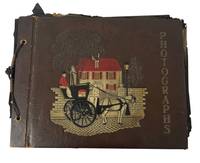
1942ref. 232231942. American serviceman's Sgt. T. Mansker's photo album compiled from experience moving between France and French colonial Algeria circa 1942-1945 A majority of the approx. 270 photographs take place in wartime Algeria under Allied military presence in French colonial Algeria. The album centers on occupied Algerian street life public space transport and military circulation in North Africa preserving roughly 100 views of of colonial Algeria spanning religious sites social street views and commercial districts shaped by foreign military presence during the war. Real photo postcards addressed by Mansker to Mrs. T. Mansker in Chicago place the album as depicting Mansker's time in France stamped and sent in November 1944 through the US Army's mailing system while the larger body of photographs are numbered North African and Algerian views indicating a commercial photographic market serving foreigners in North Africa. Photo archive of 274 items including 268 silver gelatin photographs and real photo postcards one press photograph and 5 unique negatives North Africa and France circa 1942-1945. The album begins with mailed postcards from France to Mansker's wife and continues with a dense run of black and white photographs mounted on black paper leaves many of the Algerian images uniformly numbered and consistent with commercial views sold to soldiers. Content includes parade formations marching through city streets lined with civilian spectators; a Red Cross "Enlisted Men's Service Club" entrance; harbor and rail scenes with locomotives freight cars wrecked machinery and transport corridors; bomb-damaged streets rubble and collapsed masonry in French urban settings; mosque and church exteriors and interiors; shrines cemeteries gardens monuments and civic buildings; palm-lined boulevards and colonial public architecture; and numerous Algerian street scenes with robed men children posed in portraits merchants and vendors donkey and horse transport roadside labor shepherding courtyard gatherings and small groups seated or standing beneath walls and arcades. Several street views also retain wartime control signs in the background including one reading "British Personnel Only" and another marked "Off Limits to U.S. Forces" giving direct visual evidence of restricted military space and overlapping Allied jurisdictions within the urban environment of wartime Algeria. Many photos record everyday business and movement continuing in streets and market spaces amid military passage colonial institutions. Some photos depict servicemen's entertainment and staged theatrical performance extending the album's wartime scope beyond transport and occupation into the organized leisure and morale culture surrounding Allied military life. French colonial Algeria served as a port staging ground administrative center and transportation hub after the North African landings with routes linking North Africa southern France and the wider Mediterranean war. The album's Algerian majority includes street commerce religious sites child portraiture transport routes and public ceremonies alongside Allied military presence in cities and towns under French colonial administration during the war. Black-paper leaves heavily worn with crumbling edges worn and delicate spine lots of tape residue lifted and loose photos and loose pages; photographs generally remain in good condition RPPCs remain legible. Mansker's postcards and the album's large numbered Algerian sequence anchor the material in the overlap of U.S. military movement colonial Algeria and wartime commercial photography. unknown books
1950ref. 233911950. French military photo album tracing the movement of French servicemen from infantry instruction at Saint-Maixent-l'École into North African field service during the Algerian War era with sustained documentation of rallye exercises convoy organization patrol work barracks labor communications equipment and winter combat preparation. The album's training sequences include helmeted soldiers assembled beneath a road sign reading "ST MAIXENT" and "N 138" men gathered around field maps spread across drums and teams identified by painted helmet markings including "A5" corresponding to the postwar role of Saint-Maixent's École d'application de l'infanterie as a training center for officer candidates reserve officers and noncommissioned officers. Later leaves shift into French North Africa through photographs taken at Camp Maréchal Lyautey and surrounding mountainous terrain where armed patrols move across ridgelines machine-gun crews occupy snow-covered overlooks radio operators carry field communication equipment with extended antennas and transport convoys navigate exposed roads and desert valleys. Rather than concentrating on formal portraiture the album follows the routine structure of French army service during the final decade of French colonial rule in Algeria through field movement instruction logistics temporary encampments and small-unit operations. Photo album containing 91 silver gelatin photographs most approximately 4 x 3 inches mounted on black binder leaves with removable plastic photo corners circa 1950s. Locations include Saint-Maixent-l'École Camp Maréchal Lyautey at Aïn Harrouda near Casablanca and additional unidentified sites in French North Africa. Numerous photographs retain handwritten French captions on the versos. A training image captioned "Avant le départ du Rallye l'équipe A5" identifies a rallye exercise team assembled before departure while other photographs record helmeted infantry carrying rifles along dirt roads soldiers seated inside troop transport vehicles men shoveling earth beside barracks structures and servicemen gathered in mess or recreation spaces beside French-plated automobiles and jeeps. Winter field scenes show armed patrols advancing across snow-covered terrain two soldiers resting in sleeping bags against a stone wall machine-gun positions overlooking valleys and a solitary radio operator standing in open snow with transmission equipment mounted on his back. Additional landscape photographs document roads encampments ridgelines and arid mountain terrain associated with French military movement through North Africa during the conflict. The Algerian War emerged from coordinated FLN attacks launched on November 1 1954 and developed into a prolonged colonial conflict that destabilized the French Fourth Republic expanded compulsory military service and ended with the Évian Accords and Algerian independence in 1962. French military training schools such as Saint-Maixent prepared officers and NCOs for a war increasingly defined by patrol operations convoy security communications networks and counterinsurgency deployment across difficult rural terrain. The album preserves that structure at soldier level through sequences focused on preparation movement field coordination and environmental conditions rather than ceremonial imagery. Black binder leaves show moderate handling wear; photographs remain sharp and well-preserved with occasional light silvering and minor corner wear from mounting. The removable mounts preserve access to the captioned versos and maintain the documentary character of the archive as a continuous record of French military service during the final decade of colonial rule in North Africa. unknown books
1890ref. 140651890. French Algeria landscape circa 1890s records several men with a donkey beside architectural ruins and a prominent palm tree during the period of French colonial rule in Algeria. Rather than presenting a formal architectural study the image includes people animal transport vegetation and surviving built structures within the same setting preserving specific evidence of the landscape and everyday movement through it in the late nineteenth century. Albumen print measuring 10.5" x 8" mounted on split card. A large palm dominates the scene with ruined masonry or architectural remains visible nearby and several men gathered with a donkey. The unidentified photographer has positioned the figures within the surrounding terrain rather than isolating them as studio subjects allowing the image to record both the physical site and the presence of people using or passing through it. By the 1890s Algeria had been under French colonial control for more than six decades and photographs of its cities archaeological remains landscapes and inhabitants circulated widely through European commercial and tourist photography. This image belongs to that nineteenth century photographic record while retaining unusually concrete evidence of a particular landscape through its juxtaposition of ruins vegetation human figures and animal transport. Minor crack to the top of the image; otherwise very good condition. A late nineteenth century view of French Algeria preserving both architectural remains and everyday activity within the surrounding North African landscape. unknown books
1890ref. 140661890. French Algeria street scene late nineteenth century documents three camels carrying goods through a North African town during the period of French colonial rule. The image preserves details of overland transport and daily street activity with townspeople in long robes moving along an unpaved road bordered by buildings and two large palm trees. Albumen print measuring 10.5" x 8" mounted on split card. Three camels loaded with goods occupy the roadway while several people from the town appear along the street and near the surrounding structures. Two mature palm trees rise directly beside the dirt road. The unidentified photographer records the animals pedestrians architecture and street surface within a single view providing specific visual evidence of transportation and everyday activity in the setting. By the late nineteenth century Algeria had been under French colonial rule for several decades while commercial photographers produced and circulated extensive views of Algerian cities landscapes inhabitants and modes of transport for European audiences. This photograph retains concrete evidence of camel transport within an inhabited street rather than presenting the animals as isolated ethnographic subjects. Very good condition. A detailed late nineteenth century record of goods transport and street life in colonial Algeria. unknown books
1885ref. 145561885. Original vintage albumen photo of Colonial French Algeria Arab Warrior with a Shamshir Sword circa 1875. 3.5" x 4.7" In this subtely powerful image we see an Arab warrior wearing a white keffiyeh and traditionally dressed clutching the handle of his shamshir sword and sword sheath. He is sitting on the ground and leaning against a wall about to be pulling the sword out of its sheath. Intriguing and powerful photo. In very good condition. unknown books
1900ref. 145931900. Original vintage carte de visite photograph of Abd el-Kader 1808-1883 the Algerian Islamic scholar Sufi religious leader and military commander who organized resistance to the French conquest of Algeria from 1832 to 1847. Elected emir by western Algerian tribal leaders in 1832 Abd el-Kader united tribal forces against French colonial expansion and established an Algerian state with its own military administrative and judicial institutions. His campaigns sustained armed resistance against one of Europe's most powerful armies for fifteen years making him a central figure in nineteenth-century North African history and the development of Algerian national consciousness. Sepia-toned photographic carte de visite depicting Abd el-Kader circa 1900. Measures 2.5 x 4 inches. The photograph preserves a portrait of the Algerian leader whose military campaigns and subsequent international recognition made his likeness familiar beyond North Africa. The circa 1900 dating places this photographic example after his death in 1883; the date of the original portrait image and the photographer are unidentified. Following his surrender to French forces in 1847 Abd el-Kader was imprisoned in France until 1852 and subsequently settled in Damascus where he continued his religious and scholarly activities. In 1860 during anti-Christian violence in Damascus he intervened to protect thousands of Christians receiving international recognition and the French Grand Cross of the Legion of Honour. His career encompassed organized resistance to European colonial expansion Islamic scholarship and humanitarian intervention within the Ottoman Empire. In very good condition. A photographic portrait of one of the principal leaders of nineteenth-century Algerian resistance to French colonial rule. unknown books
1853ref. 61133London: Hurst and Blackett 1853. First English Language Edition. Octavo 19cm. Two volumes rebound in half brown sheep and marbled paper boards all edges sprinkled blue; plain endpapers; ii3031pp; ii3071pp. Tight and sound but lightly rubbed with leather over spine dried and cracking title pages and final leaves browned from endleaves else clean: around Very Good. First English translation of this account of the French conquest of Algeria written by a French military officer. Uncommon in the trade. Hurst and Blackett unknown books
1981ref. UALE75Y00AJCaxton Printers 1981. Good. Algeria Henry. 75 Years of Memoirs. Caldwell: Caxton Printers 1981. 157pp. Illustrated. 8vo. Paper back. Book condition: Would be good but pages 5-10 loose. Covers lightly soiled. Caxton Printers unknown books
1837ref. 10089Paris: Gihaut Freres 1837 - `38. First Edition. Limited issue with "India" paper plates mounted. Contemporary half roan. A very good copy; some shelf wear along the lower edge; some spotting to the wide border of the title of the second work. Oblong folio. There are 18 mounted lithographic plates grouped as 6 & 12 and two lithographic titles. A remarkable and disturbing set of lithographs illustrating the conquest of the Muslim city of Constantine and the last major battle of France for its Algerian colony. The author was a painter and lithographer who began as a decorator of porcelain and rose to fame in post-Napoleonic France. Best viewed against the background of Alistair Horne's magnificent book A Savage War of Peace Algeria . Giacomelli p. 178 - '. sur papier de Chine coupe au trait carre.'; see Pouillon Dictionnaire des orientalistes de langue francaise pp. 801 - `02 for an informative entry; Cazenave Raffet et la conquête de l'Algérie. Gihaut Freres unknown books
1946ref. 47003Paris: Consistoire Central 1946. First edition. Hardcover. Good condition. Small Quarto. 62pp. Original printed boards with black lettering on gray square with black frame of cover protected by glassine jacket. Preface by Grand Rabbi Isaie Schwartz. Introduction by Léon Meiss President of Consistoire Central. Memorial publication and homage by the Consistoire Central to twenty Rabbis "victims of the awful world drama" who died martyrs by the hand of the Nazi barbarians. Illustrated with twenty b/w reproductions of portrait photographs of Rabbis and Chief Rabbis and biographical contributions for each of the honored Rabbis on opposing pages. The Consistoire Central was set up by Napoleon I. in 1808 by Imperial Decree to administer Jewish worship and congregations. The Rabbis honored in this publication include Chief Rabbi Léon Berman known for his 1937 publication a systematical attempt to present French-Jewish history Ernest Ginsburger known Jewish historian Robert Brunschwig Rabbi in Vichy and member of the resistance Elie Cyper member of the resistance Nathan Hosanski mobilized in 1939 entering the Regiment of Algerian Tirailleurs and member of the resistance aiding immigrants on the run to Spain Samuel "Samy" Klein joined the resistence movement in 1943 among others. The publication lists four Rabbis not affiliated with the Consistoire Central and thirty-six Jewish ministers at rear. Laid in a printed card announcing the death and funeral of the widow of Léon Antkowicz born Perla Feldman at the Bagneux-Parisian cemetery on Tuesday February 21st 1989. Text in French. Glassine jacket with light wear and staining rubbed. Binding with light wear. Block lightly age-toned with light water stain effecting the lower third of the block throughout. Consistoire Central hardcover books
ref. 4aa2241838/um 1850/um 1870. Maße: ca. 125 cm x 95 cm / 155 cm x 105 cm 1 Stich handcoloriert im Passepartout teils gering fleckig und Blattrand gebräunt. - Enthalten: Algier vom Wasser aus gesehen / 2 Stiche: Oran. La Marine et le port 1 davon handcoloriert / Vue de la Casabah à Alger / L'amiral Duquesne bombardant Alger / Médeia France Militaire / Constantine - unknown
ref. 5d6026L'Imprimerie Baconnier Alger 1951. 155 unpaginierte überwiegend bebilderte S. Englische-Broschur quart Umschlag gering randgebräunt und mit kleinen Randeinrissen. - sonst gutes Exemplar / good condition / dreisprachig: französisch englisch und arabisch - unknown
ref. 44698421-nnew. unknown
ref. 44698421like new. unknown
2011ref. x-1617794325Humana Pr Inc 2011. Hardcover. New. 3rd edition. 639 pages. 10.50x7.25x1.75 inches. Humana Pr Inc hardcover
2024ref. x-1666934259Lexington Books 2024. Hardcover. New. 225 pages. 9.25x6.25x0.75 inches. Lexington Books hardcover
2017ref. 1-3639531442Editorial Académica Española 2017. Paperback. New. 84 pages. Spanish language. 8.66x5.91x0.19 inches. Editorial Académica Española paperback
2017ref. 1-3659097799Editorial Académica Española 2017. Paperback. New. 72 pages. Spanish language. 8.66x5.91x0.17 inches. Editorial Académica Española paperback