DUVEYRIER (Henri)Livre Rare Book

2 514 résultats
1881réf. 38256Hachette, 1881 1881 In-8, demi-chagrin vert, dos à nerfs, caissons ornés, fers doré au premier plat, 143 pp. Bel exemplaire sous étui toilé.
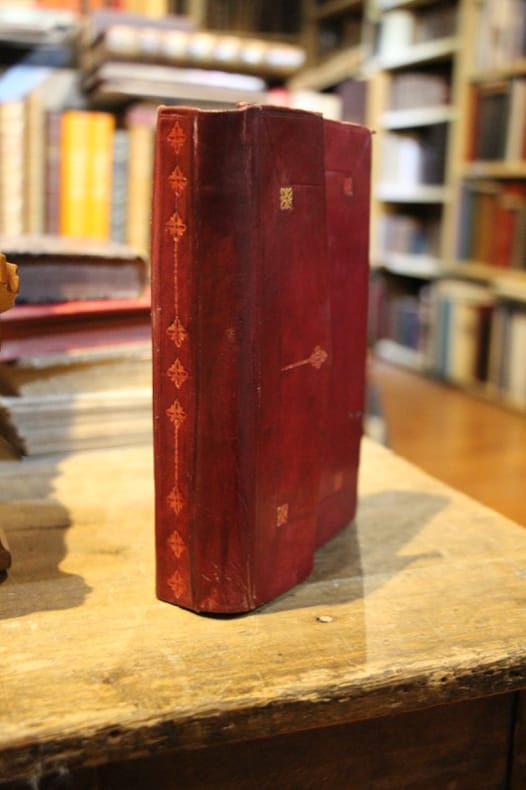
1902réf. 55797Auguste Challamel, impr. Paris 1902 In-12 plein maroquin grenat à recouvrement, filets et fleurons à froid et dorés, 508 pp. Index. Reliure passée.
1892réf. 73495Librairies-Imprimeries Réunies, impr. May et Motteroz, à Paris 1892 In-4. Reliure demi-percaline bleu moyen à coins,dos à nerfs, caissons ornés de petits fers dorés, couverture conservée [plats contrecollés sur les pages de garde], 253 pp., nombreuses vignettes couleurs d'après les aquarelles de l'auteur, une planche et une carte à double page. Coiffes légèrement émoussées. Intérieur frais. Bon exemplaire.
1973réf. 83GRENOBLE. EDITIONS DU GRESIVAUDAN. 1973. GRAND ET FORT IN-4 EN FEUILLES (28,5 X 37 X 9 CENTIMETRES ENVIRON) DE 255 PAGES, SOUS COUVERTURE BLANCHE REMPLIEE, CHEMISE ET ETUI CARTONNES DE L'EDITEUR RECOUVERTS DE PERCALINE BEIGE CLAIR. ILLUSTRE DE 16 LITHOGRAPHIES EN COULEURS HORS TEXTE A DOUBLE PAGE DE NATHALIE CHABRIER. PREMIER TIRAGE, LIMITE A 324 EXEMPLAIRES NUMEROTES, DONT 25 HORS COMMERCE. UN DES 203 SUR VELIN D'ARCHES. PETIT ACCROC SANS GRAVITE SUR L'UN DES PLATS DE L'ETUI, SINON BON EXEMPLAIRE, INTERIEUR TRES FRAIS, AVEC SIGNATURE AUTOGRAPHE DE L'ARTISTE SUR LE FEUILLET DE JUSTIFICATION DU TIRAGE.
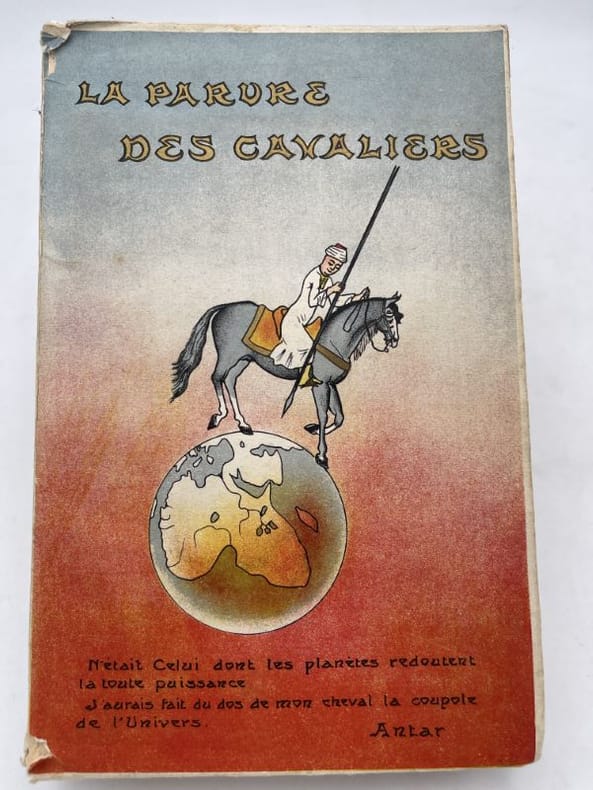
1924réf. 180148Paul Geuthner Paul Geuthner, 1924. Grand et fort In-8 broché, couverture entièrement illustrée rempliée de XV + 502 pages. Traduction française précédée d'une étude sur les sources des hippiatres arabes et accompagnées d'enppendies critiques sur l'histoire du pur-sang, de l'équitation et des sports hippiques arabes, en Maghreb et en Orient. 'Aly Ben 'Aberrahman Ben Hodeïl - El Andalusy. 34 planches hors-texte, certaines en couleurs. Index alphabétique par noms d'auteur des ouvrages écrits ou traduits en arabe relatifs à l'hippiatrie, l'art vétérinaire, la fauconnerie et la "furusiya" telle que je l'ai définie ; en fin. Bien complet des 34 planches tel que décrit dans la table des illustrations + le fac-similé d'une Hujjet. Certaines planches en couleurs, certaines planches photos à 2 ou 3 sujets. Infile déchirure sans manque sur le haut et bas de la charnière. Bel exemplaire, peu courant
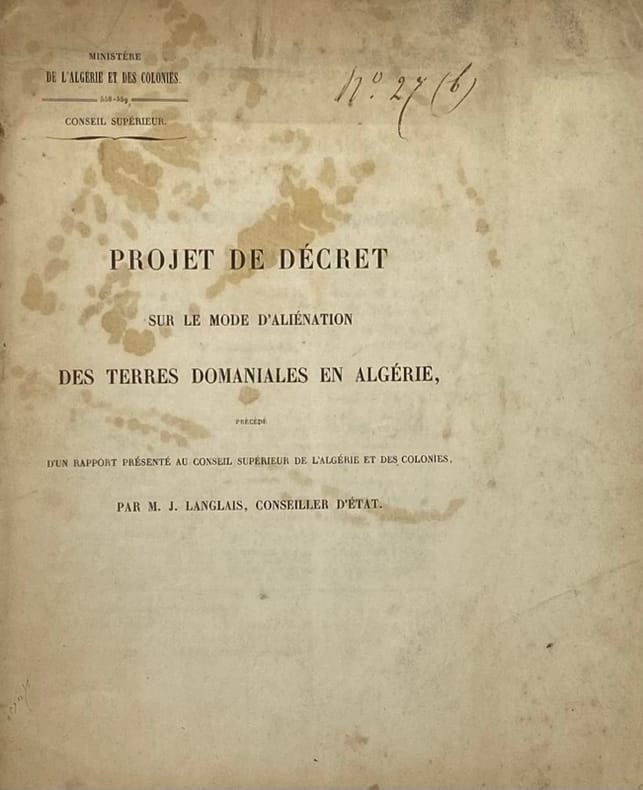
réf. 233598Paris et Constantine, 1859 - 1872 8 pièces in-4 ou in-8, brochées.
réf. 208335Aïn-Sefra, 17 octobre 1901 in-4, [7] ff. n. ch., couverts d'une écriture moyenne, soignée et très lisible (environ 30 lignes par page), en feuilles.
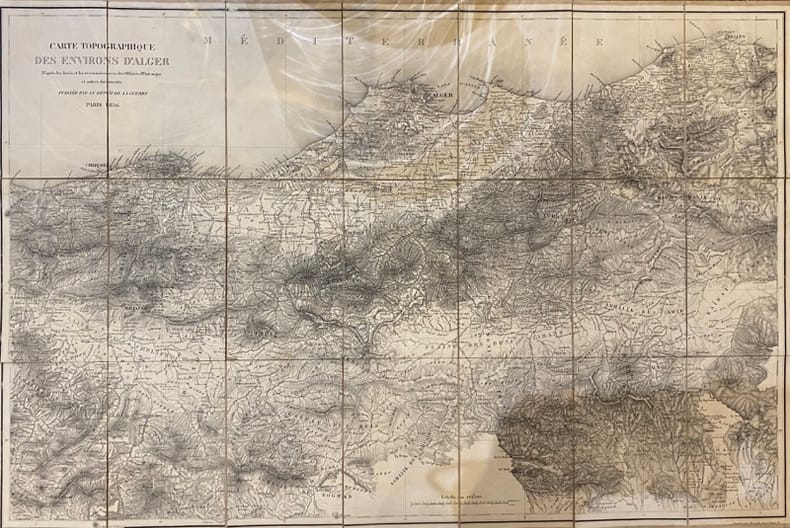
réf. 209454Paris, 1856 grande carte dépliante de 67 x 102 cm, en feuilles, entoilées, dans double emboîtage de l'époque de papier bouteille marbré.
réf. 171762Paris, Plon, 1898-1913 6 vol. in-8, frontispice au tome I, cartes h.-t. dont 9 dépliantes, broché. Quelques traits au crayon dans les marges.
réf. 230353Paris, Dumaine, 1853 in-8, XII-251 pp., broché.
réf. 23663Paris, Librairie Larose, [1937]. In-4, 606 pp., dos de toile ocre, plats de carton (petits frottements et taches).
réf. 9958Préface du Comte Albert De Mun. Vanves. Bilbliothèque fransiscaine, Sans date (vers 1900). Grand in-8, XXXIX-298 pages. Pégamoïde bleue marine, façon bradel. (Couvertures conservées). Trace d'humidité sur la marge de quelques feuillets .(Annotations explicatives anciennes dans quelques marges).
réf. 223038Paris, Langlois et Leclercq, Fortin, Masson et Cie, 1845 in-8, XVI-339 pp., demi-basane verte, dos lisse, couv. cons. (reliure postérieure).
1911réf. GITg748Paris Fontemoing et Cie 1911. In-16 2 feuillets non chiffrés (faux-titre, titre) 6-270pp. Plein maroquin bleu nuit, dos à nerfs, grande plaque estampée à froid et teintée sur les plats dans un cadre de filet doré représentant sur le 1er plat une mosaïque et des ruines antiques, sur le 2e plat une mosaïque, contreplats et pages de garde doublés de moire bleu nuit avec large bordure intérieure de filets et lotus aux angles dorés, tête dorée, plats et dos de la couverture illustrée conservés, relié vers 1920. Auréole ancienne sur le 1er plat de la reliure, texte complet et en bon état, imprimé sur papier d'édition. Bel exemplaire malgré les défauts signalés, reliure estampée à froid et teintée élégante et décorative. Tailliart numéro 749.
réf. 207691Paris, P. Bertrand, 1843 in-8, [2] ff. n. ch., 542 pp., avec une carte dépliante, manque le tableau, demi-basane aubergine à coins, dos lisse orné de filets dorés, tranches mouchetées (reliure de l'époque). Dos insolé, mais bon exemplaire.
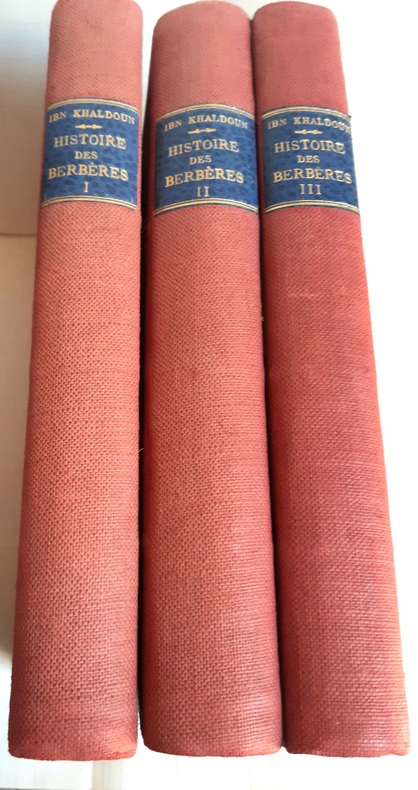
1925réf. 458Nouvelle édition sous la direction de Paul CASANOVA, professeur au Collège de France. Traduction de l'arabe par le BARON DE SLANE, interprète principal de l'armée d'Afrique. Ed.Librairie orientaliste Paul Geuthner, Paris : 1925- 1927-1934. 3 vol. /4 in-8 ( 25 X 17,5 cm),reliures de toile rouge, pièces de titre de cuir marine à mention d'auteur et titre , et filets dorés. Couvertires conservées. T1: LXVI-452 pp.T2: 605 pp.T3: 507 pp. Bibliographie d'Ibn Khaldoun.
réf. 195785Paris, Firmin-Didot, 1881-1882 3 forts vol. gr. in-8, portrait et fac-similé, demi-basane blonde, dos à nerfs (rel. de l'époque). Dos taché.
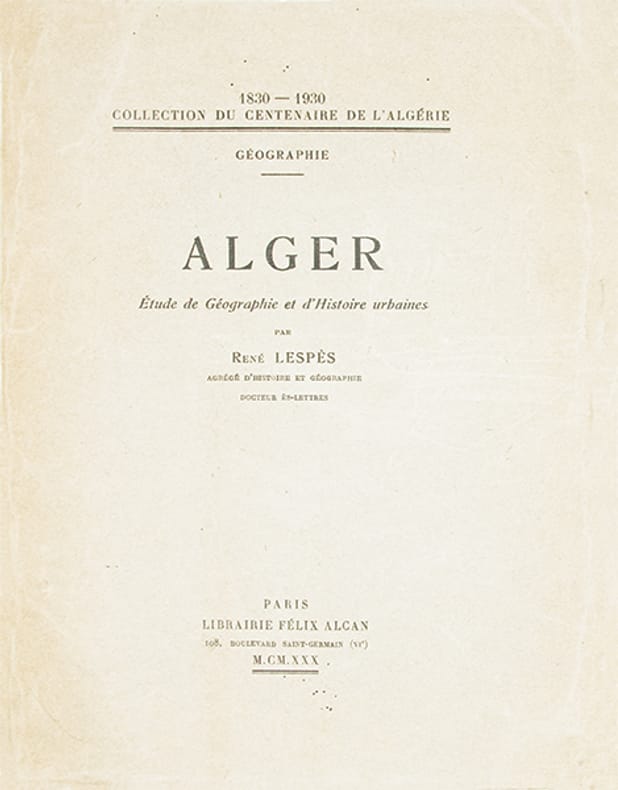
réf. 38977In-4 (235 x 185 mm), broché, couverture cartonnée imprimée de l'éditeur, 860, (1) p, 16 planches de photographies, 21 planches d'illustrations, 4 cartes et plans dont dépliants. Paris, Félix Alcan, 1930.
réf. 15258Suivie d'un précis historique sur l'Empire du Maroc. P. Roux, 1846. 2 tomes en 1 volume grand in-8, 412-396 pages. Demi basane verte de l'époque, coins, dos lisse orné de filets dorés et fleurons à froid, (rousseurs parfois fortes sur les feuillets).
réf. 14366Rabat Résidence Générale de la République Française au Maroc (vers 1914) in 8 (26x17) 1 volume relié demi basane rouge à coins, dos lisse, XXVII et 502 pages, annexes in fine non chiffrés, avec 3 grandes carte dépliantes. Ex-libris manuscrit époque du (Colonel) Gudin??, 1er chasseur d'afrique (à Rabat, Maroc). Hubert Lyautey, Nancy, 1854-Thorey, 1934, militaire français, officier pendant les guerres coloniales, Maréchal, , commissaire résident général de la République Française au Maroc, 1912-1925 Général Lyautey. Bon exemplaire ( Photographies sur demande / We can send pictures of this book on simple request )
réf. 87826Paris, Imprimerie Royale, 1844 in-4, XVI-329 pp., cartonnage papier crème (reliure de l'éditeur). Qqs défauts au cartonnage.
réf. 239067Alger, Typo. Besancenez, 1846 in-8, 207 pp., demi-maroquin havane à grain long, dos à nerfs (reliure postérieure). Ex-libris Nouvelle Bibliothèque du château du Plessis-Brion et cachet humide René de Proyart de Baillescourt
1914Very Good Turkish, Ottoman (1500-1928) Original color map of Eastern Anatolia, Dogu Beyazit, Bayazid, Bargiri, Nakhchevan, Karakilise, Van, etc. 50x60 cm. In Ottoman script (Enverî). 1 p. Scale: 1:200.000. Slightly toned, several small holes on paper. Otherwise a very good copy. Enverî script is the war minister Enver Pasha's alphabet and writing amendment, which he tried to implement within the Ministry of War between 12 March 1914 and 10 August 1914. Starting from the Tanzimat (Westernization) period in the Ottoman Empire, the discussions on simplification in language, writing, alphabet and reading-writing had increased and at the end of the 19th century, military necessities also became one of the concerns. The problems such as the low rate of literacy among the recruited soldiers, the need to teach the soldiers how to read and write in a short time, and their misconceptions about the spelling of proper nouns led Enver Pasha to add the writing problem to his reform agenda, once he took office. Enver Pasha's reform is based on the principle of writing the Ottoman letters, which take different forms in the beginning, in the middle and at the end according to their unification with the other letters, separately in their original state without merging them. While this new alphabet was being created, the existing 32 letters in the Ottoman were preserved. The 8 vowels in the Turkish language, which could not be written with the old letters, was shown by placing small marks on the existing vowels and by doing so a new alphabet consisting of a total of 40 letters was created. With this alphabet, officially called 'Ordu Elifbasi', rules were adopted such as writing of the letters without merging them, writing the words as they are pronounced. At first glance, Enver Pasha's writing reform, which appeared as a definite solution to the theory of the solution of the ongoing debates on the alphabet and the spelling, formed a wide experiment field in the military. It was not possible to use Ordu Elifbasi, which essentially is a transliteration alphabet that allows transferring the sounds of these three different languages (Turkish, Arabic, Persian) to a single alphabet, in the daily life. Thanks to this new alphabet and spelling, learning to read and write were accelerated to some extent. However, it was seen that the literacy rate of the well-educated, literate people fell to the spelling and did not even progress. This alphabet and spelling reform, which Enver Pasha thought of spreading to the whole country, caused much more problems as it was experienced in the army. Although it was postponed until the end of the mobilization period following the declaration of the mobilization, Ordu Elifbasi, which remained in force for 152 days, eventually failed to be realized. (Source: Karakus: Enver Pasha's Alphabet And Spelling Attempt: Ordu Elifbasi (Army Alphabet)).In this extremely rare document, there are some articles and thoughts on a case. This is one the serie of the Bonn projection maps which are the first map series in modern techniques in Turkey and the Ottoman Empire. In order to produce these maps covering Turkish territory, Reconnaissance Branch was incorporated into The Mapping Commission. The maps were produced in the datum based on the latitude and longitude of Ayasofya Mosque in equal area Bonn Projection. The field works for the 123 sheets covering the country were conducted by 76 staff. The production was completed in 18 years starting from east west. Field works continued without stopping except in years 1914 and 1920. This map series called also reconnaissance maps contributed a lot to producing 1:25.000 scale maps. Extremely rare. KW: "Harfleri Islah Cemiyeti" Hurûf-i munfasila Reform Turkish Letter revolution First World War WW 1 Map Geography Military maps.
1926Very Good Turkish, Ottoman (1500-1928) Original map of Kars Fortress. Oblong: 45x57 cm. In Ottoman script. Scale: 1/21000. [PLAN OF KARS FORTRESS] Kars Kal'asi plâni (Based on 1898 discoveries and 1908 practice). A very detailed plan in Ottoman script of Kars Fortress and is environment. Some red markings. Extremely rare.
réf. 39756Alger. Baconnier, 1934. Grand in-4, 286 pages. Plein chagrin sable, dos lisse, plats ornés de grandes compositions orientales à froid encadrées de triple filets, tranche supérieure peinte de motifs orientaux, non rogné. Première couverture conservée.