Miguel Angel Garcia GuineaBiblio.com

964 risultati
1985rif. L4HOCEdiciones de Libreria Estudio 1985-01-01. Hardcover. Very Good Minus/Good. 8x0x10. Very good hardcover in good dust jacket. Binding is solid. Bottom exterior page edges have some markings visible. Jacket is bright but does have some delamination/tearing at edges and has a tape repair visible on front. Protected in a clear attractive Mylar cover. We use quality packaging materials. In Spanish. Ediciones de Libreri?a Estudio hardcover
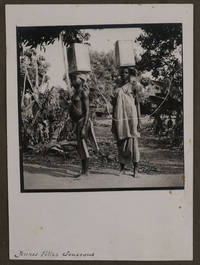
rif. PC23Oblong Octavo album ca. 19x27 cm 7 ¼ x 10 ½ in. 23 stiff card leaves. With 44 mounted original photographs of various sizes including 42 gelatin silver and platinum photos ca. 13x18 cm 5x7 in and two smaller gelatin silver photos ca. 9x14 cm 3 ½ x 4 ½ in. With six loosely inserted platinum photos image size in average ca. 12x17 cm 4 ¾ x 6 ½ in. Nine photos captioned signed “Bés” and /or numbered in negative twenty-eight with period pencil ink captions in French on the margins. Loose photos: three captioned or signed “Bés” or “Yann” in negative five with period manuscript ink captions in French on the mounts. Period brown card binding fastened with a string. A painted scene with an African hut and a manuscript title “Conakry 1935” on the front board. Boards soiled with chipping and minor losses on extremities one photo with a corner torn off but present one of the smaller photos stained one loose photo with a loss of a corner not affecting the image several photos slightly faded but overall a very good album. A historically interesting album with original photos of pre-World War II Conakry and interior French Guinea. Seventeen photos of Conakry show the Corniche promenade four views with two featuring the lighthouse on one of the Los Islands the Lazaret in the Boulbinet Bay Conakry railway station Place le Moal with the monument to Dr. Victor le Moal 1876-1908 the director of the public hygiene of Conakry’s Coronthie district in 1905-1907 the head of the Pastoria Station of the Paster Institute near Kindia in 1907 “Jardin du Gouvernement” “Salle des Fêtes” Camayenne beach parking changing cabins and two Frenchmen resting in beach chairs Camayenne gardens Ballay Hospital now Ignace Deen Hospital Conakry public gardens. There is also a nice scene of “baptism” of a Morane plane of Conakry “aero-club” featuring Joseph Vadier the governor of French Guinea in 1931-36 and his wife breaking a bottle of champagne over the side of the plane a group portrait of European children from a costume ball organized by the government in Conakry in March 1935 and a portrait of seamen in the Conakry “port des caboteurs.” Other interesting images show the photographer’s car going across a river on a small cable ferry a bridge over the Kolente River under construction a Susu village eight views of the Samou River rapids and waterfalls including two group portraits taken during a “picnic européen aux Grandes-Chutes” two views of a road in Bass-Guinée under construction portraits of Susu women and girls and others. Overall a nice atmospheric album with some unusual views of French Guinea in the 1930s’. hardcover
rif. PE68Oblong Large Octavo album ca. 165x24 cm or 6 ½ x 9 ¼ in. 56 paper leaves. With 80 mounted original gelatin silver photos including over thirty larger images from ca. 125x175 cm 4 ¾ x 6 ¾ in to ca. 115x135 cm 5 ¼ x 4 ½ in; the rest of the photos are from ca. 8x9 cm 3 ¼ x 3 ½ in to ca. 45x8 cm 1 ¾ x 3 ¼ in. Ca. 40 images with period ink captions in French on the mounts. Period grey quarter cloth album with papered boards; marbled endpapers. Binding rubbed on extremities spine soiled some photos with various degrees of fading or mild silvering but overall a very good album of interesting strong photos. Interesting collection of eighty original gelatin silver photographs – mostly ethnographic portraits and scenes with the native people of French colonial Guinea modern-day Republic of Guinea. Taken by a French resident of the colony the photos resemble images taken by François-Edmon Fortier 1862-1928 a prolific documentary photographer of French West Africa. The images in the album portray “Foulah” Fula “Soussou” Susu and “Cogniaghi” Conagui people – individuals and groups of men young women families and children; the photos allow to see traditional costumes decorations and hair styles. There are also portraits of “Femmes Tirailleurs” inhabitants of a Guinean forest women washing laundry in a river a family from Rio Pongo women from Kourussa a chief with his wives scenes at a Conakry market in a local village at a well in a “caravanserail” a views of “case de Sokbi à Kipé” a river wharf with a group of native people on a pier &c. Three photos feature Frenchmen posing with native people and youth in Kippe Kipe or watching Guinean farm workers. Overall an interesting collection of original portraits of the indigenous people of Guinea in the early 20th century. hardcover
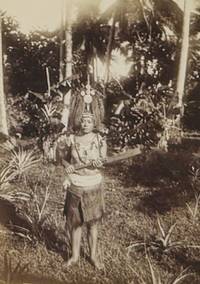
rif. PF4Oblong Folio album ca. 27 x 33 cm or 10 ½ x 13 in. 24 card stock leaves. With 138 original gelatin silver photos mostly ca. 8 x 12 cm 3 x 4 ¾ in. With 17 printed postcards ca. 9x13 cm 3 ½ x 5 in; all mounted in windows. All postcards withprinted captions on the margins. Some of the photos are captioned in German on versos. Period green full cloth album; red gilt-tooled ornamental border and generic title in German on the front board. Binding slightly rubbed on extremities several images previously removed from the album a few photos mildy faded but overall a very good album. A historically interesting extensive collection of original gelatin silver vernacular photos and printed postcards taken and collected by a German traveller to the colonies of German New Guinea and German Samoa in the early 20th century before both were occupied by Australia and New Zealand during WW1. The album opens with twenty-one photos and seven printed postcards dating back to the compiler’s voyage to the South Pacific through the Dutch East Indies modern-day Indonesia showing streets and waterfront of Makassar Sulawesi volcanoes and settlements of Banda Islands Banda Neira Banda Api Banda Papenberg peak the ocean steamer which transported the travelling party anchored in harbours the steamer crew and native Indonesians on board the steamer &c. Over forty photos and five postcards show the views and people of German New Guinea - mostly of the Bismarck Archipelago modern-day Islands Region of Papua New Guinea: native children and families from “Matupi” and “Neu Pommern Bismarck Archipel” views of Ralum and Herbertshöhe Kokopo “Landschaft bei Nusa” harbours with the travellers’ steamship cutter boats and native outrigger canoes villages and palm groves a large communal building in construction portraits of Papuan farmers members of local militia people wearing traditional costumes decorations and headdresses Papuan men listening to a gramophone on board the steamer a native couple captioned “Gruss aus dem Bismarck Archipel” on the mount &c. Very interesting are over sixty original photos and a printed postcard of German Samoa. About seventeen photographs document a public ceremony of hoisting a German Imperial flag at an open space likely in the colonial capital Apia with government officials colonial troops and a crowd of spectators. Two scenes with colonial residents feature Wilhelm Solf the first Governor of German Samoa in office: 1900-1911 wearing a white uniform and peaked cap. Two photos portray an elderly Samoan chief - most likely Mata’afa Josefo ca. 1832-1912 a Paramount Chief of German Samoa posing with a colonial resident in front of a German Imperial flag. There is also a view of the wreck of SMS “Adler” in Apia harbour which was destroyed alongside several German and U.S. warships during the 1889 Apia cyclone. Other photos show Samoan rivers coastal views portraits of Samoans in traditional costumes families children German residents &c. The printed postcard is a view of “Samoa Inseln – Apia nach Süden zu.” The album also contains several printed postcards and original photos of Fiji showing “A peep of Suva” “Fijian canoe” “Village scene – Fiji” “Attacked” “Cannibal feast – Fiji” portraits of native warriors and young women &c. Overall an historically interesting extensive collection of original gelatin silver amateur photos documenting life in German New Guinea and German Samoa in the early 20th century. hardcover
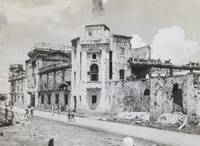
rif. PD10Oblong Octavo album ca.182x295 cm or 7 ¼ x 11 ½ in. 30 card stock leaves with 2 free endpapers. With 105 original gelatin silver photographs including one loose from ca. 104x75 cm 4 x 3 in to 47x64 cm 1 ¾ x 2 ½ in. All photos with white ink captions in English on the mounts seven photos captioned in negatives some photos dated. Period dark green half leather binding with raised bands; guilt-tooled ornaments on the front cover and the spine. Seven photos missing one page lacks fragments at the right margin several pages with minor tears but otherwise a very good album with strong interesting photos. Historically interesting collection of original photographs mostly documenting the technical reconstruction of Manila’s communication networks after the end of World War II. As follows from the photographs the compiler was a technician or lineman with the U.S. Army Signal Corps. First stationed in Pittsburgh in 1943 he likely underwent specialized technical training at one of the city's industrial or academic centers before being deployed to Finschhafen New Guinea. There he was tasked with establishing the communications infrastructure for the Allied base following the recapture of the town from Japanese forces. Finally he was sent to Manila in the fall of 1945 where he assisted in the massive effort to reconstruct the city’s destroyed telephone and telegraph systems during the initial months of the post-war occupation. The album contains 105 rare early photographs from the Pacific Theatre with most images taken in Manila in the fall of 1945. The photos capture Japanese ships sunk by U.S. forces in Manila Bay and the city’s architecture before and after the artillery bombardment Escolta Street Jones Bridge the ruins of City Hall the University of the Philippines the Manila Hotel San Vicente de Paul Parish Department of Finance Building today’s National Museum of Anthropology Commerce & Agriculture Building today’s National Museum of Natural History and Legislative Building today’s National Museum of Fine Arts. Especially interesting are about fifteen candid photographs documenting the technical reconstruction of Manila’s communication networks. Outdoor scenes show the compiler’s companions with climbing spikes and safety belts repairing overhead trunk lines. Interior views depict a “Test Desk” with technicians both American and Philippian operating specialized consoles and patch cords the massive Main Distribution Frame MDF with thousands of line terminations and heavy power panel equipment. The series also includes several photographs from Clark Field showing “Ralph” and “Eddie” posing beside wrecked aircraft. The other interesting photos from the collection show “a Native of New Guinea” posing with American soldiers as well as the compiler and his friends in military uniforms in Finschhafen and Pittsburgh beside their tents barracks and orderly room. Overall historically interesting collection of original gelatin silver photographs illustrating rare scenes from the service of the U.S. Army Signal Corps in the Pacific Theatre of World War II. hardcover
1960rif. 21135ABWiesbaden, Steiner, 1960. VIII, 441 S. Mit Textabbildungen und 10 Karten. Orig.-Kartoniert. (Studien zur Kulturkunde, Bd 16).
rif. 110434Sydney, St. Vincent’s Boys’ Home no year, 215x140mm, 45pages, paperback. Déchirures sur la couverture supérieure.
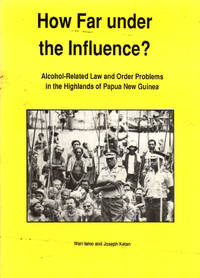
1992rif. Alibris.0008360Boroko Papua New Guinea: National Research Institute. 1992. Trade paperback. Very good. No dust jacket as issued. xiv 145 p. : ill. maps; 25 cm. Includes: Illustrations Maps. . "Based on a report to the Highlands Premiers' Council commissioned by the Highlands Regional Secretariat Inc. " Includes bibliographical references p. 134-145. National Research Institute paperback
1981rif. 172350Ok Tedi Mining Corporation. September1981. 35 full page colour charts with 9 pages of tidal predictions for 1982 and 1983 on preceeding leaves. Printed on one side of each leaf and presented in metal ring binder large oblong plastic covers titled on upper cover and spine in black. Very good copy. 30 x 43cm. "The following notes on the hydrographic charts navigational aids and tidal predictions which appear in this publication are a summary of a report prepared for the Ok Tedi Mining Limited by the Snowy Mountains Engineering Corporation with the assistance of Hydrographic Surveys Pty Ltd in December 1981. The hydrographic surveys required to produce these charts were carried out in February and March 1981. " . Ok Tedi Mining Corporation. unknown
1924rif. 156000Band (alles Erschienene): Fabuleien dreier Völker. Herausgegeben von Leo Frobenius. Jena, Diederichs, 1924. Mit doppelblattgroßem Schmucktitel von F. H. Ehmcke u. 4 Tafeln. 2 Bl., 355 S. Or.-Brosch.; etwas stockfleckig, leichte Gebrauchsspuren. (Atlantis, XI). [2 Warenabbildungen]
1868Milano, Sonzogno, 1868, 27 settembre, articolo, stralcio di "L'Emporio Pittoresco". - !! ATTENZIONE !!: Con il termine estratto (o stralcio) intendiamo riferirci ad un fascicolo contenente un articolo di rivista, sia che esso sia stato stampato a parte utilizzando la stessa composizione sia che provenga direttamente da una rivista. Le pagine sono indicate come "da/a", ad esempio: 229/231 significa che il testo è composto da tre pagine. Quando la rivista di provenienza non viene indicata é perchè ci è sconosciuta. - !! ATTENTION !!: : NOT A BOOK : “estratto” or “stralcio” means simply a few pages, original nonetheless, printed in a magazine. Pages are indicated as in "from” “to", for example: 229/231 means the text comprises three pages (229, 230 and 231). If the magazine that contained the pages is not mentioned, it is because it is unknown to us.
Cm. 24; pp. 266, (4). Brossura editoriale illustrata colorata, 14 fotografie fuori testo. Ampia dedica autografa dell'autore alla prima bianca. Ottimo esemplare. 305
1881In 8, pp. 32 con una cartina f.t. Br. rifatta con carta d'epoca.
1995l diario di un viaggio in Nuova Guinea, un paese ancora all'alba della civilizzazione, in cui convivono usanze barbare e veri e propri esempi anche per il mondo occidentale.
1827Carta geografica delle isole Amirauté inserita nell'opera "Atlas universel de geographie physique, politique, statistique et mineralogique, sur l'echelle de 1/1641836 ou d'une ligne par 1900 toises, dresse par Ph. Vandermaelen, Membre de la Societe de Geographie de Paris, d'apres les meilleures cartes, observations astronomiques et voyages dans les divers Pays de la Terre; Lithographie par H. Ode, Membre de la Societe de Geographie de Paris." edita a Bruxelles nel 1827
1922rif. 56643ABBerlin, Scherl, 1922. Gr.8°. 359 S. Mit 101 Abbildungen und 1 gefalt. farbigen Karte. Illustr. Orig.-Halbleinwand.
1991rif. 217021991 Conakry : Editions Impr. Mission catholique, 1991.IN 4 broché,sous jacquette et couverture illustrée, 147 pages : illustrations ; 30 cm
rif. 30548Lisboa, 1957, 245x175mm, 109páginas, encadernação de editor com sobrecapa.
1939rif. 169794Zürich, Büchergilde Gutenberg, 1939. Mit zahlreichen fotografischen Abbildungen. 311 S. Illustrierter Or.-Lwd.; tlw. verblasst u. stockfleckig. - Guinea. [4 Warenabbildungen]
1939rif. 3369Büchergilde Gutenberg, Zürich 1939. 311 S. mit zahlr. Abbildungen. Gr.-8°. Leinen. Leichte Gebrsp. Typographie und Buchgestaltung von Richard Paul Lohse.
1955rif. 21249ABMenasha, American Anthropological Society, 1955. X, 84pp. With illustrations and maps. Orig. printed wrappers. (American Anthropologist. Vol. 57, No. 1, Part 2).
1924In-8 (cm. 22.40), cartonato telato, titoli impressi al piatto ed al dorso, pp. XVIII, 297, (5), con illustrazioni in bianco e nero fuori testo. Prima edizione. Text in English. Foreword by J. Arthur Thomson. Piccola etichetta coeva di famosa Libreria parigina al risguardo posteriore (Brentano’s). Ex libris e segnatura al risguardo anteriore. Firma d’appartenenza. Lievi fioriture e macchie, peraltro volume in buono stato di conservazione (slightly foxed, otherwise good condition).
Madrid, Instituto de Estudios Políticos, 1944, 21,5 x 16 cm., cartulina editorial, XXII + 245 págs. + 1 hoja. (Sellos de anterior poseedor).
1944rif. 221181944. Papua New Guinea Photo Archive of 33 original silver gelatin photographs taken in Papua New Guinea circa 1944-1945 as dated in pencil on several versos. The images document traditional village life among Indigenous New Guineans many shown in ceremonial attire performing subsistence labor or posed outside grass-thatched huts. Several photos include White men in Western dress likely visiting for military anthropological or missionary purposes during the World War II Pacific campaign a period that brought foreign occupation and anthropological interest to many previously uncolonized or semi-isolated Papuan regions. Each measure approximately 3.5" x 2.5". Many images showcase Indigenous men and women wearing elaborate ritual regalia: skirts of plant fibers necklaces of shell and bone nose and ear ornaments and headpieces adorned with feathers. In some photos male villagers are shown carrying large slit-gong drums strapped over their shoulders with rope-likely part of a ceremonial performance as these drums were used in both musical and communicative traditions across the Sepik and Highlands regions One series captures local men holding American Esquire magazines and smoking cigarettes suggesting both the imposition of and interaction with the visiting Westerners. The historical context of these photographs is rooted in the Allied occupation of Papua New Guinea during World War II particularly by U.S. and Australian forces. While combat operations were widespread in New Guinea from 1942 to 1945 the final years of the war saw increased documentation by visiting soldiers anthropologists and missionaries many of whom sought to capture what they perceived as "vanishing" cultures. Indigenous Papuans during this era lived primarily in small clan-based villages practicing subsistence horticulture ritual exchange and complex oral traditions. The intrusion of Westerners especially during the war had deep and lasting impacts on social structures religious practices and material culture and this archive reflects the tension between visibility objectification and resilience. Minor curling and edgewear overall very good condition. A rich and rare visual record of traditional Indigenous life in Papua New Guinea on the cusp of dramatic wartime and postwar transformation with significant documentary value for visual anthropology Pacific studies and the wartime colonial encounter. unknown
1944rif. 221181944. Papua New Guinea Photo Archive of 33 original silver gelatin photographs taken in Papua New Guinea circa 1944-1945 as dated in pencil on several versos. The images document traditional village life among Indigenous New Guineans many shown in ceremonial attire performing subsistence labor or posed outside grass-thatched huts. Several photos include White men in Western dress likely visiting for military anthropological or missionary purposes during the World War II Pacific campaign a period that brought foreign occupation and anthropological interest to many previously uncolonized or semi-isolated Papuan regions. Each measure approximately 3.5" x 2.5". Many images showcase Indigenous men and women wearing elaborate ritual regalia: skirts of plant fibers necklaces of shell and bone nose and ear ornaments and headpieces adorned with feathers. In some photos male villagers are shown carrying large slit-gong drums strapped over their shoulders with rope-likely part of a ceremonial performance as these drums were used in both musical and communicative traditions across the Sepik and Highlands regions One series captures local men holding American Esquire magazines and smoking cigarettes suggesting both the imposition of and interaction with the visiting Westerners. The historical context of these photographs is rooted in the Allied occupation of Papua New Guinea during World War II particularly by U.S. and Australian forces. While combat operations were widespread in New Guinea from 1942 to 1945 the final years of the war saw increased documentation by visiting soldiers anthropologists and missionaries many of whom sought to capture what they perceived as "vanishing" cultures. Indigenous Papuans during this era lived primarily in small clan-based villages practicing subsistence horticulture ritual exchange and complex oral traditions. The intrusion of Westerners especially during the war had deep and lasting impacts on social structures religious practices and material culture and this archive reflects the tension between visibility objectification and resilience. Minor curling and edgewear overall very good condition. A rich and rare visual record of traditional Indigenous life in Papua New Guinea on the cusp of dramatic wartime and postwar transformation with significant documentary value for visual anthropology Pacific studies and the wartime colonial encounter. unknown books