Kohnke, GlenysMareMagnum
Guinee, PatrickBiblio.com
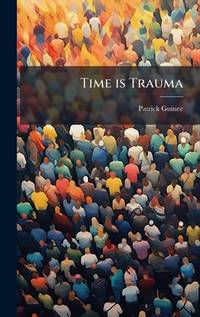
Time is Trauma
réf. 1025082370.Ghardcover. Good. Access codes and supplements are not guaranteed with used items. May be an ex-library book. hardcover
Bonita · États-Unis50,96 $US≈ 45,44 €
868 résultats
19731st edition. Hardback in very good condition in a very good condition sleeved dust jacket. 111 pages, illustrated, paintings by the author, dedication to a previous owner facing the preliminary title page. ISBN 0701606886. 50236. eng
réf. 1025082370.Ghardcover. Good. Access codes and supplements are not guaranteed with used items. May be an ex-library book. hardcover
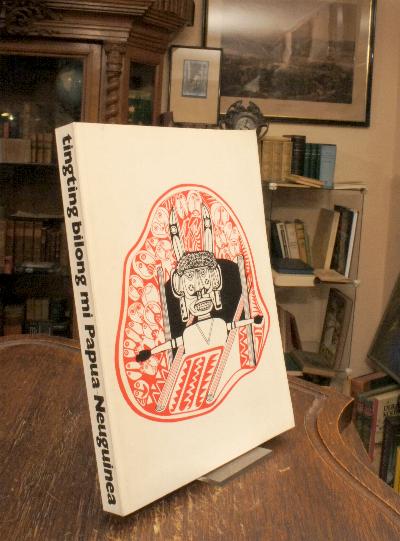
1979réf. 33588ABStuttgart, Institut für Auslandsbeziehungen, 1979. 8° (20x15), 225 S., mit zahlr. dokumentarischen fotograf Aufnahmen, sowie WerkAbb., OKart (KlappenBrosch), minimal angestaubt, untEcke etwas bestossen, [= Schriftenreihe des Instituts für Auslandsbeziehungen : Reihe Dokumentation; 8],
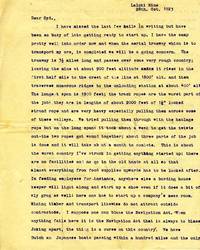
réf. 202912 page TLS describing in great detail the difficulties in setting up a mining operation in New Guinea. The author H. Edward Clayton is attempting to set up an aerial tramway to transport the ore. It is 3 1/2 miles long and passes over very rough country - the difficulty in hauling the cable is palpable. Clearly having been engaged in mining in other parts of the world before he speaks of Papua NG as "the worst country I've struck in getting anything started up" with no facilities the necessity of setting up your own company mess where as in the past "anywhere else a bording sic house keeper will light along and start up a show even if it does a bit of sly grog as well". He blames the "Navigation Act" which he calls "a curse on this country". "We have Dutch and Japanese boats passing within a hundred miles and the only ones allowed to call here are the little island boats of B.P's; the work is too much for them and the result is high fares and feights sic and infrequent service." Several other people are mentioned. There is a reference to "Bill Horsburgh" who is the assayer on this mine married with three children one of them was hospitalized for rheumatic fever in Port Moresby. "Bill has changed a good deal- as quiet as can be until he has a few in and the crust cracks." This could be a reference to William Horsburgh born in Queensland and married to Frances Stella Clayton. W.W. Horsburgh was an assayer and worked with the Dubuna and Laloki Mines of the New Guinea Copper Mines until at least 1927. It's possible that the author of the letter is related in some way to Horsburgh's wife. Clayton also asks after a George Osborne. We presume that the Laloki Mine is part of the Astrolabe mineral field near Port Moresby a massive copper mine that ran from 1907 to 1926 at the Laloki and Dubuna Mines and transported by light rail and aerial ropeway to a smelter near the Tahira Inlet wharf. Geology & Mining Potential of New Guinea by Wiliamson and Hancock 2005. 2 pp 8x10" signed H. Edward Clayton. Old folds very good condition overall. unknown
réf. 107651Canbera, Department of Linguistics Research School of Pacific Studies - The Australian National University 1980, 247x200mm, VI- 146 + 10pages, paperback. Book in good condition.
1957Milano, 1957, stralcio con copertina posticcia muta, pp. 1195/1210 con fotografie, tavole fotografiche ed una cartina. - !! ATTENZIONE !!: Con il termine estratto (o stralcio) intendiamo riferirci ad un fascicolo contenente un articolo di rivista, sia che esso sia stato stampato a parte utilizzando la stessa composizione sia che provenga direttamente da una rivista. Le pagine sono indicate come "da/a", ad esempio: 229/231 significa che il testo è composto da tre pagine. Quando la rivista di provenienza non viene indicata é perchè ci è sconosciuta. - !! ATTENTION !!: : NOT A BOOK : “estratto” or “stralcio” means simply a few pages, original nonetheless, printed in a magazine. Pages are indicated as in "from” “to", for example: 229/231 means the text comprises three pages (229, 230 and 231). If the magazine that contained the pages is not mentioned, it is because it is unknown to us.
1952Milano, 1952, stralcio con copertina posticcia muta, pp. 1307/1318 con numerose fotografie. - !! ATTENZIONE !!: Con il termine estratto (o stralcio) intendiamo riferirci ad un fascicolo contenente un articolo di rivista, sia che esso sia stato stampato a parte utilizzando la stessa composizione sia che provenga direttamente da una rivista. Le pagine sono indicate come "da/a", ad esempio: 229/231 significa che il testo è composto da tre pagine. Quando la rivista di provenienza non viene indicata é perchè ci è sconosciuta. - !! ATTENTION !!: : NOT A BOOK : “estratto” or “stralcio” means simply a few pages, original nonetheless, printed in a magazine. Pages are indicated as in "from” “to", for example: 229/231 means the text comprises three pages (229, 230 and 231). If the magazine that contained the pages is not mentioned, it is because it is unknown to us.
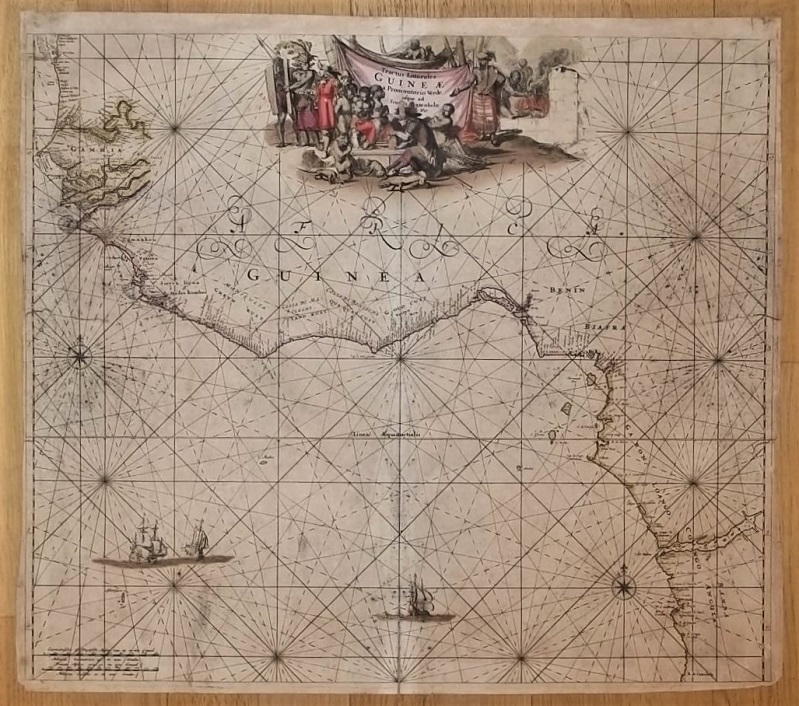
1700réf. 17369Amsterdam, de Wit, 1675 (recte um 1700). Ca. 49,5 cm x 57 cm. [4 Warenabbildungen]
1919Roma, 1919, 11 maggio, fascicolo di 8 pagine de "La tribuna illustrata", con copertina illustrata.
réf. TR20Compagnie Générale Transsaharienne, 1er Octobre 1934. In-8, 28pp., nombr. photos, 1 carte, hraires, br. Couv. couleurs.
1922In 16, pp. 308. Br. ed. con macchie sul frontespizio. Con ill. n.t. Interessante autobiografia di un missionario coraggioso, che parti' da Glasgow e soggiorno' a lungo tra i Cannibali del Pacifico.
1961réf. 6455Berlin, Verlag Neues Leben, 1961. 8°, 130 S., mit zahlreichen s/w Abb. Auf ca 50 Extratafeln, altersbed. Bräunung, Gebr.sp., Halbleinen
1885réf. 187509Australia: The Geographical Society of Australasia 1885 & 1886. Two elaborately decorated manuscripts presented to Captain Henry Charles Everill congratulating him and the members of the New Guinea Exploratory Expedition on a successful voyage. The quarto manuscript was presented by the Geographical Society of Australasia who funded the expedition and the folio by the Victorian Branch of the Geographical Society specifically 12 members of which have signed it at the end. Everill's party left Sydney on 10 June 1885 and returned home on 3 December 1885 having spent five months in New Guinea. The object of the expedition was to map unexplored territory in the Fly river region to gather information on local flora and fauna and to perform an anthropological investigation into the indigenous people. However the underlying motivations of the expedition were likely linked to Australian state expansion into the Pacific. In 1883 the Colony of Queensland attempted to annex the east of the island of New Guinea and then again shortly after the federation of Australia in 1901. The expedition left Sydney in the steamer Bonito journeying to New Guinea and up the Fly river into the Strickland River. The river was named during the expedition in honour of Sir Edward Strickland the president of the Geographical Society. The Bonito was stranded in the Strickland at which point Everill led a party another 80 miles up the river in a whaleboat. Purchased by Martin Schøyen b. 1940 the Norwegian collector of rare books and manuscripts Two manuscripts on paper quarto 335 x 265 mm 2 pages and folio 460 x 385 mm single page text in gothic and cursive script in black ink illuminated initials and titles intricate border designs in multiple colours all heightened in gilt. Contemporary black and brown morocco the folio by Thedel and Co. of Melbourne and with silk moiré doublure the quarto by John Sands of Sydney is rebacked lettered and decorated in gilt. Refurbished a few corners restored covers lightly scuffed and marked silverfishing with loss of several words in both texts heavier in the folio affecting signatures light damp staining. A very good set. unknown
réf. est381T10Hand Colored 21 x 15.5 inches Typus orarum maritimarum Guineæ, Manicongo, & Angôlæ... - Delineatio orarum maritimarum, terræ vulgo indigetatæ Terra do Natal. [Amsterdam, 1596]. 2 feuilles, chacune de 390 x 530 mm. Superbe exemplaire de l'une des cartes les plus décoratives figurant la moitié sud du continent africain, gravée par van Langren pour l'Itinerario de Linschoten. Les deux feuilles sont ornées de magnifiques cartouches de titre style Renaissance. Les mers sont traversées de lignes de rhumbs, de roses des vents, de navires et de monstres marins, tandis que les terres sont décorées de petites vignettes figurant des éléphants, des lions, ainsi qu'une scène représentant l'empereur chrétien Prester John. La feuille figurant la partie ouest de l'Afrique est ornée de deux vues des possessions portugaises de Sainte-Hélène et de l'Ascension, et des armoiries du Portugal décorant le cartouche de titre en latin et hollandais. La feuille figurant la partie orientale de l'Afrique est l'une des premières à représenter cette partie de l'Afrique. Elle s'étend de Doara à R. do Infante, et montre l'ile de Madagascar. Très bel exemplaire aquarellé. Tooley, MCC n°29,
Madrid, 1955. 4to.mayor; 46 pp., con 13 ilustraciones entre el texto y una lámina aparte. Cubiertas originales.
réf. ORD-16461Paris. La Dépêche Coloniale Illustrée. N°16. 7°Année. 31 Août 1907. Gd in-f°(295 x 406mm) broché, couverture verte imprimée et illustrée de photos, pages 201-212, 1 carte à pleine page et nombreuses illustrations photo dans le texte, publicités sur les pages de couverture. Petits défauts mais bon exemplaire.
réf. ORD-6313Paris. La Dépêche Coloniale Illustrée. N°16. 7°Année. 31 Août 1907. Gd in-f°(295 x 406mm) broché, couverture verte imprimée et illustrés de photos, pages 201-212, 1 carte à pleine page et nombreuses illustrations photo dans le texte, publicités sur les pages de couverture. Petits défauts mais bon exemplaire.
1927Roma, 1927 agosto 28, copertina illustrata a colori in fascicolo originale completo di pp. 16 de "La Tribuna illustrata – Supplemento illustrato de La Tribuna"
1925Milano, 1925, estratto con copertina posticcia muta pp. 171/176 con ill. - !! ATTENZIONE !!: Con il termine estratto (o stralcio) intendiamo riferirci ad un fascicolo contenente un articolo di rivista, sia che esso sia stato stampato a parte utilizzando la stessa composizione sia che provenga direttamente da una rivista. Le pagine sono indicate come "da/a", ad esempio: 229/231 significa che il testo è composto da tre pagine. Quando la rivista di provenienza non viene indicata é perchè ci è sconosciuta. - !! ATTENTION !!: : NOT A BOOK : “estratto” or “stralcio” means simply a few pages, original nonetheless, printed in a magazine. Pages are indicated as in "from” “to", for example: 229/231 means the text comprises three pages (229, 230 and 231). If the magazine that contained the pages is not mentioned, it is because it is unknown to us.
réf. 13978072Paris: Imprimerie de la Dépêche Coloniale, 1922 in-12, 172 pages, 16 planches hors-texte. Broché, bon état.
réf. c3638Paris, Société d' Editions Géographiques, Maritimes et Coloniales, 1930 ; petit in-8°, broché, couverture crème imprimée en brun-rouge ; 252pp., 2ff.;couverture un peu jaunie .8 illustrations photoghraphiques hors texte et 1 carte . (GrMD)
réf. 13979330Paris: L'Harmattan, 1990 in-8, 181-(11) pages. Broché, très bon état. Roman, dont les péripéties maritimes, militaires et politiques se passent en Guinée sous Sékou Touré et sont inspirées par des événements véridiques vécues par l'auteur, breton, grand connaisseur de la mer et de l'Afrique.
1974Firenze, 1974, estratto con copertina originale, pp. 4/63 con illustrazioni in nero nel testo . - !! ATTENZIONE !!: Con il termine estratto (o stralcio) intendiamo riferirci ad un fascicolo contenente un articolo di rivista, sia che esso sia stato stampato a parte utilizzando la stessa composizione sia che provenga direttamente da una rivista. Le pagine sono indicate come "da/a", ad esempio: 229/231 significa che il testo è composto da tre pagine. Quando la rivista di provenienza non viene indicata é perchè ci è sconosciuta. - !! ATTENTION !!: : NOT A BOOK : “estratto” or “stralcio” means simply a few pages, original nonetheless, printed in a magazine. Pages are indicated as in "from” “to", for example: 229/231 means the text comprises three pages (229, 230 and 231). If the magazine that contained the pages is not mentioned, it is because it is unknown to us.
1974Firenze, 1974, estratto con copertina originale, pp. 63 con illustrazioni in nero nel testo. - !! ATTENZIONE !!: Con il termine estratto (o stralcio) intendiamo riferirci ad un fascicolo contenente un articolo di rivista, sia che esso sia stato stampato a parte utilizzando la stessa composizione sia che provenga direttamente da una rivista. Le pagine sono indicate come "da/a", ad esempio: 229/231 significa che il testo è composto da tre pagine. Quando la rivista di provenienza non viene indicata é perchè ci è sconosciuta. - !! ATTENTION !!: : NOT A BOOK : “estratto” or “stralcio” means simply a few pages, original nonetheless, printed in a magazine. Pages are indicated as in "from” “to", for example: 229/231 means the text comprises three pages (229, 230 and 231). If the magazine that contained the pages is not mentioned, it is because it is unknown to us.