(Belgian Congo)Biblio.com
159 resultados
1918ref. 40631Bolenge: Congo. Very Good with no dust jacket. 1918. Fifth Edition. Flexible cloth. Small 8vo ; 231 pages; Belgian Congo. Bonkanda wa Nsao ya Nzakomba. Fifth Edition Enlarged and Revised. 231 hymns on 76 leaves in Bobangi. 8vo contemporary plain limp cloth; moderate wear spine sunned. Bolenge Congo Belge 1918. Not too many of these survive African Congo exposure in good shape. Mainly comprised of Christian hymns in Bobangi. . Congo hardcover
ref. DADAX0520365240New unknown
ref. DADAX1842774840New unknown
ref. DADAX0275969061New unknown
ref. DADAX0313234159New unknown
ref. 19807Temple London . 21 May 1867. 2pp. 12mo. With mourning border. In good condition lightly aged. When Twiss 'suggested the circumstance' Sir R. Palmer 'had some doubts about the United States Courts having limited the criminal consequences of violating neutrality to the cruise last word underlined'. There was also 'some doubt about the effect of a sale by a <> of a Prize Court to a third party. Twiss thinks 'it might be desirable to print & circulate the enclosed observations bearing upon those two points'. Temple [ London ]. 21 May 1867. unknown
ref. DADAX152611626XNew unknown
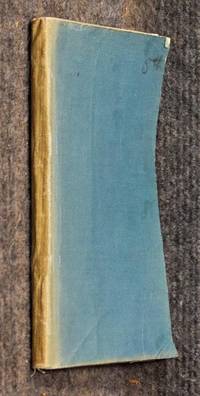
1899ref. 91742London: Her Majesty's Stationery Office 1899. Presumed First Edition First Printing. Wraps. Good. 9 1 pages and 36 pages. Tabular Data. This item has been disbound from a larger volume and now has a stiff blue cover protecting it. The British Central Africa Protectorate BCA was a British protectorate proclaimed in 1889 and ratified in 1891 that occupied the same area as present-day Malawi: it was renamed Nyasaland in 1907. British interest in the area arose from visits made by David Livingstone from 1858 onward during his exploration of the Zambezi area. This encouraged missionary activity that started in the 1860s undertaken by the Universities' Mission to Central Africa the Church of Scotland and the Free Church of Scotland and which was followed by a small number of settlers. The Portuguese government attempted to claim much of the area in which the missionaries and settlers operated but this was disputed by the British government. To forestall a Portuguese expedition claiming effective occupation a protectorate was proclaimed first over the south of this area then over the whole of it in 1889. After negotiations with the Portuguese and German governments on its boundaries the protectorate was formally ratified by the British government in May 1891. As late as 1888 the British Foreign Office declined to accept responsibility for protecting the rudimentary British settlements in the Shire Highlands despite unsubstantiated claims by the African Lakes Company of Portuguese interference with their trading activities. However it also declined to negotiate with the Portuguese government on their claim that the Shire Highlands should be considered part of Portuguese East Africa as it was not regarded by the Foreign Office as under effective Portuguese occupation. In order to prevent Portuguese occupation the British government sent Henry Hamilton Johnston as British consul to Mozambique and the Interior with instructions to report on the extent of Portuguese rule in the Zambezi and Shire valleys and the vicinity and to make conditional treaties with local rulers beyond Portuguese jurisdiction. These conditional treaties of friendship did not amount to the establishment of a British protectorate but prevented those rulers from accepting protection from another state. In response to a Portuguese incursion Johnston's deputy John Buchanan declared a Shire Highlands Protectorate in Johnston's absence despite the contrary Foreign Office instructions. It seems probable that Buchanan's action made without reference to the Foreign Office but following instructions that Johnston had left was to prevent any further advance by the Portuguese rather than to establish British rule in the area. Johnston's proclamation of a further protectorate the Nyasaland Districts Protectorate west of Lake Malawi was also contrary to Foreign Office instructions. However it was endorsed by the Foreign Office in May 1891. This was because the discovery of the Chinde channel in the Zambezi delta which was deep enough to allow sea-going ships to enter the Zambezi which was an international waterway without having to enter Portuguese territory whereas previously such ships had to use the port of Quelimane. There followed an Anglo-Portuguese Crisis in which a British refusal of arbitration was followed by the 1890 British Ultimatum of 11 January 1890. This demanded that the Portuguese give up all claims to territories beyond the Ruo River and west of Lake Malawi. The Portuguese government accepted under duress and ordered their troops in the Shire valley to withdraw to the south bank of the Ruo. This order was received by the commander at Katunga on 8 March 1890 and all Portuguese forces had evacuated Katunga and Chiromo by 12 March. An 1891 Anglo-Portuguese treaty fixed the southern borders of what had been renamed the British Central Africa Protectorate. The treaty also granted Britain a 99-year lease over Chinde a port at one of the Zambezi delta mouths where sea-going ships could transfer goods and passengers to river boats. The northern border of the protectorate was agreed at the Songwe River as part of the Anglo-German Convention in 1890. Its western border with Northern Rhodesia was fixed in 1891 at the drainage divide between Lake Malawi and the Luangwa River by agreement with the British South Africa Company which governed what is today Zambia under Royal Charter until 1924. After this until 1898 troops were used to assist the locally recruited police force to suppress the slave trade. The three main groups resisting British occupation were Yao chiefs in the south of the protectorate and Swahili groups around the center and north of Lake Nyasa both involved in the slave trade and Ngoni people who had formed two aggressively expansionists kingdoms in the west and north. As the northern Ngoni kingdom did not threaten European trading interests as it was far from European-owned estates and as the Scottish mission at Livingstonia was influential within the kingdom Johnston did not use force against it. It accepted British rule in 1904 on condition of retaining its own traditions. Its king was recognized as a paramount chief the only one in the protectorate at that time. Her Majesty's Stationery Office paperback
ref. DADAX1571819452New unknown
ref. DADAX1786993996New unknown
ref. 44191059like new. unknown
ref. 44191059-nnew. unknown
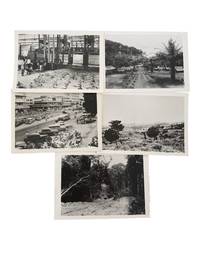
1950ref. 235541950. Belgian Congo colonial photo archive circa 1950s documenting how the Belgian state presented the colony to Western viewers through coffee production planned workers' housing road building urban commerce and managed landscape. Issued through the Belgian Government Information Center in New York the photographs translate colonial rule into a sequence of alluring scenes such as African labor inside an industrial coffee facility a rural workers' village at Bosulo automobiles and commercial buildings in Léopoldville road infrastructure through forest and savannah country in the Kibali Ituri district. The group belongs to the late colonial period when Belgium framed the Congo as a development project while its economy remained structured around extractive agriculture mineral wealth compulsory labor histories and racial hierarchy. Photo archive of five silver gelatin photographs New York: Belgian Government Information Center: Belgium and Belgian Congo each 5 x 7 inches Belgian Congo circa 1950s. The photos show workers handling sacks in a coffee facility; a thatched workers' village with a central road palms and surrounding hills captioned "Workers' village - Bosulo"; a busy Léopoldville commercial district filled with cars pedestrians bicycles storefronts and hotel signage captioned "Commercial center at Leopoldville city life vol. 10"; open savannah in the Kibali Ituri district captioned in handwritten script "In the Kibali Ituri district at a height of about 3000 feet there is a plain covered with savannah. Vegetation and countryside vol. 3"; and a forest road captioned "Vegetatikon and Countryside vol. 3 / Road through the jungle." Belgium ruled the Congo from 1908 after the international scandal of King Leopold II's Congo Free State until Congolese independence in 1960. By the mid twentieth century official Belgian publicity emphasized welfare labor housing roads agriculture and urban modernization recasting colonial control as technical improvement and economic order. These images present coffee production labor housing urban commerce and road construction as evidence of Belgian economic development in the Congo. For native Congolese that industrial system meant wage labor in export agriculture and processing residence in employer or state planned settlements movement through colonial transport networks and participation in an urban economy controlled by Belgian administration and business. Light surface wear and scattered verso stamps and annotations; images remain clean and clear. Overall very good condition. An archive of Congolese labor and land as the basis of late colonial industry in Belgian Congo. unknown
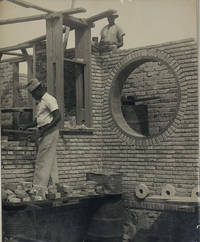
ref. PD4Seventeen unmounted gelatin silver prints including six larger ones ca. 12x17 cm ca. 4 ¾ x 6 ¾ in and seven smaller ones ca. 65x105 cm 2 ½ x 4 ¼ in with three images in between those sizes. The majority with manuscript pencil captions in French on verso. The photographs are sharp and in very good condition. This collection includes early views of Boma – the capital of Belgian Congo – its streets and the house of the “Chef Batailon” and three views of Fort de Shinkakasa built near Boma in 1891 also a panorama of the Congo river with the fort on the right and Boma in the distance. Several views of Lusambo show its streets river and a church under construction. There are also photos of a small village on the Kwamouth river and images of local people shown next to their houses with ox driven carts during the cotton harvest etc. “Boma is a port town on the Congo River some 100 km upstream from the Atlantic Ocean in the Bas-Congo province of the Democratic Republic of the Congo. Boma was the capital city of the Congo Free State and Belgian Congo the modern Democratic Republic of the Congo from 1 May 1886 to 1926 when the capital was moved to Léopoldville since renamed Kinshasa” Wikipedia. “Lusambo is a town and territory in the Sankuru district of the Kasai-Oriental province Democratic Republic of the Congo. The town lies north of the confluence of the Sankuru River and the Lubi River. In 1890 Lusambo was chosen by Paul Le Marinel as the main Belgian base in the Kasai region to defend against the threat of Arab or Swahili traders in slaves and ivory who were encroaching from the east. The station would soon become one of the most important military posts of the Congo Free State with a permanent staff of seventeen whites six hundred native soldiers and four artillery pieces” Wikipedia. unknown
1922ref. 7647Luebo Congo Belge Africa: The J. Leighton Wilson Press American Presbyterian Congo Mission 1922. First Edition. Hardcover. Very good. Plain mauve cloth 5 x 7 inches 58 pp. index clean text. No entries for any edition at WorldCat. We have seen three binding varieties for this issue: blue pebble cloth dark green pebble cloth and a mauve plain cloth.There are 38 articles in the Constitution - these define the work the officers & workers the powers of the officers the election of officers &c. The By-Laws start with no. 39 and run to no. 113. These treat with standing committees and their duties how appointed then practical matters of budgets ordering supplies hospital and medical fees &c. Ends with a 8 pp. index. The J. Leighton Wilson Press | American Presbyterian Congo Mission hardcover
1922ref. 7646Luebo Congo Belge Africa: The J. Leighton Wilson Press American Presbyterian Congo Mission 1922. First Edition. Hardcover. Very good. Dark green pebble cloth 5 x 7 inches a few blotchy stains to the binding 58 pp. index clean text. No entries for any edition at WorldCat. We have seen three binding varieties for this issue: blue pebble cloth dark green pebble cloth and a mauve plain cloth.There are 38 articles in the Constitution - these define the work the officers & workers the powers of the officers the election of officers &c. The By-Laws start with no. 39 and run to no. 113. These treat with standing committees and their duties how appointed then practical matters of budgets ordering supplies hospital and medical fees &c. Ends with a 8 pp. index. The J. Leighton Wilson Press | American Presbyterian Congo Mission hardcover
ref. DADAX0415992389New unknown
ref. DADAX1138631698New unknown
ref. DADAX0700715894New unknown
ref. DADAX1472436474New unknown
ref. DADAX0415641330New unknown
ref. DADAX0367456753New unknown
ref. DADAX3030446980New unknown
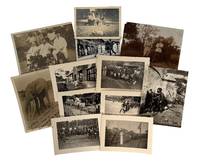
1900ref. 235051900. Belgian colonial Congo photo archive depicting European officials Indigenous Congolese adults and children public ceremony domestic labor and railway grounds between the early twentieth century and 1950. Belgium formally ruled the Congo from 1908 until June 30 1960 after King Leopold II's Congo Free State became notorious for forced labor and violence against Congolese people. A few scenes highlight colonial hierarchy as one photo shows white men in suits helmets and uniforms pose formally in chairs while Congolese men women and children appear as attendants or anthropological subjects surrounding the trio. A 1947 inscription identifying "le régent Charles" places part of the group during the Belgian prince regent's postwar tour of the Congo eight years before King Baudouin visited in 1955 and thirteen years before Congolese independence on June 30 1960. Photo archive of 12 silver gelatin photographs ranging from 3" x 4" to 3.5" x 4.75" Belgian Congo 1900-1950. French inscriptions include "Congo Belge août 1950"; "le régent Charles 1947"; "lundi le 18 janvier 1943 avec notre meilleur bonjour de tous les trois"; and "travailleur portant à l'eau" meaning "worker carrying water." Other scenes show a uniformed colonial procession outside a brick building helmeted men posed in the bush an elephant captioned with French notes Congolese children at a water spout men carrying water a compound walkway a railway yard and Congolese drummers and dancers assembled before mixed local and colonial audiences. The dichotomy of colonists occupying the pose of command travel inspection and ownership while Indigenous Congolese people appear in the surrounding labor ceremony and service spaces make for a compelling collection. Belgian rule in the Congo depended on racial separation administrative paternalism extraction mission education and controlled public ceremony while Congolese political demands intensified after the Second World War and culminated in independence on June 30 1960. Light toning handling and corner wear; photos remain clear and several inscriptions legible en verso; overall in very good condition. This archive gives Belgian colonialism a concrete human scale through officials posed with indigenous children workers ceremonial performers industrial railway spaces and royal reception scenes arranged around the unequal encounter between European power and Indigenous Congolese life. unknown
1911ref. 37502Bruxelles: Publiées par le Ministere des Colonies 1911. First edition. Aqurelles par Norman-H. Hardy. 403 photographs and drawings 2 fold-out maps and 29 full- page folio-size plates containing 20 color drawings 15 color plates of raffia designs 53 photographs of carved figures and objects and 14 photographs of 18th century Bombala embroidery. 1 vols. Large 4to. Original tan printed portfilo. Book loose in fasicules. Fine. wrappers slightly worn. First edition. Aqurelles par Norman-H. Hardy. 403 photographs and drawings 2 fold-out maps and 29 full- page folio-size plates containing 20 color drawings 15 color plates of raffia designs 53 photographs of carved figures and objects and 14 photographs of 18th century Bombala embroidery. 1 vols. Large 4to. Publiées par le Ministere des Colonies unknown